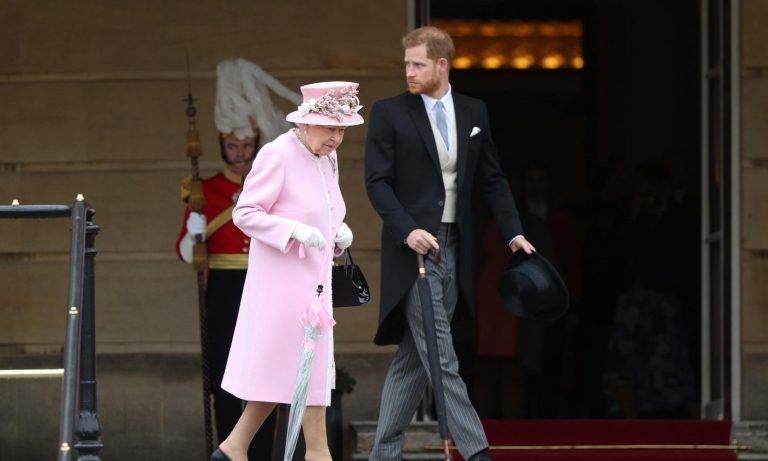
During a recent podcast, Princess Di’s former butler didn’t hold back as he talked about the Queen’s row with Harry, and why he doesn’t want to see Charles take the throne.
Paul Burrell is no longer staying quiet about the falling out between Queen Elizabeth II and her grandson. During a recent interview on The Secret To podcast, the former royal butler spills tea on Queen’s falling out with Prince Harry. The Queen basically told Harry he had to choose between his royal duties and Meghan Markle.
Burrell sides with the Queen’s handling of the situation, saying, “She would have done everything she possibly could do to say to Harry stay with the working family because you are part of it and the country loves you.” Per the Express, here’s more of the exchange:
“But he wanted something else and he went with his heart not his head and he went with the woman he loves.
“You cannot blame him for that.
“The Queen gave Harry a choice at Sandringham, Harry said ‘granny can I keep my uniforms and contacts with the army?’
And she said you can’t have one foot in the camp and one foot out.”
He added, “Look how wise she was, I think she did the right thing.”
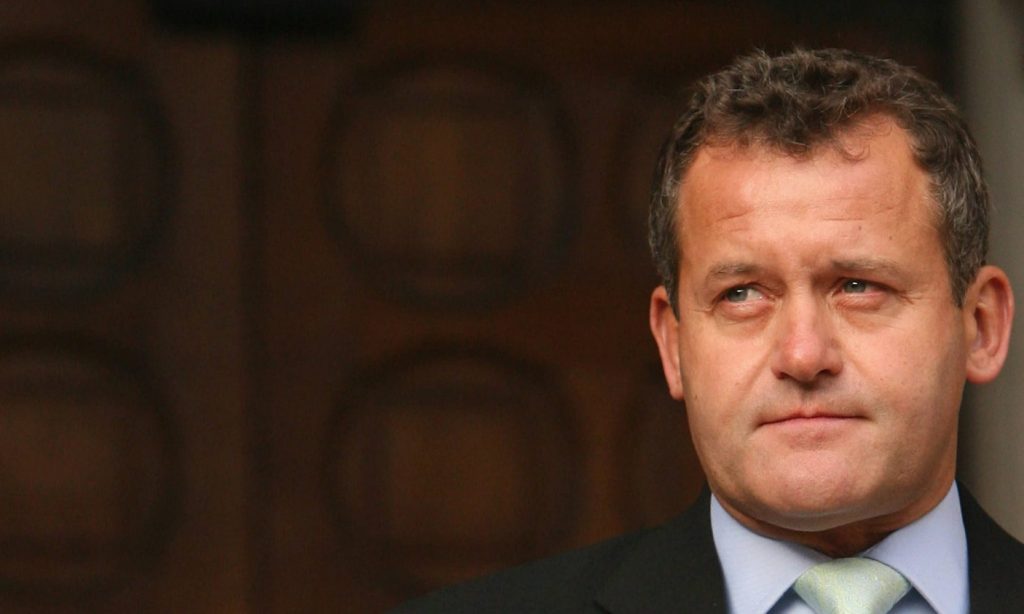
Paul Burrell, former butler of Princess Diana, Photo by Daniel Berehulak/Getty Images
Burrell, who was Princess Diana’s former Butler, and not a huge fan of her ex-husband, said he thinks Prince William should take the throne after Queen Elizabeth II instead of Prince Charles. Burrell explained that Wills is simply a better fit because of his age. But also, he just doesn’t really like Charles.
“His ex-wife Princess Diana said she did not think he would ever be King because that job would give him too many limitations.
“He has a lot of baggage with him. Can I be controversial?
“I am not a fan of King Charles and Queen Camilla, I do not have an appetite for that,” adding, “I personally would like to see Queen Catherine and King William on the throne with their beautiful family.”
As a nice kick on the way out, Burrell said of the 72-year old Charles, “Will he actually get up the steps to the throne? He might be that old.”
Whoever wins the U.S. Senate seats in Georgia will determine if marijuana gets a fair shake next year in Congress.
Although the election is over for most of America, there’s still enough of one taking place to make a difference — especially when it comes to legalizing marijuana in the United States.
Interestingly enough, the fate of federal cannabis reform now rests on the outcome of a special election slated for early January. Georgia voters must decide whether Republicans or Democrats will fill the U.S. Senate seats. Whoever wins will determine if marijuana gets a fair shake next year in Congress.
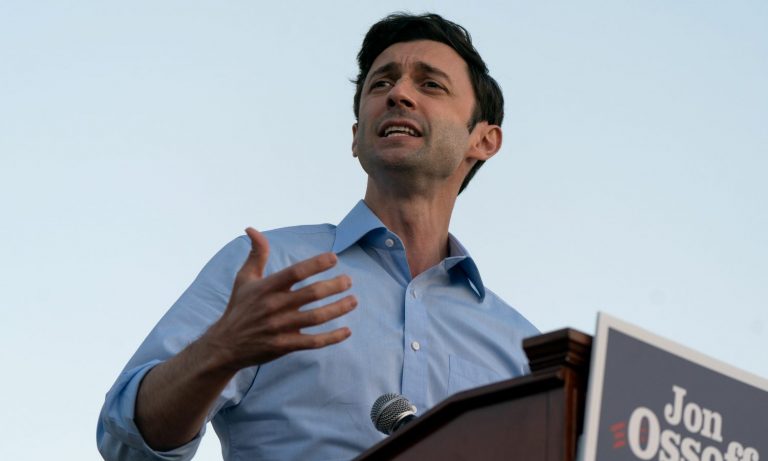
A runoff election is taking place because Georgia requires at least 50% of the votes before a candidate can be declared a winner. None of the candidates claimed such a victory in the November election. This means Senator Kelly Loeffler, the Republican incumbent, and Democratic challenger Raphael Warnock are back in battle again come January. And so are Senator David Perdue, the Republican incumbent, and Democratic challenger Jon Ossoff. The two Senate seats up for grabs could make the Democrats king of Capitol Hill at the beginning of next year. And with that crown comes the ability to further marijuana reform and end federal prohibition.
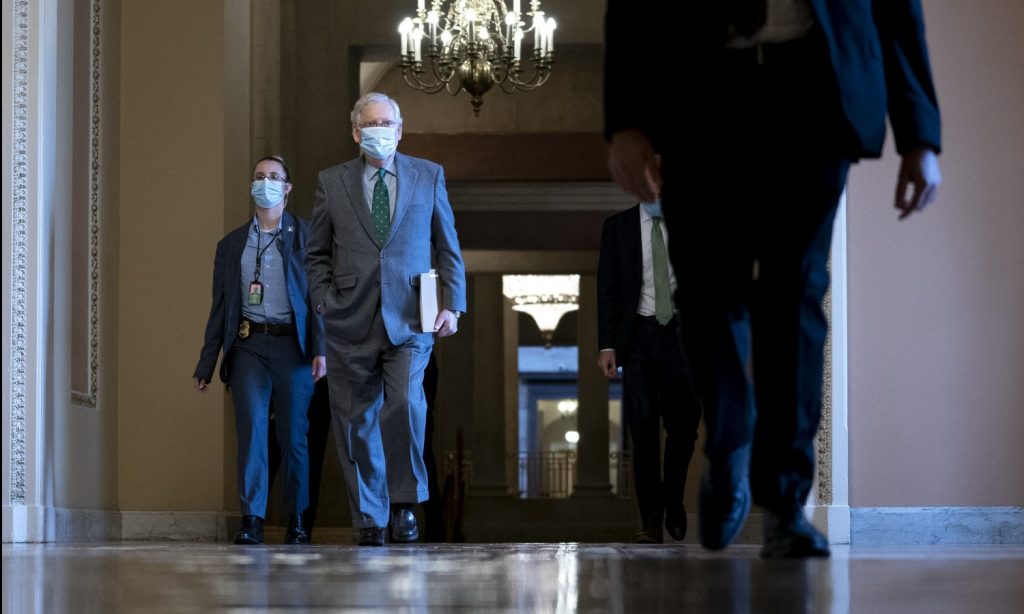
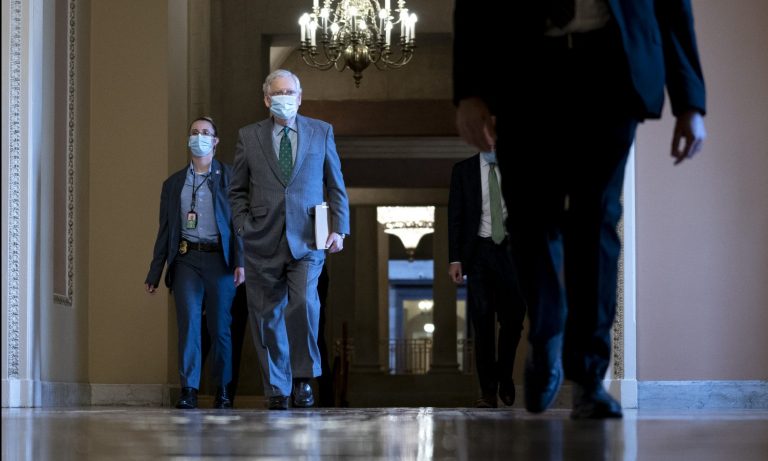
It’s no secret that Democrats are the most likely to run with a bill aimed at legalizing marijuana. In fact, the U.S. House is in the process right now of approving one that would take the herb all the way and make it part of legitimate commerce. Only the Republican-dominated Senate has stopped progress at every turn. Senate Majority Mitch McConnell, the gatekeeper to the upper chamber, has killed every pot-related measure to come out of the House. He won’t even give one a hearing. “I do not have any plans to endorse the legalization of marijuana,” McConnell said in 2018.
If the Republicans keep the two Senate seats, we can expect more of the same in 2021 and beyond. However, if the Democrats flip them, next year’s Congress will come with a whole new dynamic. Anything approved by the House would move swiftly through the Senate. Government would, for once, have an easier path to getting things done for the American people.
Even legal weed.
Honestly, we should be to the point in this country when the idea of legalizing marijuana isn’t such a daunting task. Not only has more than half the nation legalized the leaf for medicinal and recreational purposes, but the latest national public opinion poll also shows that around 705 of the population is on board. And it’s not like every Democrat and Republican are fighting over whether it is right or wrong.
Photo by Stefani Reynolds/Getty Images
Legal weed has become a mostly bipartisan issue over the past few years. It’s just that career politicians still have enough clout on the Hill to keep anything from happening. But that could all change if the Democrats find their way in control of the Senate.
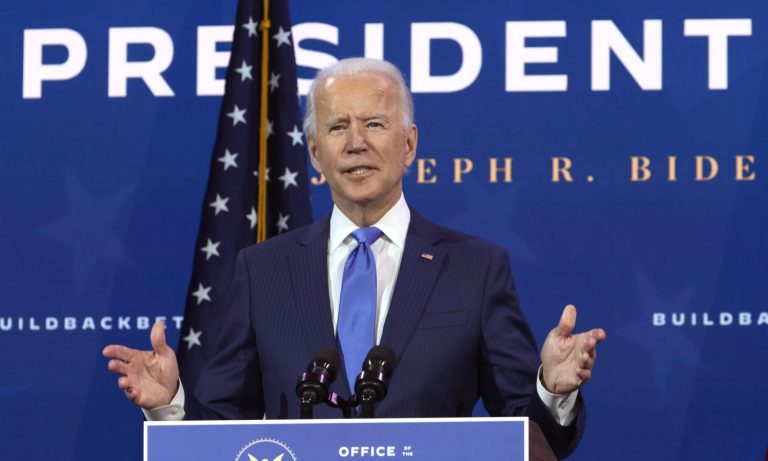
There’s still no guarantee that a Democratic win in Georgia, which would make them leaders of both the House and Senate, will ensure marijuana legalization gets done. It probably wouldn’t. President-elect Joe Biden is still against moving forward with full-blown legalization, and wants to try decriminalization instead.
There are also other critical issues that need to be addressed in the next session that Democrats will want to get locked into place before potentially losing their control in the midterms. Marijuana might not get a lot of stage time in 2021, but it would fare a lot better with Democrats running the show than another split Congress.
That alone would ensure that federal marijuana legalization remains off the table until at least 2023.
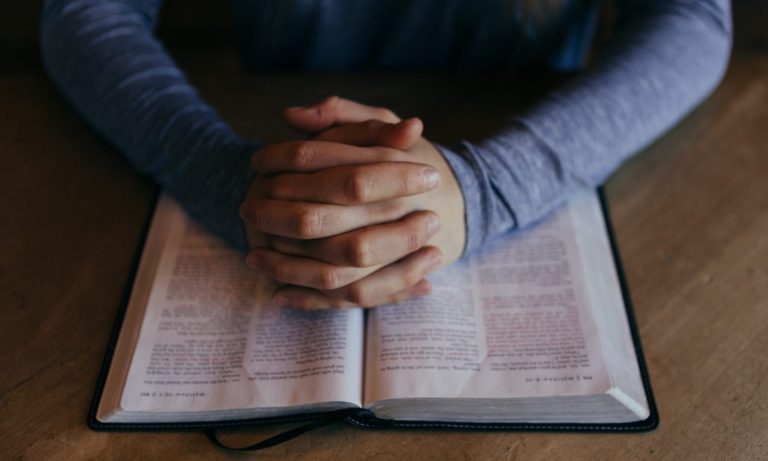
The South may be quietly adjusting to the new legalization landscape. But for now, the good ol’ white guys prevail, and Christians have righteous morality straight from the Bible on their side.
As of the November elections, there are now 15 states and the District of Columbia who have legalized adult use. There are some 36 states that enacted or voted to enact medical marijuana laws.
In the years leading up to this November, voters decided affirmatively on 28 separate ballot measures legalizing cannabis (18 measures legalizing medical marijuana, 10 measures legalizing adult use), according to National Organization for the Reform of Marijuana Laws (NORML).
That’s nearly 50 years of marijuana legalization efforts that now includes entire countries.
But late to the legalization party over the years have been the U.S. southern states, specifically Alabama, Georgia, Louisiana, Mississippi, North Carolina, South Carolina, and Virginia.
Why? Blame God, the Bible, and the Christian ethics that pervade state legislatures. It’s the South’s old-school good-ol’-boys God-knows-all network that continues to hold up or minimize or otherwise confuse legalization efforts in these states.
Mississippi legalized medical marijuana this November under Initiative 65, but did so under a cloud of a “cynical effort to misdirect voters” with a similar-sounding but much more restrictive measure (Measure 65A) put on the ballot by the state legislature, by the same state lawmakers who for decades had refused to ever seriously address the issue. There have been more than 20 medical marijuana bills that have been blocked in the last decade or so in Mississippi.
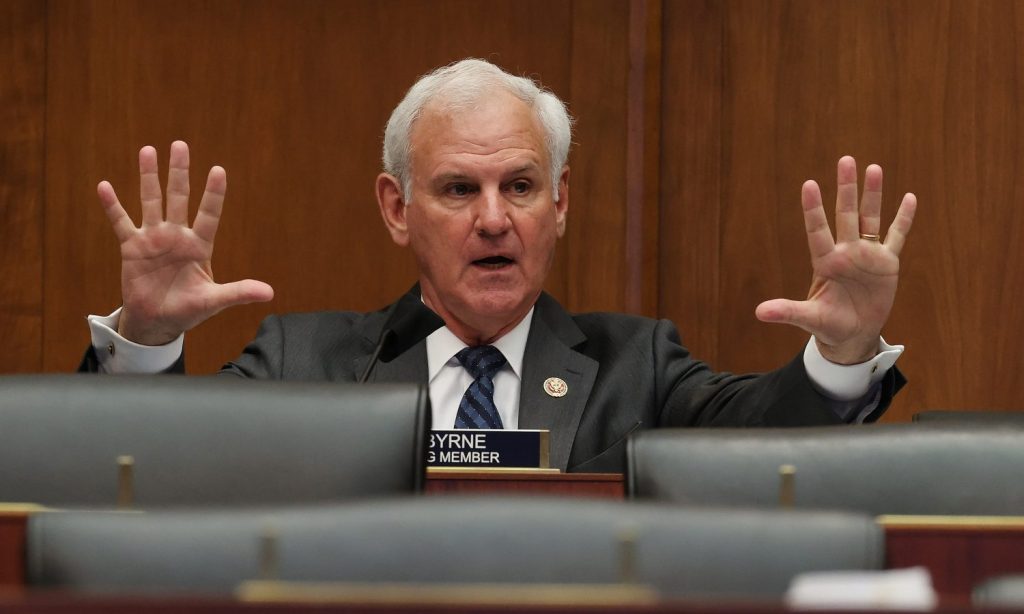
And take a look at comments from one of Alabama’s elected officials, U.S. Representative Bradley Byrne, who wants jail time for possession and is against medical use: “In a country as rich and as prosperous as America, why is life expectancy going down?” said Byrne. “It’s because of suicide, alcohol abuse and drug abuse. People doing things that literally result in their own death.
“How in the world does that happen in our country? It’s because we’ve taken God out of the center of our lives. And when you try to take God out of the center of your life, you’ll keep trying to stick something else in there but nothing else will fill it — no drug, no alcohol, no power, no wealth, nothing will fill that hole.”
Rep. Bradley Byrne (R-AL) Photo by Chip Somodevilla/Getty Images
Georgia U.S. Representative Virginia Foxx said that drug addiction is one of the largest challenges in this country, and that she “will continue to oppose any effort to make it easier for people to grow and use drugs.”
In North Carolina, U.S. Representative Ted Budd commented on the SAFE Banking Act with the usual propaganda about marijuana, citing problems with lowered IQ and serious mental illness from consuming marijuana, along with the all-time favorite of anti-marijuana crusaders—the sudden rise of marijuana-impaired car accidents.
The South Carolina Medical Cannabis Therapeutic Research Treatment Act, which was signed into law in June, 2014, was very restrictive, allowing only CBD oil for treatment of epilepsy in children. The good news is that it eventually cleared the House with a vote of 92-5. On January 10, 2017, State Senator Tom Davis and fellow Republican Representative Peter McCoy introduced the South Carolina Compassionate Care Act, a comprehensive medical cannabis bill, that would allow seriously ill patients with debilitating medical conditions to obtain state ID cards to allow them to access medical cannabis from a state regulated dispensary.
But the bill hit major resistance from law enforcement. Then there was God. “South Carolina tends to be more evangelical, more Protestant than other states,” Davis said during an Americans for Safe Access conference. “They get involved in more social issues and politics than other states. The issue of marijuana is wrapped up in the thinking ‘Is this a proper lifestyle? Are you making a proper moral choices? Is this something that we are introducing into our society that is going to lead to an erosion of values?’” he said. “All of those things are very real in South Carolina. You have to respect those concerns.”
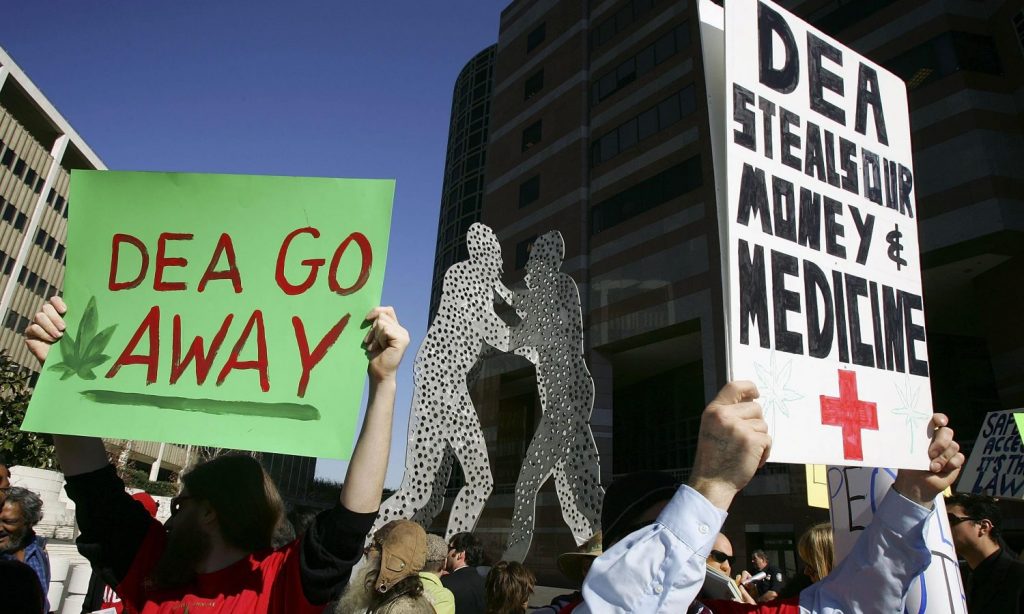
Americans for Safe Access rally / Photo by David McNew/Getty Images)
Davis has had to ride a fine line in the state among lawmakers and evangelicals, even after a recent poll showed that only 18.8% of South Carolina residents are opposed to any form of marijuana legalization, medical or otherwise. The first senate subcommittee meeting discussing the Compassionate Care Act took place on Wednesday, February 27, 2019, where Davis, the subcommittee chairman, said that he wanted a “tightly-defined medical cannabis bill that empowers physicians to allow patient use of cannabis for specific debilitating conditions when empirical evidence substantiates the benefits.”
He wants to ensure that the bill is clearly a medical bill in terms of substance as well as optics, and is “not a precursor to adult use.” All good. But the state doesn’t have a citizen initiative process, and the bill has yet to receive a vote in either the state House or Senate.
Virginia is probably one of the more progressive Southern states when it comes to marijuana legalization, with the Attorney General Mark Herring, U.S. Senator Tim Kaine, U.S. Representative Elaine Luria, State Senator Jennifer McClellan, State Senator Joe Morrissey and a host of other elected government officials all for legalizing, taxing and regulating marijuana. Most other officials in Virginia are in favor of at least decriminalizing marijuana, which happened earlier this year.
In a move that surprised some marijuana proponents, given Virginia’s harsh history with marijuana arrests and convictions over the years, Governor Ralph Northam announced the findings of a his administration’s report on marijuana on November 30 following the state’s decriminalization legislation passed by the General Assembly earlier this year. “We will advance new laws to make sure that our Commonwealth legalizes marijuana the right way,” he was quoted as saying in a press release about the report.
Louisiana is one of the less active Southern states working on legalizing. Voters approved medical marijuana in 2016, but it took three years for regulators to approve the state’s first dispensaries. Governor Bel Edwards continues to oppose legalizing and regulating adult use, even though 55 percent of Louisiana residents support legalizing the possession of small amounts of marijuana for recreational use, according to the 2019 Louisiana Survey published by the Louisiana State University.
There are other areas of the country that are out of step with the legalization movement, such as Kansas, where highway patrol is known to target cars with Colorado plates for canine searches.
But the South is slowly coming around after years of deep denials, in part because of growing popularity of medical marijuana as a healing herb, which is more in line with Christian ethics.
There is still the argument by some Christians that legalizing marijuana is a sign of moral decline in the U.S., according to a study, which is a belief that still clearly plays out in the legalization efforts in the South. Some evangelicals even believe that the Bible prohibits consuming marijuana, and it’s a sin if you do.
Still, you can’t argue with the fact that two-thirds of Americans say the use of marijuana should be legal, which is a steady increase over the past decade, according to a Pew Research Center survey. The share of U.S. adults who oppose legalization has fallen from 52 percent in 2010 to 32 percent today.
The South may be quietly adjusting to this new legalization landscape. But for now, the good ol’ white guys prevail, and Christians have righteous morality straight from the Bible on their side.
Among the options are homeland security advisor Lisa Monaco, former acting AG Sally Yates and former Massachusetts governor Deval Patrick. The new AG will play a key role in advancing cannabis reform, cannabis and policy experts tell Benzinga.
“We have seen first hand how integral having at least a somewhat sympathetic Attorney General in office is by just comparing the past two administrations,” says NORML Executive Director Erik Altieri.
For example, there was the Obama administration’s implementation of the the Cole Memo, which stated that the Department of Justice couldn’t use resources on nationwide cannabis raids.
But President Trump’s first AG, Jeff Sessions, rescinded the memo in January 2018.
The situation did not improve much under Trump’s second AG, William Barr, who has reportedly launched antitrust investigations into the cannabis industry.
“It is time we have an administration that respects the desires of our nation’s citizens and that they remember, especially when you are discussing the Executive Branch, personnel is policy,” Altieri adds.
Mattio Communications Strategist Ellen Mellody — a political veteran who worked as a press secretary during the Obama-Biden Administration in 2008 — agrees. A pro-cannabis AG in the incoming Biden administration would be significant for the future of reform despite the likely scrutiny they will face from Senator Mitch McConnell and his fellow Republicans.
“It’s likely that Republican leaders in the Senate, like McConnell, will work overtime to politicize Biden’s pick, given that each contender will likely have both supporters and detractors,” Mellody says.
Limited Impact?
Not everyone feels that the AG decision carries that much of an impact on reform.
Chris Lindsay, Director of Government Relations for the Marijuana Policy Project, noted that the federal government is limited when it comes to impacting state decisions on cannabis.
“That creates a real challenge for those in federal law enforcement who may want to take shots at these state [cannabis] laws that have been adopted,” he said.
Matt C. Pinsker, a former federal prosecutor, turned professor of criminal justice and homeland security at Virginia Commonwealth University, doesn’t consider the AG being crucial for marijuana reform.
“It was never expected that any of the Democrat nominees, let alone Biden, would enforce federal marijuana laws which conflicted with state laws for legalization,” Pinsker says.
Photo by Jonathan Bachman/Stringer/Getty Images
How A Pro- Or Anti-Pot AG Could Move The Needle
A pro-cannabis AG would align with the public’s overwhelming support for cannabis reform, be it medical or adult use, Mellody says. Yet, politicians on both sides of the aisle remain opposed to reform due to what she believes are education gaps concerning legalization.
“Historically, what many detractors don’t know, want to acknowledge or realize is that cannabis prohibition is a policy based on lies that aren’t taught in our history books,” she explains. “The American people continue to be far ahead of their elected officials when it comes to legalization, but that must change if we are to restore justice, which is something that I believe Biden is committed to doing.”
If an unexpected choice were to assume the role — an anti- or neutral cannabis AG — it could make life arduous for the cannabis industry.
“They probably can’t do a whole lot other than make life hell for a few individuals like me,” Lindsey says.
Lindsay was charged in 2011 as a co-conspirator for his involvement in a 2009 Montana medical cannabis venture.
An AG of that ilk could also stymie future programs while making life difficult for state programs, including forcing US attorneys to take up RICO lawsuits against cultivators and retailers.
“It is not expected, but there is plenty of damage that could be done if there was a will to do so,” said Altieri.
Looking Ahead
Cannabis reform may see a significant boost in the 117th Congress if the two Georgia runoffs go blue, leading to Democrats holding power in each chamber. If that scenario plays out, anti-cannabis lawmaker McConnell would no longer have the Senate majority’s leadership.
The runoff elections are scheduled for Jan. 5, 2020.
Despite the uncertainty over congressional power, it is believed that reform momentum won’t wane over the next two to four years.
“The horses have left the barn,” said Mellody, noting progress made. “However, political operatives and elected officials on both sides of the aisles need to get serious about the issue.”
Lawmakers are slow to act, and Mellody says legalization is just one of many key battles.
“The anti-cannabis movement goes far deeper than the obvious, so we must continue to enlighten more Americans to the unconstitutional injustices being imposed on veterans, students and physically and economically challenged Americans,” she says.
MPP’s Lindsey sees lawmakers taking action in several possible ways. They include addressing the SAFE Banking Act (which may be in the next COVID stimulus package), veteran access, and possibly the Harris Rider, which continues to thwart citizens’ wishes in the nation’s capital, who have repeatedly supported cannabis reform.
The 2022 midterms are also shaping up to be a pivotal vote for the balance of power in Washington DC as well for cannabis reform. The so-called “Green Wave” is expected to continue, as several states could wind up voting for medical and recreational laws in the next few years.
NORML’s Altieri expects significant reform to occur between now and the midterm elections, including the passage of additional state efforts and several Congressional votes on cannabis.
“The snowball is rolling down the hill,” he says. “And with each new victory, we gain more momentum both in political support, but also in public support.”
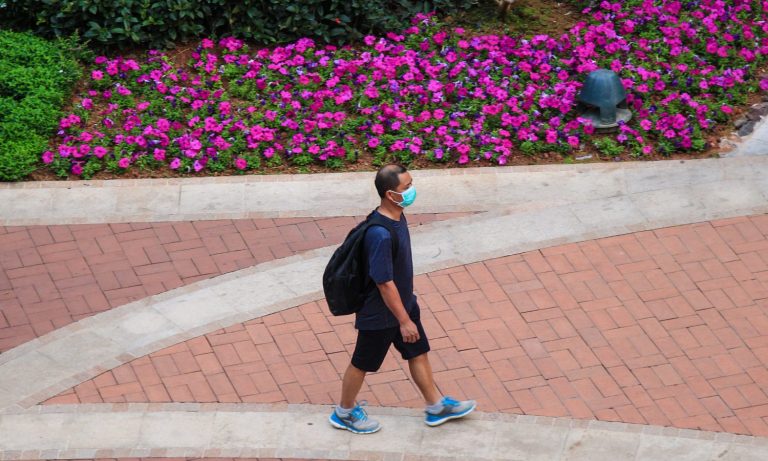
Experts believe face masks provide some protection against air pollution. But the amount of protection depends on the type of face mask.
Face masks have never been more popular, but there’s a history of their use in everyday life. Face masks have been used in Asia since long before the pandemic, with data finding them helpful in curbing the spread of the flu, SARS virus, and even our exposure to air pollution. However, experts say it depends on what type of mask you’re wearing.
While some harmful particles are filtered out by cloth face coverings, most pollutants we breathe are prohibited primarily by surgical masks due to their tightly woven fibers.
Pulmonologist Dr. Denitza Blagev explained to FOX 13 that N95 masks can offer significant protection. “It will work for trapping the particulates and reducing the particular air pollution exposure, and it will prevent you from getting COVID exposure.”
Photo by Retha Ferguson via Pexels
Richard Peltier, associate professor of environmental health science at the University of Massachusetts Amherst, said something similar to Men’s Health. “If we’re just talking about what we call ambient air pollution—that’s the stuff that comes out of factories and the tailpipes of cars and trucks—the answer is yes. When you’re wearing an N95 mask, it actually does protect you from that kind of exposure. Those masks do a pretty good job of filtering out the smallest particles.”
Peltier says that face coverings, such as bandanas and cloth masks, provide little protection from air pollution but that a study from 2016 showed that they were able to filter about 15% to 30% of contaminated air particles.
While this knowledge shouldn’t enable people to walk comfortably through construction sites with just their face coverings, it shows that they provide a small amount of protection that’s preferred over wearing nothing at all.
Cannabis experts agree that the effects of the decision could be substantial, impacting the entire cannabis industry on a global level.
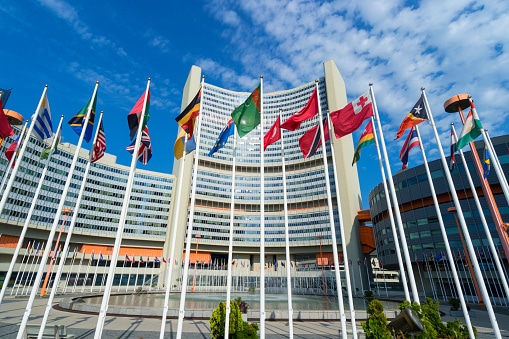
The United Nations Commission on Narcotic Drugs has made a final decision to remove cannabis from Schedule IV of the 1961 Single Convention on Narcotic Drugs.
Cannabis advocates have waited almost two years for the vote.
The World Health Organization (WHO) had recommended all forms of THC to be removed from the drug convention of 1961, placing it with cannabis in Schedule 1, the least restrictive classification by UN standards. Meanwhile, pharmaceutical cannabis medications would be placed in Schedule 3.
Only 53 current member states of the United Nations Commission on Narcotic Drugs voted, but the decision acts upon all signatories of the international drug conventions.
Although it didn’t have a vast majority with 27 votes for, 1 abstention, and 25 votes against, the recommendation was finally approved.
The remaining five related recommendations, such as 5.2 that asks to move THC from the 1971 convention to the 1961 treaty, for example, were all rejected.
Photo by JacobH/Getty Images
What Does This Mean?
Cannabis experts agree that the effects of the decision could be substantial, impacting the entire cannabis industry on a global level.
While most of them projected positive outcomes in case of approval, Grace Kaucic, Senior Communications Manager for Bluebird Botanicals said that“a vote might lead to more clarity, but it could also lead to more restrictive national frameworks.”
More optimistic views see it as a possibility of enhancing medical cannabis legalization efforts, and for the industry to experience benefits both in its regulation and research segments.
“The medical cannabis wave has accelerated in recent years already, but this will give it another boost,” Martin Jelsma, drugs and democracy program director at the Netherlands-based Transnational Institute, told Marijuana Business Daily. “And for those countries that basically mirror the U.N. scheduling in their domestic legislation, it may lead to national descheduling and remove obstacles to use cannabis for medical and research purposes.”
Is it Enough?
One concern remains: Did WHO push far enough? After all, cannabis is not similar to other drugs in Schedule 1 when it comes to risk factors.
Nevertheless, the decision is definitely one big battle cannabis finally won.
As a matter of federal law, yes, cannabis will be descheduled entirely if the MORE Act becomes law. And not only that, but all federal marijuana convictions will be expunged
We have spilled a good bit of ink on this blog writing about the MORE Act (Marijuana Opportunity and Expungement Act) which is finally headed to a floor vote in the House, probably tomorrow, December 3. The MORE Act ends federal marijuana prohibition and the criminalization of cannabis by descheduling marijuana from the Controlled Substances Act (CSA).
That would be great, of course. Assuming the House version (HR 3884) passes, it will be crucial for the Senate version (S 2227), sponsored by Vice-President-Elect Kamala Harris, to also see daylight in the upper chamber. My guess is it won’t, unless both Democratic candidates prevail in the Georgia runoffs this January, resulting in Mitch McConnell’s replacement as Senate Majority Leader.
But that’s a question for another day. For now, I want to highlight what would happen if the MORE Act does become law someday soon, because I’m seeing some bad information out there. The biggest point of confusion seems to be the idea that if the MORE Act passes, cannabis will become legal nationwide. It won’t. As a matter of federal law, yes, cannabis will be descheduled entirely. And not only that, but all federal marijuana convictions will be expunged — even the folks who were captured with many tons of cannabis in helicopters and submarines. But state laws will not be preempted in the least.
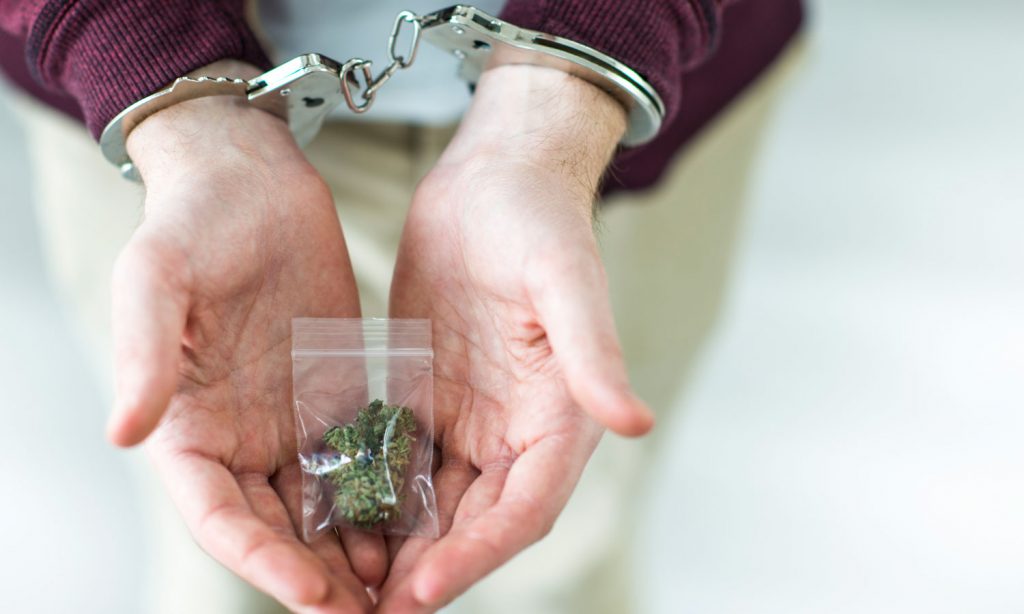
Does this mean someone could still be arrested for walking around with an ounce of cannabis in e.g. Boise, Idaho, the day after the MORE Act becomes federal law? Yes it does! And that’s a shame, because most cannabis arrests today are for simple possession, and most are made under state laws and by state police.
Close to four years ago, I explained on this blog that the federal government probably does not have the power to shutter state cannabis programs. Aside from the fact that the CSA contains express “anti-preemption” language, the Tenth Amendment of the U.S. Constitution provides that the federal government cannot “commandeer” states by forcing them to enact laws in the federal interest. That’s true in the cannabis prohibition context, and it will also be true once the feds give a green light to cannabis, under the MORE Act or otherwise.
If the MORE Act passes, what we will see is a flip of the current marijuana policy gap. Federal agents will no longer track or arrest cannabis traffickers, but state police sure could. We will be left with a patchwork of state legality, set against a permissive federal backdrop (with a 5% federal tax). And a million wrinkles to iron out.
Photo by Stefani Reynolds/Getty Images
It’s true that the feds will have some tools for dealing with prohibitionist locales once the CSA is amended. The best option is probably for Congress to preempt state law through Commerce Clause legislation, as it did with the 2018 Farm Bill for interstate transportation of hemp. It seems late for that in marijuana, though, with so many states so far down the road with cannabis licensing programs. The MORE Act steers clear of federal licensing altogether, perhaps for this reason.
Alternatively, Congress could use its spending power to encourage states to come around on ending prohibition. To this end, the MORE Act makes certain federal funds available only to “eligible States” that have taken steps to expunge cannabis convictions and eliminate penalties for cannabis parolees. This may move the needle in some jurisdictions; others will likely resist.
It’s also important to understand that the MORE Act doesn’t change all the federal laws around cannabis. For example, our firm deals with a lot of Food and Drug Administration (FDA) issues for cannabis businesses. That whole area will still be a cluster.
The FDA has taken the position that under the Federal Food, Drug, and Cosmetic Act (FD&C Act), cannabis and cannabis-derived compounds are drugs that require FDA approval before they may be added to foods and beverages, sold as dietary supplements, or advertised for therapeutic purposes. The MORE Act as written does not alter the regulatory regime under the FD&C Act. And even if it did, we again would still have the problem of 50 states with a myriad of different, confusing laws in this area.
The MORE Act does quite a bit, but it doesn’t do everything. At state and local levels, its impact will be more penumbral than direct. I do like and support the MORE Act on balance and I hope that it passes. That said, it is not the end of the road. Not even close.
Vince Sliwoski is an attorney at Harris Bricken, a law firm with lawyers in Seattle, Portland, Los Angeles, San Francisco, Barcelona, and Beijing. This story was originally published on the Canna Law Blog and has been reposted with permission.
Over the past few days, many Republicans have taken to social media to protest moving forward with the MORE Act out of respect for those still trying to survive COVID.
Senator GOP members can’t believe that House Democrats are moving forward with plans to legalize marijuana while America continues to suffer from the effects of the coronavirus. The Senate republicans balk at a move to legalize marijuana. But whose fault is that?
The U.S. House will vote on a measure today (Dec. 2) to legalize marijuana like alcohol, yet opposing forces think it should be postponed until Congress can pass a COVID relief bill. As it stands, no new round of coronavirus funding has been approved, and individuals and businesses alike are tanking.
The House wants to pass legislation known as the Marijuana Opportunity, Reinvestment and Expungement (MORE) Act. The bill is designed to eliminate marijuana from the Controlled Substances Act, allowing for a nationwide taxed and regulated pot market to unfold. It also sets aside a percentage of the tax revenue to help rebuild communities ravaged the most by the war on drugs.
Sounds great, right?
Not to a slew of Republicans. Over the past few days, many have taken to social media to protest moving forward with the MORE Act out of respect for those still trying to survive the coronavirus. “Democrats are bringing the House back into session to…Legalize marijuana?” reads a Tweet from the official House Republicans Twitter page. “THOSE are the Democrats’ priorities right now — not COVID and small business relief that the American people actually need.”
Democrats are bringing the House back into session to…
Legalize marijuana?
And…
Ban the private ownership of lions and tigers?
You read that right.
THOSE are the Democrats’ priorities right now — not COVID and small business relief that the American people actually need.
Democrats aren’t under any illusion that prioritizing marijuana reform over COVID relief efforts is going to win them any popularity contests. In fact, the MORE Act was initially scheduled to be voted on in September, yet it was pushed back to keep from upsetting the voters. But, the truth is, Democrats actually put coronavirus funding ahead of anything else. The House passed a $2.2 trillion relief bill in October — one that provided $400 per week in jobless benefits and additional funding for the business sector — but the Republicans did not want a bill that went that far.
Furthermore, on Tuesday, House and Senate lawmakers reached a $908 billion compromise on a COVID relief bill, but Senate Majority Leader Mitch McConnell shot it down. Instead, he wants one that is closer to $500 billion — something he believes will be signed into law by President Trump. So, it’s not that the Democrats aren’t trying to move on a measure to help people ravaged by the corona debacle. It’s more or less a showdown between the two parties that has prevented action.
Photo by Esther Kelleter/Getty Images
But Republicans want their constituents to think that all the Democrats care about is legal weed. Only that narrative is a tad askew from the truth. Again, House Democrats have been pushing for trillions in funding since the last round ended in July. Republicans just don’t want to spend the money.
Even if the House passes the MORE Act this week, which is expected to happen, it will still require Senate approval before it can even come close to becoming law. But that is not going to happen — not even close. Senator McConnell, the same gatekeeper to the upper chamber raising a stink over $400 billion, has said time and again that he doesn’t have any interest in supporting a bill aimed at legalizing marijuana. So in a way, the House’s vote on the MORE Act is more symbolic than a calculated move to end pot prohibition.
On the flip side, legalizing marijuana nationwide is a move that market analysts claim would create one million jobs nationwide and contribute billions to the economy. The federal government used a similar move decades ago to help dig the country out of the pits of the Great Depression. It ended alcohol prohibition.
Human sexuality can be divided into four states — desire, arousal, orgasm and satisfaction— and no sexual health medicines address this. Erectile dysfunction medications like Viagra and Cialis treat arousal in men, and that’s all. Interestingly, cannabis can help both men and women in all four of the sexual phases. It heightens the senses, leads to relaxation, opens the mind to deeper intimacy and promotes mindfulness.
Molecules That Make Us Make Vowels
Everyone seems to have an anecdote in the chamber involving marijuana and toe-curling sex, but scientists are interested in what specific molecules are involved in sexual satisfaction.
While many of us would have assumed that it was the THC making sex feel extra gratifying, the researchers of the orgasms and endocannabinoids study found that it’s not anandamide (THC’s endocannabinoid cousin) released during orgasm, it’s 2-Arachidonoylglycerol (2-AG).
Over the course of two studies, the researchers found that healthy individuals who masturbated to orgasm had elevated levels of 2-AG, not anandamide, concluding that 2-AG release plays a role in the reward aspect of sexual arousal and orgasm.
Photo by franckreporter/Getty Images
Although it doesn’t directly engage the CB1 or CB2 cannabinoid receptors, the CBD molecule does boost the body’s levels of 2-AG, which may indicate that high-CBD products could improve the action of 2-AG in sexual response.
One More Way Cannabis is Aiding Human Sexuality
Cannabis is an excellent sexual aid for those who have PTSD due to sexual trauma. THC binds to CB1 cannabinoid receptors that reside in the sexual response areas of interest, the hippocampus and amygdala. The two areas are linked to memory, the autonomic nervous system, and emotions such as fear and anxiety. Under the influence of THC, a person is less likely to experience anxiety or other negative feelings surrounding sex.
Equally notable is the fact that cannabis, specifically THC, use induces the impairment of short-term memory which is specifically suitable for keeping one’s mind in the moment during sex. When we’re not stressed out about the things waiting for us outside of the bedroom, we can relax and enjoy the sex happening on the bed (or wherever it’s happening, you animal).
Cannabis Is the Gift That Keeps on Giving
In addition to just being an enjoyable way to unwind at the end of the day, marijuana eases symptoms of anxiety disorder and helps insomniacs get some much-needed shut-eye, and if it turns out that cannabis has benefits in the bedroom as well, it will undoubtedly stoke a whole new section of the market. Who needs a brand name erectile dysfunction drug when there’s a natural supplement that does the trick without the risks and four-hour hard on?
Photo by Becca Tapert via Unsplash
The study on orgasms and the release of 2-AG in humans did not explore whether anandamide hinders our ability to receive 2-AG during sex. They only proved a reliable link between orgasms and the chemical we produce before and during the climax.
There are also no studies exploring sex and marijuana dosage. Dosage is crucial if you plan on smoking or taking edibles before having sex, especially since large doses can interfere with the performance of men.
But if we know anything from watching the cannabis space for this long, it’s that one study leads to a new one, and maybe soon those who need to can precisely dose their way to a more satisfying sex life.
The people have spoken, the U.S. is ready to go, and it’s time to pull the trigger on legalization.
It’s time. Cannabis history is having its moment. Here is a deep dive on a key congressional day for cannabis. Let’s hope it goes well.
The election is over, cannabis had its biggest voter approval day ever on November 3, and everyone who has a stake in the cannabis industry is saying it out loud: The cannabis legalization battle is over.
In total, 15 states have now either enacted or have voted to enact adult-use legalization laws, while 36 states have either enacted or have voted to enact medical marijuana access laws.
National support for cannabis legalization has reached an all-time high, as 99% of Americans now live in a state that either has now or will soon have some form of legalized marijuana as a result of the 2020 elections.
The National Organization for the Reform of Marijuana Laws (NORML) is cheering the move, calling it “…a uniquely popular issue with voters of all political persuasions.”
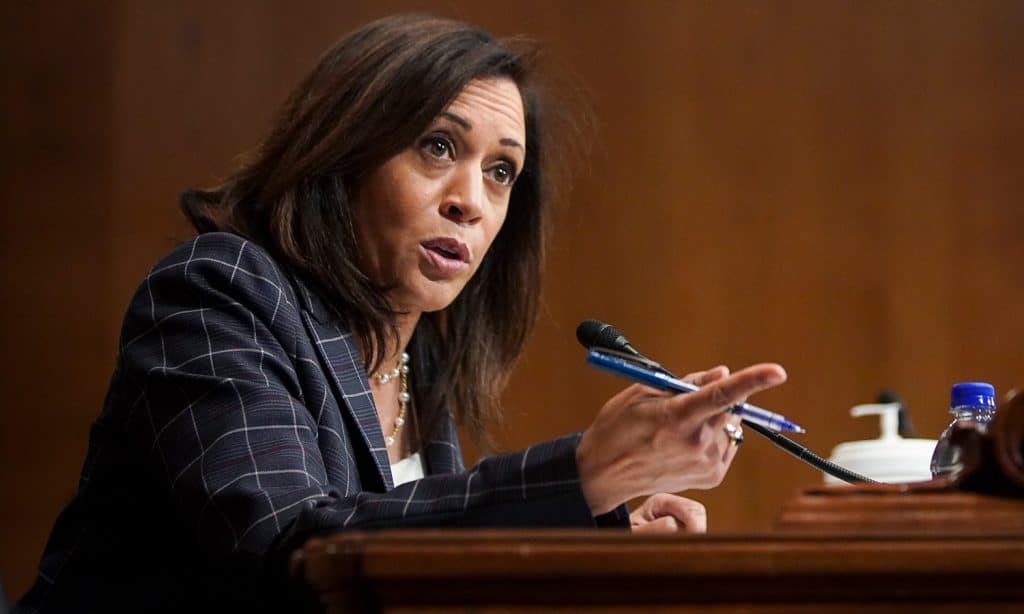
Step one is scheduled for Wednesday, December 2—an historic hearing on the Marijuana Opportunity Reinvestment and Expungement Act (the MORE Act, or H.R. 3884), originally introduced by now Vice President elect Kamala Harris and recommended for passage in the House by the Committee on the Judiciary.
Photo by FatCamera/Getty Images
It feels like full legalization—not just rescheduling but taking cannabis entirely off the Drug Enforcement Administration (DEA) schedule of substances where it has lived since the hippie-hating Nixon administration parked it there—is at hand.
A few discussions in the House on the MORE Act, which then gets voted on and pushed to and through the Senate, and voila: Open the floodgates because cannabis will join the agriculture mainstream as a just another cash crop, free and clear of all the hindrances that The Man has created to crush it.
It should be a slam dunk. But let’s take a deeper dive.
This article is not about another affirmation, another confirmation, another declaration of clarification that Joe Biden and Kamala Harris will get to work and fix this broken bit of 60-year-old stupid centered around growing and selling a plant that can get you thrown in prison in one state and make you a millionaire in the next state.
This article is a pick axe chipping away, mining down, revealing a blur of red flags throwing shadows of doubt on the light at the end of this particular tunnel leading to cannabis legalization, because full and complete cannabis legalization is nowhere close to being a done deal under this new administration.
The ifs and ands come with pretty large buts.
It begins with Joe Biden.
Biden’s record with cannabis and the war on drugs is messy, as outlined in a GOP memo in June, 2020. He was the sponsor of the National Drug Control Strategy Act of 1990, which, among other things, provides for asset forfeiture for drug offenses and the training of police using military tactics and equipment—both pillars of abuse within the war on drugs.
Biden’s pre-election plan called for the legalization of medical cannabis only, keeping cannabis on the DEA’s list of abused substances and dropping it to a Schedule II drug from its current listing as Schedule 1 drug—on par with heroin.
Biden is not exactly on the same page as his VP, who has her own bumpy background on cannabis.
First the good news: Kamala Harris is the Senate sponsor of the MORE Act in July, 2019 [co-sponsored by seven Democrats and no Republicans, with the House version to be discussed Wednesday sponsored by Jerry Nadler, D-NY].
Then, to position herself for her run as president, in May, 2018, she came out in favor of cannabis as a co-sponsor of the Marijuana Justice Act, later adding much of the language of that act into her MORE Act.
Will she be proactive for the legalization cause using her new power and influence? No word yet. Biden has demonstrated he can evolve his position on important social issues, like integrated school busing, so maybe there is some hope there.
Then there is the MORE Act itself. As proposed for discussion in the House, there are rules that need to be followed, deadlines to work through after it gets approved in the Senate..
For example, it gives the attorney general six months to decide when and how to remove cannabis from the DEA’s list of controlled substances after the MORE Act is passed—a key ruling of the Act.
Photo by FatCamera/Getty Images
Also, the creation of Cannabis Justice Office within the Office of Justice Programs, with a director appointed by the assistant attorney general, could take up to six months after passage of the bill. The director of the office will be charged with organizing and carrying out a far-reaching community reinvestment program with funding from the IRS. That will take time.
The Department of the Treasury, the Department of Justice, and the Small Business Administration all have a year to amend any rules, standard operating procedures, and other legal or policy guidance after the Act becomes law. That could create a nightmare for cannabis businesses just trying to get a foothold in the new cannabis environment.
With all that being said, there is another relevant, crucial deadline—the January 5, 2021 U.S. Senate runoff election in Georgia—that might just be the final break the cannabis industry is looking for.
If the Georgia voters send two Democrats to the Senate, then Democrats could tee up the MORE Act when it gets to the Senate and maybe, just maybe, get it passed.
The take-away here is that the industry is on a roll, a clear winner in the November elections not only in states that voted to legalize it, but because of a new Democratic administration focused on the sort of economic rebuilding assistance offered by the cannabis industry.
Many questions remain, but some uncertainty has dissolved.
The people have spoken, the U.S. is ready to go, and it’s time to pull the trigger on legalization. “The vote in the House will mark the first time that the House or the Senate has ever voted as a full chamber on legislation to end the federal cannabis prohibition since it went into effect following the passage of the Controlled Substances Act of 1970,” Blumenauer said in a statement on his website. “Congress must capitalize on this momentum and do our part to end the failed policy of prohibition that has resulted in a long and shameful period of selective enforcement against communities of color.”