Tuesday, June 9, 2026
Home Blog Page 962

Weed-Flavored Beer Getting South Florida Breweries In Trouble

Over the past couple months, marijuana-infused beer has become the hottest trend with South Florida breweries. This isn’t an uptick due to legalized medicinal marijuana either; brewers have been experimenting with cannabis terpene oil, which contains neither psychoactive THC or CBD, citing its flavorful aroma as an inspiration.

But that appears to be coming to an end. The Alcohol and Tobacco Tax and Trade Bureau sent cease-and-desist letters to multiple South Florida breweries ahead of 4/20 brewery parties centered around their weed-infused beers. As the Sun Sentinel reports, the letters block the breweries from selling any craft beer infused with cannabis terpenes oil that hasn’t received federal approval.

The beer companies have been told they “should stop production of any fermented beverages [using cannabis terpenes oil] until you have obtained the appropriate formula approval,” a TTB letter mailed to one of the breweries read.

Here’s the catch: the breweries aren’t technically using controlled substances, but still require a sign-off from the feds. Twisted Trunk Brewing even had an independent lab test their terpenes oil and it had “zero-point-zero percent” THC and CBD, says one of the brewery’s co-owners. Beer recipes containing cannabis terpenes oil are approved by the TTB on a “case-by-case” situation, with the Food and Drug Administration and the Drug Enforcement Administration sometimes making the final call.

“If you’ve used an ingredient, like [cannabis] terpenes oil, you would need to come to us for formula approval first, since that product isn’t recognized as a traditional beer ingredient,” Thomas Hogue, a TTB spokesman and director of the agency’s Office of Congressional and Public Affairs, told the Sun Sentinel. “We will not approve labels or formulas for products that contain a controlled substance.”

Two breweries canceled 4/20-themed events and others have halted production on the beers, reports the Miami New-Times. A couple breweries have submitted their beer formulas for federal approval.

Regardless, these brewers say they may have stumbled upon a brand-new innovation in the beer world. They say cannabis terpenes oil could be the ingredient they didn’t even know was missing.

“It’s kind of like the fifth Beatle,” one brewer said, in a reference to beer four primary ingredients of water, hops, grain, and yeast. “I was a naysayer in my mind, thinking it was going to taste too medicinal, or not smell like weed. But it’s potent. It’s aromatic. When we first sipped it, we were like, ‘Holy s—.’ ”

Sen. Chuck Schumer: It’s Time To End Marijuana Prohibition

In a shocking announcement of global and historic significance,  Sen. Chuck Schumer (D-NY), the Senate minority leader, said he will introduce a bill to decriminalize cannabis nationwide.

Schumer dropped the bombshell on Thursday in an exclusive interview with VICE News and followed up on Friday with an 11-tweet thread on Twitter which begins:

It’s official. Today, I am formally announcing my plan to decriminalize marijuana at the federal level. It’s time we allow states, once and for all, to have the power to decide what works best for them.

I have long believed that states should function as their own laboratories of democracy. My bill is a step in the right direction aimed at removing the barriers to state legalization efforts.

The out-of-the-blue declaration from a longtime drug warrior is just one more in series of pro-marijuana developments in recent weeks. The writing on the wall suggests cannabis prohibition may be coming to an end.

“The legislation is long overdue,” Schumer said in the VICE News interview. “I’ve seen too many people’s lives ruined because they had small amounts of marijuana and served time in jail much too long.

The complete interview will be televised Friday night at 7:30 on HBO’s “Vice News Tonight.”  

  1. Related Story: Research Deep Dive: Little-Known Health Effects Of Medical Marijuana

In a first-person column in Medium, Schumer wrote:

I am not only announcing my support for decriminalizing marijuana at the federal level. I am also announcing that in the comings weeks, I will be introducing legislation aimed at achieving this goal. This legislation will allow each state to ultimately decide how they will treat marijuana. In addition to freeing up the residents of each state to make the decisions on what’s best for them, the bill will make targeted investments which are necessary to protect public health and safety and ensure that members of all communities are able to participate in the new and thriving marijuana economy.

The news was met with jubilation among marijuana reform advocates. “With this announcement, Senator Schumer has effectively made it clear that a legislative priority for the Democratic Party is to end the federal prohibition of marijuana,” Justin Strekal, political director of NORML, told Marijuana Moment’s Tom Angell. “As Democratic Leader, it is his role to ensure that the caucus as a whole falls in line with this public policy position — a position that is held by more than 60 percent of Americans.”

Here is Friday morning’s Twitter thread:

It’s official. Today, I am formally announcing my plan to decriminalize marijuana at the federal level. It’s time we allow states, once and for all, to have the power to decide what works best for them.

I have long believed that states should function as their own laboratories of democracy. My bill is a step in the right direction aimed at removing the barriers to state legalization efforts.

So why have I changed my stance? Looking at the numbers helped. 2/3 of Americans believe marijuana should be legalized, meanwhile more than half of all drug arrests in the United States are marijuana arrests.

And under existing law, the federal government considers marijuana as dangerous as heroin and treats it less favorably than cocaine. That has to change.

In addition to decriminalization, my bill will invest critical resources into the THC research needed to prevent unintended effects on our youth and ensure highway safety.

It will also maintain federal authority to regulate interstate trafficking to ensure that marijuana from states that have legalized doesn’t pour into those that have not.

Now, I recognize that time after time when these sweeping changes occur, the little guys lose while the big guys continue to profit. We saw this with big tobacco and we could see it with marijuana as well.

That’s why this bill will inject real dollars into minority and women-owned businesses to ensure those disproportionately affected by marijuana criminalization can benefit from this new economy.

It’s clear that African Americans and Latinos have been disproportionately impacted; approximately 80% of people in federal prison and 60% in state prison for drug offenses are black or Latino.

This will not course correct the damage that’s been done, but it is a first step that can help to enable those historically harmed to have an opportunity to better compete in the industry as we make this change on the federal level.

Plain and simple: this is the right thing to do for America.

Let’s Talk About How Scotts Miracle-Gro Is Becoming A Major Player In The Cannabis Market

Scotts Miracle-Gro is quietly becoming one of the major players in the cannabis industry — and the 150-year-old multinational garden giant doubled down on its investment this week by purchasing a hydroponics company.

Scotts announced it will acquire Sunlight Supply Inc., the largest U.S. distributor of hydroponics products for $450 million, a deal the company predicts will more than double its sales to cannabis growers.

Three years ago, Scotts began gobbling up cannabis-related companies. In 2015, it spent $135 to buy two California-based businesses that sell fertilizers, soils and accessories to cannabis growers. In 2016, it forked over another $120 million on a Dutch lighting and hydroponics equipment company.

“We are creating a game-changing moment for Scotts Miracle-Gro, for Hawthorne, the hydroponic products industry and the users of our products,” said Jim Hagedorn, CEO of Scotts Miracle-Gro. “For a lot of conventional companies, I don’t think they’d want to take the risk,” added Hagedorn. “I mean I’ve talked to some other friends and CEOs who basically shake their head.”

Sunlight Supply will be part of Scotts Miracle-Gro’s wholly-owned subsidiary Hawthorne Gardening, which had sales of $290 million last year. Hawthorne now owns some of the biggest players in the hydroponic space, including Gavita, Botanicare, Can-Filters, and General Hydroponics. Sunlight Supply is America’s largest distributor of hydroponic products. In 2017, Sunlight opened a 350,000-square foot distribution center in Vancouver, Washington, and has eight other distribution facilities across North America.

“Combining Hawthorne’s industry-leading product portfolio with Sunlight’s unparalleled distribution capabilities and complementary portfolio will benefit consumers and all stakeholders in the hydroponic marketplace,” said Hagedorn. “It reinforces our confidence in the future of this industry and takes Hawthorne to a new level as a business with unique competitive advantages.”

Marijuana-Based Epilepsy Drug Is Close To FDA Approval

A marijuana-based drug received a unanimous thumbs-up from a panel of experts organized by the Food and Drug Administration. The panel voted 13-0 that the FDA should approve Epidiolex—the drug that utilizes pharmaceutical-grade CBD oil and treats rare forms of epilepsy from London-based GW Pharmaceutical.

It should be noted that the FDA is in no way bound by its expert advisory panels, though they usually follow their official opinions. The FDA is expected to make a decision on formal approval by June 27.

“In general, the risks associated with CBD treatment appear acceptable, particularly given the findings of clinical (effectiveness) in Lennox-Gastaut syndrome and Dravet syndrome, which are serious, debilitating and life-threatening disorders,” the authors noted.

Via Forbes:

Epidiolex focuses on treating patients over the age of 2 with one of two particularly rare and serious forms of epilepsy: Lennox-Gastaut syndrome and Dravet syndrome. Both syndromes have onset in early childhood and are characterized by multiple seizure types that are difficult to control under existing drugs on the market. There are currently 6 drugs approved to treat patients with Lennox-Gastaut syndrome specifically, and there none approved for Dravet syndrome. About 30,000 people in the U.S. are estimated to have Lennox-Gastaut syndrome, according to the LGS Foundation.

A study involving children with Dravet’s syndrome saw five percent becoming seizure free while taking Epidiolex. None did so taking the placebo. Meanwhile patients experienced a significant reduction in convulsive procedures (39 percent) when compared to placebo. Another study demonstrated that LGS patients saw a median reduction in monthly seizure of up to 42 percent when using Epidiolex compared to a 17 percent drop for placebo.

This would be the first drug from GW Pharma to be approved in the U.S. Another cannabidiol-based product developed by the company called Sativex treats multiple sclerosis and has regulatory approval in 30 countries outside the U.S.

Medical Marijuana Could Be Available To Louisiana Patients By September

Forty years after lawmakers approved marijuana for medical use, Louisiana patients could finally be getting their hands on the good stuff as early as September.

Earlier this week, officials from Louisiana State University and Southern University presented their plan to the joint House and Senate agriculture committee. According to Gambit Weekly, LSU will grow plants in an undisclosed 27,000 square foot building in Baton Rouge and Las Vegas-based GB Sciences will build a 5,000 square foot lab for research and production following the plants’ 8-10 week growing cycle.

Also this week, another hurdle was cleared: the Louisiana Board of Pharmacy finished handing out licenses to nine medical marijuana pharmacies throughout the state (a tenth will come at a later date).

Reports Gambit Weekly:

These moves follow 2015 and 2016 legislation that tasked several statewide agencies with coming up with the rules for medical marijuana in Louisiana. Those laws followed a dead-end 1978 medical marijuana law that sat dormant on the books without any legal infrastructure to back it up.

The goal is to produce a “plant that’s very low in THC and very high in CBD,” Bill Richardson, LSU Vice President for Agriculture and Dean of the College of Agriculture, told Gambit Weekly.

As to when the product will be available, that’s likely to happen in September, around the same time pharmacies will open.

But the plan doesn’t come without controversy. Some committee members worry about the possibility of legal conflicts with federal authorities, including how the state’s program is funded, and whether it conflicts with federal rules against marijuana.

Says Richardson, “I feel really good about where we are relative to the controversy between the state and feds. The complication for us is we’re the only university in the country that’s involved with this, with our counterparts at Southern.”

In 2016, Louisiana passed a law allowing the use of medical marijuana to treat certain conditions, including HIV/AIDS, Crohn’s disease, muscular dystrophy and epilepsy. And earlier this month, as The Fresh Toast reported, a House committee voted to add four more qualifying conditions for patients: chronic pain, PTSD, glaucoma and muscle spasms.

Proof Marijuana Is More Than 100 Times Safer Than Alcohol

There are more than 2,000 alcohol poisoning deaths each year in the U.S. — that’s an average of six a day. Marijuana, on the other hand, is not considered lethal at any humanly reasonable dose.

If alcohol were under the same scrutiny for its health impact that marijuana continues to be, bars would not be allowed to exist. After all, marijuana has been shown to be more than 100 times safer than alcohol. Is it any wonder that many Americans are reassessing their relationship with alcohol and are now choosing to smoke some dank buds instead of opening a Bud Light? Science has delivered proof marijuan is more than 100 times safer than alcohol.

It’s hard to second guess the logic. What we know about alcohol from impact studies shows it to be a public health crisis that continues year after year. Excessive alcohol use has been tied to heart disease, fatty liver, cirrhosis, depression, dementia and other life altering conditions.

As we know, it is far from the benign party enhancer that commercials sell:

  • Alcohol is the most commonly used addictive drug in the United States.
  • 33 million Americans struggle with alcohol use disorder. 
  • The Centers for Disease Control estimate that approximately 88,000 Americans die as a result of excessive alcohol use each year 
  • 10,265 people died in alcohol-impaired driving accidents In 2015 alone. That is 1/3 of all traffic deaths that year.

There are approximately 2,200 alcohol poisoning deaths each year in the U.S. That is an average of six a day. Marijuana enthusiasts in the know will be quick to remind you that cannabis is not considered lethal at any humanly reasonable dose.

RELATED: Can Medical Marijuana Help Alcoholics Stop Drinking For Good?

In addition to impact to individuals, binge drinking has real economic impact as well. In 2010 alone alcohol use was estimated to cost the US nearly $250 billion.

In both American and Canadian studies, about 40 percent of patients have shown to replace alcohol with marijuana use when given the option. The studies seem to have been foreshadowing of public choices in the marketplace.

The Cannabiz Consumer Group has shown that legal marijuana has stripped nearly 7 percent from beer sales in markets where both legal options are available. They predicted that the beer industry alone would stand to lose $2 billion in annual sales if legal marijuana were available in all 50 states.

RELATED: The Key To Treating Alcoholism With Medical Marijuana

Although millennials were the segment of the public expected to make the switch to cannabis, seniors have also been shown to be a quickly growing population. Considering the therapeutic qualities of the herb for ailments often associated with aging, it should be no surprise that many older consumers appreciate the value in this healthier intoxicant.

Consumers of all ages may appreciate and benefit medicinal qualities of cannabis as a remedy for inflammation, chronic and neuropathic pain, GI issues as well as insomnia and a host of others.

Large numbers of patients are ahead of the curve and have substituted their pharma meds for marijuana. Medicaid records have shown a substantial decrease in pharmaceutical reimbursements in states that have medical marijuana available.

The question seems to be not whether people will substitute alcohol use with marijuana but how much they will do it. Though marijuana is not without risk, it’s tough to argue against an intoxicant that is exponentially safer than alcohol and not known to produce hangovers. That is simple math for some. In time we’ll see just how many.

How PAX Plans To Truly Become The ‘Apple Of Marijuana’

If you talk to the folks of PAX Lab, the company behind the cannabis industry’s premiere loose-leaf vaporizer, don’t expect a conversation about products. They’re more than willing to discuss their line of vaporizers of course, but what they’re interested in as a brand is something more abstract. As the cannabis industry expands into a more mainstream platform, PAX is changing how it approaches its consumers, and becoming something more “mission-driven.”

In short, their tagline of being “the Apple of cannabis” will soon mean something more literal.

“We derive a great amount of inspiration from Apple and other brands that have built products where it’s fairly user-centric,” PAX CEO Bharat Vasan says. “We feel an obligation and a desire to earn folks’ trust every day on the quality of the product, the quality of the experience, keeping their best interests in heart.”

In a page stolen from the Steve Jobs’ playbook, PAX Vice-President & General Manager of PAX Era JJ O’Brien says, “It’s about storytelling. It’s about finding ways to tell new stories.”

The shift in direction from the brand’s origins also marks an overall change in connecting with their consumers. Instead of being recognized as a company that produces great products, Vasan wants PAX to focus on cannabis education and overall making marijuana “a little more approachable, a little less scary.”

When Vasan talks about the company in this way, the Apple comparisons become obvious. For many, the iPod was their first mp3 player, the iPhone was their first “smartphone,” and the iPad the first tablet they ever owned. More than any technology company, Apple focused on making something possibly niche into a palatable and pleasant user experience.

PAX only made sleekly designed and packaged products like Apple at first. The first PAX vaporizers famously didn’t come with any directions. Hidden features abounded inside the device, but you could only discover them through either word of mouth or trial and error. But starting with the PAX 3 and PAX Era—which The Cannabist called “the vaporizer of the future for concentrate lovers”—users can access an app that can customize temperature and flavor, as well as provide security for their vaporizers.

“There’s all these things you can do that humanize the same core product,” Vasan says. “Whereas the first buyers of the iPhone were probably hardcore cutting-edge technology geeks, I think we see the same evolution where PAX has done really well and has street cred with folks that really use the product and know the space. But it also has a lot of credibility because we focus on things like design simplicity, ease of use, security that makes it easier for new people coming in.”

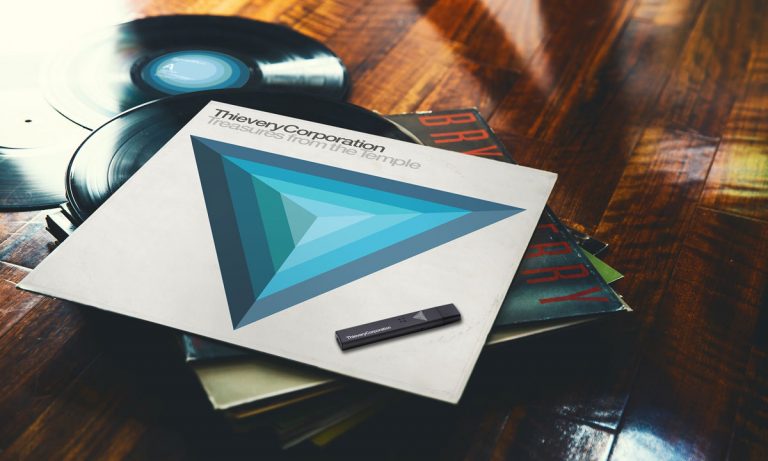
That attitude also explains their partnership with Blue River and Thievery Corporation for 4/20. “Lebanese Blonde” was Thievery Corp’s breakout single, memorably featured in the 2004 Zach Braff film Garden State. You may not immediately recognize it while listening, but it’s a song about smoking a strain of Lebanese hashish. Though other weed-friendly celebrities haven’t been shy about cashing out and slapping their name on any product, Thievery Corp. sat on the possible tie-in.

Rob Garza of Thievery Corporation called it an “easy choice” to work with PAX and Blue River, whose proprietary technology allows for a full-plant extract on cannabis concentrates. Together the partners have produced a Thievery Corporation limited edition PAX Era and a “Lebanese Blonde” cannabis oil PAX pod.

Photos courtesy of PAX

Echoing how craft beer made beer culture more approachable, this collaboration is another means of mainstreaming marijuana to a more casual consumer, one who doesn’t care for stoner culture and Rastafarian beanies and Purple Dank.

“We aren’t out there touting Rasta flags and speaking to the cannabis culture of years ago, we’re really pushing forward what it means to be a cannabis consumer in this dawn of the legal cannabis age,” O’Brien says of the collaboration. “That’s really the kind of ethos we’ve taken with this and we’ll continue take going forward.”

With the ongoing expansion of the cannabis industry, the space exists for a cannabis brand to introduce and develop a genuine relationship with new consumers. To truly become the “Apple of marijuana,” in other words. One thing’s for sure, though: PAX wants to assume that mantle moving forward.

“These are incredibly personal products to people and we don’t take that lightly,” Vasan says. “We’re not in the business of selling them lots of products. The relationship is about trust fundamentally, so we take that seriously.”

How CBD Helped Control This Teenager’s ADHD And Tourette’s Syndrome

Roxanne Benton has a store that sells tools and supplies to people in the aromatherapy industry. A few years ago when her teenage son Bevan was diagnosed with ADHD and Tourette’s, she asked a dear friend what she would do in the same situation, and it just so happened she had some helpful essential oils on hand.

Fast forward a few years, Bevan’s Tourette’s kicked in with a vengeance. The social pecking order of junior high is tough enough. Throw in ADHD and Tourette’s and you have one unhappy, picked-on kid.

Bevan’s doctor had given him Clonadine, a blood pressure medication, to “chill him out a bit.” It didn’t do anything for his anxiety or help him sleep. And it certainly didn’t do anything for his tics or “glitches,” as he and his mom called them. From the sidelines, Roxanne could still see him “glitching” while he was on the Lacrosse field.

“Seeing your son twitch uncontrollably with such force — tantamount to whiplash — is horrifying. I would do anything for him, take any pain I could for him. That’s what moms do.”

Since Roxanne had been using essential oils in her health and wellness routines as well as her business for over six years at this point, it eventually led her to meeting John Taylor. He informed her about a CBD project he was working on in Kentucky. This project utilized hemp that is grown under a Federal Pilot Program. It is flavored with natural CO2 extracts, is pesticide-free and is federally legal throughout the U.S., as per the Farm Bill of 2014.

Naturally, Roxanne trusted her friend John and considered the idea of allowing Bevan to try some CBD oil.

“I was so excited to get my first bottle from John. I gave some to Bevan, and took some myself. I don’t know if he slept so well because he was just tired and could finally get to REM sleep, or what – but I was grateful that he could finally sleep so soundly. After two days of taking CBD, I knew that while we still had lots of work to do, I had my boy back – for the first time in a very long time,” she said with relief. Bevan was calmer and more attentive. He was still “glitching,” but not nearly as drastically.

Incidentally, Bevan is Celtic for “Youthful Warrior.” Fairly soon after he implemented CBD in his diet, this ordinary mom’s extraordinary kid rediscovered himself, while Roxanne discovered the potential to heal, in the cannabis space.

After seeing him a few times, Bevan’s therapist noticed that his demeanor had changed. He was paying more attention during his sessions, and he seemed to be more “present.”

Roxanne hadn’t mentioned to her son’s therapist that he was taking CBD until he remarked to her that her son was behaving differently.

“I told him about the whole story about my friend, the manufacturer of CBD in Kentucky and how we gave it to Bevan. His therapist said to ‘keep it up!’ ” she said.

Roxanne was so happy with Bevan’s progress — He is now 15 and still plays Lacrosse — that she began to spread the news to her aromatherapy followers.

“I already had a small audience, and they were thirsty for knowledge about how this misunderstood plant, this natural product, could help so many with widely varied issues. So, I did what I do best — dug into research and started offering my own brand of Patriot Botanicals CBD to my customers.”

These days Roxanne is helping people realize that CBD is neither a snake oil nor a cure-all. “As I understand it,” she says, “CBD mainly helps bring our bodies back to homeostasis, so our bodies can work more efficiently.”

New NASA Animation Is Literally Over The Moon

NASA has released a video showing how incredible the moon looks on 4K resolution. The footage was captured by NASA’s Lunar Reconnaissance Orbiter, a spacecraft that’s tasked with recording the different sides of the moon and capturing the satellite in all its glory.

This footage was recorded in 2011, when the spacecraft was launched on a mission called the Tour of the Moon, where the camera visits a lot of interesting sites in order to show the different features of lunar terrain. The footage was recently released with a voice over and 4K resolution, so people would make popcorn, watch this with their friends and scream every five seconds about how trippy and weird space is.

The tour shows the viewer the different sides of the moon, including the parts that are facing the Earth, which can be seen through a telescope, and the areas that can only be seen from space. It also includes digital elevation models, which show how the terrain is made up.

The guy who narrates the video explains the different parts of the moon and informs you on interesting things, such as a part of the moon that features some of the coldest weather ever reported. The best part of the video is when they show some of the Apollo landing sites, just in case you want to watch the Tom Hanks movie after you’re done and have a space double feature.

Pepper Is The Coolest Humanoid Robot Even If It’s A Little Dumb

Pepper is a robot designed by SoftBank Robotics America with the purpose of making life easier and assisting humans on the job. Pepper is a greeter, one of the first robots of its kind. It helps guests out in hotels, hospitals, malls and airports, saving them time and helping them avoid human interaction for those moments when people don’t feel like engaging in conversations.

WIRED interviewed SoftBank Robotics, which explained how Pepper works. The robot can only handle basic conversations, mostly based on yes or no answers. It can also dance and propose games. Pepper has trouble when it comes to more complex forms of conversations, ones that involve social cues or facial interactions. Because of this, the robot has a touchscreen, which you can activate when you want to find something fast or don’t feel like asking.

Pepper works very similarly to Alexa and the Google Home. The main difference between these different forms of artificial intelligence (A.I.) is the fact that Pepper has a body and, for us humans, that’s a big deal. Even though you can ask any A.I. questions, there’s something about interacting with a device that has a physical and relatable presence.

A.I. of this sort marks a new type of interaction for humans. Interacting with Pepper is not like interacting with a person or a pet; it’s something new altogether that has the possibility of changing and growing.

Don't Miss Your Weekly Dose of The Fresh Toast.

Stay informed with exclusive news briefs delivered directly to your inbox every Friday.

We respect your privacy. Unsubscribe anytime.