

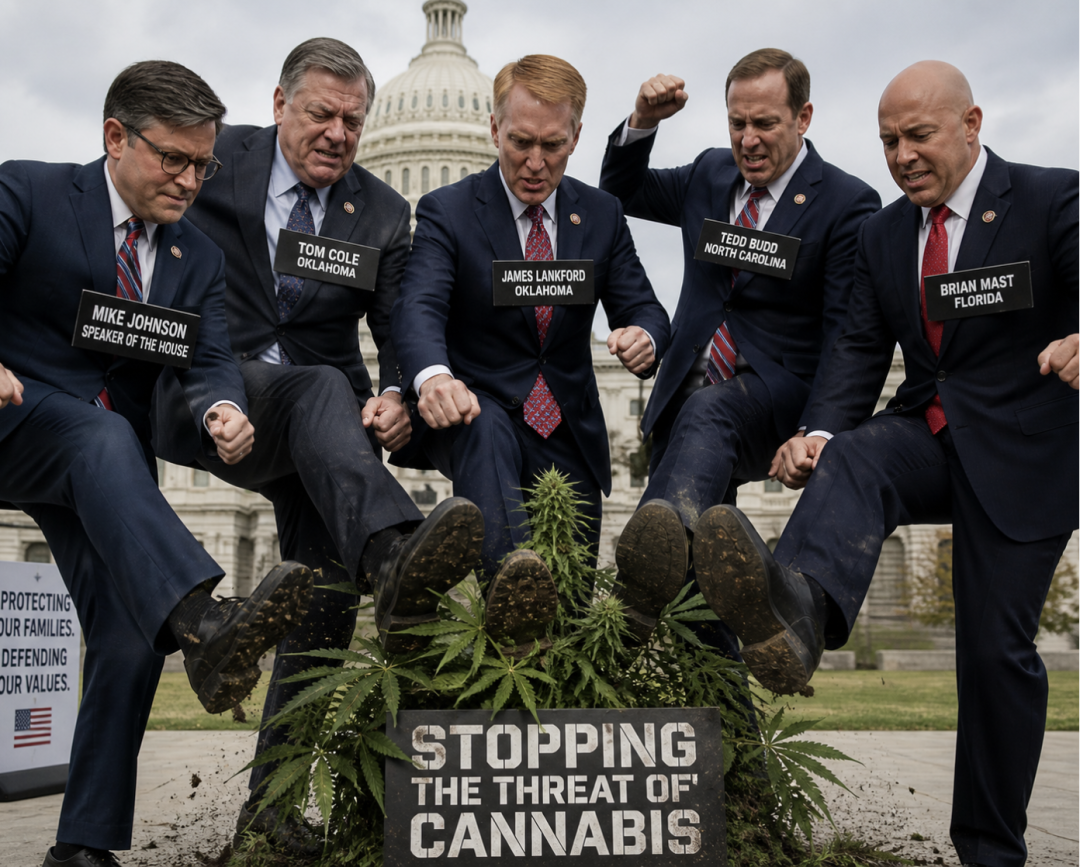
A group of rogue lawmakers are working to block the president’s cannabis rescheduling plan through funding restrictions.
A political battle over marijuana reform is intensifying in Washington as a group of lawmakers moves to block the president’s effort to reschedule marijuana under federal law. As Mitch McConnell fades in power, a new group of has arisen, here are the congressman trying to squash cannabis. Currently the center of the dispute is the House Appropriations Subcommittee on Commerce, Justice, Science, and Related Agencies, which on Thursday approved a funding bill containing language that would prevent federal officials from moving forward with cannabis rescheduling. Going directly against the president.
RELATED: What Is The Cannabis HHC
The provision would prohibit the U.S. Department of Justice from using taxpayer funds to implement or advance the rescheduling process. If ultimately enacted, it could effectively halt the federal government’s push to move marijuana from Schedule I to Schedule III under the Controlled Substances Act—despite ongoing administrative action and hearings aimed at loosening restrictions.
The vote in the subcommittee reportedly followed party lines, reflecting a broader divide in Congress over cannabis policy. While public support for legalization continues to grow nationwide, a bloc of lawmakers—primarily Republicans—remains opposed to federal reform efforts, often citing concerns about public health, youth access, and law enforcement challenges.
Among the key political figures connected to efforts to block cannabis rescheduling are:
- Mike Johnson, Speaker of the House, the successor to Mitch McConnell’s leadership in blocking cannabis
- Tom Cole, who chairs the House Appropriations Committee and has overseen spending bills including anti-rescheduling provisions.
- James Lankford, who has introduced amendments to block the Department of Justice from reclassifying marijuana.
- Ted Budd, a vocal opponent of rescheduling who has argued the policy could harm public health and safety.
- Brian Mast, who has publicly weighed in on the issue and is part of the broader Republican caucus shaping the debate.
These lawmakers represent a continuation of a long-standing faction in Congress has resisted cannabis reform for decades. Historically, opposition dates back to the passage of the Controlled Substances Act of 1970, when marijuana was classified alongside the most restrictive drugs. During the 1980s and 1990s, many members of Congress supported aggressive anti-drug policies reinforcing prohibition and strict penalties.
In recent years, however, the landscape has shifted. A majority of U.S. states now allow medical marijuana, and public opinion polls consistently show strong support for legalization. Despite this, congressional opposition has increasingly focused on using budgetary tools—such as appropriations riders—to slow or block reform efforts.
This strategy has proven effective before. Similar provisions were included in earlier spending bills, including Fiscal Year 2026 legislation, demonstrating a pattern of using federal funding restrictions to influence drug policy without directly changing the law.
RELATED: The Importance of Medical Marijuana
This strategy has proven effective before. Similar provisions were included in earlier spending bills, including Fiscal Year 2026 legislation, demonstrating a pattern of using federal funding restrictions to influence drug policy without directly changing the law.
Supporters of rescheduling argue moving cannabis to Schedule III would expand research opportunities, improve access to medical marijuana, and reduce barriers for businesses operating legally under state law. Opponents, meanwhile, maintain more scientific study is needed and warn of unintended consequences.
As the appropriations process moves forward, the fate of cannabis rescheduling remains uncertain. What is clear is Congress continues to play a pivotal role—not just through legislation, but through control of federal funding—in shaping the future of cannabis policy in the United States.
