Sunday, December 28, 2025
Home Blog Page 213

How Did Delta-8 THC Become Legal All Across America?

Irrespective of your feelings about delta-8 THC, this is a major turnaround in the history of marijuana legalization.

This article originally appeared on Cannabis.net and has been reposted with permission.

On May 19, a federal court in California ruled that the legalization of hemp at the federal level via the 2018 Farm Bill, eliminated restrictions on several cannabinoids as well as delta-8 THC.

According to reports from San Francisco Chronicles, the Ninth U.S. Circuit Court of Appeals determined that substances containing delta-8 THC are legal. This is because the federal statute defines hemp as any part of the marijuana plant including extracts, cannabinoids, and all derivatives that contain less than 0.3% by weight of delta-9 THC. The court, during the ruling, affirmed that the Constitution is silent about delta-8 THC

marijuana legalization
Photo by Olena Ruban/Getty Images

RELATED: Federal Court Rules Hemp-Derived Delta-8 THC Is Lawful

Delta-9 THC, which is often called THC, is the most prominent psychoactive cannabinoid in cannabis and stays federally illegal. It is categorized as a Schedule I controlled substance together with heroin, peyote, and methaqualone. In comparison, Delta-8 THC generally occurs in minute quantities in the marijuana plant.

However, modern production and cultivation techniques allow for minor cannabinoids to be refined and concentrated into consumer products. With that, delta-8 THC substances have grown in popularity over the years, particularly in cannabis legalized states.

Similar to delta-9 THC, delta-8 THC also has psychoactive properties. However, users claim that the experience is typically more repressed with mild side effects compared to delta-9 THC. Although some cannabis advocates and several health professionals have affirmed that little is still known about the possible risks and health impacts of delta-8 THC.

For its part, the Ninth Circuit panel remarked that while delta-8 THC has intoxicating and psychoactive properties, it does not fall within hemp’s definition of federal law, hence it is legal.

According to one of the judges in the three-judge panel, Judge D. Michael Fisher, wrote that regardless of the decision to legalize delta-8 THC, the Court won’t alter its judgment for Congress. All three judges that gave the ruling were appointed by Republican presidents. According to Fisher, if a loophole was inadvertently created by lawmakers who didn’t plan to legalize delta-8 THC, then it is congress’ responsibility to fix such a mistake.

The Controversy

The Ninth Circuit judgment originates from a controversy over apparent copyright and trademark violation that hinged on the legality of delta-8 THC. The controversy kicked off when AK Futures, a company that produces vaping products and e-cigarettes, accused Boyd Street Distro of producing sham versions of its products which contain delta-8 THC.

According to data on appeal, it was proven that delta-8 THC products produced by AK Futures are lawful under the Farm Act and hence may get trademark security. On the other hand, Boyd Street claimed the products in question were bought from an individual who claims to be AK Futures’ authorized dealer. AK Futures then claimed its full inventory for that same product had been sold out and won’t be selling the brand shortly.

According to the San Francisco Chronicle, Boyd Street’s lawyer, Darrel Menthe, argued that no evidence that Congress had plans to legalize delta-8 THC was brought forward. If substances that contain cannabinoids are considered legal, then state and federal governments will probably regulate cannabis products to make use of them safely and not advertised to children.

Darrell Menthe further added that Boyd Street has no primary plans to appeal the decision of the Court.

The director of NORML California, Dale Gieringer, during an interview with the Chronicle, affirmed that it would be more ideal from a policy point of view to just legalize delta-9 THC. He believes that since extensive studies and research has been carried out on the cannabinoid for decades, delta-9 THC is more understood than delta-8 THC.

RELATED: Delta-8 THC Is Suffering From Mislabeling Predicament — Misnomer Or Mismanagement?

Photo by RODNAE Productions via Pexels

Aftermath of the Court Ruling

With the 2018 Farm bill enacted into law, delta-8 THC and several minor cannabinoids are now in a kind of legal grey area. While a lot of businesses in the cannabis industry argue that the products are legal, a lot of legislators in many states believe otherwise.

Now, the controversy has bubbled up reaching the federal level. To this end, the Food and Drug Administration (FDA), earlier this month, published its first set of warning letters. The letters were issued to cannabis firms as regards the alleged illegal sale of substances that contains delta-8 THC.

Before the warning letters, the FDA had initially published a notice to caution consumers of such products. This approach is similar to how the FDA sent warning letters to several companies over unlicensed advertisements of CBD.

At the moment, the FDA regulations do not allow for the advertisement of cannabinoids in the food supply. However, cannabis advocates and lawmakers have been pressuring the agency to modify its laws to permit the marketing of CBD since hemp has been legalized at the federal level.

As things stand, both parties now have congressional lawmakers pushing the FDA to create new regulations on CBD. Dr. Robert M. Cliff, the FDA Commissioner, during a hearing at the U.S House committee, affirmed that he will be needing a lot of support from Congress to make such development possible.

According to Dr. Robert M. Cliff, the present councils on the food side of the drug side will not be willing to provide what is needed to achieve such a goal. Meanwhile, the Drug Enforcement Administration, since late last year, has signaled that delta-8 THC is legal under the law.

In the same last year, the Texas state government also declared that delta-8 was illegal. This was a development many oppositions challenged in court achieving a pause on the proposed ban by state enforcement.

RELATED: What It’s Like To Get High On Delta-8 THC Compared To Regular THC

marijuana legalization
Photo by Darren415/Getty Images

Conclusion

The controversy between AK Futures and Boyd Street gave enough clarity regarding the legality of e-cigarettes and delta-8 THC products under federal statute. It proves that federal courts are not paying close attention to the loopholes in psychoactive hemp derivatives that were not found in the Farm Bill of 2018.

However, irrespective of your feelings about delta-8 THC, this is a major turnaround in the history of marijuana legalization.

This article originally appeared on Cannabis.net and has been reposted with permission.

Social Isolation Is Associated With This Condition

0

A new study found links between social isolation and a common condition that affects people over the age of 65.

Dementia is a condition that affects over 55 million people around the world, becoming a greater risk as people grow older. Now, new research has found a link between social isolation and dementia, with the condition changing brain structures in the brain associated with memories.

The study, published in the journal Neurology, was conducted by researchers from the University of Warwick, the University of Cambridge and Fudan University. They found that people who were isolated had lower gray matter volume in areas of the brain linked with memory and learning.

Photo by rawpixel.com

RELATED: This Behavior Can Be An Early Sign Of Dementia

Among the more than 460,000 participants they studied (mean age baseline 57 years), social isolation was correlated to a 26% increased risk of dementia 12 years later.

Professor Edmund Rolls, who works at the University of Warwick, explained that social isolation doesn’t necessarily equate to loneliness. “There is a difference between social isolation, which is an objective state of low social connections, and loneliness, which is subjectively perceived social isolation.”

While loneliness was associated with later dementia, once these results were adjusted for depression, they were irrelevant.

Researchers spoke about the importance of maintaining social connections, especially once people are older and at a higher risk of developing dementia. “We highlight the importance of an environmental method of reducing the risk of dementia in older adults through ensuring that they are not socially isolated. During any future pandemic lockdowns, it is important that individuals, especially older adults, do not experience social isolation,” said co-author Jianfeng Feng, PhD.

RELATED: Watching This Much TV A Week Could Increase The Risk Of Dementia

Dementia is a condition that is more common for people over the age of 65. While the symptoms can be mitigated with medications and close care, it’s a condition that’s irreversible, making it important for people to keep an eye on possible warning signs. The earlier the condition is spotted, the better odds there are for a favorable prognosis.

Why Chuck Schumer Might Act On Cannabis Banking Sooner Rather Than Later

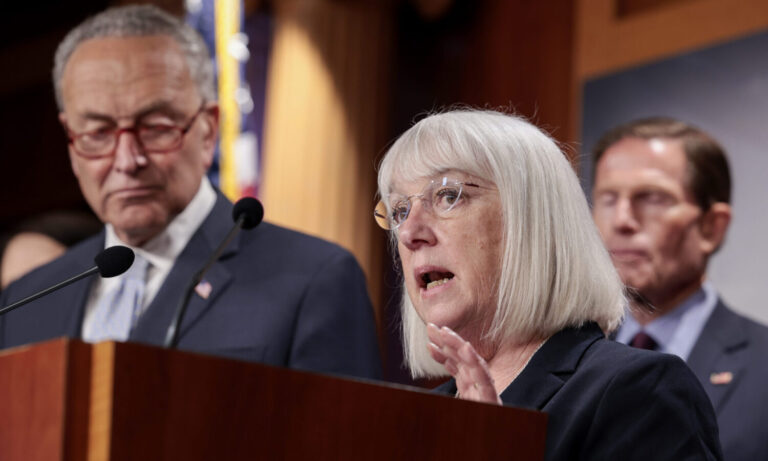
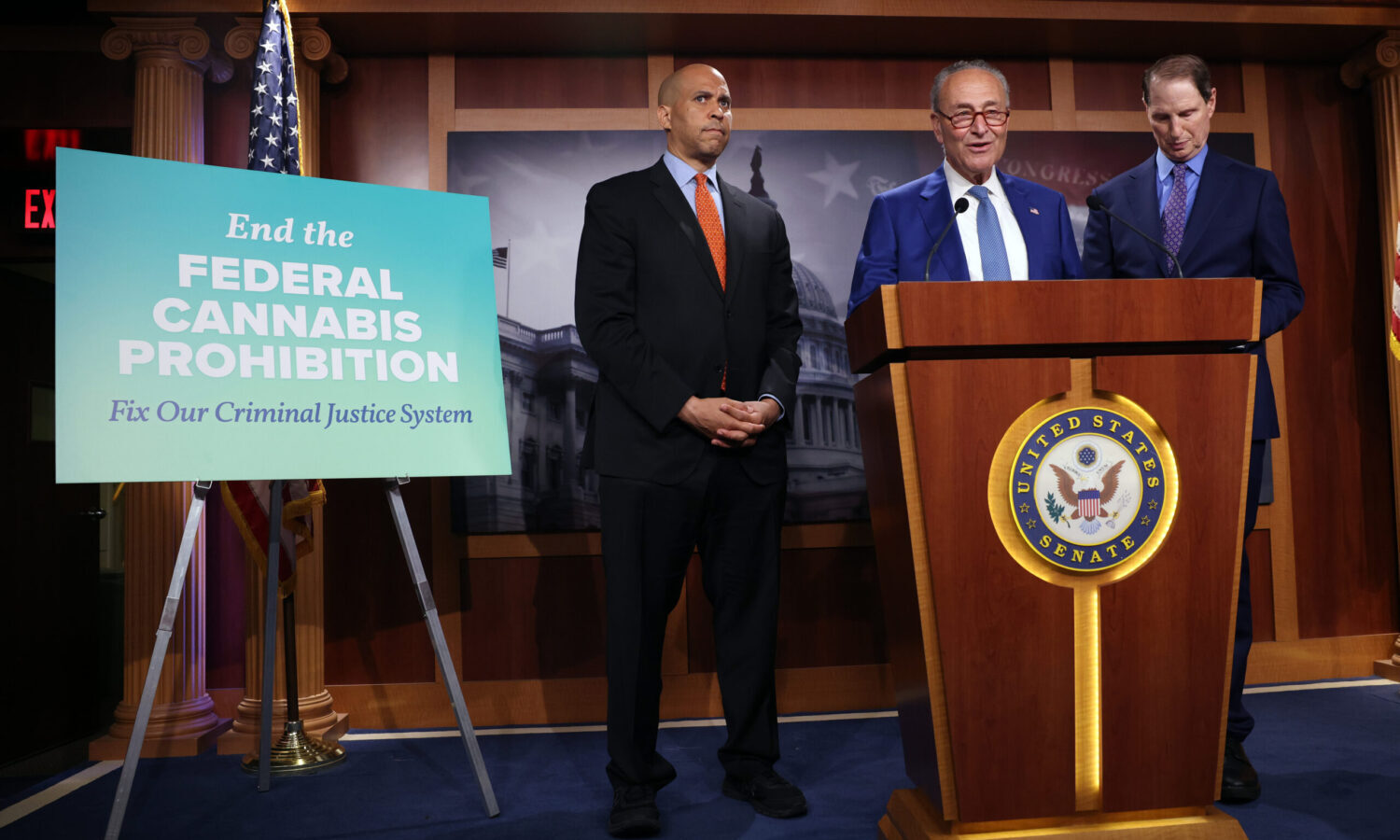
So far, Schumer’s stance has been that marijuana legalization with social equity components should be approved before the marijuana banking bill.

By Jelena Martinovic

The Senate has been under pressure from all sides recently to pass the SAFE Banking Act that would “help cannabis-related businesses, support innovation, create jobs, and strengthen public safety in our communities.”

Just recently, about a quarter of voting members of the House of Representatives urged congressional leaders to enact marijuana banking provisions into law as part of the large-scale manufacturing bill — America COMPETES Act.

Chuck Schumer’s Senate Balancing Act Could Impact Marijuana Reform
Photo by Sarah Silbiger/Getty Images

RELATED: Chuck Schumer’s Cannabis Legalization Bill: Back To The Drawing Board Until August

On the other hand, Senate Majority Leader Sen. Chuck Schumer (D-N.Y.) reaffirmed the filing postponement of a comprehensive marijuana bill to end prohibition, the Cannabis Administration and Opportunity Act (CAOA), from April to sometime before the August recess. So far, his stance has been that marijuana legalization with social equity components should be approved before the marijuana banking bill.

However, it seems that sentiment might be shifting. Schumer met earlier this week with GOP House Rep. Dave Joyce (R-OH) to discuss possible bipartisan cannabis reform steps that can be taken ahead of the finalization of a comprehensive legalization bill, reported Marijuana Moment.

A preliminary conversation  took place at an International Cannabis Bar Association conference on Thursday, as first tweeted by Politico’s Natalie Fertig.

Among other cannabis reform proposals, Schumer and Joyce discussed combining two already existing bipartisan bills — the Secure and Fair Enforcement (SAFE) Banking Act, from Rep. Ed Perlmutter (D-CO), and the Harnessing Opportunities by Pursuing Expungement (HOPE) Act. The HOPE Act, sponsored by Joyce and Alexandria Ocasio-Cortez (D-NY), would help states expunge criminal records for people with convictions for non-violent cannabis offenses by setting up a State Expungement Opportunity Grant Program.

RELATED: Senate Under Pressure From All Sides To Pass Cannabis SAFE Banking Act — Will It Happen?

“The conversation between Leader Schumer and Congressman Joyce was part of an ongoing, broader discussion between both parties and chambers to determine what reform can pass this Congress,” a Joyce senior staffer told Marijuana Moment. “It is evidence of the sincere efforts by both the leader and the congressman to find common ground for substantial, bipartisan progress on this issue. The congressman remains hopeful that an agreement can be made and progress can be achieved.”

marijuana banking
Photo by eldadcarin/Getty Images

Is There A Compromise On The Horizon?

While Joyce’s office stressed that there’s no deal on the table yet, Cantor Fitzgerald’s Pablo Zuanic said the meeting signals that Schumer “may be open to a reasonable and realistic compromise in passing SAFE…if other social equity policies can be added.”

The analyst also noted that in the scenario where Schumer doesn’t introduce his own comprehensive legalization bill before the recess, he “may be amenable to some form of compromise.”

Zuanic said that the move should stimulate multi-state operators (MSO) in the U.S. “Given where US cannabis stocks are trading (two-year lows), from a purely trading perspective this should spur the group,” he said. “We remain buyers of key US MSOs with the caveat that even if nothing happens this year, they should still be attractive long-term investments.”

So far, the SAFE Banking Act has managed to pass the U.S. House six times in the last three years.

This article originally appeared on Benzinga and has been reposted with permission.

Why Does Cannabis Dominate Drug Seizures Along US Border?

Between 2016-2020, half of all marijuana seizures included “personal use quantity of marijuana and no other drugs.”

By Jelena Martinovic

Three-quarters of U.S. Border Patrol drug seizures were exclusively for marijuana, according to a new report from the Government Accountability Office (GAO) published in early June.

The analysis of Border Patrol data, from 2016 through 2020, showed that officers pulled in roughly 35,700 “potentially removable people in about 17,500 events at checkpoints.”

marijuana arrest
Photo by FatCamera/Getty Images

RELATED: Marijuana Trafficking Is Changing At US-Mexico Border — Here’s How

“GAO found that most drug seizure events involved only U.S. citizens (91%), of which 75% involved the seizure of marijuana and no other drugs,” the report says.

Interestingly, half of all marijuana seizures (8,098 of 16,315) included “personal use quantity of marijuana and no other drugs.”

In the meantime, the analysis also showed inconsistency in the documentation of seizing trace amounts of marijuana, including marijuana residue found on paraphernalia.

The agency guidance suggested that marijuana should be put in a different category from paraphernalia containing small bits of cannabis. However, the GAO found that “1,973 seized items containing trace amounts of marijuana” were “incorrectly documented.”

“Border Patrol headquarters officials told us that they typically focus their oversight of drug seizure data on relatively large seizures, such as marijuana seizures over 100 pounds on the southwest border,” the report continues. “As a result, officials acknowledged that incorrect documentation of small quantities of marijuana, such as trace amounts, would likely be undetected by headquarters.”

RELATED: Marijuana Seizures At The Michigan-Canada Border Are Booming

On the other hand, the report also showed a significant decline, 56%, in marijuana seizures at checkpoints over the course of four years, which Is in line with more and more states legalizing the plant.

The U.S. Attorney’s offices in their sectors are not prosecuting those caught with personal use amounts of cannabis. “In such cases, people from whom marijuana is seized may be (1) referred to state or local authorities for criminal investigation or (2) released,” Border Patrol GAO said.

This article originally appeared on Benzinga and has been reposted with permission.

Russian War Might Be Push Ukraine Needs To Legalize Marijuana

While recreational cannabis remains illegal in Ukraine, the country is slowly moving towards legalizing the plant’s medicinal use.

The Russian war has affected the mental health of many Ukrainians, something that might push the country to legalize medical marijuana.

On Tuesday, Ukraine’s Minister of Healthcare, Viktor Liashko, wrote on Facebook that the cabinet had approved a bill to legalize medical cannabis, allowing the drug to treat a variety of conditions, among them, the trauma enacted by the war.

“We understand the negative effects of war on mental health. We understand the number of people who will need medical treatment due to this exposure. And we understand that there is no time to wait,” reads the post.

Why Marijuana Is Still Taboo In Russia And Ukraine
Photo by John-Mark Smith via Pexels

RELATED: Why Marijuana Is Still Illegal In Russia And Ukraine

Per NPR, the bill will regulate “the circulation of cannabis plants for medical, industrial purposes, scientific and scientific-technical activities to create the conditions for expanding the access of patients to the necessary treatment of cancer and post-traumatic stress disorder resulting from war.”

Liashko’s post explains some of the benefits of cannabis use, including that it can help treat and prevent a variety of conditions, among them, PTSD, sleep disorders and neurological diseases.

According to The Kyiv Post, the draft bill will now move on to Parliament where it’ll have to earn at least 226 votes in order to be approved. The bill is a reworked version of a previous bill that was denied last year, one that lawmakers believe will have more now support due to the country’s ongoing struggle with Russia.

RELATED: How Does The Ukrainian War Effect Cannabis Prices In Europe?

While recreational cannabis remains illegal in Ukraine, the country is slowly moving towards legalizing the plant’s medicinal use. According to a 2020 poll, 65% of the Ukrainian population supports the use of medical cannabis and President Volodymyr Zelensky campaigned while openly supporting cannabis legislation.

Despite the fact that the bill regulating medical cannabis was denied in the near past, the country did legalize the use of certain medical cannabis products.

This Tiny Colorado Town Wants To Rename Itself ‘Kush’ — Here’s Why

Cassandra Foxx, Moffat’s mayor, says she’d vote for “Kush,” noting that “change is always good.”

By Nicolás Jose Rodriguez

Benzinga recently reported that cannabis tourism was a $17 billion industry. Now, Moffat, population 120, is aiming to cash in this opportunity. To that end, the southern Colorado town in the San Luis Valley is seriously thinking of changing its name to “Kush” in a rebranding effort to ride the wave of cannabis tourism.

Mike Biggio, who co-founded Area 420, precisely a 420-acre Cannabis Business Park (zoned for licensed commercial grows) is behind the initiative. “I’m looking to establish this as a world-renowned cannabis region,” Biggio told the Denver Post.

cannabis marijuana flower
Photo by Yarygin/Getty Images

What Is Kush?

The proposed name “Kush” refers to a landrace strain of marijuana originating from the Amu Darya River Valley, located on the border between Tajikistan and Uzbekistan. According to Weedmaps, this variety of weed grew in the wild for centuries and stabilized its genetic profile through continuous natural selection.

In the 1960s and 1970s, when Afghanistan was still part of the “Hippie Trail,” countless pot smokers and fellow travelers visited the country and enjoyed one of the most potent marijuana strains on record at the time. Many of them brought these landrace seeds back to their home countries where they formed the origin of the Kush strains we know today.

‘The Napa Valley For Bud’

According to Biggio, Moffat “could be the next Humboldt County. The Napa Valley for bud,” he said. “This would show the town has both feet in on this and reflect the new culture here.”

Biggio will meet the local Board of Trustees in mid-June to discuss his proposal. The meeting is informational, an “opening salvo” before any votes are taken.

Building Momentum

Cassandra Foxx, Moffat’s mayor, says she’d vote for “Kush,” noting that “change is always good.”

Particularly in light of the fiscal benefits that Area 420 and the cannabis industry are bringing to town. As a cannabis hub or “cluster,” Area 420 has the potential to attract companies of all sizes that could work together, compete and cooperate, to promote cannabis innovation and stimulate the local economy.

RELATED: Mike Tyson’s Ear-Shaped Cannabis Gummies Banned In Colorado — Here’s Why

marijuana research testing
Photo by Bloomberg Creative Photos/Getty Images

Cannabis Revenue Put To Good Use

Mayor Foxx explained that in the past five years since Area 420 started, town revenues skyrocketed from $80,000 to ~$400,000 in excise taxes, most of it from the marijuana industry. The money has gone toward funding schools, roads and housing development.

RELATED: Will Colorado Workers Be Allowed To Light Up Medical Weed On The Job?

“This town was able to just exist(…) Then Area 420 came and brought us industry. It’s been exponential growth,” Foxx said.

However, not everyone agrees. Trustee Ken Skoglund said calling the town Kush was an overreach. “It’s not about money. It’s about right and wrong and we represent the people,” he said.

This article originally appeared on Benzinga and has been reposted with permission.

Medical Cannabis For TMJ? Here’s What The Science Says

While there are only a few studies focusing on cannabis exclusively for TMJ disorders compared to other illnesses, their results have been promising.

This article originally appeared on Cannabis.net and has been reposted with permission.

Temporomandibular joint (TMJ) disorders affect the jaw as well as the muscles responsible for controlling movement in the jaw. The temporomandibular joint functions similarly to a sliding hinge and connects the skull and jawbone. The human body has one of these jaws on each side.

The symptoms of TMJ include tenderness or pain in the jaw, pain in the left, right, or both jaws, clicking sound when you open your mouth, pain around the ear and face, muscle spasms, joint locking, difficulty chewing, and more. These can be caused by various factors such as damage in the joint or the joint cartilage due to impact, eroding of the disk, or misalignment of the jaw disk. In most cases of people with TMJ, the exact cause is unclear.

TMJ
Photo by Luiz Rogério Nunes via Unsplash

RELATED: Cannabis And Rheumatoid Arthritis: What Are The Best Options?

According to the National Institutes of Health, there are some 10 million Americans that have temporomandibular joint disorders. They tend to affect people between the ages of 20 to 40, and it’s more common in women compared to men. Most cases of TMJ disorders are mild and when diagnosed early, they are not expected to worsen over time.

Lifestyle changes such as eating soft food, application of ice packs, avoiding extreme jaw movements as well as relaxation techniques are recommended. If this is not enough, pain medications and NSAIDS may be recommended by doctors and in severe cases, the use of a stabilization splint, a type of oral appliance, may be needed. In rare cases, botox and surgery may be required.

Millions of people with TMJ struggle with the severe pain and discomfort brought on by this condition.

How Cannabis Helps TMJ Disorders

While there are only a few studies focusing on cannabis exclusively for TMJ disorders compared to other illnesses, their results have been promising. In one study, low cannabis doses were shown to be effective in treating the pain associated with this disease, which is wonderful especially for people who don’t want to take NSAIDS due to the side effects.

In another study, researchers analyzed the impact of CBD oil on 60 patients who had symptoms of TMJ. The participants were grouped into two; one of these groups were given CBD oil for topical application while the second group were given a placebo. The researchers also analyzed muscle tension among these patients before and after treatment which lasted for 14 days. Electromyography was used to measure muscle tension, and the participants were also asked to rate the intensity of their pain through a 10-point scale.

The group who was given CBD oil had 11% less tension on the left side and 13% less muscle tension on the right side, while the placebo group reported 0.2% and 3.3% improvement, respectively. With a reduction in muscle tension, the participants also had less pain. Those in the CBD oil treatment group reported that they had 70$ less pain while it was only 10% for those given placebo. The researchers concluded that applying CBD transdermally was effective in decreasing activity in the jaw muscles and was particularly helpful for patients who suffered from myofascial pain.

There is also another study revealing that a synthetic cannabinoid agonist, which is a chemical designed to bind with the same receptors that cannabis does, provided TMJ patients with relief equal to what they would get from taking morphine.

However, the research on the analgesic and anti-inflammatory properties of cannabis is strong, with dozens of studies backing up its use for treating pain. In fact, according to Harvard, the number one reason people use medical marijuana is for pain. Scientists continue looking for explanations as to how it does, and to date, we have numerous hypotheses.

Photo by rawpixel.com

RELATED: A Deep Dive Into Cannabis For Migraines — What Works And What To Stay Away From

Both CBD and THC work differently in the human body via cannabinoid receptors that can help change how we perceive pain. “We know a lot more about how THC works in terms of the molecular mechanism than CBD,” explains Steve Alexander, a University of Nottingham Medical School associate professor of pharmacology. “THC activates certain cannabinoid receptors, one of which is in the nerve cells and the other is in the immune cells. When it activates the one in the nerve cells, it reduces the sensation of pain,” he adds.

CBD has also been making waves within the medical community for its ability to treat inflammation and pain. Some studies show that CBD works to alleviate pain by working on the pain sensing systems in the body, known as nociceptive. As the human body’s endocannabinoid system helps to regulate many important functions in the body including pain management, it makes sense why cannabis can work so well.

Using Cannabis For TMJ

There are many ways patients can administer cannabis for treating TMJ, though some people may find that one method works better for them than others. For those who need immediate relief, smoking or vaporizing cannabis is recommended. Oral consumption of oils and sublingual application are also recommended. For TMJ patients who suffer from chronic pain due to TMJ, taking edibles with THC, CBD, or a ratio of both are effective for long-lasting relief though its effects can take 1-2 hours.

Using cannabis topicals can also provide fast-acting relief for TMJ. Simply apply the topical on the affected area outside the jaw or around the face and neck. This will enable the therapeutic cannabinoids to be absorbed by the skin and provide localized relief. Just be sure not to medicate with cannabis without consulting with your doctor if you are taking other medications due to potential harmful interactions.

This article originally appeared on Cannabis.net and has been reposted with permission.

Thailand Decriminalizes Marijuana, But Recreational Use Still Illegal

With recreational use of cannabis still being prohibited in the country, penalties for those who use the plant to get high will remain.

By Jelena Martinovic

Thailand became the first South-East Asian country to decriminalize marijuana on Thursday, reported CNN Travel.

Now that cannabis is removed from the banned Category 5 narcotics list, Thais can legally grow cannabis plants at home and sell the crop, a move that the government hopes will boost agriculture and tourism.

thailand
Photo by Dan Freeman via Unsplash

RELATED: Thailand Is Giving Away A Million Cannabis Plants

In 2018, Thailand became the first Southeast Asian country to legalize cannabis for medical use. However, with recreational use of cannabis still being prohibited in the country, penalties for those who use the plant to get high will remain, said Thai Health Minister Anutin Charnvirakul.

Those caught smoking in public will still face up to three months in jail and an $800 fine. However, according to the Office of the Narcotics Control Board (ONCB), cannabis possession will not result in arrest as of Friday.

Recreational Use Is Still ‘A No’

Charnvirakul, who is also a deputy prime minister, warned recently that recreational use is still “a no.”

“We still have regulations under the law that control the consumption, smoking, or use of cannabis products in non-productive ways,” he said. “There has never once been a moment that we would think about advocating people to use cannabis in terms of recreation — or use it in a way that it could irritate others.”

Interestingly, Charnvirakul, recently announced that his ministry plans to give away a million marijuana plants.

Now that cannabis decriminalization is enacted, one thousand cannabis plants will be distributed for free to people in Buri Ram starting on Friday, reported the Bangkok Post. The giveaway will last until Sunday, Charnvirakul added.

While Health Ministry deputy permanent secretary Dr. Thongchai Keeratihattayakorn recently said even smoke and odor can be a reason for officials to order people to stop smoking cannabis, under decriminalization, using parts of the plant to treat an illness is allowed. Moreover, cafes and restaurants are also free to serve cannabis-infused food and drinks containing less than 0.2% tetrahydrocannabinol (THC).

“The ministry has submitted a letter to the Office of the Consumer Protection Board [OCPB] to issue laws preventing people from using cannabis and hemp for recreational activities,” Keeratihattayakorn said, reported Nation Thailand.

RELATED: Japan Considers Legalizing Medical Marijuana, Criminalizing Recreational Use

thailand
Photo by Darren Lawrence from Pexels

How To Apply For Cannabis Cultivation Permits

So far, over 100,000 budding cannabis growers have registered via the ‘Plook Ganja’ website and mobile application reported Thaiger.

RELATED: Will Thailand Become The Next Cannabis Tourism Hotspot?

To get permission to grow cannabis or hemp at home, cultivators are obliged to notify the country’s FDA about their intentions. They can apply in two ways, either via the ‘Plook Ganja’ (‘Grow Cannabis’) mobile application –  for IOS and Android users – or through the ‘Plook Ganja’ website.

Earlier this week, the Thai FDA released guidelines for the cultivation, import and possession of marijuana.

In addition, over 3,000 of those convicted of cannabis-related drug offenses will be released from prisons nationwide. The Office of the Judiciary recently said that cannabis-related trials and detention that are in motion will be canceled now that plant is decriminalized.

This article originally appeared on Benzinga and has been reposted with permission.

Eating This Meal Twice A Week Might Increase Your Odds Of Skin Cancer

A new study found links between skin cancer and a food traditionally thought of as healthy.

While many people consider fish to be a healthy meal option, a new study shows that it can actually increase the odds of skin cancer.

The study, published in the journal Cancer Causes & Control, examined data on nearly 500,000 adults with an average age of 62. Researchers highlighted details of participants’ fish consumption habits, indicating how they ate it and how often, and compared them with their frequency of melanoma cases over a period of 15 years.

RELATED: Drinking This Is Associated With Longevity, Even When Sweetened With Sugar

Photo courtesy of Frankie Frankeny

A breakdown of results showed a link between fish intake and melanoma. People who consumed the most fish had 22% more cases of malignant melanoma than those who didn’t consume fish at all.

“Our findings have identified an association that requires further investigation,” said Eunyoung Cho, the study’s author. “We speculate that our findings could possibly be attributed to contaminants in fish, such as polychlorinated biphenyls, dioxins, arsenic, and mercury.”

Previous studies have found links between fish consumption and cancer, with researchers theorizing that fish exposes people to harmful elements. Still, researchers don’t fully understand the link and say that the study isn’t sufficient for choosing to quit fish.

The New York Times explains that while there are connections between different types of food and cancers, these tend to fade when the results are looked at as a whole. “Don’t get overwhelmed by this incomplete data that is yet to be proven,” said Dr. Sancy Leachman, director of the Melanoma Research Program at Oregon Health & Science University. “Hold on to the tried and true things: Eat well, sleep well, exercise well, all in the moderation. That gives you the most resilience you can possibly have against any kind of disease, including cancer.”

RELATED: Scientists Figure Out Why Some Life Long Smokers Never Develop Cancer

When it comes to melanoma, it’s very important to protect the skin from sun exposure and UV rays, having the best benefits if started from a young age. Experts recommend keeping an eye on new marks and spots.

How Much Do Weed Jobs Pay Right Now?

The cannabis industry is still relatively young, so there are many opportunities for employment. Here are some examples.

This article originally appeared on Cannabis.net and has been reposted with permission.

With the cannabis industry booming and expanding, there are several roles to fill in various companies to ensure the smooth running of the business. For many who are looking to join a company and fill certain roles, the first question in mind is the salary expectations of the roles within a cannabis firm.

So, here’s our review of the employee structure in a cannabis retail form and how compensations should be rolled out.

marijuana dispensary
Photo by RODNAE Productions via Pexels

Budtenders

  • Applicable titles: Retail associate, patient care advocate, dispensary associate, brand ambassador, retail specialist, dispensary agent.
  • Functions: Budtenders are one of the top contributors to the growth of the cannabis business. They assist individuals to identify the best ways to use marijuana. While Budtendering is not a simple job, it can be quite rewarding and fulfilling. Budtenders usually have the skill and experience around customer service and interacting with customers. Budtenders get to answer a lot of questions and must also be willing and ready to learn to add to/her wealth of experience.
  • Salary: Budtenders usually earn a few dollars just above the minimum wage. This is especially true if the firm is located in a local area. The hourly wage is between the local minimum wage plus $3 to $8.

Assistant Manager

Applicable titles: Retail supervisor, assistant store manager, assistant general manager, and assistant dispensary manager.

  • Functions: After the budtender comes to the assistant manager who is usually employed from within the firm. A person who fills this role often starts as a budtender who has proven his/her worthwhile showing strong leadership qualities. Responsibilities include:
    • Training new employees
    • Implementing processes and SOPs
    • Handling customer complaints
    • Keeping track of inventory
    • Overseeing employee relations
    • Communicating with customers when in need
  • Salary: Between $22-$30 per hour or $50,000-$60,000 annually.
  • The premium for assistant managers: If salaried, bonuses are often included in the contract. At an hourly rate, the assistant manager is not rewarded with bonuses or benefits.

RELATED: 9 Hot Cannabis Jobs In 2022

This Iconic Chain Restaurant Could Be Your New Dispensary
Photo by Health Korvola via Getty

General Manager

Applicable titles: Store manager, retail general manager, or ‘pharmacists’

  • Function : The general manager is in charge of operating the store, ensuring all targets are met. They are influential in the implementation of the firm’s operating procedures and policies to effectively achieve set goals. Looking at open cannabis industry jobs, the general manager is charged with various goals which include:
    • Establish a top-performing dispensary with increased sales and customers
    • Work with a small footprint to make the best use of a small space
    • Attend to either recreation or medical customer base
    • Attend to more white-collar or blue-collar customer base
    • Be asked to communicate with the average number of customers each day
    • Attend to every number of tickets each day
    • Monitor the firm’s improvement against past achievements
    • Be able to retain staff
  • Salary: Between $55,000-$100,000. The range of salary for a general manager varies greatly depending on the storage volume and the size of the firm.
  • Rewards for General Manager: 10% target bonus: the position of the general manager is highly poached, making it have a rate of turnover Cannabis firms are now beginning to offer rewards at this position to hold onto an efficient general manager. Eligibility for the bonus depends on if the general manager reaches the target yearly or quarterly.

RELATED: Top 10 Jobs In The Cannabis Industry Right Now

Here’s Why You Have To Trust Your Dispensary
Photo by Kevork Djansezian/Getty Images

Regional Manager

Applicable titles: Retail district manager, district manager, or retail area manager.

  • Functions: The regional manager is a retail leader that manages and controls around 5 stores. They are charged with people management and staff retention including training, mentoring, and supervising general managers.Regional managers in the cannabis industry motivate and lead their region to reach set goals and targets for that region. Cannabis firms need a program work with solid experience in leadership roles and previous experience in cannabis retail sales. For a lot of new cannabis companies experience is highly valued.However, several cannabis firms are still open to individuals without previous cannabis experience. Although such individuals who have been employed have experience from working in stores such as Ulta Beauty, Starbucks, or Victoria’s Secret. This is because individuals from mainstream industries usually have vast business insight and are good with numbers. In several cases, a regional manager is hired from within the firm even when lacking previous multi-store experience.
  • Basic salary: Between  $110,000-$150,000
  • Rewards for regional managers: 20% target bonus which could be earned yearly or quarterly. In some cases, regional managers earn equities as bonuses

RELATED: Nearly 1 In 10 New Jobs In This State Came From The Cannabis Industry

marijuana dispensary
Photo by smodj/Getty Images

Vice President of Retail

Applicable titles: Senior vice president (SVP) of retail, Vice president (VP) of retail, national head of retail, SVP or VP or SVP of retail operations.

  • Functions: The vice president of retail set up the entire strategy and plan for regional stores. The position is usually in charge of more than 100 stores for an operator overseeing various states. Or it could be in charge of more than 10 stores for a state. They design promotional strategies and carry out retail marketing, e-commerce, merchandising, and store-based SOPs.Individuals with adequate experience in innovating an unregulated operation to apply to the present, regulated cannabis sector suits well for the position. The individuals should be great at turning around poor-performing stores. Such individuals must also have experience with rapidly growing firms or CPG (Consumer Packaged Goods).The Vice President of retail must be very comfortable with holding board meetings and communicating with executives. They must be skilled at designing presentations and highlighting numbers, goals, and forecasts, to effectively communicate the company’s information.
  • Basic salary: Between $180,000-$250,000. Top-performing VPs of retail at leading companies in the industry make about $350,000.
  • Bonuses: 30% target bonus

Conclusion

As you can see, being an employee in the cannabis industry is definitely not a bad idea. You could monetize your love for cannabis by applying to one of these roles. You get to do what you love and get paid for it. Besides, the cannabis industry is still relatively young so many opportunities abound being an employee in the industry.

This article originally appeared on Cannabis.net and has been reposted with permission.

Don't Miss Your Weekly Dose of The Fresh Toast.

Stay informed with exclusive news briefs delivered directly to your inbox every Friday.

We respect your privacy. Unsubscribe anytime.