The new certification and registration system brings the system under the full control of the state’s OCM and continues the work of expanding the program, pursuant to the MRTA.
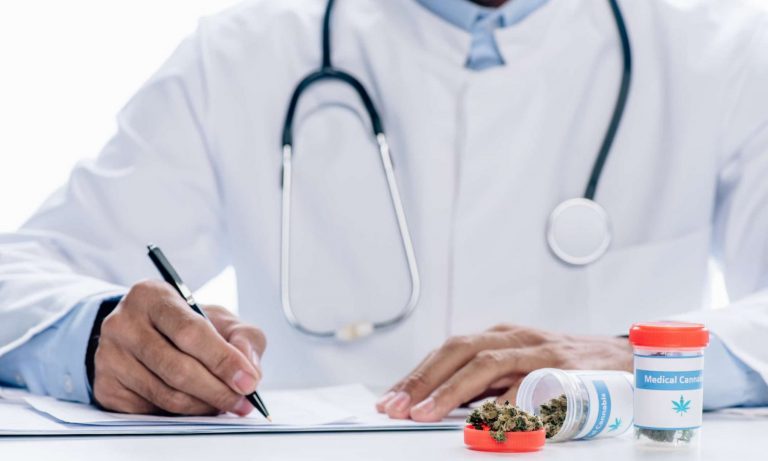
The New York State Office of Cannabis Management (OCM) announced on Monday the launch of a new medical cannabis certification and registration system that will not only be far easier to use but will expand eligibility criteria for patients who can benefit from medical cannabis.
The program, the first of its kind nationally, will allow the certification of a patient by a practitioner for any condition that the practitioner believes can be treated with medical cannabis, reported local CBS News outlet WRBG Albany. A precedent can be found in Argentina’s REPROCANN program.
This practitioner’s discretion in certifying patients was essentially granted with the passage of the Marijuana Regulation and Taxation Act (MRTA), which legalized cannabis last March.
The new certification and registration system brings the system under the full control of the state’s OCM and continues the work of expanding the program, pursuant to the MRTA.
“It is terrific to see the Medical Cannabis Program expand so vastly with the launch of the new certification and registration program and the ability of practitioners to determine qualifying conditions as included in the MRTA,” said Cannabis Control board chair Tremaine Wright.
“The new cannabis industry is taking shape as we continue to implement the MRTA and provide greater access for New Yorkers to a medicine that we’re learning more about every day. We’re continuing to move forward swiftly and today’s system launch follows our achievements that already include adding whole flower medical product sales, permanently waiving $50 patient fees, and advancing home cultivation regulations, among others.”
OCM executive director Chris Alexander added that the new patient certification and registration system are significant steps forward for New York’s program.
“We will continue to implement the MRTA and ensure that all New Yorkers who can benefit from medical cannabis have the access they need to do so,” Alexander said. “It’s important for New Yorkers to know that even as we shift the medical program to the OCM, your access will not be disrupted and the program will continue to expand.”
All current caregivers will be re-issued new registry ID cards with the patient’s name printed on them to better identify which patient(s) they are authorized to assist.
A new study examined how the legalization of cannabis at the state level affects deposits and lending activity of banks in legalizing states.
After analyzing bank data over the course of several years, researchers have concluded that recreational cannabis legalization caused a spike in deposits and lending.
Researchers collected data from more than 150,000 regulatory filings from banks across the country in states with legal marijuana between 2011 to 2016, finding a significant increase in deposits and lending after recreational cannabis was legalized. They found that in states with legal cannabis, bank deposits increased by 3% or 4% while bank lending increased from 6% to 8%, a small yet significant change.
“We attribute this finding to either limited concern about the perceived riskiness of deposits surrounding cannabis legalization, or optimism that policies would be adapted to limit banks’ risks from regulatory uncertainty,” wrote the study’s authors.
“Although we are unable to specifically identify whether the higher level of deposits is due to the acceptance of deposits from cannabis-related activities and whether banks knowingly accept these types of deposits, our findings suggest that the risk from regulatory uncertainty did not decrease banks’ willingness to accept deposits or make loans.”
Whatever the cause of this increased bank activity, it’s clear that legal cannabis is good for business.
Cannabis’s status as a federally illegal drug not only impacts cannabis businesses, it also impacts the amount of money and the permits that are necessary for its research. The system that’s now in place in the U.S. is one that limits cannabis capabilities as a business and as medicine.
There are a number of variables that have an impact on the vaping experience, none more vital than the substance being vaped and the device itself that’s being used.
Given how popular vaping has become in the cannabis community, it’s easy to assume that vaping is a one size fits all proposition, and that the end result is the same regardless of how you go about it. The reality is that while this may be a common thought process, it couldn’t be further from the truth.
There are a number of variables that have an impact on the vaping experience, none more vital than the substance being vaped and the device itself that’s being used. Having an understanding of how vaping cannabis cartridges is different from vaping dry herb can save you money and provide the framework for knowing how to achieve the exact sensation that you desire.
Cartridges Are Cut With Chemicals Which Alter Effects
Since cannabis cartridges are made with flavoring additives, along with a myriad of other chemicals naturally, it provides different effects from vaping dry herb cannabis.
Photo by Rattanakun Thongbun / EyeEm/Getty Images
Dry herb cannabis vaporizers allow users to only load finely grounded cannabis buds into devices. This means cannabis consumers who use them are likely going to consume more THC than they would with cartridges. That caveat could explain why dry herb vaporizing provides such a different sensation from consuming cartridges.
Cartridges Reduce Amount Of Cannabinoids And Terpenes Consumed
Another factor that explains the difference between vaping cartridges and dry herbs is the lack of cannabinoids and terpenes that are consumed when people choose to vape cannabis cartridges.
Cannabinoids are a category of chemical compounds that are derived from cannabis that communicate with the body’s endocannabinoid system. Terpenes are the compounds within cannabis buds that are responsible for providing a strain with its unique scent and taste profile.
Terpenes and cannabinoids each are responsible for providing qualities that specific strains are known for. Since terpenes and cannabinoids can’t be found in cannabis cartridges, consumers who dry herb vape instead are likely going to be in for a completely different experience from those that choose to vape cartridges instead.
Vaping Dry Herb Cannabis Provides Greater Control Over Smoking Experience
The devices themselves play a bigger role in the vaping experience than a lot of cannabis enthusiasts may realize. Each dry herb vaporizer comes with the ability to choose specific temperature settings for heating cannabis. Some even provide options for extended draws or shorter sessions.
Cannabis cartridges are only able to be used with batteries that often only come with 2 or 3 pre-set temperature options. This means finding that “sweet spot” where the smoke isn’t too harsh, but the effects are perfectly satisfying, difficult for consumers to find. The dry herb cannabis vaporizers provide increased options for temperature settings means that vaping dry herb cannabis is easier for a lot of consumers.
Photo by Sharon McCutcheon via Unsplash
A Proper Dry Herb Vaping Experience Entails More Maintenance
Even though dry herb cannabis vaporizers offer more customization, they also require more upkeep from a maintenance perspective. Vaping with cannabis cartridges typically entails nothing more than affixing the cartridge onto the battery. Dry herb vape cartridges are much more involved since the mouthpiece, filter and chamber can get clogged with enough use.
The key to maximizing the use of dry herb vaporizers is making sure it’s clean prior to each use. When it comes to vaping cannabis cartridges, maintenance has less of an effect on the end results as opposed to dry herb vaporizers where proper care can be make or break for consumers.
If you think you can’t do without your regular dose of edibles, then you might be interested in the following information on how to work around your cannabis drug tests.
Many people prefer edibles to other forms of cannabis. Some people like it because of its regular appearance, while others don’t because they can’t stand the harshness of smoking flowers.
Edibles are one of the top five preferred methods of consuming cannabis. It is safer and tastier than most methods. Additionally, cannabis edibles are legal to consume in most public spaces, but this does not remove their negatives.
Photo by Sarah Pender/Getty Images
Like every consumable, edibles also have health risks. They can be detected in the blood, urine, and saliva, just like other cannabis products. The upside is that it takes more time for its effects to subside, so the user gets to feel suitable for a long time. With the increasing cannabis reforms blitzing through the U.S., cannabis retailers are developing edible products for sales.
What Are Cannabis Edibles?
Cannabis Edibles are regular food products that have been prepared with cannabis. These foods contain a significant amount of cannabis, enough to induce an intense “high” effect on the consumer. Some edibles have less THC than cannabis flowers, while others have equal levels or more THC than smokable cannabis. Edibles can be in the form of cookies, gummies, candies, capsules, or beverages. Medical marijuana edibles may be more restrictive on selection due to the high dosages needed for things like chemotherapy.
Simply put, edibles are food products that contain cannabinoids.
Edibles are best consumed at home; however, they are occasionally served at parties and cannabis establishments. They are sold in recreational cannabis dispensaries and can be made at home with recipes on the web. New edibles consumers are advised to start with about 2 mg of THC products and then build up from there. It’s better to consume edibles in low doses because they tend to induce very intense highs, even more severe than vaping or smoking.
Breakdown of Edibles in The Body
The body doesn’t process edibles the same way it processes inhaled cannabinoids. Once a person eats an edible, it goes through the digestive tract and is broken down by the body organs involved in the normal digestion process. The liver also processes these digested materials.
The cannabinoids in edibles take a longer time to digest completely, unlike those in smokable cannabis and vape. For one, the processing phase is delayed for at least an hour or two, which causes the user to feel normal for about two hours after eating the product. In smoking or vaping, the user feels the impact as soon as the cannabinoids enter the bloodstream. This is why it is pretty tricky to overconsume edibles.
After edibles are entirely broken down and allowed to enter the bloodstream, the user can remain high for up to 12 hours or more if a more potent product is consumed.
Edibles and Drug Tests
Some states in the U.S. have laws that guide against the use of cannabis at the workplace. Employees are also warned against using marijuana. This is usually maintained by regular drug tests during office hours. In some legal states, this law has been scrapped, and workers are no longer required to pass THC drug tests to maintain their job positions. Flip through your workplace’s policy to ensure you can continue to enjoy cannabis as a hobby. Trust me; no one wants to lose their job just because of their love for weed.
If you think you can’t do without your regular dose of edibles, then you’d be interested in the following information on how to work around your cannabis drug tests.
Depending on the sample tested, these test materials are uniquely modified to detect even the tiniest amount of cannabis in the body. Cannabinoids can remain in the body by hiding within certain parts.
At most, THC can remain in the bloodstream for up to four hours, but can stick to saliva molecules for more than a day at most. Companies commonly test employee urine to retain cannabinoids for up to a month. The most extended period a cannabinoid can remain detectable in a human is three months (90 days), and it is usually within the hair follicles.
Photo by SageElyse/Getty Images
This proves that cannabis can be detectable in the system regardless of the method of consumption. Regular consumers have cannabinoids in their system (blood, saliva, urine, or fair) longer than these standard durations. The above time limit is observed among casual edibles users based on THC consumed. To reduce the risk of being caught with a positive cannabis drug test, it’s best to detox with your go-to detox kit. You must also drink water, a lot of it.
The Downside of Eating Edibles
The best way to consume edibles is by micro-dosing (consuming edibles with cannabinoids no more than 1–5 mg). The biggest concern arises when excess edibles are consumed. This results in confusion, insomnia, hallucinations, paranoia, and cannabis-induced psychosis. There have been emergency cases where patients suffering from panic attacks confess to consuming too many edibles.
There are also reports of older adults suffering from cardiac-related issues after consuming a high amount of cannabis. These cases have put edibles in a bad light, as many believe consuming edibles brings one step closer to cognitive impairments, lack of coordination, and even worse scenarios. The truth is that edibles have to be used responsibly, especially when the dominant cannabinoid in the product is THC.
Last Words
Frequent consumption of edibles could lead to an addictive habit unless the edibles consumed have been micro-dosed to the lowest limit. But even this could cause the user to be tolerant and feel the same level of high if the dosage is topped. Users are put at more risk when they unknowingly consume edibles spiked with synthetic drugs like Spice or K2.
It is best to either prepare your edibles yourself or purchase them from trusted sources like cannabis dispensaries or licensed edibles bakers/producers around your location.
A new study shows that vaccines don’t have an impact on fertility in males. Instead, what could impact their fertility is a COVID-19 infection.
One of the leading fears of COVID-19 vaccines is fertility, a theory that has prompted many to avoid getting their shots. But a new study found no evidence to support this belief, however, it shows that males infected with COVID-19 could experience decreased fertility for up to 60 days.
The study, funded by the National Institute of Health (NIH) and published this past week in the American Journal of Epidemiology, tracked the data of 2,100 women and their male partners for about a year, finding that while COVID-19 vaccines didn’t impact the fertility of either gender, getting sick with it did affect males.
Researchers found that men who tested positive for COVID-19 were 18% less likely to conceive during their partner’s menstrual cycle when compared to men who did not test positive for the virus. Their fertility was more likely to be affected if their illness was moderate to severe.
Researchers theorize that these findings occur due to fevers and inflammation, both symptoms of COVID-19 that have been linked with lower sperm counts. While more research is necessary to understand why this happens, couples who’ve yet to get their vaccines and haven’t done so due to fertility concerns should take this information into account.
“The findings provide reassurance that vaccination for couples seeking pregnancy does not appear to impair fertility,” said Diana Bianchi, M.D., director of NIH’s Eunice Kennedy Shriver National Institute of Child Health and Human Development, which funded the study. “They also provide information for physicians who counsel patients hoping to conceive.”
While researchers will continue to monitor the impact of vaccinations on fertility, they find it unlikely for this to become a real concern, no matter the maker of the vaccine. According to researchers at Boston University, “It is unlikely that adverse effects on fertility could arise many months after vaccination.”
Instead of trying to patchwork the CSA to allow psychedelics and other drugs to be research, perhaps it’s time to completely nullify the CSA and rework our global approach to drugs.
The “Psychedelic Train” has left the station, or so NIDA Director Nora Volkow said recently. Volkow, who has been the director of the National Institute on Drug Abuse since 2003 has been a vocal advocate for more research on Schedule-I drugs. She also believes that there will be an inevitability in the rise of the use of Psychedelics in the coming years.
In fact, the evidence suggests that psychedelics have risen in popularity since the start of the pandemic and they believe it could be a means of “escape” from the anxieties produced by the global situation. Nonetheless, Volkow believes that with the expanding research into the benefits of psychedelics more people will begin to utilize psychedelics by themselves, which warrants expedited research in use, dose, effect, and so forth.
Photo by Drew Angerer/Getty Images
This is where Schedule-I become a major problem. Said Volkow:
“Researchers must obtain a Schedule I registration which, unlike obtaining registrations for Schedule II substances (which include fentanyl, methamphetamine, and cocaine), is administratively challenging and time consuming. This process may deter some scientists from conducting research on Schedule I drugs.”
She also acknowledged the DEA’s willingness to increase the quota for research for certain psychedelic drugs.
“It will also be important to streamline the process of obtaining Schedule I registrations to further the science on these substances, including examining their therapeutic potential,” she said.
This made me think about the research barrier — the Schedule-I category. The entire system is set up to deter anyone from even researching these drugs deemed “Too dangerous to study!” Fortunately, we are seeing a pushback from the scientific community and the general public waking up to the fact that prohibition isn’t working.
Due to this shift in paradigm, the DEA was forced to shift their stance on certain drugs. First with cannabis and now with psychedelics. The public had to twist the arm of the government in order to have them say, “Sure we’re thinking about making it easier to research…just give us time!”
And so, one year leads to two and eventually a decade has blown by and virtually no headway was made in researching the therapeutic potentials of these drugs, their potential risk factors and so forth.
This makes you wonder: Why do we have the Controlled Substance Act in the first place?
Photo by matt_benoit/Getty Images
Origins of the Controlled Substance Act
The Controlled Substance Act was the second piece of policy from a much larger act entitled, “Comprehensive Drug Abuse Prevention and Control Act of 1970”. Nixon, who announced this in his short run as president until he was impeached for obstruction of justice, abuse of power and contempt for Congress.
“While Nixon himself was not impeached, the impeachment process against him is so far the only one to cause a president’s departure from office.” (Source)
Nonetheless, Nixon essentially handed the entire US Drug Market over to the pharmaceutical companies who would be in charge of “certain types of drugs”, while the rest of the drugs that was deemed “unmarketable to the masses” were left under the jurisdiction of the DEA, who would then begin to utilize federal funds to wage a war that would last for several decades.
The Comprehensive Drug Abuse Prevention and Control Act of 1970, Pub.L. 91–513, 84 Stat. 1236, enacted October 27, 1970, is a United States federal law that, with subsequent modifications, requires the pharmaceutical industry to maintain physical security and strict record keeping for certain types of drugs.[1] Controlled substances are divided into five schedules (or classes) on the basis of their potential for abuse, accepted medical use, and accepted safety under medical supervision. Substances in Schedule I have a high potential for abuse, no accredited medical use, and a lack of accepted safety. From Schedules II to V, substances decrease in potential for abuse. The schedule a substance is placed in determines how it must be controlled. Prescriptions for drugs in all schedules must bear the physician’s federal Drug Enforcement Administration (DEA) license number, but some drugs in Schedule V do not require a prescription. State schedules may vary from federal schedules.
The Controlled Substances Act (CSA), Title II of the Comprehensive Drug Abuse Prevention and Control Act of 1970, is the legal foundation of the government’s fight against the abuse of drugs and other substances. This law is a consolidation of numerous laws regulating the manufacture and distribution of narcotics, stimulants, depressants, hallucinogens, anabolic steroids, and chemicals used in the illicit production of controlled substances. The act also provides a mechanism for substances to be controlled, added to a schedule, decontrolled, removed from control, rescheduled, or transferred from one schedule to another.[2]
Photo by CRYSTALWEED cannabis via Unsplash
As you can see, the underlying mechanism here is that:
The Pharmaceutical Industry keeps record and stores all the drugs
The DEA and FDA regulate the Scheduling
Congress has powers to add and remove substances
While this seems like a good idea on paper, when you realize that roughly 75% of the FDA’s budget comes from the Biopharmaceutical industry. Science.org also found that the pharmaceutical industry pays researches plenty of “side benefits” which may possibly influence their assessments on certain drugs.
One way to look at this set up after learning about the finances is that the US government gave the pharmaceutical industry monopoly over drugs and through funding the FDA has a stake in the regulatory process. Furthermore, the DEA can actively use federal resources to literally wage war against any “black market competition” the pharmaceutical industry could face.
Of course, the system isn’t as singular-focused as described above, but if one were feeling a bit conspiratorial, this wouldn’t be a hard pill to swallow. Rather, the Act that was signed in by Nixon represents a conglomerate of special interests creating “special rules” for the status quo in the name of health and safety.
However, as we now learn about the therapeutic benefits of cannabis and psychedelics, we can clearly see that the prohibition in research had nothing to do with public health and safety, and everything to do with control and finance.
Therefore, instead of trying to patchwork the CSA to allow psychedelics and other drugs to be research, perhaps it’s time to completely nullify the CSA and rework our global approach to drugs; a policy which we decide to stop arresting users, focus on education and prevention while increasing the safety profile of the drugs themselves.
Whether it’s a new market, or an old one continuing to push its limits with recreational marijuana, weed tourism does not plan to slow down any time soon.
As leisure travel continues to recover and countries lift their travel bans and COVID-19 restrictions one by one, many tourist destinations are eagerly awaiting new visitors. No matter how luxurious or sought after the destination, it seems every locale is eager to find new ways to attract business.
In 2022, however, there is something new in the air that has begun to inspire a new wave of tourism. One of the latest trending motivators in destination travel is, putting it bluntly, weed.
In 2020, areport found that almost 30% of vacationing adults worldwide were looking for something involving cannabis on their holiday. This report found that 18 percent of Americans feel this way as well. The numbers in the report found these percentages went up even higher in the younger millennial demographic, which is a group that often favors leisure travel.
Photo by Dino Reichmuth via Unsplash
While many facets of the travel industry struggled to tread water throughout the pandemic, recreational marijuana sales continued to grow, and more areas of the world legalized recreational marijuana.
By the end of 2020, Arizona, New Jersey and South Dakota all legalized recreational cannabis use, with Connecticut, New Mexico, New York and Virginia passing initiatives one year later, according to U.S. News. That makes a total of 18 states, Washington D.C. and Guam that have an added draw for potential tourism.
Even states with established tourism are continuing to ramp up their efforts in order to stay at the top of the heap. California has been a leader in marijuana tourism since its inception, and continues to reinvent itself to maintain its status as a pot paradise.
Take West Hollywood, for example, where there are potential plans to bring an Amsterdam-like vibe to this posh LA neighborhood. “Pot cafes, restaurants, lounges and even galleries may have a ‘WeHo’ home with the potential to draw millions of tourists and their money,” according to CBS Los Angeles.
Weed tourism has proven to be so lucrative that some businesses are already establishing roots in some states that have not even legalized recreational marijuana yet. “In Florida, which currently only allows medical marijuana use, the cannabis company Trulieve has already opened dispensaries two to three times the typical size near ‘key tourist attractions,’” according to The New York Times.
Photo by Karl Paul Baldacchino via Unsplash
Closed borders and travel bans did not stop marijuana legalization from occurring elsewhere in the globe as well. Recently, the island ofMalta became the first European country to legalize recreational weed.
America’s closest neighbor to the South, Mexico, is already one of the most popular international leisure destinations for Americans. With recreational marijuana legalization on the horizon it looks like it may get even more popular, especially among cannabis enthusiasts.
“Mexico is one country on the road to legalization, where cannabis-centric spas or yoga centers could be potential tourist attractions,”wrote Forbes.
Whether it’s a new market, or an old one continuing to push its limits with recreational marijuana, weed tourism does not plan to slow down any time soon. With more states and countries pushing for legalization in the coming years, there will likely be further growth and competition within this blossoming market. What was once a quaint concept found only in places like remote Dutch cafes is now a global enterprise. So buckle up, and enjoy the ride.
The wait for legal cannabis in Florida may continue longer than proponents planned, but if everything goes accordingly from a planning and preparation standpoint, the wait may be worthwhile for consumers.
Ever since Colorado and Washington became the first states to legalize recreational cannabis use about a decade ago, dozens of other states have followed in their footsteps. In fact, nearly half of the states in the country have recreational cannabis laws on the books now, which makes one curious as to where the Sunshine State. What is Florida’s roadmap to cannabis legalization.
There is medical marijuana available in the state, which leads one to believe that the legalization of recreational cannabis isn’t too far away. Cannabis legalization could be an economic driver for Florida that’s tough to rival. Here are some key insights about the path to cannabis legalization in the Sunshine State.
Status of Medical Marijuana
Medical marijuana was initially introduced to Floridians back in 2019. Florida SB 186 signed into action by Florida Governor Ron DeSantis allows Florida residents to possess and consume up to 2.5 ounces of dry herb cannabis every five weeks. Physical possession of a medical marijuana card is necessary for avoiding prosecution from police.
While Florida medical marijuana patients aren’t allowed to grow their own cannabis, there are numerous dispensaries throughout the state they can purchase from. The amendment allowing for the medical marijuana bill to be signed into law was placed on the ballot of the 2016 election. It passed by an overwhelming majority of 71.3% to 28.7. Some of the conditions that allow Florida residents access to medical marijuana include Lupus, Migraines, Arthritis, HIV along with a handful of others.
Biggest Obstacles to Legal Recreational Marijuana
Florida voters demonstrated glaring support for medical marijuana sales in the state. Taking that into consideration, it’s fair to question what barriers cannabis advocates face when it comes to getting it legalized recreationally in the state.
According to Deputy Director of the Center for Effective Public Management for The Brookings Institution, John Hudak, there’s no bigger obstacle for cannabis legalization in Florida than the Governor himself. “The government is vehemently opposed to that type of policy change and [Ron DeSantis’s] influence is quite strong,” says Hudak. “As long as DeSantis is Governor it would have to go through a ballot initiative.”
Unless State leadership changes in Florida, grassroots mobilization is the most foreseeable path to cannabis legalization for now.
When Is the Soonest Cannabis Could Become Legal?
To say that Floridians are eager for the legalization of cannabis would be an understatement. Unfortunately, the state Supreme Court rejected the language of a ballot measure proposed by Regulate Florida, which had plans for getting it on the ballots in time for the 2022 midterm elections, were forced to shift their attention to 2024.
Photo by Matt Alaniz via Unsplash
While the news may seem bleak at the moment, according to Sarah A. Chase, the Executive Director for the council for Federal Cannabis Regulation, there could be a silver lining with having citizens vote on the ballot measure in 2024 as opposed to this coming November. “Clearly, there is overwhelming support for legalization in Florida, and what we tend to see is that the demographic groups who favor legalization are motivated to turn out at higher rates during presidential, rather than midterm, election years,” she said. “So, 2024 makes sense. Also, this only enhances the broader push for federal legalization and responsible regulatory standards and guidance.”
Another benefit of waiting until 2024 is that it gives state officials more time to study the ways other states have successfully implemented recreational cannabis sales. Says Chase, “One would hope to see Florida really take the time to study the best practices of other states, and to really listen to both the research and regulatory scientists in order to set high-quality standards to best protect American consumers and ensure health and safety.”
The wait for legal cannabis in Florida may continue longer than proponents planned, but if everything goes accordingly from a planning and preparation standpoint, the wait may be worthwhile for consumers.
A new archeological study suggests cannabis was a very important plant for people of the era.
According to an archeological study conducted in central China, members of the Tang Dynasty were big cannabis users. While the plant was long believed to be used in clothes and food, the study confirmed that the people of the era used the plant for nutritional value and that considered it an important crop. Now, an ancient Chinese tomb shows evidence of cannabis use.
The South China Morning Post reports that the discovery of cannabis was made when researchers uncovered a tomb that had been preserved for over a thousand years. In it, researchers found the walls covered in paintings of the era and with a variety of well-preserved artifacts. There were also foods in jars, where researchers found remnants of cannabis, with the Chinese reaping the benefits of the plant before it was trendy to do so.
The cannabis seeds in the jars were of different sizes than the ones that exist today, suggesting that the cannabis of the era was different than the ones we consume nowadays. Researchers believe that that type of cannabis had lower concentrations of THC.
“The cannabis was stored in a pot on the coffin bed amid other staple grains such as millet. Obviously, the descendants of Guo Xing buried cannabis as an important food crop,” said Jin Guiyun, professor of history at Shandong University.
In a peer-reviewed journal, the professor revealed that cannabis might have been more important than rice for the era. “The cannabis was buried as food for the tomb owner’s feast and health in the afterlife,” they said.
In Chinese history, cannabis was considered one of the five staple food crops, having a long history. Researchers have found evidence of cannabis that date back to 6,600 years ago.
Despite the country’s history with cannabis, China has some of the strictest marijuana laws around, with it being illegal to consume or possess it. The penalties of being caught with marijuana are severe, including years in prison, expensive fines and even the death penalty.
If politicians can set aside their differences to successfully pass German adult-use cannabis, Europe will become a competitive rival to the U.S. market within five years.
The new German coalition has indicated one of its many priorities is the legalization of cannabis for adult use. Those familiar with the United States’ cannabis policy climate will recognize a similar struggle underway in Germany between liberal and conservative political positions. Interestingly, both liberals and conservatives in countries like the U.S. and Germany want legalization, but differ on how to enact it.
Let’s look at the state of adult-use cannabis in Germany and examine the international examples that would best inform market entrant strategy for this burgeoning industry.
Photo by Maheshkumar Painam via Unsplash
Politic Divides Must Not Muddle Market Priorities
The German liberal coalition — consisting of the Social Democrats (SPD), the Green Party, and the Free Democrats (FDP) — have the legalization of adult-use cannabis on their docket as well as an entire suite of progressive initiatives such as phasing out coal by 2030, increasing voters’ rights, raising the minimum wage, and streamlining immigration. In addition to this ambitious set of initiatives, the creation of rules and regulations for the adult-use cannabis market could take six months or more.
Additionally, the Angela Merkel-led center-right Christian Democrat Union (CDU) is still very strong and will likely put up opposition to legalizing cannabis, making implementation more difficult. Doubtless, all parties will rally to provide input for the control and taxing of the cannabis trade, as a good working framework will be vital to successfully combating the well-established illicit market and for filling government tax coffers.
In addition to establishing tax brackets and revising efforts to combat illicit markets, Germany must consider market supply and what that market will look like. For example, will Germany adopt cannabis coffee houses like the Netherlands? Will Germany need to lean on other European Union Good Manufacturing Practice-registered (EU-GMP) cannabis producers to satisfy market demand and make up for the lack of growers and producers in the country? An examination of the trials and tribulations of other international adult-use cannabis markets readily suggests solutions to these queries.
Germany Must Learn from North American Cannabis Mistakes
Germany and Europe have a great opportunity to learn from Canadian and U.S. mistakes, and to create an improved infrastructural plan. Canada’s approach to rolling out adult-use legalization by using the national mail, and the implementation of Canada 2.0 to open dispensaries and distribute products has done little if anything to quell illicit market sales.
Meanwhile, south of the border the U.S. has failed largely to introduce cannabis consumption lounges or Dutch-inspired coffee shops into the distribution model. This hinders the social acceptance of cannabis by normalizing consumption, much as already takes place with the drinking of alcohol at bars and taverns.
Additionally, the U.S. undermines its legitimacy by lacking governmental GMP and health oversight for cannabis products and their production due to broad federal illegality. Germany is in a position to learn from these errors and instead position the winning combination of EU-GMP registered products and social consumption lounges to its citizens to combat the illicit market successfully.
Adult-Use Cannabis in the EU Needs Germany to Fan the Flames
Germany will need to convince Europe at large that the trade, sale, and use of recreational cannabis are within the best interests of multiple EU countries. To successfully import products from other EU member-states and get the German adult-use market off the ground, the EU Parliament must be involved.
The European Monitoring Centre for Drugs and Drug Addiction (EMCDDA), an agency of the EU, notes in the European Drug Report 2021, “Europe is also a producing region for cannabis and synthetic drugs; cannabis production is mostly for European consumption.”
Photo by Kampus Production from Pexels
EU countries could kill three birds with one stone: increase citizen safety, eliminate illicit operations, and accrue regional wealth by enabling EU members to produce legal cannabis and become leaders in the global adult-use market.
Convincing fellow EU countries is only a stepping-stone for Germany in a broader battle for the cannabis trade, however. While Germany’s voice is strong within the EU, among the United Nations (U.N.) they command less power. A U.N. commission reclassified cannabis a little over a year ago for therapeutic and medical use, but the margin was thin, with a vote of 27 in favor and 25 against the measure. While the tides of the EU and U.N. appear to be shifting, the change is sluggish compared to the rate at which individual countries have been able to pivot and greet the new market head-on.
Not all is bleak, however. Just as separate states like Colorado, Washington, and California have spurred further legalization efforts across the U.S., so separate countries in the European bloc will look to one another for inspiration. Smaller nations where cannabis is newly legal like Malta, Luxembourg, and Switzerland spark a fire for larger countries like Germany and Portugal, which could fan the flames into full European market participation.
Sooner or Later, Europe Will Be Green
Estimates place Germany’s annual projected cannabis revenue at 3.4 billion euros, while simultaneously creating 27,000 new jobs and reducing police and judicial costs by 1.3 billion euros. These are serious numbers with big market potential.
If politicians can set aside their differences to successfully pass German adult-use cannabis, Europe will become a competitive rival to the U.S. market within five years. A powerful economic leader like Germany is the best chance for Europe to advance in this space.
Projections estimate the European cannabis market will be worth €403.4 million by the end of 2021 and will grow at a compound annual growth rate (CAGR) of 67.4% from 2021 to reach €3.2 billion by 2025. If Germany wants a piece of that income in a post-COVID Europe, they must act now or be left out of the countless benefits.