In August, the DOJ asked a federal court to dismiss Fried’s lawsuit, arguing it would be too “dangerous to trust regular marijuana users to exercise sound judgment.”
A Federal Court dismissed Nikki Fried’s Second Amendment lawsuit against the federal government seeking to allow medical marijuana patients to buy and own firearms.
Fried is Florida’s agriculture and consumer services commissioner.
US District Judge Allen Winsor wrote in the Friday ruling that “Florida’s medical marijuana users are ‘unlawful user[s] of . . . [a] controlled substance,’ so this law makes it a crime for them to possess firearms.”
The lawsuit argues that there is a conflict between state and federal law and that federal policy requires medical marijuana (MMJ) cardholders to choose between their state constitutional right to MMJ and their Second Amendment right.
“No patient should have to choose between medicine and employment, a roof over their head, access to capital or their Constitutional rights,” Fried said adding that the country’s marijuana policies are “irrational, inconsistent, and incoherent.”
Fried, a medical marijuana cardholder and gun owner, explained that MMJ patients face felony charges if they lie about their marijuana use on a federal firearm application.
In July,Fried’s lawyers and other plaintiffs argued that under the recent SCOTUS ruling, the current federal policy banning those who admit to using marijuana in a background check could not be enforced.
Photo by Creative-Family/Getty Images
In August, the DOJ asked a federal court to dismiss Fried’s lawsuit, arguing it would be too “dangerous to trust regular marijuana users to exercise sound judgment.”
Fried stated that she was disappointed that the DOJ decided to “double down on harmful prohibition policies. DOJ’s argument is as offensive as it is inaccurate.”
“I will never stop looking for outside-the-box ways we can further this fight until we achieve full and equitable legalization,” Fried said at the time.
Dismissal Highlights
Now, several months after the DOJ urged a federal court to dismiss the lawsuit, the ruling came in, with the federal court siding with the DOJ. The core of the judge’s ruling lies in the argument that individuals who consume cannabis are engaging in illegal activity at the federal level, even though medical marijuana has been legalized at the state level. This makes for the precedent to refute their gun rights.
“Laws keeping guns from the mentally ill likewise flow from the historical tradition of keeping guns from those in whose hands they could be dangerous,” the judge wrote. “Plaintiffs recoil at being compared to the mentally ill…but one does not have to label marijuana users mentally ill to recognize that both categories of people can be dangerous when armed. Although the prohibition reaches those habitually using marijuana (even if not currently under the influence), habitual drug users are analogous to other groups the government has historically found too dangerous to have guns.”
Furthermore, Winsor explained that this right can be retrieved, saying, “unlawful drug users can regain their Second Amendment rights by simply ending their drug use.”
Unlike products that are skyrocketing in price, cannabis is still illegal on a federal level, and therefore not regulated the same way.
The rise of inflation and increasing prices feels inescapable right now. From the grocery store to the news to politician’s speeches on the campaign trail, increased costs are currently embedded in everyone’s mind. For those who enjoy cannabis recreationally, or rely on its medical benefits, this talk of rising prices may have you worried about the price of weed. So, in the midst of this – how much does weed cost?
As we have previously reported, however, the price of cannabis is not rising with the rate of inflation. In fact, it is reaching astonishing lows in some cases. According to Cannabis Benchmarks’ recent U.S. Cannabis Spot Index, “Both Colorado’s and California’s spot prices for wholesale flower fell to new all-time lows this week with the outdoor harvest yet to come to market in full force.”
Photo by Ivan-balvan/Getty Images
This dip in prices may have you wondering what is going on in the cannabis market. More importantly, it might have you wondering how much weed costs these days, exactly. But the answer is a bit tricky, mostly because it is still illegal on a federal level. Each state sets its own marijuana policies, and in turn the price of weed varies from state to state.
On average, according toOxfordTreatment.com, the national average for an ounce of high quality weed is currently $326, an ounce of medium quality weed is $266, and the national average price of a joint is $7.59. With this said, prices are not likely to rise in the next few months, and could even drop further overall. But this, of course, all depends on where you live. Perhaps the best question to ask in these uncertain economic times is where weed is the most expensive, and where it is the cheapest.
Where Is Marijuana Most Expensive?
Topping the list as the most expensive place to buy weed in the United States is Washington D.C., where, according toOxfordTreatment.com, an ounce of high quality weed is $597.88.
Next on the list is North Dakota, where an ounce of the same weed costs $383.6, followed by Virginia, where it costs $364.89. “These are places where marijuana use is somewhat restricted: In D.C. it is illegal to purchase, in North Dakota it’s only legal for medical use, and in Virginia it’s not legal at any level,” according to the samesite.
To put it in even simpler terms, while a joint on average costs $7.59, in the Nation’s Capital, you are likely to pay almost double, at $13.92 a pop.
Where Is Marijuana Cheapest?
What most weed enthusiasts are really after is knowing where they can find the cheapest good weed in the country. If that’s what you’re looking for, head West. The state with the lowest price for quality weed is Oregon, where, according to the same Oxford Treatment data, an ounce of high quality weed will cost you just $210.75. The second cheapest state to buy weed is another West Coast state, Washington. Third on the list is Colorado, where an ounce of high quality weed is $241.74.
All three of these states have legal medical and recreational weed. The markets are well established in these states, as is the industry competition. This means there is ample supply and competition, which likely contributes to these lower rates for quality cannabis.
Photo by Olena Ruban/Getty Images
Why the Price of Weed Is Falling
One statistic that puzzles some who follow the price of weed is why it has seemed to drop in the midst of the inflationary times of 2022. According to Andrew Livingston, director of economics and research at the Denver-based cannabis law firm Vicente Sederberg LLP, there are several reasons for this, including “heavy competition within the regulated market; high taxation rates; the undercutting of prices by illicit or unregulated operators, including street dealers; and the natural growing pains that come with running a business in uncharted territory,” he told CNN.
Everything from the illicit market to increased competition in established legal markets contributes to the low price of cannabis today. Also, unlike products that are skyrocketing in price, cannabis is still illegal on a federal level, and therefore not regulated the same way.
As Zoë Plakias, an assistant professor of agricultural, environmental and development economics at Ohio State University told Courthouse News Service, “If restrictions on the sale of cannabis were lifted, if cannabis was legalized at the federal level, and we saw trade across states, I think we’d see cannabis look much more like other types of markets.” Until that day, the price of weed will likely be more unpredictable and susceptible to many outside factors.
Even though we’re gaining an extra hour, the fluctuation in time can do a number on our bodies. Here are some cannabis strains that can help ease you into Daylight Savings.
Studies show that the one-hour time difference inflicted upon us by Daylight Savings can result in triggering underlying health issues and cause an excess of tiredness afterwards. The following strains were chosen to help you either go to bed early the night before or clear your head in the days following.
This heavy indica, lauded for its high resin production and the body high it contributes is a great cultivar to have you getting sleepy, very sleepy. The near hypnotic effects are also great for easing aches and pains that may crop up at the end of the day and thus also make it easier to catch some Zs. Another benefit is its relaxing properties. Pure Afghan strains are often used to combat severe anxiety, so no need to stress about about the impending DST.
A perfect mixture of Granddaddy Purple and OG Kush, this euphoric, yet sleepy time strain will have you counting sheep so dreamily that drifting off shouldn’t be a problem. Smooth and sweet to the pallet, this high THC strain is bound to give your snooze a little sparkle and you should wake up after the hour difference feeling refreshed. Also a very resin heavy strain, a little bit goes a long way.
Sativa dominant and fairly high in THC, this cultivar promotes a clear head and sharpness for making things click and getting on with the day. If you feel foggy from the night before, maybe you had ate a strong edible or smoked a little longer than expected before hitting the hay in the hopes of recharging, this is one that will clear the haze, regardless of its namesake. An uplifting, happy high, it should clear the noggin when needed.
Sometimes an indica leaning hybrid is still the trick to get out of a funk, especially in the case of this 40% sativa. When the 40% comes from the following cultivar, Durban Poison, it works a magic with its OG indica base that both calms the mind and clears it at the same time. Perfect for after work to recharge or while exploring creative endeavors, this sweetly popular strain won’t leave you couch-locked unless you really go in. Enjoy the flavor, the lightness of being and above all the relaxed energy that it provides.
Though likely to have you choking, you should still be nothing but grateful for this pure sativa from South Africa during DST. Perhaps the most essential strain listed to combat fatigue and really get you going, especially if you need to pick up the house, pull it together for a party or even get some work done (though it’s never recommended to drive, operate machinery or the like on any cultivar). With the amount of resin Durban Poison produces, there is a good chance that your local dispensary provides a concentrate version, which will have you seriously buzzing.
Prohibition has done nothing but closed the doors to billions of dollars in revenue, and encouraged racist policies. It’s high time we legalize marijuana federally.
Legalizing marijuana is one of the best things we can do to support public health. There have been several studies conducted across the United States supporting its many public health benefits.
Still, some are worried that the legalization of marijuana is going to result in a spike in adolescent use, violent crime, mental health illnesses, and so much more. But data shows that legalization can actually prevent this.
A 2021 paper by the National Bureau of Economic Research highlighted more surprising reasons why legalization can benefit public health.
Reduction in Violent Crime
The War on Drugs has done nothing to cut down on violent crime. It has, in fact, fueled illicit black market activity and the criminals behind them, increasing crime. The paper states that where legal dispensaries have been established, the authors saw a 19% decrease in overall crime.
Photo by Stefan Tomic/Getty Images
Researchers at the US Department of Agriculture’s Economic Research Service and Appalachian State University also state in an older paper that: “Our results indicate that medical marijuana laws result in significant reductions in both violent and property crime rates.” Meanwhile, a 2019 paper by Regional Science and Urban Economics states: “The results imply that an additional dispensary in a neighborhood leads to a reduction of 17 crimes per month per 10,000 residents, which corresponds to roughly a 19 percent decline relative to the average crime rate over the same period…”
There are many possible reasons behind this. One is that legal recreational marijuana provides greater access for adults who then no longer have to go to dealers at the black market, so the underground market no longer thrives as much in the area. Another is that the police would have less reasons to arrest individuals, saving police resources. In addition, many may turn to marijuana as a substitute for more harmful substances which actually cause an uptick in violent crime: these include alcohol, amphetamines, and cocaine.
After all, marijuana is a drug that is know for inducing euphoric and relaxing states, reducing the chances of individuals engaging in dangerous or violent behavior.
Significant Reductions In Alcohol and Tobacco Consumption
Tobacco use is a widespread killer, responsible for the deaths of over 8 million people annually. Meanwhile, alcohol kills around 225 people a day in the United States alone. You know the system is broken when tobacco and alcohol are still legal yet continue to kill people because of its availability while marijuana is still federally illegal.
Despite this, thousands in the United States still struggle with a tobacco addiction. But marijuana may help with that. The paper states that legalizing recreational marijuana is linked with a 5% and 13% reduction in alcohol and tobacco related deaths respectively.
According to research by the University of Washington together with the Oregon Health Authority Public Health Division and Multnomah County Health Department, state decriminalization of recreational marijuana use corresponds to decreases in youth alcohol consumption. Marijuana is not a gateway drug; that’s just what prohibitionists want you to think. Cannabis is actually successfully used as a mitigation tool so that people can manage their addictions to alcohol and tobacco.
Reduction In Drunk Driving Deaths
When marijuana is legalized, more people substitute it for alcohol. The paper mentions studies that legal recreational marijuana has been linked to a 5% decline in alcohol demand, as well as a 20% reduction in binge drinking among college students.
In addition, medical marijuana laws have been associated with a 13 to 15% drop in alcohol related traffic fatalities. The paper authors, together with Benjamin Hansen, have also indicated in a paper released by The University of Chicago Press Journals that there is an 8-11% reduction in traffic fatalities just within the first year of marijuana being legalized in states. The authors mention that when marijuana is legalized, it also results in a decrease in both alcohol consumption and the price of cannabis, which further cements the theory that both substances act as substitutes. However, they do emphasize that driving under the influence of marijuana is not much safer than driving while drunk.
Good For Public Health
Even if there is data backing up how beneficial marijuana is for public health, it’s still illegal federally.
A Gallup poll from 2020 revealed that 68% of Americans support the legalization of marijuana. The numbers of Americans who back marijuana legalization only continue to grow each year, as legalization spreads in states and more people become aware of the plant and its numerous benefits.
Photo by FatCamera/Getty Images
We can only hope that federal legalization isn’t just a pipe dream. This would do tremendous wonders for people and society as a whole, though the banking industry still has to overcome numerous challenges. One of the biggest hurdles faced by the industry is lack of access to traditional banking, without which, federal legalization would be nearly impossible.
State and local governments can benefit too: cannabis taxes could generate billions, which doesn’t even count extra revenues from taxes obtained from the marijuana industry. Several states, such as Washington and Colorado, have already generated millions in taxes which are being used for public investments including education, health care, and infrastructure.
Prohibition has done nothing good: it has closed the doors to billions of dollars in revenues, harmed people, encouraged racist policies. It’s high time we legalize marijuana federally.
New York cannabis regulators have provided a timeline as to when legal dispensaries can open.
New York State is edging closer and closer to a functioning cannabis legal market. According to new intel, dispensary applications may be approved within two weeks, fulfilling the organization’s wish to have dispensaries operating by the end of the year.
Axel Bernabe, the chief of staff for the Office of Cannabis Management, says his agency has scored applications and will recommend approval for applicants who represent the “top of the class.” 2/2
The news was shared on Twitter by Ashley Southall, a reporter for The New York Times. While nothing has been confirmed as of yet, responsible parties believe New York will soon be moving forward with cannabis.
“New York’s cannabis regulators may approve the state’s first licenses to operate adult-use cannabis dispensaries on Nov. 21, when the state control board meets,” reads Southall’s tweet, followed by, “Axel Bernabe, the chief of staff for the Office of Cannabis Management, says his agency has scored applications and will recommend approval for applicants who represent the top of the class.”
Marijuana regulators in New York have long mentioned the end of the year as the time when legal dispensaries would be up and running. This marks the first time when they provide a clear timeline and a date as to when this decision would be made.
Despite the positive news, cannabis businesses from other states are intimidated by the prospect of opening dispensaries in New York, known for its thriving black market (now referred to as a “grey” market by the cannabis industry). All across the state, there have been marijuana stores operating since 2021, when the drug was legalized.
And that’s not great news for business owners like Nidhi Lucky Handa, the owner of California-based cannabis company Leune, which is expanding into other states. “How do you explain this to the consumer? It’s not just one shady thing in an alley,” Handa told Bloomberg. “It’s everywhere.”
Bloomberg says that for Handa, “it’s frustrating to see the state repeating the same mistakes as California, where even bailouts and tax breaks have failed to help the legal market avoid competition from illicit weed.”
New York hoped to be one of the first states to prioritize people who’d been impacted by the war on drugs. The first licenses handed out by the state would provide these communities with the chance to be the first to get involved in the industry, allowing small businesses to have a leg up. To get all of this done, applicants had to submit the proper documents, a process that has taken months to vet and that has allowed the black market to thrive.
“The most effective way to disrupt the unregulated marketplace is for lawmakers and regulators to swiftly provide cannabis consumers with an accessible and affordable legal marketplace.” — NORML
Consumers’ decisions regarding whether to purchase cannabis products from the legal market or the unregulated market are influenced primarily by price and convenience, according to data published in the Journal of Studies on Alcohol and Drugs.
Canadian researchers surveyed a cohort of more than 11,000 marijuana consumers in the United States and Canada. Respondents said that they were most likely to forgo accessing marijuana from the legal marketplace if they believed that they could obtain cheaper products more conveniently from unregulated sources.
Photo by Ivan-balvan/Getty Images
“Higher prices and inconvenience of legal sources were common barriers to purchasing legal cannabis,” authors concluded. “Future research should examine how perceived barriers to legal purchasing change as legal markets mature.”
Data has previously shown that cannabis consumers are willing to pay higher prices for legal cannabis products because they believe that they are superior to those available from other sources. However, consumers acknowledge that they will not pay for products that they perceive are priced excessively high.
Separate data provided earlier this year by Leafly.com reported that jurisdictions with the most robust legal cannabis markets and the fewest local bans on retail outlets are most successful at disrupting unregulated cannabis supply chains.
“The most effective way to disrupt the unregulated marketplace is for lawmakers and regulators to swiftly provide cannabis consumers with an accessible and affordable legal marketplace,” NORML Deputy Director Paul Armentano said. NORML has consistently criticized the enactment of municipal bans on cannabis-related businesses, opining that they perpetuate the unregulated market by limiting consumers’ access to licensed products.
Full text of the study, “Reasons for purchasing cannabis from illegal sources in legal markets: Findings among cannabis consumers in Canada and U.S. States, 2019-2020,” appears in the Journal of Studies on Alcohol and Drugs.
With five states determining adult use legislation this November, another Green Wave could soon sweep the United States. The potential wave brings ample business opportunities, legal cannabis sales and the end to cannabis criminalization in legalized jurisdictions.
These are the states with cannabis legalization on the ballot this year.
Photo by FatCamera/Getty Images
Arkansas
In September, the Arkansas Supreme Court ruled that voters will decide the fate of adult-use cannabis this November. If approved, the bill would mark the second voter past cannabis bill in the state, following the 2016 passage of medical cannabis.
Key legislation parameters include possessing up to an ounce of cannabis and expanding the number of licensed dispensaries from 40 to 120.
The bill’s fate remains to be determined. An October 2022 poll of 974 likely voters noted a dip and support for cannabis legalization. Of those asked, 36.5% said they definitely would vote for the bill. 43% of respondents were either probably or definitely against the measure. 6.5% claim to be undecided.
Maryland
Maryland’s adult-use cannabis bill aims to expand on adult-use legislation passed in 2014, with sales starting three years later.
If Maryland ballot question 4 is approved, adults 21 and over would be permitted to possess up to 1.5 oz of cannabis and 10 grams of concentrate, beginning in July 2023. A companion piece of legislation, House Bill 837, would decriminalize those possession amounts until July 2023.
Chances of a bill passage appear high in Maryland at this time. An October 2022 poll by The Washington Post and the University of Maryland suggests that the measure should pass, with nearly three-quarters of respondents claiming to support the proposed legislation.
Photo by Olena Ruban/Getty Images
Missouri
Missouri’s March toward cannabis reform has been steadily progressing over the last few years. After the passage of medical cannabis in 2018 and the rollout of sales in 2020, voters will next determine if adult use gets the green light. A bill passage would allow adults 21 and over to participate in the adult use marketplace while expanding parole and record rehabilitation opportunities for people affected by the drug war.
Two polls conducted in September and October indicate that legalization could fall short, but it is too close to call at this time. A September analysis by Remington Research Group found 43% of respondents supporting the measure, with 10% unsure. An October poll by Emerson College and The Hill found 48% backing the ballot measure, with 17% unsure.
North Dakota
North Dakota’s Compassionate Care Act could see the state approving adult use, building off the backs of 2016’s medical legalization.
If approved, citizens 21 and older would be allowed to possess up to one ounce of cannabis and four grams of concentrate. The measure would also allow the home cultivation of up to three plants. A bill passage would also compel the state Department of Health and Human Services to establish policies regarding retail, including the licensure of up to 18 dispensaries.
Few, if any, recent polls have delved into statewide sentiment. A September 2022 poll conducted by the Dickinson Press of its southwest readers found support waning, with 40% supporting the measure, down from 60% when pulled in 2018.
April 2022 data from Civiqs and reported on by FiveThirtyEight found that North Dakota had the lowest support for cannabis legalization in the US, at 52%.
Photo by adamkaz/Getty Images
South Dakota
South Dakota voters will again look to pass adult-use legislation in 2022. The effort follows up on 2020’s passage of medical and recreational laws. Despite passing with 54% of the vote that year, the adult use component of the law was struck down by the state Supreme Court when Justices determined the ballot question violated state rules mandating ballot measures focus on a single question.
Recent polling indicates that the state is heading towards a tight race this time. An October South Dakota State University survey found that of 565 registered voters, 45% supported legalization, while 8% were undecided.
Coming Soon: Oklahoma
Oklahomans will have the opportunity to decide if they would like to see their state adopt adult use measures. But, voters will need to wait a few months longer than the rest. Their voice will be heard in March after Governor Kevin Stitt authorized a special election for the measure.
Benzinga’s Take: No matter where you stand on the issues, let your voice be heard. Do your part and vote whenever possible.
High schoolers experiment and do dumb things…one has lead a business owner to encourage parents to talk to their kids
A cannabis business owner issued a warning due to high school students going a bit to far experimenting with marijuana. The Billings, Montana guy felt called to action in the changing world of legalization and lack of education for students.
Rich Abromeit, the CEO of Montana Advanced Caregivers, explained that dabs are much more concentrated than other marijuana products and that an overdose of them can feel and produce symptoms akin to being drunk.
Photo by Roman Budnyi/Getty Images
“It would be like drinking too much,” he said. “You’re going to get nauseous, vomit, want to lie down. You’re going to want to sleep. You’re not going to be very coherent.”
Abromeit then said that dabbing is often used by medical marijuana users or people who have built up a cannabis tolerance over the years. “If you came in with no tolerance and use something with 80 percent THC, it would be a miserable experience,” he said. “Your average cannabis these days is 18 to 22%. Dabs can be upwards to 90%, 92%.”
He then called for more information before a product is consumed and equated cannabis to alcohol in terms of different strengths and effects depending on the type. “Educating the public and public safety is the most important task I believe we have right now,” he said.
Earlier this week, two students from the local high school were taken to the hospital after overdosing on dabs.
Public Schools Superintendent Greg Upham encouraged parents to speak with their kids regarding marijuana.
“You need to understand what this level of THC (the active ingredient in marijuana), and what the legalization of marijuana is all about for our kids,” he said.
Despite the scare, all students involved were now okay.
Though all of these substances are derived from the cannabis plant, not all of them are completely natural; many are synthetically produced and, as of yet, broadly unexamined.
Since hemp became legal on the federal level, entrepreneurs the world over have been looking to cash in, and a large segment of the consuming public has been all too interested to find out what they will come up with.
As exciting as new cannabis extracts may be, they also generate lots of questions. How safe are these new chemicals? Where can they be found and who are they for? The answers to these questions can be quite complicated.
In this article, we take a look at a few of the new products out there. What they are, how they work, and how to use them. Read on to learn more!
Photo by Kirill Vasikev / EyeEm/Getty Images
Delta-8
Delta-8 is a synthetic hemp-derivative that has only recently come before the public eye. Like other hemp-derivatives, it has been used to reduce stress and regulate sleep patterns. Some also associate it with increased levels of focus.
Delta-8 dosage can vary significantly depending on the purpose of its application. However, standard use dosages often come in at around 20-32 mg.
Delta-8 can be infused with tinctures, edibles, and pills. It can also be vaped using dabbing rigs and most standard vape pens.
Delta-10
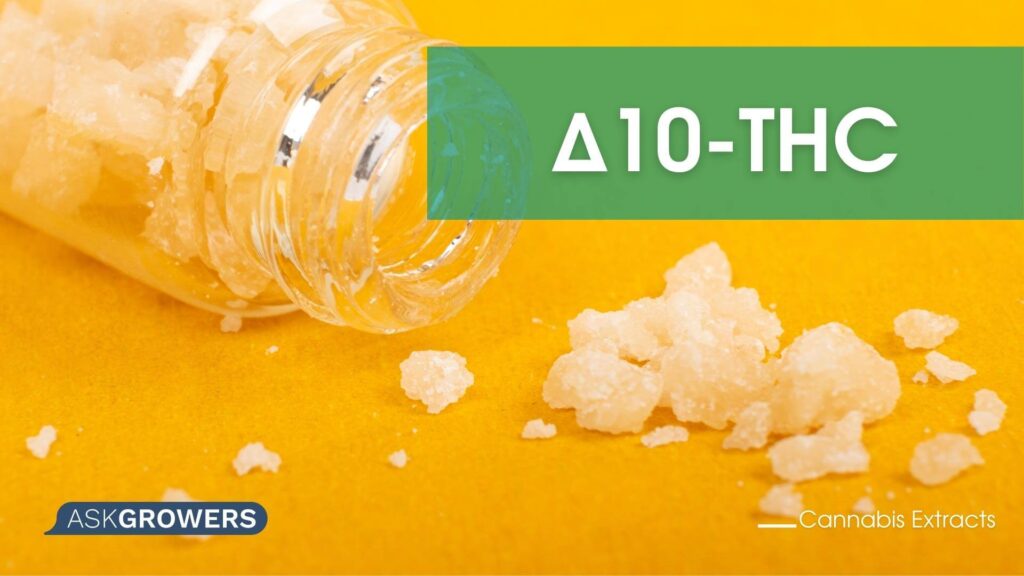
Delta-10, like Delta-8, is used to relieve stress and promote general wellness. It is prized by many for its lack of side effects and, though still relatively obscure, is quickly gaining in popularity.
Delta-10 dosage recommendations depend both on the intention of the application as well as the user’s general tolerance level. Everyday use may require doses of around 10-20 mg. However, this recommendation can increase significantly for patients with higher tolerances.
High levels of Delta-10 are not recommended before operating a vehicle, as they can impair concentration.
Delta-10 can be used as a tincture, eaten, taken in pill form, or vaped. Vaped Delta-10 typically activates in your system within twenty minutes, while other modes of ingestion could take hours to realize their effects.
HHC
Known for its relaxing effect, HHC is broadly reported as producing results that are a cross between Delta-10 and THC. Though found naturally in some sativas, HHC is also, and more commonly, synthetically produced.
Because HHC tends to be more potent than other cannabis-extracts, it typically features lower dosing recommendations. Inexperienced users often take only 5 mg. However, those with a higher tolerance may regularly consume upwards of 30.
Like most extracts, HHC can be taken in tincture form, vaped, or consumed in prepackaged products like pills, gummies, or other food items.
THCO
THCO is a potent cannabis extract that produces psychoactive euphoric effects similar to that of THC. In fact, THCO has been rumored to boast potency levels triple that of THC.
Due to its potency, THCO typically features very mild dosage levels that, for the beginner, can be as low as 3 mg. Depending on whether your intention is to microdose, or experience the entire host of THCO’s psychoactive effects, however, you may opt for a significantly higher dosage.
THCO is commonly vaped. Vaping this substance is the quickest way to experience its effects. However, it can also be taken in the form of a tincture or gummy at a slightly higher dose.
THCP
Similar to Delta-9, THCP is known for its intense potency. Though relatively obscure, this substance has been admired by the people who have tried it for the intensely euphoric sensations that it produces.
Because of its intense potency, THCP dosing usually begins very small. Users may start with as little as .3 mg and work their way up based on the effect it produces.
THCP is most potent when it is vaped. However, it can also be ingested to great effect through tinctures, and a variety of different edibles.
CBD
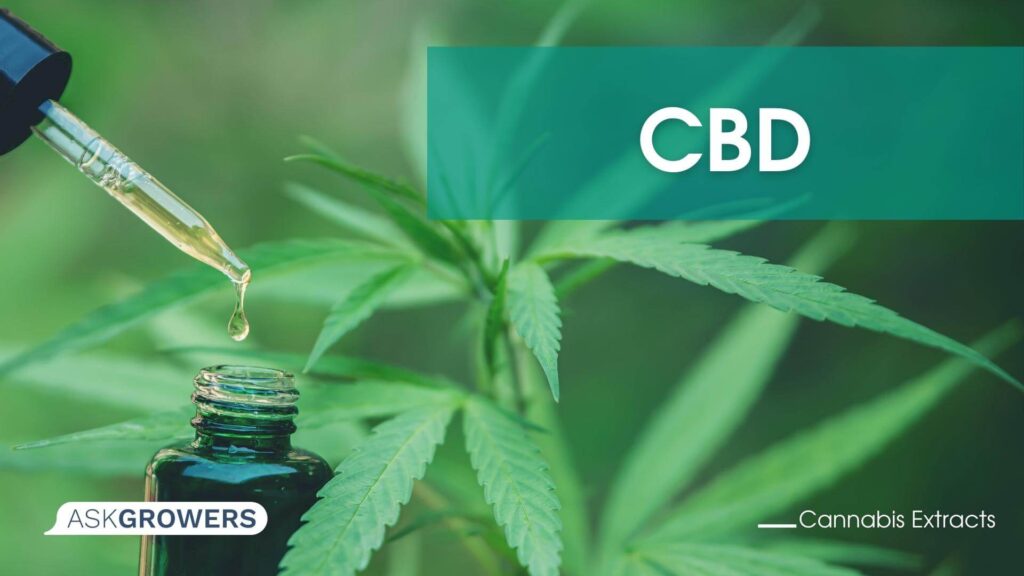
Of all the hemp extracts on the market, CBD is unquestionably the most frequently used. Found in stores all throughout the country, CBD is often used for pain and stress management.
Dosage may vary quite significantly depending on the application. For example, 40 mg may be used to treat significant pain. Lower doses may be more appropriate for basic daily use.
It’s also worth noting that CBD is being explored in a more traditionally medicinal sense, with products replacing certain epilepsy medications. In these emerging medicines, doses tend to be very high, though there are still prized for producing few side effects.
CBD oil has been broadly incorporated in a wide variety of application methods—including foods, drinks, pills, extracts, and more.
CBG
CBG is commonly used to combat inflation. Though often used interchangeably with CBD, anecdotal evidence seems to suggest that CBG may be more effective when it comes to managing pain.
CBG dosages commonly range quite widely, going from 2.5 mg all the way up to 25 mg for some users. It can be smoked, vaped, or ingested through tinctures and other edibles.
Safety Considerations
Though all of the above-mentioned substances are derived from cannabis plants, not all of them are completely natural. Many are most commonly synthetically produced and, as of yet, broadly unexamined. Though some of these chemicals have been known and observed since the 70s, most have remained primarily unstudied both because they were obscure and legally ambiguous throughout most of the United States.
However, with cannabis being significantly more available, both in terms of supply and by way of its much more permissive legal status, these products are only now beginning to emerge in the context of public consumption.
While there is little to suggest any specific danger from the aforementioned products, it is worthwhile to investigate how suitable they are for your personal health routine.
This is particularly true for users who are interested in supplementing or replacing any existing medications. For best results, speak to your doctor about how suited these substances are for your health needs.
Though it is not uncommon to find claims that CBD and other hemp products can be used to shrink cancer cells, or otherwise cure disease, it’s also worth noting that no evidence supports these claims. All of the products described above may be used to address symptoms of discomfort but should not be looked at as a cure for anything.
Getting These Products
Getting your hands on the products described above might be challenging depending on where you find yourself in the world. Some of them, of course, are quite ubiquitous. Walk into most gas stations in the United States and there is a decent enough chance you will encounter at least one product containing CBD.
Other products, however, have a much more uncertain legal status. For example, THCO and THCP are both incredibly potent chemicals with psychoactive properties that may exceed those of THC by a significant margin. For this reason, they can be difficult to find, and potentially against the law.
To make sure that you remain in compliance with your local ordinances, it is always a good idea to consult the laws of your community. Despite the uncertain legal status of some of the products described above, it’s more than safe to say that cannabis plant derivatives will continue enjoying a massive amount of popularity all around the world.
Both hemp and marijuana plants contain thousands of different chemical properties. While THC and CBD are perhaps the most famous chemicals contained within these plants, they are also a mere drop in the bucket.
As scientists continue exploring the various effects of these many chemicals, new products are sure to emerge in the not-so-distant future.
When Snoop lights his blunt, he’s already got readily available psychoactive THC, apart from the THCa that is being converted to THC when he takes a puff.
Snoop Dogg, our generation’s king of all things weed, never ceases to surprise. His latest blunt-smoking modus operandi involves putting a fully-rolled joint into the microwave for 11 seconds, which he says helps to “trap all the ingredients.”
He’s mentioned it on Twitter in 2013:
U will learn tha best way w microwave a blunt n get advice from ur favorite rappers favorite rapper #westfesttv
But why does he do it? Let’s look at the science, which Snoop obviously did.
You may have heard the word decarboxylation, which in organic chemistry speak means the removal of one or more carboxyl groups (a combination of two functional groups attached to a single carbon atom), from a molecule. In weed speak, this refers to the process of heating up cannabis to a specific temperature to activate the compounds in it.
While it may sound like something to be done in a chemistry lab or at least with a special decarb machine (which exists by the way), you can also decarb your cannabis at home with the appliances in your kitchen, like the simple microwave.
What happens then?
Decarboxylation is a chemical reaction that causes a carboxylic acid to release carbon dioxide. Tetrahydrocannabinolic acid, THCa, is a carboxylic acid. During the decarboxylation process, THCa gives off one carbon atom and two hydrogen atoms (which form carbon dioxide CO2). The process also converts cannabolic acid (CBDa) into CBD.
THCa, the natural state of THC found in the plant, won’t get you high because it can’t stimulate your cannabinoid receptors. However, when you apply heat during the decarboxylation process, the chemical structure of THC changes to Delta 9 THC, making it possible for this compound to interact with your endocannabinoid system and get you high.
So, when Snoop lights his blunt, he’s already got readily available psychoactive THC, apart from the THCa that is being converted to THC when he takes a puff. This ultimately translates to a more intense high.
Photo by Leon Bennett/Stringer/Getty Images
Why the Microwave?
The first commercially available microwave oven, “Radarange” developed in 1947 by Raytheon, was huge and cost nearly $5 grand. Once the size and price shrunk, they became popular in middle-class homes in the 1970s.
Instead of producing natural heat like an oven, a microwave targets water molecules (moisture) in the food or anything you put in the microwave.
Why Don’t We Do This All The Time?
If decarboxylation is so effective, why doesn’t everyone pop their blunt into the microwave for 11 seconds? Actually, we’re already decarbing our weed as we smoke it by creating the heat that activates the THC, which happens when you puff, puff pass or puff puff hold.
Do we need the weed to be any stronger than it already is? That’s a question of opinion. But, don’t ask Snoop. We’re already pretty sure what he’ll say.