“The most effective way to disrupt the unregulated marketplace is for lawmakers and regulators to swiftly provide cannabis consumers with an accessible and affordable legal marketplace.” — NORML
Consumers’ decisions regarding whether to purchase cannabis products from the legal market or the unregulated market are influenced primarily by price and convenience, according to data published in the Journal of Studies on Alcohol and Drugs.
Canadian researchers surveyed a cohort of more than 11,000 marijuana consumers in the United States and Canada. Respondents said that they were most likely to forgo accessing marijuana from the legal marketplace if they believed that they could obtain cheaper products more conveniently from unregulated sources.
Photo by Ivan-balvan/Getty Images
“Higher prices and inconvenience of legal sources were common barriers to purchasing legal cannabis,” authors concluded. “Future research should examine how perceived barriers to legal purchasing change as legal markets mature.”
Data has previously shown that cannabis consumers are willing to pay higher prices for legal cannabis products because they believe that they are superior to those available from other sources. However, consumers acknowledge that they will not pay for products that they perceive are priced excessively high.
Separate data provided earlier this year by Leafly.com reported that jurisdictions with the most robust legal cannabis markets and the fewest local bans on retail outlets are most successful at disrupting unregulated cannabis supply chains.
“The most effective way to disrupt the unregulated marketplace is for lawmakers and regulators to swiftly provide cannabis consumers with an accessible and affordable legal marketplace,” NORML Deputy Director Paul Armentano said. NORML has consistently criticized the enactment of municipal bans on cannabis-related businesses, opining that they perpetuate the unregulated market by limiting consumers’ access to licensed products.
Full text of the study, “Reasons for purchasing cannabis from illegal sources in legal markets: Findings among cannabis consumers in Canada and U.S. States, 2019-2020,” appears in the Journal of Studies on Alcohol and Drugs.
With five states determining adult use legislation this November, another Green Wave could soon sweep the United States. The potential wave brings ample business opportunities, legal cannabis sales and the end to cannabis criminalization in legalized jurisdictions.
These are the states with cannabis legalization on the ballot this year.
Photo by FatCamera/Getty Images
Arkansas
In September, the Arkansas Supreme Court ruled that voters will decide the fate of adult-use cannabis this November. If approved, the bill would mark the second voter past cannabis bill in the state, following the 2016 passage of medical cannabis.
Key legislation parameters include possessing up to an ounce of cannabis and expanding the number of licensed dispensaries from 40 to 120.
The bill’s fate remains to be determined. An October 2022 poll of 974 likely voters noted a dip and support for cannabis legalization. Of those asked, 36.5% said they definitely would vote for the bill. 43% of respondents were either probably or definitely against the measure. 6.5% claim to be undecided.
Maryland
Maryland’s adult-use cannabis bill aims to expand on adult-use legislation passed in 2014, with sales starting three years later.
If Maryland ballot question 4 is approved, adults 21 and over would be permitted to possess up to 1.5 oz of cannabis and 10 grams of concentrate, beginning in July 2023. A companion piece of legislation, House Bill 837, would decriminalize those possession amounts until July 2023.
Chances of a bill passage appear high in Maryland at this time. An October 2022 poll by The Washington Post and the University of Maryland suggests that the measure should pass, with nearly three-quarters of respondents claiming to support the proposed legislation.
Photo by Olena Ruban/Getty Images
Missouri
Missouri’s March toward cannabis reform has been steadily progressing over the last few years. After the passage of medical cannabis in 2018 and the rollout of sales in 2020, voters will next determine if adult use gets the green light. A bill passage would allow adults 21 and over to participate in the adult use marketplace while expanding parole and record rehabilitation opportunities for people affected by the drug war.
Two polls conducted in September and October indicate that legalization could fall short, but it is too close to call at this time. A September analysis by Remington Research Group found 43% of respondents supporting the measure, with 10% unsure. An October poll by Emerson College and The Hill found 48% backing the ballot measure, with 17% unsure.
North Dakota
North Dakota’s Compassionate Care Act could see the state approving adult use, building off the backs of 2016’s medical legalization.
If approved, citizens 21 and older would be allowed to possess up to one ounce of cannabis and four grams of concentrate. The measure would also allow the home cultivation of up to three plants. A bill passage would also compel the state Department of Health and Human Services to establish policies regarding retail, including the licensure of up to 18 dispensaries.
Few, if any, recent polls have delved into statewide sentiment. A September 2022 poll conducted by the Dickinson Press of its southwest readers found support waning, with 40% supporting the measure, down from 60% when pulled in 2018.
April 2022 data from Civiqs and reported on by FiveThirtyEight found that North Dakota had the lowest support for cannabis legalization in the US, at 52%.
Photo by adamkaz/Getty Images
South Dakota
South Dakota voters will again look to pass adult-use legislation in 2022. The effort follows up on 2020’s passage of medical and recreational laws. Despite passing with 54% of the vote that year, the adult use component of the law was struck down by the state Supreme Court when Justices determined the ballot question violated state rules mandating ballot measures focus on a single question.
Recent polling indicates that the state is heading towards a tight race this time. An October South Dakota State University survey found that of 565 registered voters, 45% supported legalization, while 8% were undecided.
Coming Soon: Oklahoma
Oklahomans will have the opportunity to decide if they would like to see their state adopt adult use measures. But, voters will need to wait a few months longer than the rest. Their voice will be heard in March after Governor Kevin Stitt authorized a special election for the measure.
Benzinga’s Take: No matter where you stand on the issues, let your voice be heard. Do your part and vote whenever possible.
High schoolers experiment and do dumb things…one has lead a business owner to encourage parents to talk to their kids
A cannabis business owner issued a warning due to high school students going a bit to far experimenting with marijuana. The Billings, Montana guy felt called to action in the changing world of legalization and lack of education for students.
Rich Abromeit, the CEO of Montana Advanced Caregivers, explained that dabs are much more concentrated than other marijuana products and that an overdose of them can feel and produce symptoms akin to being drunk.
Photo by Roman Budnyi/Getty Images
“It would be like drinking too much,” he said. “You’re going to get nauseous, vomit, want to lie down. You’re going to want to sleep. You’re not going to be very coherent.”
Abromeit then said that dabbing is often used by medical marijuana users or people who have built up a cannabis tolerance over the years. “If you came in with no tolerance and use something with 80 percent THC, it would be a miserable experience,” he said. “Your average cannabis these days is 18 to 22%. Dabs can be upwards to 90%, 92%.”
He then called for more information before a product is consumed and equated cannabis to alcohol in terms of different strengths and effects depending on the type. “Educating the public and public safety is the most important task I believe we have right now,” he said.
Earlier this week, two students from the local high school were taken to the hospital after overdosing on dabs.
Public Schools Superintendent Greg Upham encouraged parents to speak with their kids regarding marijuana.
“You need to understand what this level of THC (the active ingredient in marijuana), and what the legalization of marijuana is all about for our kids,” he said.
Despite the scare, all students involved were now okay.
Though all of these substances are derived from the cannabis plant, not all of them are completely natural; many are synthetically produced and, as of yet, broadly unexamined.
Since hemp became legal on the federal level, entrepreneurs the world over have been looking to cash in, and a large segment of the consuming public has been all too interested to find out what they will come up with.
As exciting as new cannabis extracts may be, they also generate lots of questions. How safe are these new chemicals? Where can they be found and who are they for? The answers to these questions can be quite complicated.
In this article, we take a look at a few of the new products out there. What they are, how they work, and how to use them. Read on to learn more!
Photo by Kirill Vasikev / EyeEm/Getty Images
Delta-8
Delta-8 is a synthetic hemp-derivative that has only recently come before the public eye. Like other hemp-derivatives, it has been used to reduce stress and regulate sleep patterns. Some also associate it with increased levels of focus.
Delta-8 dosage can vary significantly depending on the purpose of its application. However, standard use dosages often come in at around 20-32 mg.
Delta-8 can be infused with tinctures, edibles, and pills. It can also be vaped using dabbing rigs and most standard vape pens.
Delta-10
Delta-10, like Delta-8, is used to relieve stress and promote general wellness. It is prized by many for its lack of side effects and, though still relatively obscure, is quickly gaining in popularity.
Delta-10 dosage recommendations depend both on the intention of the application as well as the user’s general tolerance level. Everyday use may require doses of around 10-20 mg. However, this recommendation can increase significantly for patients with higher tolerances.
High levels of Delta-10 are not recommended before operating a vehicle, as they can impair concentration.
Delta-10 can be used as a tincture, eaten, taken in pill form, or vaped. Vaped Delta-10 typically activates in your system within twenty minutes, while other modes of ingestion could take hours to realize their effects.
HHC
Known for its relaxing effect, HHC is broadly reported as producing results that are a cross between Delta-10 and THC. Though found naturally in some sativas, HHC is also, and more commonly, synthetically produced.
Because HHC tends to be more potent than other cannabis-extracts, it typically features lower dosing recommendations. Inexperienced users often take only 5 mg. However, those with a higher tolerance may regularly consume upwards of 30.
Like most extracts, HHC can be taken in tincture form, vaped, or consumed in prepackaged products like pills, gummies, or other food items.
THCO
THCO is a potent cannabis extract that produces psychoactive euphoric effects similar to that of THC. In fact, THCO has been rumored to boast potency levels triple that of THC.
Due to its potency, THCO typically features very mild dosage levels that, for the beginner, can be as low as 3 mg. Depending on whether your intention is to microdose, or experience the entire host of THCO’s psychoactive effects, however, you may opt for a significantly higher dosage.
THCO is commonly vaped. Vaping this substance is the quickest way to experience its effects. However, it can also be taken in the form of a tincture or gummy at a slightly higher dose.
THCP
Similar to Delta-9, THCP is known for its intense potency. Though relatively obscure, this substance has been admired by the people who have tried it for the intensely euphoric sensations that it produces.
Because of its intense potency, THCP dosing usually begins very small. Users may start with as little as .3 mg and work their way up based on the effect it produces.
THCP is most potent when it is vaped. However, it can also be ingested to great effect through tinctures, and a variety of different edibles.
CBD
Of all the hemp extracts on the market, CBD is unquestionably the most frequently used. Found in stores all throughout the country, CBD is often used for pain and stress management.
Dosage may vary quite significantly depending on the application. For example, 40 mg may be used to treat significant pain. Lower doses may be more appropriate for basic daily use.
It’s also worth noting that CBD is being explored in a more traditionally medicinal sense, with products replacing certain epilepsy medications. In these emerging medicines, doses tend to be very high, though there are still prized for producing few side effects.
CBD oil has been broadly incorporated in a wide variety of application methods—including foods, drinks, pills, extracts, and more.
CBG
CBG is commonly used to combat inflation. Though often used interchangeably with CBD, anecdotal evidence seems to suggest that CBG may be more effective when it comes to managing pain.
CBG dosages commonly range quite widely, going from 2.5 mg all the way up to 25 mg for some users. It can be smoked, vaped, or ingested through tinctures and other edibles.
Safety Considerations
Though all of the above-mentioned substances are derived from cannabis plants, not all of them are completely natural. Many are most commonly synthetically produced and, as of yet, broadly unexamined. Though some of these chemicals have been known and observed since the 70s, most have remained primarily unstudied both because they were obscure and legally ambiguous throughout most of the United States.
However, with cannabis being significantly more available, both in terms of supply and by way of its much more permissive legal status, these products are only now beginning to emerge in the context of public consumption.
While there is little to suggest any specific danger from the aforementioned products, it is worthwhile to investigate how suitable they are for your personal health routine.
This is particularly true for users who are interested in supplementing or replacing any existing medications. For best results, speak to your doctor about how suited these substances are for your health needs.
Though it is not uncommon to find claims that CBD and other hemp products can be used to shrink cancer cells, or otherwise cure disease, it’s also worth noting that no evidence supports these claims. All of the products described above may be used to address symptoms of discomfort but should not be looked at as a cure for anything.
Getting These Products
Getting your hands on the products described above might be challenging depending on where you find yourself in the world. Some of them, of course, are quite ubiquitous. Walk into most gas stations in the United States and there is a decent enough chance you will encounter at least one product containing CBD.
Other products, however, have a much more uncertain legal status. For example, THCO and THCP are both incredibly potent chemicals with psychoactive properties that may exceed those of THC by a significant margin. For this reason, they can be difficult to find, and potentially against the law.
To make sure that you remain in compliance with your local ordinances, it is always a good idea to consult the laws of your community. Despite the uncertain legal status of some of the products described above, it’s more than safe to say that cannabis plant derivatives will continue enjoying a massive amount of popularity all around the world.
Both hemp and marijuana plants contain thousands of different chemical properties. While THC and CBD are perhaps the most famous chemicals contained within these plants, they are also a mere drop in the bucket.
As scientists continue exploring the various effects of these many chemicals, new products are sure to emerge in the not-so-distant future.
When Snoop lights his blunt, he’s already got readily available psychoactive THC, apart from the THCa that is being converted to THC when he takes a puff.
Snoop Dogg, our generation’s king of all things weed, never ceases to surprise. His latest blunt-smoking modus operandi involves putting a fully-rolled joint into the microwave for 11 seconds, which he says helps to “trap all the ingredients.”
He’s mentioned it on Twitter in 2013:
U will learn tha best way w microwave a blunt n get advice from ur favorite rappers favorite rapper #westfesttv
But why does he do it? Let’s look at the science, which Snoop obviously did.
You may have heard the word decarboxylation, which in organic chemistry speak means the removal of one or more carboxyl groups (a combination of two functional groups attached to a single carbon atom), from a molecule. In weed speak, this refers to the process of heating up cannabis to a specific temperature to activate the compounds in it.
While it may sound like something to be done in a chemistry lab or at least with a special decarb machine (which exists by the way), you can also decarb your cannabis at home with the appliances in your kitchen, like the simple microwave.
What happens then?
Decarboxylation is a chemical reaction that causes a carboxylic acid to release carbon dioxide. Tetrahydrocannabinolic acid, THCa, is a carboxylic acid. During the decarboxylation process, THCa gives off one carbon atom and two hydrogen atoms (which form carbon dioxide CO2). The process also converts cannabolic acid (CBDa) into CBD.
THCa, the natural state of THC found in the plant, won’t get you high because it can’t stimulate your cannabinoid receptors. However, when you apply heat during the decarboxylation process, the chemical structure of THC changes to Delta 9 THC, making it possible for this compound to interact with your endocannabinoid system and get you high.
So, when Snoop lights his blunt, he’s already got readily available psychoactive THC, apart from the THCa that is being converted to THC when he takes a puff. This ultimately translates to a more intense high.
Photo by Leon Bennett/Stringer/Getty Images
Why the Microwave?
The first commercially available microwave oven, “Radarange” developed in 1947 by Raytheon, was huge and cost nearly $5 grand. Once the size and price shrunk, they became popular in middle-class homes in the 1970s.
Instead of producing natural heat like an oven, a microwave targets water molecules (moisture) in the food or anything you put in the microwave.
Why Don’t We Do This All The Time?
If decarboxylation is so effective, why doesn’t everyone pop their blunt into the microwave for 11 seconds? Actually, we’re already decarbing our weed as we smoke it by creating the heat that activates the THC, which happens when you puff, puff pass or puff puff hold.
Do we need the weed to be any stronger than it already is? That’s a question of opinion. But, don’t ask Snoop. We’re already pretty sure what he’ll say.
More that 130 advocacy groups are planning to write a letter to Biden, asking him to expand the pardons to several excluded groups of people.
Advocates are calling for an expansion of Biden’s marijuana pardon, specifically, one that includes immigrants that have been deported due to these types of offenses.
Biden’s pardons affect nearly 6,500 Americans. Still, these pardons only affect US residents and citizens.
Photo by simpson33/Getty Images
ABC News reports that over 130 advocacy groups are planning on collaborating on a letter to Biden, asking him to expand the pardons and include refugees, asylum seekers and visa holders with marijuana convictions.
“Moving forward, we urge you to ensure that every step taken to remedy racial injustice includes relief to impacted immigrant communities,” says a draft of the letter. “In particular, we urge you to extend protection to all immigrants, regardless of immigration status, and to take necessary steps to ensure that immigrants do not suffer negative immigration consequences from marijuana convictions.”
Per the Transactional Records Access Clearinghouse, over 48,000 immigrants were deported for marijuana possession between the years 2003 and 2020.
When asked for comment, the White House replied: “The President’s full, unconditional pardon is the first categorical pardon in 45 years and will bring relief to thousands of Americans, disproportionately Black and brown, who are unfairly barred from housing, employment, and benefits,” said assistant press secretary Kevin Munoz.
He did not address the topic of immigrants directly.
Photo by Alex Wong/Getty Images
New York representative Alexandria Ocasio-Cortez talked about Biden’s pardon and shared her objections regarding the exclusion of undocumented people. “And, even recently with President Biden’s marijuana executive order, I very much applauded that he went there, but he exempted people if they were convicted while they were undocumented,” she said.
“That is 90%. We’re looking at the overwhelming majority of people who have been convicted that would benefit from that pardon, they have status complications,” AOC said. “We really need to step up, both in our efforts on campaigning but also our efforts in governance.”
Your body may react to anesthesia differently depending on how you ingest cannabis, how often you partake, and your dosage.
If you’re planning to use marijuana before surgery, it’s crucial to do so safely. Start by talking to your doctor about whether it’s a good idea for you to use marijuana before surgery.
Cannabis can interact with other medications, so it’s important to know what you’re taking and how those interactions might affect you. It’s also best to avoid vaping or smoking marijuana before surgery, as smoking or vaping can irritate your lungs and make it harder to heal.
Photo by engin akyurt via Unsplash
Weed and Anesthesia
When it comes to weed and anesthesia, it is necessary to follow the advice of your doctor and anesthesiologist. While some people think that using marijuana before anesthesia will make them more relaxed during surgery, it can lead to complications. Your body may react to anesthesia differently depending on how you ingest cannabis, how often you partake, and your dosage.
Marijuana and anesthesia affect the central nervous system similarly, which means people who regularly consume marijuana may require more anesthesia. Therefore, your doctor needs to know how much and how often you use marijuana to determine what to give you.
Anesthesiologists agree you should avoid eating cannabis edibles and smoking marijuana for at least six hours before anesthesia. In some cases, eating before surgery can cause aspiration pneumonia, a severe complication that can result in death. If someone is put under anesthesia within an hour or two of using marijuana, he or she is at an increased risk of complications. This risk is most profound in patients with cardiovascular disease, increasing their chances of experiencing strokes.
If you want to know about smoking weed after anesthesia, ask your anesthesiologist as the answer will vary based on the surgical procedure and a variety of other factors.
Smoking Weed After Wisdom Teeth Removal
Smoking weed after wisdom teeth removal is often a concern for patients. Many people want to know if it’s safe to smoke weed after getting wisdom teeth removed and whether it will cause more pain or damage. Some people can smoke weed safely after wisdom teeth removal without any problems, while others may experience some anesthesia-related side effects like dizziness, nausea, or vomiting.
If you are considering smoking weed after wisdom teeth removal, it is best to speak with your dentist first. They can advise you on if it is safe and any precautions you should take. In general, it is not recommended to smoke weed within 48 hours after getting wisdom teeth removed.
Smoking weed after wisdom teeth removal increases the risk of developing dry sockets. A dry socket happens when the blood clot at the extraction site comes loose or falls out prematurely due to trauma like smoking or using straws. Smoking weed can dry out saliva, which increases your risk of developing a dry socket. Want to know how weed causes dry mouth?
Photo by Cedric Fauntleroy via Pexels
One of the most frequently asked questions is, “Can you eat edibles after wisdom teeth removal?” In general, the answer is yes. Edibles are a great way to relieve pain and improve sleep after surgery. Just make sure to avoid anything crunchy or chewy, as it could irritate the surgical site. However, you should avoid ingesting cannabis if you are on narcotic painkillers due to the surgery.
Additionally, if you want to use cannabis edibles after wisdom teeth removal, you should consult your dentist. The topic hasn’t been extensively researched, so they will give you the best advice. Additionally, make sure your dentist knows that you smoke weed before you go under anesthesia.
Cannabis After Surgery
Consuming cannabis after surgery is a popular choice due to its pain-relieving properties. Some people also enjoy smoking weed after surgery to reduce nausea and vomiting, which are common side effects of surgery and anesthesia. Additionally, cannabis can make it easier to fall asleep while you’re recovering from your procedure.
If you’re heading into surgery in the future, know that smoking weed before getting anesthesia can increase the risk of complications. This topic is not well-studied, so we advise you to speak with your doctors, surgeons, and anesthesiologists about using cannabis before or after surgery.
South Dakota regulators approved an important change in the state’s medical marijuana program. In a 5-1 vote on Tuesday, the panel approved the proposal to allow the state Department of Health to remove a requirement from how the department chooses how or if a medical condition qualifies for treatment with cannabis, reported Keloland.
In other words, the department no longer must determine if “treatments currently available for the proposed condition are either ineffective or produce harmful side effects.”
Furthermore, the state official also allowed the department to change the wording of a related requirement.
The wording was changed from “Medical use of cannabis will provide therapeutic or palliative benefits that outweigh the risks of cannabis use” to “Medical use of cannabis is determined to provide benefits that outweigh the risks of cannabis use.”
Tim Engel, an attorney representing the South Dakota State Medical Association, doesn’t support these changes and Rep. Kevin Jensen agrees, saying that there would no longer be any way to identify the benefits.
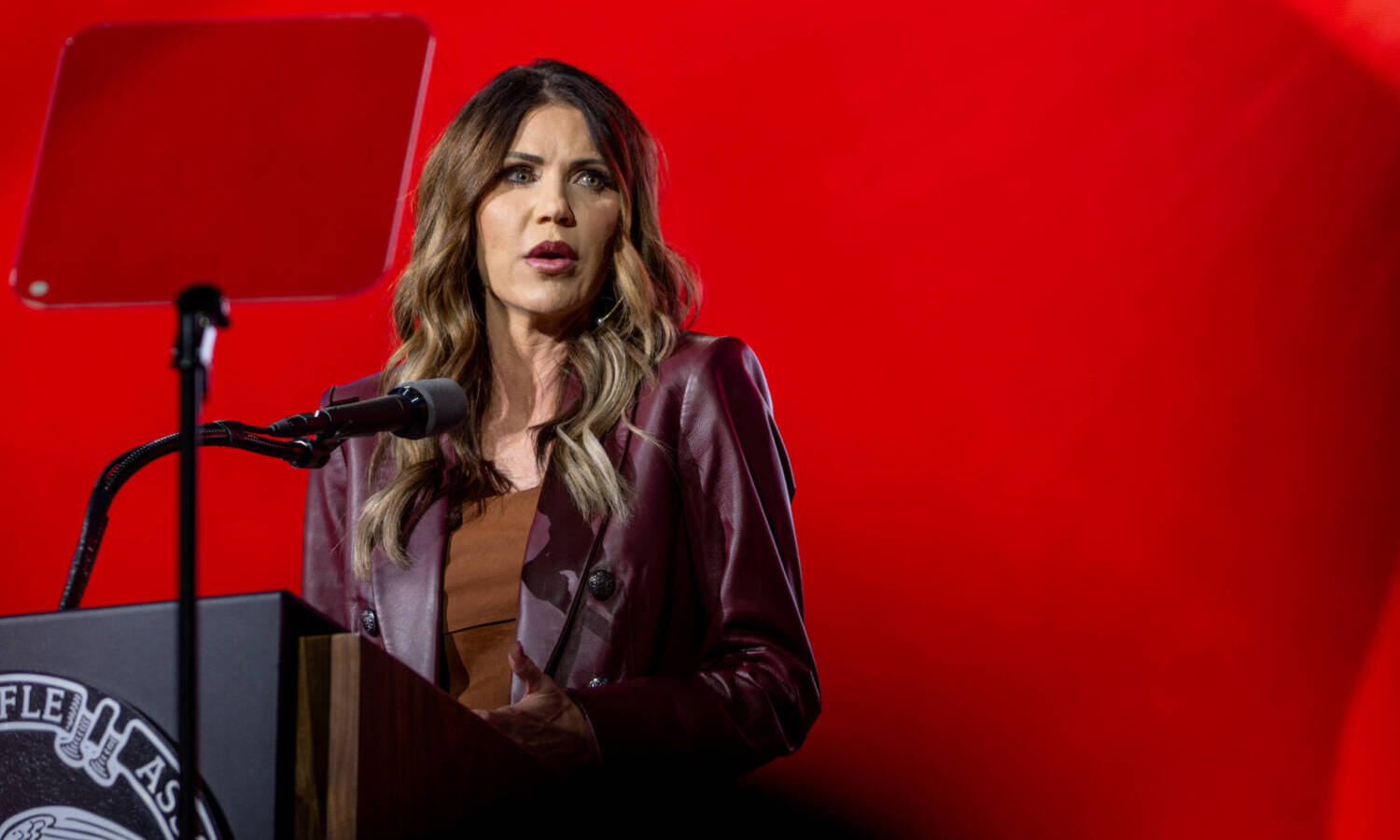
Gov. Kristi Noem / Photo by Brandon Bell/Getty Images
Recent Cannabis Developments In South Dakota
The news comes on the heels of the state’s governor Kristi Noem (R), who has opposed adult-use marijuana legalization for a while now, saying she’d allow the implementation of the law, if voters approve it on the Nov. 8 ballot.
During a recent meeting with around 20 constituents in Rapid City, Noem explained why she challenged the 2020 ballot measure, which advocates criticized for overturning the will of the people as 54% of voters backed it. The governor talked about what would happen if she gets reelected and initiates Measure 27 if it is approved next week in the elections. The bill would legalize recreational marijuana for adults over 21.
Noem had initially insisted on the court challenge, saying the measure was unconstitutional. The governor now says the new recreational marijuana proposal has been written correctly.
“If it passes, it’s going to be implemented. That’s just the facts,” Noem said.
During a recent debate, Chuck Schumer talked about a cannabis banking reform and expungement bill, claiming it was very close to happening.
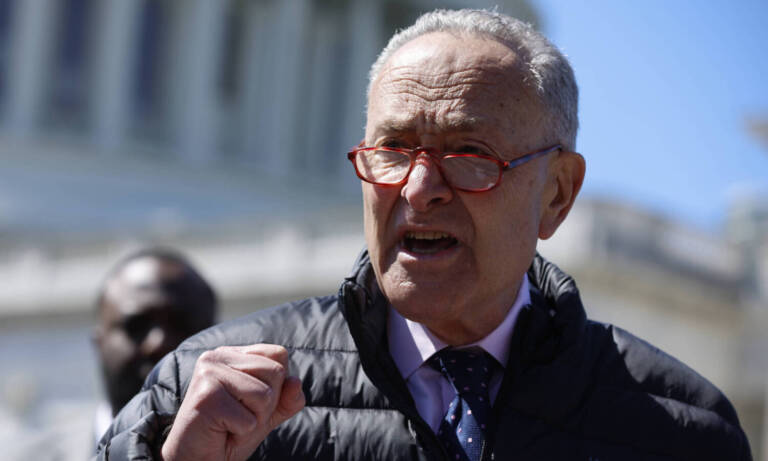
Senate Majority Leader Chuck Schumer has made it clear that cannabis is a topic that’s been avidly discussed by Congress. He says that soon there will be a bill addressing topics like banking and the expungement of prior cannabis convictions.
These statements were made on Sunday during a debate with his Republican opponent Joe Pinion. Schumer was asked specifically about the SAFE Banking Act.
https://www.youtube.com/watch?v=bd2E9qqiH_E
“I am working in a bipartisan way with Democrats and Republicans to take the SAFE Banking Act, which allows financial institutions to involve themselves in cannabis companies and lend money to them—but it also does some things for justice, such as expunging a record,” he said.
He also talked about expunging records and how important it was to act fast. “I’m working with a bunch of Republican senators, a bunch of Democratic senators, to get something passed,” he said.
Pinion had a different outlook on cannabis, talking about the high levels of THC and how these are dangerous and different than in years past. “We’re talking about THC levels that have been off the charts,” he said. “I think you bring up a good point, the notion that we would release it on the citizenry at the federal level before we’ve actually done the due diligence seems reckless and irresponsible. Just my thoughts.” He also talked about fentanyl-laced cannabis, a scare tactic that’s been debunked repeatedly in the past.
The topic of cannabis banking has been discussed extensively and has been a hindrance in many legal states. “The lack of safe banking and financial services for the cannabis industry in the State of Colorado has become a dire public safety issue for highly regulated cannabis businesses operating in compliance with state law,” said Colorado officials in a letter sent to Congress in October.
The SAFE Banking Act has passed the House on several occasions but stalled in the Senate.
As markets mature, cannabis users seek diversity and higher potency, triggering the demand for manufactured cannabis products.
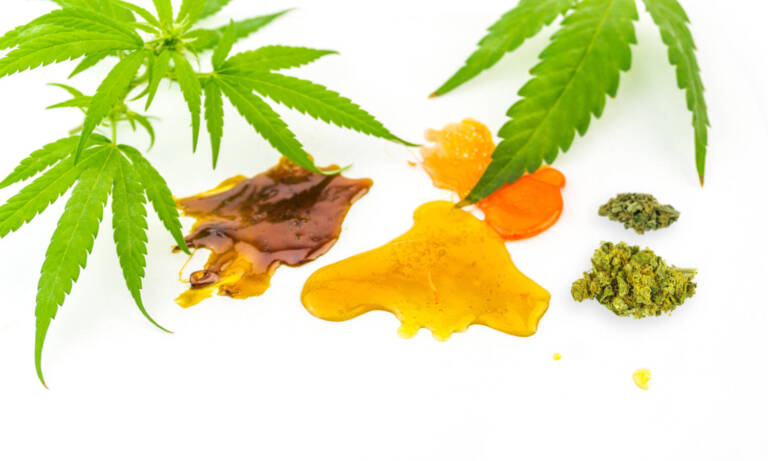
According to The Brightfield Group, a cannabis analytics firm, cannabis consumers are turning to extracts and concentrates as they seek more bang for their buck.
Falling flower prices and economics of scale behind producing extracts such as live resin or rosin, weigh in as factors that contribute to their popularity among cannabis users.
Photo by Roman Budnyi/Getty Images
As markets mature, cannabis users seek diversity and higher potency, triggering the demand for manufactured cannabis products.
“More than 64% of consumers are using cannabis at least daily. … The more frequently you use it, the higher your tolerance becomes. That’s helping build the concentrates market,” Bethany Gomez, Brightfield’s managing director told MJBizDaily.
Gomez said consumers are more price sensitive given inflation, and products have become much more refined in branding and packaging.
“We see consumers not willing to give up on their cannabis usage, not willing to use any less product. But they’re definitely looking for a stronger bang for their buck, which is why concentrates can be a really effective product for heavy users,” Gomez said.
Live Resin, Wax And Rosin: Top 3 In The US
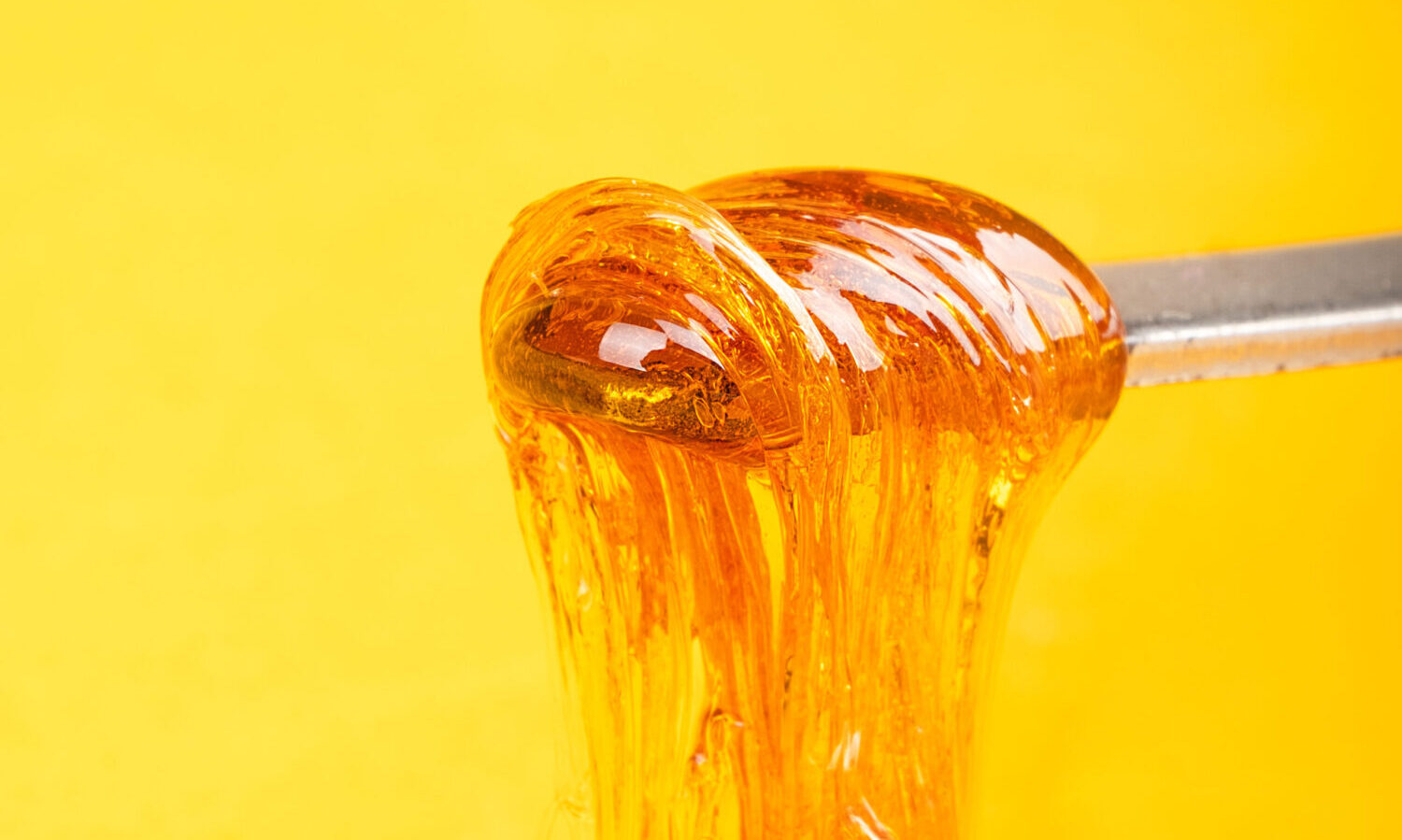
As wholesale flower prices drop country-wide, concentrate products have become cheaper. That allows some stores to sell cartridges for $11, although prices can spike depending on the quality of the product and branding.
According to Cooper Ashley, analytics manager at data company Headset, “live resin is far and away the most popular segment (within concentrates) by a pretty good margin. Right now, we have live resin at the top. Wax is the second, rosin is the third.”