Researchers recruited 274 cannabis users who had used cannabis at least weekly over the past three months, and matched them with non-users of the same age and gender.
New research by the University of Cambridge, U.K, showed that “adult and adolescent cannabis users are no more likely than non-users to lack motivation or be unable to enjoy life’s pleasure.”
According to researchers, “there is no scientific basis for the stereotype often portrayed in the media.”
“We’re so used to seeing ‘lazy stoners’ on our screens that we don’t stop to ask whether they’re an accurate representation of cannabis users,” the authors said. “Our work implies that this is in itself a lazy stereotype.”
Scientists from UCL, the University of Cambridge and the Institute of Psychiatry, Psychology and Neuroscience at King’s College London examined whether “cannabis users show higher levels of apathy (loss of motivation) and anhedonia (loss of interest or the pleasure of rewards) compared to controls and whether they were less willing to exert physical effort to receive a reward.”
The team recruited 274 adolescent and adult cannabis users who had used cannabis at least weekly over the past three months, with an average of four days per week, and matched them with non-users of the same age and gender, according to the study published in the International Journal of Neuropsychopharmacology.
Photo by Dejan Marjanovic/Getty Images
Method: Participants completed questionnaires to measure anhedonia and their levels of apathy. Nevertheless, the researchers did not find a link between the frequency of cannabis use and either apathy or anhedonia in the people who used cannabis.
Results: “We were surprised to see that there was really very little difference between cannabis users and non-users when it came to lack of motivation or lack of enjoyment, even among those who used cannabis every day,” Martine Skumlien, a Ph.D. candidate in the Department of Psychiatry at the University of Cambridge said after seeing the results. “This is contrary to the stereotypical portrayal we see on TV and in movies.”
Conclusions: However, “we need studies that look for these associations over a long period of time to confirm these findings,” said Dr. Will Lawn, from the Institute of Psychiatry, Psychology, and Neuroscience at King’s College London.
Photo by RODNAE Productions from Pexels
More Than Lazy Stoners
A 2017 study found that marijuana users, who are commonly singled out as unproductive people, have instead proven to be successful cannabis entrepreneurs. According to the study, cannabis users may feel motivated or be able to enjoy the pleasure of life, as well.
In addition, is known that many athletes, recognized as cannabis patients, have taken marijuana as a replacement for modern medicine. Recently, Aussie Footie legend Andrew Johns revealed that medicinal cannabis is helping him with chronic pain and brain seizures. Johns said that for almost 30 years he depended on sleeping pills and anti-inflammatory meds, but medicinal cannabis reversed that need.
A pair of studies linked this type of food to cancer, especially in people who consumed large amounts of it over their lives.
Many foods have been linked to cancer, but one food group continues to reappear as a risk factor. According to two new studies, processed foods like hot dogs and chips continue to be paired with cancer and having higher risks of death.
NBC News reported on these findings, showing why these studies are concerning when applied to the general population.
Man Escapes Driving Ticket By Saying That He Was Eating A McDonald’s Hash Brown
The two studies, one conducted in Italy and one in America, followed large groups of people and found consistent results.
In the study conducted in America, specifically on U.S Health workers that were trailed for a period of 24 to 28 years, researchers found that men who consumed high amounts of ultra-processed foods had a risk of 29% of developing colorectal cancer. And while the participants that were the highest consumers of ultra-processed foods ate about 80% of their daily caloric intake from that source, the national average in the U.S. is 57%. Not as extreme, but not that far off.
Interestingly, researchers didn’t find these same results when applied to women. One possible theory is the existence of estrogen, which might protect women from these adverse side effects.
Processed and ultra-processed foods are tough to define, but people generally associate the term with junk foods. Ultra-processed foods have even more chemicals and additives than processed ones, like microwave dinners and packaged sweets.
Another interesting finding is the strong link between colorectal cancers and these types of foods. Researchers believe that this is due to the stomach lining being the first element in contact with the foods.
“Diet is probably playing a role in the increase in obesity that we continue to see, and we know that obesity is associated with colorectal cancer and other cancers as well,” said Caroline Um, principal scientist at the American Cancer Society. “We’re seeing more young adults being obese [and] having things related to obesity, such as diabetes and metabolic syndrome.”
We all know processed foods aren’t healthy, but it might be helpful to learn just how unhealthy they are, with their effects going beyond our waistline. They’ve been previously linked with brain damage, cardiovascular disease, and more.
A study conducted in Brazil found that people who consumed over 20% of their caloric intake from processed foods experienced a faster decline in brain performance. Compared to the results of the study conducted on health workers, the evidence is concerning and something that may take decades to recover from.
Warning Letters are a fairly minor enforcement action. However, the FDA also has the authority to levy fines and even refer cases to the Department of Justice.
The Food and Drug Administration (FDA) has consistently taken the position that cannabidiol derived from hemp (CBD) cannot be marketed or sold as a dietary supplement or food. The FDA’s position is based on the fact that CBD has been approved for use in a pharmaceutical drug and therefore cannot legally be sold in any ingestible form.
In addition, if a CBD company makes any health or wellness claims (e.g., CBD can help you relax, CBD cures back pain) then the FDA will consider the product an unauthorized drug.
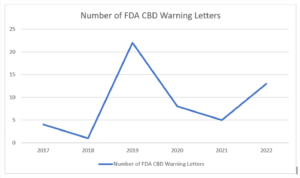
The FDA has enforced this position against companies selling CBD by issuing Warning Letters, which, as the name suggests, warns companies regarding the improper sale of adulterated and misbranded foods. Despite the consistency from the FDA, there has been a recent uptick from the agency in sending out Warning Letters to CBD companies.
*note: one letter was sent in 2022 to a company selling delta-8 and is not reflected in this graph.
As you can see, the Warning Letters spiked in 2019, which coincides with the passage of the 2018 Farm Bill in December 2018. With the rise of Covid, the FDA was preoccupied with the pandemic and the amount of Warning Letters decreased significantly. However, it appears that the FDA is again setting its sights on CBD, with 13 Warning Letters going out in 2022. I would expect that number to increase because the year is not yet complete.
Warning Letters are a fairly minor enforcement action. However, the FDA also has the authority to levy fines and even refer cases to the Department of Justice. A Warning Letter can also lead to more severe actions from the FDA, as well as harm a company’s reputation and spook investors.
Because of this uptick in Warning Letters, it’s a good time to reevaluate how to mitigate risks of selling CBD. This requires avoiding any direct or indirect claim that CBD has any health or wellness benefits. Direct claims are along the lines of “CBD cures insomnia” or “CBD can treat anxiety.” Indirect claims can be referencing a study regarding CBD, posting customer reviews indicating that CBD has some medical benefit, or implying in any way that CBD does in fact have some positive health or wellness impact.
If you are unsure how to mitigate the risks associated with CBD products, feel free to reach out to our regulatory attorneys for more information.
Daniel Shortt is a corporate and regulatory attorney based in Seattle, Washington who works extensively with entrepreneurs in the cannabis industry. You can contact him at info@gl-lg.com or (206) 430-1336. This article originally appeared on Green Light Law Group and has been reposted with permission.
The study showed similar results to previous studies that have recognized an association between cannabis use and a lower risk of developing cancers such as bladder, neck, and liver cancer.
A new study published in the journal Cancer Medicine explored the association between cannabis use and the risk of urological cancers. Researchers analyzed the cannabis use of 151,945 individuals with information on cannabis use in the UK Biobank from 2006 to 2010.
Related to the study’s method, “Crude and age-standardized incidence ratios of different urological cancers were evaluated in the entire cohort and subgroups. Cox regression was performed for survival analysis,” said the study conducted by researchers from China, the UK, and France.
Results: Researchers found that previous use of cannabis was a “significant protective factor for renal cell carcinoma and prostate cancer in multivariable analysis.”
Another association between previous cannabis use and renal cell carcinoma, as well as bladder cancer, was seen in women but not in men. The study also found no significant association between cannabis use and testicular cancer.
Photo by Tima Miroshnichenko via Pexels
Conclusion: “Previous use of cannabis was associated with a lower risk of bladder cancer, renal cell carcinoma, and prostate cancer,” the researchers stated. “The inverse association between cannabis and both renal cell carcinoma and bladder cancer was only found in females but not in males.”
The study showed similar results to previous studies that have recognized an association between cannabis use and a lower risk of developing cancers such as bladder, neck, and liver cancer.
According to another recent study published in the journal Cureus, on a trial that included participants enrolled in the NY state’s medical cannabis registry, patients with advanced cancer respond favorably to medicinal cannabis.
Said researchers, “The goals of this study were to review the characteristics of patients who received medical marijuana under our ambulatory palliative care program and to determine barriers to access and use of medical marijuana in this population.”
Bank failures, Indictment, weather – it has been a week, time to set back and unwind in a healthy way.
Rough weather, indictments and calls for riots, bank failures have dominated the news – all that is missing are murder hornets and an interview from Prince Harry and Meagan. Maybe it is time to unplug, unwind and chill in a healthy way. Relaxation is “a process that decreases the effects of stress on your mind and body.”
According to the Mayo Clinic, nearly everyone can benefit from learning relaxation techniques. Breathwork and meditation are common relaxation techniques, as is drinking herbal tea or using aromatherapy. Consider a long walk, yoga or just turning off the news and turning on some calm music.
In the first set of relaxation techniques, you are interacting with your autonomic nervous system to lower your state of arousal. In the second set of relaxation techniques, you are using natural compounds to promote feelings of relaxation. These natural compounds could be anything from lavender or chamomile, to cannabis or CBD.
Interestingly, the compound in lavender that relaxes you is called linalool, which is a terpene that you can find in various cannabis strains.
What does it look like to use cannabis or CBD to help you relax?
It could be a weekend warrior who uses a 1:1 THC:CBD tincture most nights to relax after working at a high-stress job, taking care of the kids, and maintaining a rigorous training schedule. Or a yoga practitioner staying healthy at 70 by using CBD oil to amplify the relaxation brought on by her yoga nidra meditations. Or a young couple who shares a joint before bowling night to relax and be more present in the moment.
Photo by Fiordaliso/Getty Images
Does Weed Help You Relax?
What is the difference between using weed to relax and using weed to relieve stress? While stress relief and relaxation are interrelated concepts, we are drawing a distinction between these two goals.
When you use weed to relieve stress, you are bringing yourself from a state of mild physical or emotional discomfort, anxiety, or unpleasantness to a normal state. When you use weed to relax, you are in a normal state, and you are using cannabis to banish any remaining tension and sink into a state of deep calm and relaxation. Of course, many Jointly users want to relieve stress and relax at the same time, so these experiences are often chosen together.
So, does weed help you relax? Weed is well-known to produce feelings of calm and relaxation at low doses. According to a joint study from University of Chicago and University of Illinois in Chicago, a low dose of cannabis significantly reduced feelings of stress and promoted feelings of relaxation in healthy subjects. But a slightly higher dose increased feelings of stress.
Higher doses of cannabis may not relax you, as THC has a biphasic response in which low doses relieve stress and promote feelings of relaxation, while high doses may increase stress or even make you paranoid. In general, side effects from cannabis can be mitigated by taking the minimum effective dose you need to get the results you want.
Does Weed Relax Muscles?
Muscle tightness and cramps can be caused by some common medications, by dehydration, or by overexerting yourself. Tight muscles and cramps can be painful and unpleasant, but there is some evidence that weed helps relax tight muscles. Most of the research on how weed affects tight or spasming muscles has been done on multiple sclerosis. While medical marijuana may be part of the treatment plan for multiple sclerosis, we are discussing using weed relax tight muscles from the wear and tear of daily life.
Muscle spasms are thought to originate in areas of the brain that control movement, and several of these sites contain high concentrations of endocannabinoid receptors. While the exact mechanisms by which cannabis alters movement haven’t been teased out, the way cannabis affects these brain areas likely plays a role in why so many people find that weed relaxes tight muscles.
Photo by Kampus Production via Pexels
Why Does Weed Help You Relax?
We have determined that a low dose of cannabis may promote feelings of relaxation and that weed does relax muscles, but why does weed help you relax? Weed is great for relaxing because of the wide variety of psychoactive effects produced by cannabis. Remember that the definition of relaxation is a state in which you are free from negative emotion, which allows you to have greater resilience when you are experiencing stress.
Cannabis promotes feelings of relaxation by decreasing feelings of stress and anxiety, elevating your mood, uplifting and energizing your mind, and keeping you occupied in the present moment. Together, this combination makes cannabis a highly effective relaxation tool. To learn all about the different ways cannabis helps relieve mild daily stress or how weed uplifts and energizes your mind, click those links!
But here is a quick overview of why cannabis helps you relax:
Cannabis produces its effects when molecules called cannabinoids interact with your endocannabinoid system (ECS). The ECS is a “ubiquitous system that provides homeostatic balance to the nervous and immune systems, as well as many other organ systems.” The ECS plays a role in modulating everything from sleep, to mood, to appetite, which is why cannabis can produce such a wide range of effects.
The ECS is composed of the endogenous ligands (AEA and 2-AG) also known as endocannabinoids, their receptors (CB1 and CB2), and the enzymes that degrade and recycle the ligands. Ligands and receptors are like keys and locks. When the ligand binds to the receptor, it produces a signal in the cell. To understand why cannabis has such a relaxing effect, we need to zoom in a little bit on how THC affects the brain.
A Deep Dive On Why Weed Relaxes You
Most psychoactive effects from cannabis come from THC interacting with CB1 receptors in your brain. Within the brain, CB1 receptors are expressed on GABAergic, glutamatergic, serotonergic, noradrenergic, and dopaminergic axon terminals. An axon terminal is the end of a nerve fiber that holds neurotransmitters and releases them across the synapse to the target cell. GABA, glutamate, serotonin, noradrenaline, and dopamine are neurotransmitters.
Neurotransmitters are chemical messengers that are released from the axon terminal of a neuron and trigger changes in the target cell.
When you ingest THC, “activation of these [CB1] receptors results in a robust suppression of neurotransmitter release into the synapse.” In other words, THC interacts with CB1 receptors on axon terminals, which suppresses the release of neurotransmitters. Glutamate is the primary excitatory neurotransmitter and GABA is the primary inhibitory neurotransmitter, and “the equilibrium between GABAergic and glutamatergic transmission provides an appropriate emotional reactivity.” Basically, GABA helps you feel calm, and glutamate stimulates your brain.
CB1 receptors are widely expressed on GABAergic neurons and, to a lesser extent, on glutamatergic neurons. Scientists have proposed that “low THC doses…act preferentially on glutamatergic neurons, whereas high THC doses have been proposed to act also at GABAergic neurons.”
Essentially, a low dose of THC may suppress the release of glutamate in your brain, relaxing you. A higher dose of THC may suppress the release of GABA, leading to anxiety. This reality may explain why cannabis has biphasic effects, promoting relaxation in low doses, but sometimes increasing anxiety in high doses.
Photo by Andrea Piacquadio via Pexels
Meditating While High
One of the best ways to relax is to combine your favorite relaxation technique with cannabis. For example, you could try meditating while high. You might wonder, does weed help with meditation? Can you meditate while high?
As you might expect, the best way to enhance your meditation practice with marijuana is to microdose. High doses of cannabis are more likely to cause anxiety or disorientation, which may make it difficult to meditate while high.
Some people find that weed helps them meditate because it helps them stay present in the moment. When mindfulness practitioners are tuning into their environment, they listen to the sounds around them, they feel the breeze on their skin, they smell the air—they tune in to their sensory perceptions and the world around them.
Cannabis is well-known to increase your sensory perception, possibly amplifying your connection to the present moment. If you want to supercharge your relaxation, try meditating while high.
Does CBD Relax You?
Many people find CBD to be more relaxing than THC. While CBD is a cannabinoid like THC, it exerts its effects through different mechanisms of action.
Research has shown that CBD can affect the serotonin system and the ECS in ways that may promote relaxation. For example, levels of the endocannabinoid AEA are correlated with feelings of relaxation, and CBD has been shown to elevate levels of the AEA by inhibiting the enzymes that break it down.
You can incorporate CBD into your relaxation practice in lots of creative ways. For example, you could massage a CBD balm into your feet before taking a relaxing walk. Or you could take a CBD oil capsule before your meditation session. Or you could take a few puffs of a high CBD strain before taking a bath. Both full-spectrum CBD and isolate CBD bolster your endocannabinoid system and can promote feelings of relaxation. Please note that CBD is not an FDA approved treatment for stress and anxiety disorders and we are discussing using CBD to improve your general well-being.
How Much CBD to Relax?
How much CBD do you need to take to relax? CBD has a good safety profile and is well-tolerated in most people from doses of 5mg to 500mg. Of course, everyone is different. The way CBD affects you might not be the same as another person. The best way to find out how much CBD you need to relax is to experiment with different dosages and CBD products and record your experiences on the Jointly app.
Best Weed Strains to Relax
If you have been inspired to add cannabis to your relaxation toolkit, you might be wondering what is the best marijuana strain to relax and mellow out? If you search online, you will find recommendations about Blue Dream, OG Kush—potent, high-THC strains that have a significant psychoactive effect. But before you choose your relaxing weed strain, we encourage you to look at our article Why Jointly is Better than a Strain Finder. In that article, you will learn what strain names really mean and how to use Jointly to discover the most effective products in your area.
Jointly is a cannabis wellness platform that helps you achieve your wellness goals with cannabis and CBD. Perhaps you will discover that you feel the most relaxed when you eat a 1:1 weed gummy in the afternoon, after a hard workout.
When you use Jointly, you are rating how well a product helped you achieve your wellness goals. Over time, your average ratings should go up as you optimize how you consume cannabis and CBD. Use the Results Tracker feature to make sure your results are improving over time.
How to Find Cannabis and CBD Products for Relaxation
Looking for products that can help relax? Brands and manufacturers have designed a vast range of legal cannabis and CBD products for this exact purpose: lemon balm-infused CBD gummies, vape pens with relaxing blends of terpenes, CBD-rich bath bombs and more. But how do you know if these products actually work? Jointly’s Product Finder feature allows you to look up legal, licensed cannabis and CBD products in your state based on your wellness goals. Select Relaxation and see how other users like you rated a product on a scale from 1-10, based on how well it helped them relax. By reporting your cannabis and CBD consumption, you are contributing important data to the Jointly community and helping Jointly make better product and routine recommendations for you.
Download the Jointly app on the App Store or the Google Play Store to get started on your cannabis wellness journey.
Believe it or not, smoking is currently the most common method of use for those who incorporate weed into their workouts. Here’s why it may not be right for you.
Infusing marijuana into workout routines is not a new concept, but it certainly is growing in popularity. In fact, a recent study from the University of Colorado, Boulder surveyed cannabis users in legal states and found that 81.7% of participants endorsed using marijuana at the same time as exercising. Clearly marijuana has started to find its footing among the fitness community, at least among those who enjoy both fitness and cannabis.
With more states legalizing recreational weed this trend is only likely to grow more and slowly find its way into the mainstream. While the science is inconclusive about whether you perform much better or worse while under the influence of a bit of THC, it isn’t stopping people from trying it out. But when you decide to add some THC into your fitness regimen, what is the best way to consume it for the best experience?
Photo by Li Sun via Pexels
Smoking Wins the Popular Vote
When you think about the best habit to help your workout, inhaling smoke is probably at the bottom of the list. Still, believe it or not, it is currently the most common method of use for those who incorporate weed into their workouts. At least that is what the results of a recent FitRated study suggest.
The majority of participants in the study (61.1%) opted for a smoking method, with the most popular choice among those methods being a pipe (25.3%). This is compared with 14.3% of participants opting for vaping, 11.8% popping edibles, and only 3.7% went with tinctures.
If you just went by these numbers and what is most popular among those already getting high and exercising, smoking would be the clear winner. Keep in mind there are many factors involved. Flower is often much easier to come by than edibles, vape cartridges and tinctures.
While all the participants in the study enjoyed cannabis, they may not all have had the same access to diverse dispensary offerings. Still, if you were wary about smoking a little weed before working out, perhaps these numbers will put you at ease.
Vaping for the Smoke-Free and the Novice
While smoking is the most popular option, vaping may be the smartest. For one, a hit or two from a vape is likely to leave your lungs less affected that the possible residue from a pipe. This is particularly true if you do not smoke normally.
Not only is vaping a bit easier on the lungs for the novice, but it is also easier to gauge than edibles. Since you can feel the effects of a vape almost right away, it can be something you do just moments before your workout. This requires no planning, not to mention, you won’t smell like a Phish concert!
Photo by Bruno Nascimento via Unsplash
Edibles For Long Distance Enthusiasts
Edibles are another strong contender for those looking to workout with some weed, but they work best with specific types of workouts. As we have previouslyreported, one of the biggest differences with edibles is that they take longer to kick in, and much longer to fade away.
The strength of an edible depends on dosage, but it is safe to say you should not do any exercises that involve complicated movements. There are some great activities for when you take an edible though. Long distance running, hour-long stationary bike classes, or even long rowing sessions would all pair nicely with edibles. Longer yoga classes and edibles are another popular combination, as they can help you focus and feel centered in your practice.
Tinctures and Topicals For Recovery and Leveling Up
Tinctures and topicals are not nearly as popular as edibles, vapes or smoking when it comes to combining weed with exercise. Still, this does not mean there is no home for them in this realm. One great thing about tinctures is they have some of the best benefits of edibles combined with the benefits of vaping.
Photo by CRYSTALWEED cannabis via Unsplash
For one, you don’t need to inhale and vapor or smoke, so your lungs are happy. Also, most tinctures are not derived from only fat, but from mainly alcohol, which allows them to get absorbed rapidly into your system. This also means dosing (and re-dosing) is very easy.
Tinctures should not be forgotten by those looking to incorporate marijuana into their workouts. As we previouslyreported, tinctures are popular methods for both relieving pain or simply relaxing.
So whether you are in pain after a workout, or needing a relaxing way to get through your current one, a drop or two of tinctures may be just the ticket.
A push to legalize medical marijuana in Tennessee failed last year when a bill from Republican Senator Janice Bowling was killed, even though it advanced through a committee previously.
However, separate legislation sponsored by Bowling’s fellow Republicans — Rep. Bryan Terry and Sen. Ferrell Haile — received a hearing in the House Criminal Justice Committee a year later.
The bill, SB2477/HB2458, would allow those with qualifying medical conditions to use medical cannabis legally. It will also regulate the cultivation, production, distribution, transport, sale, and possession of cannabis for medical use and research.
Moreover, she pointed out that her piece of legislation secured her an invitation to Alabama last year, where Gov. Kay Ivey signed a medical cannabis bill into law.
“It was kind of bittersweet to go [to Alabama] and rejoice with them and kind of be sad that Tennessee didn’t do it,” she said.
Photo by Brandon Jean via Unsplash
A Restaurant That Serves THC
Meanwhile, Tennessee recently got a bar and restaurant that serves THC. However, THC in the products derives from hemp, making it legal at the federal level.
Located at 1246 3rd Avenue in the Germantown neighborhood, Buds & Brews features a menu of “upscale bar fare” paired with a line of “delicious cannabis-infused sauces.”
The restaurant provides patrons with over 25 THC-infused condiments for common dressings like ketchup, honey mustard, and ranch dressing. Also, steak sauce infused with hemp-derived THC in 1-5 milligram servings.
Cannabis does not need to have a large carbon footprint, but it does, and it’s not going away anytime soon.
Weed really does grow “like a weed” in some parts of the country. As states legalize medical and recreational marijuana, however, most natural growing has been tossed aside and replaced with energy-laden practices.
Some farming techniques use shocking amounts of electricity and natural resources while simultaneously pumping harmful toxins into the environment. If left unchecked, these growing methods may have lasting effects on the environment and global climate.
Most modern farming uses some natural resources. Cannabis cultivation, however, currently requires significantly more resources than other types of horticulture. “A 2012 report on the carbon footprint of indoor production found that cannabis production makes up 1% of national electricity use,” according tothe National Conference Of State Legislatures.
Photo by Olena Ruban/Getty Images
The reason for this giant electric bill has a lot to do with how and where marijuana is grown. “Nationally, 80% of cannabis is cultivated indoors with sophisticated lighting and environmental controls designed to maximize the plant’s yield,” according toPolitico. Cannabis requires specific temperatures, humidity levels, lots of water and sunlight hours in order to yield a most lucrative crop.
Ventilation of these indoor facilities is not only pivotal to healthy plant growth, but also perhaps the most costly factor in cannabis farming. According to this article on TED.com, “The biggest energy use comes from constantly bringing fresh air into growing facilities, since proper ventilation is essential for fueling photosynthesis and preventing pests and mold.”
Cannabis can grow very quickly compared to other plants. In turn, it absorbs a great deal of C02 and gives off lots of oxygen. If cannabis cultivation occurred wildly and organically outdoors, this could potentially be good for the environment. But most of the energy used to ventilate indoor facilities cancels out this potential benefit. Some facilities even emit high levels of dangerous C02 to magnify the plants’ growth potential.
“They are putting in bottled CO2, or they’re burning natural gas on-site to basically get CO2 in the room,” Hailey Summers, the first author on a frequently-cited study on the energy costs of cannabis, and a Ph.D. candidate at Colorado State University, toldSlate. Not all growers pump C02 into their indoor facilities. Still, this practice is permitted and widely used, as there is no current federal regulation that dictates against procedures like these.
Federal legalization may be one of the best ways to decrease the carbon footprint of marijuana farming in the U.S. This would help standardized federal growing practices and provide environmental oversight. Additionally, it would be legal to transport cannabis between states.
Currently, cannabis sold in a state that has legalized cannabis must be grown and sold in the same state. Consider oranges. If the same rules applied to oranges then Maine would need to grow their own oranges. This would require indoor facilities, lights, heat and a lot more energy and money than growing oranges in Florida.
The same can be said for cannabis growth. “The crux of the problem is that federal prohibition means that you cannot transport any cannabis across state lines,” Baylen Linnekin, an agriculture lawyer and senior fellow at the Reason Foundation, told Rolling Stone.
Cannabis does not need to have a large carbon footprint, but it does, and it’s not shrinking. As global leaders continue to ponder the massive climate change problem, there is much to contemplate. It may be worth considering the ever-growing multibillion dollar business of cannabis, and how to turn its carbon footprint into a fresh set of lungs.
The fact of the matter is that we shouldn’t even really be having this debate. We need to acknowledge that drug prohibition is the worst solution for everyone.
Unless you’ve been living under a rock for the past two decades – cannabis is popular! Over the past 10 years, the support for full cannabis legalization has only been growing and some of the recent polls suggest that close to 70% of the country is in favor of making marijuana legal.
According to a recent Gallup poll, “Gallup has documented increasing support for legalizing marijuana over more than five decades, with particularly sharp increases occurring in the 2000s and 2010s. In 2013, a majority of Americans, for the first time, supported legalization. As was the case in 2020, solid majorities of U.S. adults in all major subgroups by gender, age, income, and education support legalizing marijuana.”
With this continued support for the legalization of cannabis, we might see the pool of regular users swell slightly, however, as of now there hasn’t been a major influx in “new users” despite cannabis being legal in several places. This only goes to show that not everyone who supports cannabis legalization are users themselves.
Nonetheless, for those who make the rules there is still the question about the net effect of cannabis on society and whether it will have a positive impact or not is always up for debate. Hell, it’s the very reasons why drug laws exist in the first place.
Of course, we can always look at one drug that is readily accepted by those who would caution us against cannabis legalization; I’m talking about ethanol baby!
Throughout the rest of this article we’ll take a closer look at the impact of cannabis and the impact of alcohol. Based on this assessment, we can see whether there would be a net-positive or negative based on these conditions.
If cannabis is to be such a risk to society, then surely any other drug with higher mortalities and adverse side effects should be scrutinized at the same level as cannabis. In the following article we’ll compare alcohol and cannabis and weigh out the risks and benefits of each.
Photo by Matthew Micah Wright/Getty Images
Cannabis vs. Alcohol: Yearly Deaths
According to the Centers fo Disease Control and Prevention (CDC), an estimated 95,000 people (approximately 68,000 men and 27,000 women) die from alcohol-related causes annually, making alcohol the third-leading preventable cause of death in the United States.
The leading causes of alcohol-attributable deaths due to chronic conditions in the United States were: alcohol-associated liver disease, heart disease, stroke, unspecified liver cirrhosis, liver cancer, and supraventricular cardiac dysrhythmia, AUD, breast cancer, and hypertension.
Yet, despite these horrific side effects of alcohol, it is celebrated and promoted everywhere. Now don’t get me wrong, alcohol companies should be able to peddle their drugs to their user-base even if these side-effects are so horrific.
Don’t think for a second that I’m advocating the prohibition of alcohol. Rather, I’m merely pointing out that a drug that has more causal side-effects than cannabis is currently legal and easily accessible.
Now let us check the yearly cannabis-related deaths and do our comparison.
Despite the low overall chances (virtually impossible) of dying from a weed overdose, some fatalities do occur.
The National Academies of Sciences, Engineering, and Medicine released a book-length examination of the health risks associated with various forms of cannabis. This examination included an in-depth review of the risks for fatal and nonfatal overdoses.
People cannot die from too much cannabis in their system, yet many people have died under the influence of marijuana. Basically, people get too high and do some occasional dumb stuff that gets them killed.
Accidental injuries are the most common manners of death
No deaths were due to direct cannabis toxicity.
Most cases included multiple substances, with alcohol the most prominent.
Photo by Ozge Yagmur / EyeEm/Getty Images
Medical Benefits of Alcohol
The main psychoactive ingredient in alcoholic beverages is ethanol. Generally referred to as alcohol, ethanol is the substance that makes you drunk.
It’s produced by yeasts that digest the sugar in certain carb-rich foods, such as grapes — used to make wine — or grains — used to make beer. Some types of fine red wine are rich in antioxidants and consuming one glass of wine a night will not significantly impact your health and you may even reap some of the benefits.
That said, consuming high amounts does not provide greater health benefits. In fact, if you were to get sh*t-faced every night for the next month, I can guarantee there would be a significant decline in your physical and mental wellbeing. Conversely, if you were to smoke heavy amounts of cannabis for a month straight, your physical health would not degrade as significantly and in most cases, your mental health wouldn’t be changed too significantly.
This isn’t to say you should binge toke for a month, it’s just an example!
Medical Benefits of Cannabis
The marijuana plant contains more than 100 different cannabinoids. Each one has a different effect on the body. Delta-9-tetrahydrocannabinol (THC) and cannabidiol (CBD) are the main chemicals used in medicine.
THC also produces the “high” people feel when they smoke marijuana or eat edibles.
There are enough health benefits of cannabis consumption to fill a book, but here are the most notable and researched ones:
Pain Management
Stress & Anxiety Management
Dealing with Psychological Trauma
Bringing Homeostasis to the Body
Anti Cancer Properties
Anti Seizure Properties
Anti-Viral/Anti-Bacterial
And the list goes on. It is hard to believe and fully accept that a plant with such health benefits is still frowned upon and prohibited by the majority of governments around the world.
Medical Side Effects of Alcohol Abuse
Alcohol has a long history of destroying the lives of its users, health risks are numerous and fatal, and the annual death rate alone should tell you the degree of danger it imposes on society. .
For the short terms risks, alcohol can cause:
Injuries, such as motor vehicle crashes, falls, drownings, and burns & the infinite amount of stupid shit people do while drunk
Alcohol poisoning, a common medical emergency that results from high blood alcohol levels.
Miscarriage and stillbirth, this one is pretty self-explanatory.
Photo by Adam Jaime via Unsplash
As for the long-term risks, this is where things start to get concerning, there is a long list but I’ll be mentioning the most likely to happen:
High blood pressure, heart disease, stroke, liver disease, and digestive problems.
Cancer of the breast, mouth, throat, esophagus, liver, colon, and rectum.
Weakening of the immune system, increasing the chances of getting sick.
Learning and memory problems, including dementia.
Mental health problems, including depression and anxiety.
Alcohol use disorders, or alcohol dependence.
Medical Side Effects of Cannabis Abuse
While cannabis seems to be overflowing with health benefits, just like any other substance on this earth, its excess can bring a heavy toll on the mind. Some of the medical side effects of cannabis are according to “official sources”
Drowsiness
Slow reaction times
Lower ability to pay attention and impaired coordination
Respiratory problems
It’s important to note that the vast majority of users will never experience these symptoms, except for when they are stoned. However, the moment you’re sober again – the first three side effects wear off. Respiratory problems are uncommon with chronic cannabis users, however, this doesn’t mean that you should abuse the smoke.
Some of these risks apply for some and seem non-existent to others, due to the diversity of human genetics, each person experiences the same substance differently.
But for the most part, those who consume cannabis in moderation, never suffer from any of the consequences mentioned.
Correlation Between Violent Crimes and Alcohol
Alcohol plays a big role in criminal activities and violence. Excessive drinking can lower inhibitions, impair a person’s judgment and increase the risk of aggressive behaviors.
Because of this, alcohol-related violence and crime rates are on the rise in the US. People can say whatever they want, but alcohol’s detriment to society is clear as day.
According to the Alcohol Rehab Guide, roughly 40% of inmates who are incarcerated for violent offenses were under the influence of alcohol during the time of their crime. This is probably because alcohol numbs their critical thinking and allow them to override their sense of reason when committing heinous crimes.
I know I’d much rather be drunk if I’m about to go murder someone in cold blood. Fortunately, I have no inclination to murdering anyone and therefore my alcohol consumption is virtually non-existent.
Photo by crotography/Getty Images
Some examples of criminal activities associated with excessive alcohol use include:
Robbery
Sexual Assault
Aggravated Assault
Intimate Partner Violence
Child Abuse
Homicide
However, as you can see, many times the crimes related to alcohol are directed towards innocent people. A drunk abuse father and husband, the young thug trying to prove he’s hard, the rapist getting ready to destroy someone’s world.
Alcohol allows the criminal to bypass their critical thinking, their empathy, and engage in a base-emotional state, driven by impulse. Yet this drug is readily available in every store.
Abuse and Alcohol
Many of those who abuse alcohol end up eventually abusing themselves and the people closest to them. When you tell someone that you come from a broken home, the first thing they ask you is if you had an alcoholic parent.
We are at a point where everyone knows that a raging alcoholic can wreak havoc on society, and sadly, his children, spouse, and other close family members and friends are the most at risk.
While there is much debate as to whether alcohol can be a lone trigger in domestic abuse, it cannot be denied that it is statistically more likely to be involved than it isn’t. Two-thirds of victims of spousal abuse report that the perpetrator had been drinking at the time of the incident(s).
All of this is to show just how devastating the misuse of alcohol can be in our society, and the irony that we’ve been witnessing for years, of how alcohol is being pushed and sold everywhere; As long as you’re not driving while drunk, no one can stop you from drinking your life away.
Conclusion
I think all of the scientific facts mentioned above clearly reveal whether or not cannabis is better for people and society, It is such an obvious answer to what used to be a taboo question. There is no debate, for the many benefits of cannabis overshadow the little risk it may bring when used excessively.
Each year, more people are becoming more aware of the benefits of smoking weed and using cannabis products to enhance their quality of life. However, this doesn’t mean that alcohol should be pushed back into the black market. We know that even more hazardous than alcohol and any drug on this planet is “drug prohibition”. More people die from drug prohibition each year than all drug overdoses in the world.
Alcohol is “more dangerous” than cannabis, yet at no point should we ever restrict the freedom of a person to get blitzed.
Photo by RODNAE Productions from Pexels
The larger question is whether cannabis will deliver a “net positive” on society and while this analysis can’t answer that for sure, we know for a fact that it would be more positive than alcohol.
In fact, as more people begin to consume cannabis and reduce their dependence on alcohol, we should already begin to see a “net positive” effect.
The fact of the matter is that we shouldn’t even really be having this debate. We need to acknowledge that drug prohibition is the worst solution for everyone, and everyone loses.
When we mature as a society and accept that drug use and abuse is a part of our society, we can begin to solve those more specific problems instead of trying to police people’s consumption practices.
A new experimental surgery showed some promising results for the treatment of this severe eating disorder.
Researchers appear to have found a new way to treat binge eating disorder: brain surgery. According to two patients that underwent the procedure, the experiment yielded positive results. They claim to be experiencing fewer food cravings one year later and having more control over their brains.
The pilot study, published in the journal Nature Medicine, only included six participants. Researchers used deep brain stimulation on their brains, a first in the case of binge eating disorders. Surgeons planted a device in the patients’ brains, right under the scalp, which was programmed to detect a craving to binge eat and to zap the brain to manage the impulse.
Photo by Artem Labunsky via Unsplash
While researchers explain that there’s no physical sensation for patients as the device releases its zap, it could affect their moods.
Experts explain that binge eating disorder is a result of a brain mix-up. People aren’t binge eating because they simply can’t control themselves; their brains are sending the wrong signals and causing imbalance.
While researchers are optimistic about the study’s results, they’re also open about the inherent risks of brain surgery. Still, patients spoke to NBC News and were excited with their results, which some called immediate. “Within a few days, I could tell that the cravings were becoming under control,” she said. “I wasn’t constantly thinking about food,” said Robyn Baldwin, a 58-year-old woman from California.
While the results are promising, the participants that have discussed their results are both women of a similar age, who are overweight. This means that, at this point, it’s unknown if these effects will be replicated in other patients. Still, it’s an important first step and an exciting result for millions of people who struggle with binge eating disorders.