The bill approved on Wednesday will now move to Democrat Gov. Roy Cooper’s desk, where he can decide to sign it, veto it, or let it become law with no action.
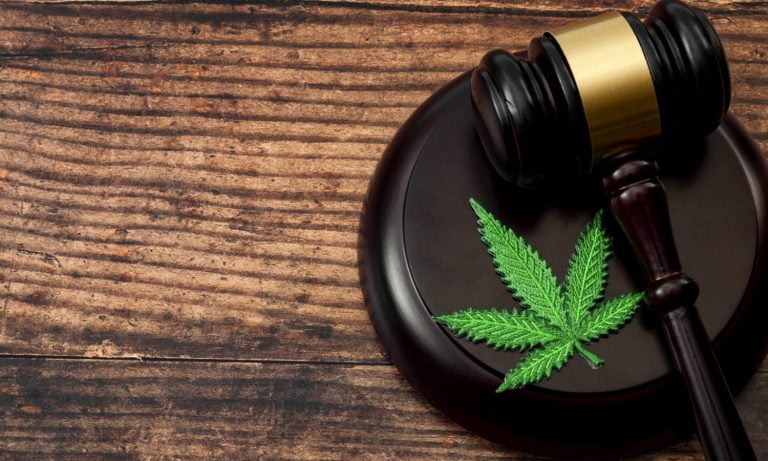
The North Carolina House passed Senate Bill 448, legalizing FDA-approved THC medications in a 92-9 vote, reported The Carolina Journal.
The move came on the heels of the Senate’s approval of a medical marijuana bill known as N.C. Compassionate Care Act, which would also legalize non-FDA-approved medical cannabis.
While it was expected that N.C. Compassionate Care Act would receive opposition and possibly be stalled in the House, with the approval of Senate Bill 448, its chances of passing the House now look even slimmer.
The bill approved on Wednesday will now move to Democrat Gov. Roy Cooper’s desk, where he can decide to sign it, veto it, or let it become law with no action.
Senate Bill 448 discloses changes to Schedule VI of the Controlled Substances Act that would enable prescription drugs containing cannabis and THC to be sold and consumed in North Carolina if the FDA approves the drug.
During Wednesday’s House debate, Rep. Larry Pitman (R) tried to add an amendment to the Controlled Substances Act that no matter the actions by the FDA or federal government, cannabis would remain illegal in the state. Fortunately for medical marijuana patients, the amendment was ruled out of order.
“The first sentence in the title of this is an act to in the absence of the objection from the commission for mental health, developmental disabilities, and substance abuse services, this would be automatic,” McElraft said. “They still have a right to do exactly what they were doing before in that commission. They can still object if they have an FDA-cleared drug that they don’t want to come to North Carolina. I have to remind you these are FDA-cleared drugs. This is not marijuana legalization.”
Rep. Carla Cunningham (D) was also among lawmakers who urged a vote against the amendment saying some children and their families have been forced to go to Colorado for years to obtain FDA-approved treatment for uncontrollable seizures.
Sen. Jim Burgin (R), one of the original co-sponsors of S.B. 448 in the Senate, was in Denver at the time of the bill’s passage. “We can get FDA-approved drugs out to the public sooner with this bill,” Burgin told Carolina Journal in a phone interview.
Earlier this month, Kansas approved similar legislation with Governor Laura Kelly (D) signing a measure that would allow Kansans to obtain FDA-approved prescription drugs derived from cannabis-related products.
When consumers shop around for cannabis flower, there are thousands of strain names to choose from. These cultivars are said to be unique in their chemical and genetic makeup, with a special terpene and flavonoid content as well as THC or CBD. That should make things easier, right?
Then again, when we’re out buying marijuana products, we also encounter labels such as sativa (energizing, uplifting), indica (relaxing, sedating), or hybrid (a combination of both). It should be simple enough. But the truth is that we can no longer rely on these names.
Photo by 2H Media via Unsplash
Cannabis Strains Are Now Irrelevant
In a recent study published in the journal PLOS One, researchers shared the findings of the biggest current analysis about the chemical composition in cannabis products. They analyzed around 90,000 cannabis samples taken from six states, checked their terpene content, cannabinoid makeup, and other chemical analysis from Leafly and other sites. They found that most of the cannabinoids available in recreational cannabis is nothing more than just THC.
The authors stated that labels “do not consistently align with the observed chemical diversity”. In fact, the study’s authors recommend that cannabis products have a proper labeling system just like what we have for the nutrition facts label with food.
“Our findings suggest that the prevailing labeling system is not an effective or safe way to provide information about these products,” says Brian Keegan, co-author of the study. “This is a real challenge for an industry that is trying to professionalize itself,” says the assistant professor of Information Science at CU Boulder, reports the CU Boulder Today.
This is revealing, given the countless names that marijuana growers and marketers have had to come up with over the past few years especially with the explosion of strains that has made the mainstream market. Memorable names are a must: think about Maui Wowie, Stinky Pinky, Han Solo Burger, Alaskan Thunder Fuck are just some of the few famous strain names.
After all, a strain name referring to one that you had an enjoyable experience with while high will stick around. It’s what you will ask your budtender for next time, and it’s a strain you’ll tell your friends about. Clever names are memorable and will pique more interest.
However, as this and other studies show, a name is pretty much all you get. Cannabis genetics change depending on who breeds it and how, so it can be rare to find 100% of the exact same kind of toke experience, genetics, terpenes, chemical makeup, and other factors if you buy your weed of the same strain elsewhere.
The study also says that identifying strains by sativa, indica, and hybrid has nothing to do with the cannabis’s chemical reality. However, they did say that there were three types of terpene combinations that were prominent in specific strains: cannabis strains high in limonene and caryophyllene, pinene and myrcene, and then those with rich myrcene and terpinolene content. These have nothing to do with their current classifications, as the researchers said, they “do not neatly correspond to the indica, sativa and hybrid labeling scheme.”
“In other words, it is likely that a sample with the label indica will have an indistinguishable terpene composition as samples labelled sativa or hybrid,” they say.
Currently, cannabis product marketers have to disclose how much THC and CBD are in a product but there is no regulation that requires them to share what other compounds are in the plant, such as what terpenes or flavonoids there are. On top of that, they can call the strain or product whatever they want. “A farmer can’t just pick up an apple and decide to call it a Golden Delicious. A beer manufacturer can’t just arbitrarily label their product a Double IPA. There are standards. But that is not the case for the cannabis industry,” explains Nick Jikomes, co-author of the study, who is also a director of science and innovation for Leafly.
Genetic Differences, Lab Tests More Important
There have been other studies that share the same results. An older study from 2015, also published in PLoS One, was conducted by researchers from Dalhousie University in Nova Scotia. They wanted to understand the genetic differences in cannabis so they analyzed around 14,031 single-point factors in DNA of 81 cannabis samples as well as 43 hemp samples.
Then another study from 2021 involved researchers analyzing thousands of marijuana samples that represented around 396 strain names in a lab. What was shocking was that these samples represented to be nothing more than 3 chemical varieties of pot, leaving the scientists to conclude that strain names don’t mean anything at all. “The very limited variability in chemical profiles shows that most of these chemovars, while named differently, are almost the same or at least very similar,” they wrote.
The researchers also discussed the absence of standardization in the cannabis industry especially for strain names, adding that they were “poorly or not at all defined.” For us consumers, this leaves us feeling confused, with the lack of information on packaging, consistency, chemical phenotype, genotype, and more.
For these reasons, recreational and medical users are better off buying cannabis products that have a Certificate of Analysis (COA). The COA is a document provided by a third-party laboratory that shows you exactly what’s in your cannabis, and this is the closest thing we can get to a “nutrition facts panel” for cannabis as of the moment. It acts as a quality check of sorts, and depending on the test results or laboratory, can provide consumers with a range of information including microbiological testing, cannabinoid concentrates, terpene profile, residual solvents, and heavy metals if any.
“Prior drug use including marijuana, regardless of whether the marijuana use was permitted under state law,” could affect an applicant’s eligibility, according to the White House.
The Biden administration clarified that people applying as White House interns will be required to fill out a standard form to disclose prior drug use including marijuana, reported Marijuana Moment.
According to a FAQ of the White House Internship Program, “prior drug use including marijuana, regardless of whether the marijuana use was permitted under state law,” could affect an applicant’s eligibility.
Is Cannabis Changing The Workplace?
As many Americans begin their return to office life, how cannabis fits into the equation is coming into play. The same can be said for companies working in a digital workplace.
In September 2021, Amazon announced that it was lobbying Congress in favor of legalizing cannabis at the federal level in part to promote equitable hiring practices.
In a blog post, Beth Galetti, Amazon’s senior vice president of human resources, said that the company had “reinstated the employment eligibility for former employees and applicants who were previously terminated or deferred during random or pre-employment marijuana screenings.”
In January 2022, Cecile V. Munoz, president of U.S. Executive Search and Consulting told Benzinga that it is never wise to keep workplace policies static.
In Colorado, for example, employers would be prohibited from denying employment or firing workers because of their off-the-clock cannabis use and on-the-job medical marijuana consumption under a measure introduced in early February.
Last April, a memo from acting New Jersey Attorney General Matthew Platkin to police chiefs telling them that they “may not take any adverse action against any officers because they do or do not use cannabis off duty.” In April 2022, began New Jersey adult-use cannabis sales so now, officers can do what they like regarding the consumption of legal cannabis so long as they are 21 or above.
With so many cannabis products on the market, it would be a pity not to take advantage of the variety of methods in which it can be consumed.
Cannabis has been a debatable subject for a long time, and people are still wondering about its use and safety. The truth is that the hemp plant has a long history, being used for its multiple benefits since ancient times.
More and more people worldwide have started to consume cannabis. According to Forbes, U.S. cannabis sales are estimated to reach $72 billion by 2030. Various cannabis products, from tinctures, oils, and vapes to toothpaste and gummies, abound on the market.
But since there are so many ways to consume marijuana, it can be challenging to figure out which one would be the best for you. Remember that different methods also imply different kinds of experience. So, if you’re a newbie to cannabis consumption, you may want to get more insight into what each method has to offer.
Photo by RODNAE Productions via Pexels
Smoking
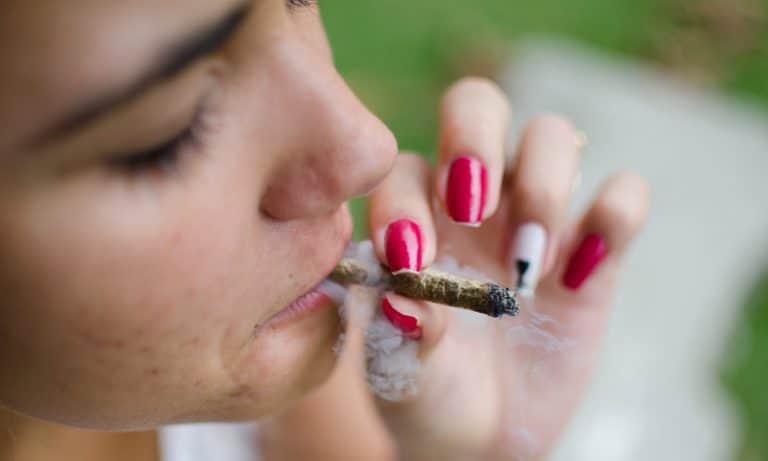
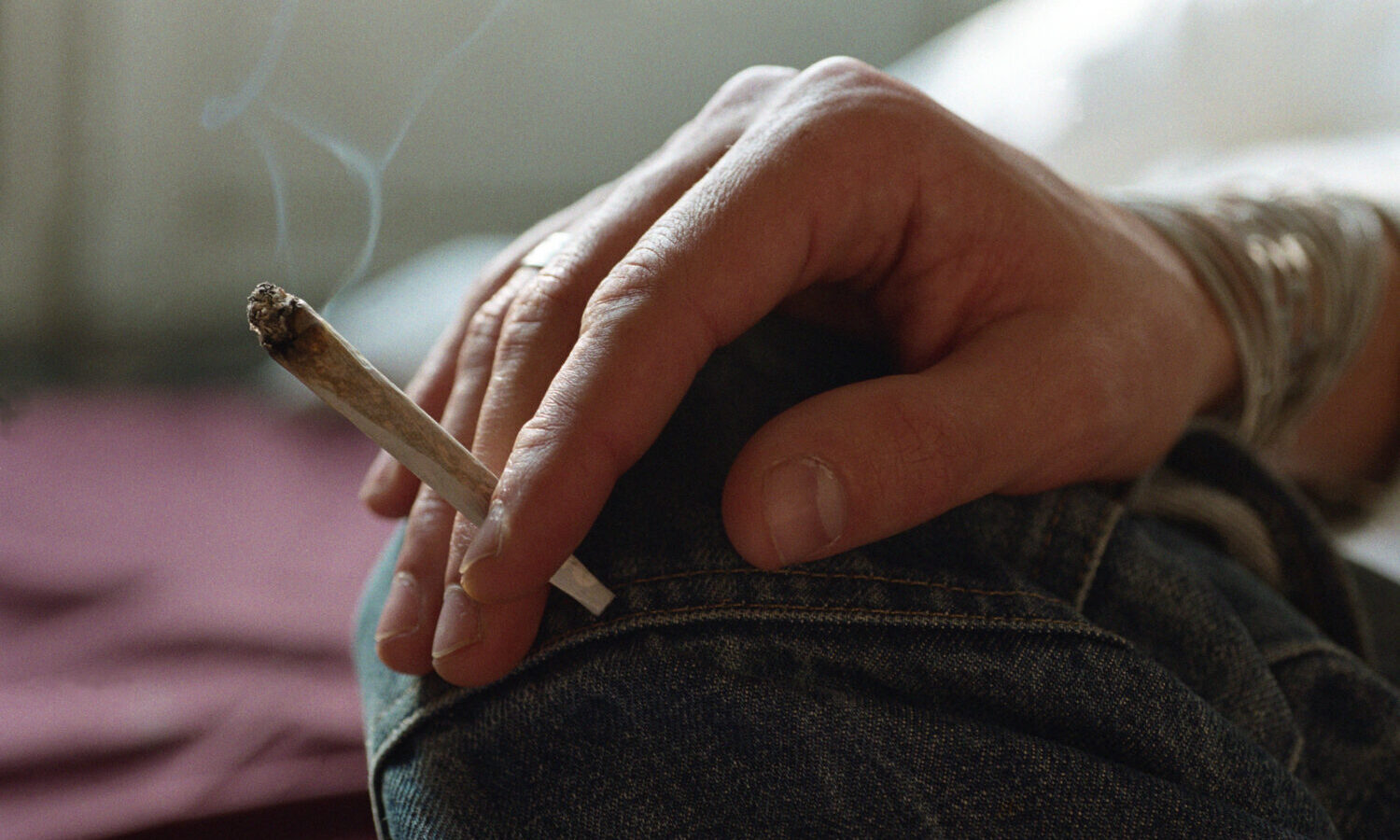
Perhaps the most widespread consumption method, smoking remains the favorite of many users. Smoking weed implies lighting the cannabis flower and inhaling the smoke, which is quite simple compared to other consumption methods. Depending on the strength of the cannabis, you can feel its effects within 5-10 minutes. The “high” feeling can last up to 3 hours, which is maybe one of the most significant advantages of this intake method.
Some of the most popular ways to smoke the cannabis flower include pipes, joints, and blunts. Each method comes with its particularities so that joints are made by rolling cannabis into rolling papers, while pipes come in a specially designed form that allows smoke to travel from that bowl-shaped area to the mouthpiece so that you can make the most of the experience.
These are probably the most popular options when it comes to cannabis smoking, thanks to their compactness, but there are also worth-trying methods like water pipes, also known as bongs. They filter and cool the smoke through water, the reason why many people believe this method to be the healthiest smoking option.
You can also grow your own cannabis and forget about always buying it. As long as you comply with the law and plant your cannabis flowers in a space that is not visible from a public place, you can grow cannabis at home. Make sure you use autoflower cannabis seeds, especially if you’re a beginner, because you don’t have to adjust lighting with seasonal changes.
Vaping
Photo by Christian Wiediger via Unsplash
Although some people mistake vaping for smoking, they’re very different concepts. While smoking, as its name also suggests, produces smoke that then reaches your lungs, vaping consists of heating cannabis below the point of combustion, which can reach 370 degrees Fahrenheit. This way, the smoke is transformed into vapors that are inhaled and distributed to the bloodstream. This method is believed to be more lung-friendly and have stronger effects because less THC (tetrahydrocannabinol) is lost in the process.
As in the case of smoking, there are several ways to vape cannabis, some of the most popular being vape pens, vaporizers, and dab rigs. Vape pens are the last innovation in terms of cannabis inhalation-related devices, being one of the top choices among consumers. And there’s no wonder why: they come in the size of discrete items that can easily fit in your pocket without drawing too much attention.
Moving from smoking and vaping to oral methods might seem a little too much, but you need to know that more and more people opt for this kind of consumption method. With so many cannabis products released on the market lately, it would be a pity not to take advantage of the variety of forms in which cannabis can be taken.
Ingesting cannabis in the form of edibles has gained ground due to various products you can choose from. From baked goods and beverage shots to chips and gummies, you can opt for the option that best suits your needs. Don’t forget that ingestion is different from smoking and vaping in the sense that the active phytochemicals responsible for the “high” take the digestive tract to reach the brain and bloodstream, not the respiratory one. That means the cannabis effects have a delayed onset, taking up to 3 hours to appear, but the good news is that you can enjoy them for up to 12 hours.
With so many cannabis seeds on the market, you can grow your own marijuana and prepare delicious recipes like cannabis-infused chocolate cookies and brownies, cannabutter, and pasta. You can find various cannabis seeds on the market, including autoflowering, feminized, and regular seeds. If you’re a collector, that’s great because now you have the possibility to grow your own mini plantation.
Tinctures
Photo by Rocky89/Getty Images
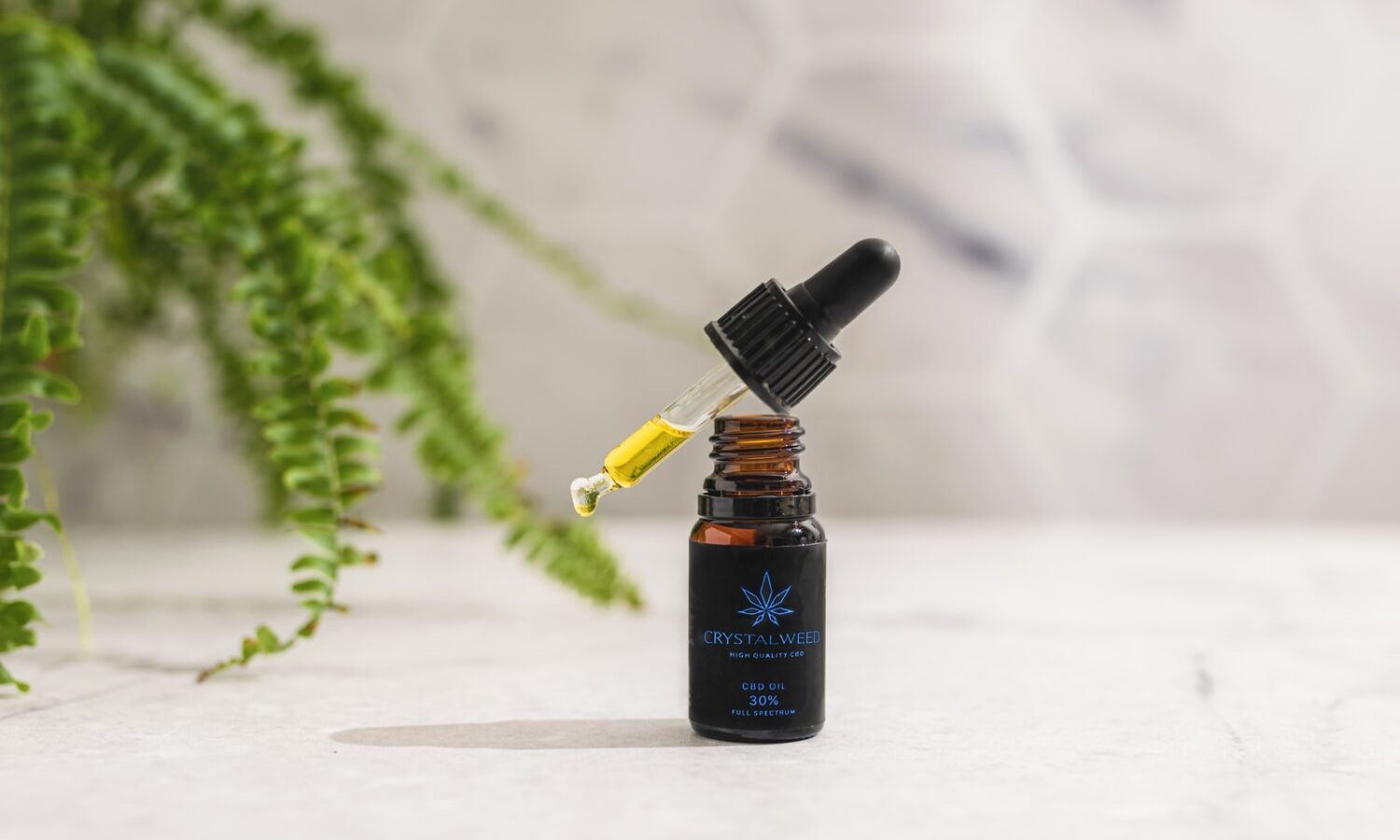
Tinctures are made by soaking the cannabis flower or leaves in alcohol, which makes their absorption through the blood vessels better take place sublingually. Now, how many drops you’re going to use is only up to you. We recommend putting 2 or 3 drops and then waiting for the cannabis to be absorbed to get the full effect. If there will remain cannabis extract under your tongue, don’t worry; the rest is going to be ingested so that no drop is wasted.
Cannabis oils are also widely used, and for a good reason: they help with unmanageable pain, psychological issues (for example, PTSD) , arthritis symptoms, and epilepsy syndromes.
Topicals
Photo by vadimguzhva/Getty Images
Being rather a delivery method than a consumption one, topical cannabis is also worth trying. You’ve probably heard that cannabis helps with issues like anxiety, but did you know that it’s also a great pain reliever? It helps with inflammation and muscle soreness, thus making pain more manageable.
When it comes to topicals, you have a myriad of variants to choose from: creams, oils, lotions, balms, sprays, and salves. If you decide on this method of using cannabis, there are plenty of choices. You can also reap this popular plant’s skincare benefits, choosing products containing cannabis as one of the main active ingredients.
However, it’s worth knowing that you won’t get “high” when using cannabis topicals because this is only possible when it’s ingested, smoked, or vaped, which means it has to reach your bloodstream. By topical application, you only absorb cannabis through the skin.
The city council passed a bill that protects marijuana users in the workplace. All that’s left is for the bill to be approved by the Mayor.
The city council in D.C. took a step forward in protecting employees from marijuana restrictions. On Tuesday, lawmakers unanimously approved a bill that would stop employers from firing employees who fail marijuana tests. In order to come to fruition, the bill would have to be approved by Mayor Muriel Bowser.
The bill, known as the Cannabis Employment Protections Amendment Act of 2022, protects employees from discrimination against marijuana use, with some exceptions.
If it were to be enacted, employers would have 60 days to notify employees and prospective employees about their new rights.
While the bill protects most workers, there are a few parameters. The bill doesn’t protect employees working in safety-sensitive occupations and people who work at courts and the federal government. It also prohibits “possession, storage, delivery, transfer, display, transportation, sale, purchase, or growing of cannabis at the employee’s place of employment.”
Marijuana use in the workplace is an issue that has caused problems in a variety of states where there are legal marijuana programs in place. Since the drug remains illegal on a federal level, the majority of workplaces adhere to their own rules and judgment when it comes to their employees and marijuana use. This has resulted in firings and complicated legal issues brought up in court.
Legal marijuana was approved in D.C. in 2015. While it’s still illegal to sell or use marijuana in public places or to operate vehicles while under the influence of the drug, anyone over the age of 21 can grow marijuana in their homes, own rolling papers and bongs, and possess up to two ounces of marijuana without fear of repercussions.
Gov. Carney cited his decision to veto due to questions surrounding the “long-term health and economic impacts” of marijuana and “serious law enforcement concerns.”
The Delaware House failed to override Gov. John Carney’s veto on the marijuana legalization bill. The cannabis bill that managed to reach the governor’s desk would have removed all penalties for adults over 21 for possessing less than an ounce of weed. Unfortunately, the House didn’t manage to gather enough votes on Tuesday to override Governor’s veto.
Why did Carney veto the bill in the first place?
While Carney has expressed an openness to support medical marijuana over the years, he’s also stated that he does not “believe that promoting or expanding the use of recreational marijuana is in the best interests of the state of Delaware, especially our young people.”
Gov. John Carney / Photo by Mark Makela/Getty Images
He cited his decision to veto due to questions surrounding the “long-term health and economic impacts” of marijuana and “serious law enforcement concerns.”
Rep. Ed Osienski who sponsored the bill was hoping to gather enough votes to override the veto, but he fell five votes short, garnering 20 instead of the minimum of 25. In May, the bill had 26 votes, which send it to the Senate. So, what happened this time? Four Democrats, Majority Leader Valerie Longhurst, Sean Matthews, Bill Carson and Andria Bennett in addition to Republicans Mike Ramone and Jeffrey Spiegelman, changed their votes, reported WHYY.
Osienski urged his colleagues to stand by their initial votes and respect the will of Delawareans and override Gov. Carney who leaves office in January 2025 after two terms.
“We need legalization,’’ Osienski said on the House floor minutes prior to the roll call vote. “So I beg of my colleagues not to wait until 2025 to do this.”
He added that “we need to fix this problem instead of just denying the freedom and the liberty of Delawareans to be able to purchase this product.”
Though disappointed with the results, Osienski said he was pleased to be “working for Delawareans.”
Emily David, the governor’s spokesperson, said Carney “thanks the House for today’s vote and respects the role of the General Assembly and all of its members in this process. He looks forward to working with them on the important issues that remain this session.”
We’re only halfway through the year, and there has been over 200 mass shootings all around the United States already.
The deadliest of these, the Uvalde school shooting targeting a fourth grade elementary class, was considered the worst since Sandy Hook. This is clearly a systemic problem within the United States, but Fox News host Laura Ingraham doesn’t think so: she made it clear that she’s anti-marijuana legalization by blaming the mass shootings on cannabis laws.
During her talk at The Ingraham Angle last week on Fox News, she said: “This is something that the medical community is well aware of. Yet, you get the sense that billions of dollars on the line are more important than our kids,” she said. “And what’s happening especially to young men in the United States, who are frequent users of the high-potency THC that’s now in marijuana products sold legally in dispensaries across the United States. I mean, this at the very least needs a serious national conversation.”
We’re in shock that someone in this day and age still actually believes pot psychosis is a thing. I mean, that’s so Reefer Madness. Did Laura Ingraham get her research from watching the 1936 propaganda film and nothing more? Because that sounds like it, and she makes herself sound so detached from reality.
There are just so many ways her irrational statement didn’t have any legs. She said that she heard about some vague reports the shooter was smoking weed, but Ingraham thinks that the issue really all lies in the legalization of marijuana and the lax laws surrounding it.
Fact Check
Here are just some reasons why Laura Ingraham’s statement is absolutely absurd. Leave marijuana legalization out of it!
Lax gun laws: According to the Small Arms Survey as reported by BBC, back in 2018 there were around 390 million firearms circulating in the United States, making the ratio of gun ownership 120.5 guns for every 100 residents. The report also states that gun ownership has increased significantly in the last few years, resulting in 11 million people exposed to guns within their homes.
In addition, the Small Arms Survey states that Americans are the #1 country whose citizens own guns. And Harvard researchers correlate this with their findings that when this many people own guns in a developed country, this will lead to many more gun homicides. And of course so many Americans own guns – it’s far too easy to get your hands on one! No matter where you live, you will come across dozens, maybe even hundreds of shops that sell guns. There are gun shows that take place almost every weekend, and you can buy a gun from a friend or family member.
Only store gun purchases require a background check, if any. That’s where firearm buyers have to fill out a form either from the ATF or the Bureau of Alcohol, Tobacco, Firearms, and Explosives. Such a background check only takes a few minutes and denials for gun ownership are rare. In fact, cannabis users can’t even own guns.
However, there are states with stricter gun laws such as in Washington DC, Chicago, and New York.
Marijuana legalization has been linked to a reduction in violent crime: There have been several studies documenting how legalizing marijuana has led to a reduction in violent crime rates. In one study in June 2020 conducted by the National Institute of Justice on the Effects of Marijuana Legalization on Law Enforcement, they said that “legalization has apparently coincided with an increase in crime clearance rates in several areas, suggesting that legalization may result in a net positive redistribution in police human resource allocation. In addition, fewer persons are being processed by the criminal justice system on nonviolent marijuana possession offenses.”
In Washington State, for example, the Drug Policy Alliance reports that since they have legalized marijuana in 2012, there has been a reduction in violent crime rates while overall crime rates have stayed at a 40-year low. The National Incident-Based Reporting System also says that violent crime continues to significantly decrease in Washington.
Shooter profiling: Scientific American released a profiling compiled by criminologists, looking at the life histories of mass shooters in the United States. Entitled, The Violence Project, one can find similarities among the shooters, and there is nothing that points to cannabis use. Some notable points here are the fact that almost half of all the shooters were able to get their guns legally from a licensed dealer, private sale, or other form of legal means while others borrowed guns and the rest have unknown origins.
The Violence Project also identified that the most common motivation for the mass shootings was psychosis, which is a type of mental disorder wherein the person can no longer identify what’s real or what isn’t. They also tend to have difficulties with employment, interpersonal conflict with family, friends, or coworkers. More than half of the shooters already had a criminal record, while a great deal of them suffered from a history of trauma or had some form of domestic abuse.
These are the facts, and there’s nothing that links to marijuana use, not even close. Sure, individuals with psychosis shouldn’t use cannabis, but that isn’t even discussed in the profiling. The two issues here are strikingly clear and worrisome: our gun laws are far too lax, while psychiatric care is declining rapidly. Given that the average age of shooters is 18, we need to start paying closer attention to the children we’re raising, look for cues, and find a way to stop exposing them to guns.
“There’s no data to support that” medical marijuana can help PTSD sufferers, said Gov. Pete Ricketts at a recent press conference in a roomful of veterans.
In 2019, 6,261 veterans in the United States took their own lives, according to the most recent data retrieved from the 2021 National Veteran Suicide Prevention Annual Report.
The staggering statistics showed that on average 17 veterans per day succumbed to suicide. The report noted that veterans take their own lives at a rate that’s twice as high as non-veteran civilians.
Photo by Bumblee_Dee/Getty Images
Knowing that suicide is a preventable cause of death, many states are coming up with a variety of strategies to deal with the issue.
Cannabis As A Solution
For veterans diagnosed with post-traumatic stress disorder (PTSD) and other physical and mental health symptoms who are looking for alternative treatments, medical marijuana arises as a solution, as seen in the case of Kansas veteran David Auble. He recentlysent a letter to members of the Kansas Senate explaining how some cancer patients like himself are in desperate need of cannabis.
Hal Wortzel, a VA forensic neuropsychiatrist and researcher said earlier in a new post by the agency that cannabis helps those with PTSD experience fewer symptoms and recover more quickly compared to people who don’t use cannabis,reported Marijuana Moment.
Conflicting studies continue to arise with opposing conclusions on marijuana’s safety and uses. As such it remains a controversial topic. In addition, many military veterans are prohibited from accessing medical cannabis since it is illegal at the federal level.
Who’s Opposing It?
To that end, words from some officials like Nebraska Gov. Pete Ricketts give a clearer picture as to why the issue is stalled.
At a recent press conference in a roomful of veterans, Ricketts said there’s no evidence that medical cannabis works for PTSD, reported KMTV 3 News Now.
“There’s no data to support that” medical marijuana can help PTSD sufferers, he said, after announcing that Nebraska will join 35 other states in a Governor’s Challenge to Prevent Suicide.
Nebraska’s veterans have been working with mental health officials to set up a program that would improve the state’s outreach and treatment.
However, it seems that cannabis legalization will not be considered at all, given that Ricketts is not too keen on the idea, unlike his predecessor Bob Kerrey, now a U.S. Senator.
Kerrey is known for joining fellow veteran Montel Williams in 2010 and calling for medical marijuana to be dispensed at VA hospitals to treat PTSD.
There’s Still Hope
On the bright side, according to a recent post on the VA website, even though marijuana use is still considered federally illegal, “veteran participation in state marijuana programs does not affect eligibility for VA care and services.”
Moreover, veterans are encouraged to speak with their VA providers about medicinal cannabis though they cannot prescribe or recommend it for medicinal use.
In the meantime, lawmakers have been taking legislative steps and have made gradual breakthroughs with the most recent one being a bill sponsored by Rep. Seth Moulton (D-MA), which would allow VA physicians to discuss MMJ treatment with military veterans as patients and would protect those who are honest about their marijuana therapy history.
Under the bill, vets would no longer have to fear losing federal benefits for using medical marijuana and would be “encouraged” to talk about these types of treatments.
A new study conducted on patients with a specific type of cancer concluded with all participants in remission.
A new study on cancer did something that has never been done before. It left every participant cancer-free.
The study, published in the New England Journal of Medicine, was conducted by researchers from Yale University and Memorial Sloan Kettering, who examined patients in advanced stages of rectal cancer. It was a small study, comprised of 18 participants, and concluded with all of them in remission.
All of the patients had a specific type of cancer, caused by a deficiency in mismatch repair, which is, according to the National Cancer Institute (NIH), cells that have mutations in genes involved in correcting mistakes when DNA is copied in a cell.
Researchers devised a special treatment for this affliction, creating a lab-made antibody called dostarlimab, an immunotherapy drug used in the treatment of endometrial cancer. However, according to Science Alert, this was the first clinical investigation of whether it was also effective against rectal cancer tumors.
Patients received a dose of the drug every three weeks for six months. And according to Memorial Sloan Kettering, “In every case, the rectal cancer disappeared after immunotherapy — without the need for the standard treatments of radiation, surgery, or chemotherapy — and the cancer has not returned in any of the patients, who have been cancer-free for up to two years.”
While the study was small and in its early stages, the results are unprecedented. While the study was narrowed down to a specific type of cancer, it could extend to other types. More research could result in new treatments and could help people recover from cancer while experiencing treatments that are less invasive and affecting.
The study’s results show how important it is for the government to encourage cannabis research in any way they can, providing users with the information they need to stay safe and informed.
A federally funded review on cannabis products highlighted the small number of studies that exist on medicinal cannabis, something that surprised researchers. Despite this, the study found some evidence of the plant’s impact on pain management.
Conducted by researchers at Oregon Health & Science University and published in the Annals of Internal Medicine, the review used data from scientifically valid studies that included randomized controlled studies and observational studies. Researchers examined over 3,000 studies conducted since January of this year, finding that only 25 studies had scientifically valid evidence.
While the evidence that researchers found on cannabis-supporting pain management was thin, there were some products that were associated with short-term pain management, particularly on neuropathic pain. These medications are dronabinol and nabilone (which contain THC), and nabiximols (a mix of THC and CBD), with the first two having FDA approval.
Researchers discussed their results, sharing how surprised they were by the limited amount of research that there is available. “With so much buzz around cannabis-related products, and the easy availability of recreational and medical marijuana in many states, consumers and patients might assume there would be more evidence about the benefits and side effects,” said lead author Marian S. McDonagh. “Unfortunately, there is very little scientifically valid research into most these products.”
“We saw only a small group of observational cohort studies on cannabis products that would be easily available in states that allow it, and these were not designed to answer the important questions on treating chronic pain,” McDonagh added.
The study’s results show how important it is for the government to encourage cannabis research in any way they can, providing users with the information they need to stay safe and informed.
“Honestly, the best advice is to talk to your primary care physician about possible treatments for chronic pain,” said McDonagh. “If you want to consider cannabis, you need to talk to your doctor.”