The committee members had many disputes, among which was the disagreement over whether it is suitable to push for the policy reforms via spending legislation.
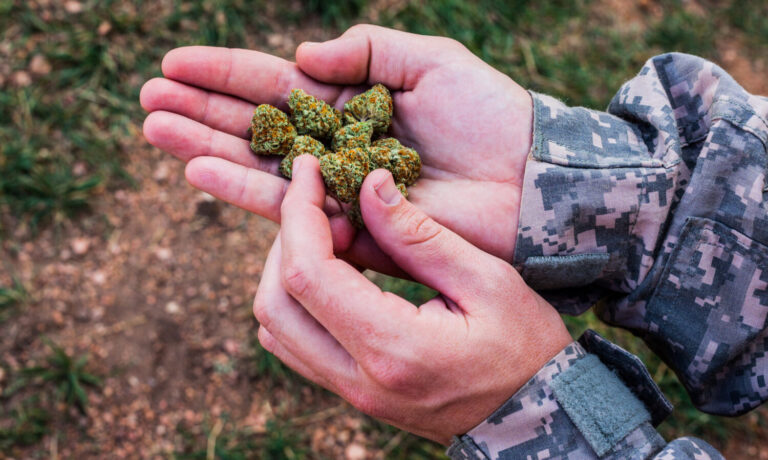
The House Rules Committee on Monday rejected bipartisan spending bill amendments aimed at advancing veterans’ access to medical cannabis on procedural grounds.
Another proposal that would allow protections for individuals who use marijuana in federally assisted public housing was removed before the panel was able to vote on it.
The committee members had many disputes, among which was the disagreement over whether it is suitable to push for the policy reforms via spending legislation. Rep. Dave Joyce (R-Oh) tried to defend the intent, for which purpose he even revised the amendment after discussing it with the House Parliamentarian.
The submitted version of the amendment would ban the US Department of Veterans Affairs (VA) to use its resources to demand certain policies blocking VA physicians from recommending medical marijuana to veterans. The measure wouldn’t oblige VA to allocate money in a specific way or to change its rules, but it would have forbidden it to spend its money to push for certain marijuana policies.
The news comes on the heels of a package of bills being approved by the House as part of the National Defense Authorization Act. Reps. Earl Blumenauer and Brian Mast’s amendment codifies the ability of VA doctors to discuss and recommend medical marijuana to veterans.
Another important amendment that passed the House this way contains the language of the Secure and Fair Enforcement (SAFE) Banking Act, which would protect financial institutions that provide services to state-legal marijuana businesses from being penalized by federal regulators.
Cannabis farms are already subject to strict water regulations in several states, and some illegal marijuana growers have given those rule followers a bad name by association.
Over the last several months, photographs and stories of unprecedented and dramatically low water levels in the southwestern United States have made their way to the front page of national news. Boats and even dead bodies have been discovered at the bottom of lakes that many never thought would run so dangerously low. This water crisis has sparked a need and demand for immediate change in the way some states use and allocate water.
Several of these states, including California, Arizona and Colorado, have thriving cannabis industries, but a now-dwindling water supply. It is no secret that consistent watering is essential to a successful marijuana harvest, but this precious resource is in jeopardy. How then, is this lack of water affecting the marijuana industry, and is there any hope that a drought could yield any positive results for cannabis in dry places?
Photo by Lealnard Riengkaew / EyeEm/Getty Images
The state that is most affected by this drought is also the nation’s top marijuana producer – California. The state is in such a state of water peril that the governor announced a $2.9-billionplan to keep some of California’s vital water flowing in its natural habitats. In fact, according to Modern Farmers, “the state will pay farms to keep thousands of acres vacant this growing season.”
While this sounds like a relief for farmers, the cannabis industry might not make the cut. “Heading into another brutally dry summer, struggling cannabis growers in California could be excluded from the state’s latest assistance plan to save water,”wrote the Water Education Foundation in regards to this latest plan.
Cannabis farms are already subject to strict water regulations in several states, and some illegal marijuana growers have given those rule followers a bad name by association. According to theWashington Post, as of last year “Water thieves, many of them illegal marijuana growers, are tapping into fire hydrants and drilling unauthorized water wells, according to officials, threatening the water supply for residents.”
This type of behavior from illegal growers only furthers the divide between the cannabis industry and other farming. After all, the cannabis industry, even though it is a hugely profitable industry, is not a top tier operation when it comes to water rights in many places.
“Cannabis growers hold a junior right and are the first in line to be curtailed in a drought,” Ted Grantham, a co-director of UC Berkeley’s Cannabis Research Centertold the Public Policy Institute of California. In other words, when a water catastrophe hits, the cannabis industry will feel the effects before most other farming industries.
While cannabis may not qualify for some of the same protections as other crops, there is relief for this highly profitable plant. The Department of Cannabis relief in California, for example,saidit “encourages cannabis licensees affected by the ongoing statewide drought emergency — including cultivators seeking to conserve water — to request disaster relief.” They make it clear that there are many circumstances that growers can apply for relief to ensure their operations don’t dry up — literally and figuratively.
Drought is also worsening already dangerous wildfire conditions, which can be detrimental to the cannabis industry. Both California and Arizona have alreadyreported wildfires this year, with more likely to come. “As drought and climate change batter the West, many outdoor growers face a new obstacle. Wildfires not only destroy crops, but they also contaminate plants if they are soaked in fire retardant or tainted by excessive smoke,” according to NBC News.
Drought is never good news for farmers. There is, however, some research showing that controlled drought may actually make marijuana more potent. “There is a definitive correlation between drought stress and increased cannabinoid content in cannabis flowers,” said Russell Pace III, President of the Cannabis Horticultural Association toBenzinga. “The plants, sensing stress, are triggered to produce more of their secondary metabolites, which includes cannabinoids and terpenoids.” In other words, controlled drought may yield stronger more potent marijuana.
While these results are from a controlled setting, it can perhaps be a bit of optimistic news for growers and marijuana enthusiasts in states that are likely to struggle with water supply issues for years to come. After all, if marijuana will become more difficult and expensive to grow, it would be nice if you could at least get some extra bang for your buck.
The general consensus about the compound is that it is a powerful cannabinoid and very safe for consumption, giving off an indica-type, couch lock kind of high.
With more states joining the bandwagon of adult-use cannabis legalization, the recreational cannabis market has grown significantly. Now, a lot of manufacturers are in a connection to synthesize and isolate the safest and most powerful compounds from the marijuana plant.
Considering that the most popular and classic cannabinoid, Delta 9 THC, is still prohibited at the federal level, manufacturers have gone into the lab to find alternative THCs that get the job done. With how far the industry has come, a lot of people are familiar with Delta 8 THC or THCV and Delta 10. However, a lot more cannabinoids exist and more are still on the horizon. The latest cannabinoid making new waves in the industry is THCjd.
Different Types of THC
Except you’re a newbie, you should be relatively used to Delta 9 THC, how it affects the mind and its reaction to the level. At a fundamental level, a lot of consumers are aware that THC is the dominant psychoactive compound present in cannabis.
THC is the reason why consumers get high on weed. But what many are not aware of is the number of THC variants that exist, how they differ from one another, and which has more potency. Not quite long, the cannabis industry came off all bent on synthesizing and accessing hundreds of cannabis. This applied to both variants that have been synthesized in the marijuana plant and several isomers and analogs.
As it stands THC, and the idea of synthesizing different variants of THC has pushed the discussion door open in some circles. Discussions about various chain lengths of THCV, THC-O, THC-H, THCB, THCP, and many more are now being conversed. This variation in chain length is also said to apply to other cannabinoids such as HHC.
You should also note that all these are synthetic cannabinoids. However, defining “synthetic cannabinoids” applies in two dimensions. First, synthetic cannabinoids are compounds that are formulated in the lab and do not exist in nature e.g THC-O. Secondly, synthetic cannabinoids are compounds that do exist in nature but minute quantities. Hence, they have to be manufactured in the lab to be used in large quantities in consumer products. E.g Delta 8 THC.
What Is THCjd?
As regards some of the latest cannabinoid compounds such as THCjd to be specific, there’s little to zero available information about the compound. In most cases, only a little information about THCjd is provided by the brand trying to sell its products.
THCjd is a remarkable and naturally occurring cannabinoid made from the separation and containing different cannabinoids. It is also popularly called phytocannabinoid and is believed to be more potent than usual THC.
THCjd (Tetrahydrocannabioctyl) is an 8-carbon side-chain said to be 19 times more potent than THC. This is courtesy of its long carbon side chain. The theory behind this is, that the longer a cannabinoid sidechain, the higher the number of THC that locks with the receptors.
For a while, the THCP with a 7-carbon side-chain was recognized to be the cannabinoid with the longest carbon side chain and the most potent. Right now, THCjd seems to have taken the position making it the most powerful cannabinoid in this market.
According to manufacturers, THCjd is directly extracted from hemp or cannabis. This means, that producing the compound does not need any chemical alteration more than the usual method of THC processing.
Frankly, there’s still a lot to learn about THCjd as information about this compound is still lacking. But the few findings so far have suggested that more research is being done behind the scenes and more should be known about the cannabinoids soon enough.
Meanwhile, the general consensus about the compound is that it is a powerful cannabinoid and very safe for consumption, giving off an indica-type, couch lock kind of high. As things are, possession and use of THCjd are legal given there are no laws governing the use and possession of this cannabinoid.
Conclusion
If you’re a newbie and you need to experience something different, THCjd is definitely a cannabinoid you can try. While enough information about the product is still lacking, you can carry out more personal research on various cannabis websites or check out various YouTube channels. However, from the experiences of many, THCjd is a cannabinoid that is safe and worth experiencing.
Since farmers have raised their voices and pointed out the unfair and discriminatory treatment, Florida health department officials opened a new round of applications, but only for Pigford-Black farmer litigants.
Since 2016, the Florida Legislature — through the Florida Department of Health — has issued more than two dozen medical marijuana licenses to farmers looking to enter the medical marijuana (MMJ) industry. However, black farmers are still waiting for their licenses to be issued as regulated by the Florida Legislature.
Having licenses is known to generate increased revenue for licensees. But it seems that in Florida there are few who count on this benefit, a situation that frustrates black farmers who would like to participate in the cannabis industry.
“The license should have been released going on five, now six years ago, where a lot of the white farmers are now $150 million to $175 million ahead of the game versus the Black farmers that have to start over at zero and are behind the ball again and the medical marijuana industry,” said Raymond Warthen, co-founder and president of Orlando-based Zion Infinite Farms, which applied for a license years ago. “It’s unfortunate.”
In contrast, several cannabis growers gained considerable market share within Florida’s $1.2 billion medical marijuana treatment center (MMTC) industry, which is poised to hit $2 billion in annual sales by 2025.
“The 14 active MMTC license holders operate 347 dispensaries with three — Trulieve, Surterra, Curaleaf (OTC: CURLF) — controlling more than two-thirds of the market,” reads a report published in June 2021.
According to the health department’s Office of Medical Marijuana Use, “the top six medical marijuana treatment centers account for nearly 90% of all sales.” In addition, there are 22 licensed treatment centers.
“Laws are too narrowly focused for us to get into the business, with the seed-to-sale vertically integrated business requirement as one of the big ones,” said John Allen, a Black farmer and president of FTG Development Inc., a licensed nursery in Cape Coral for over 38 years and an applicant for a Florida medical marijuana treatment center license.
Is This Impediment Related To Financial Hurdles?
“That $146,000 tag (application fee) is also just a fraction of the total costs,” said Roz McCarthy, director of Minorities for Medical Marijuana (M4MM) in Orlando. “Attorney fees, hiring technical writers and consultants, along with sourcing real estate for cultivation, processing, and dispensing locations, could run applicants at least half a million dollars.”
However, since farmers have raised their voices and pointed out the unfair and discriminatory treatment, Florida health department officials opened a new round of applications. Although, the application frame — last March — was only open to Pigford-Black farmer litigants.
Black farmers in Florida who were part of Pigford v. Glickman (USDA) are too old to be back in business. In addition, they lack financial resources or have died before the license could be issued. Additionally, the license holder would have to compete against multi-state giants like Trulieve Cannabis Corp., for example.
John Allen is one of the 12 black farmers who applied for licenses and is waiting for the Florida Legislature to provide them with information and good news to continue advancing in their businesses.
“It is my goal next year to expand access to the compassionate use of cannabis products in Texas so that every Texan with a medical need has access to these medicines,” said the state’s Agriculture Commissioner.
Texas continues to be one of the more restrictive states in terms of cannabis access despite its Compassionate Use Program, a 2015 measure that allows residents to consume so-called low-THC products that contain .3% or .5% THC with a physician’s recommendation.
Texas Agriculture Commissioner Sid Miller wants to expand that program. Miller, a Republican, indicated in a post on the Texas Department of Agriculture’s website that he has seen “firsthand the value of cannabis as medicine.”
“It is my goal next year to expand access to the compassionate use of cannabis products in Texas so that every Texan with a medical need has access to these medicines,” he said.
Miller backed the bill legalizing the production and retail sale of hemp products in Texas in 2019. Now, he is supervising the farming and processing of hemp.
“It is time for all of us, including the Governor, members of the Texas Legislature, and others to come together and set aside our political differences to have an honest conversation about cannabis: where we have been, where we are going and what role government should properly play,” Miller noted.
Texans Wants To See Rec Marijuana Legalized
Meanwhile, the popularity of the plant seems to be growing among Texans, with the majority strongly supporting the legalization of recreational cannabis, according to a recent survey from the University of Houston and Texas Southern University.
Interestingly, 51% of survey participants who identified as Republicans back federal marijuana legalization, even though most of the reform backers were Democrats and young people. More precisely, 79% of Democrats and 70% of independents support the cause.
Last month, at the party’s biennial state convention, the Texas Republican Party approved a platform plank against marijuana legalization, among several other newly adopted measures.
“Just because you don’t like cannabis, or you wouldn’t want your kids or your husband or whoever to use cannabis, that doesn’t mean that prohibition is the right answer,” John Baucum, political director of Republicans Against Marijuana Prohibition (RAMP), told Marijuana Moment recently.
While the Texas political landscape remains overwhelmingly conservative, cannabis advocates are setting their hopes on Beto O’Rourke, a Democratic gubernatorial candidate who favors cannabis legalization and has called out Republicans who prohibit it, yet enjoy it themselves.
“I’ll let you in on a secret,” O’Rourke said at an SXSW panel in Austin in March. “Republicans like to get high just as much as Democrats.”
The dosage of THC that the GOP legislature approved for edibles is much lower than normal, at up to 5 mg per package. But it’s still legal, nonetheless.
In a decision that came as a surprise to many in the state, Minnesota passed legislation that legalized some lower potency hemp-derived THC edibles. As we previouslyreported, this new bill now allows businesses to sell edible and drink packages with up to 5 mg of hemp-derived THC in the state.
This new decision has some people confused, but it also has unintentionally launched a program that might show what a recreational marijuana program would look like in Minnesota. While the state has legalized medical marijuana, this new edible law is giving Minnesota citizens a taste of how the state would look with legal marijuana. Who knows, this small but incremental measure might even prove to be a new gateway for other states if all goes well.
The dosage of THC that the GOP legislature approved, to be clear, is much lower than normal, at up to 5 mg per package. For context, “Recreational states have defined potency thresholds in edibles, limiting THC to 50 or 100 mg per package and 5 or 10 mg per serving depending on the state,” according to astudy published in the Journal of General Internal Medicine, which also determined there are many cases where the potency in edibles was sometimes inconsistent with what packaging suggested. In theory, one package of these lower dose edibles would equal somewhere close to one normal dose edible in another state.
The THC in question also comes from a slightly different source than most states. It is derived from legal hemp plants rather than THC-rich marijuana, but they share the same chemical makeup. This means that while the plants being used are of the legal hemp variety, the THC is essentially the same. when you look at the chemical makeup of the edible, the THC is essentially the same. (See: Cannabis, Marijuana And Hemp — What Is The Difference, Exactly?)
The fact that it is hemp derived, but still THC, and the fact that it is lower dosage but relatively unrestricted means that this new edible law might give Minnesotans a fairly realistic glimpse into the future of legal weed in the state. “Overall I think it’s a way in which Minnesotans are going to be able to check out what it’s like to have legal products being sold on shelves in a non-gray market,” Kurtis Hanna, a local lobbyist for the National Organization for the Reform of Marijuana Lawssaid to the Minnesota Star Tribune.
It is definitely a very small and narrow scope of legalization, but Hanna still sees it as a good thing. “It’s pretty exclusively dipping that toe into beverages and edible food products as opposed to making any progress on smokeable or vaporizable products,” hesaid. “But it’s a positive outcome.”
Some have said that those who voted on this new law were confused, and may have even voted on it by accident. In fact, after the amendment passed in the legislature there is a video showing Sen. Jim Abeler asked (in what appeared to be a joking manner) whether or not they had just legalized marijuana. Democratic Rep. Tina Lieblingreplied “Oh, are you kidding? Of course you have. No, just kidding. Next, we’ll do that next.”
And while she may have been joking at the time, this new law just may set the stage to open the legalization door and possibly do just that.
PD patients have a high interest in treatment with medicinal cannabis, but lack knowledge about how to take it and especially the differences between THC and CBD.
Parkinson’s disease is one of the most common neurodegenerative disorders. It was named by Jean-Martin Charcot, a French neurologist, back in 1872 after the disease was first identified by James Parkinson in 1817. Over a century later, there is still no known cure for this disease which robs people of their dignity and quality of life. However, there have been numerous modern treatments that have been developed including dopamine therapy, surgery, and even deep brain stimulation for healing the affected area in the brain.
The problem with pharmaceutical medications which have been designed for Parkinson’s disease is that they also leave patients with numerous unwanted side effects. These drugs are primarily intended to increase dopamine levels since the symptoms of Parkinson’s occur when dopamine levels drop too low. While all Parkinson’s patients experience different symptoms, the common medications used are all the same; these include Levodopa, dopamine agonists, anticholinergics, glutamate antagonist, COMT inhibitors, and MAO-B inhibitors.
The side effects from Parkinson’s medications include nausea, low blood pressure, involuntary movements, hallucinations, confusion, and behavioral issues – such as the uncontrollable need to have sex or gamble.
Thankfully, more patients are finding hope using cannabis-based medications.
What The Studies Say
In 2021, a survey sent amongst patients with Parkinson’s disease in Germany analyzed the impact of cannabis products. The results, which were published in the Journal of Parkinson’s Disease, reported that more than half of the patients acknowledge positive clinical results. In Germany, THC products can already prescribed for cases where conventional medications did not work. Meanwhile, CBD can be obtained without a prescription from the internet as well as pharmacies.
“Medical cannabis was legally approved in Germany in 2017 when approval was given for therapy-resistant symptoms in severely affected patients independent of diagnosis and without clinical evidence-based data,” says the study’s lead researcher, Professor Carsten Buhmann of Germany’s University Medical Center Hamburg-Eppendorf Department of Neurology. The researchers intended to analyze prescriptions of MMJ then assess the feedback from patients who were using it. The study was cross-sectional, nationwide, and used a questionnaire format. Afterwards, 1,300 questionnaires were completed.
They found that 54% of existing patients who were using cannabis strains for Parkinson’s said they were beneficial and it was overall tolerated well. More than 40% of them said marijuana was effective in managing muscle cramps and pain, while over 20% said that it helped reduce stiffness, anxiety, tremors, freezing, and restless legs.
“Our data confirm that PD patients have a high interest in treatment with medicinal cannabis, but lacked knowledge about how to take it and especially the differences between the two main cannabinoids, THC and CBD,” Buhmann added.
The Michael J Fox Foundation (MJFF) also conducted a recent survey through their online platform called Fox Insight. The MJFF was established to spread awareness on Parkinson’s disease, conducts research through patient engagement with the hopes of finding an objective test, and supports development of new treatments.
Researchers at the University of Colorado namely Samantha Holden, MD, MS, and her colleagues polled participants about the type of cannabis they consume, and how much CBD and THC; they also inquired how often they consume it and how long they were medicating with it.
Almost 1,900 patients with Parkinson’s disease shared their feedback. The results, which were released in the Movement Disorders Clinical Practice journal, revealed that over 70% of patients use marijuana, most commonly through oral consumption, once a day. While some of them weren’t sure about the kind of cannabis they were taking, almost half were taking high CBD products while 15% took almost equal amounts of CBD and THC. Many patients said that the cannabis helped them with pain, agitation, anxiety, or sleep.
In a 2022 survey among 1,881 patients with Parkinson’s disease, researchers from the University of Colorado Anschutz Medical Campus analyzed symptoms and prescription medication consumption after cannabis was given.
The data revealed that respondents found the most benefits for cannabis in the areas of pain, sleep, anxiety, and agitation after using either whole plant cannabis or CBD. However, patients who were also using high potency THC reported improvements in depression, tremors, appetite, and nausea though they found that it worsened bradykinesia, a Parkinson’s symptom associated with slow movements. Just like with other studies, many respondents said that cannabis was effective in helping them discontinue prescription drugs especially those that were used for anxiety and pain.
“These survey results offer a broad overview of real-world use patterns and experience among a large group of people living with PD and provide initial results regarding the differential symptomatic effects of higher THC versus higher CBD products,” concluded the authors. “In summary, people with PD report that cannabis subjectively improves some PD-related symptoms, with higher THC products conferring more frequent benefits than higher CBD products,” the authors concluded.
“Next steps should include more rigorous, controlled studies, informed by the results herein, to more objectively study the effects of varying types of cannabis on PD symptoms, as well as the impact of the different methods of ingestion and specific doses,” they wrote.
Conclusion
With all the tremendously positive feedback from patients, it shows that cannabis is promising as a natural alternative to current Parkinson’s medications. There’s still much we don’t know about it, such as the best THC:CBD ratio and route of administration, but with more studies like these out there, we should know more in no time.
A new study finds evidence that the coronavirus can survive in your freezer, leading to infections that are difficult to trace.
There’s a new source of COVID risk, this time, from an unexpected place. New research shows that the coronavirus can survive for more than 30 days in frozen meat.
The study, published in the journal Applied and Environmental Microbiology, tested different meats and exposed them to freezer environments to gauge their reactions. They also wanted to see if it was a possibility for people to catch the virus from these sources.
Researchers used surrogate viruses for their test, using ones that had similar spikes to the coronavirus. They tested them on beef, salmon, pork and chicken. They claimed that the study mattered since COVID is known to replicate in the gut, not only in the lungs and respiratory tract.
“Although you might not store meat in the fridge for 30 days, you might store it in the freezer for that long,” said the study’s first author and assistant professor at Campbell University, Emily Bailey. “We even found that the viruses could be cultured after [being frozen for] that length of time.”
Researchers decided to take on the study after they learned that COVID outbreaks were occurring in places in Southeast Asia where there were no community transmissions. This lead researchers to believe that prepackaged meats could be the culprits, especially if these were prepared in areas where there was the presence of COVID.
Bailey explains that this research should serve as an opening for more studies and for those who handle food to be more careful and aware of this issue.
“Continued efforts are needed to prevent contamination of foods and food processing surfaces, worker hands and food processing utensils such as knives,” concluded the researchers. “The lack of, or inadequate disinfection of these foods prior to packaging needs to be addressed.”
As young adults, they watched the normalization of cannabis use mitigate negative stereotypes, and they have played a leading role in the emergence of the legal cannabis economy.
Since 2012, millennials have been the pioneers of cannabis recreational adult use. This is extremely important not only to change society’s perception of marijuana but also to contribute to the evolution of the cannabis industry.
Currently, there are about 72 million millennials in the United States, which makes the generation the largest cohort by population. They also have proven to be open-minded to new experiences, hence, major drivers of social development.
According to Green Entrepreneur, millennials (individuals born between 1981 and 1996) are now between their late 20s and mid-40s and make up the largest percentage of cannabis consumers (38%), followed by Gen X (29%), then Baby Boomers (19%), and Gen Z (13%).
“Millennials came of age when cannabis-related social attitudes and policies were changing rapidly,” said Gary Allen, New Frontier Data’s CEO. “As young adults, they watched the normalization of cannabis use mitigate negative stereotypes, and they have played a leading role in the emergence of the legal cannabis economy, both as participants in the market and as champions for change.”
In addition, millennials promote, through their social media, the benefits of using cannabis and CBD products for stress, anxiety and general wellness. Some of them also saidthey “use cannabis products as a replacement for medication.” They are also in favor of more regulation to ensure the safety, quality, and efficacy of CBD and cannabis products.
Compared to previous generations, millennials and Gen Z consumers are less financially secure. However, they still prioritize healthier, plant-based foods and brands across categories that are more purpose-driven.
In addition, the Cannabis Travel Association International (CTAI) projects millennials to make up 50% of U.S. travelers by 2025 when it likewise expects their cannabis consumption to be extremely normalized compared to any other previous time of their or older generations’ lives, according to New Frontier Data.
The role of millennials in this time of constant change, new cannabis regulations and the marijuana industry itself is essential for older generations to see cannabis as one more medicinal plant among many others, and to accept the cannabis plant as a gift that the earth gives us.
One of the common questions novice and regular tokers have about their joints is: “What’s the estimated milligrams of THC in a joint?” The answer to this isn’t as straightforward as you’d like.
In 2016, a Drug and Alcohol Dependence study suggested that a 0.3g cannabis blunt contains approximately 20mg of tetrahydrocannabinol. They also pointed out that this amount isn’t definite, as there are different strains of cannabis. In addition, the study noted that the total milligrams of THC in a joint could be determined by the part of the plant being smoked and the strain’s potency.
The amount of THC in a regular joint depends on so many variables. However, if you don’t mind a little arithmetic, calculating the accurate measure of THC in your joint would be a walk in the park once you’re done with this piece. You will also get to understand the various factors that determine how much THC is in your joint, as well as their impact on your health.
Calculating the Total Amount Of THC in a Joint
A standard analytical testing lab measures the theoretical maximum amount of THC that could be in a joint using the mathematical expression: “THC max = THC + THCA / 358.48 * 314.47.”
This expression gives the lab an estimated amount of THC in a blunt. If you often purchase blunts from legal dispensaries, you may notice this estimate written on the product’s package. This mathematical formula can estimate the strength of various cannabis strains.
It all gets a bit complicated here. There could be a notable difference in how much THC you have in your joint and how much THC you can consume in one session.
The fact that a joint contains up to 20mg of THC does not mean you would ingest the entire amount. This situation can be traced to the availability of THCA (THC in its non-psychotropic form) in an unignited joint. THCA in a joint is converted to THC when ignited. This process is chemically known as decarboxylation. It describes the removal of carboxyl from THC acid.
The temperature, as well as the amount of time it takes for decarboxylation to occur in the joint, determines the total milligrams of THC you would consume in one joint. It’s been reported that at least 40% of THC is lost when smoking a joint.
Factors to Consider When Calculating THC
Four factors determine how many milligrams of THC you can consume in a joint: potency, joint size, bioavailability, and physiology.
Potency
The amount of smoke you inhale from a joint determines how much THC would be delivered. The more you inhale and the higher the strength of the weed, the more THC would be ingested. It’s important to stress that it is impossible to ingest all the THC present in the joint due to loss from combustion, inhalation, and uneven decarboxylation.
Joint Size
Joint sizes vary. Some weigh 0.3g, while some could weigh 0.66g and above. The amount of weed rolled up in your joint significantly affects how much THC is ingested. The smaller the joint, the lower the amount of THC delivered into your system. The longer or wider the joint, the more THC would be available for consumption.
Note that it is preferable to avoid longer and wider joints because they take more time to burn. The THC molecules are either burned off before you can consume them, or they’re taken away by air resistance. It’s best to have multiple smaller joints than a single big joint. More cannabis per joint; hence more THC enters your bloodstream.
Bioavailability
Bioavailability is a term that describes the amount of a cannabinoid that makes its way into a body’s circulation after consumption.
Smoking joints is one of the easiest ways of increasing the bioavailability of cannabinoids, unlike eating edibles or other cannabis-infused products. When you smoke, the THC gets to your endocannabinoid system and brain in no time, as it is almost immediately absorbed into the bloodstream. When inhaled into the lungs, the smoke has a unique ability to cross the blood-brain barrier easily. There’s no waiting period for the cannabinoids to breakdown. They are absorbed quickly.
However, all these don’t mean no THC is lost after inhalation. Most studies show that THC bioavailability is capped at 30%. However, this may vary based on the toker.
The more bioavailable THC is in your bloodstream, the higher your buzz will be. For instance, since a 0.3g joint contains 20mg THC, 20% of this gives you a low buzz, 30 to 40% delivers a medium buzz, and 50% is highly potent.
The Smoker’s Physiology
Everyone has different body chemistry. There is no standard way for the human body to break down or tolerate THC. How your body takes in THC is determined by how much smoke you’ve inhaled, your lungs’ capacity, and how much THC is exhaled with the smoke.
A novice reacts differently to THC than a regular or consistent user. The more you consume joints, the higher your tolerance gets; hence, the more THC your body can handle. Also, users react differently to THC, regardless of the strain’s potency.
How Much THC Can I Take In
Here’s an easy experiment you could try to figure out how much THC you consume in a blunt.
Step 1: Check the label to find out how many milligrams of THC is in the joint you’re about to smoke.
Starting from the first puff, count the total drag you take till you’re either satisfied or done with the joint.
Step 3: Using the Max THC expression, figure out the total milligrams of THC in the joint.
Step 4: Divide the Max THC by the total number of puffs taken. This would give your an estimate of your THC consumed.
Note that there’ll always be an error factor in this experiment.
Final Note
If you don’t have the patience to do these arithmetics, a more leisurely, though expensive way to determine how much THC you’ve consumed accurately is through blood tests. It’s the only way to know for sure.