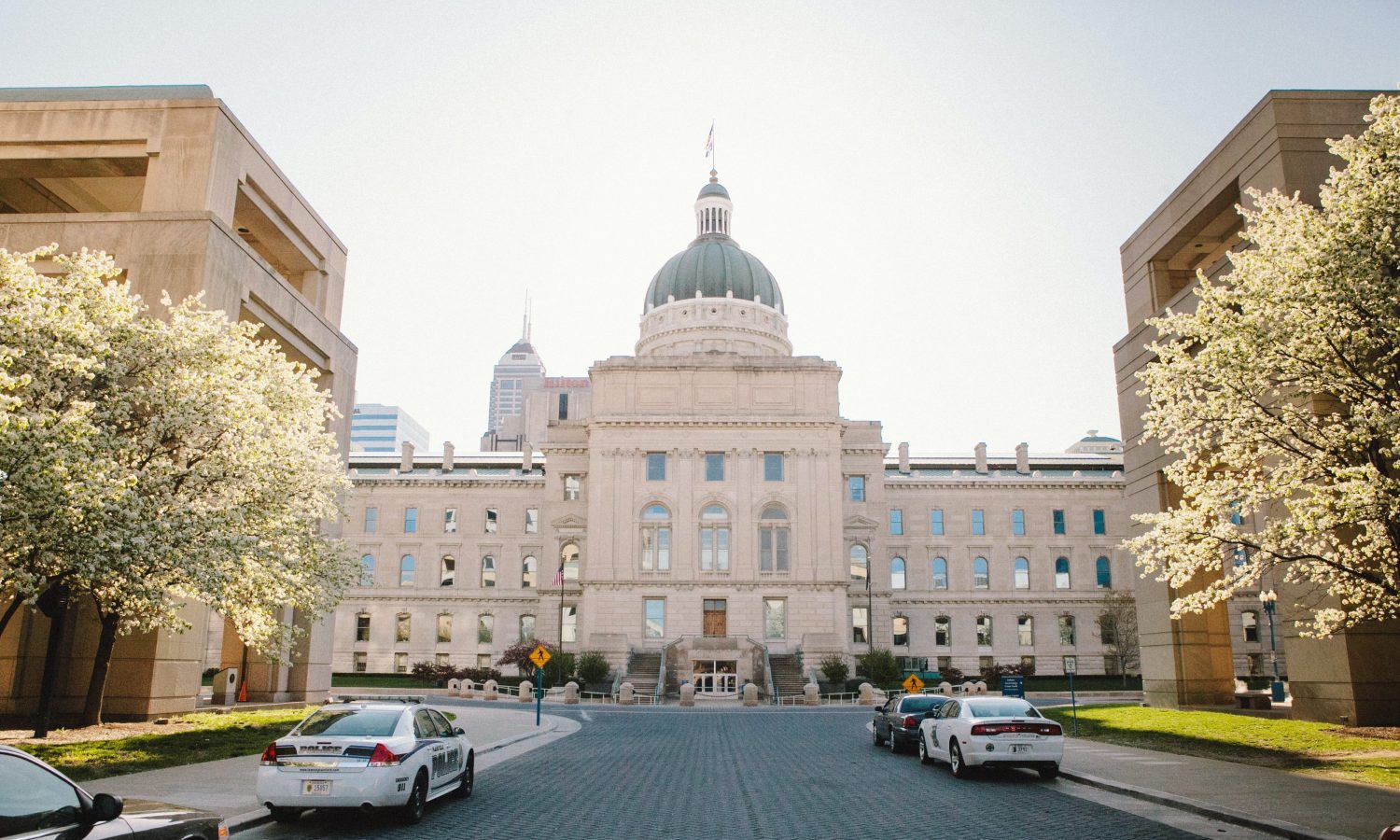
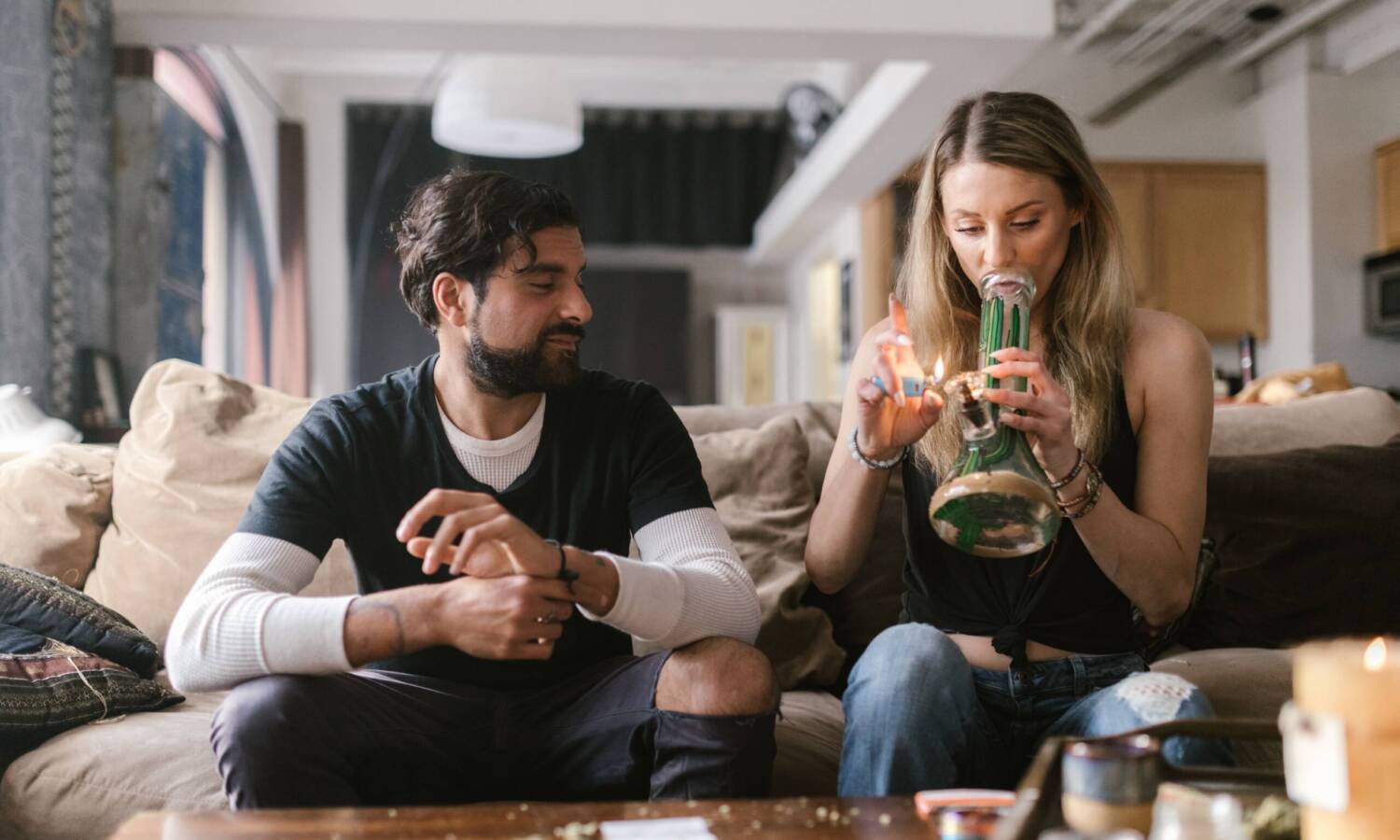
Indiana lawmakers agreed that more research on the potential health benefits and decriminalization of THC products — including marijuana, Delta-8 and Delta-9 — is needed before any legislative action is further taken, reported KPVI.
The General Assembly’s Legislative Council overwhelmingly supported the idea to task the interim study committee on public health, behavioral health and human services with reviewing the issue further.
With legislative action anticipated during the 2023 session, the task force will consult experts and take public testimony on THC issues. In addition, several meetings are expected to be held this summer or fall.
“It’s a way to look at it comprehensively and what should be the policy of the state of Indiana,” said House Speaker Todd Huston (R), chairman of the Legislative Council. “There definitely is more study needed around Delta 8 and Delta 9.”
The study committee’s recommendation would be considered as strictly advisory, leaving the final decision to legalize cannabis to the full General Assembly.
Indiana Senate Candidate Smokes Joint In Video For Cannabis Legalization Campaign
Just one day before the unofficial cannabis holiday of 4/20, Indiana Senate candidate and mayor of Hammond, Thomas McDermott released his cannabis legalization ad online, with a video of himself lighting up a joint and smoking it.
In addition to openly smoked weed, McDermott tweeted: “Even on #420day, not many Senate candidates admit to having smoked weed. I’ve been thinking a lot about whether to launch this video where I light up. It’s an issue that’s personal & important to me & so many.#LegalizeIt”
McDermott is expected to compete with incumbent Republican Sen. Todd Young in November.
A new study shows how common long COVID is, especially for those over the age of 65.
A new set of statistics show how common it is for people to develop long COVID, a condition that’s grown increasingly concerning. Long COVID refers to a group of symptoms that can last for months after initial infection and can affect major organs like the heart, lungs, and kidneys. Symptoms include fatigue, shortness of breath, brain fog, blood clots, and more.
Researchers from the Centers for Disease Control and Prevention (CDC) conducted a recent study, dividing subjects into two groups: those under the age of 65 and those older. For the former, 1 out of 5 COVID survivors was found to develop long COVID symptoms. For the latter group, results were even higher, with 1 out of 4 survivors experiencing symptoms.
The study analyzed the electronic records of 2 million people, comparing the infected with the uninfected. Results found that participants belonging to both groups were twice as likely than uninfected people to develop respiratory conditions and lung problems. The analysis also found that the most common post-COVID conditions that people developed were respiratory conditions and musculoskeletal pain.
When comparing the two groups themselves, researchers found that the older group was exposed to more risks. They also had higher risks of developing kidney failure, neurological conditions, and mental health conditions.
“It is sobering to see the results of this study again confirming the breadth of organ dysfunction and the scale of the problem,” Dr. Ziyad Al-Aly, the chief of research and development at the V.A. St. Louis Health Care System, told the New York Times. He said that, as a consequence of COVID, thousands of people could develop long-term diseases that would affect them for the rest of their lives, like diabetes, heart disease, neurological problems, and more.
Speaking on the steps of the State House in Providence, Gov. Dan McKee said the law was “equitable, controlled and safe” while establishing a regulatory framework that emphasizes public health and safety.
With the stroke of a pen, Rhode Island legalizes cannabis, joining its two neighboring states and 16 others in the recreational use of cannabis, becoming the 19th state in the country to end marijuana prohibition.
After months of negotiations between lawmakers, advocates, stakeholders and the governor’s office, and less than 24 hours after lawmakers overwhelmingly passed the legalization bill, Gov. Dan McKee signed the measure, which promises automatic expungement of past marijuana possession convictions and reserves a quarter of new retail store licenses for minority communities disproportionally hurt by the War on Drugs, reported the Providence Journal.
Today I signed the Rhode Island Cannabis Act, legalizing and safely regulating cannabis in our state.
This bill successfully incorporates our priorities of making sure legalization is:
Speaking on the steps of the State House in Providence, McKee said the law was “equitable, controlled and safe” while establishing a regulatory framework that emphasizes public health and safety. “The end result is a win for our state both socially and economically.”
The law calls for retail sales beginning Dec. 1, but it will be a while before most of the shops are open. Rhode Island Legalizes Cannabis, great news for all!
These are just some of the many cities in Europe where it’s fairly easy for tourists to get cannabis. But always do your research.
Whether you’re going to Paris, London or Venice…the historic cites, the food, the beaches, and mountains, the charm of Europe at this time of year is undeniable. People are flocking to Europe in record numbers. The airlines are packed and people are flooding Insta with their vacation photos. So, if you are traveling to Europe, here’s how to score come good weed.
While more destinations in the UK and on the continent have changed their approach to cannabis, many do not have it yet or it is harder to acquire. While no longer confined to just Amsterdam if you want to get high in Europe, though it’s still a must-visit for cannabis lovers if you’ve never been. Here’s where you can get weed while traveling to Europe.
Freetown Christiana is a bohemian hotspot in Scandinavian Europe where cannabis growing is completely legal — even if it’s illegal in the rest of the country. Head over to Pusher Street, which is the name of the Green Light District as its called, and you’ll find lots of cannabis being openly sold on the street.
Additionally, Christiana is well-known for its laid-back lifestyle, charming attractions, and strong environmental activism. Despite that, it still attracts many tourists from around the world who come to Denmark seeking cannabis in all forms. In Pusher Street, you can purchase cannabis in resin blocks, joints, and so much more. The government has turned a blind eye to it for many years, and the locals tolerate it.
Cannabis use has long been decriminalized in Portugal, and the police officers have no interest in catching people for marijuana offenses. Just be sure to behave in public and don’t give the authorities reason to catch you.
While in Lisbon, head over downtown near the touristy area by the Baixa or Praca Martim Moniz. However, the cannabis you will most likely come across here is in hash form, very rarely in flower. In Portugal, tourists have to keep in mind that you can only legally buy cannabis in small quantities; if in the rare event you are caught with large amounts on your person, this can land you in serious legal trouble.
Paella, wine, and tapas aren’t the only reasons many tourists come to Barcelona. Sure, the lovely city, culture, and nearby beaches are incredible but what better way to enjoy it than by being high?
Barcelona is quickly getting the reputation of becoming one of Europe’s most cannabis-friendly cities. Cannabis social clubs and lounges are now sprouting like weed around the city, and you can surely get more quality, top-shelf bud here compared to neighboring Portugal. There is a current loophole in the law that allows cannabis clubs to exist legally. However, smoking and possession is still legal provided you do this at home or within a social cannabis club if you’re able to obtain membership.
Photo by Florian Wehde via Unsplash
Don’t smoke in public and don’t get caught buying weed from street dealers; if you do get weed, the cops can still search you so do try to keep it in your underwear, according to insiders.
While possession and smoking cannabis are still illegal in the Czech Republic, there is a clear cannabis legalization movement going on in Prague. However, possession of under 4 grams is generally acceptable though you still want to avoid getting caught by the cops, so be sure to consume in private. Generally, the authorities are lax about it as long as you don’t smoke in public.
You will come across lots of illegal cannabis vendors in the street, but be wary: many of them have been known to defraud travelers. The best places to find weed are in the pubs and clubs during the evenings, though you’ll need to try and make some friends in order to access it.
Upon arriving in Berlin, it’s not uncommon to smell the distinct aroma of cannabis floating throughout the city. Only medical cannabis has been legal in Germany since 2017 though they have quickly become the biggest MMJ market in the entire continent while recreational cannabis is still illegal.
Photo by Stefan Widua via Unsplash
Having said that, cannabis is tolerated in Berlin. You can always find locals smoking it in public, and the cops tend to leave you alone if you do. Marijuana under 11 grams is considered a tiny amount, and in the rare event you do get caught, the cops will likely let you go with nothing more than a receipt. If you are caught with more than 11 grams on you, the story will be different, and not the way you want your European holiday to go.
The best way to score weed in Berlin is through personal contacts, though it’s also become common to find dealers on the Telegram app. Some Telegram groups can be found as well. You’ll also find people selling weed in public parks, though this isn’t recommended as it’s usually laced with chemicals and you don’t know what you are consuming.
Conclusion
These are just some of the many cities in Europe where it’s fairly easy for tourists to get cannabis. But before you do, always do your research.
The safest way is if you have a local friend who can get a hook up for you, rather than going out and doing it yourself. Before you leave, do your research because legislations can always change at the blink of an eye.
Now that a month has passed since New Jersey kicked off its long-awaited recreational cannabis sales, state regulators revealed that consumers have bought $24 million worth of cannabis, or roughly $5 million a week after a record-breaking first day when $2 million was spent.
At a Tuesday meeting, reported by the New Jersey Monitor, the Cannabis Regulatory Commission approved five additional permits for medical-only dispensaries to start selling adult-use cannabis.
The new retail shops include Garden State Dispensaries in Woodbridge, Union and Eatontown, The Apothecarium in Lodi and Ascend Wellness in Montclair. They’re joining the other 12 dispensaries that kicked off sales last month. The 13th location did not get final approval until two weeks ago.
“It’s really only a beginning, and I think it shows that there’s a lot of growth left in this market,” said Jeff Brown, executive director of the Cannabis Regulatory Commission.
In addition, a total of 46 conditional licenses were granted during the meeting, including 22 for cultivators, 13 for manufacturers and 11 for recreational retailers.
While it is not yet clear when the newly approved stores will start selling recreational marijuana products, the commission’s next gathering is expected to be held on June 23.
The state’s regulatory body initially gave the green light to sell adult-use cannabis to seven alternative treatment centers, which are multi-state operators, including Acreage Holdings, Inc., Ascend Wellness Holdings, Curaleaf Holdings, Inc., Green Thumb Industries Inc., Columbia Care Inc., TerrAscend Corp. and Verano Holdings Corp. in 13 locations across the state.
The National Institute on Drug Abuse shared that it’s looking for new partnerships to help them expand their cannabis research.
The National Institute on Drug Abuse (NIDA) shared this past Friday that they’re on the lookout for cannabis partners who can supply them with marijuana to research. The organization has faced ongoing criticism regarding the marijuana it uses for studies, which more closely resembles hemp than the kind of product that’s used by the majority of the population.
NIDA shared a notice where they listed what they’re looking for, making it clear that the marijuana must belong to facilities that operate under the Drug Enforcement Administration (DEA) approval.
Marijuana facilities would have to “produce or procure cannabis, cannabis extract and other cannabis-derived materials for basic and clinical research, and conduct quantitative and qualitative analysis, stability determination, and recommended storage conditions for these products for approved research.”
The organization hopes to conduct research on all cannabis compounds, from THC and CBD, to cannabinoids like CBN, CBC, CBG, and more.
Marijuana remains difficult to analyze due to its status as a Schedule I drug. But now that the plant is getting legalized across the country, it’s become increasingly important for authorities to develop a better understanding of cannabis and what it can do to the population on a long term basis.
NIDA has historically had a conservative point of view regarding drugs, including marijuana. This makes sense, since their efforts are to control and solve drug abuse. Still, it’s about time for them to expand their understanding of the drug. Magnifying their criteria and creating new partnerships with cannabis sources is just another step in painting a more accurate picture of the drug and its impact on the population.
Brittney Griner’s wife says that support from the WNBA has brought her “comfort,” but now she’d like President Joe Biden to do whatever is necessary to secure Griner’s release from detention in Russia.
“I just keep hearing that, you know, he has the power. She’s a political pawn,” Cherelle Griner told Good Morning America. “So if they’re holding her because they want you to do something, then I want you to do it.”
Photo by Christian Petersen/Getty Images
Brittney Griner has been detained in Russia since Feb. 17 for allegedly having cannabis oil in her bags when she entered an airport near Moscow where she was arriving to complete her season with the Russian UMMC Ekaterinburg. As a way of supplementing her low WBNA salary, Griner had been playing in Russia for seven years where Cherelle says she was treated like a superstar.
Griner, a two-time Olympic gold medalist for the U.S., faces drug smuggling charges that carry a maximum penalty of 10 years in prison. Earlier this month, the Biden administration said Griner is being wrongfully detained.
Cherelle has spoken with Secretary of State Antony Blinken about Griner’s case, but not the president.
“I was grateful for the call, you say she’s top priority, but I wanna see it. and I feel like to see it would be me seeing BG on U.S. soil,” Cherelle told Roberts. “At this point I don’t even know who I’m getting back when she comes back.”
“Every single day matters … to make sure that she comes back.”
Cherelle, who graduated from law school at North Carolina Central University earlier this month, has not spoken with Griner since the day she was first detained.
“I first heard the news through Brittney, actually. She started texting me around 2:00 a.m. that morning,” Cherelle said. “‘Babe. Babe. Babe. Wake up. They have me in this room. I don’t know what’s going on.’ and so I instantly text back “Who are they and what room?”
Cherelle said Griner texted back: “The customs people. They just grabbed me when I was going through, and they have me in this room.” Griner then said they were soon taking away her phone and that she’d call again when she could. Cherelle’s still waiting for that call nearly 100 days later.
“The first week I laid on this couch and cried my eyeballs out. I was numb. I couldn’t move. And then I said, ‘You got to get up now.’”
Via her lawyers, Brittney Griner sent a bouquet of roses to Cherelle to thank her for doing the GMA interview, knowing how difficult it would be for her.
A new study shows one place in particular where there’s a high risk of catching COVID-19.
By now, many of us are experts when it comes to avoiding COVID-19. But there is one place you’re more likely to catch COVID. The disease thrives in packed and closed-off environments, and our main way of protecting ourselves is to be vaccinated and masked up. But, according to a new study, there’s one place in particular that is a haven for COVID-19, and that’s the gym.
Published in the journal Proceedings of the National Academy of Sciences, the study analyzed 16 people and their workout routines, looking at their exhalations while at rest and at movement. Researchers expected that they would produce more exhalations during a workout. But they were surprised by just how many more aerosol particles the subjects exhaled and how these increased depending on how intense the workout was.
Researchers found that, when people were at rest, they exhaled about 500 particles per minute. When they were moving, they exhale over 76,000 particles per minute, particularly if their workout is extenuating, like a spinning class or boot camp training. Pair this with a crowded room with poor ventilation, basically most workout classes, and it’s likely to result in a super spreader event even if there’s only one person infected.
“The study provides mechanistic data to back up the assumption that exercising indoors is a higher-risk activity when it comes to transmission of COVID-19,” Linsey Marr, an expert on airborne transmission of viruses, told the New York Times.
Despite the risks, measures like opening windows, maintaining six feet of distance, and installing air filters can help the risks. While wearing a face mask is not ideal when working out, it can help reduce your aerosol particles. Experts recommend a tight-fitting surgical mask, which can be more comfortable than others and is made of breathier fabrics.
While these measures can’t be adopted by all gyms, they’re helpful guidelines nowadays, especially when looking for a safe space to work out and when COVID rates are high in your area.
What is otherwise considered normal for the rest of us, such as making eye contact, talking to people, and interacting with others, is extremely difficult and nerve-wrecking for the socially anxious.
Being an introvert is different from having social anxiety. Whereas it’s normal for introverts to feel drained from social interactions, social anxiety is actually a type of mental illness that causes a person to experience fear during social situations. But does CBD help with social anxiety?
Also known as social phobia, people who suffer from this condition experience severe dread and fear whenever they have to do anything with other people; it could be public speaking, making a presentation, attending a party, or even a simple family gathering.
Photo by Priscilla Du Preez via Unsplash
What is otherwise considered normal for the rest of us, such as making eye contact, talking to people, and interacting with others, is extremely difficult and nerve-wrecking for the socially anxious. These can result in physical symptoms such as sweating, increased heart rate, trembling, dizziness, upset stomach, and brain fog. With around 7% of the American population suffering from social anxiety disorder, it’s more common than we think but treatment and diagnosis is necessary to prevent it from escalating to depression or substance abuse.
Currently, available treatments are not always successful. Data shows that just 30% of anxiety patients undergoing treatment show improvements, but it’s also not helpful that pharmacological treatments have negative side effects.
How Can CBD Help
Cannabidiol, one of the two main cannabinoids in the cannabis plant, is a non-psychoactive compound that has shown to be tremendously effective in treating many different forms of anxiety. Generalized social anxiety disorder is one of them. While using cannabis with psychoactive THC may be helpful for some, it is also known to trigger paranoia which can make anxiety even worse in others. For these reasons, CBD may be the best choice.
A study from 2011 on a small group of people diagnosed with social anxiety disorder compared them to healthy control participants. They were tasked to do a simulated public speaking test, one of the common methods that are used to test for anxiety. The researchers discovered that when CBD was given to those with social anxiety, their discomfort and nervousness were reduced so much lower that it was comparable to people in the control group.
Another study on Japanese teenagers was conducted in 2019. The researchers sought to understand how effective CBD was for these teens who suffered from avoidant personality disorder and social anxiety disorder through a double-blind study. They were given 300mg of CBD, though others in the control group were given a placebo everyday for four weeks. The researchers measured the symptoms of social anxiety disorder at the start and culmination of the treatment the Liebowitz Social Anxiety Scale and the Fear of Negative Evaluation Questionnaire. They found that CBD was effective in reducing anxiety as proven by both tests.
The researchers followed up with the teenagers 6 months following treatment, but in this case none of the researchers still knew which of them were given the CBD or the placebo treatment. They were excited to report that the CBD did not lead to any negative side treatment and it was also interesting to note that 53% of those who were given CBD oil continued treatment by taking up Cognitive Behavioral Therapy and medications, while none of those in the placebo group did. This was significant because it showed that those who took CBD felt like they had the courage to seek the help necessary to overcome their anxiety by talking to a therapist and take other complementary medications.
In 2020, a group of researchers analyzed 8 studies that looked into the impact of CBD in different anxiety disorders. They found promising results which suggest CBD is effective when used alone, or with complementary medications for treating social anxiety disorder as well as PTSD and generalized anxiety disorder.
Photo by Headway via Unsplash
Also in 2020, a research team conducted clinical studies among patients with social anxiety, who were given a single dose of CBD, either 400 or 600mg. They were also tasked to do a public speaking simulation tasked. “Preliminary evidence from human studies demonstrates that CBD may reduce anxiety in healthy participants and patients with social anxiety disorder. It is important to emphasize that this data is preliminary and more research is required,” explained Madison Wright, lead researcher.
While these studies were focused on social anxiety disorder, the use of CBD for anxiety in general has been extremely positive and well-tolerated. Anyone who struggles with this condition can understand how debilitating it can be, and given that isolating oneself is not a viable solution. CBD is available in various forms and can safely be taken to help overcome social anxiety.
How to Use CBD for Anxiety
Medical experts and scientists have not yet come up with a standard dosing of CBD for anxiety, but studies have shown that 300-600mg of CBD can be an effective dose.
However, one patient’s dosage may vary greatly to the next because it will depend on the severity of their symptoms and how they take their CBD. There are many forms of CBD available including edibles, capsules, oils, vapes, flowers, and more. Taking CBD orally throughout the day can be beneficial for people with extreme cases; it can calm you down enough and give you the energy you need to face the day and all the necessary social interactions you have lined up.
The quickest way to benefit from the calming effects of CBD is by vaping or smoking CBD oil. This can help you gather the courage necessary if you have to make a speech or presentation on short notice.
Conclusion
We already have a mountain of evidence that cannabis, and CBD in particular, is powerful for treating anxiety safely. These studies only continue to grow as researchers take a deeper dive on its impact for specific anxiety disorders that afflict millions of Americans, sometimes so bad that it impacts our ability to function a normal day to day life.
He cited his decision to veto due to questions surrounding the “long-term health and economic impacts” of marijuana and “serious law enforcement concerns.”
Delaware Governor John Carney (D) vetoed a bill to legalize marijuana that the legislature had passed and sent to his desk earlier this month, which sets up a historic showdown with the General Assembly, reported DelawareOnline.
For years, Carney has not wavered in his position against marijuana legalization though he showed sympathy for the needs of those who benefitted from medical marijuana. He said in a statement that he does not “believe that promoting or expanding the use of recreational marijuana is in the best interests of the state of Delaware, especially our young people.”
Carney said he supported the use of medical marijuana as well as the decriminalization of marijuana. However, he cited his decision to veto due to questions surrounding the “long-term health and economic impacts” of marijuana and “serious law enforcement concerns.”
“Questions about the long-term health and economic impacts of recreational marijuana use, as well as serious law enforcement concerns, remain unresolved,” Governor Carney said. “I respect the Legislative Branch’s role in this process, and I understand that some hold a different view on this issue. However, I have been clear about my position since before I took office, and I have articulated my concerns many times.”
The legislature could still override the governor’s veto, which is sponsored by Rep. Ed Osienski (D), as it’s already received more than three-fifths of the vote in both chambers that would be required to overrule Carney’s decision.
Major Break With His Party
According to DelawareOnline, this is likely the most controversial veto of Carney’s tenure as governor and is being seen as a major break from those in the state and national Democratic Party. Carney said in a statement that he understands “that some hold a different view on this issue.”