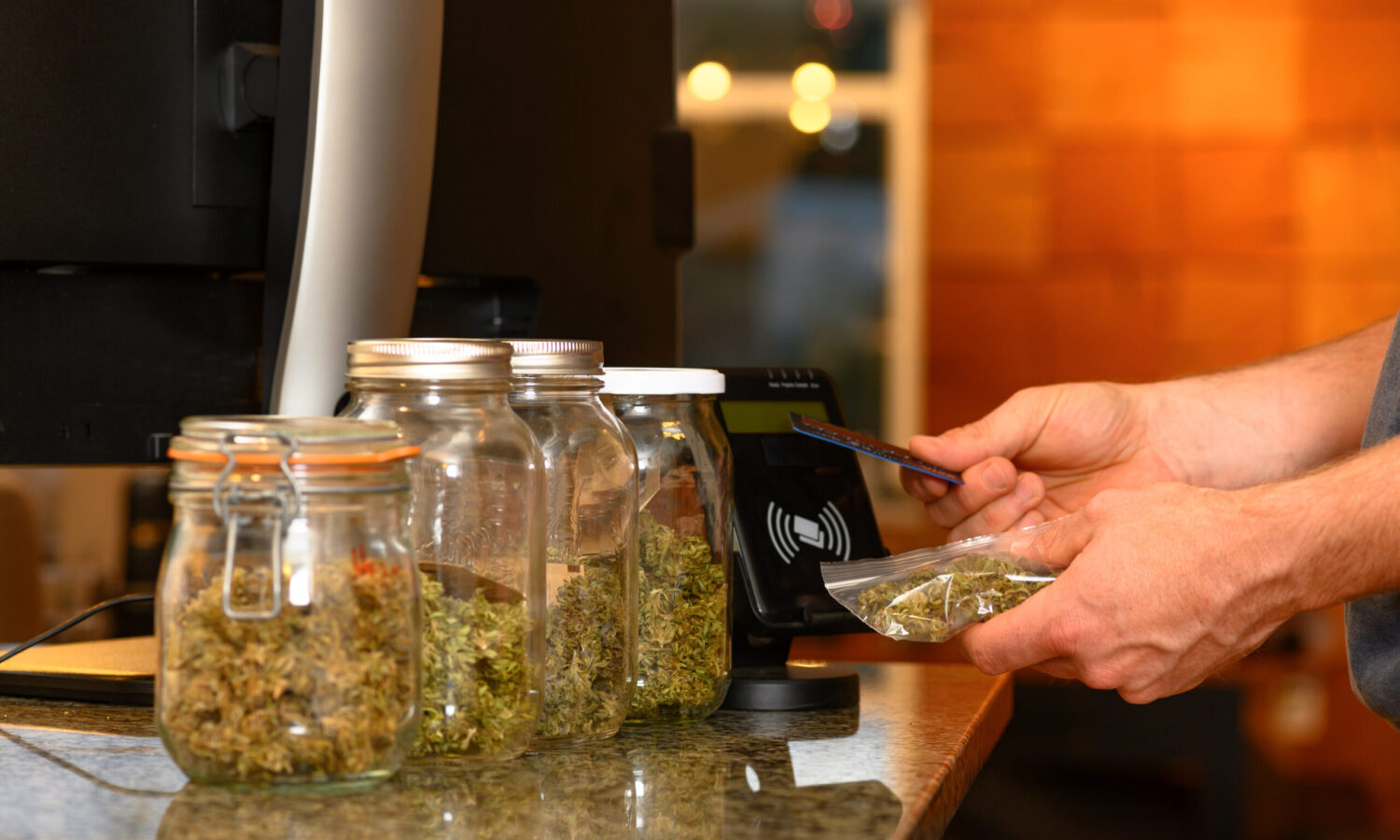
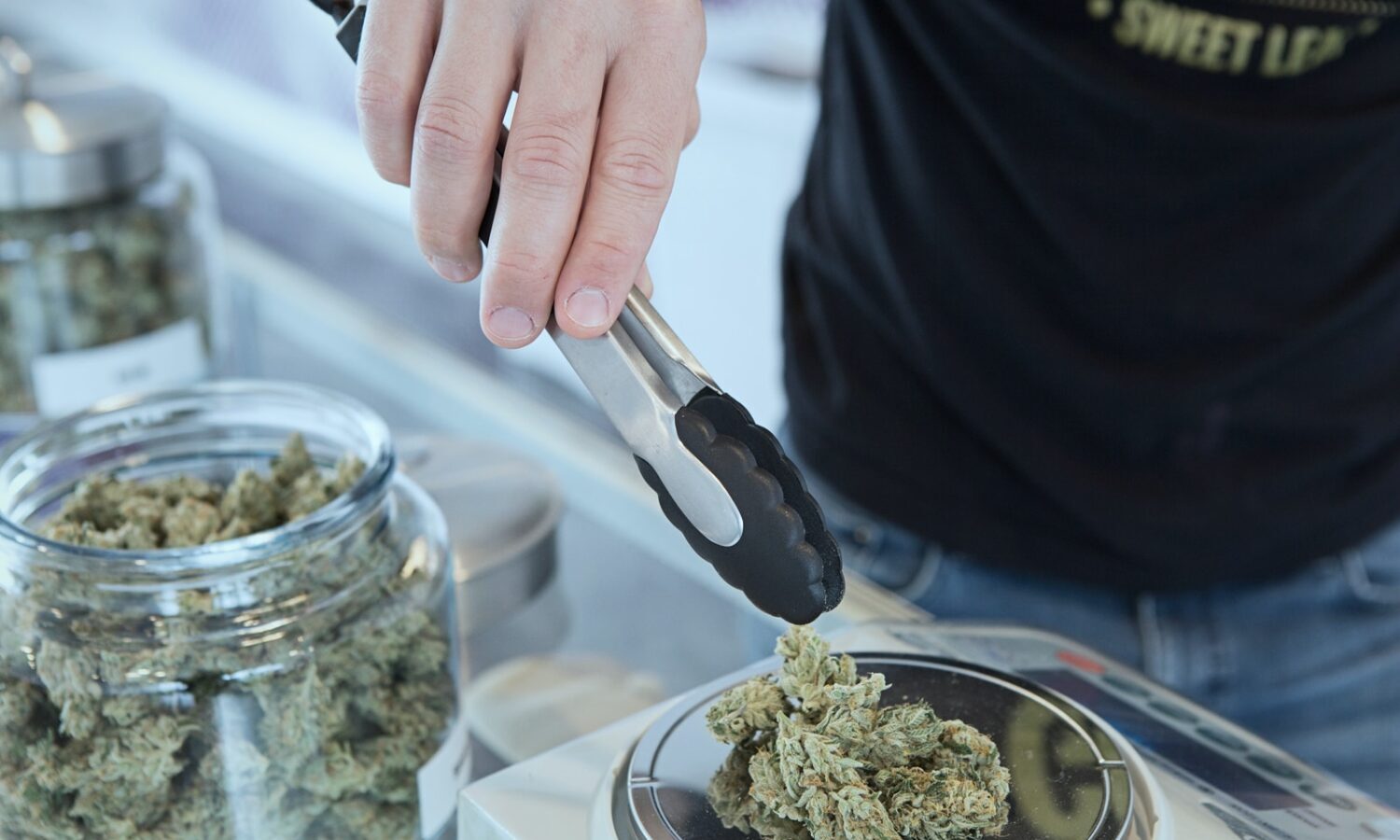
Marijuana has been shown to help relieve certain types of pain, nausea, and vomiting, as well as some mental health disorders. But what about glaucoma?
For years, patients with glaucoma have been prescribed marijuana in order to lower their intraocular pressure (IOP). Glaucoma is a progressive optic neuropathy that can lead to blindness, and it is the leading cause of blindness in the United States. In states where marijuana is legal for medical use, glaucoma is one of the qualifying conditions for which cannabis may be prescribed.
Glaucoma is a group of eye diseases that damage the optic nerve. It is the second leading cause of blindness in the world. Early detection and treatment of glaucoma is essential to preserving vision.
There are often no symptoms in the early stages of glaucoma. As the disease progresses, symptoms may include: Eye pain, blurred vision, halos around lights, seeing colored dots or rainbows around lights, difficulty seeing at night and sudden loss of vision.
The cannabinoids in marijuana reduce the production of fluid in the eye, which decreases the pressure on the optic nerve. Marijuana stimulates the release of toxins from the cells in the eye, which helps to improve vision. Marijuana has anti-inflammatory properties, which helps to reduce the damage caused by glaucoma.
Medical marijuana has been legalized in many states for the treatment of various illnesses. One such illness is glaucoma, a condition that can lead to blindness if not treated. While marijuana has been shown to be effective in reducing the pressure in the eye caused by glaucoma, it also has some side effects.
Marijuana is the most commonly used illicit drug in the United States. According to Glaucoma Today, marijuana is also the most commonly used substance in glaucoma therapy. The purpose of this statement is to review the side effects of marijuana use in patients with glaucoma.
The use of medical marijuana for the treatment of glaucoma has been around for centuries. There are some side effects associated with the use of medical marijuana. These side effects can include dry mouth, drowsiness, and difficulty with concentration.
Cannabis has been shown to help lower intraocular pressure, but there are many other factors to consider when it comes to marijuana and glaucoma. In this article, we have explored the links between the two and tried to separate fact from fiction.
Is bigger better? Maybe, but longer definitely is, at least when it comes to COVID infection.
Quick. Take a look at your fingers. You’ll want to remember their lengths, because according to a new study, there’s a correlation between the length of our fingers and COVID-19 symptoms. This incredibly random bit of data is supported by scientific evidence, with finger length suggesting the amount of sex hormones in a person’s body, which can have an impact on the course of the viral infection.
Researchers from Swansea University found that finger length is indicative to testosterone levels, a hormone that plays a key role in the progression of COVID-19. According to previous studies, a longer ring finger in the womb suggests higher testosterone levels, something that’s more common in males. A longer index finger suggests more estrogen, thus being more common in women.
The study, published in the journal Scientific Reports, analyzed a group of participants’ hormone levels at birth and during puberty. These numbers were then cross-referenced with the rate of COVID-19 hospitalizations, revealing that people with short fingers (so called ‘feminized’) and with digits of different lengths on both hands had higher odds of a more severe COVID-19 infection.
“Our findings suggest that COVID-19 severity is related to low testosterone and possibly high estrogen in both men and women,” said Professor John Manning. “’Feminized’ differences in digit ratios in hospitalized patients supports the view that individuals who have experienced low testosterone and/or high estrogen are prone to severe expression of COVID-19. This may explain why the most at-risk group is elderly males.”
Further studies into the subject could result in better treatment of the disease, shorter stays at hospitals, and in the development of antiviral drugs, increasing the disease’s options for treatment.
The length of fingers has long been associated with a variety of interesting facts, from seemingly wild claims of sexual orientation to personality traits. Since sex hormones have a relationship to these, these claims might have a scientific basis after all, even if we don’t yet understand them.
Now that these clear policies regarding hemp seed are available in Europe, the European Industrial Hemp Association thinks it will assist in developing the market and attracting outside investors.
The EC issued a two-tiered regulation. The first of them, which was authorized by the European Commission’s Standing Committee on Plants, Animals, Food, and Feed, says that oil obtained from hemp seed should not contain THC levels greater than 7.5mg/kg.
Photo by Alexander_Volkov/Getty Images
The second regulation is that for dry foods that contain hemp, such as flour and protein powder that contain hemp seed, as well as hemp seed itself, the level of THC that can be found in them must not be greater than 3mg/kg.
To put this into an international point of view, a 10mg/kg limit has been placed on both dry foods and oils containing hemp seed in Canada. And in Switzerland, a limit double that of Canada’s has been established for oil products at 20mg/kg, while the limit for dry products remains the same at 10mg/kg.
Effects of Setting Limits
German cannabis lawyer Kai-Friedrich Niermann, who is presently suing the government over laws as regards the importation of hemp, was happy about this development. In his opinion, the ruling of the European Commission was crucial and way-paving for the European hemp sector. Currently, it will be the first time organized guideline values apply across the European Union.
Therefore, such cases as when there was a comprehensive recall of totally safe hemp products that occurred last August in Germany should be a thing of the past.
In agreement was Lorenza Romanese, who is the Managing Director of the European Industrial Hemp Association (EIHA), the sole EU-wide lobbying body with any genuine lobbying strength at the moment. She announced that the EIHA accepted the recently agreed limits. For the market to thrive, it has to be a market grounded on standard rules and not an attachment of 27 national laws.
Uncertainty of Restrictions
Still, everything is not entirely satisfactory. The European Industrial Hemp Association is still unhappy. There are several reasons for this, but the main one is the persistent uncertainty that exists despite the proclamation. This is why. Labs that carry out analysis for official controls and checks must be compliant with regulations on how to deduce what is referred to as “measurement uncertainty.” The European Commission has yet to express what those uncertainty values are.
This creates a continuous ambiguity, which the new regulations have yet to resolve. Namely, a commodity is said to be not compliant under the new regulation if it extends above the maximum level permitted and the complementary margin of freedom. Absent a clear definition of what that delta is, and producers will have to defend any measurements that exceed the limit, even just slight ones, to the authorities. According to the European Industrial Hemp Association, the development finally puts an end to internal market fragmentation and will most likely boost investment in the sector.
There will be extra time given to stakeholders to adapt to the new rules by trading their current stock during a growth period. The rules will also be compulsory for all European Union member states twenty days after the release of the regulation in the official journal of the European Union.
Photo by Mehrad Vosoughi via Unsplash
Why Is the Procedure Prolonged?
There is a certain sarcastic feel to how slowly the European Commission’s hemp policy is moving. This is due, instead shockingly given the laggard pace of reform, that the European Commission also has a policy asserting that hemp growing adds to the European Green New Deal objectives. This comprises the capability of the crop to isolate carbon, promote biodiversity, prevent soil erosion, and allow planting of crops that need low, if not non-existent, use of pesticides.
Another of the reasons all of this is very ironic is the fact that France is also, by a margin, the biggest producer of hemp in the European Union, producing up to 70%, followed by the Netherlands with 10% and Austria with 4%. The most effective legal actions at the European Union level so far have occurred in this country. Furthermore, this country is where the fiercest battles over the industry’s regulations have occurred. This includes the current court battle to permit the sale of hemp flowers in the country, not only extracts.
However, one thing has been made clear. Due to all this, it is France, and not Germany, that leads the way in setting country-specific guidelines that are impacting other countries, if not impacting verdicts at the European Union level. Indeed, there is an ongoing case in Germany that seeks to ascertain the European Union rules domestically and is also shaped by the Kanavpe case in France.
Nonetheless, the times when hemp producers were not bound by formal policies like in the wild west are coming to an end. Now, on to the next battle
Bottom Line
The ultimate goal of creating this restriction is to create a single market for hemp and dried products because Europe consists of 27 member states that speak different languages and have other thoughts. The market is a mess, but now there are legally binding policies for all. Now that these clear policies regarding hemp seed are available in Europe, the EIHA thinks it will assist in developing the market and attracting outside investors.
Even though the EIHA is thrilled to have regulations in place, the association will continue to strive to increase the THC thresholds in hemp seed foods as they believe the present regulations are too strict. The association is working to perform a clinical toxicological study on 400 parties to find out the effects of foods that have CBD or other minimal cannabinoids on the human body.
Fresh science obtained through studies will be provided to the European Food Safety Authority (EFSA). There’ll be a request for a new risk assessment to re-evaluate the THC limits.
The report notes that “enforcing cannabis prohibition laws costs taxpayers approximately $3.6 billion a year,” and impacts people of color “who are almost 4 times more likely to be arrested for cannabis possession.”
Lawmakers released a report with majority and minority leaders of the House Judiciary Committee who made their arguments for and against bill HR 3617, the Marijuana Opportunity, Reinvestment, and Expungement (MORE) Act, which is sponsored by the panel’s chairman, Rep. Jerrold Nadler (D), reported Marijuana Moment.
Members of the House Judiciary Committee advanced the bill sponsored by Nadler, in September 2021.
The Marijuana Justice Coalition (MJC), a broad alliance of national advocacy organizations convened by the Drug Policy Alliance, including the American Civil Liberties Union and Human Rights Watch sent a letter to House Speaker Nancy Pelosi (D) and House Majority Leader Steny Hoyer (D) called for a floor vote on the MORE Act.
The MORE Act repeals the long-standing federal prohibition of marijuana by removing it from the Controlled Substances Act — thereby ending the state/federal conflict over cannabis policies and providing state governments with greater authority to regulate marijuana-related activities, including retail sales.
The bill creates an “Opportunity Trust Fund” to support a “Community Reinvestment Grant Program” under the Justice Department, substance misuse treatment programs, and the Small Business Administration (SBA), that would facilitate grants for states and localities that expunge marijuana convictions.
A “minority views” section of the report, by Judiciary Committee Ranking Member Jim Jordan (R), criticized the bill for being “an enormous federal subsidy and stimulus for the marijuana industry,” that “would open the floodgates to marijuana cultivation, distribution, and sale within the United States allowing transnational criminal organizations to further exploit America’s addiction crisis.”
On Wednesday, a House Rules Committee meeting is expected that will decide if the bill should be amended.
“The communities that have been most harmed by cannabis prohibition are benefiting the least from the legal marijuana marketplace,” the report states. “A legacy of racial and ethnic injustices, compounded by the disproportionate collateral consequences of 80 years of cannabis prohibition enforcement, now limits participation in the industry. Fewer than one-fifth of cannabis business owners identify as minorities and only approximately 4 percent are black.”
The report notes that “enforcing cannabis prohibition laws costs taxpayers approximately $3.6 billion a year,” and impacts people of color “who are almost 4 times more likely to be arrested for cannabis possession than their White counterparts, despite equal rates of use across populations.”
The report highlights that people of color have been historically targeted by discriminatory sentencing practices “resulting in Black men receiving drug sentences that are 13.1 percent longer than sentences imposed for White men.”
A new study found links between the symptoms of long COVID and the variant that was responsible for the infection.
Thanks to some time and research, we’re learning more about long COVID-19, its symptoms, and why it affects some people over others. A new study says that symptoms of long COVID-19 can vary depending on the COVID-19 variant that’s responsible for the infection.
The study, conducted by researchers from Italy, did a retrospective observational study on over 400 subjects who were treated for post-COVID-19 during June 2021 and June 2021. During this time period, the variants in circulation were the original form of the virus and the Alpha variant was in circulation and researchers compared and contrasted each, finding key differences. Researchers will present their findings in this year’s European Congress of Clinical Microbiology & Infectious Diseases conference.
Study subjects had been admitted in with COVID-19 and had to fill out a questionnaire regarding lingering symptoms once they were recovered four to twelve weeks later. About 76% of patients reported lingering symptoms, with the most common ones being shortness of breath and chronic fatigue, at least for those infected with the original form of the virus.
Researchers found that the Alpha variant was more likely to produce symptoms like insomnia, muscle aches and pain, brain fog, and mental health conditions like anxiety and depression.
The study showed that subjects with a stronger COVID-19 and required stronger immunosuppressants were six times more likely to report long COVID-19 symptoms.
“Many of the symptoms reported in this study have been measured, but this is the first time they have been linked to different COVID-19 variants,” said Dr. Michele Spinicci, study lead. “The long duration and broad range of symptoms reminds us that the problem is not going away, and we need to do more to support and protect these patients in the long term. Future research should focus on the potential impacts of variants of concern and vaccination status on ongoing symptoms.”
Recently, we’ve been learning more and more about long COVID-19 and the factors that make some people more likely to experience its symptoms. While a lot remains in question, researchers believe that the severity of the disease, comorbidity, and other factors can have a hand in making long COVID-19 more likely to strike.
Over 20 cannabis industry CEOs attended the U.S. Cannabis Council’s second CEO Summit in Washington D.C. just a few days ago to lobby for cannabis reform, including:
1906
Acreage Holdings
Akerna
Anacostia Organics
Bridge City Collective
Canopy Growth
Central Coast Agriculture/Raw Garden
The Cronos Group
Culta
Curaleaf
Flower One
Flowhub
Forian
Greenlane Holdings
Holistic Industries
Houseplant
LivWell
Marijuana Policy Project
PharmaCann
Standard Wellness
TrueGreen Global
Weedmaps
Photo by RODNAE Productions from Pexels
Senior staff from member companies Dutchie, Foley Hoag, Husch Blackwell and Vicente Sederberg also attended.
The CEOs and their staff arrived Tuesday evening and participated in 60 meetings with Capitol Hill offices on Wednesday and Thursday. They met with members of both parties and both chambers, with a range of opinions on cannabis, ranging from champions like Reps. Joyce and Perlmutter to current opponents of legalization.
Rep. Nancy Mace met CEOs and spoke at the reception on Wednesday night. Many of the CEOs also attended two onsite fundraisers — one Democrat and one Republican, which were organized by the campaigns.
What CEOs Are Saying
Canopy Growth CEO David Klein was “even more encouraged by the bipartisan support for federal cannabis reform on Capitol Hill,” following the discussions with key Congressional stakeholders.
“What was most evident during our conversations is the shared responsibility we have to drive legalization forward as we seek to jumpstart the U.S. economy and unlock the 1.2 million high quality jobs that federal legalization can create,” he said.
Jessica Billingsley, CEO of Akerna and Chair of US Cannabis Council, added that these conversations about federal cannabis reform have shifted from “if” to “when” and “how” this eventuality will occur: “We are already working on specific strategies and legislative vehicles for the short term, followed by our longer-term goal of achieving full US federal legalization and descheduling of cannabis.”
Christian Sederberg, founding partner of Vicente Sederberg LLP, also weighed in exclusively.
Photo by Bet_Noire/Getty Images
“Members of Congress are more knowledgeable about key cannabis policy matters than ever before. They know the legal cannabis industry is now a significant driver of jobs and commerce in many states around the country, and they appreciate the urgency around reform at the federal level. We were pleased to find they were upbeat about the prospects for this session,” he voiced.
Finally, Kellen O’Keefe, CEO of Flower One called for more expedited action.
“The time to legalize and regulate cannabis is now. We have the support of the American people and need our elected officials in Washington to work together on incremental reform such as the Safe Banking Act,” said O’Keefe. “Our industry is the fastest-growing, highest tax-paying, job-creating, and community-enriching industry on the planet. It’s about time we get the support we need to ensure we can build a sustainable and equitable future for cannabis.”
“If there is anyone out there who doubts that there is an audience for female athletes and questions whether their stories are valuable or entertaining or important … let this Academy Award be the answer.”
Ben Proudfoot’s ‘The Queen of Basketball,’ made with Shaquille O’Neal and Stephen Curry as executive producers, tells the story of Lucy Harris, the only woman to be drafted by the NBA and the first Black woman inducted into the Basketball Hall of Fame.
Upon receiving the Oscar, Proudfoot used the moment to call on President Joe Biden and urge him to obtain the release of two-time Olympic gold medalist and top women’s player Brittney Griner, who is jailed in Russia. “President Biden, bring Brittney Griner home,” Proudfoot said.
Photo by Christian Petersen/Getty Images
Griner was arrested at the airport in Moscow, where she played in the off-season and accused of having cannabis oil in her bags.
“If there is anyone out there who doubts that there is an audience for female athletes and questions whether their stories are valuable or entertaining or important … let this Academy Award be the answer,” Proudfoot, who is from Halifax, said at the award ceremony in Los Angeles, via the Associated Press.
“This proves that Lucy Harris’ story, after 45 years of being ignored, does indeed mean something profound to America and the world,” he told the Canadian press.
“From a quiet town in Mississippi to the world stage, Lucy Harris, The Queen of Basketball, has always and will always belong at the top. Her’s is a record that will never be broken.”
Growers will have to utilize better and safer farming practices to ensure product safety isn’t compromised while securing their profits at the same time.
Several years after Washington’s legislature first discussed the requirements, the state has finally approved compulsory pesticide testing for all cannabis products produced and sold in the state. Cannabis manufacturers have a duty to meet the demands of cannabis users in a state. For profit reasons, some of these operators have settled for harmful chemicals to increase the output of their crops. These chemicals include insecticides, pesticides, and inorganic fertilizers. Many of them are unfit for human consumption.
Since the first month of cannabis legalization in Washington, users have found it quite challenging to know the components of the cannabis products sold to them. A lot could go wrong, from cultivation to the final packaging of cannabis products. And these companies, cultivation facilities, and producers rarely come out to explain what goes on behind the scenes.
The Washington State Liquor and Cannabis Board (LCB) proposed third-party tests to help cannabis users know if the products to be ingested are safe.
Pesticide Testing
In legal countries and states, cannabis products undergo several third-party tests to ascertain that they’re fit for consumption. However, most of these legal areas fail to necessitate pesticide tests for these products. There are different methods for carrying out pesticide tests, but the most common is the use of a liquid chromatography-mass spectrometer. This equipment can detect even the tiniest traces of toxic chemicals used as pesticides. Ensuring that the customer’s safety is not compromised.
Washington State’s state cannabis regulators noticed the growing use of pesticides in the cannabis and hemp industries months after the state began its medical program. However, the growers claimed that they only use pesticides with zero harmful effects. Yet, feeble tests have proved that these claims are untrue. Cannabis products are starting to become mainstream products, and it would be risky to carry on the medical and recreational cannabis sectors without enforcing these critical tests.
Imagine a chronic patient suffering more because they unknowingly consumed medical cannabis containing toxic pesticides. Or an occasional recreational user developing health conditions due to these poisonous compounds. In fact, the public’s safety is far from being guaranteed without these tests. Hence, the recent development is highly commendable.
Long Awaited Policy
Cannabis advocates have lauded this new mandatory requirement as a long-awaited move for the state’s cannabis industry. A few pointed out that the states with legal cannabis markets have these regulations and more to guarantee that their residents get only the best and safest products. It is important to note that the state has always mandated that all medical products be tested for pesticides. Although some growers may have found ways to forge the test results or work around the policy. California has also banned pesticides in marijuana growing.
The core aspect of this new policy is that cannabis producers now have to conduct these tests for recreational products. The regulation change is majorly focused on the recreational industry because the regulatory board assumes that all medical products are free from toxic pesticides.
The Liquor and Cannabis Board disclosed that from the moment the new policies were announced, irregular and random tests would be conducted across cannabis manufacturing facilities in the state. They believe this will compel all producers to maintain the new status quo. It is high time recreational users stopped being exposed to unsafe cannabis products.
The WSLCB unanimously voted that the new changes for quality control of recreational cannabis would be effective April 2. The pesticide tests will be added to a list of compulsory tests that must be conducted on cannabis products released onto the market.
Photo by Wanida Prapan/Getty Images
After about three years of public debates and considerations from various stakeholders, the new stringent regulations were finally approved. Once the law is implemented in a few weeks, every batch of smokable cannabis products produced within Washington state will be tested by state-licensed laboratories. The submitted samples will be critically analyzed for toxic pesticides like Bifenthrin, Daminozide, Permethrin, Spinosad, DDVP (Dichlorvos), Abamectin, Spiromesifen, etc. Cannabis stores and dispensaries will have the results of these tests before the products can be sold. The products that fall short of the accepted standards will be destroyed.
Industry watchdogs and cannabis secret shoppers revealed months ago that at least 1 in 5 cannabis products sold in cannabis dispensaries contain toxic pesticides. The failure of these products to meet quality assurance will decrease in the next few months as farmers will halt the use of these poisonous pesticides to prevent their products from being recalled or destroyed.
Washington-based Confidence Analytics, one of the most OK state-approved cannabis testing laboratories, revealed an updated white paper in February. The White Paper outlined the CEO’s plans to take proactive measures to kick-start pesticide tests before the law is enacted. Nick Mosley pointed out that the latest revisions will have massive effects on the state’s cannabis sector. In the white paper, Mosley explained that all supply levels would be affected, not to mention the market disruptions and realignments that would follow. Mosley believes that the quality control rule amendments will create new winners and losers in the industry.
In addition, the state legislature would consider other proactive bills that would impact the state’s existing cannabis product testing requirements. The measure, named House Bill 1859, would modify the current lab accreditation scheme and standards for these licensed labs. Another bill, Senate Bill 5983, plans to establish a new regulatory committee for the Liquor and Cannabis Board to ensure other cannabis-derived compounds are regulated.
Bottom Line
Pesticide testing is now more critical than ever in Washington. More regulations will be revised and added to the existing cannabis legislation in the next few months. But for now, the regulatory board is focused on making sure all cannabis products are free of pesticides.
Growers will have to utilize better and safer farming practices to ensure product safety isn’t compromised while securing their profits at the same time. For now, the United States federal government has not approved any pesticides to cultivate cannabis and hemp. However, some states have approved the use of a few. Meanwhile, more outreach efforts are being organized to educate sensitive growers about the adverse effects of pesticides on consumer health.
It seems that New Jerseyans will have to wait a bit longer to purchase recreational cannabis, as the state regulator for the nascent industry rejected the applications from eight medical cannabis operators — dubbed Alternative Treatment Centers and all owned by MSOs — to launch adult-use sales.
Curaleaf Holdings’ founder and chairman Boris Jordan was one of many disappointed cannabis entrepreneurs who did not take the news well.
Photo via Getty/StockstudioX
“Frustrating day in NJ – once again, the goal posts have been moved & the will of the people and the Governor is being ignored! We will continue to fight for what the NJ voters decided they want – a safe & regulated adult-use cannabis marketplace,” Jordan said in a recent Tweet.
Frustrating day in NJ – once again the goal posts have been moved & the will of the people and the Governor is being ignored! We will continue to fight for what the NJ voters decided they want – a safe & regulated adult use cannabis marketplace! #msogang
The New Jersey Cannabis Regulatory Commission took the decision on the grounds that, in the aggregate, cannabis operator in the state doesn’t have enough capacity to serve the current medical market.
Following its midday meeting, the state regulator called a special meeting for April 11, where the issue will be revisited.
Recreational Sales To Launch By Mid-May
Cantor Fitzgerald’s Pablo Zuanic said that recreation sales might begin in the Garden State by mid-May despite this setback.
“In practical terms, the CRC only has two weeks to check operators’ capacity and ability to supply the med market,” the analyst said in his latest note. “Because of probably significant political pressure and lobbying, we are of the opinion some incumbents (not all) will get the green light on 4/11.”
CRC Executive Director Jeff Brown explained that “our goal is to work with the industry and the industry to work with us so at the very next CRC meeting we have a cohort of ATCs that are turnkey to launch this market here, simply pending a vote by this commission,” reported NJ Advance Media.
“If for any that are still not there, hopefully (they’ll be) ready for conditional approval pending certain timelines and regulatory milestones that we can work to get done.”
Photo by Add Weed via Unsplash
“Without having all the facts, it would seem the CRC may want to delay the rec head start for med incumbents in order to narrow the gap with new social equity applicants starting operations,” he added.
Either way, New Jersey is still on track to beat Massachusetts in terms of launching the marijuana recreational market after voters approved it via the ballot box in November 2020, the analyst noted.
Conditional Licenses
Separately, the commission unanimously awarded the first 68 conditional licenses to adult-use cannabis cultivators and manufacturers, including 50 cultivators and 18 manufacturers, reported Politico.
Zuanic said these businesses will not be ready to supply the market until the first half of 2023.
“If the newly approved licensees submit their application by March 31, are approved by April 31, the only thing preventing them from starting would be build out and receiving local permits,” the analyst added.
If you’re in the mood to visit California or go on a cannabis tourism road trip in the state, make sure to allow enough time to enjoy the various stops you’ll be making.
California is one of the best places to visit for a fulfilling cannabis experience. It is fondly known as the “center of America’s cannabis industry” due to the high number of cannabis operations that go on in the different regions of the state.
Traveling through California is usually a swell journey. The state has several unforgettable experiences for visitors, from scenic views, natural areas, and spectacular landmarks; it has it all. What’s more, cannabis is legal here.
If you’re thinking about going on a road trip through California, this guide is for you. There are various places to visit in California to show you how Californians grow and smoke only the best cannabis products. You’d get to revel in the glorious history of cannabis in the different cities in the state. If you drive as far as the Big Sur coastline or Joshua Tree, you will enjoy the state’s unique landscape. There’s more enjoyment for you if you explore with an elevated mind.
Road Trip Guides Through California
Here is a carefully curated list of three different road trips stoners could embark on to enjoy the drop-dead gorgeous views of Cali cities. The guide also highlights some picture-worthy locations where you could stop to enjoy the wonders of edibles, vapes, gummies, edibles, or flowers.
Before you go on this trip, head over to a cannabis dispensary close to you to get your favorite cannabis goodies. If you have short notice, you can hold onto some money because you’d see some dispensaries to buy your favorite strains from. It’s time for some weedy adventure.
Through California’s Pacific Coast Highway
This is a 656-mile-long trip that starts from Southern California and ends at the city’s center in Mendocino County. The iconic state road is an iconic route. It has an extensive number of stops along the coastline where you can feast your eyes on some inspiring scenery while feasting on some mouthwatering strains.
This drive shouldn’t be rushed through in four or five days. To have the most fun and experience the lifestyles of Californians in these areas, it’s best to take at least ten days. Going from Dana Point to the region close to Legget will expose you to many natural and architectural views. The most striking aspect of this road trip is the views of the majestic Pacific Ocean. A significant part of this trip passes through the coastline. There are some forested parts to enjoy close to the Big Sur. As you go up north, you’ll make your way around some mountains. You might even see some wildlife like elephants, zebras, and seals as you get closer to San Simeon.
Some man-made structures will also be highlighted as you go through California’s Pacific Coast Highway. You’ll see a diverse selection of architectural landmarks, like the Spanish colonial architecture in the Santa Ynez Valley. Other architectural gems include the Golden Gate Bridge in San Francisco and the Hearst Castle estate.
Photo by Matthew Hamilton via Unsplash
The Desert Drive
This shorter drive begins in San Diego and ends in the Joshua Tree National Park. There are several wonderful sites along this route that are mostly inconspicuous when one is in a hurry to get to a destination.
Many people often fail to appreciate the scenic views along this terrain because all their attention is fixated on getting to Joshua Tree National Park. Although Joshua Tree Park is an exciting place, it won’t hurt to take in the various rock types, meadows, and art present along the route. You can complete this 290-mile trip in a week. And yes, the trip will be worth those seven days of your life.
Once you get to San Diego, press the button on your map as you begin to head to the northeast region by going through Highway 163 to Highway 78. As the name implies, the desert drive leads towards the Ansa-Borrego Desert State Park. It’s best to stop here and enjoy the beautiful landscape. If you’re fortunate enough to visit this park during spring, you’ll witness the blooming wildflowers. There’s a 130-foot prehistoric animal sculpture you could take pictures of just at the entrance of the park. The sculptures were created by artist Ricardo Breceda.
Photo by Patrick Tomasso via Unsplash
Another part of the trip includes the Palm Canyon Drive, heading to the Salton Sea. Other stops include the abandoned navy base called Slab City, Santa Rosa, and the San Jacinto Mountains National Monument. The significant part of this drive is that there are pit stops where you can enjoy one or two hits from your favorite strains.
All the sights highlighted here are worth the hype. For some years, the Salton Sea (one of the largest inland seas in the world) would completely dry up. Now is the best time to enjoy this beauty. On the other hand, the slab city is now a deserted area where some go to enjoy a puff or more.
Don’t forget to visit Palm Springs when you’re on Highway 111. You might even get to see some celebrities at the tree park.
The Rim of the World Scenic Byway
Not everyone can free up enough time to go on very long trips, which is why this route is included in this list.
This 117-mile road trip starts at Cajon Pass and ends in the Big Bear area. Travelers have the choice to leave their vehicles and participate in hiking in the rocky and mountainous regions of the state. You could also take your rides along the cliff edges and the peaks of the mountains at San Bernadino. This trip could take three to five days. Each day, you get to explore the different lakes, mountain passes, and various hikes.
Enjoy the Ride
If you’re in the mood to visit California or go on a cannabis tourism road trip in the state, make sure to allow enough time to enjoy the various stops you’ll be making. Enjoy the mountain views, lakes, and ocean coastlines. Who knows, you could even come across another group going the same route as you—the more the merrier. The best time to visit is during the summer or spring. Have fun!