El Niño 2026 could bring major changes to cannabis cultivation, from rain and drought to crop quality, wildfire risk, production costs and marijuana prices
If your cannabis plants seem unusually happy—or unusually stressed—this year, the weather may have something to do with it. As if the industry doesn’t have enough on their plate dealing with politicans, here is how El Niño could affect cannabis. 2026 is an El Niño year, and this year’s event is shaping up to be an unusually strong one.
According to NOAA, El Niño is strengthening and has more than a 90% chance of becoming a very strong event during the fall and winter of 2026–27. Forecasters are also calling for an increased likelihood of unusual temperature and precipitation patterns across much of the United States.
For the cannabis industry, this matters. Cannabis is an agricultural crop, and agriculture is extremely sensitive to temperature, precipitation, humidity, water availability and extreme weather. An El Niño pattern doesn’t affect every cannabis-growing region in the same way, but it can change the conditions commercial farms and home growers encounter during critical parts of the growing and harvest cycles.
RELATED: US Army Relaxes Rules On Marijuana
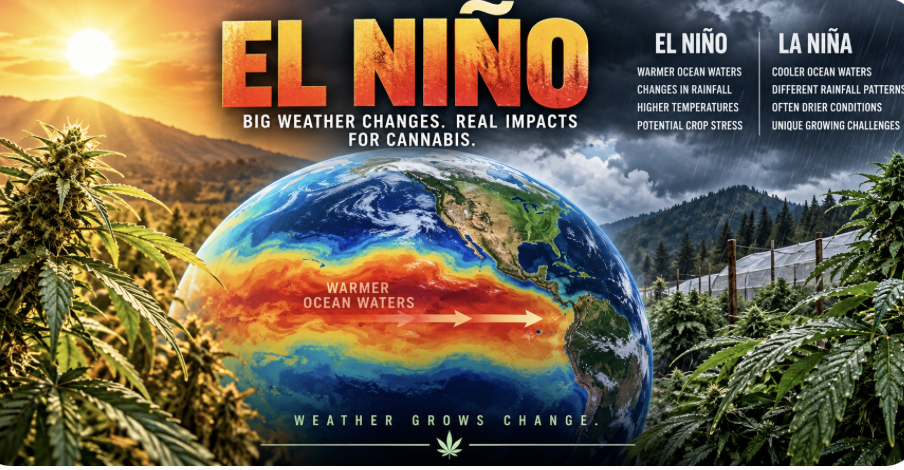
El Niño and La Niña are opposite phases of the El Niño-Southern Oscillation (ENSO), a natural climate pattern involving changes in ocean temperatures and atmospheric circulation across the tropical Pacific.
During El Niño, unusually warm ocean temperatures develop in the central and eastern tropical Pacific. That shift can influence weather patterns thousands of miles away, producing changes in rainfall, temperature and storm patterns across North America.
La Niña is essentially the opposite. Cooler-than-average waters develop in the same region, producing a different atmospheric pattern and often reversing some of the weather tendencies associated with El Niño.
The important point for cannabis growers is neither El Niño nor La Niña automatically means “good weather” or “bad weather.” The effect depends heavily on where a crop is located.
And in 2026, the distinction could be particularly important.
For outdoor cannabis cultivation, water is one of the biggest variables.
In parts of the western United States, El Niño can bring significant changes to precipitation patterns. NOAA’s current outlook calls for increased precipitation across portions of the Southwest and southern United States, while some areas—including parts of the Pacific Northwest and northern Rockies—could see below-normal precipitation during portions of the season.
For cannabis farmers, more rain can be both a blessing and a problem. Additional water can reduce irrigation demands and improve reservoirs and soil moisture. Historically, increased rainfall during El Niño periods has provided relief to drought-stressed cannabis-growing regions in California.
But cannabis plants don’t simply need “more water.” They need the right amount of water at the right time.
Excessive rain and humidity can increase disease pressure, create drainage problems and make it harder for outdoor growers to control the environment surrounding flowering plants. Wet conditions late in the season can be particularly challenging because growers are trying to protect mature flowers from moisture-related damage.
For home growers, it could mean paying much closer attention to drainage, airflow, humidity and the timing of harvest.
RELATED: So, You Want To Learn How To Grow Marijuana Outdoors