

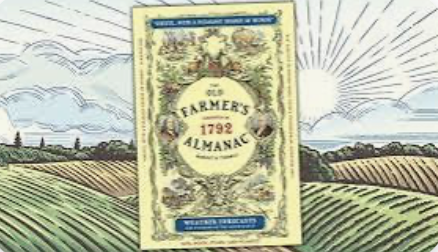
From Farm Staple to Backyard Crop: The Old Farmer’s Almanac’s Cannabis Growing Guide Shows How Marijuana Has Gone Mainstream
If you want to know how deeply cannabis has moved into the American mainstream, you could look at dispensary sales, legalization maps or the growing number of states allowing recreational marijuana. Or you could look somewhere much more unexpected: A middle American staple, the old Farmer’s Almanac embraces cannabis just like roses, turnips, carrots or corn.
Published continuously since 1792, when George Washington was president, the Old Farmer’s Almanac is the oldest continuously published periodical in North America. For generations, it has been a staple in farmhouses, kitchens, garden sheds and suburban homes, offering planting calendars, gardening advice, recipes, astronomical information and, of course, its famously scrutinized long-range weather forecasts. Its audience has expanded well beyond farmers, but its roots remain firmly planted in practical advice for people who want to grow things.
RELATED: Americans Are Consuming More Cannabis Than Ever
And now, cannabis has officially found a place in their garden.
The Almanac has been moving toward cannabis gardening for several years. Its 2024 Garden Guide included a special report titled “Yes, You Cannabis!” offering expert advice for growing the plant. Today, its website has gone further, publishing a dedicated “How to Grow Cannabis: From Planting to Harvest” guide covering everything from choosing seeds to planting, sunlight, soil, watering and harvesting.
This matters because The Old Farmer’s Almanac is not exactly known for chasing cultural fads. Cannabis appearing in its gardening pages puts marijuana in the same practical horticultural conversation as tomatoes, peppers, herbs and sunflowers.
For would-be home growers, the advice is surprisingly familiar.
The Almanac recommends starting cannabis outdoors after the last frost, when nighttime temperatures remain above about 55 degrees. Indoor growers can start plants at any time of year as long as they can provide consistent light and temperature. Outdoor plants should receive at least six hours of sunlight, have good air circulation and be planted in well-draining soil. Containers are also an option for gardeners who lack suitable ground space.
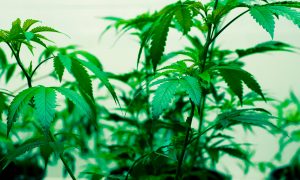
Seed selection is another important consideration. The Almanac identifies autoflowering seeds as a relatively easy option for beginners because they flower based on age rather than changes in daylight. Feminized seeds can also simplify the process by producing predominantly female plants—the ones developing the buds most home growers are seeking. Regular seeds can produce both male and female plants, requiring growers to identify and remove males if they want to prevent pollination.
The guide also emphasizes basic gardening fundamentals: sunlight, soil, water, airflow and watching for problems such as mold and bud rot. In other words, growing cannabis successfully is presented less as some mysterious counterculture activity and more as another exercise in understanding a plant.
This may be the biggest cultural shift of all.
RELATED: Does North American Weed Have A Viking Background
For decades, marijuana was associated with underground growing, clandestine gardens and a certain amount of secrecy. Now one of America’s oldest gardening authorities is essentially saying: Here’s when to plant it. Here’s where to put it. Here’s what kind of soil it likes.
The symbolism is hard to miss.
The Old Farmer’s Almanac was created for an agricultural America where people depended on practical knowledge about planting, harvesting and weather. Today, its audience includes gardeners, homeowners, cooks, travelers and anyone interested in the natural world. Its cannabis guidance reflects how dramatically the country’s relationship with marijuana has changed—and how cannabis has moved from the margins into ordinary American life.
Of course, The Old Farmer’s Almanac’s embrace of cannabis does not mean every American is growing it. Laws governing cultivation remain different from state to state, and home growers need to understand their local rules before planting.
RELATED: Cannabis Becomes America’s New Daily Health Habit
But culturally, the message is unmistakable: cannabis has become garden-worthy.
And if there is one subject giveing The Old Farmer’s Almanac even more credibility with generations of Americans, it is the weather.
The publication has been making long-range weather predictions since 1792 and traditionally claims roughly 80% accuracy. The Almanac stresses this does not mean it predicts every daily storm or temperature correctly. Rather, its long-range forecasts focus on the direction of seasonal temperature and precipitation departures from historical norms. Its methodology combines solar science, climatology and meteorology, along with historical weather patterns and modern climate data.
In fact, the Almanac says its 2025–2026 winter forecast achieved an overall accuracy rate of 88.9%, including 83.3% for temperature and 94.4% for precipitation direction.
So perhaps the clearest sign cannabis has entered middle America isn’t it is sold legally in more places or discussed openly at dinner parties.
It is one of America’s oldest farm and garden authorities now has advice for growing it.
