

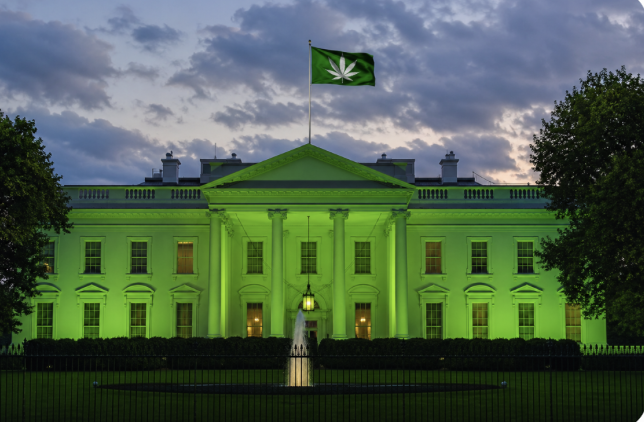
Cannabis money, Trump-connected lobbyists and White House access are converging as the administration reshapes federal marijuana policy, putting the President at odds with conservative Republicans
For decades, the cannabis industry spent millions trying to get Washington to listen. Now, in a change, the White House has its hand in cannabis – but who is benefiting? The political future which will determine the industry is becoming much more complicated.
President Donald Trump has made one of the most significant federal moves on marijuana by a Republican president. His December 2025 executive order directed the government to accelerate marijuana rescheduling, and in April the Justice Department moved FDA-approved marijuana products and marijuana sold through qualifying state medical programs into Schedule III.
President Donald Trump has made one of the most significant federal moves on marijuana by a Republican president. His December 2025 executive order directed the government to accelerate marijuana rescheduling, and in April the Justice Department moved FDA-approved marijuana products and marijuana sold through qualifying state medical programs into Schedule III.
RELATED: Senate Gives Hemp THC Drinks A Reprieve
The DEA is now considering the broader question of moving marijuana from Schedule I to Schedule III.
This is potentially worth enormous amounts of money to the cannabis industry.
But money has also been moving in the other direction.
Cannabis companies and marijuana advocates have poured money into lobbying Washington and Trump-linked political organizations. Trulieve, one of America’s largest marijuana companies, has emerged as an especially important player in the effort.
CEO Kim Rivers developed access few cannabis executives could have imagined a decade ago, including meetings with Trump as the president considered federal marijuana reform.
The relationships surrounding the access deserve attention.
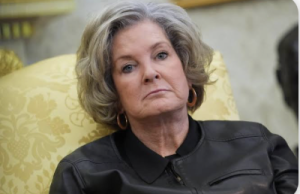
Trump chief of staff Susie Wiles previously worked for Ballard Partners, the influential Florida lobbying firm representing Trulieve. Her daughter, Caroline Wiles, has held a leadership role at another firm retained by the cannabis company.
Meanwhile, cannabis businesses and pro-marijuana organizations have contributed substantial sums to political committees aligned with Trump while the industry has spent millions more lobbying the federal government.
This does not establish a quid pro quo, nor does it prove Trump’s cannabis policies were purchased by the industry.
But it does create an unusual picture.
An industry seeking a federal policy change capable of dramatically improving its financial position is spending heavily in Washington, employing people connected to Trump’s political world and gaining direct access to the president while his administration makes decisions capable of changing the industry’s fortunes.
The financial stakes are substantial.
RELATED: Big Change in the Cannabis Industry
Federal tax code Section 280E has historically prevented marijuana companies trafficking in Schedule I or II substances from taking ordinary business deductions. Schedule III treatment can therefore provide qualifying cannabis businesses with potentially enormous tax relief.
For struggling marijuana companies, this isn’t a symbolic victory. It can change their bottom line.
And there is an intriguing political twist: Trump’s marijuana agenda is colliding with members of his own party.
House Republicans have advanced appropriations language designed to prevent the Justice Department from using federal money to implement broader marijuana rescheduling.
This creates a remarkable divide inside today’s Republican Party.
On one side is Trump, a Republican president who has somewhat embraced medical marijuana reform and pushed his administration toward Schedule III.
On the other is a Republican-controlled House, led by Speaker Mike Johnson, where conservative lawmakers remain deeply skeptical of loosening federal marijuana restrictions.
RELATED: California Is Struggling to Control Its Booming Illegal Cannabis Market
Trump reportedly even discussed his marijuana plans with Johnson before moving forward with his executive order.
The disagreement is particularly striking because Johnson has generally been one of Trump’s strongest congressional allies. Yet cannabis is exposing a fault line between Trump’s increasingly business-oriented approach to marijuana and the social-conservative wing of the Republican Party.
The same tension can be seen with hemp.
Congress approved restrictions on intoxicating hemp-derived THC products in 2025, potentially eliminating a huge portion of the booming hemp beverage and edible marketplace. The Trump White House, meanwhile, has called for Congress to develop a pathway preserving access to certain cannabinoid products.
For consumers and the cannabis industry, White House involvement could still be enormously positive.
Federal reform could encourage medical research, normalize cannabis businesses, improve access to banking and investment, and eventually produce clearer national standards for testing, labeling and consumer safety.
But the increasingly cozy relationship between cannabis money and political power deserves scrutiny regardless of which party occupies the White House.
The issue isn’t simply whether cannabis reform is good policy.
It is whether companies with money, lobbyists and presidential access will have an outsized role in deciding what America’s future cannabis industry looks like.
Smaller growers and independent dispensaries don’t have executives walking into the Oval Office. They don’t have armies of Washington lobbyists. And most don’t have millions available for political contributions.
That raises perhaps the most important question of all.
Cannabis spent decades fighting to get a seat at Washington’s table. Under Trump, it finally appears to have one.
But as the White House, cannabis executives, political donors and lobbyists grow closer—and Trump finds himself on the opposite side of some congressional Republicans—the bigger story may no longer be whether Washington embraces marijuana.
It may be who benefits when it does.
