

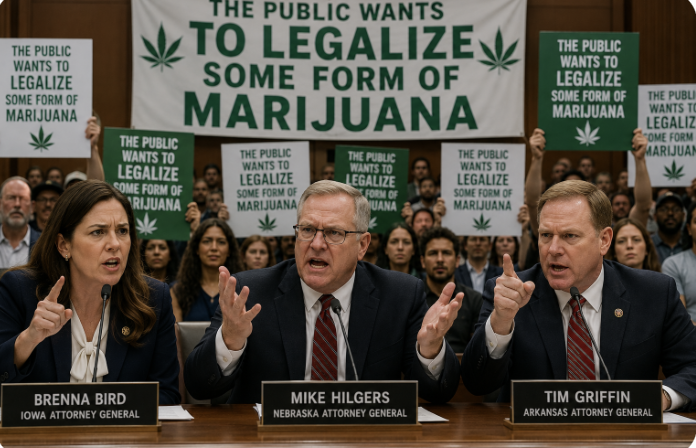
Critics say conservative state attorneys general are embracing a DeSantis-style nanny state approach by fighting cannabis reform supported by voters, patients, and even federal leadership.
While 88% of the public see value in legalizing marijuana, a group of republican attorney generals plan to block the President’s marijuana rescheduling. Three Republican state attorneygenerals are once again attempting to slow or block federal marijuana rescheduling, reviving a culture-war battle many Americans believed was already settled. Their latest effort reflects a growing divide inside conservative politics between voters who increasingly support cannabis reform and elected officials determined to maintain outdated prohibition policies.
Iowa Attorney General Brenna Bird and Nebraska Attorney General Mike Hilgers have emerged as two of the most visible leaders opposing efforts to move marijuana from Schedule I to Schedule III under federal law. Arkansas Attorney General Tim Griffin has also aligned with conservative legal efforts resisting broader cannabis reform. Together, the attorneys general argue marijuana remains dangerous and rescheduling would send the wrong public message.
RELATED: Another Senator Comes Out Strong Against Cannabis
The rescheduling proposal, originally initiated under the Biden administration and now continuing through federal review processes supported by the current administration, would formally recognize marijuana’s accepted medical use while easing research restrictions and reducing financial burdens on state-legal cannabis businesses.
Bird, Hilgers, and Griffin argue the federal government is moving too quickly and ignoring potential public health consequences. Hilgers previously led a coalition warning rescheduling would effectively reward the marijuana industry while increasing social harms. Bird has consistently supported stricter drug enforcement policies and opposed broader legalization measures.
Yet critics say their position increasingly ignores political reality, scientific evidence, and the will of the public. National polling consistently shows overwhelming support for medical marijuana and rising support for legalization among Republicans, independents, and Democrats alike. More than three dozen states already allow medical marijuana programs, while regulated cannabis markets generate billions in tax revenue and thousands of jobs.
Opponents of the attorneys general say their efforts represent an attempt to drag the country backward just as federal agencies, medical researchers, and voters move forward. They also argue the officials reflect a broader governing philosophy increasingly associated with Florida Governor Ron DeSantis — one critics describe as a modern conservative “nanny state.”
For decades, Republicans often framed themselves as defenders of personal liberty and limited government. But critics argue many conservative leaders now appear increasingly willing to use government power to regulate personal behavior, cultural issues, and medical decisions when it conflicts with their political worldview.
The criticism has become especially sharp regarding marijuana policy. Supporters of reform point out cannabis is now widely used by veterans, cancer patients, seniors, and people seeking alternatives to opioids and pharmaceutical sleep aids. To them, officials like Bird, Hilgers, and Griffin are substituting their own moral and political judgments for the preferences of voters and patients.
Critics also point to what they see as a glaring inconsistency in the opposition to marijuana reform. Alcohol — a fully legal and culturally accepted substance — is linked to far greater rates of addiction, violence, and long-term health damage than cannabis. Yet officials like Brenna Bird, Mike Hilgers, and Tim Griffin continue fighting marijuana reform even as millions of Americans view regulated cannabis as less harmful than alcohol. To reform advocates, the position reflects not public safety concerns but an outdated political and cultural bias treating marijuana differently despite shifting science and public opinion.
RELATED: More Boomers Are Embracing Cannabis
