The ruling is a setback for those who have hoped that such lawsuits would actually lead eventually to legal interstate cannabis shipping prior to federal legalization
In a break from a national trend, a federal judge in Washington state upheld the state’s residency requirement for cannabis business ownership and ruled that the US Constitution’s dormant commerce clause doesn’t apply because marijuana is still federally illegal.
Last Tuesday, US District Judge Benjamin Settle sided with the Washington Liquor and Cannabis Board and tossed a lawsuit filed in 2020 by marijuana investor Todd Brinkmeyer, who had asked the court to rule that Washington’s residency requirement is unconstitutional, Law360 reported.
Photo by jirkaejc/Getty Images
Settle wrote that states don’t have the legal power to overrule the federal Controlled Substance Act or Congress, both of which have maintained the federal illegality of cannabis, and therefore the commerce clause’s guarantee of fair interstate trade doesn’t apply.
That, Settle concluded, means Brinkmeyer didn’t have any standing to challenge the residency requirement.
“No party in this case suggests that citizens have a federal statutory or constitutional property right to cannabis while it remains federally illegal and, in fact, they do not,” the judge wrote in his ruling. “It is not clear to this Court how the dormant Commerce Clause can be read to protect illegal interstate commerce. The Supremacy Clause, preemption, general principles of federalism, and common sense suggest it does not.”
Attorney Daniel Oates, who represented Brinkmeyer in the case, called the ruling “disappointing.”
“It is unfortunate, particularly because, as the court acknowledged, the ruling stands in stark contrast to the majority of rulings by other federal courts on this same issue. We are carefully reviewing the ruling with our client and evaluating our next steps,” Oates told Law360.
Photo by Baris-Ozer/Getty Images
The ruling is a break from other federal cases, particularly one in Maine that resulted in the state’s residency mandate being thrown out, and an injunction that was issued by a federal judge in New York, preventing the state from issuing at least 18 retail licenses to date.
There are also similar lawsuits ongoing in several California cities that have residency requirements for cannabis social equity programs.
The Washington ruling is also a setback for those who have hoped that such lawsuits would actually lead eventually to legal interstate cannabis shipping prior to federal legalization, which is a speculative legal theory based on the Constitution’s dormant commerce clause. If the federal judiciary isn’t aligned on whether residency requirements are legal or not, that uncertainty could be enough to delay the interstate commerce movement for years.
New York’s cannabis consumption laws are even more permitting than the state’s own alcohol consumption laws, which call for a fine and a non-criminal summons for public alcohol consumption.
In case you hadn’t heard, weed is legal in New York and New Jersey. For those over 21 years of age in New York, it’s legal to possess up to three ounces of cannabis and up to 24 grams of concentrate for personal use. But can you walk around New York or New Jersey with weed?
New Jersey allows possession of up to one ounce of cannabis or up to five grams of concentrate/resin for personal use by adults. This means that you can carry small amounts of weed in public areas of New York and New Jersey, but still not in schools, government owned property, and many private places.
Photo by Love portrait and love the world/Getty Images
But where can you actually smoke or consume cannabis?
This is where New York and New Jersey differ. New Jersey prohibits smoking in all public areas, requiring individuals to consume their cannabis in private spaces (although your landlord may still prohibit cannabis use on their property).
While this may be disappointing for some, the New Jersey Cannabis Regulatory Commission (CRC) recently proposed rules for cannabis consumption areas, meaning that with some luck we may just see cannabis consumption lounges at the end of 2023.
For now, you can find dispensaries scattered across the state, as the CRC allowed a number of medical dispensaries to also sell for recreational use.
New York has taken a different approach. Adults may smoke or vape cannabis anywhere where smoking tobacco is allowed (with a few exceptions). New York’s cannabis consumption laws are even more permitting than the state’s own alcohol consumption laws, which call for a fine and a non-criminal summons for public alcohol consumption. This makes NY one of the most progressive states in the nation when it comes to public consumption of cannabis.
Still, cannabis use is not allowed in motor vehicles, outdoor dining areas, most indoor areas, parks, beaches, some pedestrian areas, and plenty of private spaces.
If you’re looking to consume cannabis elsewhere, New York is also expecting consumption areas (although much of the specific rules for such are not yet published). If you’re looking for where you can actually buy cannabis in New York, check out our recent article.
Anecdotal evidence has it that sativa strains will energize and inspire you while indica ones will put you to sleep and make you feel relaxed. But this isn’t necessarily true.
If you happened to ask a dozen smokers their favorite strain, you would probably come up with a dozen different answers. Some prefer a hit that will knock their socks off, while some would prefer a mellow, relaxed stone. Some are looking for a head high while others just want to feel their bodies relax.
How does an indica high feel like? When you hear a seasoned user asking for a strain that’s “fire”, “bomb” or “loud”, he’s probably referring to a potent indica strain.
Join us as we explore the mellow, relaxing stone of indica as well as take a better look at its properties.
Photo by whitebalance.oatt/Getty Images
What Is Indica?
Cannabis indica originated from the Middle East. To be more specific, it has its roots in Afghanistan, Pakistan and Tibet. The cultivars of cannabis indica are shorter than sativa plants and they generally have a broader, bushy appearance with dark-green leaves. They are popular with home growers because they have high yields within a shorter duration.
For the longest time, indica strains have been associated with a strong body high which is also referred to as couch lock. However, not all indica strains act in this way, especially when the strain is a hybrid.
What Does Indica Feel Like?
The typical Indica high can be described as being a mellow, relaxed stone.
Indica’s effect on the human body is usually referred to as being “stoned” or having a “body high.” This means that you are likely to feel its effects throughout your body as opposed to in your head. You are bound to feel very relaxed, which could eventually lead to a feeling of drowsiness and even sedation. Indica highs also tend to enhance your other senses like sound, smell and touch.
Its high could also be described as a lethargic, one that is almost a “lazy body high.”
Despite being profoundly relaxing, the body high could sometimes be heavy, giving you the urge to just sit on the couch and relax. This effect is commonly referred to as “couch lock”.
Though indica strains are believed to cause your attention span to become shorter, you might be surprised that they could inspire creativity.
Most prominently, indica strains are known to give relief. They have the ability to give relief from anxiety, stress, body pain, migraines and spasms. They can also help in the relaxation of muscles as well as reduction in the frequency of seizures. As a whole, indica strains are known to fight nausea and depression.
The last effect of indica, sedation can be realized with even very small doses. This is why it is a great sleeping aid.
Photo by Kampus Production via Pexels
Best Indica Strains
We will now delve into individual indica strains and discuss their specific highs.
Hindu Kush: If you are a fan of indica strains, you are probably familiar with Hindu Kush. This is a purebred that originates from the mountain range called that Hindu Kush that falls between Afghanistan and Pakistan. Hindu Kush will give you that mellow high that will help you wind down beautifully from a hard day of work as you relax on your balcony and watch the sun set. If you are looking for a long-lasting euphoric high, this is it.
Northern Lights: This is another classic. It has a hard-hitting high that is the perfect definition of being stoned. It also comes with serious munchies, so be prepared.
Granddaddy Purple: As its name suggests, this is the father of the father of all purple flowers. It originates from a crossing of Purple Urkle and Bid Bud. Expect the wonderful taste of a bag of grapes. Not ony does it taste delicious, it also has very potent effects. Its high is a fusion of physical relaxation and cerebral euphoria. It might set your thoughts fee to float away in a dreamy buzz but your body will definitely stay put for the duration of the high. Medically, it is used to combat stress, pain, insomnia, muscle spasms and appetite loss.
Blueberry: This strain also has Afghani roots mixed in with some Thai ones. Bred by DJ Short, Blueberry will give you a relaxed happy high that may just slump you over. If you are in search of a night cap which will also appeal to your taste buds, look no further.
9 LB Hammer: The connotation of a hard hit is not too far off with this one. You will experience a heavy head high that will slowly creep across the rest of your body. Don’t be surprised if you can’t drag yourself out of bed for the next hours.
Forbidden Fruit: Born of a cross between Cherry Pie AND Tangie, this strain tastes like a fruit cocktail. Its effects are lighter than most indicas and instead of giving you a sleepy heavy feeling, you will feel a relaxing euphoria
G-13: Now comes an interesting story. It is rumored that G-13 was as Government experiment that put together 13 of the most potent indica strains. As the story would have it, a disgruntled agent leaked it to the public and that is how we got the opportunity to share in this top secret substance.
Photo by AnnaStills/Getty Images
As far-fetched as this story is, you can definitely understand why someone would go to these lengths to concoct it. This strain is simply gob smacking. It has an intense high that will get you “stoned” in the classic way. It has an intense high that will have you staring into space watching monkeys fly.
Death Star: Why this strain got this name, we might never know. It is an Indica-dominant strain which is a cross between Sour Diesel and Sensi Star. This strain is a particularly sedative hybrid. Its effects are highly euphoric and it is known to promote spontaneous laughter as well as a sense of well-being.
Strawberry Banana: This is a particularly potent award winning strain from DNA Genetics. It has both a drowsy and a euphoric high. A cross between Bubble Gum and Banana Kush, Strawberry Banana encourages deep relaxation accompanied by a jolly metal high. Though it will make you feel drowsy, it doesn’t have a completely sedative effect. Mostly considered an evening strain, some people can get away with daytime consumption, especially because it is such a yummy treat.
Romulan: Named after an alien in Star Trek (imagine that), Romulan will give you intense cerebral effects. It is a potent Indica strain that is revered because of its powerful therapeutic qualities.
It has a deep relaxing sedating high that can get you through massive amounts of pain and insomnia to give you that much needed night of rest. It is also great in helping patients suffering from nerve damage as well as muscle spasms. In summary, it provides a full-body calm that has heavy intoxicating properties.
Medical Uses of Indica Strains
Preliminary research has pointed out that indica plants tend to have a higher concentration of CBD than sativa plants. This is why a majority of indica effects coincide with those of CBD. Indica strains therefore show great promise in resolving the below medical conditions:
While using indica strains to medicate any of these conditions, it is recommended that you use proven breeds like Afghan Kush, Northern Lights or Romulan. Most of these strains should be easily purchased from a cannabis dispensary.
Photo by monkeybusinessimages/Getty Images
What Factors Can Affect an Indica High?
By understanding the factors and circumstances that will have an effect on your high, you can make informed decisions that will give you the high you want.
Set and setting: Different scenarios can have a wildly different effect on your high. Consuming your weed in a relaxed environment will give you a much different experience than smoking it in a crowded waiting area. Always set your environment for the best effect.
Delivery method: The method you choose to take your weed will affect your experience. The most common methods of taking your weed are smoking, vaping, pessaries or eating edibles. Some methods like smoking will introduce the active components into your bloodstream in a matter of seconds while edibles have to wait for the process of digestion, which causes a delayed high.
It is also easier to control the amount of cannabis you take with some methods than it is with others.
Dose: Just as with method, different amounts will have different effects on you. That’s obvious, right?
Wrong!
Different people react differently to pot, so what may knock one down may not even scratch the surface for another. In trying to hit your sweet spot, you might need to find the exact amount that is perfect for you. Too little and it’s a waste of effort, too much and the sound of closing door will freak you out.
It is important to note that it is even harder to dose when it comes to edibles. So go slow….very slow.
Cannabinoid profile: Whether a strain is indica or sativa, its cannabinoid profile has a huge bearing on the effects it solicits. High THC strains will give you crazy psychedelic effects while high CBD strains are generally known to be relaxing.
Depending on the high you are looking for, remember to consider this as well. It is also important to note that the ratio in which these cannabinoids occur also makes a difference. Two strains can have 23% THC with one strain having 10% CBD and another 2% CBD. The strain with a lower CBD ratio will have milder effects as the CBD will counteract some of the high THC effects.
Photo by Nastasic/Getty Images
Terpenes: Terpenes are compounds found in plants that give them their characteristic smells and taste. They also possess other qualities that can be therapeutic or even medicinal. Cannabis generally has an abundance of terpenes, and so when you smoke your blunt and have a certain feeling, terpenes have certainly contributed to it. Some terpenes such as Linalool have the effect of relaxing you while Limonene is a stress reliever.
Though future research will make terpenes even better understood, their role in your current high cannot be ignored.
Age: Age has a significant role in how a cannabis high hits you. If you are young and excited, it’s likely to uplift you even more as opposed to an older person who might experience less effects, sometimes not even as pleasant.
Though more research needs to be done in this field, it’s important to re-evaluate what you take and how you take it as you grow older.
Tolerance: It is not a myth. Some people tolerate weed much better than others. The exact reasons for these can span across body chemistry, frequency of consumption, weight, metabolism and many more characteristics. It’s important to know your personal tolerance, especially if you are smoking in a group.
Anecdotal evidence has it that sativa strains will energize and inspire you while indica ones will put you to sleep and make you feel relaxed. While this is generally true, especially in native strains, the effect of breeding has led to indicas that can inspire you and sativas that can put you to sleep.
It is therefore important to understand what you are looking for in your high and turn to either an indica or sativa, but it is also as important to gauge your own reaction to that particular strain.
You may not be able to get your hands on all of them, but these five bizarre cannabis strains are worth knowing about for their strange and unique properties.
There are easily almost a thousand, if not more, cannabis strains in the world right now. And we all have at least one favorite — one that we can rely on for good times and bad. They make us feel better, laugh, sleep, and just experience the lighter side of life after a puff or two.
Going through the list of strain names available today can be overwhelming at the very least, because strains are typically given colorful and unique names to remember them by.
Strains can be named so because of their aroma, flavor, taste, and effects. But did you know that there are some downright bizarre strains out there too? Check these out:
Photo by Zummolo/Getty Images
Dr. Grinspoon
Dr. Grinspoon is a strain dedicated to Dr. Lester Grinspoon, a renowned psychiatry professor and cannabis advocate at Harvard. He was initially against marijuana — believing it was dangerous — until he researched it himself and found it was less harmful and addictive compared to tobacco and alcohol. After that, he became a crusader fighting for marijuana.
Dr. Grinspoon is a sativa heirloom strain that was bred by the Barneys Farm in Amsterdam. It has some strange growth characteristics, such as how it develops small buds similar to berries, whereas normal cannabis would grow bud in branch nodes. It doesn’t look like a regular cannabis plant, making this an ideal variety for marijuana growers who want to try growing something different, or for those looking for discretion.
Dr. Grinspoon is recommended for individuals looking for a highly cerebral and creative strain, as it increases sensory awareness and activity. Patients who are suffering from chronic pain, ADHD, and mood disorders can benefit from the effects of this special strain.
Freakshow
Freakshow is the result of a genetic mutation, evident in its rather strange leaf structure. Also known as the Cannabis Lusus Monstra, the leaves of this strain resemble ferns, making it another great choice for those who want to discreetly grow cannabis plants.
Freakshow is the brainchild of Shapeshifter, an American cannabis breeder hailing from California. The genetic mutation that gives this strain its odd-looking leaves has also been observed in other plants, though there isn’t much known about it. Shapeshifter worked on several mutant plants, and the Humboldt Seed Company eventually stepped in to assist stabilization of seeds in order to produce more of them by 2019.
There are many reasons to try Freakshow despite its unusual appearance. For one, it has a pungent diesel-like aroma as well as notes of grapefruit, eucalyptus, and thyme. Many have also observed vanilla and banana flavors after smoking. It results in a clear-headed high, consistent with many sativa strains, followed by a warm body tingling. Freakshow is a fantastic choice for a daytime smoke if you are looking to try something new.
Photo by AYEHAB/Getty Images
Frisian Duck
Frisian Duck is a cross between Ducksfoot and Frisian Dew, created by Amsterdam’s Dutch Passion. It stands out because of its strange cannabis leaves which came about due to a genetic mutation.
The fact that Frisian Duck’s leaves look like a duck’s footprint conceals it from prying eyes. You can easily grow this in your city or urban home and not have much to worry about. This hybrid strain has a mild yet spicy aroma, with notes of fresh pine, citrus, and forest. However, it doesn’t have a strong smell unlike other pungent cannabis strains, another reason why this can help you keep a low profile when growing them at home.
When fully grown, Frisian Duck cannabis plants look like a Christmas tree. They have massive flowers and result in a large yield when grown correctly. Its flowers often end up purple once matured. The light citrus and forest flavors are extra delicious for a morning toke to help wake you up.
Australian Bastard
Another cannabis strain that can easily be disguised is the Australian Bastard. Due to its unconventional physical properties, these typically go unnoticed to the untrained eye. As the name suggests, it originated down under, where it’s also known as Bindi Buds or ABC.
The Australian Bastard cannabis strain doesn’t have a strong odor and an unusual leaf shape, which is why it usually goes unnoticed. During colder temperatures, it can result in buds that have a purple hue. This strain has a desirable pine and lemon flavor, with tones of fennel. It’s the result of a stable genetic mutation that has adapted to the Australian environment.
However, Australian Bastard cannabis has low THC levels, usually under 5%. This makes it very different from otherwise high potency strains that are popular in the market. This strain may be hard to find but its rarity is one of the many things that make it special.
Photo by 3 Pelos/Getty Images
Black Haze
Black Haze is named after its very dark purple leaves, which can sometimes look black from afar. It’s a very potent strain, the result of crossing Sir Jack, Pakistani Chitral Kush, and Skunk Auto.
Upon smoking, one can’t help but notice its one-of-a-kind yet extremely delicious flavor profile: woodsy notes underneath, and tasty berries and cherries on top. Black Haze strains usually have a high THC content, ideal for getting all that stress out the window and relaxing you, mentally and physically. At small doses, Black Haze can induce a clear-headedness that is suitable for productivity and focus, allowing you to problem-solve and discover creative solutions.
Patients can benefit from its pain-killing and calming properties. This is a wonderful social strain to share with your friends, and for those with social anxiety, it can help melt those worries away. Smoke some Black Haze at the end of a tiring work day to experience blissful relief.
Adding herbs to your weed is a great way to experiment with your preferences and gain added benefits. Here are some herbs to consider.
To take your smoking experience up a notch and get the most out of your cannabis, you can use different herbs to complement it. It might seem odd initially, but don’t knock the idea until you’ve tried it.
Cannabis enthusiasts are always finding ways to enhance their smoking experience. These innovations help the niche branch out, inviting more people who can use it differently. Things like CBD oils and herbal blends are a result of these experimentations.
The potential health benefits of cannabis are one of the main attractions for new users. Different types of cannabis products, such as CBD wellness products, are linked with different results.
Photo by Nastasic/Getty Images
There are numerous other categories available, but the focus here is herbal blends. If you’ve been wondering about them, or can’t seem to make sense of them, here are five reasons you should add herbs to your blunts.
Increases the Flavor
Some people aren’t fans of weed’s original taste, which is understandable. This is where herbs come in handy because different herbs have different flavors, which complement or counter cannabis. You can try out different combinations to figure out what works for you.
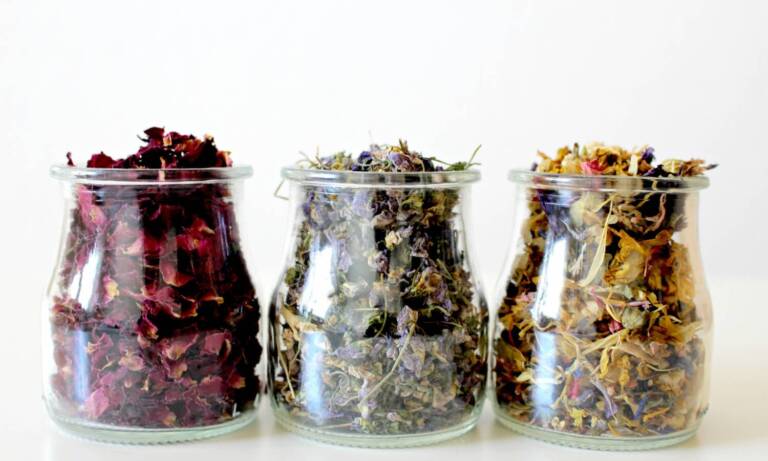
If you prefer a bitter flavor, you can try out the sage. For something spicier, go for passionflower. Mint is the best for adding a touch of freshness to the mix.
Enhances Smoke Blends’ Smoothness
One consistent issue is the harshness of cannabis smoke because it isn’t as light as other smokable materials. If you can’t get past it, mix your blend with herbs that decrease the lesser-liked side effects.
For example, mullein is an anti-inflammatory herb that helps lighten weed smoke. It also removes excess mucus in the body. It’s readily available and pairs well with a light earthy flavor.
Boosts Cannabis Properties
Cannabis has multiple properties that herbs can amplify. For example, Cannabis is most commonly used as a relaxant. So by choosing the right herb, you can increase the effect.
Rose petals have a calming, almost soothing, short-term effect that boosts relaxation and your mood. It’s also an excellent alternative to nicotine, so that’s another plus. Chamomile and lavender are also popular options for a calming effect.
Photo by RODNAE Productions from Pexels
Heightens the Smoking Experience
Whether you’re a heavy or light smoker is a personal preference. Some users add herbs because they want the maximum level of calmness, trance, or other desired effects.
If you want to feel a stronger high the next time you smoke, try adding hops into your blend. It’s said to have psychotropic effects when smoked, giving a trance-like feel, and may prompt lucid dreaming when you sleep afterward.
Extends the Life of Your Cannabis
The best thing, in the end, is getting the perfect high and still having weed left over for later. Using a blend mixed with herbs can save a lot of product every time you smoke.
Depending on how you like to make your mix and the proportions you use, you can make your weed last much longer than it usually would.
Endnote
Adding herbs to your weed is a great way to experiment with your preferences and gain added benefits. Herbal blends are getting popular and can be found in many shops online and in stores. You can give them a go and see what the hype is all about!
As a smoker of marijuana, one of the most stressful things you can go through is a drug test. Here are some things you can do to mitigate your anxiety and stress.
Marijuana consumption is one of the most exhilarating activities you will ever indulge in. However, if you happen to have an impending drug test, you might speedily revise your outlook on this particular indulgence. A 24 hour detox from marijuana is a problem for many consumers. The answer is actually quite simple, acquiring the relevant knowledge and having a good detox plan.
There are many reasons why people would want to be squeaky clean for that marijuana drug test, but it mostly revolves around employment. Join us as we take you through what you need to do to quite literally dodge the bullet and clean out your system in a day.
But how will you know you are not clean in the first place?
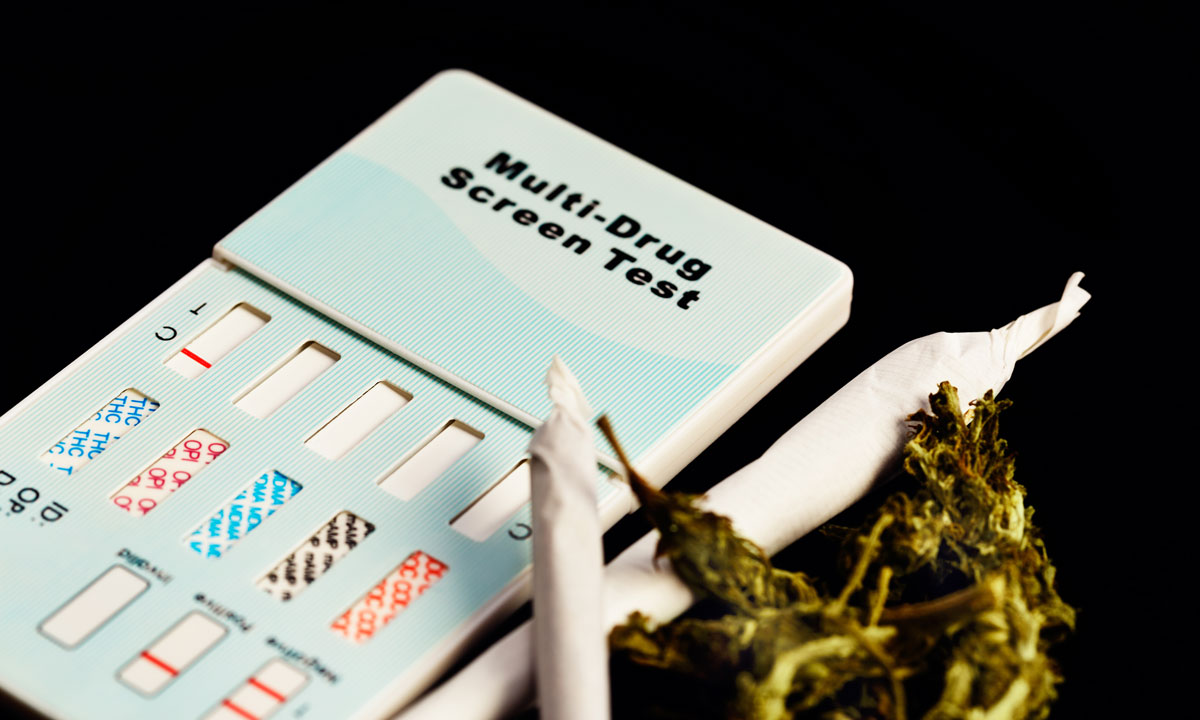
Workplace drug tests usually involve urinalysis (having your pee tested) for metabolites. Metabolites are the byproducts of processed substances in your body, in this case, THC.
After the consumption of marijuana, the THC (tetrahydrocannabinol) levels in your body immediately increase to detectable levels (THC is the psychoactive cannabinoid found in your weed which is responsible for giving you a high). Both THC and THC-COOH stay in the fat tissues of your body for different lengths on time depending on a number of factors.
As the THC is cleared out of your bloodstream, metabolites are usually left behind, and this is what the drug tests detect.
To determine whether you are “clean” enough to take a drug test, and know how best to go about getting the weed out of your system, you need to be clear on the following:
The quantity of THC as well as its metabolites that are present in your system
What type of test you are required to take
What testing levels your drug screening will use
Photo by RapidEye/Getty Images
How Can You Tell How Much THC Is in Your Body?
There are a number of factors which when put together determine the amount of THC and THC-COOH in your body, a length of time after your consumption.
These factors are:
Frequency of consumption: Determining how much THC is in your system will require you to take how often you consume into consideration.
Do you smoke just once a month, once weekly or every day? Are you just having a puff or are you consuming a whole joint or two by yourself?
It goes without saying that the more often you consume and the actual amount you consume determines how much THC and THC-COOH the fatty tissue throughout your body will accrue.
Total body fat: As we earlier mentioned, the storage of THC and THC-COOH take place in fat cells, whichever the frequency and quantity used. It follows then that the more body fat your body has, the higher the amounts of THC and metabolites will end up getting stored.
Metabolism & overall health: Another important factor is your general health. The healthier you are, the more efficient your metabolism and the mechanism of breaking down and kicking out the THC and its metabolites from your system will be.
It is important to note however that exercising can break down stored THC and push it back into your system. You should therefore avoid working out before a test.
What you’re consuming: The type and quality of what you consume has a huge bearing on how it ends up being metabolized and whether it ends up showing on a drug test. Whether you consume concentrates or flowers and even whether flowers are top shelf or schwag all make a difference in your eventual testing.
Photo by 400tmax/Getty Images
How Long Will THC Stay in the Body?
Typically, this psychoactive cannabinoid will still be in the system of a particularly infrequent user 1-2 days after consumption. If you consume every day, however, you can expect it to be in your system longer.
Generally, the half-life of THC metabolites is considered to be 7 days. This means the amount in your body decreases by 50% every 7 days, and so on and so forth.
Taking this into consideration, most people will be clean of metabolites within a period of 3-4 weeks, depending on their body weight as well as the frequency and amounts they consume.
What Are the Different Kinds of Drug Tests?
Employers and other agencies have become very creative in running tests to detect even trace amounts of THC in their employees and future employees systems.
Some of these tests are:
Urinalysis (UA): This is by far the most commonly administered drug test. Most organizations use it because it is both fairly affordable and pretty accurate. It is important to note that the urine test detects the metabolized form of THC, (THC-OOH) rather than the THC itself. I
Blood Test: This test picks the THC in your bloodstream. Unlike the urine test, a blood test will also indicate impairment. This is good news for those who rarely consume because the THC should be out of their bloodstream in a couple of hours. However, for more frequent users, THC is normally detectable days after consumption has ceased.
Hair Test : This is a much less common method of testing. However, some workplaces have started adopting it. It measures the remainders of THC-OOH in the follicle of the hair from as far back as several months.
Sounds complicated, yes?
As difficult as this one sounds to get around, we might just have something for you.
Photo via Getty
How Do I Pass a Marijuana Drug Test?
If you have a test coming up in a few days, the most sure fire way to pass it is to not consume at all. As soon as you know you might have to be tested for consumption of cannabis in any and all forms. The longer the period between your last consumption and a drug test, the better your chances of passing it.
However, if it is already too late for this particular brand of advice, do not despair, we have a back-up plan just for you that could help you mask the THC in your system.
It has become common knowledge on the streets that taking cranberry juice, vinegar, niacin, ginger root tea, creatine pills, bleach, sure jell and copious amounts of water among other things will do the trick. These taken in a haphazard way are not likely to give you the results you are looking for.
Try these three methods instead:
Detox, naturally
Forget detox programs, detox pills and detox kits! If your health is normal and you are in good shape, you can naturally get rid of the toxins in your body within 4-6 weeks as long as you take plenty of water, a great diet and exercise regularly. Naturally, if you have faster metabolism, an overall lower BMI and lower water retention, this would be even faster.
Use detoxification products
If you happen to be in a tight bind timewise having received notice of a drug test a few short days in advance, this could be a great option for you. Detoxification products will help you get rid of toxins (including the THC metabolites) in a relatively short period of time. It is believed that you could be okay for testing within 3-5 days, or generally within the period of a week.
These detoxification products are usually successful because they leverage herbal supplements to cleanse you of the effects of marijuana intake. However, be sure to use a home drug test kit before your actual test to ensure you are totally clean of THC.
And now to the big one…
Clean your system in 24 hours using same day cleansers
If you have truly been caught in the headlights and you need to take a drug test in the next 24 hours do not panic. Trying a same day cleanser might be worth your while. What this does is temporarily target your urinary tract, flushing out metabolites to give you a brief period in which the sample collected from you will be clean. This means that you could actually get to pass that test.
Photo by RapidEye/Getty Images
How to Flush Your System in 24 Hours
The primary method of passing a urine drug test on short notice is to dilute your urine enough for it to be below the threshold of 50 ng/ml. This value is actually higher than you might think. Once you have beaten it to register a less value, you are well on your way to drug free results.
Is diluted urine all there is to it?
Unfortunately not. Modern drug tests also check for dilute samples. Therefore, you will need to manage both the concentration of your urine and ensure it is not too dilute at the same time.
Let’s look at the factors that will help you flush out the THC metabolites and pass a urine drug test in just 24 hours:
Water: In as much as there is no reason to start chugging down huge amounts of water weeks or even days before a test, it is a vital component of our plan. Water will only temporarily dilute your urine hence the need to take it right before the test, ideally throughout the day before you do your test. 2-3 liters on the day before the test and 1-2 several hours before the test should do.
That said, you shouldn’t take too much water because it is not safe. Start with two liters and monitor your limits.
After you have consumed this much water over a short period, your pee will be quite dilute, that is colorless with low creatinine levels which are both red flags during a urine test.
Take these to mask your excessive water intake:
Vitamin B: Because you want your pee to be yellow, taking vitamin B will be very beneficial. Vitamin B-2 and B-12 seem to be quite effective in achieving this. All you need to do is drop by your nearest drug store, purchase 50-100 mg of either and take several hours before your test.
Creatinine: This is a chemical waste that is the byproduct of muscle metabolism. Creatinine naturally occurs in the human body and labs use it as one method to determine whether a urine sample is diluted.
Taking creatine supplements that can be purchased at almost all health food stores will have your body break it down into creatinine which will then be flushed out in your pee.
Creatinine has a half-life of three hours; therefore time your creatine intake to coincide with when you will take your test.
Photo by Irina Shatilova/Getty Images
Try Detox Drinks
The market has an abundance of detox drinks which dilute your urine and contain creatine and vitamin B to mask the dilution.
The advantages of taking a detox drink are that:
They are very convenient
They have pre measured out amounts of creatine and vitamin B to ensure you are taking just the right amount before your test.
Avoid Exercise
This might sound counterproductive, right?
Actually, exercising breaks down fat cells in your body, slowly releasing the THC metabolites stored there back into your bloodstream. This is beneficial in the long term if you were trying to rid your body of all the stored THC. However, exercising just before your drug test will ensure that you actually fail it. To ensure this doesn’t happen, refrain from exercise 24 hours before your drug test or even a couple of days if possible.
Avoid Beginning & End of Urine Stream When Collecting Sample
This is a trick that has been used by stoners for a very long time. Both the first and last parts of the urine stream have the most concentration of metabolites. When peeing into the cup, ensure that you collect a sample in the “middle” of your stream. Simply first pee into the toilet, stop and collect your sample then finish back in the toilet.
And while we are on the subject, do not give early morning pee as it also contains very high amounts of the metabolites.
How Do You Pass a Hair Follicle Test?
As we discussed earlier, hair follicle testing is one of the ways of detecting THC metabolites. Purchasing shampoos and home testing kits designed for this purpose will definitely improve your chances of passing the test.
Final Thoughts
As a smoker of marijuana, one of the most stressful things you can go through is a drug test. This is bound to cause you extreme anxiety and stress. We hope our guide on how to clean your system in 24 hours will get you out of the rut and ensure you have a long and successful career, while still occasionally indulging in your stick of choice.
The psychotropic effects of weed are substantial. However, you might be getting less out of your high than you could be.
The benefits of smoking cannabis are countless. There is a wide range of effects when it comes to enjoying this special plant, including health advantages and exhilaration. However, habitual cannabis users know very well how quickly their tolerance may grow. So, need some hacks to enhance your high.
You really planned everything so well and visited your favorite cannabis dispensary. Or maybe you ordered the best cannabis delivery service that reached you just in time. But it all got dull when you lit up. You just failed to get the high you expect.
Mood ruined, right?
Perhaps you don’t notice it at first but things are getting boring now. This cannabis is calmer and more subdued than you probably anticipated. Well, we totally understand that having to deal with this issue is very annoying.
Photo by Westend61/Getty Images
Fortunately, there are some overlooked tactics that you can use to get the most out of your cigarette sessions.
Store Your Weed Correctly
Where do you put your weed when you get it delivered to your house or buy it from a reputable cannabis dispensary? Using a plastic container or the bag the weed came in could suck up the herb’s effectiveness.
Plastic conducts electricity, which will destroy the THC in your flowers’ trichomes. A strong and durable container, such as a jar made of glass or steel, can prevent this from happening.
Some cannabis dispensaries have adjustable in-built humidity settings, while others use replaceable humidity packs. An easy alternative to these is to leave an orange, lemon, or lime peel sealed in with your cannabis for two to three hours to cure.
Preventing your stock from drying out, crumbling, and losing its potency is a good idea. To maintain your stash’s quality, put it away in a dark and cold spot where no direct sunlight can reach.
Photo by 3 Pelos/Getty Images
Make Smarter Choices
We assume that you have found a reliable supplier or the best cannabis dispensary. If you reside in a place where dispensaries or cannabis clubs are legal, this will be much less of a hassle. Even if you’re in a place with few options, you might be able to find out what kind of cannabis strain you’re being served.
This should be sufficient to enable you to explore the cultivar on the right site and gain some basic insight. You can also find relevant information about the prominent cannabinoids and terpenes in various strains, as well as other aspects of the strain’s phytochemical profile online. Different combinations of these chemicals can produce effects ranging from cerebral euphoria to a full-body buzz.
Estimates of expected THC concentrations are also easily available. These characteristics will, of course, change. But it usually depends on two important things, which is the grower and the source of the seeds. The best course of action is to try out various strains until you find one that gives you the desired effects.
Photo by rez-art/Getty Images
Experiment With New Approaches
With the passage of time, things can start to get dull and lose their shine. This may cause you to quicken or slow down your cannabis high. You may be more conscientious about your smoking habits. The intensity of the surge can be raised by prolonging the inhalation.
Plus, you need to stop smoking your blessings to death and learn to appreciate them while they last. But, at the same time, you should also think about alternating your normal cigarette with something else now and then.
If you’re not a fan of smoking out of the pipe, you may always switch to a joint or bong. Edibles, concentrates, and vaping are all some common options that work best when you get them delivered to your door steps. The point is merely to provide a brief diversion.
Photo by Volodymyr Bondarenko / EyeEm/Getty Images
Final Step: Shake Things Up
Last but not least, switching things around as much as you can definitely help you feel even more euphoric. If you usually light up as soon as you wake up, we suggest delaying your habit until the evening.
Try skipping days in between sessions and alter your method of consuming cannabis. You can easily switch between joints, dabs, vapes, edibles, and even tinctures.
Our bodies are very good when it comes to adapting to various routines. So if you want to keep your cannabis experiences interesting, try consuming it at odd hours or in unusual ways. Eliminating the same boring routine and viewing each smoking session as an opportunity for discovery can greatly enhance the experience.
You can begin in a variety of ways, some of which include enjoying a quick cannabis delivery. So spice things up a bit and experience the cannabis boost you’ve been seeking!
A new study found marijuana improves the sex lives of both men and women, but provides some extra benefits for women.
A new study adds more evidence of positive impact of marijuana’s before sex. Results show that cannabis increases the odds of orgasms and makes people more likely to experience pleasure. Most importantly, the study claims that the plant could be impactful for women, helping treat sexual dysfunctions and reducing the orgasm inequality gap.
The study, published in the Journal of Cannabis Research and conducted by researchers from East Carolina University, focused on survey responses from 811 adults between the ages of 18 and 85. The majority of them identified as female and all had previous experience with cannabis.
Photo by Goodboy Picture Company via Getty
“The purpose of this study was to examine the perceived influence of cannabis on sexual functioning and satisfaction,” researchers wrote.
Responses show that most participants, regardless of age and gender, reported experiencing more pleasure and satisfaction when having sex after consuming cannabis.
A closer look at the results show that 70% of respondents said that using cannabis before sex made them more likely to experience an orgasm while also increasing their desire. 62% said the drug increased pleasure while masturbating.
One of the strengths of the study is the fact that it used subjects of various backgrounds. For example, researchers made sure that their subjects were involved in multiple work industries, had varying cannabis preferences, ages and sexual orientations (almost 25% of the participants were identified as LGBTQIA+). After accounting for factors that could have altered their results, they concluded that the sex life of both men and women benefitted from the addition of marijuana.
“This study updates the current literature on cannabis and sexuality and provides implications for improving sexual quality,” researchers wrote. “Medical implications of this study include the possible use of cannabis for treating sexual dysfunctions, especially within women.”
In the case of women, the study suggested marijuana could help them treat various medical dysfunctions while helping close the orgasm inequality gap, a phenomenon that refers to the disparity between heterosexual men and women when it comes to orgasms.
“Women may be more likely to orgasm when using cannabis before sexual encounters, which could contribute to equity in the amount of sexual pleasure and satisfaction experienced by both women and men. Sex therapists could incorporate use of cannabis in states where it is currently legal,” argued the researchers.
A phenotype refers to the physical traits that are passed on from the parents to their offspring. These traits may include the appearance of the flowers in terms of color and bud structure.
If you have grown cannabis before you might have observed this confusing trend. You can plant your favorite strain in the first attempt and get all the desired features and effects that you were looking for. You give yourself a tap on the back, well deserved!
You do this again and it becomes a complete disaster in spite of replicating the growing formula. The plants may look and even taste a little bit different from the first batch. Your desired indica traits may be closer to sativa than indica. There is only one explanation to this: different phenotypes.
Photo by CasarsaGuru/Getty Images
The Age of Cannabis Hybridization
Cannabis hybrids have now become a popular thing. When done properly this represents the best of both worlds (sativa and indica) brought together in one strain. This is also an opportunity to harness the best phenotypes and propagate them.
For a long time cannabis growers were mixed up when choosing cannabis seeds to propagate. While indicas are desirable for the short flowering time and resin coated features, sativas offer the best in terms of cerebral buzz which is loved by consumers.
These two varieties of cannabis are on opposing ends of the spectrum when you consider their phenotypic expression. With hybrids it is possible to get a balance between the two, which is why it is easy to find a sativa that exhibits indica-like phenotypes and vice versa.
What Are Cannabis Phenotypes?
Cannabis, as well as other plants, are influenced by two factors: genetics and environmental factors. The genotype mostly refers to the genomic composition of the plant. This hidden genetic make-up gives birth to the external features that we can observe in the plant. It forms the basis for the expression of physical characteristics which make up the phenotype. It is easy to mistake the two but they are different.
The external environment helps to draw out the genotype so that it is expressed in the phenotype. If environmental conditions are not consistent, plants with similar genetic make-up may express their phenotypes differently. These differences will be expressed in terms of color, bud shape and density, aroma, and resin production.
Hence cannabis phenotypes have evolved consistently over the years through natural and man-made efforts.
For some growers, having different phenotypes in their grow is desirable as this will provide a range of desirable features. For others, consistency is key. However, most commercial growers would favor consistency over variety and this is why cloning and phenotyping is important.
Photo by Kirill Vasikev / EyeEm/Getty Images
Environmental Factors That Affect Cannabis Phenotypes
Cannabis genotypes produce certain traits based on environmental conditions. For example, purple hues are only expressed when cooler temperatures are present during the flowering phase of growth. Environmental factors will also affect the aroma, resin production, yields, and overall quality of the cannabis. You could have a high yielding variety of cannabis, but with fluctuating environmental conditions the high yield will not be achieved. If you take the same cannabis clone and subject it to two different environmental conditions the resulting plants will have different physical traits aka phenotypes.
The same applies when you take identical clones and give them to two different cannabis growers, the plant that they come up with will have the same genotype but may express different phenotypes. Even slight differences in growing conditions will affect the plant growth and end result. Factors such as temperature, humidity, and lighting conditions play a role in determining the physical traits of a strain.
Development of Phenotypes in Cannabis Plants
Phenotyping in cannabis starts as early during the formation of the seed. Unfavorable growing conditions will negatively affect the parent plant and may trigger phenotypic development before the seed ripens. Once the seed germinates, environmental conditions will allow for the development of certain traits.
Therefore, the environment helps to foster the traits of your plants at any given time. In most cases the dominant traits from the parent mask the expression of recessive traits in the strain. However, environmental fluctuations may force these recessive traits to be expressed. This is what creates the difference between different cannabis phenotypes.
How to Select a Cannabis Phenotype
When you collect seeds from a reputable cannabis seed bank you are likely to have a collection of different phenotypes of the same strain. You will need to grow a number of seeds and observe their characteristics as they begin to flower. Pick the seeds that display the most desirable traits and discard the rest. The traits here could include the colors, aroma, growth characteristics, yields, cannabinoid content, and resistance to disease. You can use these seeds to propagate your desired phenotype of cannabis.
The process of phenotyping usually takes several years especially when it’s being done on a commercial scale. It entails taking clones of the best seeds and labeling to avoid mixing. These seeds are then propagated to produce offspring with similar traits. This is usually done to facilitate the mass production of cannabis strains with the best characteristics.
The clones are grown to a height of about 6–12” a height which can be cloned. This may take 4-6 weeks. The cannabis clones need to be cultivated separately during the vegetative phase. After this initial phase the clones will need to be transported to the light cycle where they can begin to flower. You may observe some difference in how the clones behave in this stage. Some might flower sooner than the rest while the bud sizes and yields may also vary. In about 10 weeks the plants should be ready for the harvesting stage.
At this point you will have observed all the characteristics of the plants and you will be able to select the best clones. Take note of the bud structure, density, appearance, yield, and trichome gland population. Mediocre clones should be done away with. The clones you select will be used for the next generation until the generation with the best phenotypic features is realized. This may take several rounds of cloning and is likely to be a costly affair.
Photo by Jordan Siemens/Getty Images
Cannabis Genotype Vs. Phenotype
The two terms are often used interchangeably but are not one and the same thing. A cannabis genotype refers to the unseen genetic characteristics that are passed on from parent to their offspring. A phenotype on the other hand refers to the physical traits that are passed on from the parents to their offspring. These traits may include the appearance of the flowers in terms of color and bud structure. It also includes the smell, flavor, and effects that are produced by the plant. The genotype influences the expression of some of the phenotypic features; this is where the two intertwine. However, some phenotype features are as a result of environmental influences.
Selecting the Best Cannabis Phenotype
If you are a commercial grower looking to replicate desirable traits your best chance is to find your dream phenotype and take cuttings from it. To do this you will need to know what exactly you are looking for, right?
Here are a few phenotypic characteristics that you should be looking out for.
Aroma
This is one of the important things that you should be on the lookout for. The aroma of cannabis is a result of the terpenes that are present in the strain. However, this will also be influenced by the growing conditions.
Before purchasing a strain of weed most consumers will first sniff into the jar. While some users prefer sweet smelling varieties of cannabis a good number prefer to enjoy the skunkiness of myrcene in the strain. This is simply a matter of preference that should be a concern to the grower.
When selecting a phenotype, carefully consider the unique aroma that you desire to propagate knowing full well that this also represents the terpene profile.
Taste
This is another important aspect of a cannabis phenotype. Regardless of how the weed is going to be consumed, how it tastes will always draw or repel consumers. The taste helps to bring out all the qualities of the strain. Diversity is important as well and you can settle for phenotypes that have an eclectic mix of flavors.
Effects
Cannabis strains can be classified as either indica or sativa and this represents the effects that they are associated with. That said, even plants of the same strain may produce different effects based on the phenotype. So apart from selecting your preferred cultivar it is also important to consider the unique cannabinoid profile and biochemical composition that is responsible for the effects that are produced by a strain of marijuana.
Ultimately, the effects of cannabis will vary based on one’s biological make up and how often they have used cannabis. However, the phenotype is always a good starting point. The aroma and taste of cannabis will also play a role on how one perceives the effects caused by a strain.
While some phenotypes will give you a strong head buzz and propel you to outer space, others will simply mellow you and force you to defer to the couch for the better part of the day (body stone). Consumers will choose strains based on what effects they are pursuing. Therefore, every grower needs to have this at the back of their minds when selecting phenotypes.
Photo by CRYSTALWEED cannabis via Unsplash
Bud Size
The organoleptic qualities of a phenotype are bound to draw your attention from the get go. However, bud size comes in handy when you are considering how to optimize space for your cannabis canopy whether it is an indoor or outdoor grow. This will be largely determined by the size of the buds.
Generally, indica strains will form large and dense nugs while sativas will be less chunky in comparison. However, this will also vary based on the plant phenotype.
If your growing space is large you will be able to pick any phenotype that you want. On the other hand, if you are limited in terms of space you are better off going for phenotypes with smaller bud sizes. This is especially the case in indoor vertical grows.
Expected Yield
What is the expected yield of the cannabis phenotype that you select? This is a question that should always be at the back of your mind when pheno hunting. Most commercial growers will prefer going for high yielding strains that will return a handsome profit. However, you should be able to consider all other qualities such as cannabinoid profile and know which one to prioritize over the other.
How Long Does It Take To Mature
This refers to the length of the flowering period. It determines how many growing seasons you can fit into a calendar year and consequently affects your total annual yield.
Commercial growers usually favor phenotypes that flower in a short span for obvious reasons. Indicas generally flower quite fast, within 8- 10 weeks. This increases profitability. It is an effective way to get the most out of a limited grow space.
Below we have tackled some of the commonly asked questions on cannabis phenotypes. You should be able to answer some from the information provided above.
What Is a Phenotype?
This refers to the inherent traits of strains that are passed on from the parents- both male and female. When a female and male are crossed the offspring that is produced will inherit phenotypes from both the parents. When speaking of cannabis, these traits include the hues, aroma, flavor, cannabinoid content, and growth characteristics among others. Yield is also included here and is a big consideration for commercial cannabis growers. The process of looking for the best traits in a cannabis strain is commonly referred to as pheno hunting.
Do Feminized Seeds Have Phenotypes?
This is a tricky one, but yes, cannabis feminized seeds have different phenotypes. Most breeders will work through thousands of cannabis seeds to select the best phenotypes to feminize. These seeds will have desirable traits for propagation.
Is Every Seed a Different Cannabis Phenotype?
Not this is not entirely true. A reputable cannabis seed bank spends a lot of time developing and stabilizing their seeds to make them as consistent as possible. This means that the seeds should be able to give rise to plants with very similar expressed characteristics.
Last September, when Justin Costello found out he was under indictment, he ran. He was captured by an FBI SWAT team in October and was held without bail.
Justin Costello pretended to be a billionaire, claimed he was a war veteran, and took money from investors for cannabis businesses. Instead, he spent that money on himself including funding his lavish wedding. On Wednesday, Costello pleaded guilty a few months after a dramatic capture by an FBI SWAT team in California. He could get up to 10 years in prison due to his fraudulent activities.
GRN Holdings
According to the case filed in Seattle Washington, Costello claimed to be a self-made hedge-fund billionaire who managed money for wealthy people including a Saudi Sheikh. He also claimed to have a Harvard MBA and to have been shot twice as a special forces veteran with shrapnel remaining in his leg. In order to pretend he was wealthy, Costello planned to buy an $11 million house, showing bank statements for GRN Funds. The $9 million bank balance actually belonged to another cannabis company.
Photo by Cappi Thompson/Getty Images
The unsuspecting investors bought stock in GRN Holding Company, thinking the shares would eventually trade publicly. Costello also convinced the investors to open an account at TD Ameritrade and that he would manage their money at a discount from his usual fees. Costello did not possess any securities licenses. Costello was taking a 20% commission on the trades, which were only in shares of Discovery Gold Corporation (which eventually became GRN Holdings). The trading in the shares artificially propped up the price increasing Costello’s performance fees.
The cannabis con man kept the ruse up by putting out press releases claiming GRN Holdings was making acquisitions and that those companies had been vetted. Instead, Costello owned all the companies he claimed to be acquiring. In addition to that falsehood, a separately owned Costello company Renewal Fuels, made the acquisitions.
Ultimately, investors lost roughly $25 million in the GRN Holdings scheme.
Hempstract
Costello engaged in a similar scheme with another investor he convinced to invest in Hempstract Inc., which was trading at the time under the name Riverdale Oil & Gas. He also convinced investors to open a trading account and led them to believe he would be combining these cannabis companies into one larger entity.
By 2019, Costello told his investors that he had about 12 cannabis companies that he was planning to roll up into one larger company. He told the investors that these companies made millions in revenue, which was false. He continued to get more investor money as he claimed Hemstract was soon to go public.
Pacific Banking
GRN Holdings and Hempstract weren’t the only companies Costello was playing games with. Green Market Report reported Costello’s other company Pacific Banking was accused by Cann Distributors of failing to make millions of dollars in tax payments to the state of California on its behalf, as well as failing to pay vendor invoices. Cann was assessed $2 million in penalties by the state for not making those tax payments. The company also secured an order blocking Pacific from touching the roughly $2.8 million Cann said it had deposited with the bank that sees itself as a middleman between cannabis companies and traditional banks.
In addition to the issue over the tax payments, Cann Distributors also told the judge of a disturbing situation it learned about during the Costello deposition. The bank has apparently registered the Cann Distributor name in the state of Washington without telling the company.
The judge said at the time, “I have to say, that is the weirdest thing I have ever heard. I have never heard of an agreement that said one party could create a fictitious business in another state using the other party’s name.” The bank went through several ownership changes throughout the process. Pacific Processing was bought by Pacific Compliance, which was then bought by Renewal Fuels. It was also supposed to have been acquired by GRN Holdings (OTC: GRNF) which recently changed its name to Marijuana Inc.
Photo by matt_benoit/Getty Images
On the Lam
Last September, when Costello found out he was under indictment, he ran. He was captured by an FBI SWAT team in October and was held without bail.
According to court filings, he was found in a remote area near San Diego on Oct. 4. He was reported to have been carrying a backpack loaded with six one-ounce gold bars worth $12,000, U.S. currency worth $60,000, $10,000 in Mexican pesos and banking cards and checkbooks, prosecutors said in a court filing. Costello also had a receipt for a prepaid phone number in the backpack, along with a Washington state driver’s license in the name of “Christian Bolter” with Costello’s photograph, the filing said.
Pump & Dump
Costello paid stock promoters to pump up the penny stocks on Twitter and other social media. Once the shares began to rise on the purchases from his unsuspecting investors, he would then sell his shares at a profit and pay his promoters a share of the gains. It was a classic pump and dump scheme.
In October 2022, the SEC (Securities and Exchange Commission) charged Justin Costello for using a false persona, as a Harvard-educated military veteran and hedge fund billionaire, to defraud investors out of millions of dollars. In a statement, the SEC also charged Costello and David Ferraro, an associate of Costello’s, for promoting the stock of several microcap companies on social media without disclosing their own simultaneous stock sales as market prices rose. The SEC also wants to bar Costello and Ferraro from serving as an officer and director and bar them from penny stocks.
The SEC statement said that Costello shared approximately $32,000 of his profits with Ferraro, and Ferraro profited approximately $41,000 from his own trading in this scheme. The SEC’s complaint also alleges that Ferraro separately conducted his own stock promotion scheme respecting two additional microcap stocks, generating profits of approximately $68,000.
Restitution
As part of his guilty plea, Costello agreed to pay his victims $35 million in restitution. As part of his plea deal, his wife will not face any charges.