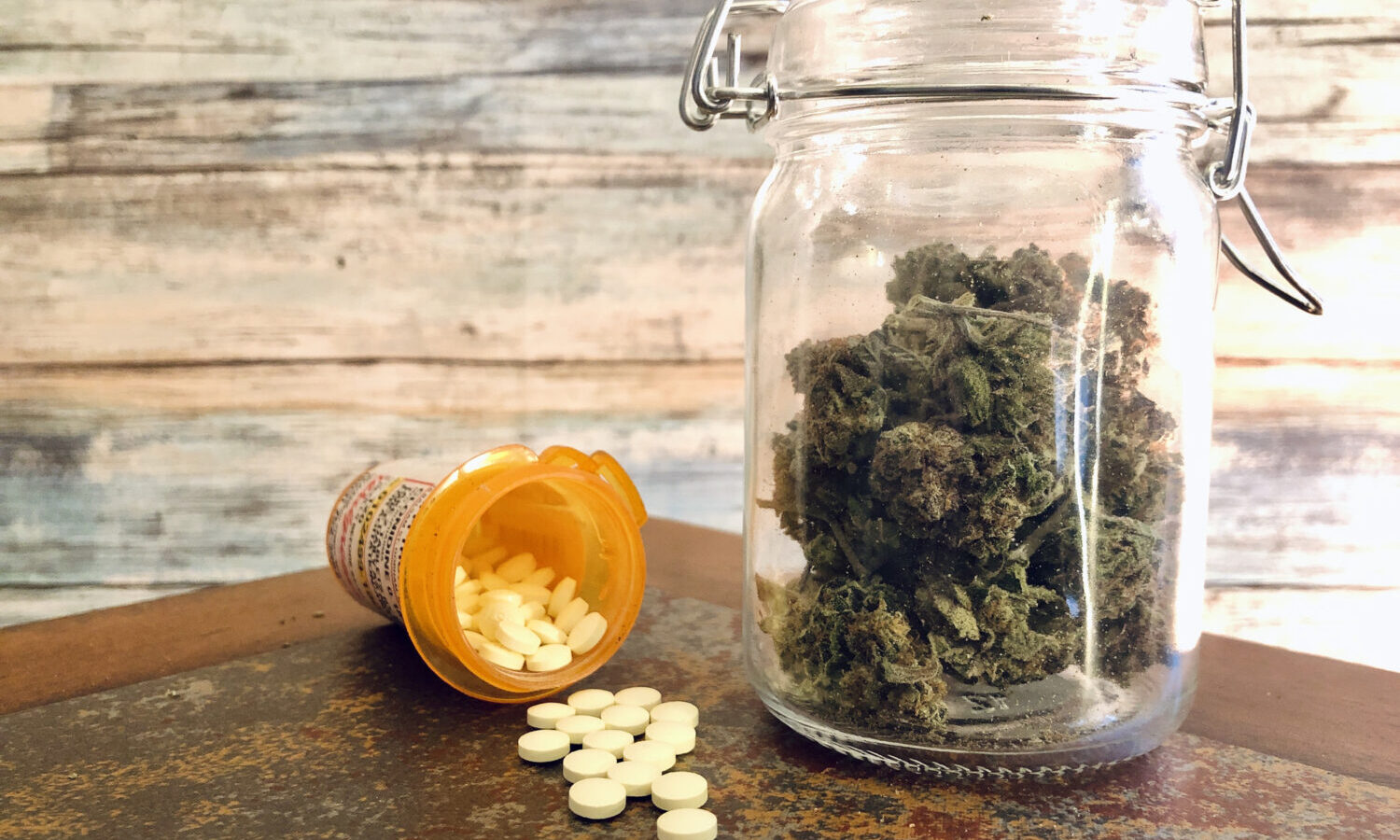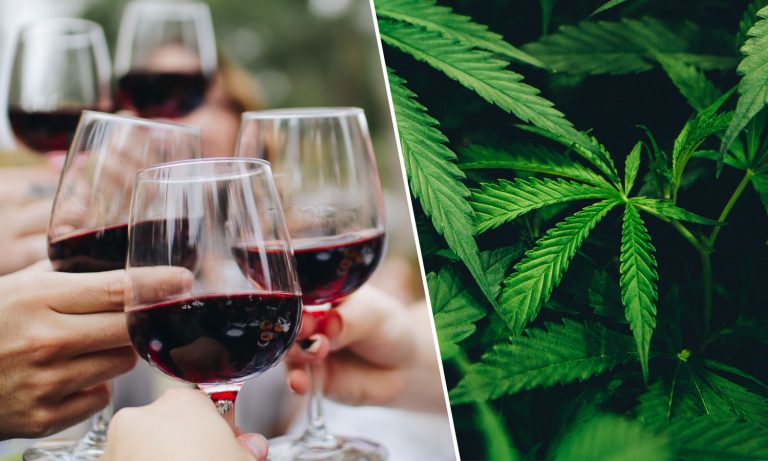
Perhaps, rather than fighting off cannabis, pharmaceutical companies can invest more into understanding the many possibilities and benefits of cannabis.
Individual states continue to open their doors to medical and recreational marijuana, and as they do a new frontier of treatment options opens up to all that states citizens who struggle with various conditions. From cancer to Multiple Sclerosis and many other conditions in between, cannabis is starting to help those who, before medical or recreational cannabis legalization, only had access to pharmaceutical medications.
While this is great news for those who previously had limited tools to treat their medical conditions and the pains associated with them, this is causing shortfalls in pharmaceutical stocks that are likely to widen as legalization efforts progress further.
A recent study published in the journal PLOS ONE has data suggesting that when medical and recreational marijuana becomes legal in a state, there is a swift and noticeable dip in pharmaceutical stock profits. While this decrease might not look significant when measuring overall profits of one of the grandest and most profitable industries, the losses this study is suggesting are certainly eye opening and worth some contemplation.
To put things into perspective, you should understand how much of an impact just one legalization can affect overall drug company profits margins. According to the study, “Returns decreased in response to both medical and recreational legalization, for both generic and brand drugmakers. Investors anticipate a single legalization event to reduce drugmaker annual sales by $3 billion on average.” Regardless of how big of an industry it is, $3 billion is not petty cash. Further, this loss occurs each year, and just from one legalization.
What makes these losses even more dramatic is that they often begin to take effect almost immediately. According to the study, the average stock returns were 1.5-2% lower just 10 days after legalization of cannabis in a given state. This shows that not only is there a very real and noticeable loss in profit, but the losses begin almost like clockwork after a state grants legal access to marijuana.
This financial downturn the drug companies are taking on might have you wondering if and how these powerful companies are responding to this. As the New Atlasreported “The study does note there is evidence that pharmaceutical companies have recognized this threat from legalized cannabis and begun targeted lobbying to prevent broader legalization.”
Photo by Cappi Thompson/Getty Images
It is no secret that pharmaceutical companies are doing what they can to stop further legalization efforts. In fact, The Guardian first reported on pharmaceutical companies funneling money in an effort to block future marijuana legalization across the country in a2016 article, and these efforts do not currently show signs of ending. After all, why would they — until the last state has legalized marijuana that is.
Still, one has to wonder if this is a futile battle. Perhaps, rather than fighting off cannabis, pharmaceutical companies can invest more into understanding the many possibilities and benefits of cannabis. It is, after all, still a relatively untapped resource for potential new products.
As we previously reported, a new study came out this summer showing that cannabinoids can be safer and more effective than opioids for certain types of pain.
If the energy being placed to stop cannabis legalization was channeled into finding more ways to use cannabis to treat illnesses, who knows what great and profitable results could be achieved.
New Orleans Police Department says that police recruits who have used marijuana within the past year are not automatically disqualified from becoming cops.
This week, the New Orleans Police Department made a change in their policy as a way of attracting new police officers. While historically, NOPD recruits were disqualified if they admitted to using marijuana, on Monday, the department unanimously agreed to relax this policy.
This marks a significant moment, representing just how much the city has changed in a short span of time. A few years ago, the justice system in New Orleans was handing out long prison sentences for marijuana possession.
While the change in the stance of the NOPD is significant, it’s still not a pro-weed organization. NOLA.com explains that the new policy makes it clear that new recruits won’t be disqualified over marijuana use within the past year, but they still must pass a drug test before getting the job. If accepted, officers must not use drugs while in the force.
New Orleans is currently facing a low number of police officers and high levels of crime rate. This crisis was prompted by the pandemic, where the department reported having under 1,000 cops for the first time in decades. In the case of crime, homicides have soared 141% over the past years. New Orleans currently has the nation’s highest level of homicides, with 52 homicides per 100,000 residents.
Photo by ev via Unsplash
“Action must be taken now if there is ever a chance to save the city and bring the reputation of being a city where tourists can come to party and celebrate and not become victims,” said Fausto Pichardo, a consultant to the city’s police department. “The residents of New Orleans also need and deserve to have a police force that can make them feel safe and be there for them every time they call 911.”
The New Orleans police department isn’t the first to relax its marijuana policies in hopes of appealing to more recruits and with being more in line with the attitude of its people. It joins states like Atlanta, Fort Lauderdale, and New York City, which removed marijuana from their list of automatic disqualifiers.
Generally, cannabis effects that have been closely linked to gender differences include anxiety and depression, pain relief, appetite, sex drive, energy, and even the tendency to drive under the influence.
Traditionally, males have consumed cannabis more than females. However, this gap is quickly closing as more females are becoming regular cannabis consumers seeking both medical and recreational gains. Do males and females experience cannabis in the same way?
Key Takeaways
Males and females experience cannabis differently
Males have more CB1 receptors in the CNS
Females have fewer but greater binding at CB1 receptors in the CNS
THC effects are more potent and prolonged in females
Females may experience greater pain and relief from cannabis compared to males
Cannabis is likely to reduce libido in males and increase it in females
Results of sex-based differences in driving under the influence are conflicting.
How one experiences cannabis is affected by several factors including the chemovar in question, frequency of use, environmental setting, and even placebo effects. At the physiological level, two plausible theories come to mind. One has to do with gonadal differences between males and females while the other has to do with the phenomenal and intriguing endocannabinoid system. And the two theories could still be interconnected.
It now emerges that males and females don’t have an identical endocannabinoid system and this makes them respond to cannabis differently. In a nutshell, males and females can share a joint but end up having very different experiences.
Generally, cannabis effects that have been closely linked to gender differences include anxiety and depression, pain relief, appetite stimulation, sexual drive, energy balance, and even the tendency to drive under the influence. The strength of the effects and even side effects experienced are apparently also influenced by male/ female differences in the ECS.
In this article, we have analyzed the results from a review study investigating sex-based differences in responding to cannabinoids with a focus on cognitive and emotional behavior. The review which was published in Behaviour Neuroscience in 2011 was titled “Sexually dimorphic effects of cannabinoid compounds on emotion and cognition.” This article also mentions later studies that have investigated the same issue.
Photo by photographer/Getty Images
Cannabinoid Receptor Differences
From preliminary research, it appears that males have more receptor binding sites for the CB1 receptors while the CB1 binding sites for females though minimal are more efficient. Just as a reminder, CB1 receptors are abundant in the higher centers and therefore are responsible for most of the psychoactive effects of cannabis. These are the same receptors to which anandamide (the bliss molecule) binds.
The studies analyzed included young rats, adult animals, as well as adolescents. Though a clear picture emerged from the analysis the CB1 variance was stronger in the younger rats.
Most studies covered in the review focused on the hippocampus, amygdala, hypothalamus, and cortex. Males consistently showed a higher prevalence of CB1 receptors in most of the cerebral regions. At the same time, females showed higher CB1 receptor- G protein coupling.
In simpler terms, males appear to have more CB1 receptors in the brain while females, even with fewer CB1 receptors, exhibit higher effectiveness at the CB1 receptor.
Sex Differences in Breakdown of THC
The review also examined sex differences in the breakdown of the psychoactive cannabinoid THC. In females, THC is metabolized to 11-OH-delta-9-THC which retains THC’s potency. In males, THC is metabolized to 11-OH-delta-9-THC and the other three metabolites, diminishing its potency. From this, the researchers concluded that since females have a higher 11-OH-delta-9-THC, they are likely to experience stronger and prolonged psychoactive effects after consuming cannabis.
In a 2021 study, researchers used a rat model to compare the expression of the endocannabinoid system in males and females. The results from this study revealed that indeed there are significant sex-based differences in the expression of the ECS in parts of the central nervous system (CNS) that are involved with chronic pain and anxiety management.
Photo by Kampus Production via Pexels
A different study examined sex-based differences in the side effects experienced by males and females after consuming cannabis. Typically, females experience more side effects from conventional drugs. Participants in this cross-sectional study were adults with chronic non-cancer pain who were treated with a medical cannabis cultivar. Females were more susceptible to adverse effects from cannabis than their male counterparts.
In a 2010 review, researchers came up with the following conclusions on how males and females respond to cannabis differently.
Males
Increased food intake
Increased energy homeostasis
Decreased sexual behavior
Females
Increased analgesia
Increased anxiety
Increased sexual behavior
It’s clear that males and females have key differences in the ECS which affect their response to cannabinoids. However, research evidence on the exact mechanisms is mostly preliminary and scanty. Additionally, there’s a paucity of research on females, and this cuts across different fields. Further studies in this area are essential to guide cannabis prescription for medical and recreational use.
Plain stone chillums are thought to have been used by Indian holy men for thousands of years and have traditionally had a connection with spirituality and meditation.
One-hitters or chillums are small pipes that contain one hit of cannabis. Generally, they are made from glass or metal and look like a long tube that has a bowl at the end and a mouthpiece at the opposite end.
One-hitters are made in a wide range of shapes and designs and can range from stunning blown glass pieces to one hitters that look exactly like a cigarette for extra discretion.
The terms “chillum” and “one-hitter” are often used interchangeably, but they can refer to slightly different devices.
Both chillums and one-hitters consist of a tube with a bowl at the end. However, a one-hitter holds one hit of cannabis flower, while a chillum can hold more. Some chillums have fairly spacious bowls that can fit nearly a gram of ground cannabis flower.
How to properly smoke a one-hitter
You can smoke one-hitters the same way you smoke a pipe, although it’s a straight tube, so you’ll need to angle it upwards so that cannabis doesn’t fall out. The conventional way of smoking chillums is to smoke them vertically through a closed fist.
Chillums, dugouts, and one-hitters are best used with ground-up cannabis, as it is easier to burn and can be packed and carried without the flower falling out.
To properly smoke a chillum or one-hitter, pack the one-hitter tightly, angle it, and light it. Then you inhale as if it were a standard pipe.
Try not to get the lighter too close to your mouth since one-hitters tend to be small and short, and there is a chance you could burn your lips.
One-hitter benefits
Discretion
One-hitters are one of the most discreet means of smoking cannabis. Quick to use and convenient to store, they can be tucked away out of sight in your pocket or the palm of your hand at a moment’s notice.
Also, to the untrained eye, lighting a one-hitter can appear like lighting a cigarette, which is why many are designed to look like a cigarette or a cigar.
Ideal for low dosing
You can also preserve your stash and keep your doses low by using one-hitters. For example, when smoking a bong, pipe, or joint, it is easy to fill up the entire bowl and consume it quickly. If your bowl is large, each bowl could hold nearly a gram of flower.
With one-hitters, you can only use a small amount of cannabis at a time, helping you use your minimum effective dose and preserve your stash.
Cannabis microdosing using one-hitters
Microdosing is easy with one-hitters. Consumers can adjust the effects of marijuana with smaller, more precise hits. Using it allows you to manage your consumption while maximizing your performance.
Originally used by holy men in India, chillums are also known as one-hitters or bats. Plain stone chillums are thought to have been used by Indian holy men for thousands of years and have traditionally had a connection with spirituality and meditation.
Smoked vertically, chillum pipes are held in your fist with the bowl sticking out between your middle and ring fingers. You inhale through the opening formed by your index finger. You can also smoke a chillum pipe horizontally like a standard pipe.
Chillums have become popular in recent decades as they are known to produce powerful hits that are often more potent than typical hand pipes. As a result, chillums are becoming increasingly popular as an alternative to the common hand pipe, and they are easily found at nearly every headshop.
In terms of design, chillums are fairly straightforward, making them a good choice for beginners. Chillums do not have a “carb,” or a hole to clear the smoke pooled in the chamber of the pipe. That’s why chillums have a heavier hit. But the airflow in the chillum is less controlled than pipes with carbs. As a result, a chillum’s bowl burns for as long as its flame lasts.
How to use a chillum
Chillums are traditionally held between your ring and pinky finger with your hand cupped over the end. Use your fist to create a smoke chamber by placing your mouth over your cupped hand. It cools the smoke and catches embers, making smoking a more enjoyable experience. Chillums should be lit at 45 degrees to prevent losing flower.
Here are some of the most popular and noteworthy approaches to weed packaging today to help you get a sense of how far this simple afterthought has evolved into a deciding factor in the industry.
Marijuana used to come in little, difficult to open yet easy to rip baggies. If the supplier happened to be in a festive mood, maybe the bag had some trees or smiley faces on it. Times sure have changed. With the major shifts in canbabus legalization and production over the last decade, it’s easy to forget the old days when it was illegal and there were no frills. Now it has modernized and here are the most popular types of marijuana packaging.
Now, it seems, there are frills everywhere. In a legal market that is ripe with competition, everyone is in a race to think of the next big thing. Whether it is a cannabis sparkling beverage or a new type of edible — the entire market is becoming more and more saturated with concepts. Even marijuana packaging, this once simple, plastic and flimsy baggy has evolved into a major part of what sells products in the legal cannabis market.
There are, of course, legal and logistical considerations one has to make when designing packaging. But apart from that, it is often all about making a statement with how you package your weed. It can mean the success of a new budding brand or the failure of another company that gets lost in the sea of competition.
Here are five of the most popular and noteworthy approaches to marijuana packaging today to help you get a sense of how far this simple afterthought has evolved into a deciding factor in the industry.
Brand Identity
At marijuana dispensaries, it is no longer simply about the strain or whether it is indica or sativa, but who makes it and distributes it is equally important. Brands, brand recognition and reputation are already playing a role in how people perceive marijuana. One example of how packaging can shape a brand’s identity is Narvona. This company took the concept of marijuana packaging and took it to such a high concept and professional level that they won a PAC Packaging Consortium Global Packaging Award. They were the first cannabis company ever to do so in 2020.
Nicolette Pavlis, the company’s president, toldForbes, “Like everyone in this business, we wanted to show our parents what cannabis should be,” she said. “Make It legit. Make it Sephora.” The packaging, in other words, strives to give the product an identity and legitimacy, just like a makeup brand or a household product. Successful marketing like this can really help establish a brand, and that is why it has become such a popular approach to packaging.
Another popular packaging technique is the minimalist approach. Sleek, clean surfaces that just highlight the brand name and the product itself. You are likely to see this minimalist trend frequently, as it looks clean, follows all the compliance standards, and is also a cost effective way to give a professional look to the product. In regards to minimalist cannabis packaging,Packaging Digest said, “Taking a minimalist approach to branding can give a business a more stylish and contemporary look. Clean and simple designs still fit well with the theme of relaxation and meditation but bring the brand into the new era.”
Eco-Friendly and Organic
Eco friendly and organic approaches to packaging are also successful and popular. They compliment the natural cannabis products, and also appeal to a significant portion of the consumer base. Asherbceo puts it, “Cannabis consumers are generally very environmentally aware and paying it forward in terms of eco-responsibility is one way to capture the loyalty of the millions of cannabis lovers around the world.” With more and more focus going towards the importance of a lower carbon footprint, it is likely we see a continued growth in the eco-friendly packaging market.
Compliant and Risk-Free
While compliance packaging is not exactly “trendy,” it certainly is mandatory. Most states require packaging to be a minimum of childproof, non-colorful and “opaque” with several warning labels. These laws vary significantly from state to state, with some states even requiring specific fonts to be used. These limitations, while not a specific style of packaging, can shape the way packaging looks. It is also the reason you may notice marijuana packaging varies significantly from state to state — it is not because of a lack of creativity.
You may wonder if there is any value to the packaging, or if you should choose one type of weed over another bad on its packaging. The answer is… sometimes. If you are buying flower, especially in larger quantities, you want a container that is not simply appealing to the eye. It also must be functional.
As we previouslyreported, glass sealable jars like mason jar styles remain the best material to use for marijuana packaging, especially if you plan to store it for a prolonged period of time. This is why you often find some of the best flower in glass airtight containers. It is a classic look and it keeps the top quality bud fresh.
According to data published in the journal Health Economics, US states with legal marijuana sales “may experience a decrease in state-level obesity rates.”
A NORML report showed that researchers affiliated with North Dakota State University “compared obesity rates in Washington state following legalization to those of a synthetic control state.”
The study “Assessing the impact of recreational marijuana legalization on obesity,” noted that researchers “examine this relationship by using a synthetic control approach to examine the impact of legalized recreational marijuana access on obesity rates by comparing Washington State to a synthetically constructed counterfactual.”
“We find that recreational marijuana’s introduction did not lead to increased obesity rates and may have led to decreases in obesity,” they continued.
“As more states gravitate to decriminalization, expanded medicinal use, and legalized recreational use of marijuana, our findings provide important insights into contemporary drug policy,” the authors concluded.
In addition, some case-control studies have reported that folks with a history of cannabis use are “less likely than abstainers to be obese or have type 2 diabetes.” Studies also previously linked marijuana use to higher rates of physical activity.
Research conducted by San Francisco-based cannabis delivery platform Eaze found an increasing crossover between cannabis use and off-the-couch activities including work, fitness and intimacy, reported Adweek.
“It may sound counterintuitive, but cannabis for responsible adults does exist,” said Elizabeth Ashford, vice president of communications at Eaze. “We’re seeing the integration of cannabis into parts of life where we previously didn’t see it. It’s not about waking up and hitting a bong,” Ashford told Adweek. “Some people may take a 2-milligram Sativa edible like someone else would drink espresso in the morning.”
To think that Pharma doesn’t have a strategy against a plant that is costing them upwards to $10 billion of lost potential revenue is to be ignorant of the ways of Pharma.
What is big pharma’s next move with legal marijuana? Want to know why historically they sat in opposition of cannabis legalization? Well, if the findings of the latest study published in the journal PLOS ONE, their loss of revenue per legalization event could be a great indicator.
Per Marijuana Moment: “The peer-reviewed research article, published in the journal PLOS ONE on Wednesday, looked at stock return and prescription drug sales data for 556 pharmaceutical companies from 1996 to 2019, analyzing market trends before and after the enactment of medical and adult-use cannabis legalization laws at the state level.
“The stock returns were ‘1.5-2% lower at 10 days after legalization,’ the study authors founds. “Returns decreased in response to both medical and recreational legalization, for both generic and brand drugmakers. Investors anticipate a single legalization event to reduce drugmaker annual sales by $3 billion on average.”
While there has been several reports that cannabis patients prefer cannabis over their prescription meds, this study definitely shows the negative impact on Pharma ROI post legalization. However, it’s not just brand name pharmaceuticals that are taking a hit. It seems that cannabis is supplanting a lot of other generic brands as well.
Photo by James Yarema via Unsplash
Researchers at the California Polytechnic State University and University of New Mexico commented:
“By expanding access and, thus use, legalization could permit cannabis to compete with conventional pharmaceuticals. Largely unpatentable, cannabis may act like a new generic entrant following medical legalization, leading some individuals to substitute away from other drugs toward cannabis. However, unlike a conventional new generic drug, cannabis use is not restricted to a single or limited set of conditions. This means that cannabis acts as a new entrant across many different drug markets simultaneously.”
Now, for some, the notion of 1.5-2% doesn’t seem like much, but on Pharma scale profits it is quite significant as the study authors related, “We find the average change in a firm’s market value per legalization event is $63 million with a total impact on market value across firms per event of $9.8 billion.”
With that much money being sucked up by cannabis, it’s no wonder that the pharmaceutical companies were hesitant towards legalizing weed. While some pharmaceutical companies are investing in creating cannabis based medicines, it’s the opioid manufacturers that are losing the most.
Not True Losses
If you look at the profits of Pharma post legalization, they still continued to make money despite legalization. However, what researchers have noticed is that the “projections” made by Pharma weren’t met. This is one of the major differences that they found, however, this isn’t to say that there was an actual loss of revenue.
“The study also factored in shifts in pharmaceutical drug sales post-legalization. “Using the historical price-to-sales ratio of drugmakers for the year associated with each legalization event, this implies a change in annual sales across all drugmakers of $3 billion per event,” it says.”
Yet, it’s also important that we don’t jump the gun and cite all of this as fact as the study authors themselves admitted.
“The economic significance of an estimated $9.8 billion loss in market value across firms per cannabis legalization event is extremely large, however our results should be interpreted cautiously. A key limitation is that we model investors as rational, which may overstate the economic significance of our results. Second, we are limited to publicly traded firms and past legalization events. Third, we note that estimates may be sensitive to our choice of using 150 to 50 days before the legalization event. Finally, we expect there to be measurement error due to heterogeneity in the legalization and subsequent regulatory processes.
“For private and public drugmakers, we expect the response to legalization to include investment and marketing,” the study concludes, citing the fact that Pfizer spent billions to acquire a “biotech company that focuses on cannabinoid-type therapies.
“’Pharmaceutical firms have devoted substantial lobbying efforts and dollars into fighting cannabis legalization,’ it continues. ‘These are signs that the pharmaceutical industry from a marketing perspective, cannabis currently remains far from an [Food and Drug Administration]-approved therapeutic equivalent, and this might explain why pharmaceutical firms have spent less effort on detailing visits to doctors.’
“’Looking beyond effects for different stakeholder populations, our study suggests cannabis might be a useful tool for increasing competition in U.S. drug markets,’ the authors said.”
Photo by Christina Victoria Craft via Unsplash
It’s important to note that these pharmaceutical companies remain opposed mainly because they cannot patent cannabinoids. Since cannabis is a very simple plant to grow at home, they don’t want it legal on a federal level. Imagine if anyone could grow their own mild-pain relievers, appetite stimulators, mood enhancers, with a little bit of sunshine and dirt?
This is something that Pharma had imagined — and they didn’t like it.
The Reason for Federal Stalling?
While the Democrats and Republicans bicker over whether inclusivity clauses should be added to cannabis legalization, I cannot help thinking that the “sponsors of politicians” might not have some influence over how people are voting. After all, nearly 70% of the US population favors cannabis legalization, yet despite this super majority, cannabis remains illegal on a federal level.
Now if we take a look at the people who take money from Pharma or who hold stock in Pharma and are currently in office, we might be able to paint a picture.
Of course, there is hardly any direct paper trails showcasing Big Pharma’s opposition — save donating to anti-cannabis organizations. However, we don’t need evidence to understand the nature of Pharma.
“Pharmaceutical companies and their lobbying groups gave roughly $1.6 million to lawmakers during the first six months of 2021, with Republicans accepting $785,000 and Democrats $776,200, the Pharma Cash to Congress database shows. Since the 2008 cycle, the industry has generally favored Republicans. The exception was 2009-10, the last time Democrats controlled both chambers of Congress and the White House.
“Democrats again narrowly hold both the House and Senate, and political scientists and other money-in-politics experts said the contributions likely reflect who is in power, which lawmakers face tougher reelection bids next year, and who has outsize sway over legislation affecting the industry’s bottom line.
“Several pharmaceutical companies paused contributions to Republican lawmakers who voted against certifying the results of the 2020 election, blunting the GOP’s total fundraising haul and overall industry giving compared with other years.”
Photo by FatCamera/Getty Images
As you can see, their money influences politics. This is nothing new, and if they are doing this so blatantly with Medicare regulations, what makes you think they don’t have any sway when it comes to cannabis legalization.
Of course, at this point it’s just “hearsay,” but considering the nature of Big Pharma, it wouldn’t surprise me if in the next 5 years we find actual evidence of them tampering with cannabis legalization, especially if people are more hesitant to use pharmaceuticals if cannabis is an alternative to treating the symptoms of their conditions.
To think that Pharma doesn’t have a strategy against a plant that is costing them upwards to $10 billion of lost potential revenue is to be ignorant of the ways of Pharma.
The drug industry’s campaign contributions are markedly strategic, said Steven Billet, an associate professor at the Graduate School of Political Management at George Washington University.
“This is a really well-organized commercial sector,” Billet said. “If I’m one of these PACs, I’ve surveyed the landscape at the front end of the process, decided on our agenda and budget, and figured out who I may be able to get to and who I wouldn’t be able to get to.”
Does this sound like bribery to you? It sure sounds like that to me, but of course, when politicians accept money from private companies who are supposed to be regulated by these very politicians we call it lobbying.
Bottom Line
Cannabis legalization directly affects Pharma’s bottom line. Pharma pays politicians to “vote” the way they want to vote. In other words, they use money to buy representation that is supposed to represent you, but instead represents primarily the needs of their donors. In this case, Pharma.
Despite the US having a super majority in favor of ending the war on cannabis, we still have the Federal government stalling at every opportunity they have. Some might say that it’s “The Republicans”, but as we saw, both sides are taking money at roughly equal sizes. The politicians running the show have a higher likelihood of being bribed by Pharma.
And even though the Democrats have been “complaining” that the only reason weed is illegal is because of Republican opposition, we’re seeing that after two years of Dems holding majority of the power — IT’S STILL NOT LEGAL!
In fact, Biden and his admin had done some pretty insane actions against the cannabis community like firing staffers over past cannabis use, calling cannabis users “untrustworthy and unethical and dangerous” and dodging any question about “keeping their promises”.
Could this be because their Pharma masters are telling them to behave like this? Who knows, but it certainly smells like it.
This article was created in partneship with Cannabis.net
While mycelium alone does contain some beneficial compounds, mycelium on grain does not. Here’s what else you need to look out for.
The new HBO documentary “Not So Pretty” encourages consumers to read the back of product labels, and educate themselves on what’s inside of their daily wellness/beauty products. The cold hard truth about “filler ingredients” is coming to the surface for a variety of well-known mass-produced beauty products, alongside already scrutinized natural products leveraging botanical adaptogens like cannabinoids and superfood mushrooms.
Adaptogens are non-toxic substances obtained as plant extracts which allow human body to adapt to various stresses, while restoring normal physiological functioning. By 2027 the market of adaptogen-driven products is estimated to reach $14 billion USD. Medicinal mushrooms including reishi, maitake and shiitake, turkey tail, etc are a few popular adaptogens commonly found in supplements today that reached $14.7 million in sales in 2020.
As superfood mushroom products continue to grow in popularity, it’s time for brands to come clean about whether their products contain the beneficial active compounds promised on the label or filler ingredients. Mycelium on grain is one common filler you may find written on product labels. Mycelium on grain is quite different than natural mycelium, which is the mushroom’s root system that’s cultivated before a fruiting body containing most of the adaptogen’s benefits ever emerges.
Brendan Smith, CEO & Founder of Raw Botanics, an adaptogen wellness brand offering several superfood mushroom products, explains further, comparing mycelium to that of an apple tree:
“If mycelium is like the apple tree, the apples would be considered the mushroom fruiting body. The tree and its roots are a complex delivery system responsible for creating and nurturing the apple, and without question, nutrients are found in both the tree and the fruit. Although mycelium is a critical part of the mushroom, the most beneficial nutrients are found in the fruit body mushroom,” said Smith.
Photo by Luis Alvarez/Getty Images
While mycelium alone does contain some beneficial compounds, mycelium on grain does not. When myceliated grain forms the bulk of a supplement, the grain acts as a filler, essentially diluting the product’s beneficial compounds.
“Mycelium produced for use in supplements is not the same as what is grown in the wild; consumers should be aware of this. Most mycelium used for supplements is grown on a substrate, often grain or oats. In these cases, you are typically getting inferior products compared to fruit body extracts, one that may have a higher concentration of grain filler than actual mycelium,” Smith continued.
The Labeling Issue
Mushroom product labeling requirements from the FDA tell manufacturers to clearly distinguish whether the product contains fruit body extract, but these rules are loosely followed. In fact, one study shows that 74% of reishi supplements available in the US do not match their labels.
This issue is not limited to mushroom supplements, but food products as well. A recent 2021 study on wild mushrooms showed that out of the 16 products tested, only five contained the wild mushrooms accurately described on the labels. Wild mushrooms in the United States are mostly regulated by state and local agencies.
Currently, only 31 states have regulations in place, and 94% do not require notification to authorities before selling wild mushrooms. This creates a bit of a grey area that isn’t much different from what the CBD industry is experiencing today, according to consumer product safety expert Tyler Williams, who trains major food and beverage companies worldwide to help improve their food safety practices, most recently launching the only accredited global certification program for cannabis.
“The FDA is responsible for the regulation of the products as it falls under their scope of jurisdiction, however, the lack of federal regulations leaves it up to the local authorities to try and create their own regulations if they so choose. This regulatory grey area can cause inexperienced mushroom harvesters to sell unsafe or poisonous mushrooms to consumers and be a potential source for food fraud,” said Tyler Williams, CTO of ASI Global Standards, and Cannabis Safety & Quality.
So, if you can’t trust what you read on a product’s label, how can you size up the legitimacy of products being sold on store shelves?
The Role of Product Quality Testing and Auditing
One method Raw Botanics relies upon is thorough product testing. Raw Botanics products are tested twice by two separate third-party labs — for quality, consistency, and purity to prove that no fillers, unnatural additives, or unnecessary ingredients are used.
“Our products contain more than just mushrooms; most of them also include a combination of benefit-based cannabinoids and terpenes. Given the plethora of adaptogens involved in our formulations, it’s always been a priority for us to demonstrate purity to our consumers by making our lab results easily accessible. If you’re having trouble tracking down a product’s lab test results or COA, I’d consider that a red flag,” said Smith.
Photo by eskymaks/Getty Images
While testing ensures that the product is free from things like pesticides, heavy metals, or microbes, it does not guarantee that products are labeled correctly. This is where cGMP (current Good Manufacturing Practices) standards come into play.
“Food safety and/or dietary supplement audits, like those provided by ASI Food Safety, look at product identity, labeling, supplier controls, etc. While there might not be an audit specifically for wild mushroom harvesting, the manufacturers that process the mushrooms can be audited under a cGMP standard,” said Williams.
Another avenue to pursue is getting a product patented through the USPTO. Consumers concerned about a product’s legitimacy can always search online to see if a product has been patented. Ojai Energetics PBC, a patent creation and commercialization company, sees patents as an effective barrier against bad market players. OE PBC has worked alongside patent law firm Wilson Sonsini to build IP for the cannabis and psychedelics industries, covering consumer, pharma, industrial, and energy verticals.
“Having patents in supplements enables strong innovation for formulation and additionally provided a barrier for knock-off companies from entering the market with ineffective and adulterated products,” said Will Kleidon, CEO & Founder of Ojai Energetics.
Mushrooms are among the top 25 bestselling ingredients in the channel of natural supplements. As the industry of superfood mushroom products continues to grow, so does the number of questionable products on store shelves. So, how can you make sure the mushroom products you’re purchasing are actually doing what the label claims they’ll do? As we discussed, you can search for “fruiting body extract” on the label, as opposed to “mycelium on grain,” or conduct due diligence on the brand offering the product to see if they are cGMP certified or if they’ve had the product patented.
Lastly, avoid purchasing products from brands without lab test results or COAs (Certificate of Analysis) readily available on their website. By following all of these steps you’ll be sure to find a high quality adaptogen product or brand that’s worth your business, and more importantly, your trust.
A new study is the first to successfully treat this common and debilitating autoimmune disease.
Autoimmune diseases are numerous and difficult to treat. Lupus is one of the most common, affecting over 200,000 people a year and affecting their bodies and lifestyle. Now, a new study has become the first to effectively treat lupus in five patients, driving the illness into remission.
Researchers in Germany believe that their work marks a significant moment that could help treat other autoimmune diseases such as rheumatoid arthritis and multiple sclerosis.
The study, published in the journal Nature Medicine, involved four women and one man, all between the ages of 18 to 24, who were severely sick with lupus. They received transfusions of modified immune cells, a procedure called CAR T-cell therapy, which has been successful in treating some cancers. For this research, doctors extracted T-cells from the patients and modified them, reinserting them into their bodies.
Photo by Towfiqu barbhuiya via Unsplash
The study was a success, with all participants involved entering the remission stage of their disease. These patients have been off their lupus medication for three to 17 months, with their bodies functioning properly.
The Guardian interviewed study lead Professor Georg Schett, who said he and his team are very excited about these results. “Several other autoimmune diseases which are dependent on B cells and show autoantibodies may respond to this treatment,” he said. “These include rheumatoid arthritis, myositis, and systemic sclerosis. But also diseases like multiple sclerosis may be very responsive to CAR T-cell treatment.”
Lupus is a condition that occurs when people’s immune system attacks healthy tissue instead of harmful agents. There’s a lot that remains unknown about the condition, including why it occurs, with researchers theorizing that it could be an adverse reaction to certain medications, changes in puberty or menopause, and more.
The disease can cause fatigue, pain, and even organ damage, having flare-ups and periods where it lies dormant, thus becoming difficult to diagnose.
The majority of Pennsylvanians want to see recreational marijuana legalized, according to a recent CBS News poll that shows 66% of registered voters support the cannabis policy reform, while 34% oppose it.
Rep. Amen Brown (D), who earlier announced his intent to file a reform bill that he’ll be working on with his GOP colleague Sen. Mike Regan (R), said that legalization of recreational marijuana is “just the right thing to do.”
“Education, after-school programs, affordable housing, things of that nature and investing that money and creating jobs and helping communities who were hit the hardest by the prohibition,” Brown continued.
However, despite the support marijuana has among Pennsylvania voters, cannabis laws in the Keystone State remain harsh. A recentreport from the Marijuana Policy Project revealed that Pennsylvania is one of 19 US states where marijuana possession is penalized with possible imprisonment and a criminal record.
In 2021, 12,439 adults and 1,057 juveniles were arrested for simple cannabis possession, data from Pennsylvania State Police showed. Even though the figures represent a 30% drop between 2020 and 2021, they remain high.
Lawmakers Push For Policy Change
While the latest push for policy change on the state level came from Sen. Chris Gebhard, who said in a recent co-sponsorship memo that the measure he plans to introduce would set up a new licensing process under which “independent” cannabis grower/processors operating in the Keystone State would be allowed to launch dispensaries as vertically integrated businesses, PA’s Lt. Gov. John Fetterman’s efforts are targeting federal policy change.
Fetterman (D), who is running for a Senate seat, recently urged President Biden to deschedule marijuana from a Schedule I drug and work to decriminalize it. Shortly after, the two politicians crossed paths in Pittsburgh and discussed potential changes to the status of cannabis under the Controlled Substances Act prior to his speech at a union hall on Labor Day.
However, it seems Biden will remain silent on the issue, at least before the midterm elections, judging by White House Press Secretary Karine Jean-Pierre’s latest statement.
“I don’t have anything else to share in the upcoming weeks,” Jean-Pierre said on Friday during a press gaggle aboard Air Force One.