Marijuana use is becoming increasingly common. And as more states legalize the plant for recreational and medicinal purposes, more and more people are confident in its medicinal strength. Still, due to how difficult it is to conduct proper research on the drug, there are a lot of things we don’t know about cannabis, including benefits and side effects. Is regular marijuana use linked with an overactive bladder?
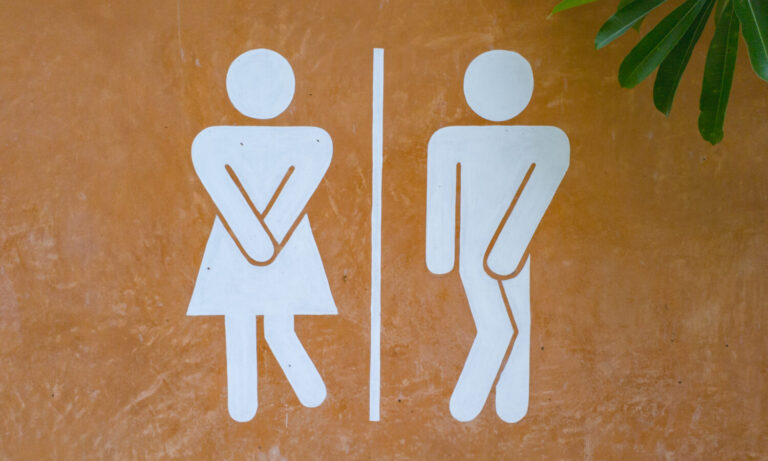
A new study published in the American Journal of Medicine examined whether marijuana has an impact on overactive bladders and found that regular marijuana users are more likely to suffer from the condition than non-users.
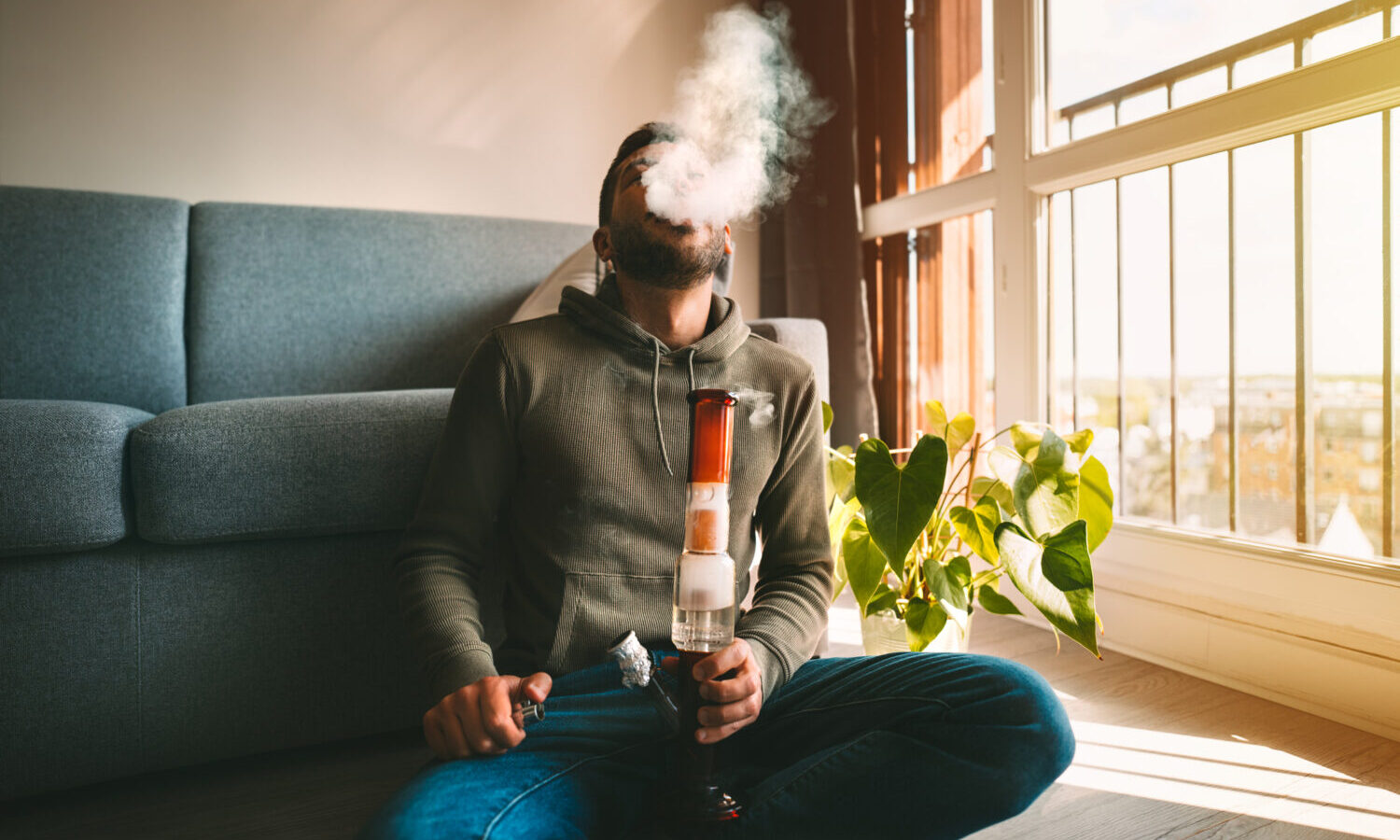
Photo by Daria Kulkova/Getty Images
Researchers collected data from 2005 and 2018 on regular and non-regular marijuana users aged 18 to 59, who answered a variety of questions about drug use and kidney conditions.
Over 18,000 samples were gathered, with 24% of respondents identifying as regular marijuana users. These people were more likely to be male, single, smokers, thinner, and younger when compared to the other participants in the study. They also reported more urinary incontinence and frequent nocturia, which is the urge to wake up in the middle of the night to go use the bathroom.
While researchers don’t understand why marijuana affects bladders specifically, the study shows that regular marijuana users were at higher risk of overactive bladder disorder and at an especially higher risk of nocturia.
“Our data do not support the evidence for the use of cannabinoids in the medical treatment of patients with overactive bladder, especially given the thorny health problems caused by marijuana,” concludes the study.
Overactive bladder is defined as a condition where people have to urinate with more frequency. It includes behaviors like nocturia, urge incontinence, and more. It’s considered a chronic disease.
It might not be possible to fatally overdose on weed, but you sure can have so much that you wish you never got high in the first place. Here’s how to avoid that.
Although we hear it time and time again, we often have to learn the hard way that there is truth in the phrase “having too much of a good thing.” This saying, while annoying when uttered by our worrying parents when we eat candy as children, can be painfully true when it comes to marijuana consumption. What starts off as a delicious edible and relaxing high can potentially lead to an overwhelming burst of anxiety, paranoia and heart pounding. This is where the “too much” part comes into play.
When it comes to marijuana, it might not be possible to overdose in the classical sense when you think of a drug overdose and the death associated with it, but you sure can have so much that you wish you never got high in the first place. So in order to prevent an event that involves you thoroughly delirious and/or paranoid, you should probably know how much weed is too much for you, and how to avoid getting to that point.
Standard Dose Vs. Too Much
If you are looking to find a “serving size” of THC, you will quickly learn that the number of milligrams for a “serving” fluctuates based on who you ask and what state you are in. Scientists, for example, use 5 mg doses in most tests, as this creates a standard, and often subjects in the study feel the desired effects at that level. Experts recommend starting off with 2.5 mg of THC, and to not exceed 40 mg of THC per day.
Photo by Jamie Grill/Getty Images
In some states you can get a single edible that is 10mg, which sort of implies the serving size could be 10 mg in those places, while other states have a limited edibles to 5 mg. Ten milligrams is often considered a standard serving for those well-versed in THC consumption. Either way, as a rule of thumb, it is best to go with the one edible, and wait. Exceeding 40 mg, unless you are a seasoned cannabis consumer with a high tolerance, could send you into another dimension, which can be problematic and even dangerous if you weren’t planning on entering said dimension.
Edibles are the dosages you need to pay closest attention to, since they take so long to kick in. When it comes to smoking and vaping, it is much easier to keep yourself from consuming too many mg of THC at once. You just need to take a few breaks and pay attention to your mind and body to see if you notice any warning signs that you may have had too much.
Warning Signs That You Should Stop Consuming
One of the best ways to know when it is definitely time to stop consuming is when you start experiencing some of marijuana’s negative side effects. Sure, negative side effects can occur at any dosage, but if you are experiencing more than one, or more than you typically do, it could be you have consumed too many milligrams of THC.
The Centers for Disease Control and Prevention (CDC) states on its website that while fatal overdoses of marijuana are unlikely, watching out for some of the negative side effects can help keep you from entering a place that renders you out of your own control for several hours. The CDC mentions extreme confusion, anxiety, paranoia, a fast heart rate, increased blood pressure, hallucinations and vomiting as major red flags.
You might experience one or two of these from time to time, especially if you have a low tolerance or are trying a new strain, but experiencing several of these symptoms means it is time to pump the brakes. Be sure to note the amount of THC you consumed and try halting it the next time you indulge, and go from there.
Photo by MykolaSenyuk/Getty Images
Dosing Is Individual, Not A Science
Remember that while following a self-guided THC dosage plan can help you avoid a negative experience of feeling too high, you need to remember there is no exact correlation to milligrams of THC and how high you will be. All sorts of factors play a role in how high a certain amount of weed will get you.
From the strain, to the time of day, your weight and what you had for breakfast are just a few of the variables that can make all the difference between 10 mg of THC being perfect or way too much. As we’ve mentioned before, dosages of any substance effect people in different ways. Factors like tolerance, body mass, mindset and more all make a difference. So give yourself time to feel the effects before upping your dosage.
Once you find what works for you, it is probably good not to test the limits, because often the only way to find out how many milligrams of THC is too much is to find out from personal experience, and that’s an experiment you should do your best to avoid.
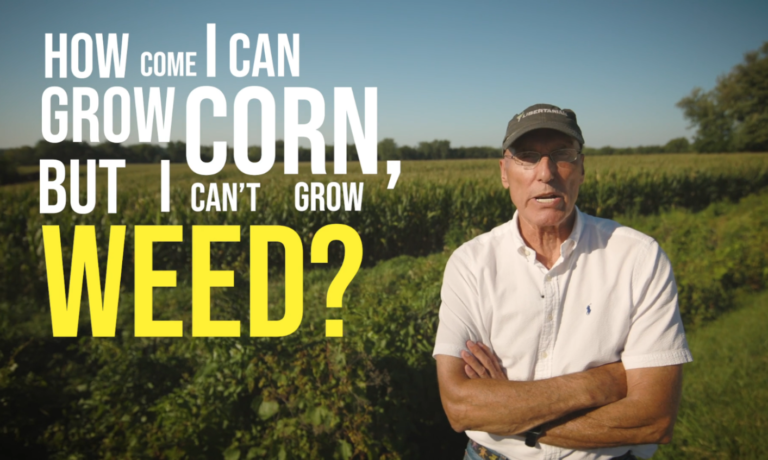
Libertarian candidate for governor Rick Stewart opens one of his recent TV ads by questioning Iowa’s Gov. Kim Reynolds (R) about her resistance to legalizing marijuana and easing up on arrests for simple possession, reported local media.
“What the hell, Kim?” he says. “Here I am in Illinois — why, only a few miles from the Iowa border — and they’ve got legal cannabis.” Stewart said in the spot titled “Dear Kim, ‘WEED!'”
“Our laws today in Iowa put people into rape cages because they smoked marijuana,” Stewart said. “You’re going to lose your college scholarship, you’re going to lose your job, you’re going to lose your kids — you’re going to lose everything because here in Iowa we think cannabis is a gateway drug. Well, a gateway to what?”
Stewart is the co-founder of Frontier Natural Products Co-op, a cooperatively owned wholesaler of organic products, based in Norway, Iowa. This is not the first time Stewart has released an ad calling for the end of the War on Drugs. ‘When I win, I will chase drug war criminals with a vengeance. Most of them are here in DC, stalking the halls of Congress. They’ve wasted 1 trillion dollars and decimated three generations of black Americans,” Stewart said in 2016 when he was running for Linn County sheriff.
While Governor Reynolds opposes legalizing marijuana, Democrat candidate Deidre DeJear supports legalizing and regulating cannabis like alcohol for adults 21 and older. According to a 2021 poll, 54% of adults say they favor legalizing weed for recreational use in Iowa, while 39% oppose it and 6% are unsure.
Cannabis in Iowa
Although neighboring Illinois has legal cannabis, and Nebraska, Minnesota and Missouri have decriminalized simple possession, Iowa continues to arrest individuals for possessing small amounts of weed. According to the Marijuana Policy Project, first-offense possession is punishable by up to six months in jail and a $1,000 fine, which is “one of the most severe first-offense penalties in the country.” Data compiled by the ACLU, shows Black Iowans are nearly eight times more likely to be arrested for marijuana possession than whites.
During the 2022 legislative session, Senators Joe Bolkcom (D), Janet Petersen (D), and Sarah Trone Garriott (D) proposed an amendment to the Iowa Constitution that would legalize cannabis for adults.
Michael Franken (D), one of Iowa’s Senate candidates, has spoken out on the federal cannabis legalization, its removal as a controlled substance and addressing incarceration for marijuana-related crimes, which disproportionately affect Black Iowans.
“I view the medicinal use of marijuana and the recreational use, controlled much as we do with alcohol, to be absolutely fine and well overdue,” Franken told reporters in June. “We should have the federal statutes put in place where money, revenue generated by taxing THC is used for interstate commerce just like it would for anything else.”
Meanwhile, Iowa’s Republican Senator Chuck Grassley does not support adult-use cannabis legalization.
The survey of more than 600 people revealed that 72% of them support marijuana legalization, while 66% of them supported a cannabis reform law that makes low-level possession legal.
Data shows DC overwhelming supports marijuana legalization – and opposes this! Washington D.C. voters are embracing cannabis. Not only do voters want the drug to be legalized and available to everyone who wants it — they also oppose the state’s restrictive measures.
The survey was commissioned by I-71 Committee, an organization of citizens and people involved with the cannabis industry that support marijuana legalization.
The survey of more than 600 likely voters revealed that 72% of them support marijuana legalization, while 66% of them supported a cannabis reform law that makes low-level possession, personal cultivation, and marijuana gifting legal. Gifting has become a problem for the state, with some businesses using this loophole to create a marijuana market that the law has yet to enable.
While the state is concerned with this loophole and is looking for valid ways of addressing it, according to the survey, gifting isn’t an issue for voters. Seventy-six percent of them said they’d prefer if the government reformed laws to create a functioning market instead of closing it down altogether.
Marijuana gifting has been a hot-button issue over the past year, particularly in states that have decriminalized the drug but have yet to establish a functioning legal market. The term refers to the practice of gifting people marijuana as they purchase a different item, say a t-shirt or a hat, and it’s allowed for a variety of businesses to thrive and make a business.
States like New York and Connecticut have been finding new ways to cope with marijuana gifting, sending cease and desist letters to businesses, and more.
D.C. decriminalized marijuana in 2015, allowing residents to carry up to two ounces of marijuana.
Aside from treating a variety of conditions that plague the lives of millions of Americans, the side effects associated with weed are nowhere near as risky as the ones that’ve been linked with opioids over the past decades.
One of the best arguments for legal marijuana is its possible influence on the opioid crisis. Supporters of cannabis have theorized that the plant’s medical capabilities could help treat a variety of conditions that are commonly treated by opioids, which come with a batch of adverse side effects.
Now, a new study supports this belief, showing that medical marijuana can help patients reduce their opioid intake while substantially addressing the condition that affects their quality of life.
Photo by Cappi Thompson/Getty Images
The study, published in the journal Substance Use and Misuse, surveyed more than 2,000 medical marijuana patients in Florida regarding their marijuana consumption habits and whether these had impacted their use of pharmaceuticals.
A whopping 90% of patients said marijuana was helpful in treating their condition, while 88% of them said it was important for their quality of life. In the case of the connection between opioids and marijuana, the results were very positive, with 85% of respondents claiming that cannabis reduced their pain. 79% of them said that they stopped or reduced their opioid intake after they started consuming cannabis.
In an accompanying press release, researcher Carolyn Pritchett explained why the survey should provide some supporting evidence for the benefits of medical marijuana, and why it should be considered as a valid alternative for many of these conditions.
“If there’s the option to instead use a medicine with less harmful side-effects, including a lower risk of overdose and death, then it should perhaps be considered. But more research, including studies that follow patients over time, is needed before substituting opioid painkillers for medical cannabis becomes commonplace,” she said.
This study joins a body of evidence that shows the positive aspects of medical marijuana. Aside from treating a variety of conditions that plague the lives of millions of Americans, the side effects associated with marijuana are nowhere near as risky as the ones that have been linked with opioids over the past decades.
Most candidates for federal office do not see cannabis as an issue prominent enough to discuss, and deep partisan differences still remain among elected officials.
Cannabis reform has grown in popularity with voters, activists, and state legislators; cannabis is now legal for medical use in 38 states and DC and for adult-use in 19 states and DC. Despite those advances in state level reforms and in the broader conversation nationwide, Congress has failed to pass a major piece of legislation addressing the issue, and many voters and activists wonder why. Congressional candidates’ silence on cannabis reform is troubling.
One argument is that federal level officials—in the executive branch and in Congress—simply don’t care enough about the issue to address it. To consider this question, I included a coding about cannabis reform in Brookings Primaries Project in 2022. The Brookings Primaries Project examines the publicly stated views—via the websites and social media presence—of all candidates running in U.S. congressional primary races. We coded each candidate on a four-point scale: whether they supported legalization or decriminalization of cannabis, whether they supported medical legalization only, whether their position was complex or indecipherable, and whether they failed to mention the issue at all.
The results provide three general takeaways. First, primary candidates for Congress do not consider the issue important enough to elevate to be included on their website or on social media. Second, on average, candidates who do engage on the issue are at least not harmed by staking out a public position. Third, stark differences exist between Democratic primary candidates for Congress and Republican primary candidates for Congress.
These findings generally reflect a reality that bears out in public opinion polling. While cannabis reform is popular among Americans (68% support in the latest Gallup poll), it is not a salient issue among voters; polling shows that cannabis reform has never jumped into even the top 20 most important issues for voters. That support but lack of salience has a compelling impact on members of Congress and congressional candidates: it gives them the freedom not to engage the issue.
Overall, we coded 2360 candidates running in Democratic and Republican primaries for Congress. As table 1 shows, the vast majority of candidates (81.4%) made no mention of cannabis reform at all on their websites and social media. In fact, clashing against the idea that the popularity of cannabis reform should be pushing legislators to make clear statements of support for reform, 86.4% of candidates either made no mention, staked out an unclear position, or explicitly opposed cannabis reform.
TABLE 1: CANNABIS CAMPAIGN POSITIONS AMONG 2022 CONGRESSIONAL PRIMARY CANDIDATES
Those publicly stated positions were not uniform across parties however. As Table 2 shows, a pro-cannabis reform position was much more popular among Democratic candidates (30.5%) than among Republican candidates (2.0%). This demonstrates clear differences between the parties that are also reflected in rates of opposition to cannabis. Although more than 90% of Republican candidates failed to mention cannabis at all, 4.1% of them staked out an anti-cannabis reform position. On the other hand, only three of the 962 Democratic primary candidates (0.3%) opposed reform.
TABLE 2: 2022 CONGRESSIONAL PRIMARY CANDIDATES’ CANNABIS POSITIONS BY PARTY
It is true in public polling that differences exist between Democratic voters’ support (83%) for cannabis reform and Republican voters’ support (50%). However, the polling data above show that there is still a clear disconnect between what voters want and what candidates for office are willing to say about the issue. For example, only 2% of Republican primary candidates supported cannabis reform, despite 50% of GOP voters endorsing that policy. And even while a third of Democratic primary candidates support legalization, that pales in comparison to the more than 80% support Gallup finds among Democrats.
Another way to look at these data are to divide states up according to whether they are running for Congress in the 19 states that are fully legal, the 19 states that have medical only, or the 12 states that have neither. As table 3 shows, the legal status of cannabis in a state has effectively no impact on whether a candidate engages on the issue: between 80.2% and 82.9% of candidates in each type of state are silent on it. Candidates in fully legal states (15.9%) are more likely to support cannabis legalization than in medical only (12.2%) or non-legal states (11.7%).
TABLE 3: 2022 CONGRESSIONAL PRIMARY CANDIDATES’ CANNABIS POSITIONS BY STATE TYPE
Similarly, as Table 4 shows, Democrats in fully legal states are the most supportive of cannabis reform, with more than a third of candidates in primaries voicing support. The same was not true of Republican candidates. Republicans in cannabis legal states were less likely to support cannabis reform than they were in medical only states and non-legal states. What’s more, this was not an artifact of fewer Republicans running in fully legal states—there were more GOP primary candidates in legal states than in either medical only or non-legal states.
TABLE 4: 2022 CONGRESSIONAL PRIMARY CANDIDATES’ CANNABIS POSITIONS BY STATE TYPE AND PARTY
The data also allow for an analysis of a) whether cannabis could be viewed as more than a fringe issue and b) whether taking a position on cannabis potentially harms candidates’ chances of winning. The latter point is of particular interest given the vestiges of drug-war era indoctrination among elected officials that a pro-drug reform position is politically toxic.
To do this, I examine the difference in cannabis position taking among candidates who went on to win their primaries versus those who lost. As Table 5 shows, among all candidates, winners were much more likely to address the cannabis issue (33.3%) than were congressional primary losers (9.5%). Those figures include winning candidates who were more likely to oppose cannabis legalization (6.0%) than were losing candidates (0.5%). However, winning candidates were also significantly more likely to support cannabis reform (22.2%) than were losing candidates (8.4%).
TABLE 5: 2022 CONGRESSIONAL PRIMARY CANDIDATES’ CANNABIS POSITIONS AMONG WINNERS AND LOSERS
There are a few key takeaways from these findings. First, while cannabis may not be a popular issue for congressional primary candidates to address publicly, it is not a fringe issue only discussed by unserious candidates. Successful primary candidates are addressing the issue significantly more than losing candidates.
Second, successful primary candidates do not see cannabis reform taking as a political liability—like it once was—as more than one-fifth of successful candidates voiced support for that position on their website and/or through social media.
Third, despite gains in cannabis reform in a variety of areas, public opposition to cannabis reform is still embraced successfully by some candidates.
Fourth, the analysis cannot tell us whether support or opposition to cannabis reform helps candidates, however, we can say that in many races, it does not harm those candidates, given the levels of success among cannabis position-taking candidates.
The data also show that cannabis position taking differences by winners and losers is driven largely by party. As Table 6 shows, of the 54 winning primary candidates who publicly opposed cannabis, 94.4% were Republicans. Conversely, of the 199 winning candidates who supported cannabis reform, 95.0% were Democrats. In fact, among all Democratic primary candidates, 64.5% of those taking a pro-cannabis position won their primary, and only 55.1% of winning Democratic candidates opted not to take a position on the issue. For Republicans, 78.1% of all winning candidates opted not to discuss cannabis in any context.
TABLE 6: 2022 CONGRESSIONAL PRIMARY CANDIDATES’ CANNABIS POSITIONS AMONG WINNERS AND LOSERS, BY PARTY
It is clear that among all candidates, all Democrats, and all Republicans, taking no public position on cannabis was the most popular strategy during the 2022 congressional primaries. However, among candidates who chose to take a clear position on cannabis, Republicans were more likely to oppose legalization than support it, and the reverse is true for Democratic primary candidates who took a position on cannabis.
In sum, cannabis as a political issue has risen in importance over the past 25 years. As state legislatures and voters via referenda have enacted changes to cannabis laws, the issue has become more popular even in the halls of Congress.
However, cannabis reform advocates’ frequent stupefaction at the lack of progress at the federal level bumps up against a stark reality. Most candidates for federal office do not see cannabis as an issue prominent enough to discuss, and deep partisan differences still remain among elected officials, even as support for cannabis in the general public has exploded in recent years. And the true motivator for a member of Congress to take or change a position—whether voters hold their feet to the fire over an issue—has not yet become a reality in the vast majority of Congressional races across the United States.
New Jersey workplace marijuana guidelines confuse employers. Released by the Cannabis Regulatory Commission (CRC) they have baffled workplace management over what they can and cannot do when a worker is high on the job.
Cannabis law experts and employment attorneys called the rules and their rollout vague and baffling and said the suggestions mentioned therein are impractical to implement and therefore will likely keep businesses in a “state of limbo.”
“I see a lot of risk from both the employer and the employees’ side that’s a little concerning,” said Sean Sanders, an employment attorney at Frier Levitt, reported the New Jersey Monitor.
Earlier this month, the CRC issued interim guidance while it continues to develop more permanent regulations to certify workplace impairment experts, which are required by law. Since legalization, employees can no longer be terminated solely because of a drug test positive for marijuana.
Photo by fauxels via Pexels
The interim guidelines allow employers to use an observation report form issued by the agency, which when used in conjunction with a positive drug test for marijuana.
Chair of the CRC, Dianna Houenou said the new guidelines seek to strike a balance between employers’ rights and employees’ rights, but the guidance doesn’t actually do anything new.
As such, lawyers and business leaders who have been awaiting the guidelines were unimpressed and frustrated with what the commission released, now five months after the industry launched and nearly two years since voters approved cannabis legalization.
“The concern is, how do we do this? That’s the biggest question, and I wish the CRC guidance would give us a little bit more, no pun intended, guidance,” said Tracy Armstrong, an employment lawyer at Wilentz, Goldman & Spitzer, who serves on the New Jersey State Bar Association’s cannabis law committee.
Look For Signs Of Behavioral Impairment? Good Luck With That
The form lists signs of physical and behavioral impairment: red, swollen eyes; sniffling nose; heavy breathing; a marijuana odor; rambling speech; looking confused; excessive yawning, and more even though many of these signs can also be due to allergies or medication, or even someone having a bad day.
“You don’t want to be targeting your employees who look depressed, and certainly you don’t want to be documenting it,” said employment attorney Sanders. “That brings up a whole ‘nother can of worms with the Law Against Discrimination.”
Stress is terrible for your physical and mental health. A new study says that it can impact your relationship, even during the honeymoon stage.
It makes life more difficult, whether we’re talking about people who live alone or those who live with a romantic partner. A new study says doing this in a relationship is likely to cause stress for a couple. While it makes sense, people focusing on their partner’s bad habits is rough for people. This behavior occurred even when couples were in the “honeymoon stage” of their relationship.
The study was published in the journal Social Psychological and Personality Science and was led by a researcher from the University of Texas.
Photo by SIphotography/Getty Images
The study involved 79 heterosexual newlywed couples, who were asked to complete surveys each night for 10 days. Before the start of the study, they were asked about the stress in their lives, allowing researchers to develop an understanding of their baseline stress level. Afterward, participants filled out a chart with their and their partner’s behavior every night.
Researchers claimed they wanted a sample of newlyweds since these people tend to focus on the positive aspect of their relationship, often overlooking their partner’s flaws and negative actions. They found that an accumulation of stress was enough to make participants shift their attention from their partners elsewhere.
“We found that individuals who reported experiencing more stressful life events outside of their relationship, such as problems at work, were especially likely to notice if their partner behaved in an inconsiderate manner,” study lead author Dr. Lisa Neff told told the Daily Mail.
While the results simply reinforce that stress is bad for relationships no matter at what stage they’re at, researchers think their study shows just how impactful stress can be. “But the fact that we found these effects in a sample of newlyweds speaks to how impactful the effects of stress can be,” said Neff.
She suggests expanding the study to include people at different stages of their relationships, likely showing that stress has a stronger impact on couples that have been together for longer periods of time.
In this modern age of marijuana, what happens to the part of the plant that doesn’t get you high? There are many options.
Endless time, money and thought go into exactly what to do with marijuana buds once they are ripe for the picking. There are ever-evolving methods of extraction, and always a new and exciting way to consume cannabis. But the THC rich buds, or flower, are a small fraction of the towering cannabis plant. What happens to marijuana scraps?
After the plant has been cured and trimmed, there remains a large mound of natural cannabis scraps that must be dealt with. Years ago, in the olden days of cannabis cultivation, this pile could have been added to a compost pile out back, or burned safely in a controlled burn. Those unregulated days are a thing of the past.
In today’s legal and highly regulated market, you can’t just toss marijuana scraps in the back of the greenhouse. So, in this modern age of marijuana, what happens to the part of the plant that doesn’t get you high?
What Is Cannabis Waste, Exactly?
When you picture cannabis waste, the visual you have is likely a tidy mound of plant stalks and unusable leaves. This does make up a large portion of cannabis waste, but there are other forms of waste as well that can be a bit trickier and less green. “Cannabis waste can be any material that has come in contact with cannabis throughout the cultivation, production, manufacturing, or retail process,” according to theEcoWaste, a cannabis waste disposal service.
There are the sponges and chemicals used to clone and propagate plants. There are other unused products, and used testing samples. This hodgepodge of cannabis waste can make it a bit trickier to dispose of.
Cannabis Waste Requires Strict Record Keeping
Perhaps you live in a place where trash pickup is a bit of a pain. Maybe you need to separate trash in 4 different bins and bring it all the way to a recycling facility. If you think that is annoying, imagine having to keep records of everything you throw away. That, essentially, is what most farm managers are responsible for at their facilities. You cannot simply sweep up a mess and dump it, or light it ablaze and tell authorities it has turned to dust. There must be records, and documented proof that the cannabis waste has, indeed, been completely and properly disposed of.
Photo by CRYSTALWEED cannabis via Unsplash
“Unlike other agricultural industries, cannabis growers in most areas must keep exhaustive records of every ounce of material they discard,” according to an article inBioCycle, a resource for organic recycling and composting. The article continues, stating that some laws are so strict and exact that “Some jurisdictions require that each plant get its own identification and tracking tag, or that senior managers from the producer accompany the wastes to any external disposal site.”
BioCycle also mentions how some states require video footage of cannabis waste areas be held for up to 90 days, in order to prove there is no discrepancy between written records and video proof. Needless to say, this is not your typical trip to the dump.
Composting Is Best, But Sometimes Complicated Option
Composting cannabis waste is often the best option for the environment and the growers. The problem is, you can’t simply throw cannabis waste into a compost pile and walk away. In addition to proper documentation, you need to grind, chop and mix the cannabis waste with non-cannabis waste to make sure that it no longer resembles anything that could be sold as a cannabis product.
In fact, according toGreen Mountain Technologies, “Many state regulations for the disposal of cannabis waste require the cannabis to be mixed at least 50%-50% by volume with non-cannabis waste in order to render the cannabis waste unusable.” Once you achieve this mixture, you still need to find a suitable facility to take this compostable waste. This can be an adventure in itself.
Other disposal methods include:
Bokashi Process
The Bokashi process is another compost-style method of recycling cannabis scraps, but involves using a vessel, an organic additive, and time. The process was invented in Japan in the 1980s, and, like competing, is a natural way of breaking down organic materials and turning them into a re-usable substance.
According toThe Spruce, “Unlike traditional composting, which is an aerobic process that requires oxygen, Bokashi is an anaerobic process that requires that you isolate the materials from oxygen as much as possible.” This is an organic process fit for smaller operations, but for those with very large growing facilities, it would involve a large investment to build vessels large enough to get rid of all the organic waste.
Cannabis Disposal Companies
As the cannabis industry continues to boom, all industries surrounding it are also growing and expanding — this even includes the waste treatment sector. All over the United States and Canada, small and large businesses are forming to help deal with cannabis waste removal. Some of these businesses focus on logistics and ease of surface, while others are focused on the organic route with the goal of lowering the cannabis industry’s carbon footprint. This is still a new frontier, and as the cannabis industry grows (along with the regulations that come with a legal cannabis market), these cannabis disposal companies are likely to multiply.
Landfills
While the last place you would expect or want cannabis waste is in a landfill taking up space, this is a legal option and potential final resting place for cannabis scraps. Sure, many growers are environmentally friendly at heart, but the fact remains that there is no incentive apart from one’s own environmental morality to compost cannabis rather than send it to a landfill. In fact there are a few reasons cannabis is more likely to end up in a landfill than a compost facility.
For one, landfills are often more accessible than compost facilities. This means, logistically, landfills are a much easier option for some companies. It is also important to note that you can only compost cannabis waste if it is mixed with equally organic materials, like dirt, grass or other organic waste. While this might be no problem for a large outdoor growing farm in a moderate climate, organic waste might be harder to come by in the middle of the winter for an indoor growing operation.
Cannabis disposal facilities offer an alternative to landfills, but they are not currently as prevalent an option. One can only hope that since these strict laws of marijuana waste disposal don’t seem to be going anywhere, perhaps we can at least find a simple and organic way to take care of the scrappier side of cannabis cultivation.
The Michigan State Police/Forensic Science Division (MSP/FSD) recently halted THC toxicology testing for drivers suspected to be driving under the influence of marijuana. This came after a “technical issue” that revealed that previous test methods allowed for the conversion of CBD into THC leading to false positive results.
THC, the intoxicating cannabinoid in marijuana, is believed to impair driving by prolonging one’s reaction time. CBD on the other hand is non-intoxicating and federally legal.
With the recent findings by the MSP, it appears that dozens of drivers who might have consumed CBD have been wrongfully penalized for testing positive for THC erroneously.
The MSP/FSD tests approximately 200,000 samples for alcohol and other drugs each year. An evaluation launched by the body on August 19, 2022 revealed that the current test for THC could result in a positive test even when a sample contains pure CBD. Following this discovery, MSP ordered an immediate stop to THC testing until this issue had been resolved.
Upon further investigation, the MSP believes that this error might have been carried forward since March 28, 2019 when CBD became legal in the state. Lab data indicates that about 3,250 samples have been affected by this error.
The MSP has escalated the issue to the ANSI National Accreditation Board (ANAB) which is the accrediting body. In addition, MSP has halted the disposal of all blood samples to preserve evidence in case there will be a need for re-analysis in the future.