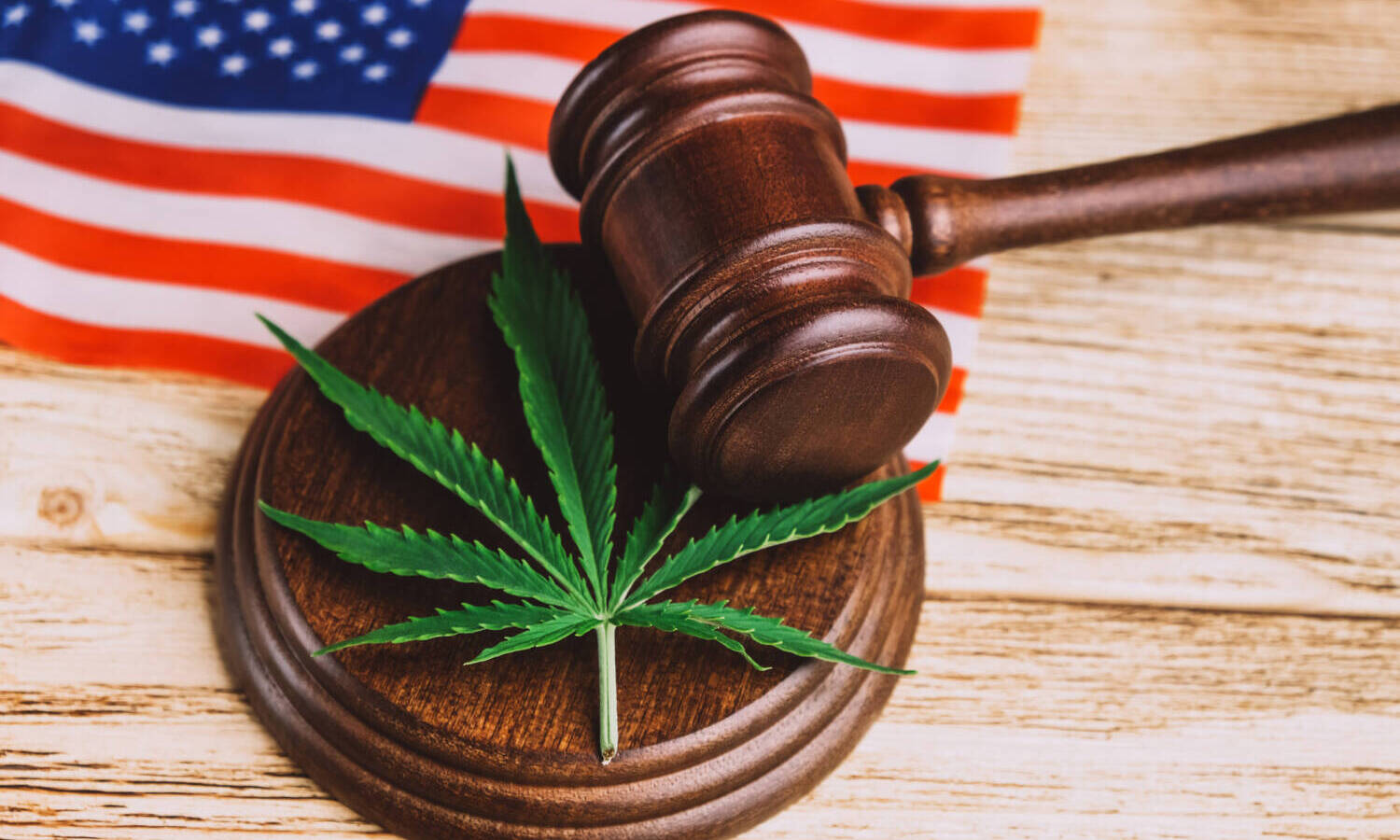
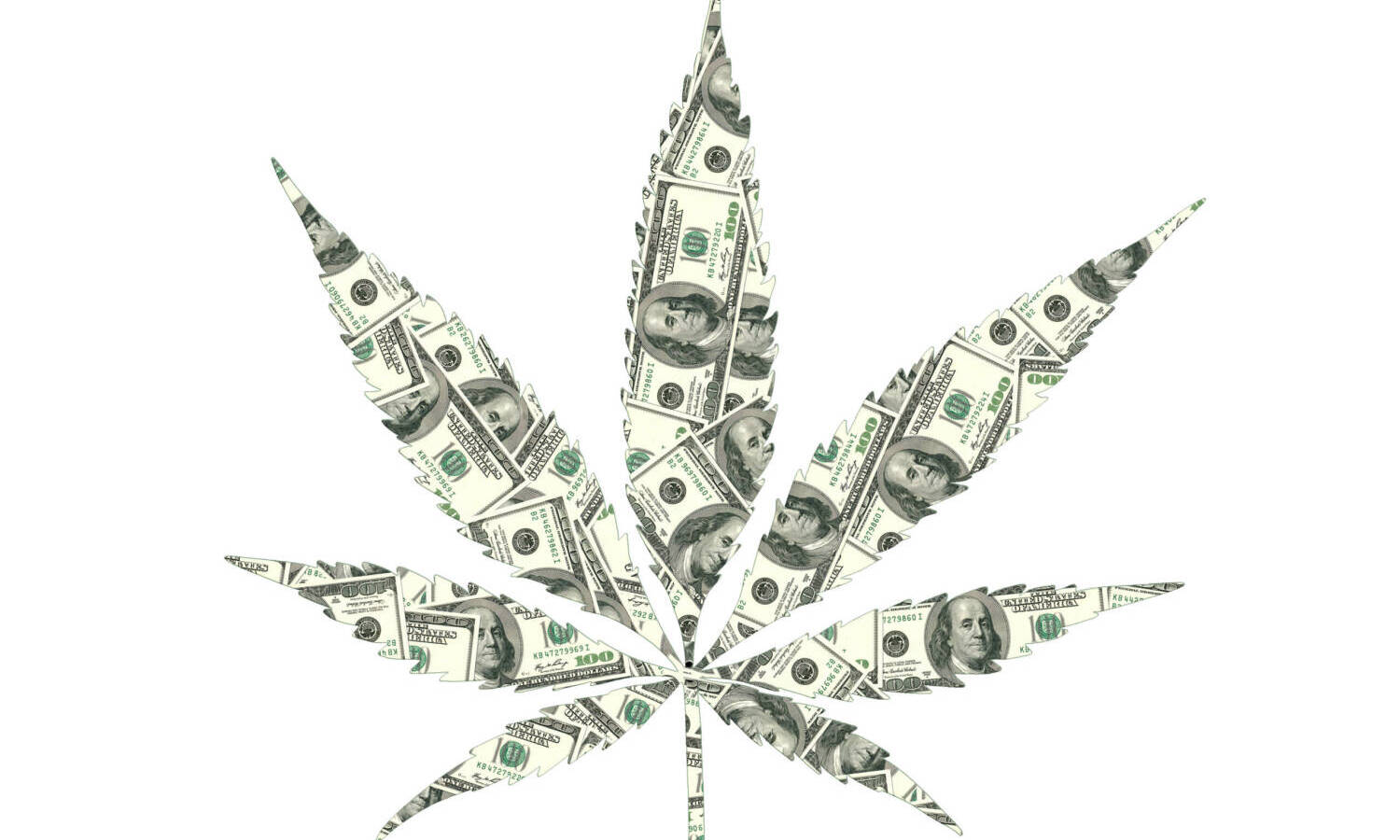
Legal Missouri 2022, one of the proposals with chances of ending up before voters this fall, would allow the state to cap licenses, giving current license holders an advantage over the new applicants.
With the state on the verge of another potential vote on legalizing Missouri’s recreational marijuana, local minorities fear being excluded by regulations. “The industry is growing, but our involvement is not,” said Brennan England, state director of Minorities for Medical Marijuana, reported the Missouri Independent.
Although the state does not have records of the race of license holders, according to Abe Givins, social equity activist and co-owner of Village, a vertically-integrated medical marijuana company that’s minority-owned and part of the Viola Brands franchise, few licenses were granted to Black business owners. Upon the legalization of medical cannabis in the state, regulators issued limited licenses.
Photo by AYEHAB/Getty Images
According to a report released by the Missouri Medical Cannabis Trade Association (MoCannTrade), the Missouri Department of Health and Senior Services has approved 322 facilities, including 185 dispensaries, 63 infused products manufacturers and 46 marijuana cultivation facilities. In addition, the Department has licensed and certified a total of 386 facilities to cultivate, manufacture, test, transport and dispense medical marijuana to Missouri patients.
Legal Missouri 2022, one of the proposals with chances of ending up before voters this fall, would allow the state to cap licenses, giving current license holders an advantage over the new applicants. For the first 18 months, the state would only award recreational cannabis licenses to the entities that already have medical marijuana business licenses.
“[Legal Missouri] creates monopolies,” said state Rep. Ashley Bland-Manlove (D), president of the Missouri Legislative Black Caucus. “People who have the desire and the skill set, and maybe the bare minimum qualifying capital, are boxed out.”
Legal Missouri 2022
The proposed legislation contemplates the creation of 144 “micro licenses” for applicants with ZIP codes with high incarceration rates for marijuana. However, licenses on their own do not guarantee access to capital or business networks.
According to Adolphus Pruitt, president of the NAACP chapter in St. Louis, the lack of access to traditional banking is another burden on Black business owners in general.
“Those micro licenses are what’s going to be Black folks’ entry into the marketplace because they don’t have the capital,” commented Pruitt in support of Legal Missouri.
“If you want to have equity for the people that win the micro licenses, then you do want to have some level of limits there,” added John Payne, campaign manager for Legal Missouri.
On Tuesday, a Missouri House committee heard testimony on a proposal sponsored by Republican Rep. Ron Hicks that would legalize recreational marijuana without caps on licenses, arguing that these affect minority-owned businesses.
Weed and trips are a tricky combo. Here’s what you should know before you get to the airport about traveling with a marijuana vape.
Traveling with marijuana shouldn’t be taken lightly. This week, it was announced that WNBA superstar Brittney Griner had been detained in Russia after her vape cartridges were spotted in her luggage. It’s a mistake that could result in a 10-year prison sentence.
While America doesn’t operate like Russia, cannabis still remains tricky. No matter the laws in the state you’re traveling to, marijuana remains a federally illegal drug in the U.S. Internationally, it’s even worse since cannabis is illegal in most countries.
If you’re considering traveling with a weed vape, here are some of the most important things you should know.
Nationally
Photo by Chalabala/Getty Images
Wouldn’t it be great to not have to worry about weed when traveling? Sadly, we’re not there yet — far from it, in fact. On a national level, it all depends on the state. While some airports are fine with weed, others are not. For example, Denver’s airport, which is located in the very legal state of Colorado, forbids cannabis.
As for the Travel Security Administration (TSA), their stance is pretty clear. Since marijuana is federally illegal, passengers will be stopped if they have cannabis on them. Still, it helps to know your rights; don’t interact with police officers unless you have to and, if detained or arrested, let them know that you don’t consent to a search and that you want a lawyer.
While vape pens are discreet, it’s still important to be careful with these devices considering the fact that they’re illegal on a federal level. The TSA is not on the lookout for weed, they’re more concerned with things that can pose an immediate risk, but you never know what an agent might do if they stumble upon your vape during a security screening.
When it comes to international travel, weed is never a good idea. If traveling to a country with illegal cannabis, there’s no way of knowing what they could do and whether you could be arrested or not. And even if the country has a legal marijuana program, like Canada for example, traveling with marijuana remains illegal. “Cannabis is illegal in most countries. If you try to travel internationally with any amount of cannabis in your possession, you could face serious criminal penalties both at home and abroad,” according to the Canadian government website.
If you have a medical marijuana card, you might face fewer hurdles in airports. Still, it’s not a clear path and, if caught, you’re on the losing side of the argument. If caught with a weed pen having all of your documentation in hand might help you, including your doctor’s certificate, your marijuana medical ID card, and your physician’s number. Ideally, you’d be traveling to a state with medical marijuana reciprocity.
Bottom line: if traveling nationally with weed, the more discreet you are the better, and know that there’s always a degree of risk, no matter how farfetched it might seem. When traveling internationally, don’t do it. No matter the legal status of the drug, jail time is a real possibility and it’s best to be as careful as possible.
We find ourselves in volatile times. The past two years have taken its toll on the collective mind, body and soul of humanity. We no longer trust the media, the institutions that are meant to safeguard us, and many have drawn imaginary lines of “difference” between themselves and their neighbors.
Many of us find it difficult to understand just how the hell we got here.
Photo by Fiordaliso/Getty Images
How did the conspiracy theorists get so much “right?” Are we really entering into a dystopian future, enslaved by the elite in a neo-corporate feudalistic system…where you need to prove how many times you got “boosted” against the latest alarmist pandemic before you can exercise basic human freedoms such as traveling or dining at your favorite restaurant?
These are all narratives that have been circulating the internet and have plagued conspiracy theorists for decades. Only recently, has the possibility of such a future gone mainstream due to the tyrannical reactions of western leaders and their allegiances to elitist clubs trying to shape the world in their image.
The uncertainty, the looming fear, the volatile news cycles — could all of this be part of a war strategy called “Cognitive Warfare”? As outlined by NATO:
“In cognitive warfare, the human mind becomes the battlefield. The aim is to change not only what people think, but how they think and act. Waged successfully, it shapes and influences individual and group beliefs and behaviors to favor an aggressor’s tactical or strategic objectives. In its extreme form, it has the potential to fracture and fragment an entire society, so that it no longer has the collective will to resist an adversary’s intentions.
“The aims of cognitive warfare can be limited, with short time horizons. Or they can be strategic, with campaigns launched over the course of decades. Several successive campaigns could be launched with the long-term objective of disrupting entire societies or alliances, by seeding doubts about governance, subverting democratic processes, triggering civil disturbances, or instigating separatist movements.
“Cognitive warfare integrates cyber, information, psychological, and social engineering capabilities to achieve its ends.
According to this Substack article: “[Cognitive Warfare] seeks to sow doubt, to introduce conflicting narratives, to polarize opinion, to radicalize groups, and to motivate them to acts that can disrupt or fragment an otherwise cohesive society. Social networking sites induce social proofing, wherein we mimic and affirm others’ actions and beliefs to fit in with our social groups, which become echo chambers of conformism and groupthink.”
The article by Karen Hunt is a must read! This is but one aspect from the article and will help put into perspective a lot of what’s happening in this world.
The fact of the matter is that when you look objectively at what’s going on, through the lens of warfare, the mind is truly the ultimate battlefield. Can you honestly say that you “trust” the media or your government? Surely there are some that would say yes, but we are at a point in time where the vast majority of people feel disenfranchised by their leadership, subjected to the agendas of the affluent and powerful.
However, understanding that the mind is the ultimate battlefield — and knowing that the CIA attempted to use cannabis as a mind control agent yet found it to have the opposite effect — I was wondering whether cannabis could also inoculate you against this kind of mental warfare.
Photo by Kampus Production from Pexels
“Turn On, Tune In, Drop Out”
Timothy Leary famously said, “Turn on, Tune in, Drop out” and was infamously labeled as the “most dangerous man in America” according to Bill Minutalgio and Steven L. Davis. Leary had escaped prison after he was arrested for two cannabis joints and thrown into jail for ten years. Leary was a Harvard professor and an outspoken representative of an ever-growing counter-culture.
But what Leary meant by his infamous quote, “turn on, tune in, drop out” is a call to awaken the conscious mind. Leary also mapped out the 8-Circuits of Consciousness which is a map of how the human consciousness imprints itself in hierarchical orders. Robert Anton Wilson talks about it in detail in his book Prometheus Rising.
The point I’m trying to make here is that when it comes to Cognitive Warfare – your participation is absolutely essential. In order for the warfare to work, you need to opt in and respond emotionally. Leary found emotional action to be of the lowest expressions of consciousness. He said:
“Emotions are the lowest form of consciousness. Emotional actions are the most contracted, narrowing, dangerous form of behavior. Emotions are caused by biochemical secretions in the body to serve during the state of acute emergency. An emotional person is a blind, crazed maniac. Emotions are addictive and narcotic and stupefacient.
The emotional person cannot think; he cannot perform any effective game action (except in acts of physical aggression and strength). The emotional person is turned off sensually. His body is a churning robot. […]
The only state in which we can learn, harmonize, grow, merge, join, understand is the absence of emotion. This is called bliss or ecstasy, attained through centering the emotions”
Turn On
Turning on, in my view point is “becoming an active observer” of the self. It’s about becoming conscious about your own actions and thoughts, to become mindful about where your attention rests.
In this aspect, cannabis can help as I explained in my article about Mindfulness Toking. This is the first step in being able to interrupt the Cognitive Warfare because when you become aware of your own thoughts and actions, you also become aware of thoughts and actions that are not of your own – and then you have a decision on how you respond.
Photo by RODNAE Productions from Pexels
Tune In
This aspect of the quote relates to “what frequency you’re tuned in to”. In other words, where do you spend your awareness? Robert Anton Wilson once wrote; “What the Thinker Thinks, the Prover Proves” which basically eludes to how our unconscious mind interacts with reality when we engage with particular “reality tunnels”.
Within the context of Cognitive Warfare – those engaging in these tactics would like you to fall victim to particular narratives in order to increase instances of your focal point in your life. For example, if you believe that there are people out to get your money and to steal everything you have, your unconscious mind begins to look for “evidence” to support this idea.
Therefore, “tuning in” is what you can do by tuning your conscious awareness into that which you want to see more of, and diminishing that which you don’t
Drop Out!
Finally, you need to drop out of the mainstream narrative. The media, corporate press, politicians, they all spin tales to influence your behavior. Your superpower is “non-engagement”. This doesn’t mean to ignore actual threats to your life, but it does mean to stop emotionally responding to these issues by realizing that you are in control of where your attention rests.
While the World Economic Forum might be pushing an agenda called “The Great Reset,” dropping out of the narrative is as simple as doing something completely different when confronting the narrative. For example, “The Great Reset” is also the name of a breathwork meditation I created as a response to the WEF agenda. This is meant to disrupt the narratives and reclaim your mind.
Bottom Line
While cannabis can help you disrupt the internal and external automation, it cannot do it by itself; you have to actively work on safeguarding your mind from invasive narratives meant to demoralize, ostracize and ridicule the individual.
In a world where people are pushing war, we’ve got to be pushing peace.
“It’s important to be able to gift cannabis because not everybody has the financial stability that they need in order to enter into the medical program,” said one local activist.
The General Law Committee, a joint standing committee of the Connecticut General Assembly, debated a proposed bill that would prevent residents from gifting cannabis products or face up to a year in prison and a $10,000 fine, reported NBC.
During a public virtual hearing streamed live on March 8, business owners and cannabis advocates expressed concerns about Raised Bill No. 5329 seeking to address the loophole of “gifting” cannabis.
Photo by Daniel Garzón Herazo / EyeEm/Getty Images
“It’s important to be able to gift cannabis because not everybody has the financial stability that they need in order to enter into the medical program,” said Christine Capitan, from CT Canna Warriors, a local advocacy group.
“Enacting a law that criminalizes any of the giving of this plant-based medicine to our fellow family members, friends or even complete strangers is unethical, unfathomable, borderline nefarious,” added Duncan Markovich, from Better Ways, a local cannabis retailer.
“Why should it be criminal to give a vegetable or herbs from my own garden to my community?” Markovich asked.
Rep. Michael D’Agostino of Hamden explained that the newly proposed bill was created to deter large-scale gifting, reported High Times.
“The committee’s intent, with this language, was to really prevent and rein in these retail gifting events that have been occurring in the state, which really are retail events,” D’Agostino noted, in reference to festivals such as “High Bazaar,” which allowed visitors to explore local vendors.
“They’re just an end-run around the permitting and transaction process that we’ve set up through our cannabis laws.”
Photo by Tim Allen/Getty Images
House Minority Leader Vincent Candelora said a homegrown model would have been a better way to make cannabis more affordable for medical patients. “This is not the legalization of marijuana. This is truly a commercialized market,” Candelora said.
Anxiety affects a large number of people in varying ways. And now, a new study has found links between this common activity and significant anxiety relief.
Many things claim to cure anxiety, but those who struggle with the condition know that it’s not so simple to get rid of. A new study shows that something as common and pleasant as listening to music can be very effective when it comes to treating anxiety, helping people relax by a considerable amount.
The study, published in the journal Plos One and conducted by a group of Canadian researchers from Ryerson University, utilized music and Auditory Beat Stimulation (ABS), a sound that combines tones and plays them in one ear or another, stimulating the brain. ABS is an interesting method, one that seeks to provide anxiety relief (a condition that’s on the rise and that affects people of all ages) in the least invasive form possible, disregarding medications.
The research examined 163 patients who were already taking anti-anxiety medication. They were instructed to listen to relaxing music, ABS sessions, both, or “pink noise,” a sound similar to white noise. Participants listened to these sessions for 24 minutes, with an artificial intelligence device selecting the music depending on the participant’s mood.
Researchers found that participants with moderate levels of anxiety experienced the most benefits after listening to music and ABS. Participants who had high levels of anxiety reaped more benefits from listening to music only when compared to the group who listened to ABS.
“The findings from this research are exciting as they indicate personalized music shows great promise in effectively reducing anxiety in specific segments of the population that suffer from anxiety,” wrote the researchers.
Music has long been associated with anxiety-relieving properties, but there haven’t been many studies that look at it through a scientific lens. Nowadays, when there are so many options for remote and digital treatment, the exploration of auditory stress-relieving tools sounds like something worth investigating, that could provide relief to large amounts of people.
Moving cannabis drugs away from Schedule 1 to Schedule 2 or lower would positively impact the national cannabis industry. But there is a downside, too.
Cannabis drugs are federally illegal and are classified as Schedule 1 drugs in the United States. For a country where 35 out of 50 states have decriminalized or legalized the use of cannabis for medical reasons, this federal policy seems absurd.
Schedule 1 drugs are considered the most addictive drugs, and they offer no therapeutic benefits to users. Drugs included in this group include marijuana, psychedelics, and heroin. The illogicality of having cannabis on this list is that many studies have shown that the drug has immense medicinal value. Patients suffering from chronic pain, cancer symptoms, muscle spasms, and inflammation have shown improvements when placed on cannabis-derived drugs.
Photo by Olena Ruban/Getty Images
On the other hand, Schedule 2 is reserved for drugs considered less addictive and with little medicinal value. This is where the absurdity compounds. Cocaine is listed here. This implies that the Drug Enforcement Administration believes cocaine is less addictive and less dangerous than cannabis. Even though cocaine is a well-known, dangerous drug that millions have abused in different regions of the world,
Rescheduling Cannabis from Schedule 1
The Controlled Substances Act was first approved in 1971. During that period, cannabis was widely prohibited in most countries globally, and there were misconceptions about it. Cannabis advocates tried their best to make the governments see reason as regards the designation, but they couldn’t.
Fast forward to today: countries like Canada, Germany, and Spain have legalized cannabis for medical use. At the same time, the United States government chooses to stick to its ancient CSA. The recent wave of cannabis support in the House and Congress has people looking for other means to shift the direction of federal cannabis laws.
In 2018, the federal government approved the cultivation, possession, and use of hemp through the Farm Bill. However, this has more or less thrown many stakeholders into a state of confusion over how CBD can be used. The federal government’s attempt to differentiate between cannabis and hemp wasn’t as successful as they thought it would be. Experts even revealed that the bill created a grey area for delta-8 THC and some intoxicating cannabinoids.
Cannabis industry observers and advocates suggest that rescheduling cannabis from schedule 1 to a lower schedule would be the best bet.
Why Reschedule?
The efforts of Congress to decriminalize cannabis have been unsuccessful. Although the legislature would have been the best path to cannabis legalization, rescheduling is not a bad option. With congress, cannabis gets descheduled and decriminalized. However, with rescheduling, the drug remains a controlled substance.
The current political atmosphere suggests that the legislature might not be able to decriminalize the drug soon, with the presidency enacting policies that do not show that federal cannabis legalization is in the works.
Some cannabis executives believe that it would be best to reschedule the drug while Congress continues to try other strategies. Rescheduling cannabis to a lower level would make the drug more available for research. For legal states, it would increase the number of opportunities for resident pharmaceutical companies and marijuana businesses.
The executive director of the U.S. Cannabis Council in Washington, DC, Steve Hawkins, said that rescheduling talks might divert attention from better cannabis reforms. He says that Congress currently has few opportunities to approve progressive cannabis policies.
Photo by Jordan Siemens/Getty Images
The Advantages of Rescheduling Cannabis
Moving cannabis drugs away from Schedule 1 to Schedule 2 or lower would positively impact the national cannabis industry.
Firstly, rescheduling will create more research opportunities for scientists and institutions. This would be the most positive impact of rescheduling. Pharmaceutical companies and institutions will find it easier to apply for licenses to study cannabis and its compounds. The federal requirements for this would also be reduced.
Dr. Steven Groff, founder, and co-chair of Groff North America, said that rescheduling to schedule 2 would serve as a short-term solution. But researchers would face fewer restrictions when applying for approval to carry out cannabis-related research.
The CEO of MedPharm, Albert Gutierrez, pointed out that more companies will be encouraged to apply for schedule 2 permits to conduct experiments on cannabis-derived products. MedPharm is one of the Colorado-based companies with DEA permits to carry out cannabis research.
Right now, only large-scale companies can afford to fund cannabis research. This limits the amount of information discovered about the drug. With the proposed paradigm, multi-state operators would also consider researching their most preferred formulations in search of ways to make the products fit for human consumption.
Rescheduling cannabis would reduce the stigma attached to the drug’s use. Medical doctors would finally be free to discuss cannabis treatments with patients before they get to the dying stage. These physicians will have fewer fears if they know that their DEA registration isn’t at risk.
Downsides to Rescheduling Cannabis
It would be wrong to acknowledge the pros without considering the potential downsides of rescheduling cannabis.
The most important aspect is that rescheduling cannabis to the immediate lower level would not remove Section 280E of the national tax code. Except the drug is moved to Schedule 3 or 4, which is quite unlikely.
Photo by athima tongloom/Getty Images
The Vice President of Columbia Care MSO, Adam Goers, said that the massive disparity between state and federal cannabis laws wouldn’t be resolved by taking cannabis off schedule 1. For this to work, the federal government will first have to recognize the progress of legal cannabis states before deciding to move cannabis to a lower tier.
Any mistake made while rescheduling cannabis could open the door for the black market to thrive. Goers pointed out that no one wants a repeat of the ambiguous 2018 Farm Bill.
Conclusion
It is essential that rescheduling is done in a way that boosts existing state markets rather than undermining them.
Many cannabis skeptics believe that a change in the CSA drug list will precede the legislature’s legalization of cannabis markets. In terms of international drug treaties, the U.S. has already picked a position supporting medical cannabis in 2020. Hence, the country can drop the drug from the category of the most dangerous and addictive drugs. The probability that the U.S government will take cannabis to a level lower than Schedule 2 remains very low.
Dogs are cute and cuddly. And according to a new study, they can also help with pain relief.
Dogs are amazing, but a new study shows that they’re also medicinal. According to data, spending just 10 minutes with a therapy dog in an emergency room is capable of providing patients with pain relief.
The study, published in the journal PLOS One, shows that dogs provide affection and optimism for hospital patients, helping them cope with symptoms of pain and other afflictions.
The study examined 200 hospital patients, who were asked to report their pain on a scale of 1 to 10. There were two groups: a control group that had no pain intervention, and the test group, where participants spent 10 minutes alongside a therapy dog. After their sessions, patients were asked to submit their pain levels again. Unsurprisingly, those who received dog visits reported less pain.
Photo by Alvan Nee via Unsplash
While dogs don’t do anything to treat the pain itself, they could provide a more wholistic approach to health care, one of support and optimism that a lot of people with therapy dogs are well acquainted with.
CNN spoke with some experts who said this approach could make patients feel better and make their time easier at hospitals, something that is never too pleasant, no matter how attentive the health care workers are. Despite sanitary concerns, researchers believe it is possible to use therapy animals to the patients’ benefits, without affecting the ecosystem of the hospital.
“The things that you can gain from pets and some of the positive emotions that could be elicited from having the pet around you I think could have an impact on the pain experience itself,” said Michelle Gagnon, assistant professor of psychology at the University of Saskatchewan.
Pain is a physical thing, but like most things, it’s heavily impacted by the patient’s headspace and overall experience. A more wholistic approach, one that makes patients feel comfortable and as happy as possible, may help facilitate treatment and leave them with a more positive experience and outlook on their condition.
The majority of states that have fully embraced recreational marijuana are blue, but there are 10 red states that are making moves to go more “green” by the end of this year.
Federal legalization of marijuana might be moving slowly in the U.S., but individual states are overturning their marijuana prohibitions one by one. In just the last few years, the interest in medical and recreational marijuana has skyrocketed, often thanks to the success stories within states that have led the way in legalization.
While the current political climate makes many issues polarizing, marijuana continues to be one topic that finds support on both sides of the aisle. Most of the states that have fully embraced recreational marijuana are blue, but there are many red states that are currently looking to level the playing field.
Even states with conservative strongholds are getting on-board with the marijuana revolution. In fact, there are 10 red states that are making moves to go more “green” by the end of 2022.
Photo by wildpixel/Getty Images
Arkansas
Arkansas has the potential to loosen its marijuana restrictions further in 2022. In 2016, Arkansas voters approved a measure that legalized medical marijuana. There are three recreational measures up for discussion and possible vote this year alone. One proposal is called the Arkansas Marijuana Amendment of 2022, “which would allow for a number of cannabis businesses proportional to the state’s population,” according to the Arkansas Democrat Gazette.
Idaho
Idaho is a state where marijuana is currently illegal, even for medical purposes. This year, a potential ballot measure led by the pro-legalization group The Idaho Way is trying to end Idaho’s marijuana ban. The Idaho Marijuana Legalization Initiative may appear on a ballot in November. This initiative would allow adults over 21 to possess, use and transfer up to three ounces of cannabis in the state.
Kansas
Kansas democrats are pushing to get a resolution passed through the house and senate that would put recreational marijuana on the ballot.
“After many years of trying to get some of these things done, maybe it’s just time to turn it over to voters and let them have a chance to weigh in on it,” Rep. Jason Probst told Kansas City’s KSHB. This initiative would allow the voter’s of Kansas to decide the fate of marijuana in the sunflower state as early as November 2022.
Kentucky
While Kentucky has made strides in the hemp world, it remains as one of 13 remaining states where marijuana is completely illegal. Some democratic lawmakers are trying to change that this year.
The bill, proposed this year, “would not just create a regulatory and taxing structure for recreational marijuana, but also create the automatic expungement of marijuana-related misdemeanors within one year,” according to the Louisville Courier Journal. The bill is unlikely to gain republican support, but it is a first bold step towards loosening Kentucky’s harsh laws marijuana laws.
Recreational marijuana is still illegal in Mississippi, and the necessary support for its legalization may still be years away. This new law, however, has put an end to the state’s ban on marijuana.
Missouri
Missouri lawmakers introduced a bill that would legalize marijuana for adult use if passed. The Cannabis Freedom Act, was introduced by Missouri Republican Ron Hicks in February. If the bill passes, it would allow non-violent offenders of marijuana to be released, and would allow for legal adult use of marijuana.
“The Cannabis Freedom Act is the product of input from many different stakeholders including members of law enforcement and those who have endured incarceration for conduct that society now deems acceptable,” Hicks said.
Nebraska
Nebraska has legalization pending that would put a measure on the 2022 ballot to legalize marijuana in the state. The bill “would put the issue of legalizing the use, possession, and retail sale of marijuana for adults on the ballot before voters to be decided in the 2022 election,” according to NORML.
This bill is still pending, but if it goes through, the people of Nebraska could change the future of marijuana in this midwestern state in 2022.
North Dakota
North Dakota has had several bills defeated recently that would have potentially started the legalization of marijuana. While two of the bills were defeated, there is a third that was defeated as of February 22, and potentially more in the works.
While these recent defeats may give a grim outlook, the fact that so many measures are being introduced is proof that many in North Dakota are ready to make marijuana reform a reality.
Photo by Bet_Noire/Getty Images
South Carolina
The South Carolina senate passed a medical marijuana bill this February. There has been great debate over many years in South Carolina, and the bill itself reflects the vocal opposition. “The limited number of conditions makes the bill the most restrictive cannabis bill in the U.S.,” according to Greenville News. Although the medical marijuana bill is limiting, it is definitely a vital first step in the fight for legalization in that state.
South Dakota
South Dakota is another state where there is heated and passionate debate over cannabis. Voters approved adult use marijuana in the state by a narrow voting margin in 2020, but the Supreme Court later invalidated that vote.
Although some bills were rejected this year, many advocates of marijuana legalization are pushing for another ballot measure, so the voters of South Dakota can decide the legalization of marijuana once and for all in 2022.
If you want to enjoy a smoking experience that rests between mild intoxication and therapeutic satisfaction, then you should definitely purchase one of these strains.
Gone are the days when everyone had no idea what they were smoking and just hoped for the best. Today, cannabis is rightly grouped into strains based on its effects and THC levels.
The global cannabis industry is now a curated industry with thousands of strains developed to meet the consumer’s needs. If you need to feel energized or relaxed, euphoric or mellowed out, or if you’d rather be somewhere in the middle of all these, you only need to do some research to find the right strain.
Cannabis dispensaries sell high-THC, low-CBD products, and low-THC, low-CBD products. You just need to make a choice.
Low-THC Cannabis Strains
Also referred to as high-CBD strains, low-THC cannabis refers to any strain that contains less than 15% THC. These strains provide the user with relief and a relaxed mood with little or no psychoactive impact. Not everyone enjoys the intoxicating effects of high THC pot; they prefer to keep a clear head while enjoying the cannabis itself.
Hemp is a form of low-THC cannabis, but not all low-THC cannabis is floral hemp. Hemp is ergonomically similar to cannabis, but it has less than 0.3% THC. Hemo, like most low-THC products, had the potential to provide users with medicinal benefits.
First-time and low-tolerance users are always advised to stick to low-THC strains because they are much easier to handle. Powerful, high-THC strains could have first-time users experiencing paranoia and anxiety.
It is sometimes a confusing decision to know the right strain of low-THC cannabis to purchase or use, especially for individuals with very little experience. There are so many strains to pick from, but here are the best six. The following low-THC strains are guaranteed to give their users a low dose of THC.
Star Tonic
Star tonic is a high-CBD hybrid developed from cannatonic and death star strains. The 2:1 CBD: THC strain has less than 9% THC levels and a CBD level of 17%. A few minutes after taking the first hit, the user experiences a mellow onset. Novice users may feel a mild psychoactive reaction.
Anecdotal evidence suggests that Star Tonic could be a panacea for mood disorders like depression and anxiety. It could also be a potential treatment for inflammation, migraines, and other forms of pain. The highs that follow after consuming this strain are sufficient enough to deliver a euphoric feeling to its consumers. If you are still new to the concept of smoking marijuana, a wrap of star tonic could point you in the right direction without leaving you overwhelmed.
Photo by Animaflora/Getty Images
In the Pines
This strain is another hybrid developed from Master Kush, Pineapple Thai, and Pineapple genetics. It is high in CBD with about 6% THC content. This strain is renowned for its magical buzz and stimulating high. Consumers who prefer this strain say that it helps relieve their anxieties and chronic pains.
In the Pines is an invigorating strain with a combo of piney and citrusy notes. Unlike regular strains, which leave the consumer with a heavy mouthfeel, this strain leaves a citrus and earthy twang instead.
Red Pop
Another low-THC hybrid. The developers of this strain are based in Detroit, Michigan. The strain was rightly named after the state’s famous red soda pop. These strings deliver an effect that’s somewhere between euphoric and relaxing. Lab tests show that the Red Pop has a profile that’s rich in terpenes and low in THC. This explains why the strain has a sweet flavor akin to the region’s precious red fizzy soda.
New and frequent users of Red Pop claim that it helps relieve pain, symptoms of hypertension, and high eye pressure. Apart from its medical benefits, it is generally a strain that can be used to get into a good mood. The aroma from Red Pop is similar to a bright berry-sweet scent. The exhaled smoke also smells nice. Don’t be surprised if you find yourself experiencing a mild craving for bright red pop soda while you smoke this cannabis.
Pennywise
Pennywise is referred to as a therapeutic cannabis strain. Plants in this strain have varying cannabinoid profiles that fall between the range of 5 to 10% THC. The ratio of THC to CBD is often 1:1 or 1:2. The Smoking Pennywise strain gives the user a fulfilling cannabis experience. It is well-suited for smokers with low tolerance levels and newcomers. Heavy smokers can use this strain to ease back from high-THC strains. It can be used to manage health conditions like pain and mood disorders. Many cannabis lovers ensure they have Pennywise strains in their medicine cabinets at all times. It is best for curing insomnia.
When Pennywise hits, you can expect an earthy aroma mixed with spicy, sweet notes. The exhale is accompanied by a sweet note and a slightly bitter finish.
Photo by Olena Ruban/Getty Images
CBD Blue Shark
The blue shark is a distinct therapeutic strain. It was developed from a cross of Blueberry, Shark Shock, Skunk # 1, and CBD Shark. The most potent varieties found in this strain have up to 15% THC, but most have less than 10% THC. Regular smokers claim this strain delivers a focused and relaxing high that gradually results in a mild euphoric buzz. The Blue Shark strain is indica-dominant and is recommended for day or evening use.
Blue Dynamite
The Blue Dynamite strain is lauded for its calming effects. The flowers have between 6 and 10% THC depending on the cultivation practices used. Its cannabinoid profile shows a 2:1 CBD to THC level. This makes it suitable for medical use.
Experienced users reported that this strain helped relieve body pains while also providing a euphoric high. Blue Dynamite can treat insomnia and give the user a good night’s sleep.
Star Tonic, In the Pines, Blue Dynamite, CBD Blue Shark, Pennywise, and Red Pop are six of the most thoughtfully cultivated cannabis strains. They can be purchased at licensed cannabis stores around you. If you want to enjoy a smoking experience that rests between mild intoxication and therapeutic satisfaction, then you should definitely locate and purchase one of these.
According to a poll released Tuesday by the American Bankers Association (ABA), 65% of respondents said they favor allowing cannabis businesses to “access traditional banking services, like a checking account or business loan, in states where cannabis is now legal.” Only 15% of the respondents were against the policy, reported Marijuana Moment.
In addition, the survey, conducted by Morning Consult, asked about whether Congress should approve legislation that would accomplish that reform.
Sixty-eight percent of respondents agreed that new legislation should be approved to guarantee the access of cannabis firms to traditional banking.
“Consumers clearly agree that now is the time to resolve the ongoing conflict between state and federal law so banks can serve legal cannabis and cannabis-related businesses,” ABA CEO Rob Nichols said in a press release. “Doing so will help banks meet the needs of their communities while enhancing public safety, increasing the efficiency of tax collections, and improving the financial transparency of the cannabis industry.”
The survey involved interviews with 2,210 adults from February 18-19, with a +/- 2 percent margin of error. “The interviews were conducted online and the data were weighted to approximate a target sample of adults based on age, race/ethnicity, gender, educational attainment, and region,” reported ABA.