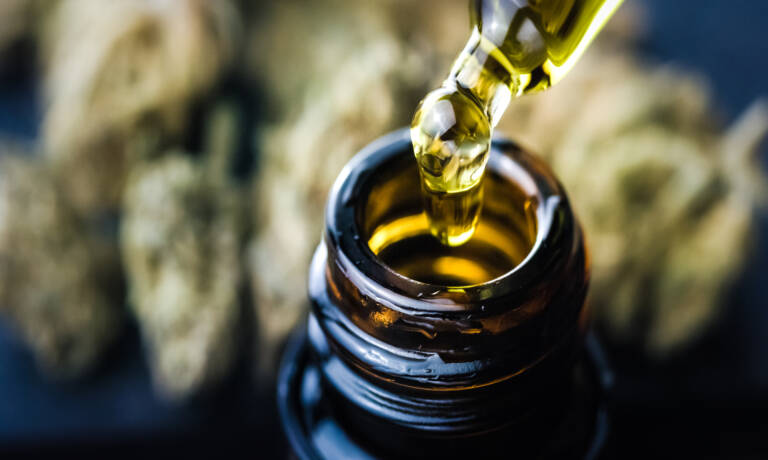
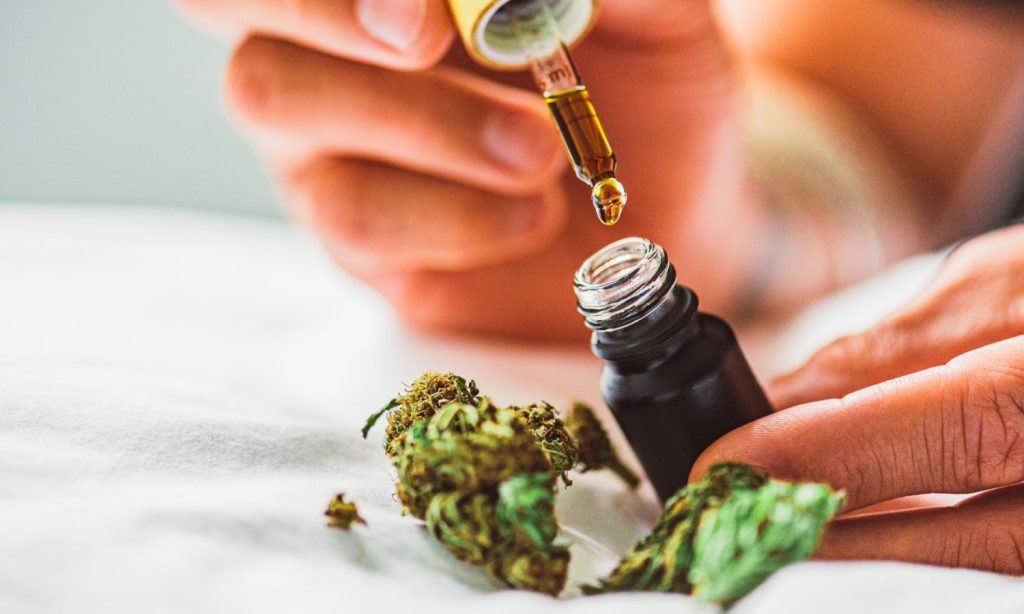
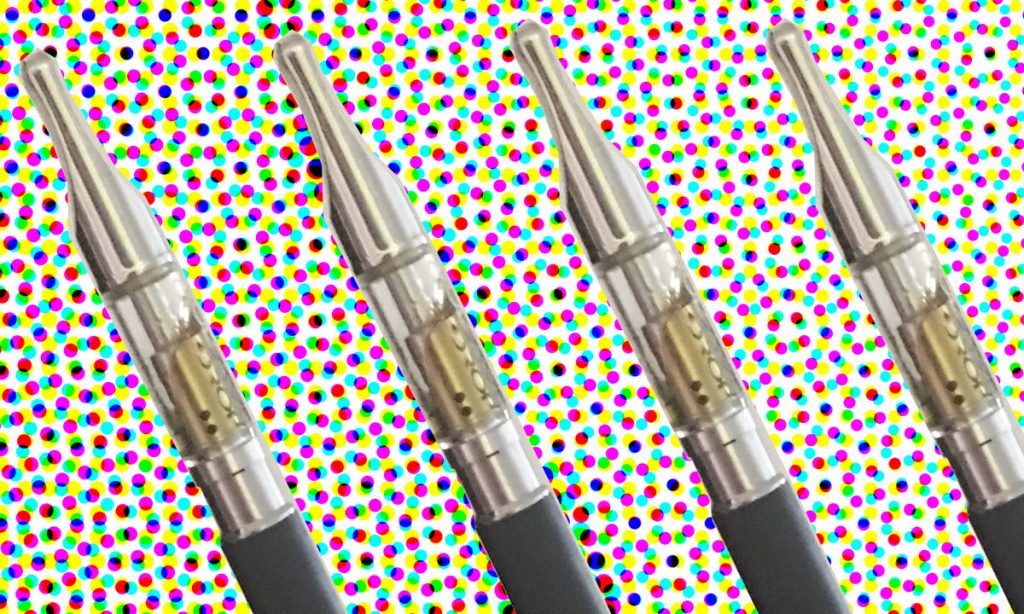
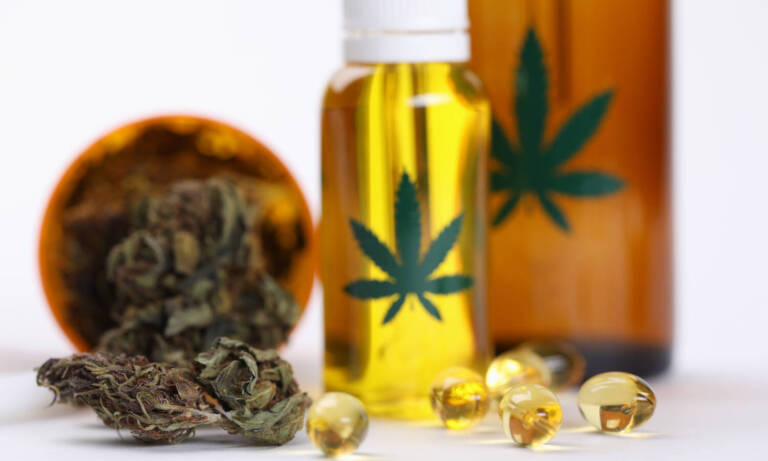
Sativyl contains a 27 mg/ml concentration of THC (tetrahydrocannabinol) and 25 mg/ml of CBD. It’s sold by the flask and contains 10 ml and 250 mg of concentration.
Cannabis-based drug Sativyl has been approved as a treatment for cancer-related pain in Peru.
Sativyl, produced by Verdemed, was created to be as similar as possible to Sativex, produced by Jazz Pharmaceuticals PLC’s GW Pharmaceuticals and is recommended for the relief of cancer symptoms and spasticity in patients with multiple sclerosis.
Photo by fstop123/Getty Images
Among other uses, Sativyl is indicated to relieve strong pain. The medication is considered an efficient, non-addictive substitute for opioids, like morphine or oxycodone.
In the United States, opioids are considered a public health issue. The CDC recorded a 28.5% increase in deaths caused by opioid overdoses between April 2020 and April 2021. For the first time ever, the country surpassed the mark of 100,000 drug-related deaths over a year-long period.
An Alternative To Classic Antiemetics
Sativyl also works to control nausea caused by chemotherapy treatment. The antiemetic performance of the medication improves the patient’s appetite and, consequently, their physical condition to face the therapy.
Sativyl contains a 27 mg/ml concentration of THC (tetrahydrocannabinol) and 25 mg/ml of CBD. It’s sold by the flask and contains 10 ml and 250 mg of concentration.
The medicine itself is produced in Canada by the pharmaceutical company Verdemed, in partnership with the Toronto Institute of Pharmaceutical Technology.
Photo by Rocky89/Getty Images
“In January of next year, we’ll have Sativyl on the Peruvian market,” says José Bacellar, the company’s CEO. “We believe it will cost a third of Mevatyl [the Brazilian version of Sativex], coming up to a mere R$500 [$89.60].”
The Peruvian health license was approved less than one month after Verdemed received the Brazilian Sanitary Agency (ANVISA) approval to distribute full spectrum 50 mg/ml CBD, a medicine developed in partnership with the American-Colombian company Clever Leaves. Documentation for Sativylhas already been submitted to ANVISA (the Brazilian equivalent of the FDA) for analysis.
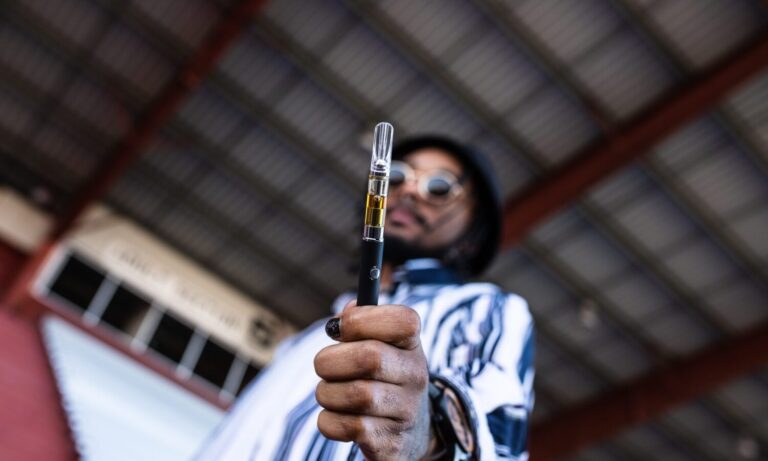
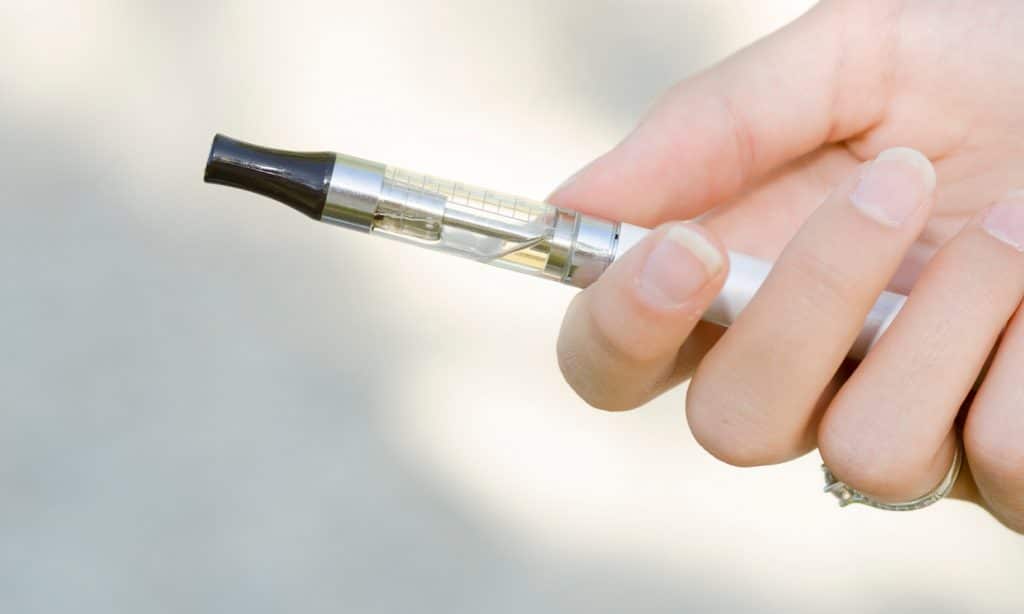
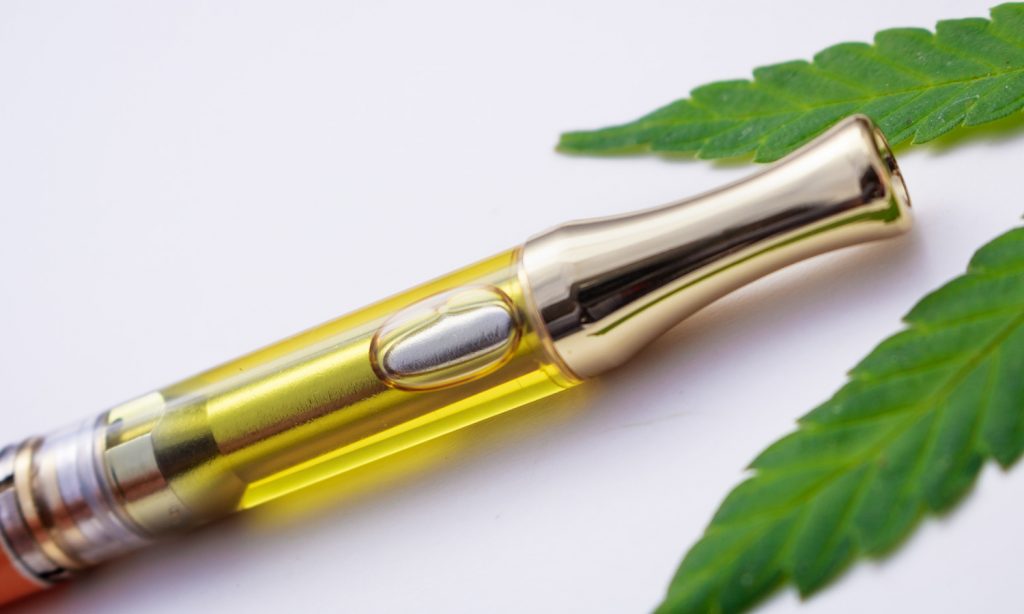
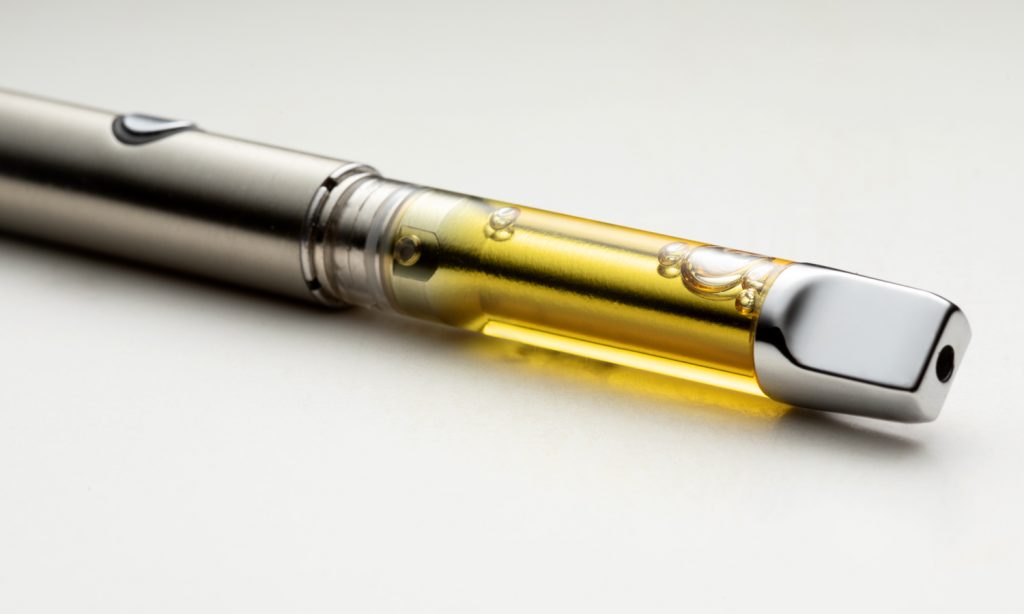
Vape pens are some of the most popular ways of consuming marijuana, but users should know the difference between consuming vaporized cannabis vs flower.
There are many ways to consume marijuana but none of them are as easy and convenient as a vape pen. These devices can be purchased in dispensaries and come in different models, with some being disposable and others just requiring the switch of a cartridge and a quick charge. They have understandably become some of the most popular items in the cannabis industry, with a 50% increase in sales between 2017 and 2018.
While vape pens are not the most extreme form of consuming cannabis, they’re a bit of a departure if you’re used to smoking flower. Here are some of the most noticeable pros and cons of these devices.
Vape pens are some of the most portable and discreet ways of consuming cannabis. Once you have one you won’t have to worry about where you store your pen or who’s looking at you while you vape. These devices generally release a much more muted smell when compared to joints and pipes, and are also hard to distinguish from e-cigarettes.
Quick Consumption
Photo courtesy of Mary Schumacher; graphic by TFT
One of the reasons why vape pens are so convenient is because you don’t need anything else (aside from the cannabis extract) to get high. Your plans won’t be derailed by a missing lighter and you won’t have to waste minutes in rolling up a joint or grinding weed and then packing it into a bowl.
Another positive aspect about vape pens is the fact that they’re much easier to manage than bongs and dabs. While either of those methods might get you too high from a single hit, this only occurs with vape pens if you take several hits in one go. Unless you’re a beginner or have little experience with vaporized cannabis, one hit of a vape pen won’t lead to an overdose.
Flavors
Photo by Chimpinski/Getty Images
This might be a pro or a con depending on your perspective, but flavors are definitely one of the things that make vape pens more intriguing for a wide variety of users. Flavors make the smoke and the cannabis taste more palatable, especially if you’re someone who’s new to the drug and doesn’t enjoy the aromatic and weedy flavor and smell that occurs when consuming other forms of weed. Vape juices come in every flavor, whether that’s fruits, drinks, mint, and more.
Switching from smoking marijuana flower to vaping requires some adaptation since the latter tends to be a lot stronger. A 2018 study conducted by Johns Hopkins Medicine researchers analyzed two groups of subjects: one of them smoked concentrate and the other smoked flower. Both groups consumed the same dosage. The study found that subjects who smoked concentrate experienced more short term anxiety, paranoia, memory loss and distraction.
Need Charging
Photo by Flickr user Ecig Click
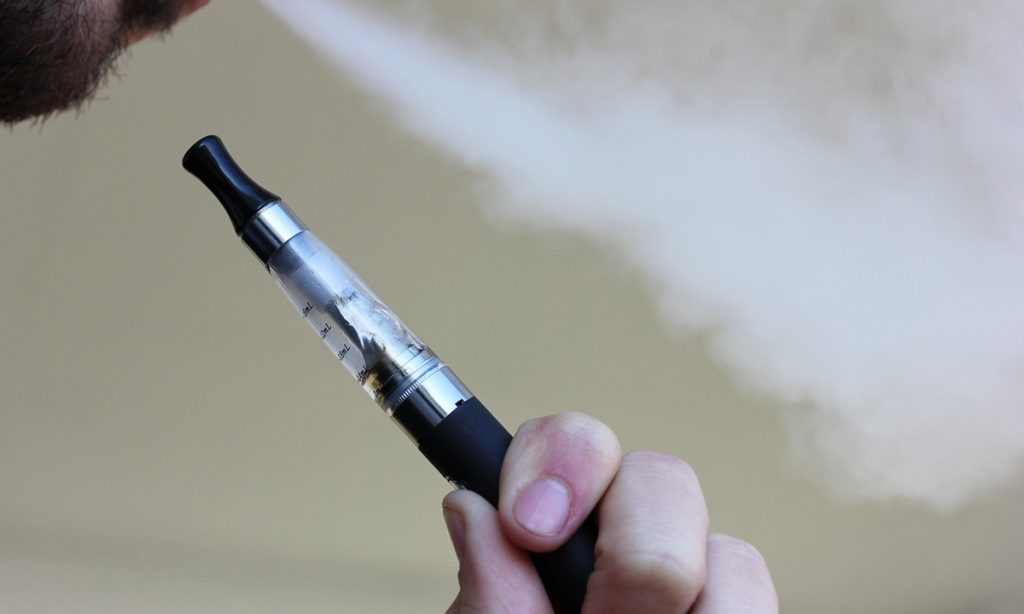
Unlike flower, bongs and dabs, vape pens must be charged. This shouldn’t be much of a hassle if you regularly charge your devices but it could lead to some annoyance if you lose the charger or if you forget and had planned to smoke on the go.
Vape pens, depending on their price and level of complexity, demand some care. While disposable pens can be thrown away after they run out of juice, more expensive products demand regular cleanings, protection from extreme weather, a protective case and regular charge.
Feeling super high while surrounded by family is not a good time. Here’s how you can navigate this potentially awkward situation.
Thanksgiving can be an emotional time of year, filled with food, booze, and close friends and family. While you may have the world’s best relationship with your loved ones, once you’re past a certain age, finding yourself drunk and in a food coma while in your childhood bedroom doesn’t always equal fun.
Some weed might be just what you need in order to keep things under control. But if you’re smoking and hiding it from your relatives, getting too high might be a stressful and bad idea.
While every family is different, no one enjoys being super high while having relatives ask them about their job prospects or the people they’re dating. Here are some tips that can help you navigate this difficult moment.
It may seem basic, but water is very important when it comes to managing a really intense high, especially if you’re the kind of person who gets cottonmouth and might find themselves making weird sounds with their mouth in the middle of dinner. Drink something cold and preferably non-alcoholic to keep you from getting more intoxicated. And make sure to hold on to that drink. Take periodic sips and get refills, which will help you feel grounded and provide you with a sense of time. Snacking on something (not edibles!) might also help.
Don’t panic. It’s just a bad high and it’s amplified by your own head. Unless you reek of marijuana, people won’t likely notice. Go for a walk before dinner or hang out in your bathroom for a little bit to help you chill out. A walk is particularly effective since it provides you with a change of scenery and some fresh air.
Take a shower
Photo by 955169 via Pixabay
If you can make a quick escape and take a shower, do it. Showers can help you feel more relaxed and provide a safe space for introspection and some much-needed perspective. As you shower, remember to take a few deep breaths. Afterward, put on some fresh and comfy clothes. You might still be high, but you’ll give yourself some space to calm down.
You know that what you really want to be doing is eating, so go off. Eat to your heart’s content. Thanksgiving is a nice cover for your munchies. While eating is completely a weed activity, it’s Thanksgiving, the one day where people won’t question you if you get seconds or thirds. After every couple of bites, tune in to what people are saying and give out compliments to the chef. Just, space them out a little bit.
Most people won’t notice a thing if you’re careful, so try to keep your cool and remind yourself that no one knows the depths of your high except for yourself. If you think someone is looking at you weirdly or asking you too many questions, just chalk it up to marijuana-induced paranoia. The best thing you can do at the moment is to stay calm and to remind yourself that this is momentary. Also, to enjoy the food.
Uber has said its new cannabis delivery service will attract more Canadian adults to turn to safe, legal weed, which will ultimately help the country wrest sales away from the illicit market.
Uber is getting into the cannabis industry in Canada!
The delivery and takeout division of Uber has teamed up with the cannabis retailer Tokyo Smoke to deliver weed products orders via Uber Eats in Ontario, Canada, a company spokesperson confirmed to Reuters.
Photo by Kai Pilger via Unsplash
Under the new arrangement, adult consumers can order cannabis via the Uber Eats’ app and then pick it up at their closest Tokyo Smoke shop, starting today (Monday) at 9 a.m. ET.
The rideshare company that already delivers alcohol via its Uber Eats division has been contemplating joining the booming marijuana space for a while. In April, the company’s CEO Dara Khosrowshahi revealed that Uber is open to including cannabis deliveries in the U.S. once the plant is legal on the federal level.
“When the road is clear for cannabis, when federal laws come into play, we’re absolutely going to take a look at it,” Khosrowshahi said at the time.
It’s been over three years since Canada legally embraced adult-use cannabis sales in an effort to deal with the illicit and unsafe marijuana market. Nevertheless, the country is still having trouble with illegal producers that are somehow still managing to snag a significant share of total annual sales.
Uber has said its new cannabis delivery service with Tokyo Smoke will attract more Canadian adults to turn to safe, legal weed, which will ultimately help the country wrest sales away from the illicit market that now accounts for more than 40% of all non-medical marijuana sales across Canada, reported Reuters.
What’s Next?
Will Uber reach other provinces with this new cannabis delivery service? So far, there is no clear confirmation from the company.
“We will continue to watch regulations and opportunities closely market by market. And as local and federal laws evolve, we will explore opportunities with merchants who operate in other regions,” the Uber spokesperson told Reuters.
Uber Expressed Interest In The Cannabis Space Last Year
This is not the first time Uber has explored the advantages and opportunities in the cannabis space. Last year, Uber hired cannabis advertiser Fyllo to help it target cannabis consumers when marketing its food delivery services, Bloomberg reported.
“A cannabis consumer is younger than the normal consumer, has more disposable income; they are busier than most, they are working all the time, exercising all the time, going on adventures all the time,” Travis Freeman, Uber’s global head of media, told the outlet at the time.
Reportedly, Uber revealed that cannabis consumers are more prone to finish watching video ads than average consumers.
With much to be thankful for, industry experts appeared optimistic about continued progress through 2021 and into the new year.
Cannabis operators tell Benzinga that there is much to be thankful for as the United States heads into Thanksgiving this year.
Dozens of sources cited a range of subjects they’re thankful for, including the eroding stigma against the plant, growing sectors and state marketplaces and improving tech. Some brought up subjects that included the industry’s growth, advancing legislation and their community.
Photo by colnihko/Getty Images
Thankful For Industry Growth, Shrinking Stigmas
Matt Hawkins, managing partner of Entourage Effect Capital and Interim CEO of Harborside Inc., said he is thankful to see the industry grow into a sophisticated, professional space that he’s happy to help scale.
U.S. sales are slated to reach $26 billion in 2021, according to Marijuana Business Daily.
“This is a consequential period of growth, especially considering how private investment firms like Entourage can access attractive deals before institutional investors -which is virtually unheard of in mainstream sectors,” said Hawkins.
With the COVID-19 pandemic ongoing, several noted that legislative and consumer growth is that much more impressive. They credit the public’s increased cannabis use as a critical component.
“As COVID continues to be a challenge, more and more people are finding cannabis to be a safe and effective option to treat all the anxiety and depression that has come with battling a pandemic,” said Green Chip Stocks founder Jeff Siegel.
Joe Caltabiano, CEO of Choice Consolidation Corp., is also thankful to see the stigma erode as plant access increases.
“Perhaps even better, we are seeing fewer people prosecuted for the use of cannabis, and we are making real progress toward setting right some of the many wrongs that occurred during the War on Drugs,” added Caltabiano.
Thankful For Making An Impact Across Communities
Various educators and operators noted their thanks for being part of community outreach and educational endeavors.
Nick Kovacevich, CEO of Greenlane Holdings Inc., said, “I am thankful to be working in an industry that is doing good for society.” He noted a range of issues, including job creation, tax generation, patient access, crime reduction and addressing some wrongs stemming from the war on drugs.
A web page for KushCo, a Greenlane company Kovacevich founded, notes that it participates in efforts geared towards criminal justice reform, the pandemic, paid day off for Election Day and two additional employee days off to take on philanthropic endeavors.
Photo by SEASTOCK/Getty Images
Dr. Alicia Reid, faculty lead and chair of the chemistry and environmental sciences department at Medgar Evers College in New York City, is proud to see her school offer its first introductory cannabis class this past August.
Reid said that the cannabis education initiative at Medgar Evers, a predominantly Black student population, is “grateful for the opportunity to educate and intercede on behalf of a population that has been largely sidelined from meaningful participation in this emerging industry.”
The class aims to be the first of several courses the college introduces over time.
Thankful For Legislative Progress
Numerous cannabis operators cited legislative movements on the state level and potential activity on the federal level as reasons why they’re thankful this year.
Cannabis legislation was introduced in 34 states in 2021, passing in 15 as of November 19.
Kameron Norwood, co-founder of Half Day CBD, is thankful for the SAFE Banking Act passing the House in September 2021.
“This is a huge step forward in removing barriers to bringing the cannabis industry out of the shadows, protecting business owners and consumers and generally legitimizing the industry,” said Norwood, adding he hopes to see the momentum continue for legislation and stigma erosion.
Photo by MasterKeySystem/Getty Images
Morgan Paxhia, managing director for Poseidon Investment Management, said she is thankful for the people leading the legislative charge.
“We are thankful for those teams that have their eyes on the horizon and are building towards a much bigger outcome,” she said.
Thankful For Their Community
Numerous sources thanked those around them.
David Farris, VP of sales and marketing for Planet 13 Holdings Inc., thanked the Las Vegas community.
“Every year, we are moved by the generosity of our customers, sponsored vendors, and staff,” he said, adding that Planet 13 works with local nonprofits to donate food and toys to the community during the season.
Operators thanked employees that worked through the pandemic.
Todd Green, director of investor relations at Jushi Holdings Inc., said staff kept Jushi-owned Beyond and Hello locations functional and safe during the pandemic.
“They rose to the occasion time and time again, ensuring the safety and wellness of our patients and customers, fostering a supportive and positive environment, and going beyond to properly educate people on the best products that suit their needs,” Green said.
Meanwhile, Jim Higdon, co-founder of Cornbread Hemp in Kentucky, thanked the state’s organic hemp cultivators despite being one of 14 states without a legal medical cannabis market.
“Thankfully, the Kentucky agricultural climate is so favorable for growing cannabis that our farmers have been able to overcome the challenges of growing exceptional hemp flower in a state without legal marijuana,” Hidgon said.
With much to be thankful for, sources appeared optimistic about continued progress through 2021 and into the new year.
The idea that people are seeking alternatives to alcohol is demonstrated by the fact that only 60% of American adults reported drinking alcoholic beverages this year.
Ever since Colorado legalized marijuana for recreational use back in 2012, it’s been no secret that it would create a financial windfall for both cannabis businesses, along with the State itself. A decade later, multiple other states have followed in the footsteps of the Centennial State in allowing their citizens to purchase cannabis in a manner similar to alcohol or liquor.
Although the assumption was that recreational marijuana sales would start off strong, experts couldn’t have predicted demand for it would be as high as it has been. Here are a few key indicators that reveal that alcohol is no longer ruler of the vice kingdom.
Photo by BENCE BOROS via Unsplash
People Are Seeking New Alternatives to Alcohol
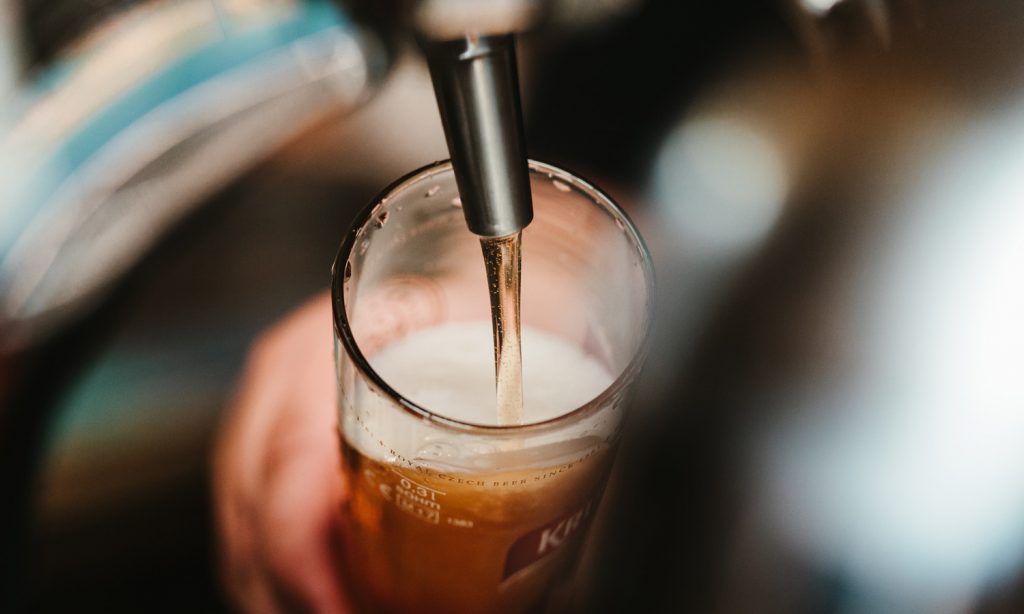
No one has been caught more off guard by the high demand for cannabis products than beer, wine and liquor companies. Sales tax revenue for alcohol has been surpassed by those of recreational marijuana. According to David Feldman, CEO of Skip Intro Advisors, a strategic consulting firm for up-and-coming cannabis brands, there are numerous reasons why tax revenue for cannabis has surpassed alcohol.
“Some states tax rates on marijuana sales are higher than that of alcohol, so this differential may partially reflect that,” he explained. “That said, it is an important milestone to see cannabis tax revenue exceed that of alcohol, as it appears more people are turning to cannabis as an alternative to more addictive products like alcohol and pain products.”
Numbers Don’t Lie
The idea that people are seeking alternatives to alcohol is demonstrated by the fact that only 60% of American adults reported drinking alcoholic beverages this year, which is down nearly 10% from a decade ago when that number was as high as 67%. Over the course of the past decade, the public perception of adult recreational cannabis use has shifted dramatically. That’s led to cannabis usage heading in the complete opposite direction of alcohol use, which is one of the main reasons it has surpassed alcohol in sales tax revenue. Research shows that roughly 22 million Americans use cannabis each month.
Further demonstrating America’s continued gravitation towards cannabis as an alternative to alcohol is that more studies predict that the rate of Americans who’ve at least tried marijuana will surpass 50% soon. Both Washington state and California are current examples of how nationwide legalization of cannabis could lead to alcohol playing second fiddle for good. California, for example, collected $369,028,000 in revenue from alcohol sales, compared to more than $1 billion in tax revenue from cannabis sales. The state of Washington happened to collectmore than $229.4 million in sales tax revenue for cannabis products than for alcoholic products during the fiscal year of 2020. That trend shows no signs of slowing down.
According to data received from the Washington State Liquor and Cannabis Bureau, sales tax revenue from cannabis products nearly tripled those of alcoholic products. While total sales tax revenue from alcohol was around $18,500,00, sales tax revenue for cannabis products totaled more than $46,503,315. The question is whether or not these sales tax figures will remain the same after the market for recreational cannabis starts to mature.
Photo by Jamie Grill/Getty Images
Will Cannabis’s Reign as King Last as Long as Alcohol?
After prohibition ended, alcohol was the substance of choice for several decades. The peak of America’s alcohol consumption occurred during the mid-to-late 1970s when more than 70% of Americans reported being drinkers. In the near century after the end of alcohol prohibition, Americans were likely overdue for a new vice to catch their attention and subsequently their wallets.
As marijuana prohibition is now in its final phases, a question that’ll boggle the minds of cannabis users for years to come is what will be the substance of choice that threatens the crown that marijuana took from alcohol.
Sometimes, the act of smoking could act as a deterrent to your spiritual and personal development and abstinence or selective abstinence can help you reach your goals faster.
Actor Nick Offerman, known best for his role as Ron Swanson on “Parks and Recreation,” recently said in an interview that he has quit cannabis and that he once used marijuana as a form of escapism. This doesn’t mean he’s against the legalization and regulation of cannabis, however from a personal position he will not be smoking. In part, he is quitting because of his wife (actress Megan Mullally), but as he mentioned, the other side of the coin is that he’s “happy enough”.
“When I depended on marijuana for escapism, I couldn’t get the good stuff and now that I can afford the most incredible pot, I don’t want it,” he toldThe Independent.
Megan Mullally and Nick Offerman, Photo by Amy Sussman/Getty Images
Irrespective of Offerman’s decision to quit smoking, his decision to quit inspired me to write this article. I’m not saying that everyone who smokes cannabis are doing it to escape their reality, on the contrary. If you have ever read my work you’d know I’m far more nuanced than that.
Nonetheless, I do believe that there are some people who are smoking cannabis for the wrong reasons and thus today we’ll be addressing a few of them.
To Fit In
This is most probably not a problem for cannabis smokers who have been around the block a few times, however, some people who are just starting to smoke might be doing so because they want to “fit in” with the crowd.
This is a terrible reason to smoke weed. Cannabis should always be a personal choice and if you don’t want to smoke it because you feel compelled to, and are only doing it so you’re not the odd ball out, either you need to find new friends who accepts you for you, or you need to examine your need for acceptance.
The fact of the matter is that whenever you do something because “others” are doing it, it reflects on the lack of personal identity and integrity. Never let others be your motivation for smoking.
Escapism
There’s a difference between smoking to gain perspective and smoking to avoid dealing with real shit in your life. The fact of the matter is that cannabis can be used as a form of escapism. This might not necessarily be a bad thing when the idea of “escaping” is temporary. However, when it becomes the norm, you might need to reconsider your cannabis consumption.
While cannabis does have the ability to make the intolerable more tolerable, simply tolerating sh***y situations in your life will never give you the space to solve them. On the contrary, you’ll be making a negative feedback loop in where you’ll be smoking to escape, prolonging the suffering, and then smoking to escape prolonged suffering.
Photo by Matt Moloney via Unsplash
Sometimes we do need to escape our problems for a few moments, especially if the problem at hand is clouding your ability to think. In this case, you can use cannabis to “diffuse” a situation long enough, to remove your stress from the equation and to reassess the situation.
Once you have gained some clarity, don’t use cannabis as a means of prolonging suffering but take action swiftly to resolve whatever it may be that is plaguing you.
To Be Cool
Smoking weed is neither cool, or uncool — it’s simply an act we do. When you’re smoking to be cool, it means once again that you’re doing it for others. “Cool” is a state of mind as opposed to a particular action you do.
Sure, you can do things that “look cool” or “feel cool”, but cool comes from a deep sense of self-knowledge and a whole bag of “not-giving-a-shit” and a dash of personality. Therefore, if you are using a substance to achieve this state of being, you’re not really that cool.
Once more, this is more of an issue for people who are younger and may not have established their identity on firm ground, seeking to find ways to modify who they think they are. If this is you, being quiet and meditating a bit might provide you with far more insight than smoking weed.
Boredom
Smoking weed can make doing nothing seem amazing! Just lying back and smoking a doobie can take your mind off the mundane and the boring. Smoking weed in this case is not recommended. Sometimes, you want to sit with the boredom, you want to feel the existential dread bubble up inside in order to motivate you to do “something”.
Photo by RODNAE Productions from Pexels
If you have nothing better to do than to smoke weed, you are essentially numbing yourself to the other things in life. Smoking weed in this case can act as a detrimental factor in your personal development. If you’ve got nothing better to do, I highly recommend finding something to do — something bigger than yourself and something you can work on overtime.
Cannabis provides instant gratification, but that gratification when you have no purpose is short-lived. It’s far better to use cannabis as a tool as opposed to a vehicle of “escape”.
Bottom Line
Smoking cannabis is neither good nor bad, it simply is something you do. However, your motivations can mean that cannabis consumption could be “bad for you” in this particular moment. This doesn’t mean that it will always be “bad”.
Rather, this article is about examining the motivations behind why you smoke cannabis. Sometimes, the act of smoking could act as a deterrent to your spiritual and personal development and abstinence or selective abstinence can help you reach your goals faster.
For example, if you are smoking because you have nothing better to do, rather smoke as a reward for doing something you didn’t like to do. Use the relief that cannabis provides you to your advantage. Similarly, if you need to smoke to be cool, simply find a group of people who think you’re cool without anything else. This way, you know you’ve got legitimate people in your life.
Of course, everything I write here is purely subjective. There is no absolute in this story. Only you know your motivations and, if at the very least, this article made you question your reasons for smoking weed, I did my job.
This article was created in partnership with Cannabis.net
Just because Joe Biden’s administration has the power to deschedule, it does not mean that the administration will deschedule.
Last month, Senators Elizabeth Warren and Cory Booker requested that the U.S. Attorney General, Merrick Garland, initiate proceedings under the Controlled Substances Act (CSA) to deschedule cannabis. This would, as the letter to Garland says, “decriminalize” marijuana.
The CSA’s Power
The letter outlines the hypocrisy of marijuana’s current classification as a Schedule I substance, which is reserved for the most dangerous drugs:
The CSA imposes criminal penalties for the use and distribution of certain drugs that vary in severity according to each drug’s “schedule.” A Schedule I drug is classified as having “no currently accepted medical use” and “a high potential for abuse.” Currently, the CSA classifies cannabis as a Schedule I substance, alongside substances like heroin and ecstasy. In contrast, arguably more harmful substances such as cocaine and OxyContin are classified as Schedule II substances, which are less stringently regulated. (Citations omitted).
Photo by OlegMalyshev/Getty Images
The portion of the CSA that empowers the Attorney General (AG) to schedule substances is codified as Title 21 of the U.S. Code, Section 811 (21 USC 811). Under that statute, the “Attorney General may by rule, remove any drug or other substance from the schedules if he finds that the drug or other substance does not meet the requirements for inclusion in any schedule.” 21 USC 811(a)(2).
Before initiating rulemaking to remove a drug from a schedule, the Department of Health and Human Services (HHS) must evaluate the substance. If the HHS Secretary recommends descheduling a drug, that decision is binding on the Attorney General. However, if the HHS Secretary recommends that the substance be rescheduled or remain in the current schedule, that is not binding on the AG. For the purpose of the CSA, the Attorney General delegates its power to the DEA and the HHS delegates its power to the Food and Drug Administration (FDA).
Where Does Joe Biden Stand?
Last year, when President Joe Biden was appointing members to his cabinet, we profiled eventual Attorney General Merrick Garland and eventual HHS Secretary Xavier Becerra. Of the two Cabinet members, Becerra has the better cannabis credentials, having served as the Attorney General for the state of California. When Jeff Sessions repealed the Cole Memo in January 2018, Xavier Becerra criticized the move and vowed to uphold California state law with regards to marijuana. Garland’s position on cannabis is less clear but as Attorney General, he has not made any effort to crack down on cannabis since he began leading the Department of Justice.
The Biden Administration does have the power to deschedule cannabis through various agencies that serve under the executive branch, namely the Department of Justice and HHS. However, just because Joe Biden’s administration has the power to deschedule, it does not mean that the administration will deschedule. After all, Joe Biden has not shown support for cannabis legalization, after firing staffers for using marijuana early in his tenure. More recently, the Biden administration has maintained harmful practices that penalize individuals who decide to use marijuana.
Photo by Samuel Corum/Getty Images
While Biden has not been pro-cannabis, it is not clear whether Biden would stop Garland and Becerra from descheduling cannabis, as requested in the letter from Warren and Booker. Biden has the power to remove both Becerra and Garland from office, the question is whether or not an attempt to deschedule would count as a fileable offense in Biden’s eyes.
It does not appear that Garland or Beccera are interested in descheduling as there have not been any public efforts to do so since the two received Booker and Warren’s letter. Additionally, simply descheduling cannabis at the federal level is an imperfect way to legalize cannabis. If cannabis was descheduled tomorrow, there would be some major benefits. For one, IRC 280E would no longer apply to cannabis businesses, allowing businesses to take usual deductions as it only impacts Schedule I and II substances. In addition, criminal penalties associated with cannabis would no longer apply on a federal level if cannabis is decriminalized.
Bottom Line
However, decriminalization would not establish a legal, federal market. It could lead to a race to the bottom with states relaxing environmental and pesticide regulations to attract businesses to their local market. Descheduling also does not, on its own, address many of the major concerns around legalization such as the need for social equity and consumer protection. To establish a tightly regulated national cannabis market, Congress needs to pass comprehensive cannabis legislation. Getting a legalization bill through the House is realistic, but due to the filibuster, getting a bill through the Senate is a long shot. At the very least, the letter from Warren and Booker should motivate their colleagues to prioritize federal cannabis reform. If not, the future of cannabis could be shaped by executive agencies rather than the legislature.
Daniel Shortt is a corporate and regulatory attorney based in Seattle, Washington who works extensively with entrepreneurs in the cannabis industry. You can contact him at info@gl-lg.com or (206) 430-1336.
Most of us are aware of the health risks of smoking, but a new study suggests this dangerous symptom of heart disease is common in smokers.
Smoking has long been associated with a variety of health issues. While this didn’t use to be the case, nowadays, teens and adults are well aware of the negative side effects of the habit, which has been linked with diseases like cancer, diabetes, lung diseases, and more.
A new study shows evidence that strokes might be one of the first signs of heart disease to present in smokers. Researchers also found that cardiovascular disease as the leading adverse health effect amongst smokers.
Photo by Alessandro Zambon via Unsplash
The study, published in the Journal of the American Heart Association, was conducted by researchers who wanted to raise awareness of the risk of cardiovascular disease when smoking is involved.
“There is often more awareness and concern about cancer as a result of smoking than heart disease, so we wanted to better define the risks of smoking-related to different types of cardiovascular disease and, most importantly, to cardiovascular death,” said lead author of the study, Sadiya S. Kahn, MD.
The research included data from over 106,165 adults in the U.S., between the ages of 29 and 79, free of cardiovascular disease at the start of the study. Participants were organized by smoking status and sex, with researchers finding a variety of results that were surprising in how strong the relationship is between smoking and cardiovascular disease.
Some findings include middle-aged women who smoke being twice more likely than non-smokers to have a fatal cardiovascular disease event. In the case of men, smokers were 10% more likely to have long term risk for cardiovascular disease when compared to non-smokers. There was also evidence that suggests that younger smokers are more likely to develop cardiovascular disease than non-smokers, with risks increasing the longer people smoked.
There’s a lot of evidence out there that indicates that smoking is bad for your health, especially if done over long periods of time. While smoking is addictive and difficult to quit, more and more evidence suggests that the sooner it’s done, the better outcomes your body will have, from lung health to heart health.
It’s almost certain that only the existing large medical cannabis license-holders will be able to commence sales by mid-February, giving them a head-start over new industry entrants.
At its meeting on November 10, 2021, the New Jersey Cannabis Regulatory Commission announced that it will start accepting applications for cultivation, manufacturing, and testing lab licenses on December 15, 2021, and applications for retail licenses on March 15, 2022.
The applications will be accepted and approved on a rolling basis (pun always intended), according to the announcement, although certain applications may be able to “cut the line.” Conditional applications (in which applicants check only certain boxes, and then are given 120 days after approval to find a suitable property and obtain the approval of municipal authorities) will be prioritized over annual license applications. In addition, priority will be given in the following order: social equity businesses, diversely-owned businesses, impact-zone businesses, bonus-point applicants, and then the remainder of applicants. To sort this out, it may help to think of a conditional diversely-owned social equity applicant as gas, and a standard annual-license applicant as the schwaggiest of schwag!
Photography by Steve Kelley aka mudpig/Getty Images
In terms of the total number of licenses, the only stated limitation on the state level is that no greater than 37 new cultivation licenses will be awarded in the first two years. It follows that the true limit on how many licenses of each type will be awarded will be based off the caps that each municipality sets for each type of license.
A wrinkle with municipalities is that 70% of them opted out of permitting cannabis businesses. The deadline to opt out (or be opted in by default for 5 years) came days after the CRC released temporary, partial regulations. Municipalities that opted in essentially had to put on a blindfold and smoke a state-rolled joint without knowing what the regulations could be laced with!
The issue now is that a number of these municipalities will have to opt back in and then create and approve the rules that will govern cannabis businesses within their borders before they can approve any businesses. This could further incentivize applicants to pursue conditional licenses that enable applicants to obtain municipal sign-off after receiving conditional state approval.
In another important development, the CRC announced that it will issue a final list of the impact zones in the state. This is particularly significant for applicants that are not social equity businesses or diversely-owned businesses, as it is the most effective way for such applicants to “cut the line” over standard annual-license applications.
The New Jersey legalization law required sales of adult-use cannabis to start by mid-February 2022. But it is almost certain that only the existing large medical cannabis license-holders will be able to commence sales by that date, giving them a head-start over new industry entrants. Considering the overall frequency of lawsuits arising from the application process in multiple states, and the complicated nature of this prioritization process, new applicants should also unfortunately expect, and prepare for, litigation that could delay the award of licenses.