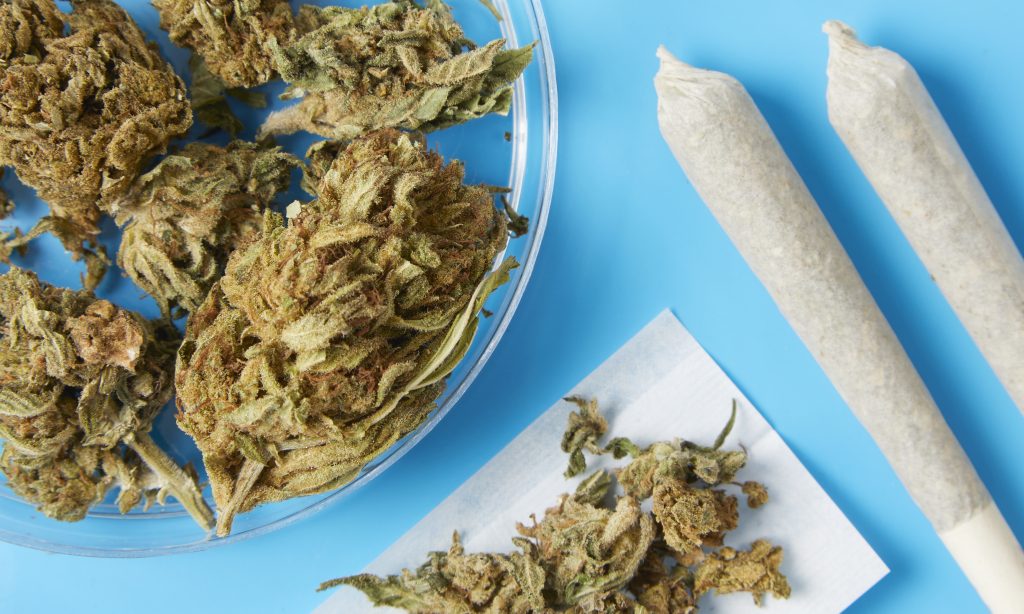
Panama’s National Legislative Assembly approved a bill legalizing medical cannabis in a unanimous vote of 40 to 0.
Thus, the country will become the first in Central America to regulate the medicinal use of cannabis. However, the new regulations must be approved by Panamanian President Laurentino Cortizo.
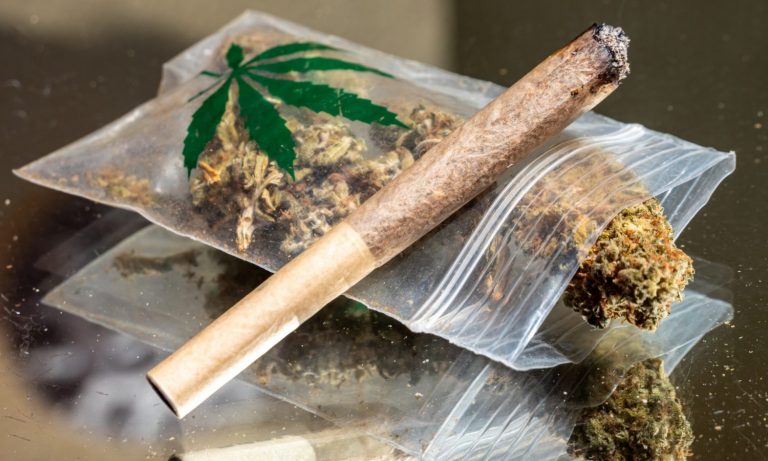
Photo by Fabrice Parchet via Unsplash
In this regard, activist Carlos Ossa warned: “Until the new law is approved we will continue in the same situation: forced to commit illegalities out of necessity and we will continue to be exposed to the illegal market where there are no guarantees.”
Details of the law
As reported by Ciudad Cannabis, the new legislation creates a regulatory framework that allows “monitored and controlled” access to medical cannabis and its derivatives.
In addition, the law creates the National Program for the Study of the Medicinal Use of Cannabis and its Derivativesto promote research and develop educational campaigns addressed to the population.
The new regulation establishes that only seven licenses for the manufacture of cannabis derivatives will be granted.
According to France 24, licensed companies will be able to export seeds, plants and derivatives. To do so, they must submit an export plan and register buyers with Panama’s regulatory authorities.
Meanwhile, the law establishes that it is prohibited to sell cannabis from home or outside authorized establishments and that advertising pertaining to marijuana may only appear in scientific journals, not the media or social networks.
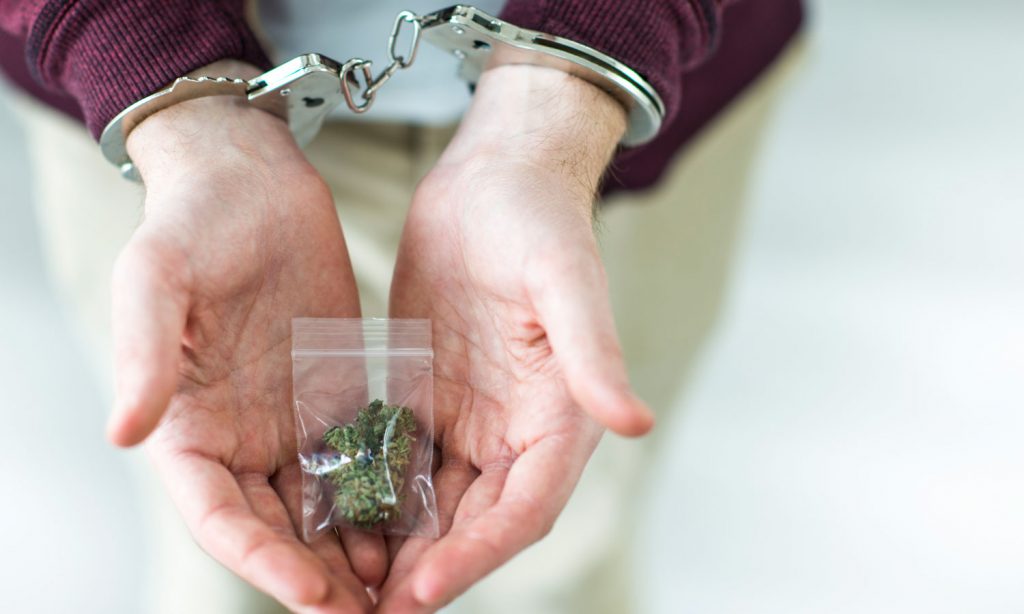
Growing marijuana could result in a penalty of 10 to 15 years in prison.
“This is a great achievement, it is not a perfect law nor perhaps the ideal one, but it is definitely a first step that is fair and necessary,” Ossa concluded.
The only way the pro-pot public was given to get their thoughts in front of Senate lawmakers was by sending an email.
Cannabis advocates have been waiting for years, and in some cases decades, for federal lawmakers to get serious about legalizing marijuana. Well, it finally happened earlier this year.
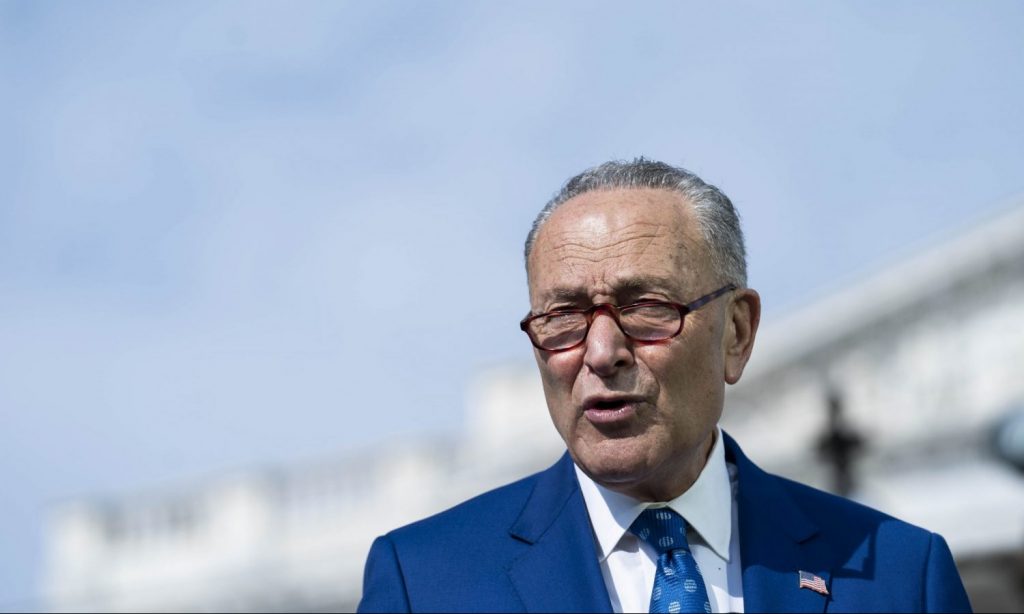
Senate Majority Leader Chuck Schumer and his band of liberal, democratic cronies introduced a proposal in July designed to legalize the cannabis plant nationwide for adult use. The measure wasn’t the final draft, though. Schumer published the details of his cannabis concept in hopes of receiving loads of input from high America so he could tweak it, make it better and finally introduce a pro-pot plan that would make the cannabis community proud.
The deadline for public comment was September 1, 2021. The big question is: Did you give Schumer your two cents or do nothing at all?
Photo by Kevin Dietsch / Getty Images
The average cannabis advocate we talked to about Schumer’s proposal was completely and utterly oblivious to the notice giving them three months to voice their concerns. “This is the first I’m hearing of it,” 52-year-old Marleen from Cleveland, Ohio, told The Fresh Toast. “I haven’t even seen the bill.”
Others were aware of the public comment process. They just didn’t know how to go about submitting their opinions. “I read several articles about Schumer’s bill, even perused the document online, but nobody really ever explained how we should go about sharing our thoughts,” said 32-year-old Mark from Atlanta, Georgia. “This shouldn’t have been that difficult.”
The logistical ins and outs of getting public comments to Schumer and members of the U.S. Senate weren’t at all cut and dry. Although nearly every news source published a piece about the proposal, examining the potential for nationwide cannabis reform in 2021, very few took the time to explain to the general public how their voice could be heard. Schumer and his crew of cannabis crusaders didn’t make it any easier. There was no website where the public could plug in their concerns in a manner that was convenient.
No, it couldn’t be that simple.
The only way the pro-pot public was given to get their thoughts in front of Senate lawmakers was by sending an email to: Cannabis_Reform@finance.senate.gov.
Photo by Sarah Silbiger/Getty Images
But for diehard cannabis advocates — those who live and breathe the issue every day — the inconvenience factor shouldn’t be an excuse for inaction. Those who have time to leave hateful comments on social media every time they are presented with the latest news or opposing opinions certainly have time to dig up an email address and write a short letter in support of the cause. But then again, maybe we shouldn’t expect too much from headline readers and wishful thinkers.
Fortunately, national cannabis advocacy groups dug in to deliver comments to the Senate for those people.
“Over the last six weeks, we solicited feedback from thousands of marijuana policy reform supporters from every state in the union,” NORML said in a letter addressed to Senators Schumer, Booker, and Wyden.
So what happens now?
Well, Senate Democrats will review the public comments and do their best to address those concerns in their final bill. We know that Schumer has also spent the past few months discussing the cannabis issue with colleagues in an effort to drum up support for the final draft once it is introduced.
The last we heard; however, Schumer didn’t have the votes to take nationwide marijuana legalization all the way. He’s faced with fierce opposition from Republicans — namely Senate Minority Leader Mitch McConnell — and a fair share of Democrats still remain on the fence about whether cannabis reform is suitable for the country. Therefore, we shouldn’t expect to see Schumer’s cannabis measure landing on the desk of President Biden anytime soon.
Cannabis businesses can only thrive when workers stay committed to the growth of the company. Here’s how to ensure that happens.
At least 3 in 10 new employees resign within the first three months of being hired by cannabis-related businesses. Umm, say what? Why are there so many open cannabis jobs in the hottest industry in America?
These businesses are forced to recruit new staff almost every month due to the exit of these individuals.
Photo by AYEHAB/Getty Images
Recruitment of staff in cannabis-based companies
There are many employment opportunities in the cannabis industry, they include sales and marketing officers, budtenders, cultivation site workers, lab attendants, cannabis specialists/consultants, etc.
Workers are hired based on their degrees, level of experience, and readiness to learn. Once they have been hired, the company proceeds to train them to be the best they can be in their specified units.
Why are new cannabis employees resigning?
The cannabis industry has become populated with companies out to compete with each other for the best workforce. Most of these workers are leaving because they have been offered better packages by competitors. These competitors see no reason to train new workers when they can offer industry-trained and experienced workers in other companies better packages. This logic is being applied by various companies in the cannabis industry, workers are more or less being snatched from competitors.
Another factor that contributes to low worker retention is poor management. Workers ought to be respected and given creative freedom in whatever unit they belong to, but this is not the case. Due to the always available stream of workers ready to fill up junior positions, companies tend not to hold their workers in high regard.
An employee leaving creates a vacuum among the team, which can limit the growth of the business in various ways. Business owners are frustrated by the recent events as more resources are wasted in employing new workers again and again. Some companies have tried offering better benefits to workers, but this has still not stopped 1 in 3 workers from leaving at least two months after recruitment.
Photo by Heath Korvola / Getty Images
Companies have to grab the bull by the horns by approving sustainable employee retention policies. These policies will prevent employees from leaving unless the reasons are valid enough. In addition to these policies, company management must begin to consider ways to improve the personal growth of each employee.
Here are some strategies that could be implemented to improve a company’s work environment as well as reduce the rate at which employees leave.
Hold workshop events for career development
It is not enough that you train workers immediately when they are employed. You have to help them hone their skills. Holding workshops on career development helps boost your worker’s morale and it helps them set a career plan for themselves. Workshop tutors must ensure they let workers know how their career path affects their professional growth as well as the company goals.
With these classes held at least once a month, workers can see the bigger picture and understand just how valuable they are to the company’s mission.
Benefits and rewards
Cannabis companies rake in revenue worth (at least) thousands of dollars every quarter. Without workers’ high performance, the company would not run perfectly or realize much profit. In months of high profits, remember to reward hard-working members of your team, this will further motivate them to put in their best.
Each worker must also have benefits attached to their roles in the company. Basic benefits packages could include health insurance, rent allowance, and transport allowance.
Workers should also be promoted and their salaries must be increased at the right time. This is a better option than recruiting and training a new employee.
Provide new challenges
Workers get bored of doing the same task each day. Although repetition of tasks helps workers become experts, most times it makes the job lose its thrill. Workers become too relaxed and they consider seeking challenges in other companies.
Provide a variety of tasks for workers to complete in a set time frame. It could be learning new skills or working in other units, this would make workers excited to come into work each day.
Photo by Add Weed via Unsplash
These motivational challenges must revolve around each worker’s skills and interests.
Also, consider the perks of allowing workers to work from home or schedule some activities for the team to complete outside the office. It could be in the form of charity events or community service.
Improve communication
All healthy relationships — formal or informal — are based on good communication between all team members.
Communicating with workers allows you to think of more ways you could improve your company’s culture and work ethic.
Communication is also about giving workers feedback on their performance and inquiring from them about the challenges bugging them in the workplace.
Informal and formal communication within the workplace is very essential to the growth of the team. Workers become more confident and free to approach senior team members for help without the fear of being judged or ignored.
You will also become more attuned to the perks and needs of team members.
Conflict management
The workplace contains people with different cultures, religions, and qualities. So, it is normal to have conflicts. What matters is how these conflicts are handled.
Sometimes workers can handle internal conflicts without involving senior team members, however, continuous disputes tend to make the work environment unfriendly and toxic.
Photo by Jacques Laurent/Getty Images
Company managers must have conflict resolution sessions with team members. Workers should be able to report issues, and managers should know not to judge but rather to moderate.
When conflicts are swiftly addressed, the work environment remains productive.
Company values and culture
When recruiting workers, make sure their values align with the company’s values.
This is one of the most essential factors that determine whether or not a worker would remain in the company for a long time.
Good and defined company cultures help workers stay committed to the growth of the company.
Cannabis businesses can only thrive when workers stay committed to the growth of the company.
All members of the team have to be invested in the success of the company by seeing the need to evolve into valuable team members.
The primary focus of each business manager should be providing a healthy work environment for workers. When your workers are happy and motivated, the productivity of the company will be long-term.
If you are working with a mental health professional to develop a treatment plan for depression, CBD could be right for you.
During the past few years, there has been growing popularity regarding CBD, or cannabidiol. It is one of the two main substances that is isolated from hemp.
Many people enjoy using CBD to treat a wide variety of health issues, including depression, anxiety, and stress relief. Because depression is an issue that impacts people worldwide, new treatment options have been developed, including CBD.
If you are struggling with depression, reach out to a mental health professional who can help you develop a comprehensive treatment plan that includes therapy, which might include CBD.
Photo by Charles Wollertz/Getty Images
An Overview of CBD
CBD is one of the numerous substances isolated from hemp; however, the other primary substance is THC. THC stands for tetrahydrocannabinol and is responsible for the psychoactive effects of cannabis. Even though a lot of people believe CBD can get you high, this is not the case. CBD does not have any psychoactive effects. CBD has been found to be helpful to treat a wide variety of medical issues. Examples include stress relief, anxiety, depression, chronic pain, and sleep issues.
Furthermore, a prescription medication called Epidiolex is used to treat certain types of seizure disorders. As more research is done on CBD, more benefits are being uncovered. This includes benefits related to CBD and the treatment of depression.
What Are the Signs and Symptoms of Depression?
Similar to other medical issues, depression can present in a variety of ways. There are a few common symptoms of depression, including:
Many people who develop depression have issues falling asleep or staying asleep at night.
Individuals with depression often experience changes in their eating habits, either eating significantly more or less.
People with depression also feel guilty about things that are not their fault.
Depression can also present with changes in an emotional state, leading to major mood swings. People with depression may have rapid mood swings ranging from happiness to sadness and anger.
There are certain situations where people with depression may develop suicidal ideation.
Anyone who suffers from depression deserves to have access to a trained mental health professional who can help them address these concerns. If you are working with a mental health professional to develop a treatment plan for depression, CBD could be right for you.
Can CBD Be Used To Treat Depression?
Yes, CBD can be used to treat depression. Many prescription medications treat depression by altering levels of serotonin, which is a neurotransmitter in the brain that causes people to feel happy. There is some evidence that CBD can alter serotonin levels, making it an effective treatment for depression. Even though CBD can be helpful in certain cases, it also has the potential to interfere with other prescription medications. Therefore, if you are taking prescription medications for depression, you need to talk to your doctor ahead of time. That way, you can figure out if CBD will interact with anything else you are taking. This could have an impact on your treatment plan.
Photo by BATCH by Wisconsin Hemp Scientific via Unsplash
How Do You Choose the Right CBD Product?
If you are trying to find CBD that can help you treat depression, you need to choose the right product. In particular, you need to pay attention to whether the product has any THC in it. If you take something with THC, you are going to feel psychoactive effects. Therefore, you need to make sure you do not operate heavy machinery. You should also think about how you want to consume CBD. Some people prefer to inhale it directly, while others prefer to use substances they can apply to the skin’s surface. Make sure you talk to a professional about the type of CBD product that is right for you. That way, you are comfortable using the CBD treatment method you purchase.
Talk To a Professional About CBD for the Treatment of Depression
If you or someone you know is suffering from symptoms of depression, remember that you are not alone. There are professionals who can help you. CBD can help you treat depression in the right situations. But before you try it for the first time, be sure to talk to a doctor. Then, if you have questions about finding the right CBD product, reach out to someone who has experience in this area. That way, you know you will find CBD products that can help you effectively treat depression. It could be a part of your comprehensive treatment plan.
Over time, cannabis highs lose a bit of their buzz and become lackluster. Here’s how to naturally get them back.
Every activity in life can use a pick-me-up, from the weekly dinners you cook to sex. Weed is the same; while the first few times consuming weed is euphoric and shiny, the more you do it, the more you get used to it and it becomes normal.
There’s nothing wrong with normal, but weed becomes a deeper experience when you put some thought into it and get creative. This can mean pairing your weed with a beautiful hike or your favorite TV show. It can also mean pairing weed with some kind of natural stimulant or experience, making your whole session stronger and more intense.
Here’s how to naturally make your weed experience more intense:
Mangos are a delicious fruit is infamous among weed smokers, whether they’ve paired it with weed or not. It’s not all lies; mangoes contain myrcene, an aromatic compound that has been associated with stress-relieving properties.
Mixing weed and mangoes is a strong and aromatic experience, from your tastebuds to the way your body processes the compounds in each element. Still, it’s difficult to predict what your experience will be like, especially since weed strains can be vastly different depending on their effects and the way they affect your body. If you want to mix mangoes and weed, start slow and try out different strains and cannabis-to-mangoes ratio.
Tame your high with strong odors
Photo by Danielle Guercio
The line between an intense and uncomfortable high is thin, and it’s important to recognize it since it can make or break your experience. Strong odors and flavors, like the one that comes from peppercorns or lemons, can help temper a high that’s too strong, bringing you into the present. Using a scented humidifier can also help you relax and get into a comfortable headspace, perfect for smoking weed and having a good time.
Incorporate coffee, food, or something stimulating
In order to make your cannabis experience more intense, mix your weed consumption with something else. Having a coffee or a Red Bull might prove to be a little more intense than what you’d expect, or it might produce an experience that’s focused and euphoric, great for completing chores around the house or for writing or completing assignments.
Some people love to mix weed and alcohol, something that feels good when it works but that has some side effects that not everyone wants to experience (crossfaded highs are no joke). Foods like peanuts or sweet potatoes might also boost your weed experience, with the former having plenty of omega-3, which is also present in cannabinoids and could theoretically extend your high. Sweet potatoes are rich in B-vitamins and carbs, which boost serotonin and might give a happy tint to your high.
Take a tolerance break
Photo by Radu Florin via Unsplash
Lastly, a tolerance break might be the simplest answer for your cannabis plateau. Taking a week or a two-week break will reinvigorate your relationship with marijuana and make for a more powerful experience, one that can help you be more aware of everything you’re doing under the influence, whether that’s taking a nap or watching a trippy movie.
The lawsuit was filed last year by a cannabis researcher and three military veterans in the form of a previously submitted one-page handwritten petition to the DEA seeking to reschedule cannabis.
The U.S. Court of Appeals for the Ninth Circuit ruled on Monday against a petition to request that the Drug Enforcement Administration (DEA) reschedule cannabis in all of its forms under the Controlled Substances Acts (CSA).
A ray of light appeared when Judge Paul Watford revealed in a concurring opinion that the agency may be obliged to reclassify cannabis considering the misinterpretation of the medical value of marijuana.
Photo by matt_benoit/Getty Images
What Happened – The Original Petition
The lawsuit was filed last year by cannabis researcher Dr. Sue Sisley of the Scottsdale Research Institute, the Battlefield Foundation and three military veterans in the form of a previously submitted one-page handwritten petition to the DEA seeking to reschedule cannabis. The petition was originally submitted by Stephen Zyszkiewicz, a California state prisoner and Jeramy Bowers, a medical cannabis patient. It was denied by the DEA via a letter, in which the agency claimed that cannabis had no currently recognized medical value.
Lawyers who appealed the decision asked the courts to order the DEA to run a “formal rulemaking process, which would involve expert testimony and public comment,” reported Marijuana Moment. Furthermore, they argued that the DEA’s dismissal was unconstitutional and that it put a stop to important research underway about the medicinal value of cannabis.
The new ruling, however, noted that “petitioners failed to exhaust their administrative remedies with the DEA. Although the CSA does not require exhaustion of administrative remedies, the panel agreed with Second Circuit that the text and structure of the CSA show that Congress sought to favor administrative decision-making that required exhaustion under the CSA.”
Furthermore, the opinion stated that petitioners were looking to avoid the standard administrative process by asking for a review of the DEA’s response to the petition and trying to raise different arguments from the original petition.
Petitioners Are Still Allowed To File Their Own Petition
“Nothing prevents Petitioners from filing a petition of their own before the DEA, raising the arguments they seek to raise before us now. Because Petitioners have failed to exhaust their administrative remedies with the DEA, their petition for judicial review is dismissed.”
The panel also noted that “while it is undoubtedly true that the interests of third parties would be affected by a rescheduling of cannabis, this fact does not diminish Petitioners’ direct and particularized interest in rescheduling.”
Judge Recognizes The Power Of Petitioners’ Arguments
Judge Paul Watford concurred, but also separately noted that in “an appropriate case, the Drug Enforcement Administration may well be obliged to initiate a reclassification proceeding for marijuana, given the strength of petitioners’ arguments that the agency has misinterpreted the controlling statute by concluding that marijuana ‘has no currently accepted medical use in treatment in the United States.’”
When insurers and major retailers are backing cannabis policy, we can infer that there is something going on behind the scenes.
Want to know how I know that weed is going to be legalized on a federal level fairly soon Insurers are getting ready. That’s right! One of these days you’ll be able to get weed insurance on your crops, cannabis-related business ventures and much more.
This might not be of significant importance to consumers, but if insurers do get a chance to play with the cannabis industry, it could revolutionize the industry within a matter of months.
Right now, it’s incredibly difficult to get coverage because of cannabis’ Schedule I status, which makes it fall in the most restrictive category of the Controlled Substance Act. This means that if an insurer currently works with a cannabis company, they would technically be breaking federal law. This could jeopardize their entire operation. This is why most major insurers use proxies within the state to provide coverage, but sometimes with a 20%-30% in cost increase.
How this will impact the end consumer?
The cannabis industry is in political limbo currently. It isn’t legal but at the same time it’s “somewhat legal” in some places. This means that to operate a business within the cannabis industry is very risky. Things cost much more and a lot of those expenses are outsourced to the consumer.
If insurers can get into the cannabis game, they reduce risk and would be able to compete with one another to provide more accessible rates.
With more security comes more investment capital and once banking comes into the equation, it’s check mate! And with the industry legitimized, good ol’ capitalism will do the rest to drive down prices to a fair price point and establish a national “norm”.
Of course, politicians will be involved in this and cannabis lobbyists will be influencing politicians like every other industry, but that is a good thing. It means that cannabis is fully legitimized on all levels.
BDSA expects some form of federal legalization in 2022, and Petrilli, of NCRMA, said that could send insurance sales to cannabis businesses to more than $3 billion over the next five years, if the industry were insured like normal businesses.
“Whoever leads on providing reasonably priced insurance for this industry with the necessary coverage is going to be very, very successful,” said [Gavin] Kogan [CEO of Grupo Flor, which is a licensed cultivator, distributor and manufacturer with five dispensaries in California].
Signs are everywhere!
As someone who has been writing on cannabis related issues for roughly 10-years now, it’s interesting to see how the overall climate has changed towards the plant. I started writing a few years before Washington and Colorado legalized it.
Most of the content I wrote back then related to anecdotal findings of the healing potential of cannabis. It turned out, after scientists studied it, that many of the findings were backed by science.
Nonetheless, there wasn’t a lot of positive references to cannabis or marijuana within the mainstream. But fast forward to 2021 and you’ve got Apple and Amazon all on board with cannabis.
We are seeing various factions of politicians beginning to submit pro cannabis legislation and a general disdain for the anti-weed sentiment.
When you see all of the different sectors throwing their cast in favor of legal cannabis, you can only wonder how much longer the government can resist federal legalization.
More importantly, what are they waiting for?
The North American Cannabis Coalition
Between Canada, the United States and Mexico, there is a global potential. The only player that hasn’t officially joined the legal weed party is the United States.
Mexico is also lagging behind since they only nullified a part of the constitution that prohibits the consumption of cannabis for an adult, but have not removed is from the penal code. This means legalization there is also in a legal limbo.
Analysts hope that by the end of the year there may be some “formal” rules on the table. Until then Mexico is sort of like the Wild West with many participants eagerly waiting for industry standards and laws.
Nonetheless, once Mexico, the U.S.
Photo by Nathan Griffith/Getty Images
and Canada all embark on cannabis legality they have the potential to rule the globe with cannabis production. Mexico with its cheap labor force, the U.S. with their enormous consumer market and Canada with their heavy pharmaceutical interests already firmly established, we can simply imagine how that would impact the global cannabis scene.
Once these three powerhouses come into play – we can expect other countries to legalize rather quickly after that. The United Nations would probably have to rewrite some of their drug policy since the US and Mexico and Canada at that point would have broken the accord.
At the end of the day, what the United Nations say is always a recommendation as opposed to a law. However, this would send a message to the rest of the world. The US is the primary influencer on the War on Drugs.
If the US were to back out of a drug treaty and legalize a drug for profit, this will reframe the conversation. Additionally, it would open up a line of questioning in relation to other drugs such as psilocybin, LSD and other psychedelics — all which have shown benefit within a medical context.
Bottom line
When insurers and major retailers are backing cannabis policy, we can infer that there is something going on behind the scenes. These mega corporations pay lobbyists a lot of money to know what’s going to happen in relation to policy shifts.
If they are getting ready, then it’s safe to say that cannabis is coming to the mainstream and is here to stay!
Many farmers believe that if the FDA would settle the issues around hemp regulations, the market could recover.
As hemp prices continue to fall, farmers are leaving. When the Farm Bill of 2018 passed, farmers rejoiced at the ability to legally grow hemp. Visions of massive demand for CBD products caused farmers to plant thousands of acres.
Indeed, it seemed a sure-fire thing. Seemingly overnight numerous products on retailers’ shelves had some version with CBD included. Body products, foods, and supplements all touted the benefits of having CBD added. Then it all fell apart as several problems combined to crash the market.
The problems ranged from a lack of guidance from the FDA, falling prices, less demand for CBD than expected, weather-related issues, and a pandemic. The crops planted in 2019 led to a glut of biomass that persists today. Farmers who were unable to make any money have left the business leaving only the truly committed.
Photo by Tinnakorn Jorruang/Getty Images
Price Crash
The glut of biomass caused the prices to slide as the market worked its way through the supply. Hemp Benchmarks’ latest August report wrote, “CBG Biomass and extracted CBG products also saw their observed wholesale prices continue to slide this month. In regard to Crude CBD Oil, Hemp Benchmarks observed USDA Certified Organic and THC Free product that helped to buttress the category’s spot price somewhat, but this month’s assessed price for Crude saw an overall decline on an increase in the frequency of reported deals settling under $100 per kilogram.” Indoor-grown CBD flower is down 3% from July, greenhouse-grown CBD flower has dropped 5% from July and only outdoor grown CBD flower saw its price rise by 7% from July according to the Benchmarks data.
One example of the drastic fall in prices comes from North Dakota, where Veronica Michael told the Hemp Benchmark, “When we first started extraction [in the spring of 2019], crude had been around $1,400 [per kilogram],” she remembered. “I got a call from two buyers in the last two weeks. One was in Colorado and one was in Washington. Both were offering from about $80 to $120 [per kilogram] for crude. That’s ridiculously low. When you look at distillates and isolates, the numbers aren’t good either. People want to buy distillates and isolates for less than we can make them for unless you’re a really big producer. It makes me nervous and scared for the future.”
Farmers Leaving
Hemp Benchmarks reported that it counted 10,881 hemp farming licenses issued nationwide for the 2021 season, down 45% from 19,799 hemp cultivation licenses documented in 2020. Brett Eaton, CEO and founder of Green Cherry Organics in Fort Collins, Colorado Told Hemp Benchmarks that “24 of the 28 hemp farmers he works with regularly are not planting hemp this year. Eaton’s company created the first USDA-certified organic hemp greenhouse in the United States. It also sells its CBD products and clones nationally, and works with hemp farmers in 11 different states.”
With no one to buy the hemp or prices so low that it doesn’t cover the expense of growing, many farmers returned to more traditional crops whose prices have soared. Corn and wheat crops affected by droughts have seen prices at three-month highs. The droughts in some areas contrast with overly heavy rains in other areas. The market has also seen a shift where hemp is being planted. Colorado hemp acres have fallen from 2020 to 2021, while Texas and Illinois have dramatically increased planting. Oregon, which has been a big state for hemp farmers, is seeing those acres face the criticism that the hemp plantings are masking actual illegal THC heavy cannabis farming.
Photo by AlenaPaulus/Getty Images
Outlook
For now, the outlook remains challenging. Many of the farmers cited in the August Hemp Benchmark report said that if the FDA would settle the issues around hemp regulations the market could recover. However, the FDA seems to be punting back to Congress and isn’t moving to take a stand. No one can do anything about the weather or pandemic forced quarantine issues. The industry could be helped by consolidation, but that doesn’t look to be happening. The THC side of the cannabis industry is awash in M&A deals, but the hemp side has just seen businesses close versus being acquired or merging.
One thing that could help with the 2019 glut is that some of the remaining product is now turning brown and moldy. That suggests that at some point CBD brands will need to buy new CBD products and with fewer farmers planting less acreage, prices would surely rise. Still, the hemp farming industry is clearly becoming one for long-term players. It is not the quick turn on investment that the THC cannabis industry enjoys.
When it comes to your health, you should be careful and steer clear of certain trends. Especially those on TikTok. Here are some examples.
TikTok is a place for all sorts of advice, from how to get revenge on an ex, to how to take care of your plants. If you have a question regarding just about anything, you’ll likely find an answer on TikTok, something that is great, but that also requires some vetting. This is especially important when it comes to your mental and physical health, including skincare.
Skincare TikTok is quite prominent. These videos, usually found under the hashtags #skincare or #beauty, have dramatically varied recommendations, from influencers using and reviewing products to advanced techniques like DIY microneedling. Needless to say, recommendations and suggestions like the latter should be supervised by a certified professional, and people should be careful of following these bits of advice.
The Huffington Post spoke with health and skincare experts who were against following certain TikTok skincare trends. Here are the 5 most prominent TikTok skincare trends you should avoid:
Microneedling is a relatively simple procedure when done by the care of a professional. Despite the fact that is described as “minimally invasive,” it’s still a procedure, one where small needles enter and probe the skin in order to generate new collagen and develop new and healthier skin. By using a dermaroller, people on TikTok are conducting these procedures at home. While some have found success, health experts explain that these small abrasions could result in infections and the like.
Sunscreen contouring is the practice of using sunscreen to selectively tan skin, creating an effect that’s similar to what you’d get when applying makeup to your face. It’s a bad idea. “Any tanning of the skin is a sign that DNA damage to skin cells has occurred. Sunscreen is not meant to be used only as a highlighter in select areas. You need an even application throughout the whole face to protect from photo-aging and skin cancer,” said dermatologist Dr. Joyce Parker.
DIY injections
Photo by Ake via rawpixel.com
It’s safe to say that using any needles for skincare procedures while unsupervised is a resounding no. No matter how simple and friendly the instructions look, any type of injection in the skin could result in lesions, infections, scarring, and even permanent blindness if administered incorrectly.
It feels crazy to have to write that people should absolutely avoid removing moles from their skin but here we are. Moles aren’t like nails or hair or even a little piece of skin that’s bugging you and you want to remove easily. One of the most important parts about dermatologists who remove moles is their expertise, knowing whether the mole is benign or malignant. If it’s the latter, the mole could be a symptom of a larger problem and should have a biopsy in order to make sure your skin is okay.
Much more
Photo by rawpixel.com
Skincare is a very delicate process. While finding recommendations and inspiration online is great, TikTok is a perfect tool for providing reductive advice. Just because a skin care regimen works on someone, doesn’t mean it’ll work on you, and it could result in, at best, a loss of money, at worst, some dangerous side effects.
Use TikTok for fun, but keep the serious and health-related stuff to professionals.
Old Uncle Sam is perfectly okay with letting the people make their own choices regarding alcohol and tobacco, so what is such a big deal about allowing them to make that choice with weed?
Naysayers of the nug — those who, despite all the positive noise surrounding marijuana in the United States — are really bearing down on the argument that the nation shouldn’t legalize it because of the potential health consequences.
A recent article published in the National Review goes for the jugular of the cannabis scene, suggesting that medical marijuana is a scam; weed gives people cancer; it can be deadly, and it doesn’t — or it hasn’t yet — snuffed out the black market. So, wouldn’t we be better off to discourage legalization and lock away pot offenders?
Photo by vladans/Getty Images
Although there is some evidence that smoking marijuana isn’t much different from smoking cigarettes in terms of cancer risk, this alone shouldn’t deter federal legalization. Tobacco use is declining across the nation, mostly because people are starting to realize that it isn’t the healthiest of activities. Still, smokers don’t, nor have they ever needed the federal government to uphold prohibition to inspire them to make smarter decisions.
This is America, after all, a country based on one’s ability to make choices regardless of the potential hazards. That’s why 16 million Americans are living with some kind of disease brought on by smoking, while 500,000 of them are dying from these maladies every single year, according to statistics published by the Centers for Disease Control and Prevention (CDC).
The same goes for alcohol, arguably America’s favorite drug of choice. How could it not be? It’s a social lubricant that makes the reserved more outgoing; it makes the less attractive more appealing. In the case of responsible use, it can be moderated throughout the day at backyard BBQs and other social events without getting a person completely and utterly obliterated. Nevertheless, it isn’t a healthy drink. Alcohol is responsible for at least 100-thousand deaths in this country every year, some of which are cancer-related. However, try to ban it again, and you’ll see a violent backlash that makes the Capitol Hill riots look like a Bob Ross painting.
Old Uncle Sam is perfectly okay with letting the people make their own choices regarding alcohol and tobacco, so what is such a big deal about allowing them to make that choice with weed?
Cannabis advocates like to argue against the validity of research that finds potential health risks associated with marijuana and will cry out for someone, anyone, to look at the evidence of its potential health benefits. They want people to know about the mostly anecdotal evidence showing how marijuana may treat PTSD, curb the opioid crisis, and any other number of the findings of the week. If Congress would just legalize it, some advocates would argue, the United States might even experience a significant drop in cancer rates, too. So far, there is no evidence that cannabis is a miracle drug. Still, that doesn’t mean that we shouldn’t be looking to legalize it.
Photo by Matt Moloney via Unsplash
Regardless of which side you stand on this issue, none of what is mentioned above should matter in the grand scheme of federal marijuana legalization. Right now, around 20 states have legalized for adults 21 and older. But conflicting marijuana laws have created more problems, like the existence of a domestically-driven black market.
Congress should be looking at legal weed now more than ever, as these clashing laws surrounding marijuana aren’t doing the country any justice. As long as there are prohibition laws, law-abiding citizens will continue to go to jail and get jammed up in the criminal justice system — one that should be focusing on real criminals with actual victims.
Legalizing marijuana nationwide would protect responsible users in legal states while allowing law enforcement to crack the skulls of criminals who go against the grain of the system, just like they do with alcohol. It shouldn’t matter that marijuana might cause some users to have health issues, only that continued prohibition causes problems for everyone.