Monday, May 11, 2026
Home Blog Page 366

Were The Sick Just Dying To Legalize Marijuana For The Healthy?

The booming marijuana industry and the cannabis community truly owe their freedom and businesses to the patients still living.

Disclaimer: The views expressed in this article solely belong to the author and do not necessarily represent those of The Fresh Toast.

The drive to legalize marijuana seems unstoppable. Arrests are falling (but still over 400,000 annually), and the various cannabis industries (plural) are booming. Hooray for our side! 

If present trends continue, in a few years, people will have forgotten that marijuana was ever illegal. The memory hole really works.  

How Cannabis Banking Bill Fares In Senate Will Dictate Future Of National Marijuana Reform
Photo by krisanapong detraphiphat/Getty Images

So how did 100 years of maximum government and medical and media industry propaganda fail? Or did it? 

We owe it all to medical marijuana. It wasn’t just that cannabis was medically useful. It worked when nothing else did, and so the medical establishment, the American Medical Association, etc, the Quackocracy, simply lied about it, and, outrageously, they continue to do so.   

SEE: The Individual Courage And Collective Cowardice Of The Medical Profession

Then “People With AIDS” got uppity. In San Francisco, my late, great friend, Dennis Peron, a gay rights activist and a remarkably brave human being, took a stand.  

“In 1991, Peron organized for the passage of San Francisco’s Proposition P, a resolution calling on the state government to permit medical cannabis, which received 79% of the vote.”  

Medical Marijuana Not Always An Affordable Alternative To Prescription Drugs
Photo by Matthew Lloyd/Getty Images

Five years later, Peron backed Proposition 215 which won 55.6% of the vote and demonstrated that the people could bypass the politicians and the medical establishment… in states that allow the people to vote on issues. 

SEE: Pride Month: Celebrating ties between California’s cannabis and LGBTQ movements  

Then the Internet emerged as a way to bypass the “gatekeepers”. Journalism in the “free world” has utterly failed by its own standards. Even now, the arrest numbers are rarely reported, and the federal government continues to block cannabinoid research, and millions of sick and dying Americans still cannot get medical access to a plant, and it isn’t reported.  

The problem is actually much worse in Britain and the EU.  

SEE: Why Do The British Insist On Confusing Cannabis With Tobacco?

As Dave Berry quipped, “It is better to be rich and healthy than poor and sick.” 

While over-regulation and high taxes are problems for the recreational market, they are much worse for the patients. 

Ironically, our medical marijuana system resembles the rest of the American medical system economically. It’s the best in the world, if you can afford it.  

Best States For Medical Marijuana Dispensaries
Photo by CasarsaGuru/Getty Images

Even more ironic is the sad fact that this is especially true in California, where patients complain about the high cost of over-regulated and over-taxed medicine. Consequently, the black market marijuana business in California is booming.  

SEE: This State Is Home To The Largest Marijuana Black Market  

AND: Why The Law Of Unintended Consequences Is The Only Law That Always Works 

In some ways these regulations are beneficial to patients who may be at greater risk from contaminants such as mold. However, there were few problems reported in the AIDS community when only black market weed was available. Similarly, in Dutch cannabis “coffeeshops”, weed is sold from open bins and there have never been any major problems.  

Obviously, medical marijuana should be covered by both private and government health insurance, which would make it much more affordable. There may be political problems with that, but far more dangerous and addictive drugs are covered by insurance. 

SEE: How Psychedelic Medicine Followed Medical Marijuana But Don’t Mention the Drug War 

Patients should also be encouraged to grow their own, either in co-ops or in conjunction with artisanal growers. 

SEE: Let Artisanal Marijuana Growers Replace Black Market With Home Grown  

Of course, patients need more than cheap weed. They may need more guidance about which strains are best for people with their particular problems. Many older patients may even need guidance about how to smoke or vape.  

Using Medical Marijuana To Treat Diabetes
Photo by Esther Kelleter/EyeEm/Getty Images

The first time I visited Peron’s San Francisco Cannabis Buyers Club it was obvious that it was more than just a store. The patients could sit down and smoke their medicine with other patients and be treated like human beings. Many of them badly needed to medicate, but there may not have been anyplace else where they could smoke.  

The recreational market is finally getting “consumption lounges”, equivalent to Dutch “coffeeshops”.   

SEE: Marijuana Social Clubs Are The Last Major Step For Legalization 

Again, hooray for our side, but medical patients need and deserve it even more. The booming marijuana industry and the “cannabis community” truly owe their freedom and businesses to the patients still living and to the memory of those like Dennis Peron who fought the good fight to get us where we are today. 

SEE: Why The US Has Made A Complete Mess Of Partial Marijuana Legalization (So Far) 

Richard Cowan is a former NORML National Director and author of What You Need To Know About CBD And Drug Testing

Which Is More Harmful Cigarettes Or Blunts

Cigarettes and blunts produce smoke that is harmful to your lungs. But which method of consumption is worse for your overall health?

There are marked differences between tobacco and marijuana, but there are still a few things they share. One of them is smoke, a harmful agent no matter which way you look at it. Despite the content inside the wrapping paper, ingesting ash is harmful and could have repercussions later on in your life.

But what is more harmful: cigarettes or blunts? There are a few studies out there that look into both, finding some differences that have some weight when it comes to your overall health.

Tobacco is highly carcinogenic

Can CBD Help You Quit Smoking Cigarettes?
Photo by Mathew MacQuarrie via Unsplash

When comparing cannabis and tobacco, cannabis is the clear winner. Tobacco is a highly carcinogenic element, one that’s also very addictive. While cannabis can be addictive and toxic when ingested via smoke, your body isn’t exposed to the same level of toxins as it is when consuming tobacco.

Tobacco contains over 4,000 different chemical compounds with many of them having links to cancer.

Cigarettes are smoked more often than blunts

5 Things About CBD Cigarettes You Should Know
Photo by Graham Hughes/EyeEm/Getty Images

Another con of cigarette smoking is related to the number of cigarettes people smoke daily. Moderate cigarette smokers smoke from 1 to 5 cigarettes a day. The more they consume cigarettes, the likelier they are to develop lung cancer and heart disease.

RELATED: What’s The Difference Between Spliffs, Joints And Blunts?

While blunts are harmful and result in a lot of ingested smoke, they’re also consumed much less often. Unlike cigarettes, blunts are usually shared and not consumed on a daily basis.

But cigarettes have filters

Cannabis Is Much Safer Than Cigarettes
Photo by Philippe Goulet via Unsplash

RELATED: Can CBD Help You Quit Smoking Cigarettes?

One thing that cigarettes have that blunts don’t is the presence of filters, which can prevent the amount of tar and ash that your lungs are subjected to. While the filter does very little when it comes to preventing cancer, it is a beneficial advantage. Blunts are bigger and produce more ash and tar, with no filter in between them and your mouth.

At the end of the day, it’s all about personal preference. Blunt smokers have an edge over cigarette smokers, especially since they can find other ways of ingesting cannabis. Plus, light to moderate cannabis use hasn’t been linked to lung cancer, so it’s important to stay moderate.

Are Doctors Good Sources For Medical Marijuana Info

While almost half of primary care patients used cannabis in the past year, only 18% consider their provider a reliable source of information.

The majority of cannabis patients do not consider their primary care physicians a good source of information regarding cannabis, according to a recent survey. The results coincide with a growing concern about the lack of education doctors receive regarding the therapeutic benefits cannabinoids provide.

A 2020 study published in the Journal of Primary Care & Community Health surveyed more than 1,000 primary care patients in Vermont who were at least 18-years-old. Though the state legalized medical cannabis in 2004, only 18% of survey respondents rated their doctor as a reliable source for cannabis information.

According to the survey, 45% of Vermont primary care patients reported using cannabinoids in the past year.

americans oldest state medical marijuana program will die next jan

Photo by Sarah Pflug via Burst“Given the large proportion of patients using cannabinoids, primary care providers likely need more education about the potential risks and benefits,” researchers wrote. “We suggest that providers initiate an open dialogue about cannabinoid use with all patients in order to create a safe space for patients to ask questions and monitor use.”

According to a 2019 survey, 45% of primary care providers said they were not prepared to answer patient questions about medical marijuana. However, 77% expressed interest in learning more.

RELATED: The #1 Thing This Doctor Wishes Other Physicians Knew About Cannabis

Primary care physicians aren’t the only ones who feel a lack of medical knowledge regarding medical marijuana. A study published in May in the journal Current Oncology found that most Canadian oncologists “lacked sufficient knowledge about cannabis and its utility as a medication in cancer treatment.”

Israeli Firm Says Medical Marijuana Best Taken In Microdosing Format
Photo by Esther Kelleter/EyeEm/Getty Image

An earlier study published in the Journal of the American Pharmacists Association found that more than 90% of pharmacy students believed medical cannabis should be legalized and more than 70% stated they as pharmacists should be responsible in the dispensing process of medical cannabis. But researchers reported that only 15% of students received passing scores when tested on their cannabis knowledge.

RELATED: How To Start Talking To Your Doctor About Cannabis And CBD

According to the study, “Although students feel pharmacists should be involved in the dispensing process of [medical cannabis], this study continues to highlight that pharmacy students are not prepared to recommend, counsel, and interpret drug interactions related to [medical cannabis].”

Joe Exotic Launches Cannabis Brand From Jail

The Tiger King will be launching his cannabis brand soon. And, yes, he is still behind bars.

Joe Exotic, that guy from the Netflix series Tiger King, is getting involved in the weed business. Unlike many other cannabis entrepreneurs, he is launching his brand from jail.

Per TMZ, Exotic (real name Joseph Maldonado-Passage) has been working on this idea for a cannabis brand since last July. In a statement, entertainment lawyer Brad Small, one of Exotic’s attorneys, said that his client would be partnering up with Tango Hotel Charlie Group, LLC and Cannaxxs LTD. The collaborative brand will be called Joe Exotic Cannabis.

To make the story even weirder, Exotic is partnering with Jason Hervey, the older brother from the hit TV series the “Wonder Years.”

Tiger King and Marijuana Are Linked In More Ways Than One
Photo by Nick Karvounis via Unsplash

According to Forbes, Small mentioned to Hervey that he was looking to strike a deal in the cannabis industry for his client and the rest is history. “I told Brad, ‘Well, that’s funny, my friend and I are discussing the cannabis business right now,” said Hervey. “The timing was good; the chemistry was even better—away we go.”

The outlet further explained that:

When asked what he thinks about doing business with someone who is in prison for a murder-for-hire plot—Moldanado-Passage has vehemently denied the charges he’s been convicted of—Hervey admits that Joe Exotic is a “polarizing figure” but he believes being in prison only makes Joe’s story and brand more compelling.

It seems like Exotic has been involved in every stage of the brand-making process via phone calls and emails. One of Exotic’s motivations to get involved in the cannabis industry is to provide relief for people who suffer from a variety of ailments.

RELATED: Tiger King and Marijuana Are Linked In More Ways Than One

Joe Exotic Cannabis will include a variety of products and will be sold in dispensaries located in Colorado, California, and Oklahoma. The brand’s products will include THC in the states where it’s legal (California and Colorado) and CBD.

The brand will launch within weeks, with a part of the proceeds being donated towards captive tiger care organizations.

RELATED: Music Publicist And Cannabis Advocate Taps ‘Tiger King’ Producer To Tell Harrowing Tale

In addition to “Tiger King”, Exotic’s much-touted 2020 also included a fight with the Trump administration following an attempt to get a pardon from the then-sitting president. Exotic now claims to have “more faith in President Biden and VP Harris to do the right thing, not just for me, but for the thousands serving long sentences for non-violent crimes such as conspiracy.”

Despite the ending of the documentary series, Hollywood is not through with Joe Exotic and Carole Baskin’s story. Two scripted TV series are in the works, one starring Nicolas Cage and the other with Kate McKinnon and Cameron Mitchell attached to star.

Washington’s Joints For Jabs Program Proves Challenging For Marijuana Retailers

Health care organization, such as hospitals and universities, are hesitant to get involved with the Joints for Jabs program as marijuana remains illegal at the federal level.

The Washington State Liquor and Cannabis Board (WSLCB) recently garnered national attention for rolling out its “Joints for Jabs” promotion. The incentive program is intended to encourage vaccinations by allowing licensed Washington marijuana retailers to provide free joints to adults vaccinated at in-store clinics. The Joints for Jabs promotion received a glowing write up in the New York Times and was covered extensively by national television outlets such as ABC News.

However, subsequent local coverage of Washington’s Joints for Jabs, such as an article from Seattle-based AP reporter Gene Johnson, indicates that the program is “falling flat.” This post will examine the issues potentially slowing down the Joints for Jabs program in Washington and provide details on how Washington retailers (might) be able to give out free joints during this limited vaccine promotion.

You Can Get A Free Joint If You Get Vaccinated In Washington State
Photo by Elsa Olofsson via Unsplash

Before diving in to the WSLCB’s Joints for Jabs program, it’s worth noting that this is not the first Joints for Jabs program in the country. As far as I can tell, the phrase Joint for Jabs originated from an advocacy group out of Washington DC called DC Marijuana Justice (DCMJ) who organized a joint giveaway at public vaccination sites in the city. DCMJ brought together homegrowers, who operate within the confines of DC’s marijuana laws, to lawfully distribute free bags of cannabis to folks who received a “jab” aka a vaccine shot.

RELATED: You Can Get A Free Joint If You Get Vaccinated In Washington State

The WSLCB’s Joint for Jabs program may share a name with the DCMJ promotion but it’s a much different program. DCMJ is an advocacy group that organized donations from homegrowers. The WSLCB is a state agency that regulates cannabis, liquor and tobacco. Unsurprisingly, the government agency’s program is a little more complicated and bureaucratic.

The WSLCB’s Joints for Jabs promotion was announced with some restrictive conditions and constraints:

  • Timing. The Joints for Jabs program runs from June 7-July 12, 2021, a little more than a month.
  • Joints Only. Retailers may only provide one pre-roll joint to a person who received a vaccine dose. No other product may be given away.
  • Retailers Only. Only retailers may give away joints. Producers and processors cannot participate in the program. Retailers must purchase joints they intend to give away as part of the program at wholesale, meaning that producer and processors cannot give away or donate joints to retailers who would then give those same joints to vaccine recipients.
  • Records. Retailers must keep records of products provided as part of this program.
  • Age Restriction. Only adults over the age of twenty-one can receive a free joint. If a retailer is hosting an on-site vaccination clinic the retailer must continue to ensure that minors do not enter retail stores.
  • OnSite Vaccinations Only. Only individuals who received a vaccination shot at an in-store or on-site vaccine clinic at the retail location are eligible to receive a free joint. The joint must be given at the same time that the person receives a vaccine and cannot be delayed, postponed, or given out at a later date.

According to Johnson’s article, licensed retailers find the requirement that only individuals who receive a vaccine on-site may receive a free joint to be particularly challenging:

“Retailers told the state Liquor and Cannabis Board during a meeting Wednesday that many don’t have the space to host a vaccine clinic. Some health-care providers are queasy about setting up a clinic on the site of a marijuana business because they don’t want to jeopardize federal funding by being involved in the distribution of an illegal drug. And the program is set to expire July 12 — too soon for them to offer a second shot to customers who might show up for a first shot in mid- to late June.”

These restrictions – as per usual for cannabis – are far stricter than similar allowances the WSLCB provided for a similar vaccine promotion with liquor:

“The retailers also ruefully noted that the Liquor and Cannabis Board allowed breweries, wineries and bars to offer a free drink to customers who merely showed proof of vaccination — no onsite clinic required.”

The on-site restriction is a major sticking point. Marijuana retail stores are generally small operations. They are designed so that people can come in, make a selection and purchase cannabis. They are not designed to allow space for administering vaccinations.

This Vaccine Side Effect Can Affect Your Whole Body
Photo by National Cancer Institute via Unsplash

In addition, simply finding health-care providers to come administer vaccinations is a challenge. Generally speaking, retail store employees are not medical professionals capable of administering vaccines. Health care organization, such as hospitals and universities, are hesitant to get involved with the Joints for Jabs program as marijuana remains illegal at the federal level.

Retailers hoping to participate in the Jabs for Joints promotion can reach out to the Washington State Department of Health (DOH) by filling out the “off-site vaccination clinic checklist and guidelines” form and submitting it to covid.vaccine@doh.wa.gov. The DOH also provides resources on giving the vaccine, including a Vaccine Administration Frequently Asked Questions/Planning Resources page on its website. The Center for Disease Control also provides resources for hosting a vaccine clinic. At least one Seattle-based retailer has set up a Joint for Jabs program, with Uncle Ike’s hosting a vaccine site on June 16, 2021.

If you are a Washington retailer who wants to host a vaccine clinic as part of the Joints for Jabs program you can discuss this issue further by setting up a call with one of our Washington attorneys.

A Pill To Cure COVID-19? It’s Possible

0

Antiviral pills have been able to provide treatment for viruses like HIV, influenza and more. The U.S. is now investing in a pill for COVID-19.

The COVID-19 vaccine was a worldly effort that resulted in the fastest vaccine ever made. The shot put a door stop in the pandemic and allowed millions of people to feel safe and return to a sense of normalcy.

Now that there’s a vaccine that drastically reduces the odds of contracting the disease, the U.S. government is interested in a pill that could treat COVID-19 infections.

RELATED: This Serious COVID-19 Vaccine Side Effect Can Be Detected When Lying Down

This COVID-19 Vaccine Side Effect Suggests You May Already Have COVID
Photo by CDC via Unsplash

As reported by the New York Times, the U.S. government is investing $3 billion dollars into researching a pill to fight COVID-19. This funding will speed up a program that will facilitate clinical trials of pills that are in development, with the goal of having a first generation of them ready by the end of the year.  The program will also work on developing pills that can treat other viruses and prevent future pandemics.

Antiviral pills are used to treat a wide variety of conditions like HIV, influenza and more. While there’s a year of evidence and data to work with, during the bulk of the pandemic doctors had a hard time curing sick people with COVID-19.

These Are The 5 Most Common Face Mask Mistakes
Photo by ?? Claudio Schwarz via Unsplash

The pill would ideally work when taken early on in the progression of the disease, attacking the infection quickly and preventing its spread and propagation, which is when complications arise for the majority of people. Still, despite the promising pills in the program, it’s difficult to get a functioning pill on the first trial, so experts believe it will take a couple of years to get a functioning prescription for COVID-19.

RELATED: This Popular Pill Could Have Cured Period Cramps

The program would provide support for the development of pills that can treat coronaviruses, flaviviruses (transmitted primarily by ticks and mosquitoes) and more. Even if the pills are not effective right away, they create a groundwork that could help curb future pandemics and save millions of lives.

Connecticut Marijuana Legalization Bill Sent To Governor’s Desk After Days Of Fierce Debate

In a statement made following the vote, Gov. Lamont said it was fitting that cannabis legalization should happen on the anniversary of the war on drugs.

By Jelena Martinovic

Connecticut is on the verge of becoming the 18th state to legalize marijuana for recreational purposes after lawmakers finally sent a cannabis reform bill to Gov. Ned Lamont’s desk on Thursday morning, the 50th anniversary of President Richard Nixon’s declaration of the war on drugs.

The state Senate passed the bill in a 16-11 vote following a debate over a provision on equity licensing eligibility.

Gov. Lamont, who previously threatened to veto it over the eleventh-hour amendment, is now expected to sign the bill that will legalize the use and possession of up to 1.5 ounces of cannabis by adults 21 and older as of July 1. However, the launch of commercial cannabis sales is not expected to begin until May 2022.

Somebody Should Let Federal Government Know Americans Want Legal Marijuana
Photo by Kindel Media from Pexels

On Tuesday, senators had approved an amendment, introduced by  Sen. Gary Winfield, that would allow those with prior cannabis arrests and convictions and their family members to qualify for social equity status when applying for marijuana business licenses.

The Democratic governor objected to the amendment, arguing that it doesn’t adequately address equity issues. The governor’s chief of staff, Paul Mounds Jr., said in a statement that the rule “allows just about anyone with a history of cannabis crimes or a member of their family, regardless of financial means, who was once arrested on simple possession to be considered with the same weight as someone from a neighborhood who has seen many of their friends and loved ones face significant penalties and discrimination due to their past cannabis crimes.”

RELATED: States Most Likely To Legalize Cannabis In 2021

A second Senate amendment reportedly addressed the governor’s concerns by clarifying that only those with income equal to three times the state’s median income could qualify for social equity status.

However, House lawmakers removed Senate changes before passing the measure late Wednesday, after hours of floor debate in a 76 to 62 vote with 13 not voting.

The current bill, initially introduced by House Speaker Matt Ritter and Senate President Martin Looney, now includes a preference for people coming from low-income communities defined by census tracts.

RELATED: Montana Is Getting Ready To Legalize Recreational Cannabis In 2021

In a statement made following the vote, Gov. Lamont said it was fitting that cannabis legalization should happen on the anniversary of the war on drugs.

“The war on cannabis, which was at its core a war on people in Black and Brown communities, not only caused injustices and increased disparities in our state, it did little to protect public health and safety. I look forward to signing the bill and moving beyond this terrible period of incarceration and injustice.”

This article originally appeared on Benzinga and has been reposted with permission.
Malaysian Cancer Survivor Faces Possible Death Sentence Over Medical Cannabis

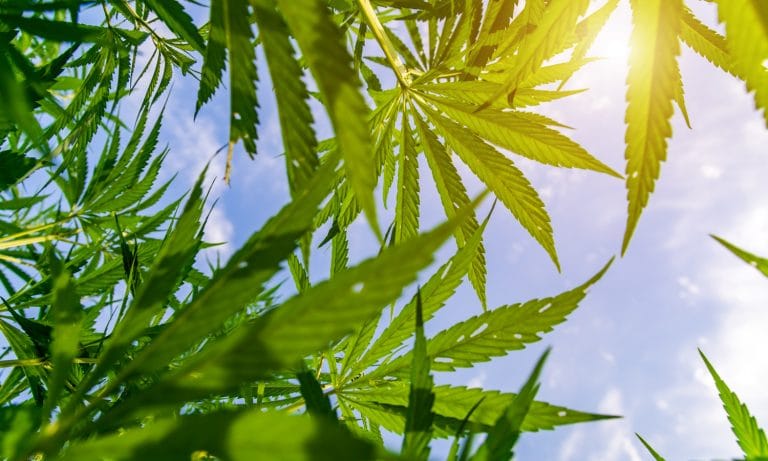
The southeast Asian country continues to have the harshest cannabis laws in the world, including the death penalty for convicted drug traffickers.

By Nina Zdinjak

Life has a way of creating stranger-than-fiction scenarios like this one: first, you get cancer. Then you become strong enough to fight it off and survive. Then, after all that, you decide to be noble and humane and share the medical insights you gained while struggling with your health issues and you end up facing a death sentence…this time not from cancer, but a firing squad.

This is the story of Amiruddin Nadarajan Abdullah, 62, better known as Dr. Ganja or Dr.G.

New Study Finds Hemp Oil Can Help Treat Chronic Neuropathic Pain
Photo by rezkrr/Getty Images

After being diagnosed with a painful spinal cord tumor that caused him to lose a kidney, Dr. Ganja, who was struggling with chronic pain and chemo-related fatigue, decided to seek out alternative treatments that eventually led him to medical cannabis in the form of hemp seed oil. It worked wonders for him until he was arrested and charged for distributing chocolates and brownies made with hemp seed oil. Dr. Ganja is actually not an MD. He earned that nickname because of his habit of inviting people suffering from cancer and other ailments into his home and sharing his hemp oil medicine with them.

Despite a United Nations decision last year to recognize the medicinal properties of cannabis, many advocates hoped countries around the world would catch up with evolving attitudes towards the plant. Some did. Malayasia was not one of them. The southeast Asian country continues to have the harshest cannabis laws in the world, including the death penalty for convicted drug traffickers.

Dr. G, who served in the Malaysian army for 22 years, was arrested in 2017 and charged with 36 offenses under Malaysia’s Dangerous Drugs Act.

“He isn’t a drug dealer or some drug lord,” his daughter Siti told VICE World News.

Malaysian Princess And The Last Prisoner Project Join Forces To Help Dr. Ganja

The Malaysian Princess Tengku Chanela Jamidah is collaborating with the Last Prisoner Project (LPP ) to support Dr. Ganja’s appeal, reported Forbes. Together they have launched an event to raise funds for his cause.

The fundraiser is the LPP’s first international cannabis project, but they’re all in.

RELATED: Cancer And Medical Marijuana: A Patient’s Perspective

“Last Prisoner Project holds a vision of freedom for every last cannabis prisoner around the globe,” said Mary Bailey, managing director of LPP, a non-profit involved in criminal justice reform.

malaysia
Photo by Esmonde Yong via Unsplash

Princess Jamidah said Malaysia should allow cannabis as an inherent human right. As a well-known figure in the fashion, beauty and entertainment sectors, she has used her broad platform for the last two years to promote cannabis legalization. She is also the official patron of the Malaysian cannabis advocacy group MASA.

‘I Will Not Stop Until He Is Free’ 

The Princess explained to Forbes that Malaysians should be reminded that cannabis and hemp have been used by their ancestors for hundreds of years.

“I am aware that there are many within the family and outside of the family who oppose what I do. This is not what I fear. I fear living a life that is not in honor of my authenticity and truth, I believe the plant is extremely intelligent and she is our teacher and I would rather live my life in acknowledgment of that truth than live a life deprived of my soul’s path and mission,” Jamidah said.

The princess emphasized the larger picture and the many patients in need of medical marijuana.

 RELATED: Study Confirms CBD Could Protect Brain Against Neurodegenerative Diseases

“We must consider the epileptic child, the cancer patient, Alzheimer’s and Parkinson’s patients that are faced with pain, suffering and risk their lives every day deprived of this medicine that has been proven to heal. What are my risks compared to their courage and survival?”

The princess is as adamant about freeing Dr. G as she is about the cannabis plant.

“Let my voice and activism be a vessel for Dr. G as we believe in the same truths, I will not stop until he is free,” the Princess said.

Those who wish may contribute to Dr. G’s Crowdfunding campaign. All proceeds will be used to support his death sentence appeal and, hopefully, his release.

This article originally appeared on Benzinga and has been reposted with permission.
Congress To Consider Full Drug Decriminalization Bill

Whether he remembers it or not, President Biden has signaled support for drug decriminalization. It’s just a matter of getting Democrats and Republicans to stop fighting each other long enough to do some good for the country. 

It was 50 years ago that President Nixon declared the drug war, a move that was supposed to keep America from sinking into the gutters of addiction and on the path to righteousness. However, that’s not what happened. Instead, millions of lives and families have been destroyed through the concept of policing a drug-addled nation.

The drug war is such a failed ethos that even President Joe Biden claims to support putting an end to the criminal penalties associated with low-level drug possession. Well, House Democrats want to test Biden on his word later this year.

What US Government Could Learn From Oregon’s New Drug Decriminalization Law
Photo by LeszekCzerwonka/Getty Images

Earlier this week, Democratic Representatives Cori Bush of Missouri and Bonnie Watson Coleman of New Jersey introduced the Drug Policy Reform Act (DPRA). The bill was designed to decriminalize the possession of all illegal drugs while also clearing some convictions and allotting funds to drug addiction organizations. It pulls the responsibility of handling the drug problem out of the hands of the Justice Department and places it in the care of the U.S. Department of Health and Human Services. It’s a push that goes beyond just legalizing marijuana for adults 21 and over, something that Senate Democrats have promised to consider this year.

To be clear, the bill does not call for the legalization of any dangerous drug. It would not create a taxed and regulated national market for marijuana, cocaine, heroin, or any other substance currently banned under Uncle Sam’s Controlled Substances Act. It would only ensure that drug users were no longer dealt with through the criminal justice system unless their crime was violent in nature. 

 RELATED: Drug Decriminalization Vs. Legalization — Here’s The Difference

The bill would continue to throw the book at drug dealers. Anyone involved in the illicit drug trade could still face criminal charges. But Mr. Average Heroin User who gets busted along the side of the highway holding a personal amount of the drug would no longer have to worry about going to prison. Not unless they were involved with more violations than just drug possession. 

Portugal has had a similar policy in place for over two decades, and it has been largely successful. Since drug decriminalization was passed, the country has seen an overall decline in drug use in citizens 15-24. Not only that, but there has been a 60% increase in drug rehab cases. It stands to reason that the United States should borrow a chapter from Portugal and try a more common sense, health-centered approach to combating the drug war.

RELATED: Punishing Drug Dealers Just Leads To More Violence And Deadly Narcotics

Somewhere around 83,000 Americans have died since May 2020 from overdoses. Furthermore, hundreds of thousands continue to get jammed up in the criminal justice system every year because of their vices. This makes it difficult for people to clean up, get jobs, find places to live, receive federal assistance, and any number of opportunities provided to people without drug blemishes on their records.

The DPRA would change that. 

Sorry But Criminalizing Drug Dealers Make Drugs Cheaper and Deadlier
Photo by MachineHeadz/Getty Images

Unfortunately, the bill doesn’t stand a chance. Although it might find the support needed to clear the House, it won’t get far in the Senate. The upper chamber is so muddled with Republican retaliation right now that it’s going to be impossible for Democrats to get anything accomplished — much less heavy policy changes regarding illegal drugs. In reality, the DPRA would be a much better move for the nation than the MORE Act or any bill focused on legalizing marijuana.

But while the country has come to believe that legal weed makes sense — 90% think it should be legal, according to Gallup — it might be a hard sell to convince the more conservative population that removing criminal penalties from hard drugs is the right thing to do. 

 RELATED: What US Government Could Learn From Oregon’s New Drug Decriminalization Law

The U.S. just started experimenting with the concept of drug decriminalization. Oregon stopped prosecuting drug offenders in February of 2021 and focused $100 million in cannabis taxes on rehabilitation. 

Whether he remembers it or not, President Biden has signaled support for drug decriminalization. “No one should be imprisoned for the use of illegal drugs alone. Instead, they should be diverted to drug courts and treatment,” reads the 2019 Biden campaign website. It’s just a matter of getting Democrats and Republicans to side with the issue and stop fighting each other long enough to actually do some good for the country. 

Yeah, yeah, we know. Better luck next time.

The Majority Of Hospitalized COVID-19 Patients Have This In Common

0

Current COVID-19 hospitalizations are very different from what they were a year ago. But those who have been hospitalized have this in common.

As the pandemic progresses, doctors from across the country are reporting fewer hospitalizations. The one thing they all have in common? The patients hospitalized haven’t been vaccinated.

“Less than 1% of our hospitalized COVID patients are vaccinated,” infectious disease expert Dr. Mark Sannes told USA Today.

5 things about CBD your patient wants to know
Photo by wutwhanfoto/Getty Images

Vaccinated people are very unlikely to get seriously sick and be hospitalized due to COVID-19, making it all the more pressing and important for unvaccinated people to get their shot.

RELATED: This Serious COVID-19 Vaccine Side Effect Can Be Detected When Lying Down

According to recent hospital data, the hospitals with the highest hospitalization rates tend to be located in states with low vaccination. These include Idaho, Wyoming, Arkansas, and Missouri.

As the vaccine program develops, doctors are starting to see a marked change. A year ago, hospitalized patients tended to be seniors or people with underlying health conditions. Now, the majority of people in hospitals are young adults who haven’t yet gotten their shots.

covid-19 vaccine
Photo by RF._.studio from Pexels

Despite the government’s efforts in trying to get people motivated to get the vaccine, there are some who remain reticent, whether that’s due to vaccine mistrust because they can’t get their time off work or due to an inconvenient location. Even though both shots of the vaccine are free, a small group of people believes that getting their shot will result in billed expenses later on.

RELATED: This Symptom Is Linked To Severe COVID-19 Cases In Men

While it’s up to every person to get their shot, vaccinations have a community impact. When people get their shot, they make it easier to protect their family members, from the people they live with to kinds who haven’t yet been vaccinated.

Despite the conspiracy theories and concerns over vaccine side effects, the one thing that data and evidence proves is how effective these shots are against the virus.

Don't Miss Your Weekly Dose of The Fresh Toast.

Stay informed with exclusive news briefs delivered directly to your inbox every Friday.

We respect your privacy. Unsubscribe anytime.