

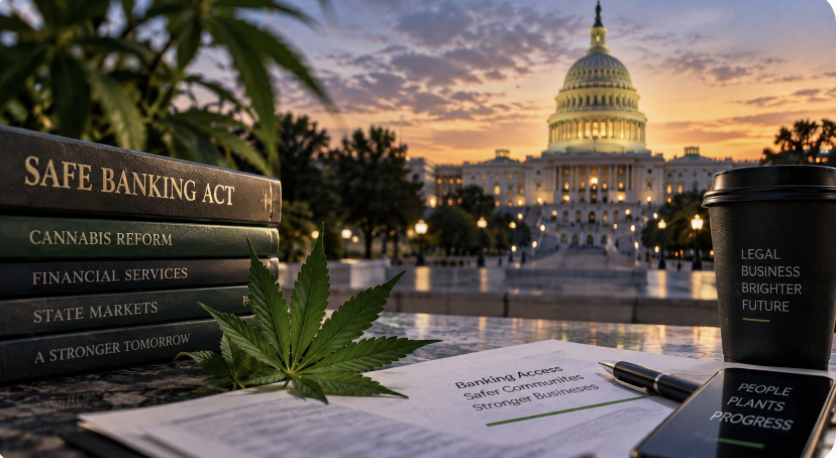
The SAFE Banking Act is back in Congress for another attempt to give state-legal cannabis businesses access to traditional banking—and Speaker Mike Johnson could be one of the biggest factors in what happens next.
Washington has seen this movie before.
It is back in Congress, but is there hope for hte 8th introduction of the SAFE Banking Act? This week another attempt to resolve one of the cannabis industry’s longest-running problems was introduced. How businesses can be legal under state law but still struggle to access the traditional U.S. banking system because marijuana remains federally illegal has bedeviled congress, patients, mom and pop businesses and more.
The 2026 version, the Secure and Fair Enforcement Banking Act of 2026, was introduced in the Senate as S. 4942 on June 24 by Sen. Jeff Merkley (D-Ore.), with Republican Sens. Lisa Murkowski (Alaska) and Steve Daines (Mont.), along with Democratic Sen. Elizabeth Warren (Mass.), as cosponsors. The House version, H.R. 9471, was introduced the following day by Rep. Dave Joyce (R-Ohio) with a bipartisan group of cosponsors.
The legislation would provide protections for financial institutions serving cannabis businesses operating legally under state law.
RELATED: How The Midwest Is Becoming A Surprising Cannabis Story
The banking issue is hardly theoretical.
Cannabis remains federally illegal, even though most states have legalized marijuana in some form. This creates a complicated situation for banks, credit unions and other financial institutions currently or want to serve state-licensed cannabis companies.
A recent Government Accountability Office report found cannabis businesses continue to face difficulties obtaining banking services, including bank accounts and loans. The report noted financial institutions hesitate to work with cannabis businesses because of federal legal risks and compliance costs.
As a result, some cannabis businesses continue to operate with significant amounts of cash—something both the cannabis industry and banking organizations say creates unnecessary security and regulatory concerns.
The American Bankers Association supports the 2026 legislation, arguing the SAFE Banking Act would provide greater legal and regulatory clarity for financial institutions serving state-licensed cannabis businesses.
One of the biggest questions sits in the House.
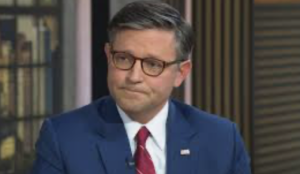
Speaker Mike Johnson (R-LA) has historically been opposed to marijuana banking legislation, and his position could matter because the Speaker has significant influence over what reaches the House floor.
But his position appears more complicated than simply blocking the bill.
According to reporting in June, congressional staffers said Johnson had indicated he would not prevent a SAFE Banking vote if a majority of House Republicans supported bringing the measure to the floor. At the same time, those staffers said Johnson remained personally opposed to the legislation.
This distinction could prove important.
The House version currently has bipartisan support, but bipartisan sponsorship does not automatically translate into enough support to move legislation through Congress. H.R. 9471 was referred to the House Financial Services Committee, as well as the Judiciary and Veterans’ Affairs committees, while the Senate version was referred to the Senate Banking, Housing and Urban Affairs Committee.
RELATED: Could Marijuana Rescheduling Help Reduce The Spiraling National Deficit
The cannabis industry’s banking problem has persisted through years of legalization and multiple versions of the legislation.
The American Bankers Association and the National Cannabis Industry Association are among the organizations supporting the current bill. The ABA says the legislation would give banks a clearer federal framework for serving state-legal cannabis businesses, while the NCIA has continued to argue banking access remains a critical issue for the industry.
There is also a broader change happening in federal cannabis policy. The banking debate now exists alongside federal action concerning marijuana’s classification and the continuing evolution of the state and federal regulatory divide.
But the SAFE Banking Act still faces the same fundamental challenge it has faced before: getting from bipartisan introduction to an actual vote and, ultimately, enactment. The upcoming elections and the intense bickering between the two parties make it more difficult.
But for cannabis businesses, investors, banks and the thousands of companies provide services to the industry, the stakes are significant.
Yet, with the focus on the Iran war, ballrooms, tariffs, a trade war with Canada and spiraling gas and food prices, it seems the eighth introduction doesn’t guarantee SAFE Banking will become law.
But it does put the issue back where supporters have wanted it for years: on the desks of lawmakers in Washington, D.C.
