

New Research Shows Cannabis Is Bringing Democrats and Republicans Closer Together While Alcohol Consumption Begins to Diverge
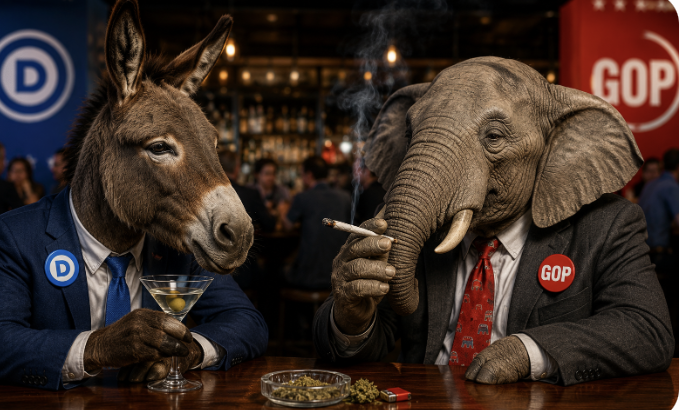
For much of modern American history, alcohol was one of the few recreational substances largely transcended politics. Democrats, Republicans and independents all reported similar drinking habits, making alcohol one of the country’s most bipartisan consumer products. But is cannabis and alcohol use bipartisan? Lately, the picture has begun to shift. A Gallup survey released in 2025 found the share of Americans who drink alcohol fell to its lowest level since polling began in 1939, driven in part by a sharp decline among Republicans. While Democrats’ drinking habits remained relatively stable, Republicans reporting they drink alcohol dropped from 65% in 2023 to 46% in 2025. Researchers say the reasons are still unclear, though growing health concerns appear to be influencing Americans across the political spectrum.
Cannabis, by contrast, has moved in the opposite direction politically. Once viewed as a deeply partisan issue, marijuana has steadily become more bipartisan as legalization has expanded, medical research has grown and public attitudes have evolved. Today, support for legal cannabis extends well beyond traditional political boundaries, making it one of the few issues where Americans increasingly find common ground.
RELATED: California Is Struggling to Control Its Booming Illegal Cannabis Market
The shift is reflected in national polling. According to the Pew Research Center, released in March 2024, 88% of Americans believe marijuana should be legal in some form. Among them, 57% support legalizing cannabis for both medical and recreational use, while 32% believe it should be legal for medical use only. Just 11% say marijuana should remain completely illegal. More recently, Pew reported 51% of American adults have tried cannabis, underscoring how mainstream marijuana has become. Polling compiled by NORML also shows majorities of Democrats, Republicans and independents now support legalization, a remarkable change from decades past.
The bipartisan support represents a dramatic evolution. In 1969, only 12% of Americans supported legalizing marijuana, according to Pew. Public opinion crossed the 50% threshold in 2011 and has continued climbing as more Americans gained firsthand experience with cannabis or saw family members and friends benefit from medical marijuana.
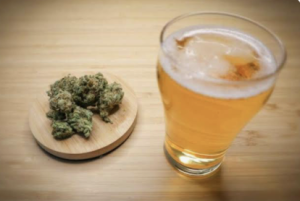
Alcohol remains the nation’s most widely consumed recreational substance. Approximately 85% of American adults report having consumed alcohol at some point, according to Pew, making it significantly more common than cannabis. Yet today’s trends suggest while alcohol consumption may be shifting among some political groups, acceptance of cannabis continues to broaden across virtually all of them.
Much of cannabis’ bipartisan appeal comes from the fact it serves different needs for different people. While many adults enjoy marijuana recreationally to unwind after work or socialize with friends, millions of others use it for health and wellness. Patients enrolled in medical marijuana programs rely on cannabis to help manage chronic pain, multiple sclerosis symptoms, chemotherapy-related nausea, epilepsy and sleep disorders. Others report cannabis helps reduce anxiety, ease stress or promote relaxation without the hangover commonly associated with excessive alcohol consumption.
These varied uses have broadened marijuana’s appeal across generations and political philosophies. Veterans coping with chronic pain, retirees seeking better sleep, working professionals looking for alternatives to alcohol, athletes recovering from strenuous exercise and parents managing everyday stress have all contributed to cannabis becoming part of mainstream American life. As more Americans have personal experience with cannabis—or know someone who has benefited from it—the issue has become less about politics and more about personal choice.
The growing popularity of low-dose edibles, cannabis beverages, tinctures and precisely labeled products has also increased consumer confidence. Many consumers appreciate being able to choose products with predictable dosing and different cannabinoid profiles, making cannabis more approachable for first-time users and older adults who may never have considered it years ago.
Economic factors have further strengthened bipartisan support. States led by both Republican and Democratic governors have generated billions of dollars in tax revenue through legal cannabis markets while creating jobs, supporting small businesses and reducing arrests for low-level marijuana offenses. As a result, discussions increasingly focus on regulation, consumer safety and economic opportunity rather than ideology.
RELATED: The Best Late Summer Cocktails
Public perception has changed alongside these developments. Today’s cannabis consumers include business executives, entrepreneurs, military veterans, healthcare workers, retirees and parents—far removed from the stereotypes once dominating public conversation. The normalization of cannabis has been fueled not only by legalization but also by growing scientific research and countless personal stories of people who say it has improved their quality of life.
Alcohol remains federally legal nationwide and deeply rooted in American culture, while cannabis laws still vary by state. Nevertheless, marijuana has increasingly earned acceptance for reasons extending beyond recreation. For many Americans, it is a wellness tool, a medical treatment, a way to relax after a demanding day or, in some cases, an alternative to alcohol.
In an era when political polarization dominates many national conversations, cannabis has emerged as one of the rare issues where agreement continues to grow. While Americans may still disagree on the details of regulation, Democrats, Republicans and independents increasingly share the view cannabis has legitimate medical, therapeutic and recreational value. Ironically, as alcohol consumption begins to show signs of political divergence, cannabis is becoming one of the country’s most bipartisan consumer products—a reflection of changing science, changing attitudes and changing American lifestyles.
