

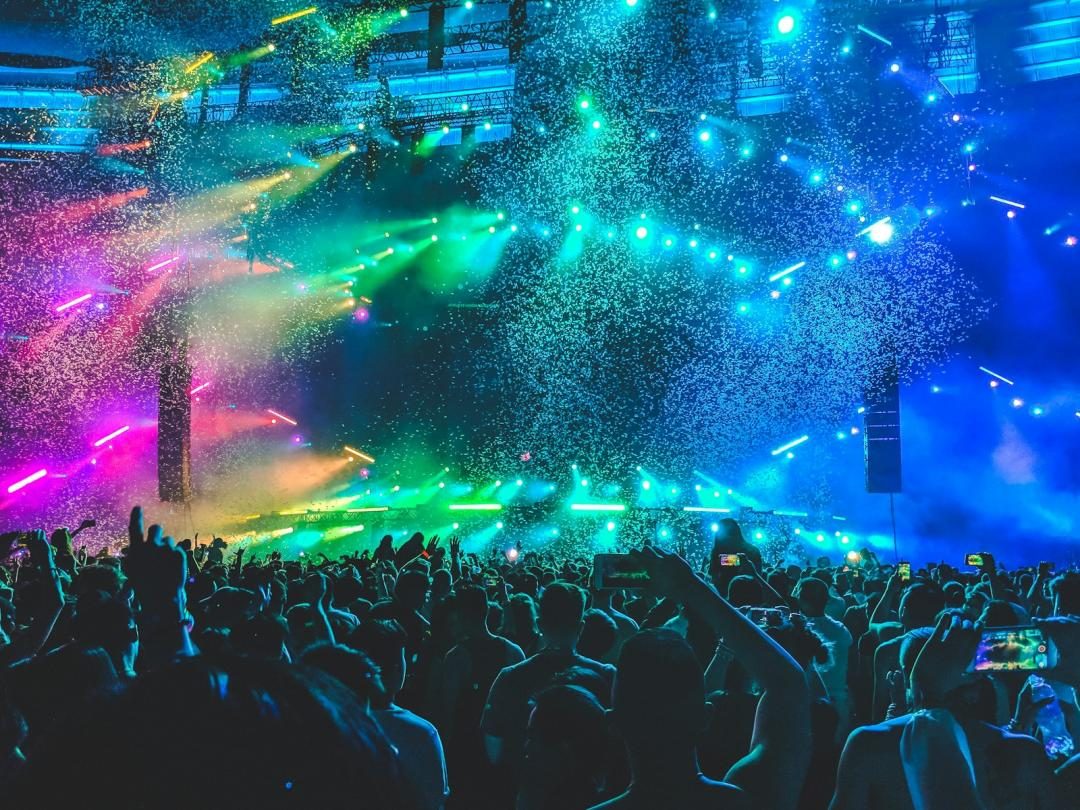
The magic of EDM and cannabis continues to fuel music festivals, dance culture, and a new generation of fans seeking connection, creativity, and unforgettable experiences
Electronic Dance Music (EDM) has evolved from an underground movement into one of the world’s biggest cultural forces. From sold-out festivals like Tomorrowland, Electric Daisy Carnival (EDC), and Ultra Music Festival to packed clubs and streaming playlists, EDM has become the soundtrack for millions. Alongside its rise, marijuana has increasingly become part of the conversation, with many fans saying the two create a uniquely immersive experience. Here is the magic of EDM and cannabis.
While cannabis isn’t for everyone—and many people enjoy EDM completely sober—the connection between the genre and cannabis culture has become increasingly visible as legalization expands across North America and attitudes toward marijuana continue to evolve.
RELATED: Gen Z Is Drinking Way Less Than Previous Generations
EDM’s roots stretch back to the late 1970s and early 1980s, when disco, synth-pop, Chicago house, and Detroit techno began reshaping dance music. Underground warehouse parties in cities like Chicago, Detroit, London, and Berlin became laboratories for new sounds driven by drum machines, synthesizers, and DJs who mixed tracks seamlessly into marathon dance sessions.
During the 1990s, rave culture exploded across Europe before spreading worldwide. By the 2010s, artists including Calvin Harris, Tiësto, Martin Garrix, David Guetta, Skrillex, Deadmau5, and Swedish House Mafia helped bring EDM into mainstream pop culture. Today, electronic artists regularly headline festivals, dominate streaming platforms, and collaborate with some of the biggest names in music.
Far from fading, EDM remains hotter than ever. Festival attendance continues to grow, social media has introduced DJs to global audiences, and platforms like Spotify, YouTube, and TikTok have made electronic music more accessible than any time in history.
Music has long been intertwined with cannabis, and EDM offers an especially immersive environment. Pulsing bass, synchronized light shows, lasers, visual art, and thousands of people moving together create a sensory-rich experience some cannabis consumers say becomes even more engaging after consuming marijuana.
Users report cannabis can heighten appreciation for musical details, deepen emotional responses, and encourage a stronger feeling of connection with the crowd. Certain strains are also chosen for relaxation before a show or for enhancing creativity during music production.
Researchers continue to study how cannabinoids influence perception, mood, and sensory processing, and experiences vary significantly from person to person. Factors such as dosage, individual tolerance, and the THC-to-CBD ratio all play an important role. While some people find cannabis enhances live music, others may experience anxiety or overstimulation, making moderation especially important in high-energy environments.
Today’s EDM festivals are about much more than music. Events increasingly feature wellness areas, yoga sessions, immersive art installations, gourmet food, sustainability initiatives, and VIP experiences attracting fans across generations.
In regions where recreational cannabis is legal, dispensaries often report increased business during major music weekends. Cannabis brands have also begun sponsoring educational events, lifestyle activations, and artist collaborations reflecting a broader shift from counterculture to mainstream consumer culture.
RELATED: How To Microdose Marijuana
