

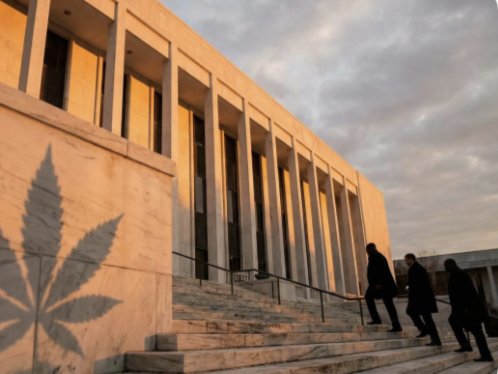
As the DEA’s Schedule III marijuana hearings wrap up, the final decision could reshape cannabis research, medical marijuana, business taxes, and the future of federal cannabis policy.
As the DEA marijuana rescheduling hearings near conclusion, it brings the federal government’s most significant review of cannabis policy in more than 50 years closer to a conclusion. And the cannabis industry is refreshing the page like a maniac to see what happens.
The hearings stem from the Biden administration’s proposal to move marijuana from Schedule I of the Controlled Substances Act to Schedule III—a recommendation made after the U.S. Department of Health and Human Services concluded cannabis has accepted medical uses and a lower potential for abuse than other Schedule I drugs. While the hearings have featured legal arguments, expert testimony, and procedural disputes, the biggest question remains unanswered: What happens next?
For patients, physicians, researchers, cannabis businesses, and investors, the DEA’s decision could have far-reaching consequences. Here are the four most likely outcomes.
RELATED: Why Anxiety Feels Worse Than Ever
1. The DEA Approves Marijuana Rescheduling to Schedule III
This is the outcome many in the cannabis industry have been hoping for.
If the DEA finalizes the proposed move to Schedule III, marijuana would no longer be classified alongside heroin and LSD as a drug with “no accepted medical use.” Instead, the federal government would formally recognize its medical value while continuing to regulate it as a controlled substance.
The impact would be significant.
Perhaps the biggest immediate benefit would be the elimination of the federal tax burden created by IRS Section 280E. Today, licensed cannabis businesses cannot deduct ordinary business expenses because marijuana remains a Schedule I substance. A Schedule III classification would remove the obstacle, allowing many businesses to reduce their tax liability and invest more in employees, expansion, and innovation.
Researchers would also benefit from fewer regulatory hurdles when studying cannabis for conditions such as chronic pain, epilepsy, PTSD, multiple sclerosis, and cancer-related symptoms. Physicians and healthcare institutions may become more willing to engage in cannabis research as federal policy becomes more aligned with existing scientific evidence.
However, approval would not legalize recreational marijuana nationwide. Individual states would continue to determine their own cannabis laws, and federal restrictions would still apply outside approved medical and research settings.

2. The DEA Modifies the Proposal Before Issuing a Final Rule
Federal rulemaking rarely follows a perfectly straight path.
The DEA could agree marijuana should move to Schedule III while making changes to the final rule based on evidence presented during the hearings. Those changes could involve implementation timelines, regulatory language, or administrative procedures designed to clarify how the new classification would be enforced.
While this outcome would still represent progress for cannabis reform, it could delay implementation by several months as federal agencies finalize the details.
For businesses and investors, the result would likely be additional patience—but with the expectation meaningful reform is still moving forward.
3. The DEA Rejects Marijuana Rescheduling
Although many observers believe this is becoming less likely, it remains a possibility.
The DEA could determine the evidence presented during the administrative process does not justify moving marijuana to Schedule III. In this case, cannabis would remain a Schedule I controlled substance, preserving the current federal framework.
Such a decision would disappoint much of the medical cannabis community and the legal cannabis industry, both of which argue decades of research support marijuana’s accepted medical use.
A rejection would almost certainly trigger legal challenges and increase pressure on Congress to address federal cannabis policy through legislation rather than administrative action.
RELATED: Is CBD Next On The Fed’s Hit List
4. More Delays Before Any Final Decision
If there has been one constant throughout the rescheduling process, it has been delays.
Even after the hearings conclude, the administrative law judge must review the record before making recommendations. The DEA will then consider those findings before issuing a final decision.
Regardless of which way the agency ultimately rules, legal appeals are widely expected. Opponents and supporters alike have indicated they are prepared to challenge aspects of the decision in federal court if necessary.
That means the marijuana rescheduling debate could continue well beyond the hearings themselves, extending into another chapter of federal policymaking before any lasting certainty emerges.
What Happens Next?
With testimony complete, attention now turns to the DEA’s review process.
Once the administrative record is finalized, the agency will determine whether to adopt, modify, or reject the proposed Schedule III classification. While no exact timeline has been announced, observers expect the next phase to draw intense scrutiny from lawmakers, medical organizations, cannabis businesses, and advocacy groups.
Regardless of the outcome, one thing is already clear: the federal government’s position on marijuana has fundamentally shifted.
Just a few years ago, federal agencies maintained cannabis had no accepted medical use. Today, the debate centers not on whether marijuana has medical value, but on how it should be regulated. This alone marks a historic turning point in American cannabis policy.
A Defining Moment for Federal Cannabis Reform
The DEA’s marijuana rescheduling hearings are about far more than changing a classification in the Controlled Substances Act. They represent a broader reassessment of how the federal government views cannabis after decades of evolving scientific research, expanding state legalization, and growing public acceptance.
Whether the agency approves Schedule III, modifies the proposal, rejects it, or delays a final decision, the outcome will influence medical research, patient access, cannabis taxation, investment, and future federal reform efforts for years to come.
The hearings may be ending, but the next chapter in America’s cannabis story is only beginning.
