Friday, June 26, 2026
Home Blog Page 1008

Kate Middleton’s Baby Bump Suggests She’s Having Another One Of These

Is Kate Middleton’s baby bump further proof that she’s having a little princess? If old wives tales are correct, the higher and wider the bump,  the more likely a woman will give birth to a girl. And Kate is definitely riding high. 

Speculation started swirling months ago that the Duchess will be having another little girl, after she was spotted on multiple occasions wearing pink. And now, with just a few weeks away from the birth of her third child, some believe the shape of Kate’s bump is solid evidence that she’s having a girl. And if that’s true, it’ll be news to Kate and William, who claim not to have known the sex of any of their children before they were born, not that they aren’t guessing along with the rest of us.

The Daily Mail has some side-by-side comparison photos of Kate throughout her pregnancies and theorize that yes, she is going to have another girl because “throughout this pregnancy with her third child, the Duchess has looked more like she did when she was pregnant with Princess Charlotte than she did with Prince George – with a higher and more pronounced bump.”

https://www.instagram.com/p/BfWtF-xgDss

According to doctors, the way a pregnant woman carries her baby has more to do with her shape — in Kate’s case, tall and slender — than the sex of the baby.

The Mirror reports that when it comes to playing the odds, Mary is the favorite name for the new Royal, followed by Alice and Victoria. And if it’s a boy? Albert  and Arthur are the top bets.


NFL Teams Don’t Care Anymore If Athletes Fail Marijuana Drug Testing

Like most of society, the National Football League’s views on marijuana may be changing. Every year around this time, marijuana and football become intertwined in a predictable manner—failed drug tests.

At the NFL Combine, future potential players compete in various athletic and mental tests to document up close their value for teams’ front offices. They also submit to a drug test and someone notable fails ever year. Because players know it’s coming, teams consider the drug test as an “unofficial intelligence test.” The thinking goes: Basically you’d be an idiot to fail, so if you do fail…

But teams may be changing their stance. According to Bleacher Report, many teams no longer regard marijuana usage as the detrimental character issue they once did. Just last year, Dallas Cowboys owner Jerry Jones privately advocated to end the league’s prohibition on marijuana.

“We just don’t care as much about marijuana as we used to,” a longtime AFC team official told Bleacher Report, adding:

Instead, several team officials said they are putting far more emphasis on domestic violence and other severe criminal acts.

A player that fails a combine drug test for pot will still be flagged, and his draft value will diminish. Just not as much as it did in previous years.

[…]

As society has shifted its views toward marijuana, including legalizing it in several states, and become less tolerant of violent abusers, the NFL is slowly reflecting that societal shift.

What’s important to remember here: Though the NFL’s chief medical officer has stated marijuana research is “really important,” cannabis remains on the league’s banned substances list. NFL commissioner Roger Goodell, whose contract was recently extended, has also spouted some misinformed opinions regarding cannabis and its medicinal values.

Don’t expect a wave of support from front offices and executives any time soon essentially. It’s progress that players entering the league seemingly won’t be punished for cannabis usage like they once were, but it still isn’t anything resembling honest change.

Jesus’ Butt Was Hiding A 240-Year-Old Secret Message

A statue of Christ in Spain has been hiding a message in its butt for over 240 years, completing the ultimate act of trolling ever recorded in the history of mankind.

The hidden message was stored on a secret compartment in the statue’s butt, hidden by a piece of cloth that the Christ was wearing. Huffington Post reports that the only reason this compartment was discovered was because the statue, known as the Cristo del Miserere, had to be taken in for restoration.

Instead of containing a mysterious map that leads to treasure, the inside of the statue only contained a letter from 1777, written by Joaquin Minguez, a chaplain of the Cathedral of Burgo de Osma. The letter was the chaplain’s version of a time capsule, describing how life was 240 years ago and discussing the statue and other works of art created by the artist.

The letter also described some of the games that people used to play at the time (including cards and ball), some of the diseases that existed (such as malaria and typhoid), and the most common types of crop.

The original document was sent to the archbishop and a copy was returned to the statue’s butt for posterity. And for fun.

Meghan Markle Warned Against Inviting This Person To The Royal Wedding

Rumors regarding the royal wedding’s guest list are swirling, with many people wondering about the heads of states, nobles, and family friends that’ll be attending.

Samantha Grant, Meghan Markle’s half-sister, is one of these rumored guests, with some sources claiming that she won’t be invited due to the tenuous relationship that she’s had with her sister. According to Yahoo.com, Grant’s ex-husband Scott Rasmussen claims that Prince Harry and Meghan Markle should be very careful when it comes to his ex.

Samantha’s the pushy one. She made our marriage a living hell. I believe she resented Meghan because she had the life Samantha always wanted and she was jealous.

He claims that when he first met Markle as a teen, she was polite and “everything Samantha wanted to be.” It sounds like he wants the invitation for himself.

For her part, Samantha Grant has spoken about Markle fondly, denying the rumors that she’s smearing her sister’s reputation. The Daily Express claims that Grant will offer commentary on the wedding from an unnamed american TV channel, and that she might release a memoir. You gotta do what you can with those five minutes of fame.

Does Trump Really Want The Death Penalty For Drug Sellers?

Five sources within the Trump Administration indicate that the president regularly makes statements indicating he would like to emulate policies of China, the Philippines, and Singapore by executing drug sellers, according to a report by Axios.

“Given Trump’s embrace of the Philippines’ Rodrigo Duterte, who has overseen a large-scale campaign of state-sanctioned murder, it’s no surprise that Trump is saying he wants to execute drug dealers,” said Maria McFarland Sánchez-Moreno, executive director of Drug Policy Alliance. “But executions are not only barbaric and illegal under international law—they also don’t work. It’s appalling that in the midst of a major overdose crisis, Trump continues to ignore proven policies that save lives, and instead seeks to emulate the behavior of killers.”

Trump has praised President Duterte’s response to drugs in the Philippines, which has led to thousands of extrajudicial executions of people for their suspected involvement in drugs. The International Criminal Court is assessing whether this policy constitutes a crime against humanity.

Using the death penalty for drug offenses, as Trump apparently wants to do, is a violation of international law. It is a policy that has primarily been adopted by autocratic or highly repressive states like China, Iran, and Singapore; even if it worked at reducing drug supply or use—and these states have provided no meaningful evidence that it has—it is an entirely disproportionate and abusive state response to problematic drug use.

In contrast to ineffective draconian policies, by adopting an integrated approach to prevention, education, harm reduction, including ensuring widespread distribution of naloxone, and evidence-based treatment, it is possible to dramatically reduce the number of deaths related to opioid use.

In addition to prevention programs that educate people with honest information about opioids, harm reduction strategies and programs have a strong track record of improving the health of people using opioids and preventing overdose deaths. There are a wide range of well-established harm reduction practices. Some are as simple as teaching young people how to stay safe when partying. Other proven measures include setting up safe consumption sites, enacting Good Samaritan laws that encourage people to seek help when someone is in distress without fear of punishment, and ensuring that people in the best position to reverse an overdose—people who use drugs themselves or their friends and families—have easy access to the overdose antidote medication naloxone.

Another life-saving harm reduction technique is to give people who use opioids a means of testing the substance they are using to see if it has been adulterated with fentanyl or some other substance that could lead to an overdose or other adverse reaction.

Harm reduction programs enable people with expertise in drug use to engage with those who are using problematically, earn their trust, and potentially guide them toward voluntary treatment programs. Judgment and the threat of being punished for drug use drives people who use drugs underground and into greater danger of an overdose or other adverse reactions. Harm reduction, on the other hand, saves lives.

What You Need To Know About Marijuana And Gum Disease

A new study finds that marijuana users have worse teeth and gum disease than non-users. But researchers aren’t sure why.

A long term study of New Zealanders published in JAMA Psychiatry shows that 20-year marijuana veterans are every bit as healthy as their straight-edge peers in every way but one: Weed smokers have worse teeth and significant gun disease.

And it’s not as though they’re just getting high and passing out on the couch before they can brush. The weed cohort is no less negligent of their pearlies than anyone else.

The people behind the report only crunched the numbers, so they don’t have any explanations. But if they go hunting for one, they should check out the archives for this report from 2009. In it, researchers first gave mice gum disease, and then followed that up with does CBD. After thirty days of cannabinoid treatment, they examined the mousey mandibles and found less bone loss than expected and less “neutrophil migration,” which we think means less indication of infection in the gums.

So cannabis, good for your gums or bad? Certainly we can’t say. But whichever path further science will illuminate, there is one point today on which we can all agree: A little personal preclinical trial of cannabis will infinitely improve any visit to the dentist.

Should You Tell Your Doctor About Your Marijuana Use?

Although marijuana is considered one of the safest drugs in the world, when combined with other over-the-counter medications, it can sometimes produce unwanted effects.

Around 30 states have legalized marijuana for medicinal use, but there are still plenty of jurisdictions across the nation where the green is lumped in with illegal drugs. In these areas of prohibition, marijuana consumption can bring down all sorts of problems for the user.

Children can be ripped away from their homes, loss of employment is always possible, as is a wealth of other uncertainty. It is for this reason that many people are less than honest when discussing their drug history or current use with their family physician. But is it safe to discuss your relationship with cannabis with your doctor?

One of the primary hang-ups people have about sharing their cannabis use with their doctor is the worry that it might somehow get them in trouble with the law. But that cannot happen. The Health Insurance Portability and Accountability Act of 1996 (HIPAA) does a number of things for patients, including provide them with privacy.

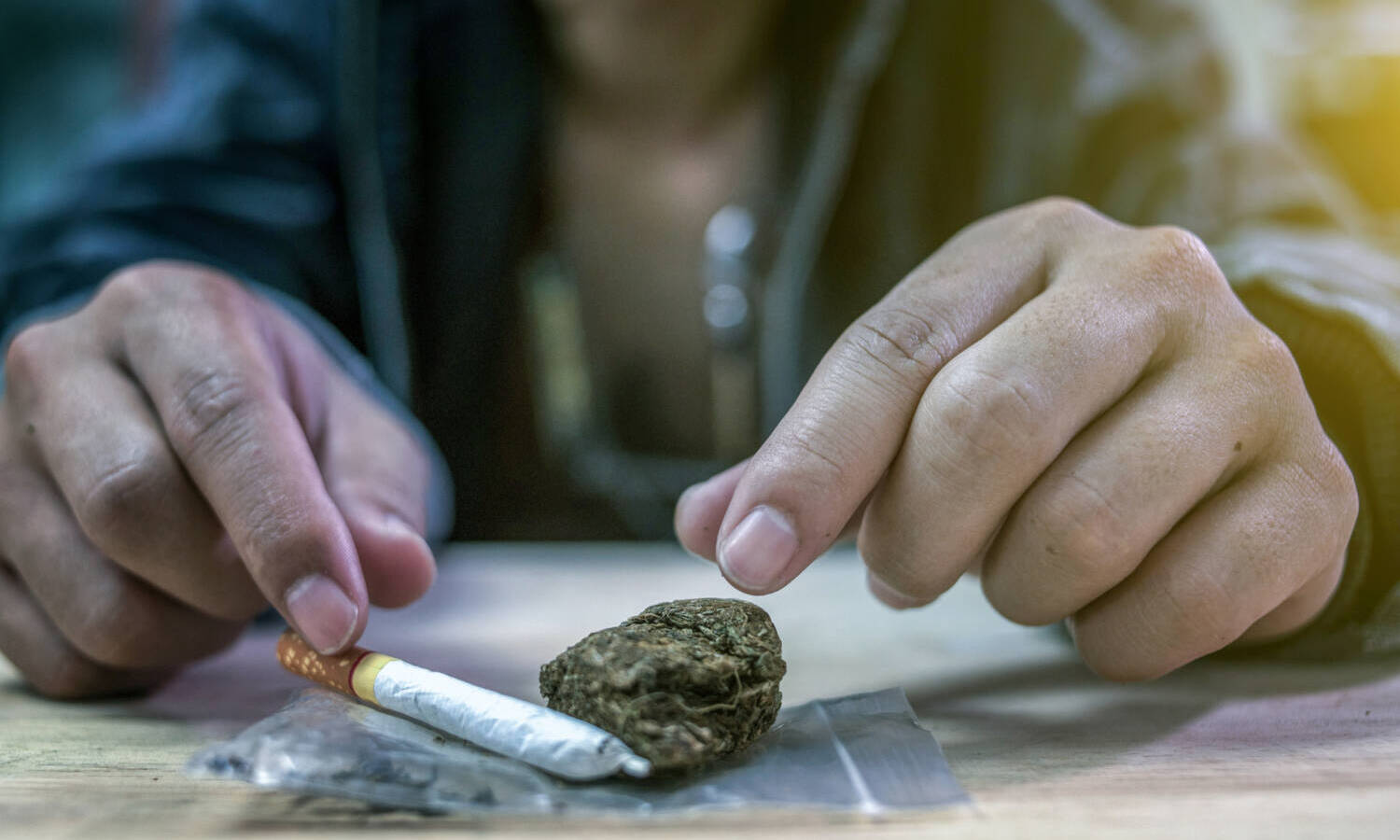
marijuana bud joint
Photo by athima tongloom/Getty Images

So regardless of a physician’s personal stance on marijuana, he or she cannot share the medical information of a patient with law enforcement.

In some cases, however, a person’s illegal marijuana use can still cause snags with health insurance. Some experts suggest asking the doctor to speak confidentially about a few concerns before divulging this information.

“Before discussing marijuana, you might ask your doctor if what you say next could be off the record — not entered into your chart,” Catherine Hiller, author of Just Say Yes: A Marijuana Memoir wrote for the Huffington Post. “He or she is likely to turn away from the screen, look you in the eye — and finally pay you some attention!”

But even the federal government, which still considers the cannabis plant one of the most dangerous drugs in the world, wants to change the rules. The Centers for Disease Control and Prevention released an updated set of guidelines in 2016 urging doctors to amend their drug screening policies to protect marijuana users from being disqualified from treatment. The agency said, “Clinicians should not test for substances for which results would not affect patient management or for which implications for patient management are unclear. For example, experts noted that there might be uncertainty about the clinical implications of a positive urine drug test for tetrahydrocannabinols (THC).”

It is important to remember that the goal of most doctors is to help their patients. These professionals will respect your honesty and likely even offer counsel on how marijuana may affect your overall treatment plan.

Although marijuana is considered one of the safest drugs in the world, when combined with other common, over-the-counter medications, it can sometimes produce some unwanted effects. So try to shoot straight with your healthcare provider.

PBS Host Rick Steves Proposes Weed Trip To Educate Jeff Sessions

Rick Steves, the affable host of the long-running PBS travel series Rick Steves’ Europe, has made himself an essential visual guide to anyone who wants to visit Europe and do it right. Furthermore, Steves has written various books that have become must-reads in the travel literary canon.

What you might not know is that Steves is a fierce advocate for cannabis. He has stated his belief that marijuana is a “soft drug” like alcohol and tobacco and should be regulated and taxed as such. He also serves on the advisory board of NORML, the National Organization for the Reform of Marijuana Laws.

Through his travels, he’s come to believe that Europe holds a far better approach to regulating marijuana, where personal responsibility is valued over prohibition. As he told Rolling Stone, he “credits his European travels for opening his eyes to a more creative and sensible approach to drug policy.” One person he believes would benefit from a Euro trip to witness firsthand the continent’s “sensible approach” is none other than Attorney General Jeff Sessions. In fact, Steves laid out a whole travel plan for Sessions to truly expand his extremely limited and limiting views on marijuana.

Via Rolling Stone:

“I would take him to Switzerland and we’d go to a heroin maintenance clinic,” Steves says of the Swiss clinics where even hard drugs like heroin are not treated with a carceral approach.

Next, Steves says they’d hit a Barcelonan cannabis club. “In Spain they can’t sell marijuana but they can grow it. In practice, they don’t want to grow it so they join a club that grows it collectively, and they can enjoy the harvest.”

Then, Steves says it would be off to the Netherlands where he and the attorney general would visit a Dutch “coffee shop,” where adults can buy a variety of cannabis items in limited quantities from a reputable seller.

“After the coffee shop, we’d visit a mayor and a policeman and have [Sessions] listen to the mayor and policeman explain why they’d rather have coffee shops than have marijuana sold on the street,” Steves says.

Steves has taken personal responsibility for convincing members of Congress the benefits and logic to ending marijuana prohibition. Part of his persuasion lies in his symbol as a genial, kind of goofy travel host that completely upends the obsolete “Reefer Madness” narrative that Sessions continues to spill.

As more foundational members in Republican circles, like the Koch Brothers, feel more comfortable voicing critical opposition to Sessions’ retrograde policies, it seems more and more likely Steves may soon recreate his Euro weed adventure after all. The attorney general just might be left out of the party.

Former Dr. Dre, Snoop Dogg Weed Guy Is Succeeding In Legal Cannabis

You probably aren’t familiar with the name, but his customers are pretty well known. Not that long ago, Virgil Grant wasn’t allowed to talk about his dealing and his high-profile clients, but thanks to recreational cannabis legalization in California, he represents the two eras: “the criminal past and legalized future,” as the New York Times recently put it.

Grant used to sell cannabis out of his family’s Compton grocery store. His clients included the likes of Dr. Dre, Tupac, Snoop Dogg, and Coolio. He’s now the proud owner of three licensed businesses in LA, but his victory was hard-won. Because he participated in illegal marijuana dealings, Grant spent more than eight years in federal and state prisons.

Though many celebrate the rich possibilities in the cannabis business world, which has announced itself as a multi-billion-dollar industry, Grant doesn’t forget how it used to be.

Via New York Times:

Virgil Grant can now talk about it—the illicit deals that went down at his family’s grocery store in Compton in the 1980s and ’90s. Mr. Grant would stuff bags of marijuana into empty boxes of Lucky Charms and hand them to his clients, a drug deal made to look like a trip to the bodega. He vacuum sealed the cash he received and buried it in his backyard, hundreds of thousands of dollars guaranteed to stay fresh.

In many ways, Grant represents the attempted reconciliation between the nation’s war on drugs and the current legal environment. He might reminisce fondly over delivering his premium product to those celebrity clients in their music studios. But he talks just as strongly about the future possibilities available.

He hopes to one day open legal marijuana shops in Compton, his old stomping grounds. But the city has rejected legal marijuana sales with overwhelming voting against multiple propositions that would establish a local cannabis industry. Though it might be legal statewide, buying cannabis in Compton, California remains illegal.

Yet, Grant remains hopeful, as he plans to push another vote through in the coming year. He believes it will create “hundreds, if not thousands of jobs.” As he told the New York Times, “Watch how ‘no’ will become a staunch ‘yes.’ ”

These Cities Consume The Least Amount Of Marijuana In The World

0

The cities around the world where the least amount of marijuana is consumed are, counter-intuitively, not all in countries with the harshest penalties for users and sellers. Nor are most among the cities where weed is most expensive.

Seedo, a company that makes a device allowing users to grow cannabis plants at home, recently released a report that shows which cities around the world consume the least weed. They compiled the list through crowdsourcing and cross-referenced it with the World Drug Report 2017.

Note: The rankings were on overall consumption in the city, not per capita.

5. Luxembourg City, Luxembourg

Population:  107,247

Area:  19.87 square miles

Legal status: Partially legal

Total consumption in metric tons: 0.32

Consumption per capita in grams: 2.98

Price per gram: $7.26

The capital city in one of Europe’s smallest countries (by area) reclassified cannabis as a “Category B” substance under local law. This means only a fine on first offense. The fine can range from around $350 to $2000. Webehigh.com reports that users are safe from police, just “don’t be too obvious” and lists weed on their tolerance level as “virtually legal.”

The country began a two-year trial of medical marijuana last year.

4. Thessaloniki, Greece

Population:  325,182

Area:  7.5 square miles

Legal status: Partially legal

Total consumption in metric tons: 0.29

Consumption per capita in grams: 0.82

Price per gram: $13.49

Though recreational cannabis is illegal in Greece, courts will often dismiss charges if it is for a small amount for personal use. The country allowed medicinal marijuana in 2017.

Enforcement in Greece’s second-largest city, at least regarding tourists, is lax. Marijuanatravels.com notes that travelers are mostly left alone by local authorities.

3. Kyoto, Japan

Population:  1.5 million

Area:  319.6 square miles

Legal status: Illegal

Total consumption in metric tons: 0.24

Consumption per capita in grams: 0.16

Price per gram: $29.65

Japan doesn’t have the harshest marijuana laws in the world, but it famously has some of the more stringent and aggressively enforced. Though hemp has been cultivated for more than 10 thousand years, it was generally not for psychoactive use.

The sentence for possession of any amount is up to five years behind bars and a $19,000 fine. Foreigners may be deported immediately and may be banned from returning.

Perhaps because of the penalties, a gram of weed  in Kyoto is the third most expensive in the world.

2. Santo Domingo, Dominican Rep.

Population:  965,040

Area:  40.3 square miles

Legal status: Illegal

Total consumption in metric tons: 0.16

Consumption per capita in grams: 0.16

Price per gram: $6.93

Marijuana possession is a major offense, so much so that the State Department issued a Travel Advisory. Any amount can get you jailed. Accused persons remain incarcerated while awaiting trial and the whole process could run several years. The maximum penalty for simple possession is two years in prison and a fine.

The penalties are harsh in large part because of geography. The country, and its capital — the center of the largest metropolitan area in the Caribbean — is strategically located between South America and the United States. The government doesn’t want the republic’s ports used by smugglers.

In its enthusiast’s travel guide, webehigh.com notes “the police are very corrupt and you will likely be able to buy your way out. Expect a WORLD of hassle if you get caught.”

1. Singapore, Singapore

Population:  5.6 million

Area:  278 square miles

Legal status: Illegal

Total consumption in metric tons: 0.02

Consumption per capita in grams: .03

Price per gram: $14.01

The penalties for using marijuana in the city-state are severe. Simple possession can result in up to 10 years in prison and a $20,000 fine. Trafficking 500 grams or more, or taking that amount in or out of the country, can result in a death sentence.

As tripsavvy.com reports:

Under the Misuse of Drugs Act, the burden of proof lies on the defendant, not on the government. If you’re caught with large amounts of drugs, you are simply presumed by law to be trafficking ….

As per Section 17 of the Act, you are automatically presumed to be trafficking in drugs if you are caught with the following amounts … Cannabis – 15 grams or more.

Despite the dire consequences, the cost of a gram is 20th most expensive among the world’s cities between Helsinki, where enforcement is lax, and Berlin, where simple possession has basically been decriminalized.


Don't Miss Your Weekly Dose of The Fresh Toast.

Stay informed with exclusive news briefs delivered directly to your inbox every Friday.

We respect your privacy. Unsubscribe anytime.