Monday, June 22, 2026
Home Blog Page 1061

Gossip: Meghan Markle & Prince Harry Jetted Off To The South Of France; Taylor Swift’s Tour Has No Sellouts

Prince Harry and Meghan Markle celebrated the New Year in Monaco after taking a helicopter to the millionaire’s playground. The loved-up royal couple’s private flight was a considerable upgrade from their economy trip to Nice – where they are said to have sat beside the toilets among other passengers. In an attempt to remain incognito, the pair boarded their 9.55am flight from Heathrow before any other passengers and headed straight to the back of the plane, next to the rear toilets. They also took up three rows of economy seats, either side of the aisle, even though there were only themselves and three ‘edgy and nervous’ bodyguards in their party.

Harry, 33, apparently slumped down next to the window dressed in jeans, a jacket and with a baseball cap pulled over his face. Bride-to-be Miss Markle, 36, was sitting next to him in a black beanie hat and minimal make-up. According to one fellow traveler, the aircraft actually took off several minutes early, much to the surprise of other passengers, and shaved 20 minutes off its two-hour flight time. And if anyone hadn’t spotted the group by that point, they couldn’t mistake the two heavily armed officers from the French border police waiting for the party as they disembarked, ready to whisk them out through the VIP area.

Other sources have told the Mail that several members of France’s elite Service de la Protection – the police unit responsible for the protection of foreign dignitaries – have flown down from Paris to guard the couple during their stay. Asked if Kensington Palace had requested them, they said: ‘No, it would have been offered and would have been non-negotiable. After what happened to his mother in this country and the issue of terrorism, it would be insisted on even for a private trip such as this.’

All officers within the force are armed with a Beretta M9, while at least one of them would also have a machine gun. It is understood that Harry and Miss Markle flew out to celebrate the New Year with friends and plan to stay several days at a private residence in the Riviera region. The weather is perfect for a short break – sunny and a pleasant 15C (59F).

The trip to the South of France may well be a welcome break for Harry and Miss Markle before wedding preparations begin in earnest. One decision that has already been made is the catering firm they will use for their May nuptials. While royal household staff will man and cater the main event – and will be paid for by the Queen and Prince Charles privately – the couple have also employed society favorite Table Talk, most probably for the evening reception. The firm has royal pedigree – it was used by Prince William and the Duchess of Cambridge for their 2011 wedding and by Kate’s sister, Pippa Middleton, when she married last year.
[From The Daily Mail]

Taylor Swift’s “Reputation” Tour Has Yet To Produce A Single Sellout

What is Taylor Swift’s “Reputation” worth? Not the jacked-up prices she’s charging for concert tickets.

A look at Ticketmaster’s interactive seat charts confirms that Swift’s schedule of 33 dates for the North American “Reputation” tour has yet to produce a single sellout, from its May 8 launch in Phoenix to its Oct. 6 finale in Arlington, Texas.

By comparison, all the dates on Swift’s “1989” tour in 2015 “sold out within minutes,” according to concertsandsports.com.

“Sales so far have been a mega disappointment,” one music-industry insider told The Post. “There are hundreds if not thousands of tickets left for every show.”

On top of high prices, some prospective buyers are getting irked by Ticketmaster’s “Verified Fan” program, which required participants to register weeks before tickets went on presale, proving they were and bona fide fans and not bots looking to buy tickets for scalpers.

By charging higher prices and blocking out scalpers, Swift and her promoter Louis Messina could fatten their coffers by as much as $1.5 million per show, according to an estimate in Billboard.


 

Love the fresh dirt we bring over daily from Naughty Gossip? Let us know in the comments!

Trouble Down South: Tetra Health Centers Closes 5 Florida Locations

While Regulate Florida pushes hard to get legalized cannabis on the ballot for 2018, local attorney Michael Minardi doesn’t believe they’ll be able to get the signatures required in time. In the meantime, he’s pushing for education on the plant, which was voted in medically by a whopping 72 percent for Florida residents.

There are problems with the medical marijuana program. Five Tetra Health Centers in the Tampa Bay area closed their doors, leaving only one location open for business. In a statement to FOX 13, THC explained:

“Even though 72 percent of Florida residents voted yes for Amendment 2, there have been many challenges in providing our services to patients in need of medical marijuana. Between the legislative actions that have changed qualifying conditions to the state’s delay in issuing medical cards to patients, medical providers like Tetra Health Care are facing serious roadblocks to providing compassionate patient care. We have made a decision to temporarily close some of our locations in order to focus our efforts on working directly with lawmakers to address the root of these issues, find solutions, and move forward.”

They went on to say that patients could face additional problems if the amendment wasn’t attended to. They will not be reopening the closed locations, but may open new locations in the future.

Not all Floridians are buying Tetra’s reasoning however. Ben Polara, executive director of Florida for Care said that “it sounds like these guys had a bad run of it, and they’re getting out of town.” When TampaBay.com reached out for further comment, the organization reiterated their stance.

Over 39,000 Florida residents with qualifying conditions have signed up for the program, but administrative glitches have held up the process that leads to a dispensary door. Polara said that that didn’t ring true either, citing expanded qualifications and shorter wait times for medical marijuana cards.

Hopefully Florida goes all the way green in 2020, and new players will enter the marketplace to provide cannabis to those who need it.

Marijuana Pro-Tips: How I Lost 50 Pounds Using Cannabis

I dropped 50 pounds in 2016 and I credit marijuana for the weight loss. Seriously.

You’ve no doubt heard all the munchie jokes and the claims that cannabis makes the user lazy and unmotivated. But there is a growing body of evidence suggesting that the herb doesn’t necessarily make your body grow.

An American Journal of Medicine study in 2013 found that people consuming cannabis at least three to five times a week had 16 percent lower fasting insulin levels and smaller waist circumference. Yes, you read that correctly: a smaller waist circumference.

How is this possible? Researchers are still trying to get to the bottom of the science, but some speculate that cannabis appears to regulate the glucose-absorption process, increasing levels of “good cholesterol” and improving metabolic functioning.

Another theory suggests that cannabis interacts with cannabinoid receptors in the brain that control memory and appetite. When triggered by CBD (a non-psychoactive component found in cannabis), the results can be an increased appetite. But these receptors can become desensitized over time, making the regular user less likely to gain weight.

Essentially what may be happening is this: Marijuana will generally promote appetite and binge eating when first using marijuana. Eventually, it has the opposite effect the cannabinoid receptors in your brain become desensitized or trained.

“The most important finding is that current users of marijuana appeared to have better carbohydrate metabolism than nonusers,” says Murray Mittleman, an associate professor of medicine at Harvard Medical School and the author of the study. “Their fasting insulin levels were lower, and they appeared to be less resistant to the insulin produced by their body to maintain a normal blood-sugar level.”

So now that we’ve got the science out of the way, let me walk you through my 50-pound weight loss. First of all, just smoking weed is not going to help you lose weight. You seriously need to adopt a healthier lifestyle and be mindful of what you are putting in your body.

For me, it started with digging my FitBit out of the junk drawer and joining Weight Watchers in May. By Labor Day, I shed 50 pounds.

Here are a few tips:

Get Off Your Butt

It’s simple math, really: Energy in, energy out. If you burn more calories than you take in, your body shrinks. Go figure.

My FitBit reminded me every day that I needed 10,000 steps (or about 5 miles) a day minimum. Eventually, my daily goal became 15,000 steps a day. Put in your earbuds and take a few 15 minutes walks a day. It’s not that tough.

Cut Back On The Booze

My days of heavy drinking are behind me. I enjoy a cocktail, a glass of wine or a pint of beer like most people. But because of Weight Watchers I became keenly aware of the calories in just one drink. Moderation, people.

Eat Like A Grown-Up

For me, this meant dedicating myself to a balanced diet. I did not exclude one kind of food — I enjoyed pasta, pizza, steak and the occasional piece of cake. But I also loaded up on fruits, vegetables and healthier proteins. (Side note: Hemp seed is a superfood that should be part of your diet.)

Get A Good Night’s Sleep

This was the key for me. For decades, I have trouble getting to sleep. I’ve tried just about everything except for sleeping pills. I have heard too many Ambien horror stories and I let my doctor know this would not be an option for me.

When I can’t sleep, I usually get out of bed instead of tossing and turning. My feet and brain would take me directly to the fridge where I would consume calories I didn’t even need. It was just midnight snacking.

Fortunately, cannabis is a wonderful sleep aid. Each night for dessert, I allowed myself a small piece of cannabis-infused chocolate followed by vaping or smoking a small amount of the herb. On most nights, a blissful sleep was the result.

For My Fellow Weight Watcher Peeps:

When I attend my Seattle meetings, the issue of alcohol comes up nearly every week. For those unfamiliar with how the program works, food and beverages are given point values based on calories, carbohydrates, fat, etc. A 5-oz. glass of wine is 4 points. So if you have two glasses (remember, 5-oz is a serving), you have just spent 8 points. One 12-oz. bottle of Sierra Nevada beer is 5 points. Your basic 2-oz. martini is 6 points.

The number of points per day is based on your age, weight and other factors. For me, my daily point allocation is 35 points.  So two beers is nearly a third of my entire points for the day. Remember that small piece of chocolate I eat for dessert? That is 1 point for a tiny piece. If I go crazy and have three pieces — which I do on weekends on occasion — is still only 3 points. Still, the tasty cannabis treat is still half of the points of a martini.

Are there specific strains that are better for weight loss?

Once again, the research is inconclusive. But there is some evidence that strains containing a higher concentration of the compound THCV are better than others. THCV is a cannabinoid often found in so-called “landrace strains” and acts as an  antagonist of the CB1 and CB2 receptors. Some scientists theorize that this blocks THC from overwhelming your brain, thus suppressing the appetite.

If you are fortunate enough to live in a state where you can purchase cannabis from a reputable retailer or dispensary that tests its product, ask your budtender for these strains high in THCV such as Super Silver Haze or G13.

Marijuana May Help Migraines Better Than Prescription Drugs

People who suffer from migraines spend significant time and energy to prevent, manage and recover from the painful ailment.   But marijuana may help migraines better than prescription drugs.

Yet another study, this one conducted by Italian researchers and published in June, suggests that cannabis may be more effective at reducing migraine pain than pharmaceutical drugs.

The research found that patients suffering from “cluster headaches” only found relief if the symptoms began in childhood.

“We were able to demonstrate that cannabinoids are an alternative to established treatments in migraine prevention,” wrote Dr. Maria Nicolodi, the study’s lead author. “That said, they are only suited for use in the acute treatment of cluster headaches in patients with a history of migraine from childhood on.”

According to clinical trial data presented at the 3rd Congress of the European Academy of Neurology, daily marijuana consumption can lead to a reduction in migraine headache frequency.

The study examined the medicinal impact of oral cannabinoid treatments compared to amitriptyline, a pharmaceutical commonly prescribed for migraines. Patients treated daily with a 200 mg dose of a combination of THC and CBD achieved a 40 percent reduction in migraine frequency – a result that was similar to the efficacy of amitriptyline therapy.

Subjects also reported that cannabinoid therapy significantly reduced acute migraine pain, but only when taken at doses above 100 mg.

More than 5 million Americans experience migraines at least once a month.

This is not the first time a study found a connection to cannabis and reduced migraine symptoms.

A study from the University of Colorado, published earlier this year, showed that the frequency of migraines in patients who used cannabis dropped from 10.4 per month to 4.6.

This study indicated that smoked marijuana, which hits the bloodstream almost instantly, was best for treating acute migraines. Edibles, which take much longer to metabolize, helped prevent headaches. So you might want to think about marijuana may help migraines better than prescription drugs

Want To Be A Real-Life Mermaid? Here’s How To Nail Your Interview

Weeki Wachee Springs State Park in Spring Hill, Florida is known for its live mermaid shows. And now, they’re looking to expand their roster of talent. If you’ve ever flirted with the idea of becoming a real life Ariel, pack your bags.

The park is holding auditions January 13 and if you think the only qualifications include being able to swim and looking cute in a onesie, think again.

“It’s not easy what they do, and a lot of girls find that out (during the audition),” the parks PR manager, John Athanason, tells Tampa Bay Times.

Auditions include a series of physical endurance trials, like treading water for long periods of time, and swimming 300 yards against the current. Of course, candidates will also need to be able to hold their breath for long periods of time, all while performing ballet moves (including flips) under water.

“It’s an inherently dangerous job,” says Athanason, “and you need to be able to not only save yourself, but save a colleague.”

The mermaid tank faces a 400-seat auditorium, which means potential mermaids need to be comfortable in front of the crowd.

The Weeki Wachee mermaids have been performing since 1947, according to the Tampa Bay Times. They perform underwater year-round in 72-degree spring water from the head of the Weeki Wachee river. The mermaid show takes place in a limestone theater submerged six feet below the spring’s surface.

If you think your personal safety is worth $10 an hour, this might be for you.


If You Hate The Word ‘Moist’ You’re Not Alone And Here’s Why

There’s a scientific reason why your skin wants to crawl off your body when you hear the word “moist” and it has a lot to do with the word’s repulsive reputation.

Cognitive psychologist Paul Thibodeau took it upon himself to figure out why some people (about 18 per cent) are averse  to the word and came up with three different hypotheses: the sound of the word, the connotation of the word, and the social transmission of the word — how it’s viewed in pop culture and society in general.

The findings? “The experiments provided the most support for a combination of the second and third possibilities: that aversion to “moist” may spread socially but it is also grounded in feelings of disgust toward bodily functions.”

https://giphy.com/gifs/season-8-bravo-jules-wainstein-26z0FvlXQN1PXha1i

It’s interesting to note that of those participants who said they were hated the word had several traits in common:

Women, younger people, and those with more education, who tended to score higher on measures of disgust toward bodily function and neuroticism (a personality trait characterized by increased feelings of anxiety, worry, anger and guilt), were particularly likely to find the word unpleasant.

Thibodeau’s study concludes that our harsh reaction to the word “moist” can be traced back to our natural disgust of bodily functions, which is strongly reinforced by society. The deeper meaning in this study found that disgust (of anything) is adaptive.

If we didn’t have an instinct to run away from vomit and diarrhea, disease would spread more easily. But is this instinct biological or do we learn it? Does our culture shape what we find disgusting? This is a complex and nuanced question. Significant work is needed to answer it definitively.

He says his study suggests that by their association with bodily functions alone, the symbols (words) we use to communicate can become contaminated and elicit disgust.

For example, those who watched a video of handsome actors awkwardly saying the word “moist” reported being even more uncomfortable with the word versus those who watched a video of actors (no word if they were also handsome) using the word to describe cake. Says Thibodeau:

After watching the cringe-inducing video, people considered “moist” not only more aversive, but said that it was a word they used relatively infrequently and that the word had a more negative connotation. In other words, watching the video that made “moist” seem aversive shifted the entire profile of the word to be more consistent with the perceptions of people who were already averse to the word.

How does it make you feel? Hot and bothered or just bothered?

Here’s What You Need To Know About Legal Marijuana In California

The new year brings with it a new era for marijuana in California. January 1, 2018, marks the beginning of a new approach for Californians when adults can legally buy marijuana at a licensed retailer. The state regulates marijuana and marijuana products, the cultivation of marijuana accords with environmental and labor regulations and standards, and the state begins collecting tax revenue to fund community investment, environmental restoration, and drug treatment and prevention.

This is when the harms of marijuana criminalization begin to come to an end. It is a moment to celebrate, even as we recognize the challenges that lay ahead of us. For decades, Californians have suffered the consequences of marijuana criminalization. Despite having the largest medical marijuana economy in the world, California had no state system to regulate and control marijuana. No rules. No safeguards. No protections for consumers, workers, youth, or the environment.

Under criminalization, the state arrested and incarcerated hundreds of thousands of people. Over 450,000 people were arrested for marijuana offenses in California in the last decade alone. And, not surprisingly, race played a key role in who got arrested.

Despite similar rates of use, police arrest African-Americans for marijuana possession at higher rates than whites in every state, and nearly every city and county, in the US California was no exception. In 2015 in black people in California were more than twice as likely as white people to be arrested for a marijuana misdemeanor and nearly five times more likely than white people to be arrested for a marijuana felony. Latinx people were 35 percent more likely to be arrested for a marijuana offense than white people.

The damage caused by these arrests was magnified and compounded by way of collateral consequences that can include revocation or loss of professional licenses, barriers to employment, barring from public housing, loss of educational aid, driver’s license suspension, bars on adoption, exclusion from jury service, loss of health care and other military benefits, and deportation.

Under criminalization, the environment was ravaged. Hilltops were leveled, forests and native vegetation cleared, streams destroyed and polluted, wildlife poisoned and killed, public land turned into dumping grounds for trash, pesticides, and fertilizers. Workers lacked even the most basic, minimal protection for stolen wages or injury on the job. Marijuana consumers and medical marijuana patients were denied access to a safe and regulated product and to information about what they purchased and consumed.

Marijuana prohibition in California was a colossal failure. In November of 2016, California voters opted for a new approach. Prop. 64 legalized the possession and personal use of marijuana for adults age 21 and older, and created a system to license and regulate businesses to cultivate, manufacture, distribute, test, and sell marijuana and marijuana products.

In addition to tackling regulation, Proposition 64 was a sentencing reform measure. Proposition 64 reduced most felony and misdemeanor penalties for marijuana offenses and made those changes retroactive so that people can get their sentences reduced and old convictions taken off their records. The sentencing reform pieces of Prop. 64 took effect immediately. As a result, people were released from jails and thousands of people have had felonies and misdemeanors removed from their records. And there are thousands and thousands more people who can still benefit from these reforms and have their records changed.

State and local governments have been working on the licensing and regulation for the past year. This past summer, the legislature passed and the governor signed the Medicinal and Adult Use Cannabis Regulation and Safety Act to combine the medical and adult use laws and rules into one comprehensive regulatory system under the authority of the Bureau of Cannabis Control and a number of state agencies. Those agencies released emergency regulations at the end of last month and are poised to begin issuing licenses in the new year. After some uncertainty about the timeline, it appears that there will licensed business in California selling to adult consumers and patients on January 1.

Certainly, the shift to legalization will be slow and will not be without difficulty and the need for adjustment and improvement. All businesses must also comply with local licensing and rules. California has 58 counties and 482 incorporated cities across the state, each with the option to create its own rules or to ban marijuana businesses altogether.

There will be better access in some places than others. Some localities will take longer and will try different approaches. There are still a number of open questions on the state level that will be worked out in permanent regulations and future legislation. But the Governor, the Legislature, the state regulators, and (at least some) localities are working in good faith to make it happen.

The biggest challenge moving forward is to ensure that in creating and implementing this new approach to marijuana in California, this new era, that we do not repeat the worst, most harmful aspects of criminalization. We have to be intentional about not allowing racism and discrimination to plague the enforcement of the marijuana offenses and fines that remain in place, such as citations for public consumption. We have to ensure that black and brown children are not suspended or expelled from school while their white counterparts are afforded access to newly funded treatment and prevention services.

We must look carefully at the new industry we have created to make sure that the people and communities that bore the brunt of criminalization are not excluded from opportunity and inclusion due to prior arrests or convictions, or due to a lack of access to banking, capital, or property. Some localities—Oakland, San Francisco, and Los Angeles—are creating local licensing schemes that center equity and inclusion. Others must follow their lead. This is our opportunity for a new, much better approach. We need to ensure that we seize it.

The Fresh Toast Marijuana Legislative Roundup: Jan. 2

The last week of 2017 ended with federal protection of medical marijuana alive (barely). Massachusetts’s cannabis commission OK’d draft regulations for the recreational market. And in California, Los Angeles finally announced it would accept business applications as legalization becomes legal in the state. Read all about these developments and more in The Fresh Toast’s Marijuana Legislative Roundup for Jan. 2.

National:  

On December 21, Congress once again extended federal protections on medical marijuana businesses into the new year. The legislation, known as a continuing resolution (CR), leaves all provisions of the last budget in place while extending government funding until a new budget can be passed. That includes a measure known as the Rohrabacher-Blumenauer (or Rohrabacher-Farr) Amendment, which prohibits the use of federal funds to impede states from “implementing their own state laws that authorize the use, distribution, possession, or cultivation of medical marijuana.” The amendment has been included in every federal spending bill since its first passage in 2014, and was extended several times in 2017 despite a letter by Attorney General Jeff Sessions urging lawmakers to scrap the measure. This continuing resolution will keep the amendment in effect until January 19, 2018, when Congress must either pass another CR or an entirely new spending bill.    

Massachusetts:  

On December 21, the Massachusetts Cannabis Control Commission approved a set of draft regulations to implement the recreational marijuana legalization law first approved by voters and then substantially modified by the state legislature. The rules provide for social cannabis consumption under two different licenses. The first, called a “primary use” license, would be for businesses that derive most of their income from marijuana sales, such as cannabis lounges. The second type, called a “mixed-use” license, would allow marijuana to be consumed at coffee shops, yoga studios, and other businesses that derive most of their income from sources other than cannabis sales.

The regulations would also allow up to $3,000 worth of marijuana products to be delivered under a strict set of rules, as well as the creation of cannabis cooperatives to produce marijuana products that could then be sold to retailers, but not directly to consumers. The draft rules will be open to public comment until March, when they will be finalized and implemented before a July 1 deadline for the start of recreational sales.  

California:  

On December 22, city officials in Los Angeles announced that they would not begin accepting applications from recreational cannabis businesses to operate in the city until Wednesday, January 3. That means it could be several weeks before recreational cannabis will be sold in the state’s largest marijuana market following the January 1 start of recreational sales in the state. California law requires that businesses obtain local permits before they can apply for state licenses to grow, sell, or distribute cannabis products.

Local governments have been scrambling to put the necessary regulations in place to begin issuing permits, and the state only began issuing licenses in mid-December. As a result, it appears that very few businesses will be opening for recreational sales on New Year’s Day.   

Gossip: Psychic Predicts Prince Harry & Meghan Won’t Make It Five Years; Carrie Underwood Needed ’40 To 50 Stitches’ To Close Her Face

An Aussie psychic has some predictions about royalty for 2018.

An Australian psychic has predicted how 2018 will unfold for the royal family, and the news isn’t promising for one particular couple. Kerrie Erwin appeared on Sunrise on Sunday to reveal whether Prince Harry, 33, and his fiancée Meghan Markle, 36, would last and also claimed to know the gender of Prince William and the Duchess of Cambridge’s third child. And while it’s happy news for one couple, Kerrie claims the other, is headed for a split months ahead of their highly anticipated wedding.

When asked how Meghan and Harry will fare once they settle into royal life together, Kerrie claimed there would be a struggle.

‘I do get [feelings of] a pregnancy for her next year. But actually I don’t think it’s going to last,’ she said. ‘I’d probably give it five years. I feel there is a lot of personal things going on between them because they’re two very strong individuals. Which is a sad thing. I wish them all the best. But it doesn’t look good.’

While that’s likely not the joyful news they were looking to ring in the new year with, Kate and William are sitting pretty with a solid prediction about the gender of their child.

‘I feel it’s a girl. I feel really happy for them because I’ve always loved Diana, she’s absolutely gorgeous,’ Kerrie said. ‘I feel like they’re a very good couple. They’re soulmates.’

Kerrie also predicted Germany would win the World Cup, suggesting it would be a ‘close’ call but the voice inside her head was insisting it would be the Western European country.

In terms of celebrity splits, she said Kanye West and Kim Kardashian West are heading back up the aisle, suggesting their solo careers would be the root cause of some eventual heartache. There were also warning signs for Justin Timberlake and his wife Jessica Biel, who share a two-year-old son, Silas, together. ‘I feel there are a few problems there as well. I don’t get good feelings for them at all.’

Carrie Underwood Needed ’40 To 50 Stitches’ To Close Her Face

Good God.

Carrie Underwood is still healing from injuries she suffered after falling on the steps of her house in November. Underwood, 34, previously said that she had broken her wrist after falling outside of her home, and on Sunday she revealed that the incident also caused severe cuts to her face.

In a post to her fan club members, the country singer said that in addition to having surgery on her wrist, she required “40 and 50 stitches” to her face.

“There is also another part of the story that I haven’t been ready to talk about since I have still been living it and there has been much uncertainty as to how things will end up,” she wrote, according to Entertainment Tonight and Taste of Country. “It’s crazy how a freak random accident can change your life. “In addition to breaking my wrist, I somehow managed to injure my face as well. I’ll spare you the gruesome details, but when I came out of surgery the night of my fall, the doctor told [Underwood’s husband] Mike that he had put between 40 and 50 stitches in.”

The accident left Underwood unable to perform at the Country Rising benefit show held at Nashville’s Bridgestone Arena soon after. Seven weeks after the accident, Underwood said that she’s on the mend but “not quite looking the same.”

“I honestly don’t know how things are going to end up but I do know this: I am grateful,” she wrote. “I am grateful that it wasn’t much, much worse. And I am grateful for the people in my life that have been there every step of the way.”

But with a new year underway, Underwood is optimistic for what her future holds.

“I am determined to make 2018 amazing and I want to share things with you along the way,” she concluded. “And when I am ready to get in front of a camera, I want you all to understand why I might look a bit different.”

Love the fresh dirt we bring over daily from Naughty Gossip? Let us know in the comments!

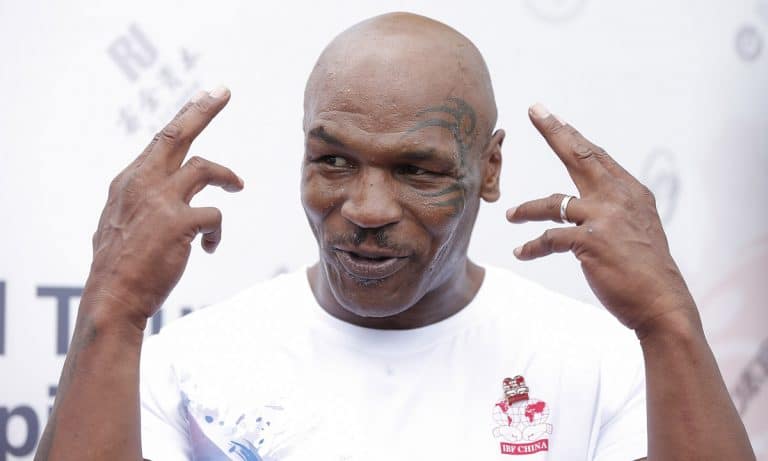
Mike Tyson Buys 40-Acre Cannabis Farm In California

Mike Tyson, the former heavyweight champion and one-time most-feared-man on the planet, has traded in his boxing gloves for gardening gloves. In December, Tyson and his business partners broke ground on a 40-acre plot of land near Death Valley, which will become a cannabis ranch, farm and resort.

The Blast, a new celebrity site created by TMZ co-founder Mike Walters, was first to break the news and reports Tyson Ranch will be dedicating 20 acres of the property for cannabis growing facilities that “will allow master growers to have maximum control of their environment.” There will also be a Tyson Cultivation School to teach growers the latest and greatest ways to perfect their own strains.

The Blast also lists Tyson’s business partners as  Robert Hickman, Jay Strommen and also city mayor Jennifer Wood. That’s right. Tyson is working with the mayor on this project.

Along with growing high-grade cannabis, Tyson Ranch will feature:

  • Hydro-feed plant and supply store
  • Extraction facility
  • Edible factory
  • Premium “glamping” campgrounds and cabins
  • Amphitheater

On Monday, cannabis retail sales become legal in California, opening up the most coveted market in America. The state’s recreational marijuana industry is forecast to be worth $7 billion by 2020. California is the sixth state to allow recreational sales.

Tyson has been a longtime believer in the healing properties of marijuana, and his ranch will work to improve the medical research and treatment of the plant, The Blast reports.

Don't Miss Your Weekly Dose of The Fresh Toast.

Stay informed with exclusive news briefs delivered directly to your inbox every Friday.

We respect your privacy. Unsubscribe anytime.