Sunday, December 21, 2025
Home Blog Page 1141

Looks Like Raw Marijuana Leaves Are The Next Superfood

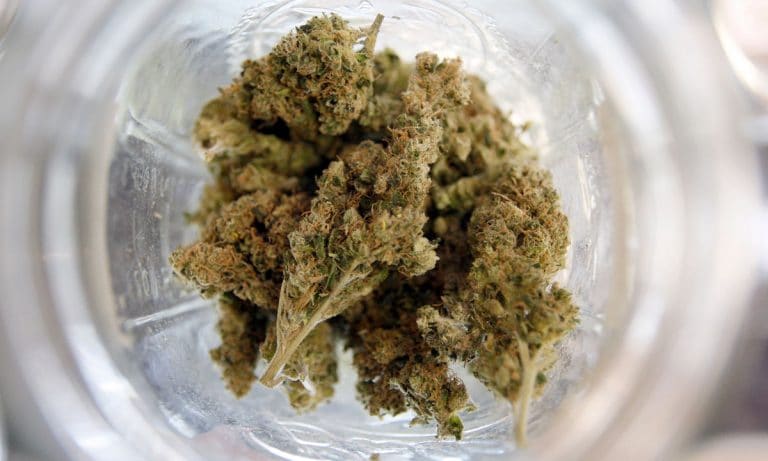
Cannabis flower is good for you in a myriad of ways, but what about the leaves themselves? Doctors and enthusiasts are starting to ask how raw marijuana leaves can benefit the body.


But before you go sprinkling a gram into your morning kale smoothie, it’s important to note that it does matter how you prepare and serve the cannabis.

When cannabis is heated, cannabinoid acids are activated into psychoactive THC and cannabinoid CBD. In these forms, even the most regular stoner can only handle relatively small doses. The recommended dose for this kind of THC is 10 oral milligrams, but raw cannabis acids can be taken in upwards of thousands of milligrams.

As Herb notes, Dr. William Courtney spoke about the benefits of raw cannabis several years ago:

He says that cannabinoid acids are anti-inflammatory, antioxidant, anti-diabetic, anti-ischemic, and have anti-tumoural effects. Courtney suggests that because the raw plant doesn’t have psychoactive effect, it allows people who don’t want to feel high to take it in the morning when they get up, while driving, or at work.

Smoothies and juicing the leaves are the most delicious delivery methods for raw cannabis leaves, but the imagination can run a little wild with this one: Keeping it in a little windowsill terra-cotta pot next to your basil and rosemary plants? Snipping off a leaf to sprinkle onto pasta or omelettes? Chopping it into salads or soups? Sure.

Even The New Yorker jumped on this trend, briefly, in 2013.

American Legion Fires Back At VA Secretary Over Medical Marijuana

The American Legion is mad as hell and is not taking it anymore. This week, the nation’s largest wartime veterans service organization, urged the U.S. Department of Veterans Affairs to get serious about supporting research into marijuana’s therapeutic benefits in treating PTSD.

The group, chartered by Congress in 1919 to focus on advocating patriotism across the U.S., on Wednesday escalated its campaign to convince VA Secretary David Shulkin to fully get behind an FDA-approved study taking place at the Scottsdale Research Institute in Arizona that could potentially help thousands of disabled veterans.

American Legion National Commander Denise Rohan submitted a letter to Shulkin urging the secretary to stop dragging their feet. Last month at the American Legion National Convention in Reno, the doctor facilitating the study – Dr. Sue Sisley – asked members of the Legion’s Veterans Affairs and Rehabilitation Division to express their support for her study: 

“We will not be able to achieve this without your help. There is no way we’ll be able to complete this study without the Phoenix VA hospital opening their doors to us. Your leadership is well aware of this problem, and they’ve been very generous in trying to help us address this issue with the hospital. But we have not made any headway.

“The American Legion has already been immensely supportive of the study, but we’ve never formalized that. In fact, this falls within the parameters of the (Legion’s Resolution 11) passed last year. I would urge you to consider endorsing the study as an organization, enabling us to have the momentum of the Legion behind the study to generation the cooperation from the Phoenix VA.”

The Legion apparently heard Sisley’s plea. In her letter to Shulkin, Rohan said, “The Carl T. Hayden Phoenix VA Health Care System is ideally geographically located to assist with this effort and should enthusiastically take the lead in assisting with this research study. … Without the assistance of the Department, this study is in jeopardy of failing due to lack of viable test participants.” 

Rohan closed the letter telling Shulkin “Your immediate attention in this important matter is greatly appreciated. We ask for your direct involvement to ensure this critical research is fully enabled.”

Here is the full text of Rohan’s letter: 

Dr. Mr. Secretary:

For more than a year, The American Legion has called on the federal government to support and enable scientific research to clinically confirm the medicinal value of cannabis. The National Academy of Medicine recently reviewed 10,000 scientific abstracts on the therapeutic value of cannabis and reached nearly 100 conclusions in a report issued earlier this year. As a two million member strong veteran service organization, our primary interest and advocacy is grounded in the wellbeing and improved health of our veterans, and specifically our service disabled veterans.

The Scottsdale Research Institute, outside of Phoenix Arizona, is currently in phase one of an FDA-Approved Marijuana/PTSD research study, being conducted in collaboration with the National Institute of Health (NIH) National Institute on Drug Abuse (NIDA). This study is a Placebo-Controlled, Triple-Blind, Randomized Crossover Pilot Study of the Safety and Efficacy of Four Different Potencies of Smoked Marijuana in 76 Veterans with Chronic, Treatment-Resistant Posttraumatic Stress Disorder (PTSD).

The American Legion is a strong, vocal proponent of the Department of Veterans Affairs (VA) and has published several books, pamphlets, and magazines that help showcase VA’s value to The United States of America. Our members have long been a ferocious advocate for evidence-based, complementary and alternative medicines and therapies. For decades, we have supported increased funding and research in such therapies as hyperbaric oxygen therapy, Quantitative Electroencephalography (QEEG), animal therapy, recreational therapy, meditation, and mindfulness therapies, just to name a few, to improve outcomes for veterans confronted with PTSD.

The American Legion supports VA’s statutory medical research mission and has donated millions of dollars toward expanding VA’s scientific research. VA innovation is widely championed for their breakthrough discoveries in medicine and has been recognized over the years with three Nobel Prizes for scientific work that has benefited the world over.

The research being conducted by the Scottsdale Institute is the first cannabis based research of its kind in The United States and could potentially produce scientific evidence that will enhance, improve, and save the lives of veterans suffering from post-traumatic stress disorder (PTSD). Many veterans have approached us to tell us that access to cannabis has materially improved their health and well-being. While their stories are very compelling, we need clinical evidence to have a fact-based discussion on the future of cannabis policy.

As a scientific research leader in this country with a statutory obligation to care for and improve the lives of our nation’s veterans, The American Legion calls on the Department of Veterans Affairs to assist the Scottsdale Institute, in accordance with VA’s existing policies and regulations (VHA Directive 1200 §2.b and §5.tt VHA Handbook 1200.01 §8.g and §10.a(1) VHA Handbook 1200.05 §3.xxx(note)) that states, in part;

“NOTE: This guidance does not preclude VA clinicians, in the normal course of their clinical duties, from discussing specific research studies with their patients where appropriate, and referring them to a non-VA investigator for more information about a non-VA study. However, VA personnel should not provide the non-VA investigator with the names or contact information of Veterans who might be eligible for the study. Instead, the VA clinician should provide the Veteran with the contact information for the non-VA investigator so the Veteran may initiate contact if he/she is interested in participating in the non-VA study.”

The Carl T. Hayden Phoenix VA Health Care System is ideally geographically located to assist with this effort and should enthusiastically take the lead in assisting with this research study. There is an overwhelming body of evidence suggests that cannabis is effective in treating a number of service connected related illnesses, including PTSD and chronic pain, the two most persistent and widespread illnesses and injuries plaguing our veteran community. Without the assistance of the Department, this study is in jeopardy of failing due to lack of viable test participants. Project scientists have screened thousands of applicants, but due to the strict requirements of the study which is required to produce reliable scientific data, nearly 99 percent of these applicants are eliminated for a variety of screening reasons. This study needs 50 more participants and the Phoenix VA is in the best possible position to assist by simply allowing principle investigators to brief VAMC medical staff on the progress of the study, and by allowing clinicians to reveal the existence of the study to potential participants.

Your immediate attention in this important matter is greatly appreciated. We ask for your direct involvement to ensure this critical research is fully enabled.

Sincerely,

Denise H. Rohan 

Olivia Newton-John Says Marijuana Has Helped Her Battle Cancer

In May of this year, Olivia-Newton John got news that the cancer she beat 24 years ago had returned. This time, in her lower back.

She initially thought she had sciatica. Still performing, Newton-John, who made a name for herself in the movie Grease, says she’d grit her teeth, pop some aspirin and go on.

Turns out, her breast cancer had metastasized to the sacrum. The prognosis? Newton-John says she doesn’t read into prognosis and statistics because “I’m not going to be one of those statistics, I’m going to be fine,” the 68-year old told the Today show. She says that she will probably deal with cancer the rest of her life but thinks “you can live with cancer the way you live with other things if you take care of yourself.”

And for her, that includes medical marijuana, which she credits for helping her get back on her feet during bouts of crippling pain.

“People have this vision from the ’60s of people just sitting around, you know, getting stoned, and I think it’s not about that. This plant is a healing plant. I think we need to change the vision of what it is because it helped me greatly and it helps with pain and inflammation.”

When she was treated for cancer the first time, NJ said she felt the need for more than just traditional treatment. She supplemented chemotherapy with meditation, yoga, art and music — all of which she offers other cancer patients at her wellness and research center in her hometown of Melbourne, Australia.

What has cancer taught her about herself? “I think it taught me that I’m stronger than I thought I was, because even though you have a team around you and people are helping you, really in the end it’s up to you.”

Next year marks the 40th anniversary of Grease. Newton-John plans to auction off her famous leather pants from the movie to help fund her wellness center.

Here’s The Number One Reason Why People Use Marijuana

Roughly 40 million Americans have some sort of sleep issues and more and more of these sleep-deprived souls are turning to cannabis to get a restful night in bed. Sure, marijuana is used by millions for its psychoactive high, but a recent survey reveals that nearly 50 percent of consumers of the herb just want to doze off at night.

The survey, conducted in the Denver area by Consumer Research Around Cannabis, found that only pain relief rivals sleep as a reason for using marijuana, Forbes reported. The researchers surveyed 1,258 cannabis users in the Denver metropolitan area and nearby parts of Wyoming and Nebraska.

According to the study, 47.2 percent of the respondents bought marijuana to help them sleep and 47.2 percent said the herb helps treat chronic or recurring pain. The third most popular reason, at 45.7 percent, use it for depression or anxiety.

Nearly a third of the respondents (32.8 percent) claim they consume cannabis for “creative purposes and expanding perceptions and thought processes.” Only 28.5 percent of those surveyed said they use cannabis to have a good time with friends and family.

Lack of sleep is becoming a serious issue in the U.S. The Centers for Disease Control and Prevention considers sleep apnea and other related disorders a dangerously hidden public health issue. According to the CDC, “persons experiencing sleep insufficiency are also more likely to suffer from chronic diseases such as hypertension, diabetes, depression, and obesity, as well as from cancer, increased mortality, and reduced quality of life and productivity.”

Unlike prescription or over-the-counter sleep medications, cannabis users report that they do not feel groggy or impaired in the morning. And even the most ardent drug warrior will concede that cannabis is much less addictive than medications such as Ambien or Lunesta.

An estimated 10 million Americans have a prescription for Ambien or some other pharmaceutical sleep medication and 4 percent of adults report that they have taken a sleeping pill or sedative in the previous month.

Jackpot! Las Vegas Gets First 24/7 Marijuana Store

For night owls, Las Vegas is their kind of town. In Sin City, it’s legal to gamble and buy booze 24 hours a day. Beginning this weekend, it will be legal to buy marijuana any time of day too.

When Nevada legalized the sale of recreational marijuana last November, Las Vegas officials mandated retail outlets to shut their doors from 3-6 a.m. But the city council on Wednesday voted unanimously to allow one shop — Oasis Cannabis — to keep its doors open 24/7. And Benjamin Sillitoe, CEO and co-founder of Oasis Cannabis, told the Las Vegas Review-Journal that he plans on making the change as early as Friday.

The move helps clarify a murky set of local laws that appeared to favor some retail outlets over others. In nearby North Las Vegas, Reef Dispensaries already enjoyed all-night status. Earlier this week, Clark County commissioners voted to allow its 26 marijuana stores to keep their doors open, but that change will take weeks to implement.

Sillitoe told the Review-Journal that businesses neighboring his facility, including a tavern and a body painting studio, are allowed to remain open. “We have people lined up at our door at 6 a.m., and (we) are rushing people out at 3 a.m.,” Sillitoe told the newspaper.

According to North Las Vegas Planning Manager Marc Jordan, being open all night long has not created a nuisance in the neighborhood. The city has allowed all-night sales since the medical marijuana program began three years ago. “We haven’t had any reason to establish hours,” Jordan said. “(And) we haven’t had any concerns come down from City Council or citizen complaints that I am aware of that would warrant us to revisit it.”

Reef Dispensaries CEO Matthew Morgan said the extended hours has helped his business. “It’s thriving,” he said. “Three in the morning to 7 a.m. is a huge window for people who enjoy the nightlife in Las Vegas and are looking for something to settle down.”

Will Washingtonians Finally Get To Grow Their Own Marijuana?

Unlike other states with recreational cannabis, Washington does not allow for home cultivation of recreational cannabis. However, that could change soon as SB 5131 requires the Washington State Liquor and Cannabis Board (LCB) to study the viability of home cultivation.

The LCB will hold a public hearing on October 4 on whether the State should allow home grows of recreational marijuana. (If you live in the state, written public comments may be submitted through October 11 at rules@lcb.wa.gov or hard copy at PO Box 43080, Olympia, WA 98504.)

The LCB must consider home cultivation in light of the Cole Memorandum, the Obama-era policy statement from the Department of Justice that tacitly permits states to legalize marijuana so long as those states enact strong and effective regulations. The Cole Memo outlines eight enforcement priorities:

  1. Preventing the distribution of marijuana to minors;
  2. Preventing revenue from the sale of marijuana from going to criminal enterprises, gangs, and cartels;
  3. Preventing the diversion of marijuana from states where it is legal under state law in some form to other states;
  4. Preventing state-authorized marijuana activity from being used as a cover or pretext for the trafficking of other illegal drugs or other illegal activity;
  5. Preventing violence and the use of firearms in the cultivation and distribution of marijuana;
  6. Preventing drugged driving and the exacerbation of other adverse public health consequences associated with marijuana use;
  7. Preventing the growing of marijuana on public lands and the attendant public safety and environmental dangers posed by marijuana production on public lands; and
  8. Preventing marijuana possession or use on federal property.

The LCB has opposed home cultivation in the past. In 2015, Washington lawmakers considered a bill that would have allowed cultivation of up to six cannabis plants. In response, the LCB sent a letter outlining the Board’s concern that unregulated home grows would increase the occurrence of all eight enforcement priorities outlined in the Cole Memo.

The LCB worries that home cultivation will lead to diversion. Washington producer, processors, transporters, researchers, and retailers must all use “seed-to-sale” traceability software. As the name suggests, a cannabis plant is monitored throughout its life to prevent cannabis from being diverted to other states, to minors, or to the black market.

The LCB is seeking public input on three proposed options:

  1. Tightly Regulated Recreational Marijuana Home Grows
    This option would impose a strict regulatory framework. Home cultivators would need a permit to grow legally. Permit holders could then purchase plants from licensed producers. Each household would be allowed four plants and all plants would be tracked in the same traceability system used to monitor commercially grown cannabis.  The LCB would impose requirements to ensure security, preventing youth access, and preventing diversion. Both the LCB and local authorities would monitor home grows. Cannabis processing would be subject to the same restrictions as apply to medical cannabis (e.g., no combustible processing).
  2. Local Control Of Recreational Marijuana Home Grows
    Like Option One, this option would require a permit, require safeguards to prevent diversion, limit each household to four plants, and allow permit holders to purchase plants from producers. Option Two would not require home cultivators to use the State’s traceability system. It also would give greater authority to local jurisdictions to create more restrictions and to authorize, control, and enforce the home grown program.
  3. Recreational Home Grows Are Prohibited
    The third option is to maintain the status quo and prohibit home cultivation.

The LCB must report its findings to Washington’s legislature by December 1. Lawmakers provided the LCB with no additional funds, meaning the Board must conduct its study without expanding its budget. There is no guarantee that anything changes but this is could be the beginning of recreational home cultivation in Washington.

Daniel Shortt is an attorney at Harris Bricken, a law firm with lawyers in Seattle, Portland, Los Angeles, San Francisco, Barcelona, and Beijing. This story was originally published on the Canna Law Blog.  

This Country Will Be The Next To Legalize Medical Marijuana

The debate on whether to legalize medical marijuana sparked up last February, when a makeshift cannabis lab, run by mothers who were trying to medicate their sick children, was raided by the police in Peru. The raid made a lot of people angry, with the public understanding and backing the mothers, which inspired large groups of people to push for the legalization of the drug, at least for medical purposes.

President Pedro Pablo Kuczynski was one of the first to propose the consideration for legalizing the drug, proposing a legislation outlining medical marijuana. The legislation was approved and it must now face the Peruvian Council, which will declare if medical marijuana will be legalized or not. It’s understood that the measure, if successful, would benefit all patients suffering from cancer, epilepsy, Parkinson’s disease and many other illnesses.

Cannabis oil is also included in the legislation and would become a legalized product, since it’s considered medicinal. Recreational cannabis is still something that’s debated and that hasn’t been specified in the legislation.

Many people believe that this is a critical moment for the future of recreational and medicinal marijuana in Peru, signaling yet another country that’s planning on moving forward with their views on the drug and that’s in favor of progress.  

Can Medical Marijuana Help With My Crohn’s Disease?

Crohn’s disease is a form of inflammatory bowel disease (IBD) that affects more than half a million Americans. The causes of Crohn’s are not fully understood, but the effect is to send body’s immune system into hyperdrive so that it mistakes the microorganisms that naturally, and peaceably, populate our guts for ravaging invaders. The chronic inflammation produced by this immunological false alarm can lead to painful thickening and ulceration of the intestines. Other symptoms include nausea, vomiting, diarrhea, constipation, “urgent need,” and—not surprisingly—fatigue.

There is no cure for Crohn’s. One common treatment, however, is corticosteroids, but they present a smorgasbord of side effects, from minor (hair loss) to potentially life threatening (lowered immune response, elevated blood pressure and blood sugar level). So Crohn’s sufferers can face a Sophie’s choice between rectal bleeding and adult-onset diabetes.

There Is Growing Evidence That Marijuana Offers A Better Alternative:

  • IBD patients who smoke pot report an improved quality of life: A 2011 survey found that a “significant number” of IBD patients already use marijuana to treat their symptoms and that a majority of them find it “very helpful.” These results were echoed in a pilot study from 2012, which listed benefits including lower levels of pain and depression and an increased sense of overall health.
  • Science is beginning to side with the smokers: In a first-of-its-kind placebo-controlled study to test the effects of cannabis on Crohn’s disease, published in 2013, ninety percent of smokers experienced “a clinical response.” Forty percent achieved full remission. Smokers also reported “significant increase in quality of life,” including better sleep and appetite.
  • Cannabis provides all the benefit and little downside: The same 2013 study reported no unpleasant side effects. In fact, the marijuana even helped wean three subjects from steroid dependency.
  • Related Story: Why Won’t My Doctor Prescribe Medical Marijuana For Me?

  • Cannabis doesn’t mask Crohn’s symptoms; it treats them: There are lots of cannabis receptors in the brain (which accounts for marijuana’s effect on mood), but the gut is also dense with receptors that have been well attested to produce an anti-inflammatory effect. The effect, however, is not permanent: It wears off about two weeks after ceasing cannabis intake.
  • Legal restrictions are preventing people from finding help: One quarter of people with IBD have never used marijuana, but they would try it medicinally if it were legal.

Governor: Nevada Casinos Need To Talk With The Marijuana Industry

Nevada Gov. Brian Sandoval signed an executive order on Wednesday directing the Gaming Policy Committee to discuss how casinos should work with the legal marijuana industry.

“Gaming regulators have been clear on the prohibition of marijuana consumption on licensed gaming properties, but there are additional policy considerations such as industry events and business relationships that should be contemplated,” said Sandoval, who is one of 12 members on the gaming committee.

He is not the only politician hoping that the two industries can form some sort of working relationship. Sen. Tick Segerblom, D-Las Vegas, who is also a committee member, told the Reno Gazette-Journal:

“This is not about smoking marijuana at casinos, this is business. This is business conventions. This is money. This is where they can talk about insurance for dispensaries at a convention, or security. It’s one thing to sell marijuana at a casino, but it’s another to just talk business. Las Vegas could be the capital for these conventions, and Reno.”

Earlier this month, the Nevada Gaming Commission announced that it was illegal to consume cannabis in bars, casinos, hotels, and public places. So although marijuana is legal in the state, tourists and residents are having a difficult time to legally consume cannabis in places that aren’t their homes.

Casinos, which will continue to prohibit marijuana consumption on their properties, have been faced with a number of “grey area” scenarios since recreational marijuana became legal on Jan. 1 in Nevada.

Tony Alamo, chairman of the Nevada Gaming Commission, told the Gazette-Journal he has received dozens of calls from gaming officials unclear on the murky regulations.

 “We told licenses stay away from marijuana, you could be involved in federal violations,” said  A.G. Burnett, chairman of the Gaming Control Board, which regulates the industry in Nevada. “There were a number of gaming licensees that wanted to get involved. We had maneuvered and guided the industry, but with the advent of recreational, it’s a different game.”

Gaming industry executives have asked regulators if they are allowed to take money from a marijuana businesses. “We need some action – one way or another – from the federal government,” Burnett told the Gazette-Journal. “Knowing what we’re supposed to enforce would be helpful. It’s not been easy.”

Massive Crowd Shows Up When New Florida Dispensary Opens Its Doors

The owners of Trulieve, a Florida medical marijuana company, didn’t know exactly what to expect when it had its grand opening in Bradenton on Monday. A small line formed before the doors opened for business, but the retail store quickly filled to capacity and was standing room only as patients celebrated Florida’s expanded marijuana program.

According to the Bradenton Herald, scores of patients showed up to buy cannabis oil. One patient, Miguel Couvertier, an Air Force veteran, expressed relief that he will now be able to easily access his medicine:

“It helps a lot. We voted for this to get away from the opioids that are prescribed by doctors and the (Department of Veterans Affairs). There were no alternatives before now and now we have alternatives we know work for us.”

In November, 71.3 percent of Florida voters approved a constitutional amendment expanding medical marijuana, making Florida one of 29 states that have legalized cannabis for medical consumption. But state lawmakers fought over how to enact the will of the people. In June, the state legislature ruled that the sale of flowers, buds or any other part of the plant that can be smoked would remain illegal. Only marijuana converted into oil is legal.

Trulieve is one of 17 dispensaries approved by the state. Each company approved by the state is allowed to operate no more than 25 retail stores. Trulieve already has stores in Tampa and Clearwater.

According to Trulieve CEO Kim Rivers, most of his customers are in their 60s and 70s. And many, like Couvertier, are veterans.

Couvertier told the Herald that he has been frustrated by the state’s foot dragging when it comes to cannabis legislation:

“I’m mad, to tell you the truth. The government process moves differently than what we voted for and has made things more difficult.”

The veteran says he also is angry at the legislature’s decision to ban smokeable marijuana:

“It’s disappointing because these products are more expensive than what a flower-based product would be. Leaving smokeable marijuana on the black market makes no sense. This isn’t what we voted for.”

Don't Miss Your Weekly Dose of The Fresh Toast.

Stay informed with exclusive news briefs delivered directly to your inbox every Friday.

We respect your privacy. Unsubscribe anytime.