Canadians hoping to get in a quick toke before boarding their flight at a British Columbia airport are out of luck. Last year, Prince George Airport was set to become the first in the world to open a retail cannabis shop on its terminal. But alas, the project fell through.
Photo by Artur Tumasjan via Unsplash
What Happened
In December, the Prince George Airport Authority (PGAA) announced that Cloudbreak Cannabis, previously known as Copilot Cannabis, “would not be signing a lease or beginning construction, citing changing market conditions.” Apparently, the decision was made due to changing economic conditions, reported MjBizDaily.
“A lot has changed in the economy,” said PGAA president and CEO Gordon Duke. “And certainly, we’ve seen with interest rates and inflation, just in the past six months, it has really changed the economic environment.”
Duke said the store was in development for about three years and was due to open in the first quarter of this year before the change of plans.
He explained that it took longer to develop than a regular airport retail store would typically take, citing regulatory hurdles related to opening cannabis stores as well as the added complexity of opening one in an airport. “We were hopeful and enthused that this might come to fruition, however, we understand the risk associated with any startup business.”
Last year, one of Canada’s busiest airports, Toronto Pearson, reportedly hired a lobbyist to explore the possibility of retailing cannabis. However, the governing authority of the airport ruled out those business plans before they got off the ground.
Photo by Erik Odiin via Unsplash
Canadians Use Cannabis Responsibly
Canadians still prefer smoking as the most common method of consuming cannabis, despite a decline in recent years, showed a recent 2022 Canadian Cannabis Survey.
Among the survey findings is that cannabis use among people aged 16 to 19 has returned to pre-legalization levels in 2021 and 2022. Most respondents even said they bought products in legal stores. The report also showed while stoned on weed decreased between 2018 and 2021 and remained unchanged in 2022.
A second New York dispensary is set to open in Manhattan more than two weeks after the state saw its first legal adult-use sale. The “Union Square Travel Agency: A Cannabis Store,” will be located at the former home of an old Chase bank on the corner of Broadway and East 13th Street, across from the Union Square subway station.
The store plans to open in February, but had a soft opening on Friday at another facility (with an entrance at 62 East 13th St.) while the main 5,000-square-foot space is being built out.
Of the proceeds, 51% will go to the Doe Fund, which provides housing, career training and counseling to marginalized populations in New York City. Additionally, the store will only sell products cultivated in the state with a focus on women and BIPOC-owned businesses.
Photo by Ferdinand Stöhr via Unsplash
The dispensary will be open from 10 a.m. to 10 p.m. on weekdays and 10 a.m. to 11 p.m. on weekends, seven days a week.
The first legal adult-use dispensary opened Dec. 28 at a former Gap retail store in lower Manhattan near Astor Place. The historic opening marked a long-awaited launch of a state marijuana market that many analysts project could become one of the country’s most promising.
Despite the proliferation of numerous illegal shops throughout the state, Gov. Kathy Hochul announced on Dec. 21 that Housing Works, a minority-controlled nonprofit that focuses on helping those with HIV and AIDS, would be the first of 36 recently licensed dispensaries to begin selling cannabis to the general public. Housing Works has been known for running a small chain of charitable retail outlets.
The state is expected to issue an additional 139 licenses in the coming months for about 900 applicants. The state reserved its first round of retail licenses for applicants with marijuana convictions or their relatives, plus some nonprofit groups.
It also planned a $200 million public-private fund to aid social equity applicants with real estate, though its status and how much progress has been made is not exactly clear. Industry stakeholders toldGreen Market Report in November that there’s been little news on how much progress has been made by fund managers in actually raising capital or getting state monies deposited, so that actual retail spaces can be leased for social equity cannabis companies.
The Dormitory Authority of the State of New York then missed its Dec. 30 deadline to report to the governor, the legislature and the public on its status and details about the social equity program and its relationship with the firm it selected as a fund manager. A DASNY spokesperson told NY Cannabis Insider last week that the agency “will have the report out soon.”
Photo by Michael M. Santiago/Getty Images
The New York Office of Cannabis Management also extended the license application window for marijuana testing labs to March 31 from its originally scheduled closure of New Year’s Eve.
Chris Alexander, the executive director of the OCM, told the Cannabis Control Board at a public meeting in December that adding that the state is still looking for top-notch lab candidates. “That is a cornerstone of the market that we’re building,” he said.
Alexander also said that the state is rolling out more resources to support the legal marijuana market and to suppress the thriving illicit trade, including:
A public education campaign called “Why Buy Legal New York.”
Ongoing enforcement against unlicensed retailers, including the seizure of more than $4 million in illegal cannabis products from 53 locations by the New York City Sheriff’s joint task force.
A study conducted on twins found that those who live in legal states have lower odds of abusing alcohol, among other things.
A federally funded study reveals residents of legal marijuana states have lower rates of this disorder. The data concluded states with legal weed have lower rates of alcohol use disorder (AUD). The longitudinal study that began in 2014 when weed wasn’t legal, was conducted by researchers from the University of Colorado and the University of Minnesota and published in the journal Psychological Medicine.
In all cases, one twin lived in a state with legal marijuana while the other didn’t, providing a unique case for researchers trying to understand the impact of legalization without having to worry over complex factors like the subjects’ genetics and socialization. The study found that while alcohol consumption between states didn’t vary greatly, twins that lived in legal states were less likely to face harm when under the influence of alcohol.
Photo by Taylor Brandon via Unsplash
“Recreational legalization was associated with increased cannabis use and decreased AUD symptoms but was not associated with other maladaptations,” wrote the researchers. They also determined that states with legal cannabis didn’t have a higher rate of psychosocial disorders, a concern for many that don’t support legalizing marijuana.
Despite the promising evidence, researchers made it clear that the study’s data was difficult to interpret and that it should be studied further before jumping to any conclusions and suggesting that legal marijuana is the cause of this change.
While cannabis could have a positive impact on alcohol use disorder, it could also impact other factors that weren’t studied in the research, including greater cannabis use, tobacco use, and other unhealthy behaviors that pose a risk for people’s health.
Government officials and researchers are interested in figuring out legal cannabis’ impact as soon as possible, whether that means it leads to more tax revenue or if it increases the odds of mental health illness.
While these studies won’t likely change much in the short term, their results could impact cannabis’ future, helping shape the way in which states handle the drug and educate their communities.
Some people do claim that they notice an immediate effect after using CBD. Although this might be the case for you, it’s more likely that you’ll need to give it a while.
If you’re using CBD, or cannabinoids of any kind, consistency is essential. One of the biggest mistakes you can make when taking CBD is expecting an immediate fix. (For simplicity’s sake, cannabinoid preparations of any kind are all hereafter referred to as CBD.)
Often, people take CBD and expect it to work like a drug: noticeably and immediately. But CBD is less like Tylenol and more like a good exercise regimen — it can take a while before you notice a difference.
And, like with any good supplement, using CBD regularly is the key to experiencing its benefits. If you’re using CBD and you’re not sure why you haven’t noticed a difference yet, here are some things to consider.
Photo by MAXSHOT/Getty Images
You Need to Use CBD Consistently
If you’re using CBD (or cannabinoid preparations of any kind), consistency is essential. The majority of successful studies on CBD involve giving the participants a daily dose of CBD, not a once-off dose. Often, these studies span weeks or months.
Most experts advise that CBD takes a while to build up in the system. For this reason, you can’t expect immediate results after a single dosage.
What does this mean for you? In order to reap the benefits of CBD, it’s best that you use CBD on a daily basis. We recommend using your CBD product every day, around the same time every day, in order to notice a difference.
How Long Will it Take for CBD to Work?
Most of our customers — and, anecdotally, most CBD users we know — start noticing a difference after a minimum of five days of regular use. Some people use it for three weeks before they fully feel the benefits of CBD.
Some people do claim that they notice an immediate effect. Although this might be the case for you, it’s more likely that you’ll need to give it a while.
You might find it best if you use CBD around the same time every day. You can take it several times a day — say, morning, night, and during your lunch break — if you prefer. This can give you a consistent dosage throughout the day.
Photo by CRYSTALWEED cannabis via Unsplash
How Much CBD Do I Need to Use?
If you’ve used CBD consistently for over a week and don’t notice any differences, it might be that you’re using too little.
If you’re an experienced cannabinoid user, we always suggest to start with the higher recommended milligrams, however, if you’re totally new to using CBD or cannabinoids, it’s best to start with a low dosage and slowly increase it. Although it’s pretty rare, some people experience side effects from CBD (such as nausea and fatigue). If you do experience these side effects, you might want to try taking it with a meal, decrease your dosage or stop taking it altogether.
We recommend experimenting a little — try a higher dose if you’d like. But remember that when it comes to benefiting from CBD, time and consistency is more important than dosage.
Tips for Boosting the Effects of CBD
If you want to make the most of your hemp tinctures, we recommend using CBD with a high-fat meal. A 2016study found that fat helps us absorb more CBD, increasing the bioavailability from less than 10% to around 30%. In other words, fat helps your body absorb and use CBD.
For a bonus, add a little black pepper. Ananimal study found that CBD levels in the bloodstream were six times higher when it was taken with piperine, which is found in black pepper.
Lastly, we recommend keeping a dosage journal. Whether you write it down on a piece of paper or use your Notes app, try to record your daily dosage of CBD. When you’re new to CBD, this can help you learn what your body needs while you figure out your ideal dosage. Since no two bodies are alike, only you can hear what your body is saying.
Photo by Sarah Pender/Getty Images
The Best Things in Life Are Slow
We’re used to instant gratification. We pop pills for relief from pain and headaches, we click a single button and have thousands of movies at our fingertips, we place online orders and receive them the next day.
While this is convenient, it’s important to remember that the best things in life often come slowly. Consistently sticking to healthy habits, like exercising, eating well, taking supplements or using CBD, might not give us instant results, but it sure canimprove our lives for the better. Slow, sustainable changes might be just what your body needs.
In order for those who potentially benefit from cannabis to seek aid without fear of judgment, it is important that we continue to educate ourselves and break down social taboos surrounding its usage.
Recently on Reddit I saw a person ask the community CPTSD the following question: I use cannabis to help me with emotional pain but nobody understands that. Does anyone have a similar issue? Everyone is telling me it makes things worse. I feel that it helps most of the time maybe not always.
Well, we are aware that cannabis has long been vilified as a harmful substance that might cause addiction and other negative effects. Recent studies have, however, demonstrated that cannabis can be used successfully to treat emotional suffering, such as anxiety and depression. New studies also show psychedelics are helping thousands clear the deck of emotional pain and damage.
Photo by SIphotography/Getty Images
Despite this, a lot of people still think using cannabis is uncool, and there is a lot of stigma attached to using marijuana to treat emotional suffering.
One of the main reasons for the stigma is the lack of education and understanding about the effects of cannabis on the brain. The potential negative effects of cannabis use have received more attention than its potential positive effects for many years. Because of this ignorance, cannabis usage is seen negatively, which makes it challenging for users to get the emotional support they need without feeling judged.
Cannabis use has also come to be associated with criminal activity as a result of cannabis being banned in many parts of the world. People may find it difficult to get care for their emotional pain because of this association since they may be afraid of the legal repercussions.
However, more research is being conducted on the therapeutic advantages of cannabis as a result of its legalization in some states and nations. Because cannabis affects the body’s endocannabinoid system, which is involved in controlling mood, anxiety, and other emotional reactions, studies have shown that it can be a successful treatment for emotional pain. Additionally, this has led to a rise in acceptance among the populace as large.
It’s important to realize that some people will always stigmatize you no matter what. They are completely consumed by their concepts of cannabis and until they have a Ruthless Awakening — when they will need cannabis to save their lives — they will continue to exist within their belief systems. There wouldn’t be much you could do to change their minds and within this context, acceptance is the only path forward.
Photo by wildpixel/Getty Images
The Sticky Bottom Line
As more studies on the medicinal uses of the plant are conducted, the stigma associated with using cannabis to treat emotional distress is starting to fade. While it’s critical to be aware of any hazards connected to cannabis usage, it’s also crucial to take into account any potential advantages, especially for people who are experiencing emotional anguish.
In order for those who potentially benefit from cannabis to seek aid without fear of judgment, it is important that we continue to educate ourselves and break down social taboos surrounding its usage.
At the end of the day if it works for you, and people judge you for it, they can go to hell. You’re the one that’s living your life, and if you let others dictate what is and isn’t accepted, you’ll always be a slave to their expectations.
This article was created in partnership with Cannabis.net
The Republican governor of Virginia is asking state lawmakers to give him more tools to crack down on largely unregulated cannabis products and retailers, particularly hemp-derived goods such as delta-8 and delta-10 edibles.
Gov. Glenn Youngkin included several such requests in his 2023 state budget proposal, including asking for $2.1 million and 15 new positions within the state Department of Agriculture and Consumer Services (VDACS) to “eliminate intoxicating cannabis-derived products from unregulated channels,” a spokesperson for Youngkin told the Virginia Mercury.
Youngkin also requested $513,000 in new funding for the state attorney general’s office, so the agency can hire five more “cannabis consumer protection investigators.”
Attorney General Jason Miyares already pledged to go after retailers selling possibly illegal cannabis goods, such as knockoff edibles that are colorfully packaged and can be easily confused with mainstream candy.
Photo by IRA_EVVA/Getty Images
The move by Youngkin comes amid the ongoing absence of a fully regulated and operational adult-use cannabis market, which is not slated to launch until next year sometime. State lawmakers still have to agree on a regulatory system for the industry, and at least one bill to do that has been introduced this year.
The crackdown, however, will also contribute to market uncertainty, since many businesses that could be affected believe they were operating within the bounds of the law, WRIC reported.
“These products do need some kind of regulation so that consumers are getting a safe and effective product. At the same time, the way the state is going about this has been very confusing,” said one Richmond-based hemp goods retailer who sold delta-8 and delta-10 edibles before state inspectors told him to cease and desist last year.
A spokesman for the VDACS told WRIC that his agency has made more than 5,300 site inspections since July to enforce new rules on hemp goods and that less than 7% of vendors were selling illegal marijuana or hemp goods. There are currently 12 companies involved in administrative hearings to determine whether the goods they were selling were legal or not, WRIC reported.
If you’re someone who enjoys getting high, but can’t seem to find the ambition to start a workout routine, perhaps it’s time to try one of these popular exercises proven to pair perfectly with a little pot.
As marijuana stigmas slowly fall away, the act of lighting up a joint or popping an edible is becoming as acceptable as opening a bottle of wine. Getting stoned is now an after-work nightcap equivalent, and “high” is the preferred mental state for many travelers. You might even have noticed that THC is becoming infused into some of America’s favorite workouts.
Colorado University recently published astudy in which “results indicated that the majority (81.7%) of participants endorsed using cannabis concurrently with exercise.” That number is very telling, even for a state that has legalized recreational marijuana and has a thriving cannabis industry.
The samestudy went on to state that “approximately half reported that it increases their motivation to exercise.” So, if you’re someone who enjoys getting high but can’t seem to find the ambition to start a workout routine, perhaps it is time to try one of these five popular exercises that are proven to pair perfectly with a little pot.
Yoga
Photo by Carl Barcelo via Unsplash
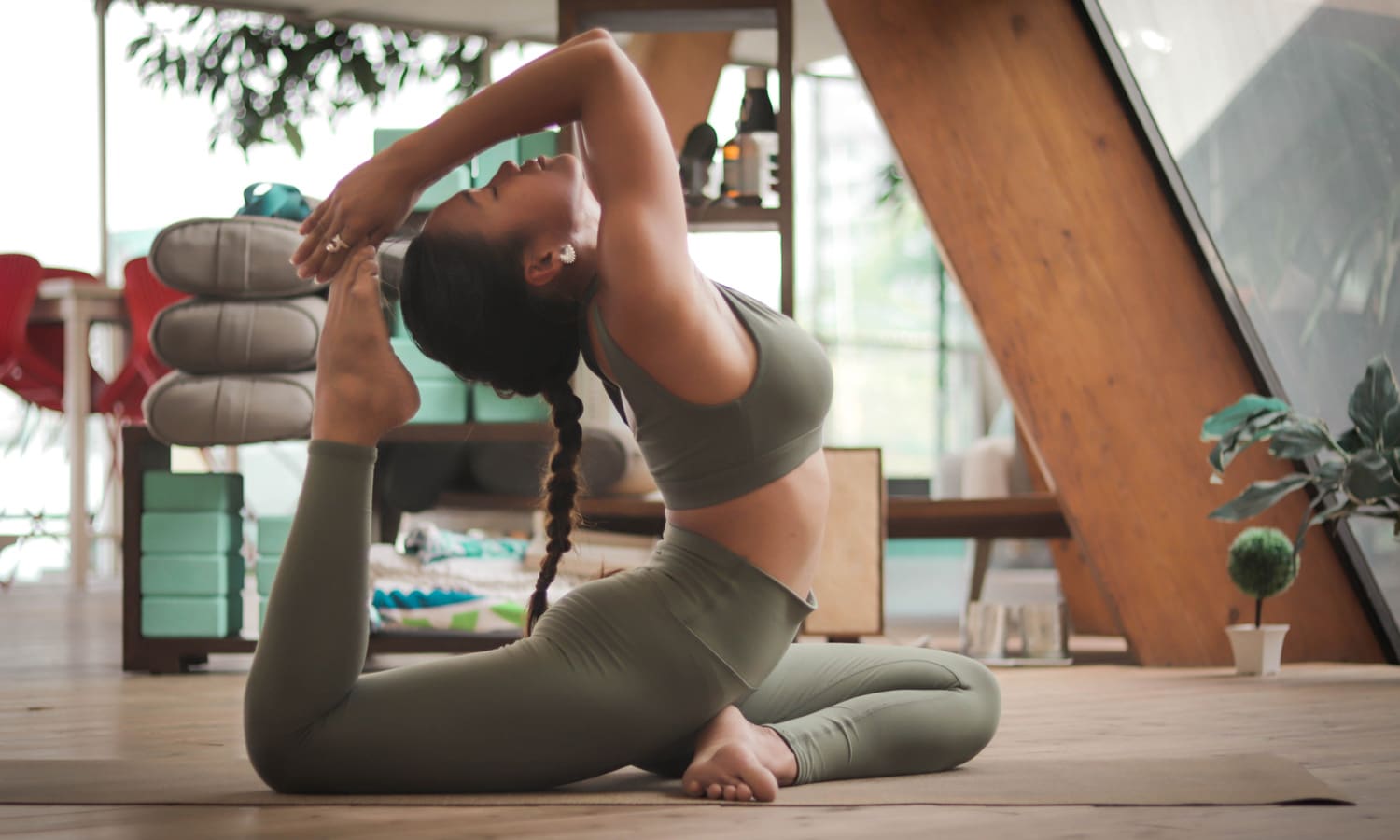
Yoga and marijuana have been friends for a long time. Many yoga practitioners speak to the mellowing qualities of THC and how they can greatly enhance a guided yoga practice.
“It really does facilitate getting out of the head and quieting the ego concerns of what has already happened in the past and what may happen in the future,” Dee Dussault, founder of Ganja Yoga told Yoga Journal.
Many yogis and even yoga studios in states with legalized recreational marijuana have begun to publicly combine cannabis into their yoga practices. Marijuasana, for example, is a company that “infuses” the practice of yoga and cannabis – and they have successfully made business out of it. There are many other small businesses like Marijuasana, and likely many more due to sprout up in states that have just passed legalization measures.
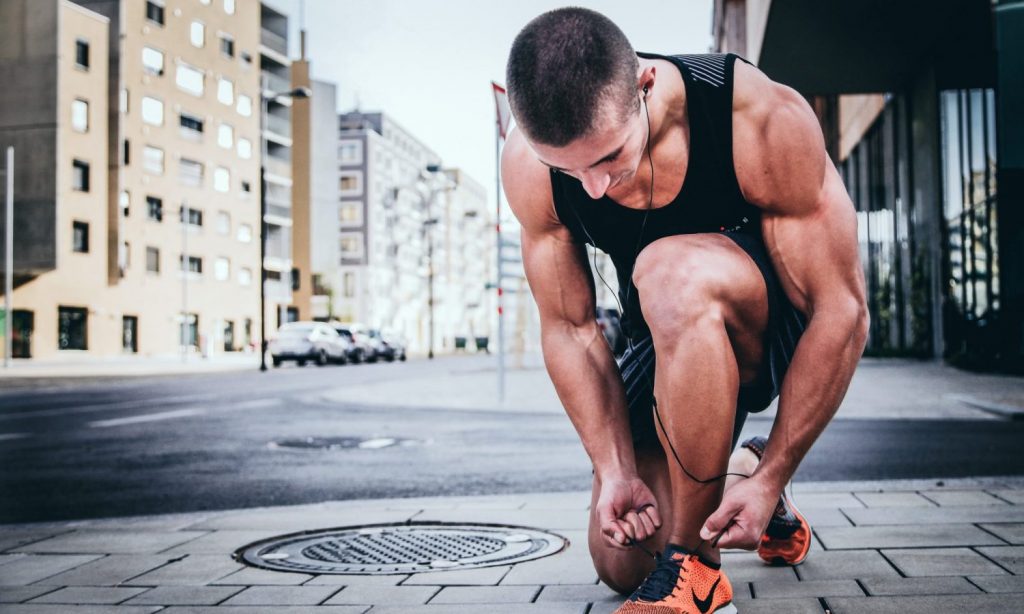
Running
Photo by Alexander Redl via Unsplash
Running and marijuana was discussed a great deal recently thanks to a heated olympic controversy. One thing to come out of the controversy was knowledge that many athletes, especially runners, use cannabis.
Not only does marijuana have mental benefits, but it also has proven pain relief benefits that may be attractive to high-endurance athletes like runners.
In a 2019 study of athletes published in the journal PLOS One, “Of the 1,161 participants 302 (26.0%) were current cannabis users.” The study cited the pain relief benefits of cannabis as one potential reason so many professional athletes use cannabis.
Even if you don’t plan on winning a gold medal any time soon, it is good to know that after a long run, cannabis can assist in numbing the pain. This may be all you need to help stick to a consistent workout routine.
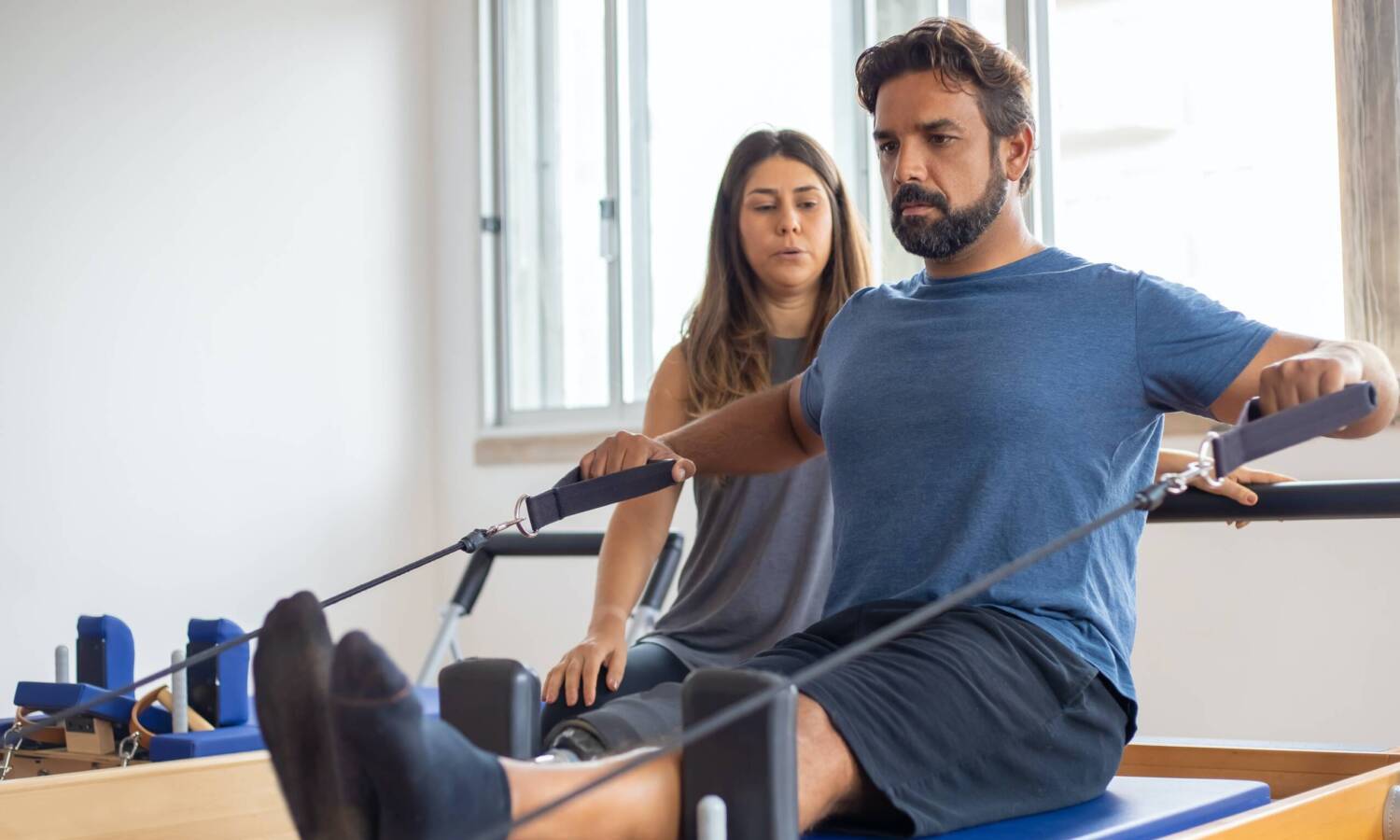
Pilates
Photo by Kampus Production via Pexels
Pilates has been a popular exercise for many years, and resurged as a favorite for many during times of quarantine. Adding a dose of THC to pilates and other low-impact repetitive exercises can be a great combination.
Not only does cannabis potentially help with any pain or aches, but the THC can help focus you during your workout, just as it would during a yoga practice. Several groups have formed in states where recreational marijuana is legal. In fact, a “Puff-n-Pilates” event may be happening at an exercise studio near you.
Stationary Biking
Photo by Josh Nuttall via Unsplash
Pilates are not the only workout class style of workout that have found a mass of stoned followers. “Pelostoners” and other cycling groups that like to pair stationary biking with marijuana are popping up throughout social media.
While biking on roads under the influence of THC may be dangerous and is certainly illegal, it can be great fun to cycle safely indoors while slightly “elevated.”
Many cyclists use marijuana because “It’s pain relieving properties can ease the strain on the body while its mind-altering effects can help some athletes get in the zone to push a little harder when the workout gets really tough,” according to anarticle in Canada Cycle Magazine.
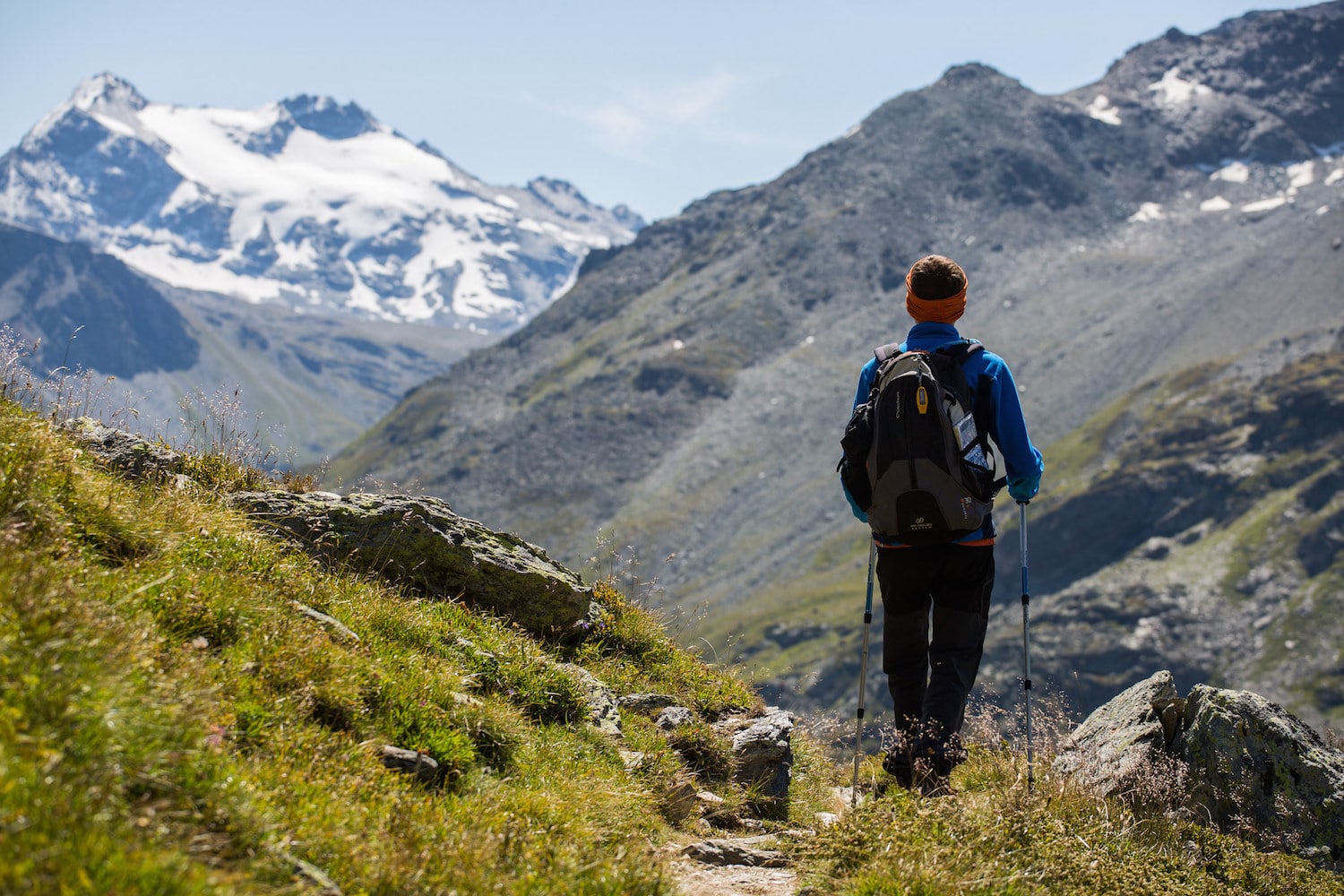
Hiking
Franck Michel/Flickr
Cannabis and hiking have gone hand and hand for generations. Many nature lovers who are looking to disconnect can find an even further sense of peace and calm when sparking up a joint while sitting at a beautiful vista.
Combining your high-cardio hike with cannabis can be highly motivating. It is important to note that you should avoid any dangerous or treacherous hikes when under the influence of cannabis. Always ensure that you are considering your safety before you combine cannabis with any activity. Stay within the law, stay safe and stay motivated.
Many patients assume they aren’t going to have adverse side effects from cannabis because they often don’t view it as seriously as they would a prescription drug.
There has been an increase in the rate of cannabis-related visits to the emergency department among adults in California, a new study shows. According to the findings, published in the Journal of the American Geriatrics Society, cannabis-related emergency department visits went from a total of 366 in 2005 to 12,167 in 2019.
Researchers with the University of California San Diego School Of Medicine used a trend analysis of data from the Department of Healthcare Access and Information.
While cannabis is often prescribed to alleviate chronic pain, especially among the elderly, there is also an increased risk of adverse effects on health associated with psychoactive substances — including marijuana.
“Many patients assume they aren’t going to have adverse side effects from cannabis because they often don’t view it as seriously as they would a prescription drug,” said Benjamin Han, a geriatrician in the Division of Geriatrics, Gerontology, and Palliative Care in the Department of Medicine at UC San Diego School of Medicine.
Photo by Westend61/Getty Images
“I do see a lot of older adults who are overly confident, saying they know how to handle it… yet as they have gotten older, their bodies are more sensitive, and the concentrations are very different from what they may have tried when they were younger,” he added.
According to the study, cannabis can slow reaction time and impair attention, which may lead to injuries and falls; increase the risk for psychosis, delirium, and paranoia; exacerbate cardiovascular and pulmonary diseases and interact with other prescription medications.
The unintended consequences may require emergency care.
“Although cannabis may be helpful for some chronic symptoms, it is important to weigh that potential benefit with the risk, including ending up in an emergency department,” Han said.
Education and discussions with older adults about cannabis use should be included in routine medical care, Han advised.
“We have much to learn about cannabis, given all the new forms of it and combinations of THC (tetrahydrocannabinol) and CBD (cannabidiol), and this will inform our understanding of risks and possible benefits, too,” researchers said.
Photo by simpson33/Getty Images
Cannabis Is Medicine Not A Non-Legal Drug
Alison Moore, a co-author of the study, said current substance uses screening questionnaires typically lump cannabis/marijuana with non-legal drugs, such as cocaine and methamphetamine, which can lead to patients being hesitant to answer.
Providers can then ask how frequently cannabis is used, for what purpose (i.e., medically for pain, sleep, or anxiety or recreationally to relax) and in what form (i.e., smoked, eaten, applied topically).
“Once the provider has this type of information, they can then educate the patient about potential risks of use,” Moore concluded.
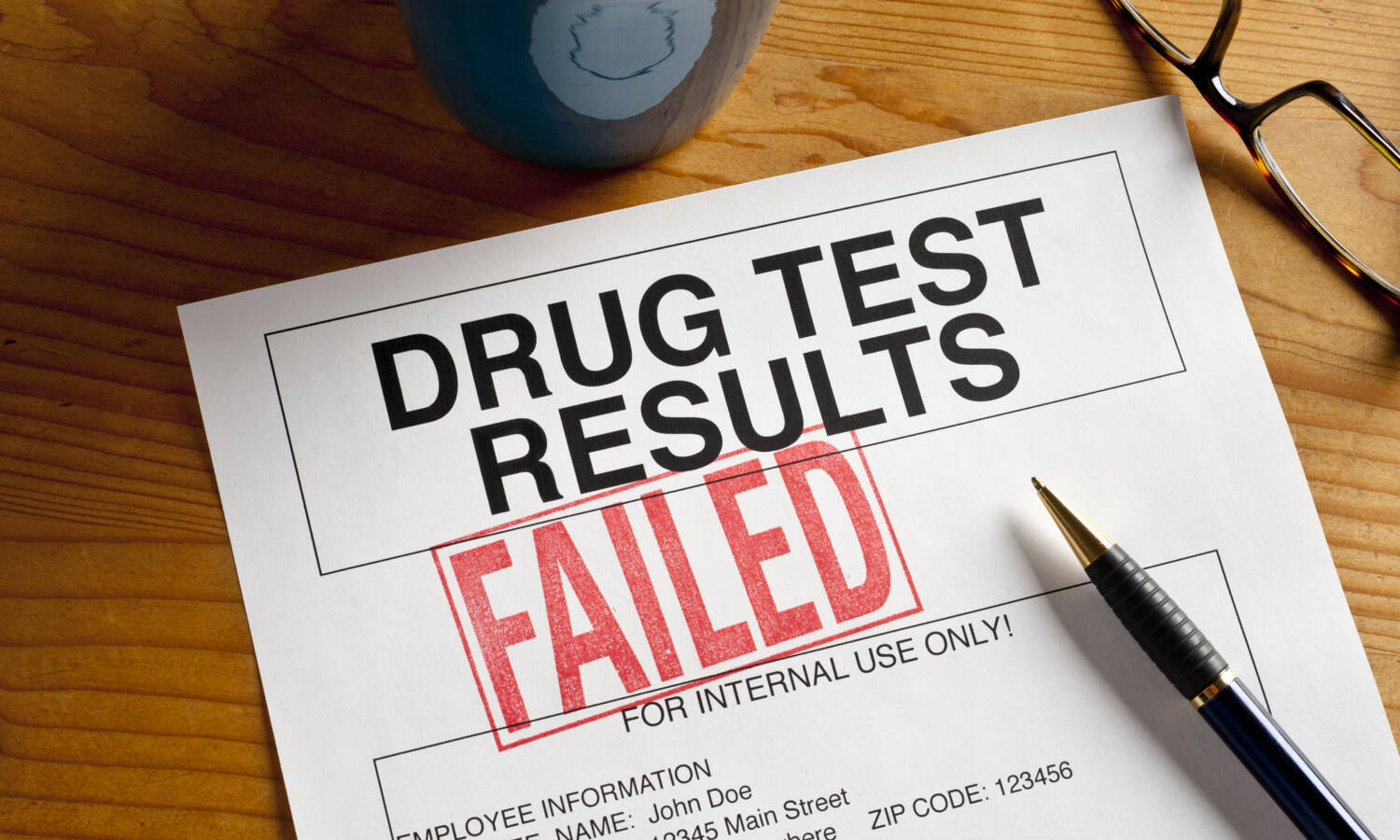
Here is everything that you need to understand about how CBD impacts a drug test and what you should do to be on the safe side.
Since hemp was legalized in 2018, increasingly more Americans have been turning to hemp-derived cannabidiol (CBD) to improve their general health and wellness. Recent statistics reveal that 1 in 3 Americans have tried a CBD product, with a majority of users being aged between 18 and 29. However, the close relationship between CBD which is federally legal and THC which is not, poses a challenge to CBD users in the work space. Will CBD show up on a drug test?
Most workplaces, including major sports leagues, have strict anti-drug policies and subject employees to frequent drug tests. Failing a drug test can have dire consequences such as being put on probation or even losing a job opportunity or career. It is therefore not surprising that many people are concerned about CBD showing up on a drug test.
The truth is that it is very unlikely that CBD will show up and cause you to fail a drug test. CBD is chemically different from the psychoactive cannabinoid THC which is usually screened for in most drug tests. Therefore, having CBD in your system should not be a cause of concern, unless the CBD product had some THC in it. That’s where the challenge lies. Even negligible amounts of THC can be picked by some drug tests.
The quality of most of the CBD products in the market leaves much to be desired. Some CBD products are made from marijuana and contain high amounts of THC. While a third-party test should pick this up, some CBD products are not subjected to independent testing while others have product labels that are misleading. It’s easy to be deceived into believing that a CBD product has zero THC while in actual sense it has significant amounts of THC.
False positives for THC may also arise in drug testing. This happens when a test falsely indicates the presence of THC.
Photo by KLH49/Getty Images
How Do (Marijuana) Drug Tests Work?
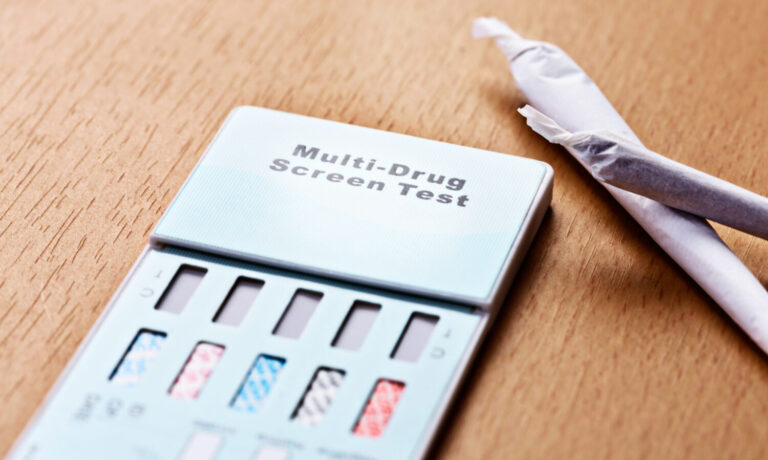
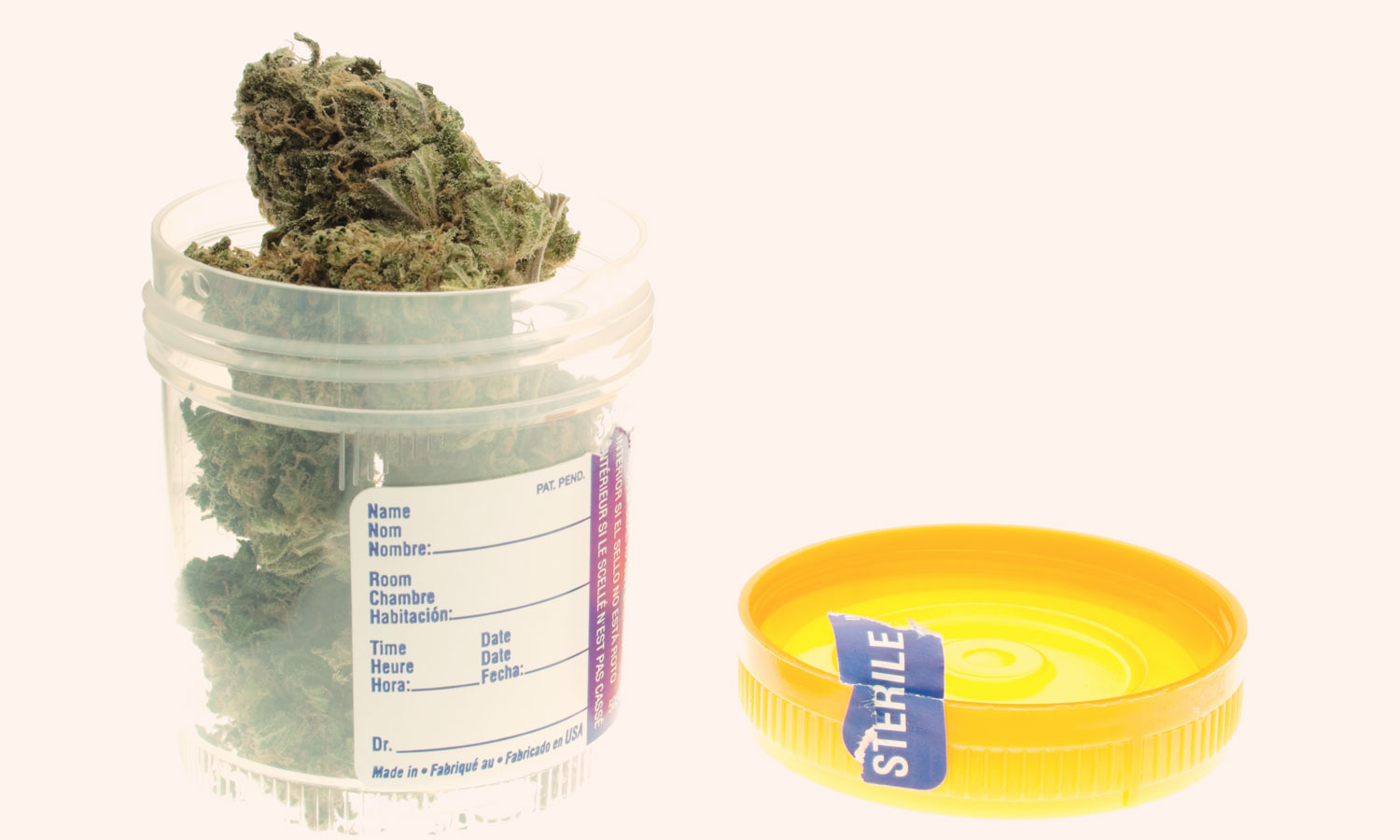
Marijuana drug tests use biological samples such as saliva, urine, blood, or hair to test for the presence of THC in the body. The most common drug test is the five panel test that tests for the presence of active metabolites from PCP, cocaine, marijuana, opiates, and amphetamines. The nine panel test screens additional drugs including barbiturates and benzodiazepines.
Urine is the most frequently used biological sample in drug tests. However, simpler tests that use oral fluids have now become commonplace. They are non-intrusive, easy to use, and give instant results. Most marijuana tests have a cutoff level of 50 ng/ml. This means that a test will turn out positive if the THC level exceeds this amount. However, some tests will detect as little as 15 ng/ml of THC.
What’s The Difference Between Drug Screening and Drug Tests?
The two terms are often used interchangeably but they actually mean different things. Drug screening involves quick and efficient testing that produces instant results. They confirm the presence of a drug; it’s either present in a sample or it is absent. They are also relatively affordable, but may not be as accurate. Therefore, they are mostly used to confirm the presence of a drug but are usually followed up with a drug test when the screening result is positive.
Drug tests are more accurate than drug screens. They also require a longer waiting time as the sample is sent to the lab for specific testing that gives detailed information. Drug testing is often used to confirm the results from a drug screen.
Will CBD Show Up On A Drug Test?
Drug tests screen for the presence of THC, the psychoactive compound in cannabis sativa and not CBD, which is non-psychoactive. Therefore, CBD should not show up on a drug test.
Most CBD products contain little amounts of THC. Legal hemp derived CBD should not exceed 0.3% THC. However, some drug tests are very sensitive and will pick up trace amounts of THC and hence give a positive result. In such a case, it may be necessary to carry out a specific drug test that will show the exact amount of THC in one’s system. A false positive result is recorded when a test picks THC erroneously.
Causes of False Positive Results
Getting a false positive result after consuming a CBD product can be quite scary. However, you need not worry if that happens to you. If you are sure that you haven’t consumed a marijuana product but still turn a positive drug test, it is your right to request for a repeat test. Here are a few reasons why you might get a false positive result after consuming CBD:
Consuming a CBD supplement that has high amounts of THC
Consuming a CBD product that is contaminated with THC
Inhaling second-hand marijuana smoke in an enclosed space
Photo by 400tmax/Getty Images
How to Avoid False Positives
False positive results don’t surface frequently. They only occur in about 5-10% of cases. Here are three things that you can do to avoid false positive results.
Purchase CBD Products From A Reputable Source
Reputable CBD vendors will subject their products to third-party testing. The certificate of analysis from the independent testing should show the exact concentration of THC in the CBD product. You should not purchase CBD products that exceed 0.3% THC or those that lack third-party testing results.
Avoid Medications Prior to the Drug Test
If you can avoid taking medications prior to the drug test, do so. Otherwise, you can consult with your pharmacist to let them know that you’re about to go through a drug test and hence they should eliminate or substitute drugs that may trigger false positive results for marijuana testing.
CBD Isolate Versus Broad Spectrum Versus Full Spectrum
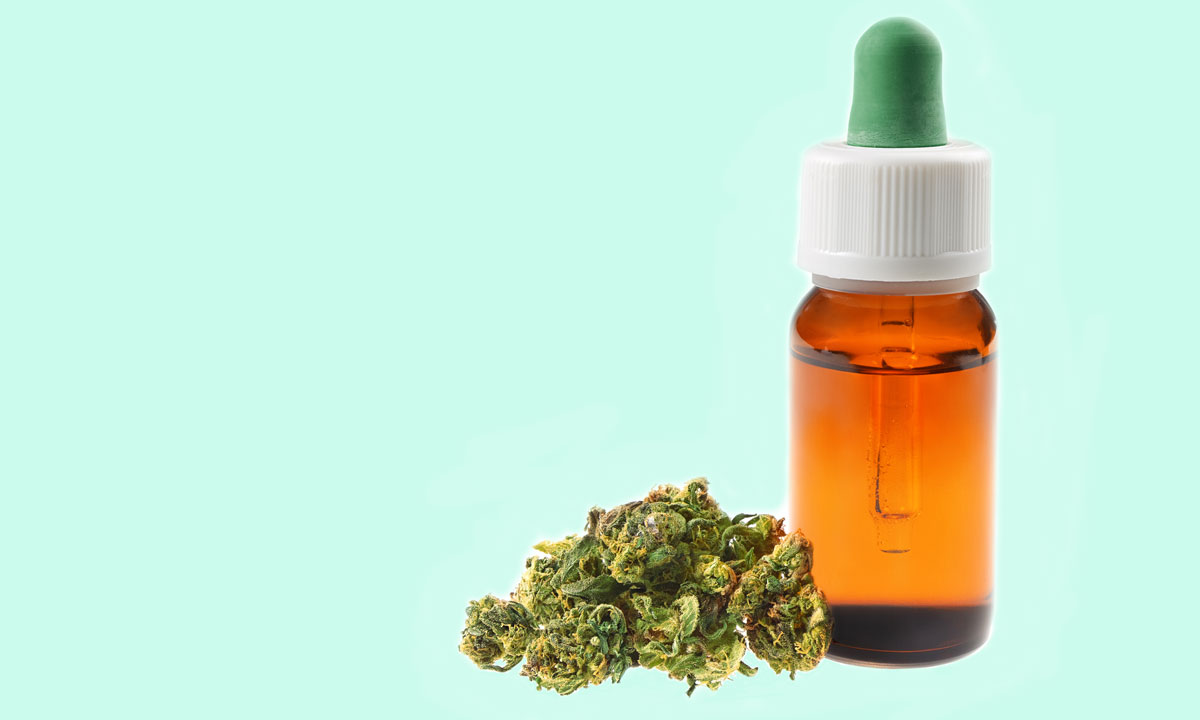
CBD products come in three forms; isolate, broad spectrum, and full spectrum. CBD isolate contains pure CBD with zero THC. This is the most ideal form of CBD to ingest when you’re about to take a drug test. Broad spectrum CBD does not contain THC, but it may contain THCA which converts to THC when it is exposed to heat. Full spectrum CBD contains small amounts of THC. If you consume full spectrum CBD regularly and have a slow metabolism, you might turn in a false positive result for marijuana. But again, the chances of this happening are very slim.
Photo by Morrison1977/Getty Images
Will Consuming CBD Make Me Fail A Drug Test?
It is highly unlikely that consuming CBD will cause you to fail a drug test. Standard drug tests screen for the psychoactive cannabinoid called THC that causes the typical marijuana high. Therefore, drug tests should not test positive due to the presence of CBD.
However, you should be wary of CBD products that have THC in them as they may cause you to fail a drug test. Always check results from third-party testing to ensure that the THC concentration does not exceed 0.3%. One sure fire way to be on the safe side when consuming CBD products is to ensure that it has zero THC.
Some medications may also trigger false positive results. In very unlikely circumstances, second-hand smoke from a marijuana smoker might be the reason why you fail a drug test. In case you doubt your drug tests results, always request for a repeat test and let the employer know all the reasons why you might be having false positive results.
Cannabis data company BDSA expects flower to command the most market share in New York’s legal market, but the firm also believes the vape category will be stronger in the New York market than in other emerging markets.
New York is predicted to be the largest new market for adult-use cannabis, according to data provider BDSA.
“With nearly 15 million residents over the age of 21 and tens of millions more tourists visiting the state annually, New York is one of the most exciting cannabis opportunities in 2023,” said Roy Bingham, co-founder and CEO of BDSA. “Despite some expected growing pains in the early years, the market is expected to be the second-largest contributor to sales growth through 2026, following Florida.”
Photo by Michael M. Santiago/Getty Images
Growing pains indeed. New York launched its legal adult-use industry with just one dispensary in Manhattan, with another planned later in January – unlike New Jersey, which launched its fully legal market in April 2022 with numerous stores all opening on the first day.
The state also will be competing with Connecticut, which begins its adult-use sales on Jan. 9 with multiple locations ready to go.
So what does New York have going for it?
BDSA believes that New Yorkers will prefer to buy in their home state versus driving across state lines to make their cannabis purchases. Bingham also thinks the New York market will benefit from being a popular tourist destination.
Vape Power
Like other states, BDSA expects flower to command the most market share in New York’s legal market, but the firm also believes the vape category will be stronger in the New York market than in other emerging markets.
BDSA tracked medical cannabis sales in New York and found that, in November, the vape and flower categories each accounted for 35% of that market’s sales. In contrast, the vape category only accounted for 27% of adult-use sales in the first three months of New Jersey’s adult-use market.
BDSA Consumer Insights determined that New Yorkers have a propensity for flower-based products and are 35% more likely than the aggregate of consumers in adult-use states to prefer joints they have rolled themselves.
They are also 27% more likely to prefer “spliffs” (a joint containing tobacco that consumers must roll themselves).
Photo by Jon Cartwright/Getty Images
No More Shame
New Yorkers are getting more comfortable with owning their cannabis use.
“Consumer Insights data reveal strong growth within the state, with 45% of those surveyed claiming to be past six-month consumers, an approximate 17% increase in consumer penetration since fall 2021,” BDSA noted. “An additional 27% of New York adults indicate they’re likely to consume in the future. ”
Bingham said that this nascent New York market reminds him of the early days of Colorado, which also began as a collection of independent retailers.
“We have always had independent stores, and we have hundreds of them,” Bingham said. “At the moment it’s tiny, but it will be bigger than the medical market.”