More research will give HHS and DOJ more data that will support the fact that marijuana’s Schedule I status is absolutely ridiculous.
On Friday, December 2, 2022, the White House announced that President Biden signed House Resolution 8454, into law. The new Marijuana Research Bill is a sign federal prohibition is ending. What passed is:
H.R. 8454, the “Medical Marijuana and Cannabidiol Research Expansion Act,” which establishes a new registration process for conducting research on marijuana and for manufacturing marijuana products for research purposes and drug development.
According to Kyle Jaeger of Marijuana Moment, this is a significant and historic moment in cannabis reform:
President Joe Biden has officially signed a marijuana research bill into law, making history by enacting the first piece of standalone federal cannabis reform legislation in U.S. history.
HR 8454 is not just historic because it’s the first standalone cannabis legislation in US history, it is also likely going to play a major role in ending federal prohibition.
In October, Biden requested that the Department of Health and Human Services (HHS) and the Department of Justice (DOJ) evaluate marijuana’s Schedule I status.
The CSA establishes a process for determining the scheduling of substances and relies on research to support any movement across the schedules or to remove a substance from the CSA all together. For years, the feds have used the same outdated studies showing that marijuana is dangerous and without medical benefit. This has created a Catch-22 as described by cannabis policy expert John Hudak in a 2016 interview with NPR:
There is this cannabis Catch-22 and it is, as a Schedule 1 drug, it is very difficult to do research on the plant. There are only certain researchers who will get the certification and licensure necessary to handle the drug. Then, of course, you need the funding to study it. You need approval from university institutional review boards, and the burdens that exist to do the type of research on a Schedule 1 drug are tremendous. But that research is what will inform the medical community as to its medical use, and so what you need and what you can do are entirely prevented by this federal government policy.
HR 8485 could allow researchers to finally break this Catch-22 loop. More research will give HHS and DOJ more data that will support the fact that marijuana’s Schedule I status is absolutely ridiculous. That could very well lead Biden’s administration to remove marijuana from Schedule I and hopefully from the CSA all together.
Photo by Nastasic/Getty Images
How HR 8485 Works
The CSA governs drugs at the federal level, including marijuana. Any controlled substance must be handled in compliance with the CSA. Marijuana is a Schedule I substance, which is the most restrictive category for any drug in the US. Schedule I substances are nearly impossible to research because they are deemed to have no medical use and too dangerous for use even with a doctor.
The registration requirements for any person or entity hoping to research scheduled substances are contained in 21 USC 823(f). The new law amends 21 USC 823(f) by requiring the Attorney General to register practitioners to conduct research on marijuana and its derivatives, extracts, preparations, and compounds, if the applicants research protocol has been reviewed and approved by the Department of HHS, the National Institute of Health, and otherwise in compliance with federal regulations on research protocols. The applicant must also demonstrate how it will control marijuana to prevent diversion or otherwise unlawful use.
HR 8454 also outlines what an application for marijuana research will entail. It also establishes security requirements and requires that the Attorney General and HHS consult to determine if there is an adequate supply of marijuana, including specific strains for research, and prepare a report to Congress on the matter.
HR 8485 also allows institutes of higher education, practitioners, or manufacturers to manufacture, distribute, dispense, or possess marijuana or cannabidiol if the purpose is for medical research for drug development so long as that person or entity is registered with the Food and Drug Administration (FDA).
HR 8485 also mandates that HHS, the National Institute of Health, and other federal agencies all report to Congress on the CBD, marijuana (including delta-9 THC), and the barriers associated with researching marijuana and CBD in states that have legalized their use. HHS and company will also be required to make recommendations on whether state-legal cannabis can be researched by federal agencies.
Daniel Shortt is a corporate and regulatory attorney based in Seattle, Washington who works extensively with entrepreneurs in the cannabis industry. You can contact him at info@gl-lg.com or (206) 430-1336. This article originally appeared on Green Light Law Group and has been reposted with permission.
Mastering the steam chalice can take a few tries, especially if you’re a dedicated joint smoker. Even if you’re used to working with glass bongs, a Jamaican steam chalice will undoubtedly feel strange in your hands at first.
Although smoking marijuana is widespread throughout the world, Jamaica has one of the most profoundly rooted cannabis cultures. The Rastafari, a 20th-century movement that reveres marijuana as a sacred plant, originated in Jamaica. They believe that smoking marijuana fosters calm, love, and depths of reflection and medication that can serve as a gateway to the divine.
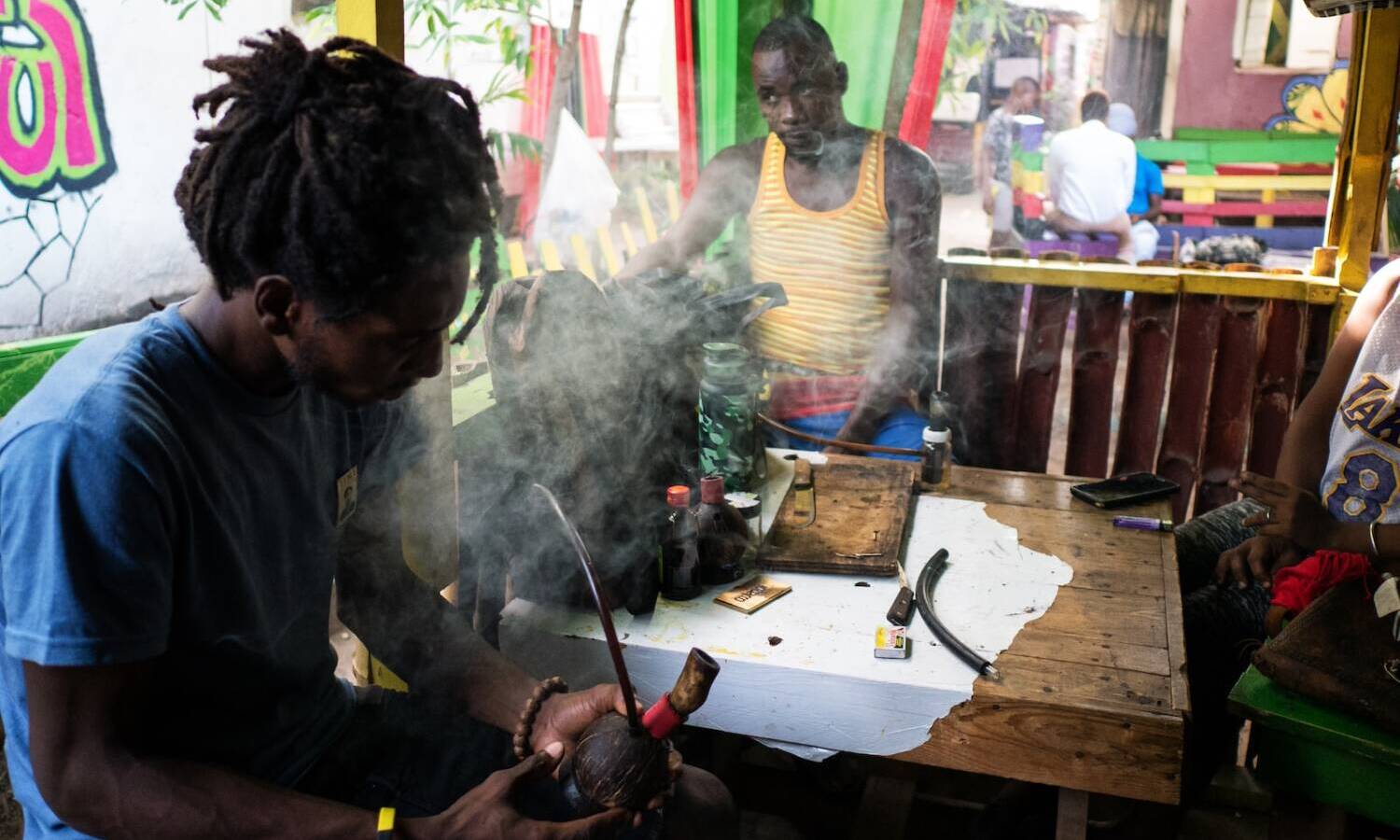
Suppose you’re looking for more conventional ways to enjoy cannabis, or you’re tired of your regular routine. In that case, you should try burning with a Jamaican steam chalice. These organic devices are said to be the first and original vaporizers. The steam chalice, which originated with the Rastafari faith in Jamaica, vaporizes weed using bamboo sticks, coconuts, and hot coals instead of electricity.
Photo by Yarygin/Getty Images
The steam chalice may be used by contemporary non-Rastafaris for various reasons. There are several methods to consume weed, but burning plant material harms the lungs. Hence, many cannabis consumers are switching to alternative forms of use, such as edibles, drinks, and—increasingly—vaporizers.
Why not choose the Jamaican steam chalice, which has the most heritage and personality, if you’re going to smoke a vape? It’s a one-of-a-kind, highly potent, spiritually charged way of consuming weed.
What Is a Steam Chalice?
The Jamaican steam chalice is a traditional method of inhaling cannabis, although it is distinct from other conventional methods. Why? Because it does not burn the flower but rather “steams” it. The steam chalice could be considered the earliest vaporizer. This method of inhaling weed, similar to modern vapes, frees up terpenes and cannabinoids without generating as many potentially toxic byproducts as combustion.
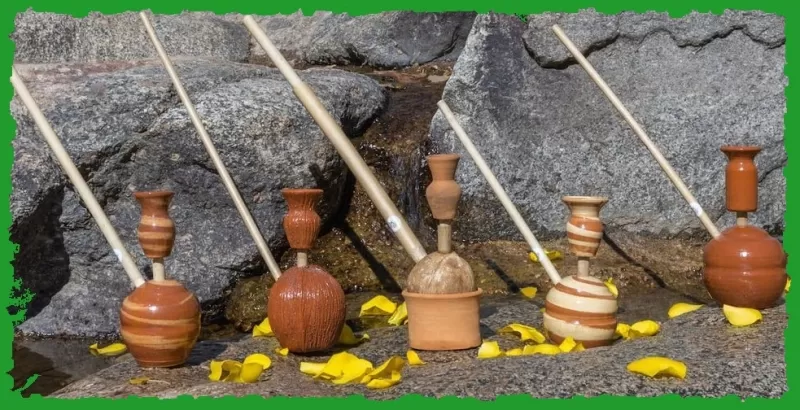
Surprisingly, the steam chalice combines all significant elements: fire, air, water, and earth. Looking at the components, steam chalices are made up of four essential parts:
Coconut: The steam chalice’s main component is a coconut. It is comparable to the bong’s chamber. Its water content aids in filtering the vapour that is produced from the bowl to produce smoother hits. When holding and smoking a steam chalice, the coconut acts as the “handle.”
Cutchie: A cutchie is a clay pipe that resembles a sizable bong bowl. This part of the steam chalice supports the flower over the downstem. It keeps it out of the heated temperatures when THC and other phytonutrients are released from the charcoal.
Bamboo tubes: The downstem and the mouthpiece of a steam chalice are made of two bamboo tubes. In contrast to typical bongs, this one has a downstem and bowl positioned precisely above the chamber and a mouthpiece extending from the coconut’s side.
Gritty: This essential clay grate rests above the flower and has many tiny holes. It limits direct contact and burning of the plant material while acting as a base for the burning of charcoal.
Now that you’re acquainted with steam chalices and their components, it’s time to learn how to handle one.
How to Use a Steam Chalice
Mastering the steam chalice can take a few tries, especially if you’re a dedicated joint smoker. Even if you’re used to working with massive and complex glass bongs, a Jamaican steam chalice will undoubtedly feel strange in your hands at first.
We’ve included some simple instructions below to help you get started with this vintage piece of equipment. Follow them carefully for an easy introduction to this innovative cannabis use.
Fill the coconut with water first before doing anything else. The mouthpiece can be pulled from the coconut’s side to accomplish this. After that, add water below the orifice before reinstalling the bamboo mouthpiece. Take a bare tear. The sound that comes out should closely resemble the bong’s bubbling. If you don’t hear that distinctive sound, the water content of the coconut is either too high or too low.
The cutchie needs to be filled with herbs next. However, traditional cutchies link to the downstem through significantly larger holes in the bottom. So, to prevent flowers from falling into the chalice, many chalice users put in the part or whole torn buds. If you’d instead grind your bud, cover the hole with a large enough sheet of metal gauze before adding the flower.
Put the gritty in the cutchie after it has been filled. Depending on your type, some cutchies have a lip where you can insert the gritty to keep it from touching the herb below.
Photo by Nigel SB Photography via Unsplash
At this stage, things become even more unusual. You’re undoubtedly used to flicking the lighter or vape button before inhaling. You’ll find yourself grabbing into a bag of coal instead when using a cannabis chalice. Fill the top chamber of the cutchie with adequate charcoal. Then, use a blowtorch lighter to light the pieces. You’re ready to go when the charcoal chunks are steadily burning.
Now comes the exciting part. In the same way, you would hit a pipe or bong, place your finger over the coconut’s shotgun hole and hit the steam chalice. To clear the coconut, let go of your finger at the end of every hit. You’ll feel a clean, terpene-rich, and slightly vegetal flavor; keep in mind you’re vaping weed, not burning it.
You’ll need to wash your cutchie at the end of the operation. Remove the hot charcoal pieces with care and empty the steamed cannabis. Pour the water from the coconut and save your marijuana chalice for later use. Use a couple of pipe cleaners to clean the inside of the bamboo sticks every now and then.
Conclusion
Thinking of owning a Jamaican steam chalice? An expertly designed smoking chalice will be easy to buy online. However, if you’re thinking of executing a do-it-yourself project, you’ll get a pretty good understanding of how to build one from scratch by watching a YouTube video or two.
A new study by the AMA found medical marijuana curbed opioid use and provided an alternate route for cancer treatment.
Legal medical marijuana has been linked with reduced opioid use according to a new study conducted by the American Medical Association. Results add more evidence to the argument that legal marijuana can curb and manage opioid use, and could have a significant impact on the opioid crisis.
The study, published in JAMA Oncology, analyzed the results of thousands of patients with different types of cancer.
Photo by FOTOGRAFIA INC./Getty Images
Researchers explained that the study was conducted in order to explore the links that exist between marijuana legalization and opioid use. They concluded that medical marijuana curbed opioid use and provided an alternate route for treatment.
“Findings of this cross-sectional study suggest that medical marijuana legalization implemented from 2012 to 2017 was associated with a lower rate of opioid dispensing and pain-related hospital events among some adults receiving treatment for newly diagnosed cancer,” they wrote.
“The nature of these associations and their implications for patient safety and quality of life need to be further investigated,” researchers added.
Photo by Christina Victoria Craft via Unsplash
Despite the fact that the study had some limitations and that the topic of marijuana and opioids should be researched further, the results are still important and should at least prove how important it is to conduct the necessary research on the matter.
Previous studies have found similar connections, with medical marijuana giving patients suffering from different conditions an alternative to opioids, and that the new industry has the power to impact pharmaceutical companies.
While many things remain unknown about cannabis and its relationship with opioid use, it remains important to explore this connection and figure out if the plant could become a healthier outlet for people suffering from various medical ailments.
A federally funded study has found no correlation between marijuana legalization and cannabis use among teens, which is relief for marijuana enthusiasts. At the same time, this study, which was funded by the National Institute on Drug Abuse (NIDA), has poked holes in the theory that’s often fronted by legalization opponents — that legalization will increase teen consumption of marijuana.
Currently, adult-use marijuana is legal in 21 states and DC. Maryland and Missouri joined this list through the midterm elections that happened barely a month ago.
Photo by cottonbro from Pexels
The study, published in the American Journal of Preventive Medicine, reviewed data collected from three longitudinal studies relating to use of cannabis among teens in New York, Oregon, and Washington between 1999 to 2021. The researchers found that teens in states that have legalized cannabis are not any more likely to abuse cannabis than teens in states that have not legalized cannabis.
Though preliminary, the results from this study offer a glimmer of hope that marijuana legalization could have more benefit than harm to offer. Study author Jennifer Bailey has, however, advised cautious optimism, saying, “Although things look encouraging now, as we note in our paper, alcohol use increased slowly over 40 years after the end of alcohol prohibition.”
Barriers to SBA assistance were a major complaint from cannabis companies during the COVID-19 pandemic, despite the fact that the industry was designated as “essential” by nearly every state with a functional marijuana market.
A Democratic senator has formally introduced a bill that, if successful, would make U.S. cannabis companies fully eligible for federal loans through the Small Business Administration.
According to a news release, Sen. Jacky Rosen of Nevada put forth the Fair Access for Cannabis Small Business Act, which would reverse the current prohibition on financial assistance for marijuana businesses.
Photo by jirkaejc/Getty Images
“The unfair barriers to basic federal support and resources have hurt our state’s legally operating cannabis small businesses,” Rosen said in the announcement. “This legislation will level the playing field so that cannabis small businesses — including those owned by people of color, women, and veterans — have access to the same federal resources and loans that other legal businesses are entitled to.”
Barriers to SBA assistance were a major complaint from cannabis companies during the COVID-19 pandemic, despite the fact that the entire industry was designated as “essential” by nearly every state with a functional marijuana market. And the overall lack of access to traditional financial services and banking has been an ongoing hurdle.
Rosen’s bill, according to the release, would give marijuana businesses access to “7(a) loans, disaster loans, microloans, the Small Business Investment Company (SBIC) program, and SBA’s resource partners including SCORE, Veterans Business Outreach Centers, and Women’s Business centers.”
Several industry leaders hailed the bill and said it could be a major financial boost to much of the cannabis sector.
The bill, however, likely faces an uphill climb given the political dynamics in the Senate, where Democrats only hold a slim majority. A 60-vote majority would be needed to break a Republican filibuster.
Earlier this year, the Nevada senator urged the Senate Appropriations Committee to push for similar reforms through federal spending bills and also advocated with House Armed Services Committee leaders for the passage of the SAFE Banking Act.
Researchers found that cannabis was effective in improving cognitive function while helping reduce risky decision making, which is common among individuals with bipolar disorder.
Around 46 million people around the world struggle with the symptoms of bipolar disorder. Also known as manic depression, bipolar disorder can disrupt daily life, affecting relationships and ability to work.
There are three kinds of bipolar disorder: bipolar I, with symptoms including manic episodes that can last at least a week and may even require admission to the hospital; bipolar II is characterized by patterns of manic and depressive episodes, particularly elevated moods that make patients more agitated and energetic; and cyclothymic disorder, with symptoms including a rapid cycling of high and low mood swings, going from excessively energetic and happy to depressive in a switch.
Photo by Maskot/Getty Images
Psychotherapy and medications are recommended for the treatment of bipolar disorder. Pharmaceutical medications are conventionally seen as necessary to help regulate moods. However, many patients don’t find relief from symptoms from pharmaceutical medications especially its effects take a while, and they usually come with side effects.
Cannabis is a safer, more natural alternative that can help patients with bipolar disorder.
A brand new study, that sought to understand how cannabis affected cognitive and goal-directed behaviors among people with bipolar disorder, reveals that marijuana may have “uniquely beneficial effects” for this condition. Researchers, who presented the findings at the Neuroscience 2022 conference, specifically found that cannabis was effective in improving cognitive function while helping reduce risky decision making, which is common among individuals with bipolar disorder.
The researchers also suggest that cannabis reduces the dopaminergic activity in the brain to help suppress its symptoms.
“Chronic cannabis use may have uniquely beneficial effects in people with BD. Previous studies suggest that some people with BD have increased dopaminergic activity due to a reduced dopamine transporter expression,” they concluded. “Chronic cannabis use has been shown to reduce dopamine release, thus chronic cannabis use may result in a return to dopamine homeostasis in people with BD and consequently normalizing their deficits in goal directed behaviors. We are engaged in additional studies that explore this potential,” wrote the authors.
Other Studies
There have been similar findings in other older studies.
According a 2018 clinical trial data, researchers found that cannabis consumption is linked to improvement in clinical symptoms of bipolar disorder. It also doesn’t negatively impact cognitive performance, they shared. Researchers from Harvard Medical School, McLean Hospital, and Tufts University analyzed the impact of cannabis on cognitive function and moods among patients who have been diagnosed with bipolar disorder. This marked the first clinical trial to ever be conducted with the goal of analyzing how marijuana affects neuropsychological performance and mood.
They found that cannabis use resulted in reduced scores for depression, anger, and tension. It was also associated with increased vigor. However, patients who consumed marijuana also showed no significant changes in cognitive performance compared to subjects who abstained.
“The current study highlights preliminary evidence that patients with BPD who regularly smoked marijuana reported at least a short-term clinical symptom alleviation following marijuana use, indicating potential mood-stabilizing properties of marijuana in at least a subset of patients with BPD,” they concluded.
Photo by SIphotography/Getty Images
A significant portion of the population do not even know they have bipolar disorder. They do, however, experience mild symptoms of mood swings and other symptoms of dysregulated moods. For them, cannabis can also help.
A 2020 review from researchers at the University of New Mexico involving the analysis of real-life information taken from the Releaf App found that cannabis was effective in treating the symptoms of depression. “One of the more interesting findings from this study, is that cannabis flower with relatively high levels of tetrahydrocannabinol or THC is particularly associated with immediate reductions in the intensity of depressive feelings,” explains researcher Jacob Miguel Vigil.
“With no end to the depression epidemic in sight, and given the limitations and potential severe negative side effects of conventional antidepressant medications, there is a real need for people to be able to treat mood disturbances with natural, safe, and effective medications, and the cannabis plant checks off all three boxes,” he added.
Boosting the endocannabinoid system with the use of cannabinoid-based products has been shown to positively impact the neuroendocrine, neurotransmission, and neuroimmune systems. These systems are all greatly affected by those who suffer from depression and other mood disorders such as bipolar disorder.
In a 2006 study out of Montreal, researchers found that increasing the amount of endocannabinoids produced by the brain is effective in improving one’s mood. Investigators from the McGill University Health Center revealed that using the synthetic URB579 agent resulted in “potent anti-depressant-like effects” in animal models because it was successful in preventing cannabinoids from degrading.
It was the first study to ever prove that something external can help boost cannabinoids and overall mood.
According to lead researcher Gabriella Gobbi, “This is the first time it has been shown that a drug that increases cannabinoids in the brain can improve your mood,” she said.
Additionally, a 2020 report from BMC Psychiatry found that whole plant cannabis and plant-based cannabinoids are effective in improving moods and sleep while reducing anxiety and psychotic disorders.
Conclusion
While the body of research on cannabis for bipolar disorders is fairly young, the studies and anecdotal evidence is promising. If you or a loved one struggle with bipolar disorder and want to use cannabis or CBD products, be sure to do so with the guidance of your physician.
The joke about going for a walk with your cousin every Thanksgiving may be a thing of the past. With so many new forms of cannabis consumption, that “walk” to go smoke a joint with your cool cousin undetected could become Thanksgiving lore.
Beverages, edibles, and, in some cases, the convenient vape pen dominated Green Wednesday sales, as the day before Thanksgiving has come to be called.
Inflation also seemed to rear its ugly head this year. Sales transactions were up, but the amount customers spent was less. Data from both Headset and Jane Technologies demonstrate that Green Wednesday continues to be a winner for cannabis consumption.
Headset ran the numbers to see if Green Wednesday sales popped versus previous Wednesdays for dispensaries — and indeed they did. Combined sales data from California, Colorado, Massachusetts, Michigan, Nevada, Oregon, and Washington state saw sales jump by 48% compared with previous Wednesdays in November.
Headset also found that this year’s Green Wednesday was the third-highest grossing day of sales after 4/20 and the Friday before the 4th of July. Green Wednesday overtook Black Friday as the highest-grossing day during the Thanksgiving holiday stretch. In 2021, Green Wednesday saw a 61% increase in sales compared to a typical Wednesday.
As expected, sales fell on Thanksgiving Day as many dispensaries closed for the holiday, and Black Friday only experienced a slight increase of 1%. It looks as if consumers stocked up before heading out to relatives for the weekend.
Secret Stoners
Category Performance
The products that people could consume without Aunt Gertrude being any wiser grew. Headset noted that topicals (15.7%), beverages (13.2%), and edibles (6.1%) all experienced sales growth during the holiday stretch. Popular inhalable products, such as concentrates (-11.4%) and flower (-10.8%), took the biggest hit.
In Jane’s data, vape cartridges were the top-selling category, beating out flower by 20%. Vapes are easy to carry and not nearly as stinky as smoking flower.
Sales Lift
Jane Technologies looked at nationwide sales and in particular the new market of New Jersey. Jane found that Green Wednesday’s total sales increased by 77% compared to the previous four Wednesdays in a nationwide view. The average store saw sales increase by 20% over last year.
In New Jersey, sales increased by 100%. More mature markets saw sales fall or grow only slightly. California sales fell by 8%, Colorado fell by 7%, and Massachusetts dropped by 30%. Illinois’ Green Wednesday average store sales increased by 9%.
It seems consumers were on a budget this year. Transactions were up, but shopping carts weren’t full. Nationwide, Jane Technologies said that the average cart size fell by 8% from last year. In California, the cart size fell by 18%, in Colorado by 8%, Massachusetts carts fell by 17% and in Illinois, shoppers’ carts dropped by 14%.
Photo by Ivan-balvan/Getty Images
Discounts
Headset noted that discounts increased across the board during the holiday stretch with the average discount increasing 7.3 percentage points to 21.8% across the three days of holidays.
While Green Wednesday was the largest sales day, it had the smallest average discount (19.8%), though an increase of nearly 6 percentage points from a typical Wednesday. Thanksgiving (22.2%) and Black Friday (23.7%) saw the largest average discounts both with an increase of more than 8 percentage points compared to a typical Thursday and Friday.
In Closing
Grabbing a beverage or munching an edible during the holiday may have replaced the annual walk with your cousin. It might lower the tensions that come with some family gatherings and even boost the munchies so that you can avoid insulting Granny by not eating that second piece of pie.
Ultimately, the cannabis industry, which has seen declining sales in some markets, must’ve been pleased to see customers pouring in on Wednesday. Let the holidays begin! And let’s keep that tradition of walking with your cousin — just bring them a gummy instead.
With seniors becoming a crucial part of the retail market, it seems high time we understand the different ways marijuana impacts us as we age.
If you use cannabis regularly or have casually enjoyed it for many years, you may have noticed it affects you differently today than it did 5, 10 or even 20 years ago. A lot of this change may have to do with factors like tolerance, the weed itself or even life experience. Here is how marijuana affects us differently as we age.
After all, once we get used to a substance it doesn’t quite feel the same as it once did, and it takes more of the substance to feel the similar effects. But there could be something else contributing to this change you feel. Your age might be one of the reasons that cannabis affects you differently today than it did when you were younger.
Photo by Westend61/Getty Images
Marijuana use has increased significantly in the older demographics in the last several years. According to a 2020 study published in the JAMA Network, “Marijuana use in the prior year among people over 65 had jumped 75 percent from 2015 to 2018, from 2.4 percent of that group to 4.2 percent. By 2019, use had reached 5 percent.” With this steady increase in older folks getting high, it is more pertinent than ever to understand if and how marijuana use affects people differently based on age.
Cannabis use is only now starting to be widely studied and tested. It will take years of data and more cannabis decriminalization before we get the more nuanced answers to how marijuana affects us as we age. But while much more research must be done, with the limited research available, scientists are uncovering some very interesting findings – and some might even surprise you.
For one, there is memory and mental capacity to consider. You might think that as we get older, marijuana might mess with our memory and cognition more than it once did. After all, as we age, our minds aren’t exactly what they used to be. But this might not be the case when it comes to marijuana use. According to a 2021 study titled “Are the Acute Effects of THC Different in Aging Adults,” the results, and previous reports, actually differ from what you might think.
“Consistent with some reports in the preclinical literature, the findings suggest that older adults may be less sensitive to the effects of THC on cognitive and affective measures.” In other words, older users tended to keep their wits about them just fine (if not better) than younger adults. In the end, their findings suggest that “THC has an adverse impact on aspects of cognition in younger adults and that young adults are more susceptible to phenotypes of THC dependence.”
Photo by Toan Nguyen via Unsplash
When it comes to cannabis and age, the curious results are not limited to just seniors and more “seasoned” cannabis users. There are also some studies that compare mature adult usage to adolescent cannabis usage. According to a 2019 study that examined age-related differences regarding cannabis use, adolescents showed a slightly more resilient memory than older users. “Human adolescents exhibited less impairment in memory post-intoxication than adults,” according to thestudy.
But while the younger users may have had less impairment, they found that younger users tended to crave cannabis more. “Craving and inhibitory control may not decrease as much after cannabis intoxication in adolescents compared to adults.” The authors also noted these trends were most noticeable among “very heavy and dependent users.”
More research is required in order to uncover more concrete evidence within these trends. Marijuana affects everyone differently, and the user’s age is a not-often researched, but clearly significant variable when it comes to THC and how we react to it.
Now, more than ever, this type of research is important. After all, more and more seniors (and adults in general) are reaching for cannabis instead of other substances. Even retailers are getting in on the trend. “Major retailers offer dispensary discounts of 10 to 20 percent on ‘Silver Sundays’ or ‘Senior Appreciation Days,’” according to theNew York Times.
With seniors becoming a crucial part of the retail market, it seems high time we understand the different ways marijuana impacts us as we age.
The start of the new pilot program comes as a third phase of the Medical Marijuana Assistance Program (MMAP) that was launched in the state earlier this year.
Medical marijuana patients who are also senior citizens with low incomes in Pennsylvania will receive financial assistance for medical cannabis via a new pilot program. The state’s Department of Health recently launched a program offering $50 a month in financial assistance to help nearly 1,400 senior citizens afford the cost of medical marijuana.
“The payments are the first step toward establishing a third phase for the financial assistance program authorized to help low-income medical marijuana patients afford the drug,” reported Capitol Wire. “Because insurance companies don’t include medical marijuana in their prescription drug coverage, medical marijuana patients are left to pony up the full cost of medical marijuana when they visit the state’s dispensaries.”
Photo by FatCamera/Getty Images
The outlet further reported that the Keystone State doesn’t have enough resources to offer needed financial help to all of the low-income patients.
The start of the new pilot program comes as a third phase of the Medical Marijuana Assistance Program (MMAP) that was launched earlier this year, writes HighTimes.
Phase 1 focused on eliminating yearly card fees for eligible participants registered in the commonwealth’s financial hardship program, according to the PA Health Dept. Phase 2 removed all background check fees for eligible caregivers, while Phase 3 aims to distribute yet-to-be-established benefits per funding period for eligible patients.
Prices for medical marijuana in the state have been an issue for a while now. Earlier this year, John Collins, former director of the Office of Medical Marijuana called attention to the issue.
“I’m clearly calling out today, secretary, a red flag that needs to be investigated,” Collins told Pennsylvania Health Secretary Keara Klinepeter, reported the Inquirer.
A recent report from the Marijuana Policy Project revealed that Pennsylvania is one of 19 US states where marijuana possession is penalized with possible imprisonment and a criminal record.
In 2021, 12,439 adults and 1,057 juveniles were arrested for simple cannabis possession, data from Pennsylvania State Police showed. Even though the figures represent a 30% drop between 2020 and 2021, they remain high.
Being conscious about what it is you’re doing can go a long way in mitigating lasting damage. And you certainly don’t need to hold big monster hits to get higher.
Everyone knows smoking is bad for your health. Cigarettes are especially bad due to the nicotine and tar in tobacco. But what about cannabis? How to keep your longs healthy as a marijuana smoker?
Photo by rez-art/Getty Images
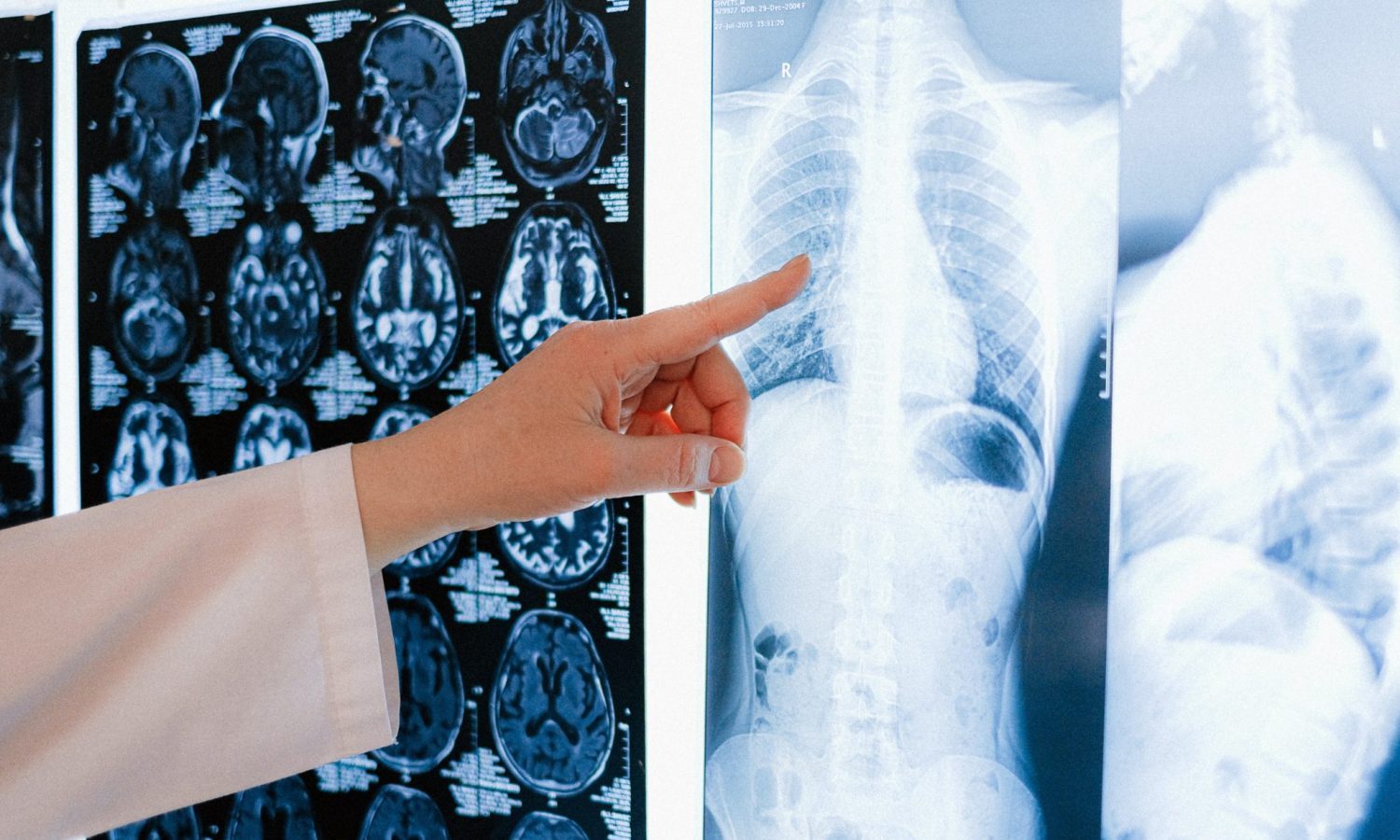
Over the past week or so, I’ve been seeing more headlines about a small study that looked at cannabis smokers, tobacco smokers, and non-smokers’ CT scans to see if they could visibly see effects their substance us one the lungs.
You can spot a smoker by merely looking at CT scans, and so the researchers wanted to see what the effects of cannabis were.
Study co-author Dr. Giselle Revah, a cardiothoracic radiologist and assistant professor at the University of Ottawa in Canada, said it’s possible to see that someone is a heavy or longtime cigarette smoker just by looking at their CT scan. She wondered if marijuana, the second most commonly smoked substance after tobacco, would show similar results. She was surprised to find little information existed.
For this study, the researchers compared chest CT results from 56 marijuana smokers, including some who also used tobacco, with 33 who smoked only tobacco and 57 nonsmokers. Roughly 75% of the weed smokers had emphysema compared to 67% of the tobacco-only smokers and 5% of nonsmokers.
Additionally, there were some men who had enlarged breast tissue within the cannabis group. Of course we don’t know how many “some men” are within the small sample group.
While the sample size of the study was very small, I can very much imagine that chronically smoking weed will have some detrimental effect on the lungs. While lung cancer isn’t very prevalent in cannabis smokers, it makes sense that there would be damage to the air sacs in the lungs.
Photo by Anna Shvets from Pexels
The Working Theory
According to the researchers, the nature of how people smoke cannabis could play an important role in the type of damage they are seeing.
First, cannabis smokers tend to smoke without a filter. The filter serves to cool down the smoke and filter out some undesirable plant matter, etc. Most people do make “cardboard filters” by rolling a piece of cardboard and putting it in the end of the joint or blunt.
However, this doesn’t provide the same level of filtration as a tobacco filter which has cotton doused in chemicals. While the other stuff in the filter is probably murderous, the filtration of the smoke from the burning plant matter is superior to rolled up cardboard.
Then there’s the factor of cannabis users “holding” the smoke in their lungs. This is a cannabis myth where they want to “absorb as much THC per hit” as possible. However, the truth of the matter is that you absorb up to 97% of THC from the smoke in the first 2-3 seconds. Therefore, you just need to inhale, hold it for a second or two, and then release.
Holding the smoke will not “get you higher”. What is getting you higher is oxygen deprivation. When you enter into a hypoxic state, you can feel light headed which in combination with the THC makes you “feel way higher”.
At the end of this article I’ll provide you with some exercises to “get higher” without needing to hold any smoke.
Nonetheless, researchers believe this is why there was greater evidence of emphysema in the CT scans of cannabis smokers than tobacco smokers. They also said the golden words: more research is needed. And with good reason. The sample for this study does not indicate anything. It simply shows some correlation between CT scans and cannabis users, but with a sample size that small, you can’t definitively say that this is true across the board.
Irrespective of whether it’s true or not, the information provided by the research does give you the opportunity to mitigate the damage from cannabis smoke. An informed cannabis smoker can reduce risk armed with actionable information.
So for the rest of this article we’re going to be talking about ways that you can keep your lungs healthy as a cannabis smoker.
Photo by Daria Kulkova/Getty Images
Don’t Inhale So Deeply
When you’re smoking weed to get high, you don’t have to inhale a full lung of smoke. You simply need to know how to inhale diaphragmatically. However, even if you don’t know how to inhale diaphragmatically, you simply need to take a hit up till where it’s comfortable.
Trying to force as much smoke into your lungs as possible won’t “make you higher”. In fact, if you want to achieve the “highness” from oxygen overstimulation or deprivation, then stick to the end of this article. I’ll show you exactly how you can “trip balls” on O2.
Nonetheless, just take normal tokes. No need to over do it. You can always take another hit if you need more. However, trying to force an ungodly amount of smoke in your lungs could have a more detrimental effect on your overall health over time.
Don’t Hold It Like a Dumbass!
While I have spoken about this above, I think it’s important to reiterate that holding it in doesn’t necessarily make you higher. Rather, you’re playing around with the dynamics of the breath and you don’t need to hold in smoke to achieve similar results.
It’s best to smoke up, rest, and then dive into breathwork or something similar if you truly want to “trip balls”. If that’s what you’re after.
Holding it in doesn’t provide any inherent benefit, therefore, simply cutting out this practice can reduce the stress you place on the lungs.
Don’t Smoke Too Much!
If you’re smoking from the moment you open your eyes to the moment you’re closing them, you might have a dependency on cannabis. Nonetheless, even if you’re chronically impaired, then why not switch things up. You can have edibles, you can vape, you can even have tinctures.
All of these non-smoking alternatives can reduce the impact of the “smoke” on the lungs. Maybe instead of your regular wake and bake, you can take a few drops of tincture and drop it into your coffee. That way you get the morning buzz without burning any plant matter.
Photo by Inside Creative House/Getty Images
Bongs or Bubblers
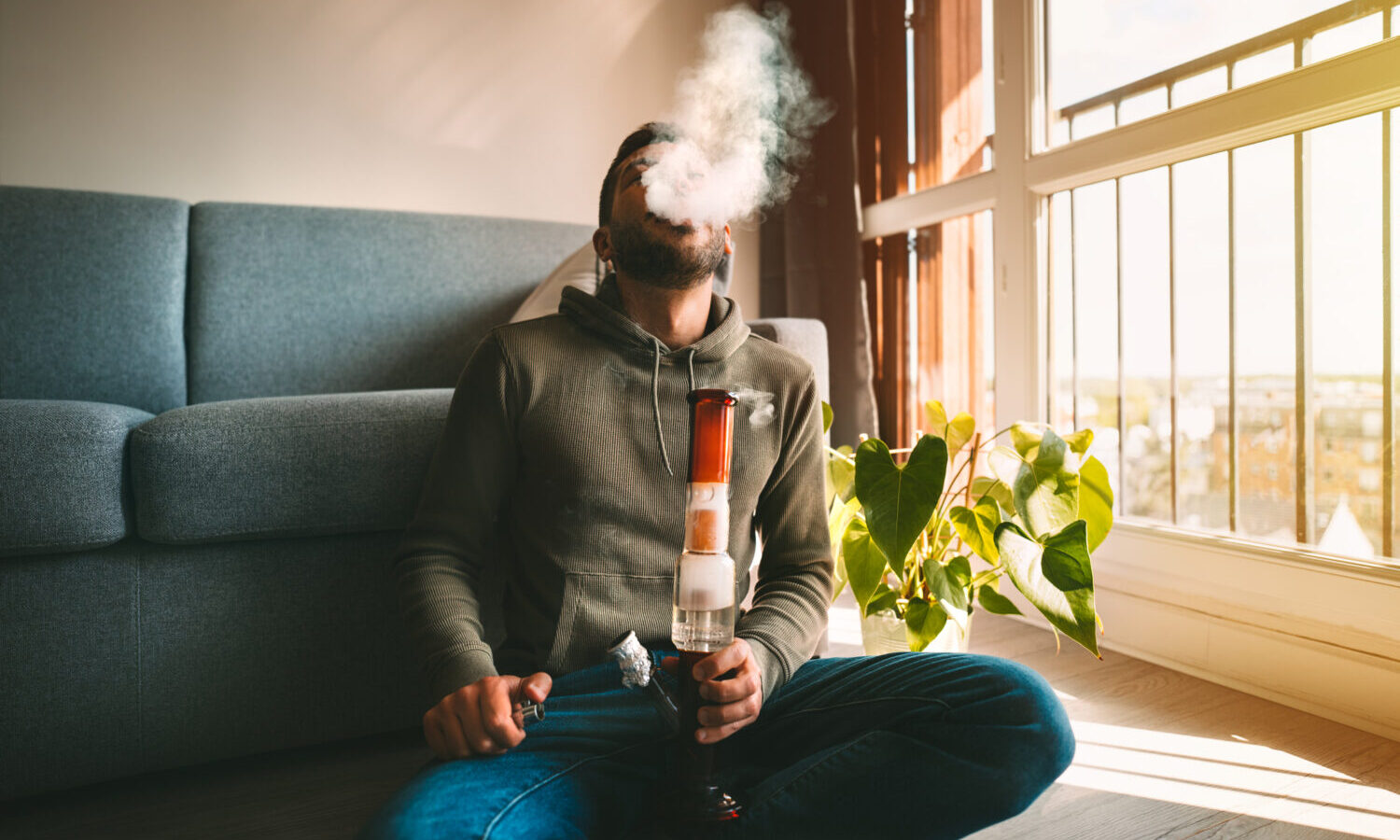
While a bong can certainly give you more volume of smoke per hit, it’s also cleaner because the smoke gets filtered through the water. Therefore, if you’re going to smoke, using a bong is actually not a bad idea. All you got to remember is to take moderate tokes.
While there isn’t too much “science” on the quality of bong smoke (I wonder why), it doesn’t take a rocket scientist to understand that when you add a filter to the smoke you’ll get fewer harmful particles. Does this make it safe?
Of course not! But certainly less harmful than smoking a blunt!
Vaporize
Vaping eliminates the combustion process from “smoking marijuana”. However, I would argue that vaping “dry bud” should be the gold standard of vaping. When it comes to pre-mixed cannabis, you don’t know what else they put in there. However, when we’re using straight up cannabis in a dry herb vaporizer, you’re heating up the process enough to turn the cannabinoids into vapor but not enough to start combustion thereby eliminating smoke altogether.
Whether vaporizing might have some other risks involved — only time will tell. However, when compared directly to smoking, it’s certainly a lot less riskier.
An added benefit of vaporizing is that your weed lasts longer. You get more “toke per bowl” with a vaporizer than with a traditional pipe. Therefore, even though the price tag of a Pax pocket vaporizer might be hefty, after a month or two of use, you would have saved that much money in weed.
Photo by whitebalance.oatt/Getty Images
Keep Your Lungs Active
One thing that I’m very surprised about is that there isn’t more education on breath control. The fact of the matter is that the cardiovascular system is responsible the majority of the energy you wield. Think about it.
How long can you go without food? In some cases, a human being can go months without food. How about water? Water is a more essential element for the human condition seeing that 60% of our mass is water. Therefore, you can go for roughly one week without water before you suffer organ failure. I’m sure there are some people who can go even longer, but the average Joe and Jane would only be able to do a few days at most.
Now how about air? Air is so vital to your life that the vast majority of people can only go a few minutes without air before they cease to exist.
Yet, despite this being such an important function for living, we hardly have any education on how to properly breathe, how to regulate our nervous system using the breath etc.
One would think that with such a vital resource for sentient life, we would have countless studies on the subject matter. However, that isn’t really the case. Modern science is only now getting into the “science of breathing” and we have been “re-discovering” some ancient truths.
The fact of the matter is that the breath has been studied extensively by ancient cultures. The Vedic Sciences have entire volumes dedicated to “breath control” or “Pranayama”.
Pranayama, for those who don’t know, is basically yoga for the lungs.
A Few Exercises You Should Try
Deep slow breathing is definitely something that everyone should try daily. Not only is this proven to relax and calm down your nervous system, it also can help provide mental clarity and help declutter the mind, lower your blood pressure, and increase your dopamine levels.
To do this, you simply have to inhale slowly through the nose shooting the air into the diaphragm. Once you have filled the diaphragm to the brim, then open up the mid section of your lungs, and finally the top. Try to inhale in a single smooth movement.
On the exhale, with pursed lips, simply let go for about eight seconds of exhalation. This full expansion allows your lung to extend completely, and helps exercise the lung. In the book “The Yogi Science of the Breath” they call this type of inhalation the “Yogic Complete Breath”.
You can practice this a few times per day and you will notice a significant improvement in your overall vitality. It’s also a good way to take a moment to re-center yourself, if shit is going a bit haywire.
Photo by Kosamtu/Getty Images
Do Some Breathwork
While the yogic complete breath is definitely going to be something that will give you a boost in life, doing regular breathwork is probably one of your best bets to strengthening the lungs. There are plenty of styles of breathing out there, so depending on the type of person you are, you’ll find something that fits.
A good way to get your feet wet is to buy a breathwork bundle pack, which contain several different modes of breathwork. That way you can experiment with different techniques and see which ones you like.
Of course, there’s also plenty of free material on Youtube where you can experiment with the breath. Not only will you see a major improvement in your breathing capacity, you’ll also feel an overwhelming sense of peace and tranquility as the breath is directly tied to the autonomic nervous system.
In other words, when you realize that by changing your breathing patterns you can actually flip a switch in your nervous system — it’s a game changer!
Sticky Bottom Line
In the end, these suggestions are simply meant to make you aware of the fact that whenever you smoke anything, you’re still doing some damage to the organism. Being conscious about what it is you’re doing can go a long way in mitigating lasting damage.
At the very least I hope you realize that you don’t need to hold big monster hits to “get higher”.
In fact, if you want to get “high” on the breath, just go ahead, smoke a bowl of your favorite weed, wait like 10-15 minutes, and stretch. Then, lie down flat on the back, put on some headphones, and do this breathwork video.