“The term ‘marijuana’ itself is pejorative and racist,” Democratic state Rep. Melanie Morgan said during 2021 testimony on House Bill 1210, which she sponsored.
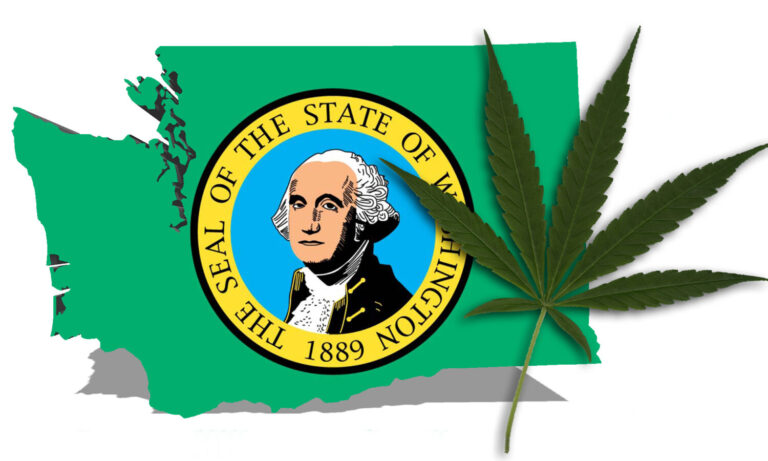
The Washington State Liquor and Cannabis Board adopted a motion to implement 2022 legislation that replaces the word “marijuana” with “cannabis” in all state laws, reported Big Country News.
Governor Jay Inslee signed the bill into law in March. With the Washington State Liquor and Cannabis Board’s adoption, the new rules are expected to take effect on August 6.
The measure refers to the racist origins of the Spanish word for weed as utilized by Harry Anslinger, who was the first commissioner of the Federal Bureau of Narcotics that later became the Drug Enforcement Administration (DEA) and played a key role in pushing Congress to pass the Marijuana Tax Act of 1937 that forbade selling and possessing cannabis.
“The term ‘marijuana’ itself is pejorative and racist,” Democratic state Rep. Melanie Morgan said during 2021 testimony on House Bill 1210, which she sponsored, according to local CBS affiliate KIRO 7 and reported by Yahoo Finance.
“As recreational marijuana use became more popular, it was negatively associated with Mexican immigrants,” Morgan noted. “Even though it seems simple because it’s just one word, the reality is we’re healing the wrongs that were committed against Black and Brown people around cannabis.”
She referred to Anslinger’s comments: “Marijuana is the most violent causing drug in the history of mankind. And most marijuana users are Negroes, Hispanic, Caribbean, and entertainers. Their satanic music, jazz, and swing result from marijuana usage.”
Jeff Kildahl, LCB’s cannabis policy and rules coordinator agreed. “Passing the bill, the Legislature found use of the term ‘marijuana’ in the United States has discriminatory origins and should be replaced with the more scientifically accurate term ‘cannabis.’” Kildahl noted that the word replacement will apply to Title 314 of the Washington Administrative Code.
I think that cannabis products, particularly those with over 10mg of THC, should indeed have warning labels — the same way that we regulate tobacco products. Here’s why.
Over the last few years, high THC cannabis has caught the attention of medical professionals and parents alike, but not in a good way. There has been an increased incidence of schizophrenia and psychosis cases attributed to consuming high THC cannabis, particularly among the youth.
On the other hand, for recreational users and other types of medical marijuana patients (including those struggling with severe depression, treatment-resistant post-traumatic stress disorder, cancer, and many more), the recent development of extremely potent cannabis — with concentrates sometimes reaching as much as 95% THC — has been nothing but good news. Sure, people say that the choices we have today are definitely not your grandparents’ weed.
Thanks to developments in genetics, we now have a wide array of THC products to choose from, ranging from 0.3% THC all the way up to the high 90s. And these types of products are available in dispensaries around the nation wherever it’s been legalized for adult use, medical use, or both.
Cannabis is Safe, But Has Never Been Touted as a Cure-All
A quick look at any search engine will show you a vast array of clinical studies done that show the efficacy and safety of cannabis for treating long list of mental and physical health disorders. There has also been a great emphasis on its efficacy with mental health issues, a serious medical problem that the industry is struggling to treat with effectiveness and precision.
According to the National Alliance on Mental Health, untreated mental health disorders costs the United States some $300 billion annually due to productivity losses. In addition, mental health illness and substance abuse disorders are commonly co-occurring issues, with many of those struggling with mental health disorders turning to dangerous antidepressants that one can easily overdose on. This leads to a (preventable) increase in the death toll. People with untreated mental health disorders, especially the more serious types such as psychosis and schizophrenia, tend to self-medicate which is why they often struggle with substance use disorders.
The real problem here is the absurdly high costs of mental health care in the country. Being able to afford a therapist or psychiatrist is something that is exclusively for the rich, while only very few can access programs that are designed to help the impoverished. I mean, average therapist and psychiatric fees start at least at $100 per appointment. Can we wrap our heads around this fact? And one with serious mental health problems would need several of these sessions throughout the year, maybe several a month even, just to get better.
No wonder people are self-medicating, which has become easier to do with increased access to legal weed. But we’re seeing results that are unfortunate.
“Studies have suggested that high potency cannabis is linked to higher likelihood of psychosis, depression, anxiety, and cannabis dependence, but these studies hadn’t been able to account for people’s early mental health symptoms, and hadn’t always taken into account whether the risks of high potency use were over and above the risks from using cannabis everyday,” says a 2020 study from JAMA Psychiatry.
So while a great majority of the population is enjoying tremendous relief from conditions that pharmaceutical drugs weren’t able to help them with, or because they simply do not want to use synthetic medications, there’s the growing minority of cases that are sounding the alarm on the easy accessibility of high THC cannabis particularly among those prone to psychosis and schizophrenia.
Cannabis advocates, even medical professionals who support the use of the drug, have never said that this miraculously medicinal plant should be seen as a cure-all.
There are certainly some circumstances wherein patients have to learn not to self-medicate with it, just in the way they could practice restraint in ensuring to follow the correct dosage for prescription drugs, or not mixing it with alcohol for fun.
Data Show Cannabis Is Generally Safe & Well-Tolerated
In numerous studies showing the efficacy of cannabis for treating a myriad of conditions, patients report that it’s usually well-tolerated.
Sure, cannabis has some well-known and common side effects. These can include paranoia, anxiety, dry mouth, red eyes, and feeling high – so much so that you’d be too impaired to drive. These are simply part of the psychoactive effects of cannabis, and science tells us that because each human being has such a unique biochemistry, we will all react to cannabis in different ways.
However, you also have to remember that cannabis is recognized as one of the safest recreational drugs in the world, even despite these minor side effects that people can experience while on it. Magic mushrooms ranks the safest, with cannabis not far behind at second place.
Furthermore, one would have to consume a ridiculously large amount of marijuana within a short time to even overdose. To date, there has not been a single case of a person overdosing from marijuana. Yes, it’s possible to take such a high amount of THC that you would feel unhinged from reality, but that would subside in a few hours.
And yes, people with cardiovascular problems should not take high THC substances. That also goes for people with severe mental health disorders, people who drive, people who have asthma, and a couple more. It’s not for everyone, but it’s certainly helping a significant percentage of the human population lead healthier and better lives.
Conclusion
To end this article, I think that cannabis should indeed have mental health warning labels. As someone who thinks that consumers should be armed with all the information they can when it comes to making a decision on their own well-being, I think that cannabis products, particularly those with over 10mg of THC, should indeed have warning labels — the same way that we regulate tobacco products.
If that is what it takes to increase access to marijuana and improve its awareness and education, which likely means more widespread legalization, then it’s certainly for everyone’s best interest.
According to a Care Quality Commission (CQC) publication, unlicensed medical cannabis prescribing in the private healthcare sector increased by 935% from 2020 to 2021 with 15 providers that offer unlicensed cannabis-based products for medicinal use registered and more being assessed.
The recent report “Safer management of controlled drugs: Annual update 2021” noted there were 37,634 items prescribed between January and November 2021 by non-National Health Service (NHS) healthcare services compared to 3,636 items prescribed between January and November 2020.
By contrast, over the same period of time, the NHS CBMPs prescribing in England was so low that data could not be reported. “The number of items prescribed within the NHS is so small that this could potentially affect patient confidentiality,” reads the report.
“Medicines licensed to cannabis-based drugs are routinely available on the NHS,” Pharmacy Minister Maria Caulfield said last April in response assessment has been made of the adequacy of access to medicinal cannabis for people who are eligible.
“However, clinical guidelines from the National Institute for Health and Care Excellence demonstrate a clear need for more evidence to support routine prescribing and funding decisions for cannabis-based products not licensed for medicinal use,” Caulfield added. “Until that evidence base is built, prescribers will remain reluctant to prescribe and the NHS will not be able to make any routine funding decisions.”
Moreover, the National Institute for Health Research confirmed — in October 2020 — that despite a call for applications, no government-funded medical cannabis trials were taking place.
“Since 2020, we have seen an 846% growth in the number of patients accessing our specialist service,” said Simon Erridge, Head of Research and Access at Sapphire Medical Clinics related to the recent surge in CBMPs prescriptions.
“The prescription of unlicensed cannabis-based medicines through the NHS has not seen the same growth (…) the National Institute for Health and Care Excellence published in 2019, that which did not show sufficient clinical benefit compared to the costs associated with these drugs,” Erridge concluded. “There is also a lack of randomized controlled trials demonstrating the efficacy of CBMPs compared to other licensed drugs.”
The letter asks the Biden Administration to use its authority for two purposes: to deschedule cannabis and to clear the names of all individuals convicted of non-violent cannabis offenses.
As marijuana faces federal legalization, Democrats are asking President Biden to step up and deschedule the drug.
The Hill reports that a group of senators sent the Biden Administration a letter this past Wednesday. It was signed by Senators Elizabeth Warren, Bernie Sanders, Cory Booker, and more.
The letter asks the Biden Administration to use its authority for two purposes: to deschedule cannabis and to clear the names of all individuals convicted of non-violent cannabis offenses. The letter highlights the medical benefits of the drug and features a recommendation by the World Health Organization to reclassify the drug and remove it from the more “restrictive classification under international drug treaties.” It also puts an emphasis on the effect that cannabis criminalization has had on communities of color.
“We ask that the Biden Administration act quickly to rectify this decade long injustice harming individuals, especially Black and Brown communities,” the letter reads.
The letter is a follow-up to the previous correspondence that occurred between Democratic senators and the Biden Administration, an exchange that was called “extraordinarily disappointing” and that was only “half a page.” Apparently, the administration is concerned over cannabis’ safety and the fact that it hasn’t been studies that deem it a safe and effective treatment for any condition.
“The Administration’s failure to coordinate a timely review of its cannabis policy is harming thousands of Americans, slowing research, and depriving Americans of their ability to use marijuana for medical or other purposes,” reads the letter.
While marijuana is becoming legalized in more and more states, it still faces an uphill battle when it comes to federal laws. While a large percentage of Democrats want to legalize it, many Republicans are against the idea, making it unlikely for both parties to reach an agreement and for the laws to change any time soon.
Even if the economy in general takes a dip, marijuana is just beginning to test the waters in many states.
A year ago, there were only whispers of a recession. Now it is starting to dominate conversations, and it has companies and citizens worried about the months to come.
A recession is not at all certain, but experts are saying the likelihood is higher than it was before. “The probability of a recession over the next 12 months is now 30%, the highest since 2020,” according to Bloomberg. This number, they said, is double the odds that were predicted just three months ago.
It is no secret that this country is in pretty shaky and uncertain financial times. Interest rates are on the rise, there have been ongoing supply chain issues, a depressed stock market and an ongoing war in Ukraine that shows no signs of letting up any time soon. “Bleak” is a word we all are hearing more than we would like these days.
But just because many facets of the economy and daily life have been negatively affected, does this mean the cannabis industry will also take a nosedive? Or can it thrive in these tough times? After all, the industry showed impressive gains during the pandemic while so many other industries teetered on the edge of collapse.
The answer to these questions is a bit complicated, but there is hope that cannabis, although not recession proof, can fare much better than other industries in tough financial times. According toInvesting Daily, “Many cannabis stocks have been caught in the downdraft, as investors shift to risk-off mode,” but that when the broader market starts to turn around, “cannabis stocks are likely to stage an even sharper upward trajectory.”
In other words, while cannabis stocks and the industry are not immune to the economic downturn, it has a tack record and ability to bounce back and rise higher than ever before.
While there is hope that cannabis can bounce back quickly, the fact remains that as finances become tight, people might not spend as much on marijuana. “Obviously, the inflation factor is happening everywhere,” Aaron Smith, CEO of the National Cannabis Industry Association, told the Denver Post, adding that some cannabis users are “probably cutting down on consumption because they’re having a hard time making ends meet or paying their bills.”
Even as many dispensaries offer their lowest rates with sales and promotions, if a consumer is struggling to pay for basic necessities, a marijuana budget simply might not exist.
It is a hard truth that the demand for cannabis is less than the demand for food and living expenses, and some may find themselves in a position where there is only enough money for the needs, rather than the wants. Still, even if a bit of financial gloom may linger in the distance, there is also hope.
Some places, like Rhode Island, have optimism when it comes to the marijuana industry. According toNBC affiliate WJAR, the State Department of Administration projects $41 million in marijuana sales in just the first seven months of marijuana legalization in the state, starting on December 1. So while the country braces in many ways for a possible economic downturn, some states like Rhode Island are hopeful that marijuana can provide welcomed prosperity to their state’s economies.
Marijuana is not recession proof, but it is certainly a desirable product and a resilient industry. It is also a young business, and even if the economy in general takes a dip, marijuana is just beginning to test the waters in many states. This means there is potential for growth in the industry, even if the country as a whole sees a slightly shrinking economy for a period of time.
A new state law allowing adult cannabis users in Minnesota to purchase edibles infused with hemp-derived cannabinoids, including small amounts of THC went into effect last Friday. Now, Democrats are touting the move as an under-the-radar way to legalize marijuana in the future, reported Minnesota Reformer.
“We absolutely did this on purpose,” House Majority Leader Ryan Winkler, DFL-Golden Valley, who is also known for pushing for cannabis reform, said on Tuesday at a press briefing. “It was an intentional step forward.”
Gov. Tim Walz signed the large-scale legislation that included provisions that provide permanent protections to Minnesota-based hemp businesses for legal sales of CBD-infused foods and drinks in early June. Besides CBD, the measure allows all hemp-derived cannabinoids to be legally sold in food items, beverages, and topicals, to name a few.
The provision was a part of a health and human services measure and it also legalized the production and sale of edible products with THC. Under the bill, the products must contain less than the federal limit of 0.3 % THC.
“Sometimes legislation benefits from a lot of publicity,” Winkler answered a question about why Democrats didn’t publicize a bill that went fairly unnoticed by the public. “Sometimes legislation benefits from the ability to do the work more quietly, but it was all done in the public eye,” Winkler said when asked why Democrats didn’t publicize a bill they’re now all celebrating.”
LatAm Cann.BIZ was conceived as a 2-day fully bilingual interdisciplinary conference that will address global and regional trends and provide up-to-date information on the cannabis and hemp industries
LatAm Cann.BIZ, the most important cannabis event in Latin America, will be held on September 1 and 2 at the Santa María Luxury Collection Hotel & Golf Resort in Panama City.
The event, organized by El Planteo, the most read cannabis media outlet in the Spanish-speaking world, PR MedCann.Biz, Javier Hasse, and Canalis Capital, will bring together a large portion of the most prominent business people, investors, and professionals in the global cannabis industry to Panama. Find your tickets here.
A Conference For The Global Cannabis Industry
LatAm Cann.BIZ was conceived as a 2-day fully bilingual interdisciplinary conference that will address global and regional trends and provide up-to-date information on the cannabis and hemp industries, including the regulatory framework that governs its production and distribution, cannabis technology, science, and good agricultural and manufacturing practices.
Executives of the best-performing cannabis companies, political actors, high-ranking government officials, medical professionals, and cannabis communicators will attend the event.
“We have thought of it as a space to discover interesting investment opportunities and learn how to be successful in this budding industry,” says Noemi Pérez, CEO of Green Book Academy, president of Puerto Rico MedCann.Biz, and one of the organizers of the event.
Featured Speakers
The event will feature speeches, panel discussions, talks, networking, and presentations from companies and investors, and will enable networking among various stakeholders.
Some of the most outstanding speakers are:
Adolfo Linares – Lawyer, Former Vice Minister of Education of Panama
Aras Azadian – Avicanna (OTC: AVCNF)
Bob Hoban – Clark Hill
Carlos Hoyos – Velo Legal
Carlos Ossa – Patient Activist
Carlos Vives Jr.
Carolina de la Guardia – Lawyer
Cynthia Salarizadeh – House of Saka, Green Market Report
Dr. Dedi Meiri – Laboratory of Cancer Biology and Cannabinoid Research at the Technion Faculty of Biology
Dra. Ericka Stahl – Fundación Buscando Alternativas, Interdiscipliary Latin American Society of Cannabinology
Eric Block – Wana Brands
Lcda. Elvia Lau – National Director of Pharmacy and Drugs, Health Ministry of Panama
Facundo Garretón – Former Legislator of Argentina, Terraflos
Garyn Angel – Magical Butter
Hernán Panessi – Journalist
Ingrid Schmidt – LATAM Cann.Biz
Javier Hasse – El Planteo, Benzinga, Forbes, Entrepreneur Media
José Bacellar – VerdeMed
Juanjo Feijoo – Weedmaps (NASDAQ: MAPS)
Julian Cohen – Canopy Growth Corp (NYSE: CGC)
Leroy Sheffer – Vice President of the National Bank of Panama’s Board of Directors
Lorne Gertner – Serial Entrepreneur, Toky Smoke, PharmaCan
Our media partners include The Fresh Toast, El Planteo, Benzinga, High Times Magazine, Honeysuckle Magazine, Revista Crónicas, En Volá, Green Market Report, and more.
Get your brand in front of the top media in the cannabis world and beyond!
It is common knowledge that toxic materials enter the body through the mouth, impacting in this way the oral mucosa and various structures in our body, writes News Medical Life Sciences. While many studies have been conducted on the impact of tobacco smoke, new research on marijuana is becoming more common.
As per the new study, cannabis smoke condensate induces human gingival epithelial cell damage through apoptosis, autophagy, and oxidative stress, published in Archives of Oral Biology, which examined how cannabis smoke condensate (CSC) affects the gingival epithelial cells.
The research analyzed the effect of CSC on cell shape, adhesion and viability at different time intervals, using microscope and lactate dehydrogenase activity assays. The impacts of CSC on autophagy, oxidative stress, and cell apoptosis were analyzed using gene expression via an RT2-PCR array.
The Results
“CSC deregulated gingival epithelial cell shape and adhesion, decreased cell viability, and increased lactate dehydrogenase release. Its toxic effects included apoptosis, autophagy, and oxidative stress,” the study authors wrote.
In short, cannabis smoke condensate is toxic to gingival epithelial cells. Similar effects have been noticed with cigarette smoke condensate.
What’s more, the scientists discovered that marijuana smoke caused higher expression of several genes, such as the TNF superfamily and NLR-family apoptosis inhibitory protein that bolstered gingival epithelial cell death through apoptosis. In addition lowering of CD40L gene expression disrupted cell communication and, indirectly, caused cell apoptosis.
What’s also important is that scientists believe that as epithelial cells are important in our innate immunity, their reaction to CSC exposure can possibly have an important effect on the immune response. The authors, however, noted that this suggestion should be examined in a new study.
In addition, these results come from a study conducted on monolayer cell cultures and should be further confirmed via animal studies.
Countless people already benefit from using cannabis before, after, and even during their workouts. The key is finding the right dosage that works for your unique needs and athletic lifestyle.
All of us oftentimes can make use of a little push to do a workout. That’s why using pre-workout mixes and energy drinks have become so popular. They contain an array of ingredients ranging from creatinine to caffeine and BCAA’s (branched-chain amino acids), which promise to give an energy boost that you need to do better at your workouts. But thinking outside the box, and with a bit of data, maybe marijuana instead of energy drinks?
And they do work; there are many studies and anecdotal evidence showing that these drinks indeed provide long-lasting energy needed to efficiently exercise. However, energy drinks, which are primarily made with caffeine, sugar, and sodium, are actually dangerous and extremely unhealthy. Sometimes, they contain guarana, which is a bean sourced from South America containing double the amount of caffeine in coffee.
Consuming energy drinks can have serious side effects including increased heart rate, trouble sleeping, restlessness, muscle twitches, and even stomach irritation. In fact, the ingredients in energy drinks can even cause difficulty for arteries to properly dilate. Even the healthiest person can easily suffer from cardiac arrest after consuming energy drinks.
Other common side effects of energy drinks include:
Using Cannabis Products As A Safer, Natural Pre-Workout
While marijuana has always had the reputation of making people lazy couch potatoes (no thanks to Reefer Madness), the truth is that the correct products can help you fight off fatigue while helping you feel invigorated and energized.
The human body has its own endocannabinoid system, and we produce our own version of the cannabinoids found in the marijuana plant. These endocannabinoids are essentially tiny fat molecules that circulate around the brain, but they are referred to as ‘endo’ since they are produced within the body. They stimulate the CB1 and CB2 receptors in the body but when we consume cannabis, exogenous cannabinoids such as CBD and THC also activate the endocannabinoid system.
As a result, using both exocannabinoids while harnessing the power of endocannabinoids can greatly enhance the endorphin boost.
In a 2019 study, individuals who used marijuana prior to exercise reported that their engagement in physical activity increased.
Also in 2019, Angela Bryan, a social psychologist, polled over 600 marijuana consumers in the United States. The participants all lived in states that have legalized marijuana, and they were asked about their workout habits as well as other health factors. The poll results showed that 4 out of 5 respondents admitted to using marijuana before a workout or right after. Meanwhile, those people also spent more time exercising compared to people who didn’t combine cannabis with their workout regimen.
Additionally, around 70% of the respondents who used marijuana before exercising said that doing so made the workout more enjoyable. Though anyone who consumes cannabis can tell you that it does make anything more fun, Bryan thinks that chemical interactions are responsible for this.
Then in 2022, a study by researchers at the University of New Mexico showed that more than 91% of people among a cohort of 3,922 who self-administered marijuana, did so to fight off fatigue. While they did use cannabis because fatigue was an effect of other diseases they were suffering from, it showed that the plant was indeed effective in helping people find relief from fatigue while helping boost energy levels right after consuming it.
Some experts believe that the euphoria we feel from exercise actually comes from the endocannabinoid system. In a study from 2003, researchers discovered that anandamide, a molecule from the endocannabinoid system which is responsible for feelings of bliss, occurs in elevated levels after volunteers cycled or ran inside a lab. Marijuana targets the same receptors causing Bryan to assume that cannabis could actually help to jumpstart the blissful feelings caused by anandamide.
On top of that, cannabis is also effective for helping you recover from your exercise. This is one of the key reasons why athletes use CBD and THC products, to assist with pain alleviation and soreness that often occurs after a hard workout. The anti-inflammatory properties of cannabinoid compounds are well-known and is backed up by several studies.
How To Use Cannabis As A Pre-Workout
There are many ways you can use cannabis as a pre-workout. Here are some tips to keep in mind:
If you prefer to smoke flower, opt for the sativa varieties. These are well-known for their energizing and uplifting properties, suitable for use before you go on the gym or head out to the trails.
Experiment with oral and sublingual routes of administration. Edibles are not recommended for exercises purposes since its effects last too long and how it impacts your exercise may be unpredictable. Instead, use CBD or THC edibles to help with recovery after an intense session.
Using THC products can impair your motor control and slow down judgment, so getting too lit before sports such as sky diving, bungee jumping, or cycling is not recommended on THC.
Start by microdosing and using small amounts at first, such as with 5mg of THC and working your way up. Eventually, you can find a dosage that suits your needs best and helps you perform at your peak.
Countless people already benefit from using cannabis before, after, and even during their workouts. The key is finding the right dosage that works for your unique needs and athletic lifestyle.
“You have people walking around with wheelbarrows full of cash,” Sen. Ron Wyden said in a July 4 interview. “That’s just a magnet for criminal activity.”
Rep. Ed Perlmutter (D-CO), a House sponsor of a bipartisan marijuana banking reform bill, filed an amendment to the Fiscal Year 2023 National Defense Authorization Act (NDAA) last week that would be incorporated into the Secure and Fair Enforcement (SAFE) Banking Act.
The move came after bipartisan congressional members concluded that marijuana banking legislation will not be included in the final version of the United States Innovation and Competition Act (a/k/a The America COMPETES Act).
The bill was formally attached as an amendment to large-scale legislation dealing with innovation and manufacturing in February.
In a recent press release, Perlmutter said he will “pursue any and all legislative avenues to get SAFE Banking across the finish line this year.”
In the meantime Sen. Ron Wyden (D-Ore.) told Willamette Week that he, Sen. Cory Booker (D-N.J.), and Senate Majority Leader Chuck Schumer (D-N.Y.) continue to push for federal cannabis reform, as they want to see their legalization bill in the works before the Senate recess, expected around August 8.
The lawmakers’ bill, the Cannabis Administration and Opportunity Act, would end the prohibition of cannabis and “ensure restorative justice, public health and implement responsible taxes and regulations.”
“You have people walking around with wheelbarrows full of cash,” Wyden said in a July 4 interview. “That’s just a magnet for criminal activity.”
Cannabis Banking Is A Priority
With the cannabis dispensary crime wave getting stronger by the day, cannabis banking continues to be a priority. In a letter to Wyden sent on June 14, Paul Rosenbaum, chairman of the Oregon Liquor and Cannabis Commission urged him to nudge Congress in the right direction.
“Enough states are engaged in some form of legalization that this should be an immediate national priority, not just a priority for our state.”
While Wyden’s measure that bans the federal government from rejecting people’s security clearances required for employment at intelligence agencies because of prior cannabis use was recently green-lighted by the Senate Intelligence Committee, it remains to be seen what Congress will do next.
“Millions of Americans have voted for legalization,” Wyden said. “Oregonians already voted to join the 21st century. I’m going to try and get the rest of the Congress to catch up with us.”