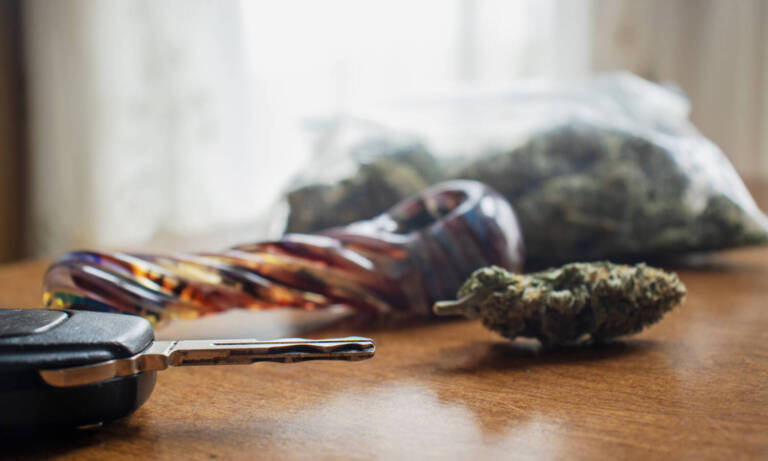
Does cannabis legalization increase impaired driving? According to the Coalition for Cannabis Policy, Education, and Regulation’s (CPEAR) recently published paper, it does not.
One of the key findings of the policy report says the effect of legalization on DUIC is “either insignificant or declines a year after the legal market was implemented,” though the organization highlighted that “more research and better data collection” is needed.
The paper titled “Contextualizing the Problem: Driving Under the Influence of Cannabis and Other Drugs in America” also stressed that cannabis use alongside the use of other drugs can lead to impaired judgment and decision-making.
In addition, the report also attributed an increase in DUIC offenses to less knowledge of the impacts cannabis has on one’s ability to safely drive a vehicle.
“As CPEAR has always stated, it’s never safe to drive while under the intoxicating influence of cannabis,” said Shanita Penny, head of CPEAR’s Center of Excellence. “U.S. federal law should create a clear expectation that if you drive high, you will get a DUI, while also embracing the programs, technologies, and best practices to combat driving while intoxicated. We look forward to engaging with lawmakers on this critical matter as we continue to advocate for a federal framework for cannabis.”
Recent Research On Marijuana & Driving
Interestingly, a recent study revealed that over 40% of US drivers use both alcohol and marijuana.
Moreover, according to a study published recently in the Journal of Preventative Medicine Reports, frequent cannabis users in states where recreational marijuana is legal showed significantly lower risk of self-reported DUIC within three hours after use compared to those living in states where cannabis is not legal.
Some drivers believe that driving while high does not affect their ability to operate an automobile despite warnings from law enforcement that the number of fatal car crashes involving cannabis has more than doubled in the past several years.
Either way, the overall number of studies proving that cannabis legalization has a positive effect is on the rise.
Cannabis Legalization Decreases Impaired Driving
Earlier this year, researchers from state Universities of Tennessee, Arkansas and Iowa found that US recreational cannabis legalization reduced the number of heavy truck accidents by 11% in the eight states studied.
Some states went a step further, with Pennsylvania leading the way. A recent bill that seeks to protect medical marijuana patients in the Keystone State from being charged with driving under the influence was approved by the Senate Transportation Committee by a 13-0 vote.
Under the bill medical cannabis is to be equally treated like any other prescription narcotic, requiring proof of impairment of the person’s ability to drive in order to be charged with DUI.
It is likely that many more laws will be implemented before cannabis lounges take off in a major way in other states.
There is something special about a lounge experience. An intentionally designed atmosphere for strangers to meet in order to enjoy ambience and interaction is something most of us took for granted before COVID. Bar, lounges and restaurants do a great business. Now there might cannabis-infused meeting place opening in different states. Here is what cannabis lounges could mean for weed consumption.
As we previouslyreported, the Nevada Cannabis Compliance Board recently approved a measure that will allow cannabis consumption in lounges. While Alaska was the first state to approve cannabis lounges, Nevada, and specifically Las Vegas, along with some California cities, seem to have big and immediate plans for this new frontier. It is almost as if cannabis entrepreneurs are looking to take the buzz and nostalgia of Amsterdam’s weed cafes and explode them into modern American times.
This effort may prove to be a huge new growth market, and even a shift in how Americans view and consume their weed. While this is all exciting news, there are a lot of unanswered questions about how to run and regulate a marijuana consumption lounge. If this is the future of marijuana, how will states safely take this concept to the mainstream?
Marijuana lounges are a relatively new idea in the US in the scheme of things. For context, Colorado legalized marijuana in 2012, and Alaska legalized consumption lounges in 2019. But as more states legalize marijuana and are hungry for a piece of this new enterprise after lockdown, there is a growing interest in cannabis lounges.
“The politics of pot lounges are changing along with shifting social mores around the substance,” wrotePolitico, which interviewed Larry Scheffler, the co-CEO of a proposed cannabis lounge in Las Vegas. And this isn’t the boutique corner cafe you might think of when you think of a weed lounge, unless you are picturing a space fit with a giant 5-inch-deep splashing pool.
“You take your shoes off. You dance in the water. You consume cannabis, and there’s 100,000 rooms looking down on you from the Vegas towers,” Schefflersaid. This, my friends, is not Central Perk, but an altogether otherworldly cannabis experience. It all sounds fascinating, but how on Earth can you regulate such a venture?
Take California for example. Several jurisdictions within California have begun legalizing forms of cannabis consumption lounges. But as more and more of these establishments pop up, just as many questions arise. “California law restricts indoor smoking, which could preclude customers from puffing on a joint in a lounge,” Brad Rowetold the New York Times recently. “And there are regulations intended to protect employees from working in smoke-filled environments,” Rowe said.
These are not the only questions people are asking either. In a recent article about consumption lounges, The National Cannabis Industry Associationasked: “Could public consumption spaces cause people to over-consume? Will there be limits on how much cannabis a person is allowed to consume at a lounge in one visit? What is a ‘single serving’ of cannabis anyway?” These are all valid and mostly unanswered questions. Still, according to the same article, this has not stopped seven states from forging plans for legalizing consumption lounges.
Currently, Alaska is the only state with any real history in this department. Its laws, according to theMarijuana Policy Project, allow you to purchase and consume up to one gram of cannabis or an edible of up to 10mg of THC. Alcohol and tobacco sale and consumption is prohibited. There are also strict regulations about staff, and even strict ventilation regulations.
These are all understandable laws, and it is likely these and many others will be implemented before cannabis lounges take off in a major way in other states. Still, even though you might not be able to have a “happy hour” at these new consumption lounges, there are likely to be a lot of smiling faces in lounges and cafes across the nation once these establishments open their doors.
As of July 1, purchases of cannabis via New Jersey’s Medicinal Cannabis Program are tax-free, as a result of a three-phase process enacted in 2019 when provisions to eliminate the tax were signed by Gov. Phil Murphy.
Now after years of paying higher than average prices for medical cannabis, New Jersey MMJ patients can now buy medical cannabis products at a permitted dispensary at cheaper prices, reported New Jersey 101.5.
“Removing state sales tax on medicinal cannabis is consistent with Governor Murphy and the Legislature’s intent to prioritize patients and improve affordability,” said Jeff Brown, executive director of the New Jersey Cannabis Regulatory Commission. “As the sales tax has been phased out from 4% to 2% and now to 0%, patients have been able to spend less on their medicine, further ensuring patients are prioritized over recreational consumers.”
Named after a 7-year-old boy who used cannabis to alleviate cancer symptoms, The Jake Honig Compassionate Use Medical Cannabis Act applies only to medical cannabis, and it does not affect the sale of recreational marijuana, which kicked off in the Garden State in April.
Initially available in dispensaries run by seven marijuana operators, recreational cannabis was welcomed by New Jerseyans.
The NJ Cannabis Regulatory Commission revealed in May that consumers bought $24 million worth of cannabis in the first month of sales or roughly $5 million a week after a record-breaking first day when $2 million was spent.
The letter comes on the heels of the Biden administration confirming it will consider safe consumption sites and cannabis decriminalization to address the public health emergency.
Last week, a group of six U.S. senators urged the Biden administration to use its position and remove cannabis from the list of Schedule 1 substances under federal law. Sen. Elizabeth Warren (D-MA), Bernie Sanders (I-VT), Cory Booker (D-NJ), Ron Wyden (D-ORE), Kirsten Gillibrand (D-NY), and Edward J.Markey (D-MA) sent the letter on Wednesday, urging the administration to “use its existing authority to (i) deschedule cannabis and (ii) issue pardons to all individuals convicted of nonviolent cannabis-related offenses.”
U.S. Senators Amy Klobuchar (D-MIN) and Tina Smith (D-Min), while not being a part of this group that signed and sent the letter to President Biden, Attorney General Merrick Garland, and Health and Human Services (HHS) Secretary Xavier Becerra said they are also backing recreational marijuana legalization and commuting sentences of non-violent offenders, reported Minnesota Reformer.
“I support the legalization of marijuana on the federal level and believe that states should have the right to determine the best approach to marijuana within their borders. We must also take steps to expunge prior non-violent convictions,” Klobuchar stated.
Klobuchar previously ran for president in 2020, and prior to serving the Senate, she was Hennepin County attorney for two terms, in charge of the state’s biggest team of prosecuting lawyers.
Smith seems to be on the same page with all these politicians fighting for the same cause – legalizing the plant. Her spokeswoman, Lexi Byler, stated, “Sen. Smith believes that marijuana should be legalized, and that cannabis should be removed from the nation’s list of illegal controlled substances. She also supports expunging non-violent marijuana convictions.
Letter Highlights & Recent Developments
In the letter senators sent last week, they wrote, “The Administration’s failure to coordinate a timely review of its cannabis policy is harming thousands of Americans, slowing research, and depriving Americans of their ability to use marijuana for medical or other purposes. We ask that the Biden Administration act quickly to rectify this decade-long injustice harming individuals, especially Black and Brown communities.”
Senators haven’t forgotten to mention growing public support for marijuana legalization, and also the problems communities of color are dealing with due to the “racist and harmful legacy of cannabis policies,” in the U.S.
“The legacy of the war on drugs is pervasive. It is estimated that over 40,000 individuals are still incarcerated for cannabis related offenses,” they wrote. “A report released by the American Civil Liberties Union in 2020 found that Black individuals were nearly four times as likely to be arrested for cannabis possession even with comparable usage rates amongst individuals of all races. In some states Black individuals were almost 10 times more likely to be arrested for cannabis possession.”
The letter comes on the heels of the Biden administration confirming it will consider safe consumption sites and cannabis decriminalization to address the public health emergency. Nevertheless, this is far from the first time the Biden administration is making promises and no real actions around marijuana reform, and also not the first time the White House is under pressure from all sides on this matter, thus, the need from senators to push harder. Will it work this time? We’ll see.
Further testing on pesticides used to cultivate marijuana is one way to ensure all the consumers are safe from harmful chemicals.
As Rhode Island gears up for its recreational sales debut this December, it now requires all of its cannabis pass pesticide testing. This process is common, as nearly all legal states have some form of pesticide testing in place. With cannabis being illegal on a federal level, however, one is left to question exactly how rigorous this testing is.
In fact, since marijuana is not technically a food product or controlled at all by any federal body, one has to wonder exactly what type of pesticides we might be consuming with our recreational, and even medical marijuana. The answer, just like with marijuana policy in general, is that it varies significantly from state to state.
Arizona is a good example of how some states are handling pesticide oversight. The state of Arizona determined that testing for pesticides in marijuana was essential before it is placed on shelves, “but unlike other states, regulators here don’t do their own testing to ensure they are safe,” wrote AZ Central. The state has a third party test its marijuana, which puts full faith in this outside company to provide accurate and reliable information. This is not an uncommon practice since marijuana policy is still enjoying its “Wild West” phase in many newly-legal states.
The fact is, pesticide testing varies significantly from state to state. In a2021 study, “six states imposed the strictest U.S. EPA tolerances (i.e. maximum residue levels) for food commodities on up to 400 pesticidal active ingredients in cannabis, while pesticide testing was optional in three states.” The study found that the action levels of regulated pesticides were very different depending on what jurisdiction it came from.
The main reason for this inconsistency is due to the fact that the main agency that regulates and monitors pesticide use in the US is currently not at all involved in regulating marijuana pesticides. According to theEPA, they have not registered any pesticides for marijuana. This is because as a federal organization they cannot make policy for a substance that is deemed a Schedule 1 drug. Instead, the responsibility and authority is left to the states that have legalized marijuana.
These decisions are not always easy, and state lawmakers are having to make their own policies based on very little testing and history. According to theEnvironmental Healthy Perspective (EHP), “These states have had to make difficult decisions about regulating the use of potentially harmful chemicals on cannabis plants without the benefit of the type of rigorous data that typically inform pesticide policy.” While many states are mirroring their policies after ones that seem strict and have worked for other things like food safety, the fact is marijuana pesticide regulation is a very new science.
Further testing on pesticides used to cultivate marijuana is one way to ensure all the consumers are safe from harmful chemicals. Even without federal legalization, if there is continued research and strict pesticide testing, the legal products on the shelf should be safe for all to consume. After all, it is an organic allure that gives marijuana its appeal to so many. Therefore, it’s crucial states do all they can to preserve its sacred, pure and natural reputation.
Many of these THCs are not pharmaceutically or commercially available, but it’s a joy to know that varied variants of psychoactive compounds are constantly being discovered.
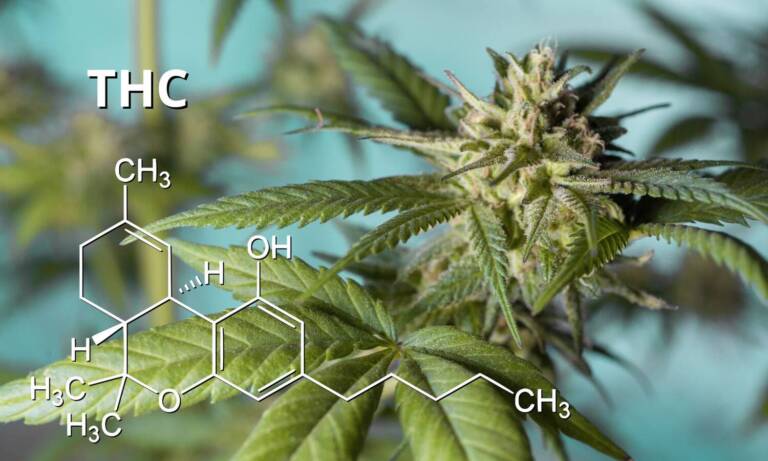
How many types of THC are there and which one is the strongest? A lot of cannabis users are very familiar with delta-9 THC and the effects it has on our bodies and mind. At a basic level, an average cannabis consumer recognizes that the major psychoactive compound present in cannabis is THC — it is responsible for the high feeling one gets after cannabis use.
However, what many consumers don’t know is the number of different THCs there are. So, in this article, we’ll briefly talk about 15 distinct THC compounds. Although more THCs still exist, these 15 are the most common ones.
THCA is the natural THC present in all raw marijuana plants. However, once raw cannabis is heated THCA frees its carboxylic acid group, transforming to delta-9 THC. This entire process is called decarboxylation.
THCA can be found everywhere in a cannabis plant. It is present in the leaves, flowers, and stems. The psychoactive effects of THCA in itself are minimal, so don’t expect much from it. Although some chew on the stems and leaves to get some relaxing effects. However, once decarboxylation occurs, the mind-altering psychoactive effects come into play
Delta 3 to 7
‘Delta’ is a term used in chemistry to signify the location of a double bond on a carbon chain molecule. When it comes to THC, there are many variations. For instance, with the popular delta-9, the double bond is on the ninth carbon chain. This means the location of a double on a carbon chain gives an entirely different variety of THC.
This means delta-7 THC, delta-6 THC, delta-5 THC, delta-4 THC, and delta-3 THC are synthetic isomers of delta-9 THC. These isomers were formulated in the lab between 1940 and 1970 to create various THC versions that could medically help patients. Not just that, different variants were also created to tackle problems like stability and shelf life.
The most common type of THC is delta-9. When people talk about THC more times than not, they are referring to delta-9 THC. This is because it is the primary psychoactive compound present in cannabis plants.
But what happens when delta-9 ages? Well, when delta-9 THC degrades and oxidizes, what we get is a large quantity of CBN (a cannabinoid) and a small amount of delta-8 and other travel compounds and cannabinoids. This oxidation gives delta-8 a more stable property, causing it to have more medical applications compared to delta-9. However, delta-8 THC is naturally available in minute amounts in cannabis plants, so it is often synthesized in the lab.
As for delta-10 THC, it is a completely synthesized cannabinoid discovered through serendipity. The delta-10 THC trend kicked off in California when Fusion Farms accidentally produced crystals that were slightly different from the usual cannabinoids. Hence, the new THC synthesized was dubbed delta-10 THC.
11-hydroxy-THC is not a cannabinoid when examined closely. It is more of a metabolite our bodies create when we consume THC in a specific way. When plant-based THCs like delta-9 or delta-8 THC are eaten, the body digests them and metabolizes them courtesy of the liver. The resulting metabolite formed is 11-hydroxy-THC, a more powerful tetrahydrocannabinols than delta-8 and delta-9.
This entire process is called the first-pass metabolism and this is why orally ingesting cannabis products gives a prolonged and more intense effect than smoking. For this reason, delta-8 edibles are just as potent as delta-9 edibles but similar things can’t be said to go vape or flower products.
Tetrahydrocannabivarin, or THCV is a naturally occurring THC analog. It comes from the breakdown of CBGVA, a precursor cannabinoid into tetrahydrocannabivarin acid (THCVA). An interesting thing about THCV is its interaction with the endocannabinoid system and its effects on weight and appetite.
Meanwhile, Tetrahydrocannabiphorol (THCP) is a distinct THC analog-type known as a homolog. Homologs are molecules that belong to a compound series that differs by a reacting unit from each other. In this case, the alkyl side chain is the repeating unit. While delta-9 THC has an alkyl side chain of 5 terms, that is, it has 5 carbon atoms in total, THCP has an alkyl side chain of 7 terms.
THC-O
THC-O-Acetate is a byproduct of a distinct decarboxylation type known as LTA decarboxylation. This decarboxylation process is quite different from the usual light or best-induced decarboxylation method. LTA decarboxylation makes use of lead tetraacetate, a very toxic compound to stimulate oxidative decarboxylation which results in the formation of acetate ester.
THC-O is not naturally occurring and can only be manufactured using this process. To this end, THC-O is a synthetic delta-9 analogs. While it has gained some popularity, it is vital to note that it is a compound present in any quantity in the cannabis plant.
Delta-9 tetrahydrocannabihexol and cannabidiol (CBDh) were discovered by the same group of Italian scientists who first isolated CBDP and THCP. These phytocannabinoids were discovered in 2020, and that was found to be a hexyl delta-9 THC homolog. Instead of an alkyl side chain like most THCs, THCh holds an n-hexyl side chain.
A similar situation also applies to THCB (tetrahydrocannabutol). While little information is available on this THC, it is also a delta-9 THC homolog but the major difference is the alkyl side chain being replaced by a butyl side chain.
So, which THC is the strongest?
The answer to this question isn’t straightforward. Referring to the strongest THC depends on some factors. Is it in terms of consumption methods or product types? To further elaborate, if what you need is the strongest smokable THC, then the answer would be THC- I. The downside here is that the THC is completely synthetic and its long-term effects remain unknown.
On the other hand, if you need a naturally occurring THC, then THCP would be the most powerful. Sadly, it comes in trace amounts, so you won’t find plenty of it in raw flowers. Thankfully, THCP usually comes in concentrates so you can just buy that. However, if you like to eat edibles, 11-hydroxy-THC is your best bet since it is a very potent metabolite form of delta-8 and delta-9 THC. But if you don’t like edibles, you will be having none of 11-hydroxy-THC.
Conclusion
In today’s market, varieties of cannabinoids are certainly not lacking. However, a lot of these THCs are not pharmaceutically or commercially available, but it’s a joy to know that varied variants of psychoactive compounds are constantly being discovered.
Here’s what you should know about monkeypox vaccines and avoiding the disease.
Monkeypox cases are on the rise all over the country. Currently, there are over 350 confirmed cases, with several states reporting at least one case. Once we account for the fact that there are few options for testing, it’s safe to assume that there are more infections that we don’t know about.
This environment is likely to set off your pandemic warning bells. Is there a monkeypox vaccine and can you get one? If not, how do you protect yourself?
There is a monkeypox vaccine, but it’s not available to the general public just yet. While it’s understandable to freak out over yet another viral disease, it’s important to remain calm and to read up on other ways of protecting yourself, because there are several.
Monkeypox vaccines are available. While they’re not as widespread as Covid vaccines, these should be available now in small amounts, with the Department of Health and Human Services expecting more shipments later this year.
Currently, areas with higher rates of monkeypox like Florida, California, and New York, have priority for these vaccines. People who have had close physical contact with someone who was diagnosed with monkeypox, who have a sexual partner diagnosed with the disease, men who have sex with men and who’ve had multiple sexual partners in one of these areas are also on the priority list and should be able to get vaccines with relative ease.
Monkeypox is transmitted by close contact, making it especially risky between family members, close friends, and sexual partners. Keep an eye on your social circle and know that the disease can be spread by sharing clothes, towels, or utensils like plates and silverware. Monkeypox is known for its lesions which look like blisters. Interacting with them is likely to cause contagion.
To stay protected, keep your distance from people who have these symptoms and keep an eye on any skin lesions that appear on your body, visiting a doctor as soon as possible to get a proper diagnosis. If you experience symptoms, let your social circle know, that way they can get vaccinated and eliminate further routes of infection.
Cannabis research in the United States is notoriously difficult, which is why many of these new, recent discoveries on the plant’s compounds are done by researchers abroad.
Marijuana is the most widely used “illicit” drug in the entire world. It’s also the most popular, with millions of consumers now using it legally all the world thanks to many countries relaxing its stance following suit after the United States, Canada, and Uruguay.
However, from a scientific perspective, we know so little about the compounds in the plant. So far, there are 500 known compounds in the plant but only two cannabinoids — tetrahydrocannabinol (THC) and cannabidiol (CBD) — have been extensively studied numerous times over. We have been able to identify their therapeutic applications for dozens of afflictions though that’s not to say that they are the only 2 valuable compounds in the plant.
THC is the cannabinoid responsible for its psychoactive properties, and it also has important therapeutic benefits. On the other hand, CBD doesn’t cause a high but it’s widely marketed as a powerful sedative. Both have potent anti-inflammatory properties that help provide relief from pain, spasms, anxiety, depression, trauma, and more.
But over the last few years, scientists have been able to identify even more compounds within the plant that are beneficial for us. There are several other major and minor cannabinoids and terpenes that all have terrific medicinal value in many different ways; in addition, it also contains flavonoids and omega-3 fatty acids. Let’s look at some of the recent discoveries.
Kynurenine, Kynurenic Acid, and Tryptophan
In March 2022, Italian researchers have identified tryptophan, kynurenine, and kynurenic acid in cannabis for the first time earlier this year. Though these compounds already exist in us humans as well as mammals, kynurenine is a metabolite of tryptophan, which is an amino acid that we can’t produce ourselves. Hence, we need to rely on our food intake to get enough of it.
Through high-resolution mass spectrometry and liquid chromatography, they found that these compounds exist all over the plant though it’s in much larger amount within the leaves. It’s also interesting for the researchers that kynurenic acid is highly concentrated in cannabis compared to other plants, since it has also been found in some vegetables including potato, pumpkin, and broccoli – as well as other herbs and spices.
According to the researchers, 95% of tryptophan in the human body is metabolized into kynurenine, though some of it further degrades to kynurenic acid. The latter is piquing the interest of researchers because of its neuroprotective, anti-inflammatory, and anti-oxidative benefits especially for the heart and the brain. In addition, tryptophan metabolites are known for helping to regulate lipids and mitigating obesity.
“Considering the important role played by kynurenic acid in animals and humans, its accumulation in the leaves opens a new branch of the cannabis chemistry that makes this plant even more attractive than it already is,” they concluded.
THCP and CBDP
In 2019, Italian researchers also accidentally discovered two cannabinoids namely THCP and CBDP while studying an industrial strain of hemp. The same team discovered THCB and CBDB in the year before, but being able to identify THCP was extremely significant because it may help us better understand why some strains with low THC levels are still extremely powerful in both their high and their medicinal value.
Using mouse models, they discovered that the binding mechanism of THCP on the animals’ CB1 receptors resulted in similar effects as THC even when they only used half a dose. They found that THCP was 33 times more active on the CB1 receptor compared to THC, while it was also 5-10 times more active on the CB2 receptor. In addition, they found that THCP is easier to dissolve in fats. This is why cannabis strains that contain more THCP are more powerful compared to those that only contain THC.
On the other hand, they also discovered CBDP, also known as CBD-C7 or CBD-heptyl. Unfortunately, we still know significantly less about CBDP compared to THCP but researchers have deprioritized studying it simply because it had less efficacy binding to CB1 and CB2 receptors.
Though there’s still a lot we don’t know about THCP, the Italian researchers did discover that it may have potential for pain relief, hypomobility, and helping reduce temperature within the rectum.
“In our opinion, this compound should be included in the list of the main phytocannabinoids to be determined for a correct evaluation of the pharmacological effect of the cannabis extracts administered to patients,” said the researchers. “In fact, we believe that the discovery of an extremely potent THC-like phytocannabinoid may shed light on several pharmacological effects not ascribable solely to THC,” they conclude.
For those interested to explore what THCP feels like, you may be interested to know that some cannabis brands already sell THCP products in the market.
Conclusion
Even if marijuana is legal in one form or another in a majority of US states, researching it is a completely different beast. Cannabis research in the United States is notoriously difficult, which is why many of these new, recent discoveries on the plant’s compounds are done by researchers abroad.
Currently, cannabis is still a federally illegal substance and it’s still listed as a Schedule 1 drug at the time of writing. This hasn’t stopped researches from both near and far from studying what they can about the plant, and it looks like we can still expect exciting new discoveries in the upcoming years.
Learning about the plant should be something that supporters as well as opponents of marijuana legalization should welcome because unbiased research will only help us move forward and make more educated decisions — both for patients and doctors.
Gov. Tom Wolf is considering the bill, which was sent to his desk July 7, after passing Pennsylvania’s House of Representatives and being amended by the state senate.
A Pennsylvania General Assembly bill would protect banks, credit unions, and insurance companies that do business with legal cannabis companies in their state.
Bill 331 amends Title 12, Commerce and Trade, of the Pennsylvania Consolidated Statutes, “providing for legitimate cannabis-related business and incentive-based savings program; and imposing a penalty,” reads the bill.
Now, Gov. Tom Wolf is considering the bill, which was sent to his desk July 7, after passing Pennsylvania’s House of Representatives and being amended by the state senate.
“The law would prevent prosecution only under state laws, not federal statutes,” said Meredith Buettner, executive director of the Pennsylvania Cannabis Coalition. “Even after passage, the bank still may not be safe from the possibility of federal prosecution or interference.”
“I expect the law to improve cannabis industry access to banking services,” said Jordan Grant, director of government relations with the industry group Pennsylvania Association of Community Bankers.
After the Senate rejected the SAFE Act and therefore the Marijuana Banking Bill is still not a part of the America COMPETES Act, hopes for federal cannabis banking reform remain on hold.
“Legal cannabis companies do not have access to banks or the insurance market the way other businesses do,” said Michael H. Sampson, co-leader of the Cannabis Industry Group at the Downtown Law Offices of Leech Tishman Fuscaldo & Lampl.
However, cannabis sales in PA are estimated to total between $1.6 billion and $2 billion this year and grow from $2.2 billion to $2.7 billion, through its medical marijuana program.
Moreover, doctors in PA can prescribe cannabis for different medical conditions such as chronic pain, nausea, and multiple sclerosis. In addition, marijuana patients and caregivers have received marijuana cards in the state that allows them to purchase cannabis at dispensaries.
The Office of Cannabis Management (OCM) explains why these businesses are receiving notices and makes it clear that getting the police involved is not a priority. They claim these stores, which imply they’re selling legal cannabis, don’t follow the state’s rules and regulations for selling cannabis and put the public at risk of consuming untested products while confusing them.
The cease and desist letters serve as a warning and were sent out to 52 businesses whose odds of getting a license (once they’re available) may decrease if they continue to sell weed.
“You need a license to sell cannabis in New York. Licensed sales and a regulated market are the only way New York’s customers will be assured that the cannabis products they are purchasing have been tested and tracked from seed to sale,” said Tremaine Wright, chair of New York’s Cannabis Control Board.
“Sale of untested products put lives at risk,” she added. “I implore these illegal store operators, and any other stores pretending to be legal operations, to stop selling cannabis products immediately.”
Illegal cannabis businesses in New York have thrived over the past year, appearing in a variety of locations in the forms of pop-ups, weed trucks, and more. While a legal cannabis market is yet to be established, the state decriminalized marijuana and allows adults over the age of 21 to possess and publicly consume cannabis. They also allow them to gift cannabis to others as long as people don’t receive money or compensation in exchange.
Responsible parties are asking for patience from cannabis sellers, especially as the state gets its start and tries to prioritize those who’ve been harmed by the war on drugs. They ask communities to be forthright and to help identify illegal sellers while keeping the police as uninvolved as possible.
Businesses that received cease and desist letters were issued a warning without any police involvement or threats of arrests.