Michigan’s cannabis consumers didn’t hold back on 4/20 this year. But then, of course, no one expected them to.
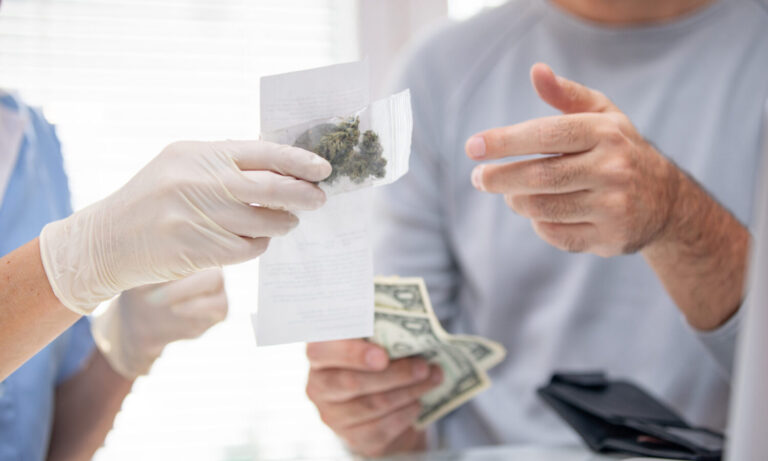
Indeed, more than two tons of cannabis flower was sold during the annual weed holiday. Initial data from Michigan’s Cannabis Regulatory Agency (CRA) shows overall sales of cannabis flower on 4/20 were up 242% this year compared to the same day in 2021, CRA director Andrew Brisbo said.
Here’s the breakdown of cannabis flower sold on 4/20 over the past three years:
2022 – 4,619 pounds
2021 – 1,912 pounds
2020 – 430 pounds
During this year’s cannabis holiday, consumers bought more than $15.5 million in cannabis products from the state’s retailers. Overall weed product sales, measured by price, were up 45% from the previous year.
Total 4/20 weed sales in Michigan in the last three years:
2022 – $15.55 million
2021 – $10.69 million
2020 – $3.67 million
“Overall sales continue to increase despite significant price decreases year over year,” Brisbo said, per the Detroit News. “Over 140,000 adult-use vape cartridges were sold [on 4/20] — 100,000 more than last year.”
Adult-use cannabis purchasers pay a 10% excise tax on top of state sales tax while MMJ consumers do not pay excise tax.
The influx of sales Wednesday translates to more than $2.55 million in excise taxes and state sales in a single day, CRA spokesman David Harns said.
Recreational cannabis sales in Michigan are forecasted to hit a new high of $1.5 billion this year. It seems this year’s 4/20 celebrations provided a hefty push along that road.
Only in Florida! A wedding turned into stoner fest for unsuspecting guests, chaos ensues. The bride and her wedding caterer were arrested after they apparently laced the wedding feast, including lasagna, with weed, causing several guests to get sick and probably a lot more to wonder what the hell was going on.
Several guests at the wedding started feeling odd after dinner, some reporting tingly feelings and wild thoughts, while others felt certain their hearts were going to stop, The Washington Post reported.
The bride, Danya Shea Svoboda, and her side-kick caterer, Joycelyn Montrinice Bryant, have been charged with culpable negligence, delivery of marijuana and violating Florida’s Anti-Tampering Act.
According to affidavits, released by various Florida outlets, Svoboda “agreed to and allowed Joycelyn Montrinice Bryant to lace the food she served … with cannabis unbeknownst to the attendees, many of whom became very ill and required medical attention.”
When Seminole County deputies were called to the community center where the wedding reception was taking place, several guests were already being treated by county fire rescue personnel for “symptoms consistent with that of someone who has used illegal drugs.”
The Groom’s Giveaway
When a deputy asked the bride and her new spouse if they had requested or consented to the cannabis-infused food, new hubby Andrew “stared at (the deputy) with a blank expression for a few moments before stuttering through a ‘no,’” which probably should have been a dead giveaway that the groom had eaten too much lasagna, which later tested positive for THC.
Paranoia Strikes Deep…And It’s Uncomfortable
According to the affidavits, one woman told an investigator that while she was at the hospital, she felt paranoid and “believed her husband … wasn’t telling her the truth about other family members,” and that her son-in-law had died and no one was telling her.
Using Secret Ingredients, No Matter What Kind, Is No Joke
“Consider the dangers that come with unknowingly consuming alcohol and then driving. Beyond that, what if one of your guests has given up drinking or drug use? Is it ‘fun’ to be the reason they broke their sobriety? Once someone’s state of consciousness is unwittingly altered, the consequences of whatever they do next are on you,” wrote The Takeout.
Both Svoboda and Bryant bonded out of Seminole County Jail and will be arraigned in June. And next time you want a wedding turned into stoner fest for unsuspecting guests, think twice.
Many people have found that cannabis is a safe and healthy way to cope with the demands of parenting. Here’s how it can help you.
Raising children is no joke. The extreme pressure parents face to put food on the table, raise socially and morally responsible citizens, making ends meet, having to take care of your career only names a few of the struggles parents actually experience.
It can be so hard at times that parents get lost in their roles, often forgetting to take care of themselves and their relationships with their spouses — and this can cause desperation, leading to substance abuse and other bad habits.
Using cannabis regularly has become the secret of many successful parents, who have found that it’s a safe and healthy way to cope with the demands of parenting, which can easily take 18 years of your life until one child is off to college. While there are still many people that are against parents using cannabis, one cannot deny its multitude of benefits.
What the Studies Say
In fact, a recent study out of Oxford has revealed that the presence of adult-use cannabis laws has been linked with a decrease in foster care admissions. The study, conducted by economists at the University of Mississippi, analyzed patterns in foster care admission among states before and after adult-use cannabis was legalized.
Their findings?
“Our most conservative estimates imply that legalization causes at least a 10% decrease in total admissions into foster care due to specific child-welfare concerns,” reads the study.
“Legalization may impact foster-care admissions directly by changing the welfare of children or indirectly by changing policies and attitudes towards marijuana use in the home. Direct effects may arise because marijuana use itself causes behaviors that affect child welfare, or because it changes the likelihood of using other drugs,” said the authors.
“We also find that placements due to physical abuse, parental neglect, and parental incarceration decrease after legalization, providing evidence that legalization reduces substantive threats to child welfare, although the precise mechanism behind these effects is unclear,” they add.
Another study from 2019 involving 32 adult medical marijuana patients who participated in a focus group discussion shed some insights as to why parents medicate. The study’s authors sought to better understand how the use of marijuana impacts parenting.
Six out of 11 parent participants said that cannabis use helped them to be calmer, making it easier to manage difficult emotions that arise with parenting. However, it was also interesting that some noted they didn’t want their kids to use cannabis. But more importantly, the study’s findings revealed that MMJ patients who are parents can indeed benefit from alternative ways to cope with stress caused by parenting.
There is also adequate anecdotal evidence from parents that it does indeed calm them down and help them become a better parent without the harmful and potentially dangerous side effects of other coping mechanisms, such as alcohol and hard drugs, which can increase the chances of domestic violence.
How Cannabis Helps Parents
Stress: From sleepless nights caring for infants and toddlers, to the general frustration of raising young ones and all the endless list of daily tasks in between makes parenting perhaps the most stressful job in the world.
Parenting is extremely overwhelming, and the longer parents cope with stress alone, the more this can lead to depression, anxiety, sleep disorders, and physical ailments rooted in inflammation and muscle tension. Cannabis has been proven in numerous studies time and again as an effective treatment for stress and anxiety. It also should be said that chronic exposure to stress can change a person, and when you want to be the best for your kid, cannabis can help you get yourself back and be at your best.
Anger management: Any parent can tell you that raising children can often come with numerous infuriating episodes. Explosive outbursts can easily ruin the trust you have with your kid, and it can also deteriorate the relationship you have with your spouse.
Research shows that cannabis can be a good antidote to anger. It’s also a much better way to cope with anger than alcohol, which can only make it worse. Cannabis contains vital cannabinoids that can help stabilize mood disorders, which can help spell the difference between a good and a bad day for you and your family.
Sleep: From the moment you become a parent, you can say goodbye to peaceful hours of sleep. When your child grows up, there will also be inevitable periods driving you to sleeplessness because of certain issues. It could be your kid’s health, school, making ends meet, difficult in-laws, and so much more.
No matter what’s driving you to lose sleep, cannabis is there for you. A few puffs or a quality indica product does a better job of ensuring you get good shut-eye, making you more restful the next day. The lack of sleep can also cause mood disorders, so getting 8 hours of restful sleep can make a big difference in ensuring that you get rest and are prepared to tackle the challenges ahead.
Conclusion
These days, parents have so many more options when it comes to medicating discreetly. There’s the use of vapes, gels, capsules, tinctures, beverages, and edibles which make calming down after a stressful day effective but also easier than ever.
If you’re the type of person who doesn’t want to get high, that’s fine. You can microdose by taking tiny puffs of your vape or consuming edibles that have been infused with low doses of THC, which has been shown in studies to be beneficial for treating stress whereas a high THC strain may make stress worse.
Cannabidiol (CBD), the non-psychoactive compound in the cannabis plant, is also very powerful in inducing calmness and relaxation. CBD products are widely available in legal states, and for parents struggling with anger, frustration, and high levels of stress, CBD may be the best route for you.
“We cannot settle for half-baked, insufficient legislation that is nothing more than a political ploy to give folks false hope on the prospects of cannabis legalization here in Wisconsin,” said Sen. Melissa Agard.
On Wednesday, Wisconsin Senate Committee on Insurance, Licensing and Forestry held a public hearing on Senate Bill 1034 relating to medical marijuana. Prior to the hearing, State Senator Melissa Agard (D-Madison), a vocal supporter of marijuana legalization, revealed that she will testify against the bill and released the following statement as reported by WisPolitics:
“The most dangerous thing about cannabis in Wisconsin is that it is illegal. Senate Bill 1034 falls drastically short of the cannabis reform our state desperately needs and what the majority of Wisconsinites support: full cannabis legalization,” she wrote.
“While I am encouraged that Senate Bill 1034 received a public hearing, we as legislators had 15 months of this session in which we could have worked on cannabis legalization in a bipartisan manner. Instead, this bill does not go nearly far enough for cannabis reform or adequately address the harms of cannabis prohibition in Wisconsin,” Agard said, further stressing that Wisconsinites are ready for marijuana reform, with some 61% supporting it.
“We cannot settle for half-baked, insufficient legislation that is nothing more than a political ploy to give folks false hope on the prospects of cannabis legalization here in Wisconsin. We must put our efforts behind full cannabis legalization,” Agard concluded.
One of the problems in relation to the hearing is the inability of the measure to become the law this year because the Legislature has adjourned and will to be back in session until 2023. While there’s no doubt that the Senate committee hearing on the medical marijuana bill is an accomplishment in that it enables supporters to present their arguments about MMJ’s benefits as they seek reform in the state, Sen. Agard previously noted that this was insufficient.
She explained at the time that this is the second session in a row wherein “legislative Republicans have introduced a late session, politically motivated bill to try and fool the people of Wisconsin into thinking they are genuine about legalization. Having a public hearing after the session has already been gaveled out is a cynical political ploy that gives people false hope about the prospects of this legislation.”
Agard concluded that she is disappointed by her Republican colleagues, who did not see fit to help her in her cannabis legalization efforts.
Data shows that pets across North America are suffering increasingly due to cannabis toxicity.
Accidentally high pets, veterinarians may know why. A new study found that one of the most impacted demographics by legal marijuana. A study, published in the journal PLOS One, shares the findings of vets across North America. It showed that cases of poisoning occurred most frequently in dogs, cats, iguanas, ferrets, horses, and more.
According to the researchers, most accidentally high pets via edibles, but they also eat joint butts and plant materials. CNN spoke with some experts who provided some context for the study and stressed the importance of keeping an eye on your pets when having cannabis around the house.
“It’s important to remember our pets are not tiny people. They’re very different creatures with different metabolisms and because of that they can have serious outcomes from ingesting marijuana,” said Dr. Dana Varble, the chief veterinary officer for the North American Veterinary Community.
She explained that, in the cases of dogs and cats, they often experience distress and anxiety after consuming cannabis, made even worse by the fact that they’re unable to understand what’s going on in their bodies. She says there’s a double danger in today’s edibles; one from the THC itself and another from the contents of the edible itself, whether that’s chocolate or sweeteners like xylitol, all harmful to animals’ metabolisms.
Vets and researchers believe this increase in pet cannabis poisonings can be due to several factors: 1) cannabis legalization, and 2) people feeling more comfortable with reporting these situations. Then there’s also the fact that people may be more inclined to proving CBD or cannabis to their pets, thinking that it’s a safe way to address their stress or anxiety. “Cannabis-based medicine is not approved for veterinary use,” summarizes a vet.
The cannabis industry has tried its best to manage those who consume its products, asking for IDs and packaging products in child-proof containers. It’s up to cannabis consumers to put their products away once they’re brought home, making sure they keep their pets and children safe from these elements.
Earlier this month, Colorado Attorney General Philip Weiser (D) and Ohio Attorney General Dave Yost (R) sent a letter to U.S. Senate leadership demanding the passage of the cannabis-related SAFE banking bill.
The Secure and Fair Enforcement (SAFE) Banking Act aims to protect financial institutions that wish to provide their services to state-legal marijuana businesses. Some industry experts believe the bill has a better chance of passing the Senate than the MORE Act, which would remove cannabis from the Controlled Substances list and allow states to legalize its production and sale free from federal interference.
Photo by jirkaejc/Getty Images
Wiser and Yost, who are also serving as co-chairs of the National Association of Attorneys General (NAAG) Federalism Committee, said in the letter that “states and federal government share a strong and common interest in protecting public safety and bringing grey market financial activities into the regulated banking sector,” reported Marijuana Moment.
“To address these vital goals, we yet again urge the Senate to bring the SAFE Banking Act to the Senate floor for a vote as soon as possible,” they wrote.
SAFE Banking Sponsor Also Acts
On the heels of the bipartisan duo’s move, Rep. Ed Perlmutter (D-CO), the sponsor of the bill, also issued his letter to Senate leadership urging the same action from the chamber.
Perlmutter suggested that passing the Secure and Fair Enforcement (SAFE) Banking Act, aside from being a priority on its own, would also serve as a legislative “icebreaker” for broader reform.
In the new letter, the attorneys general highlighted that they “urge the Senate to advance the SAFE Banking Act or similar legislation to provide a safe harbor for depository institutions that provide a financial product or service to a covered business in a state that has implemented laws and regulations that ensure accountability in the marijuana industry.
“Our banking system must be flexible enough to address the needs of businesses in the various states, with state input while protecting the interests of the federal government,” the letter continues. “This includes a banking system for marijuana-related businesses that is both responsive and effective in meeting the demands of our economy.”
On Thursday, Weiser went to social media channels to spread the word:
The law prohibits banks from providing services to cannabis businesses in states where medical or retail sales are legal. Cash-only operations pose safety threats. Again we ask the US Senate to pass the #SAFEBankingAct to give this industry access to the federal banking system. pic.twitter.com/E0RnOoiI8i
— Colorado Attorney General (@COAttnyGeneral) April 21, 2022
With 18 states having legal adult-use markets and 37 states plus DC, Puerto Rico, Guam, the Northern Mariana Islands and the US Virgin Islands having legalized medical marijuana, it’s hard to imagine that broader reform is not on the horizon. The question seems to be when not if.
So, Perlmutter might just be right that the SAFE Banking Act could serve as an “icebreaker” for federal marijuana reform. We’ll see.
Americans taking cannabis even for medical purposes in marijuana-legal states are still at risk of losing their jobs so long as the federal government maintains a ban on marijuana. That’s in keeping with a statement released by US officials on Saturday, which indicates that even if you have a doctor’s prescription, you can’t be legally excused if you test positive for THC, marijuana’s major psychoactive ingredient.
Over the weekend, the U.S. Substance Abuse and Mental Health Services Administration proposed to expand drug testing systems for which employees can be examined for Schedule 1 prohibited drugs, which consists of substances that the feds say presently have no accepted medical use and a high potential for abuse and cannabis.
Substance Abuse and Mental Health Services Administration also suggested implementing language in the Federal Register to point out that second-hand inhalation of marijuana smoke isn’t a genuine excuse for individuals who test positive for cannabis, nor is taking edibles that possess THC. The policies refer to all forms of drug testing, which include samples of blood, urine, and saliva.
Mixed Views on Testing
Views on federal prohibition among Congress members are mixed, understandably, as more states legalize cannabis. The House of Reps Appropriations Committee published a report last year in which they advised federal agencies to abolish regulations demanding the sack of employees who use medical marijuana in states in which it’s legal.
Among employers, the U.S. Military has been among the most strict, to impose marijuana prohibition, banning service members from partaking in any form of marijuana, including CBD and other compounds made legal in the 2018 Farm Bill. According to Marijuana Moment, members of the U.S. Navy were told recently not to drink a new Rockstar energy drink from Pepsi that contained cannabis seed oil.
The notice sent to the military members stated that Sailors and Marines are banned from using any product made or derived from cannabis, including CBD, irrespective of the product’s THC concentration and if it was used under the civilian law that applies.
The FBI hasn’t gotten rid of its prohibition policy yet, but it has reduced it considerably. Potential FBI employees can be automatically disqualified from joining the agency only if they’ve taken cannabis within a year of applying for a job, which is lesser than the previous three-year rule.
Lawmakers In Illinois Say Different
In the Illinois House of Reps, State lawmakers have passed a bill that would tackle a growing problem in legal marijuana: safeguarding employees who use cannabis from getting fired for having THC in their system.
Though marijuana has been legalized for medical use in 37 states and recreational use in 18, employers in most places can still choose to make use of the result to refuse to hire a job applicant or to fire a worker. Some states have gone into action.
A law was recently passed in Philadelphia that stops employers from using a cannabis drug test as a condition for employment. In Illinois, where both recreational, and medical marijuana are legal, lawmakers have been working since last year to address the matter statewide.
Photo by thamyrissalgueiro/Getty Images
A Matter of Fairness
The Illinois House passed the legislation by a 61-41 vote, mainly along party lines. The bill’s lead backer, state Rep. Bob Morgan, a Democrat, said the measure would allow people to use a legal product on their own time “without fear of losing their employment.”
People view it as a matter of fairness. An employee can consume alcohol on weekends or weeknights without fear of consequences. But even in states that have legalized cannabis, it’s difficult to do the same with cannabis if employees are scared of a drug test on Monday morning. This is because THC, the psychoactive element in cannabis, can be detected in the bloodstream or urine for several days.
The Illinois suggestion stops employers from sacking or refusing to hire someone after a drug test spots THC in their system, so long as the individual does not appear intoxicated and doesn’t test above the threshold for driving under the influence, which is 10 nanograms per milliliter in urine or saliva or 5 nanograms per milliliter of blood.
Though the law seems rational, the matter is more complex for business owners and law enforcement.
Marijuana and Professional License
This is a question that pops up more and more often in our world. If you are a licensed professional (for example, doctor, lawyer, nurse), and you happen to have a medical marijuana card, can you lose your license because of medical use of marijuana?.
Sadly, it’s not a question with an easy answer, notably since the laws about legal marijuana use now differ a lot from state to state. Marijuana is permitted in at least 36 states for medicinal purposes, while 18 states have legalized it for recreational use.
Meanwhile, not all licensing boards have kept up with changing outlook toward marijuana, and there remain many looming worries about impairment on the job as well as public views around licensed professionals who use cannabis. All of these elements combine to make this an extremely complicated question.
Bottom Line
Drug testing is a major problem for marijuana entrepreneurs and consumers. Worries about loss of job prevent people from using weed, even if it’s prescribed by a doctor. In places where recreational use is legal, many people still won’t buy cannabis on weekends or for after-hours use, due to fear of losing their job.
Also, can the use of medical cannabis still endanger your professional license?. The answer is a loud “maybe”. If you have found yourself in trouble with your state’s licensing board over the lawful use of medical cannabis, it’s not a matter to be taken lightly. After all, your means of living is dependent on your license to practice, and losing the license could cost you your career.
Having a skilled professional license attorney on your side can make a significant difference in the outcome and even save your license.
White House Press Secretary Jen Psaki was again asked about the President’s pledge to stop criminalizing people over marijuana at a briefing with reporters on Wednesday.
The unofficial marijuana holiday 4/20 once again stirred up discussion among top lawmakers and officials in the U.S. about the drug’s legal status.
While the support for the legalization of marijuana on the federal level comes mainly from the Democrats, President Joe Biden has not yet given an “update” on progress in fulfilling his decriminalization promise from the campaign trail.
Photo by MasterKeySystem/Getty Images
Cannabis Banking Reform As Legislative Icebreaker
Sen. Patty Murray (D-WA), the third-highest-ranking Senate Democrat, once again expressed her support for passing a bipartisan cannabis banking reform bill during a visit to a credit union on Wednesday, reported Marijuana Moment.
During a press event at a branch of the Salal Credit Union, Murray — the assistant Democratic Senate leader — said the broad legislative vehicle might be the “best opportunity” for marijuana banking reform to advance this session.
The senator added the America COMPETES Act “has a really good chance of passing and deals with a lot of really critical issues facing Americans today.”
Perlmutter Urges Senators To Action On The Reform
With congressional leaders appointing key lawmakers to discuss the final form of a large-scale bill dealing with innovation and manufacturing in recent days, there’s hope that it will be the vehicle to protect financial institutions that work with state-legal cannabis businesses.
The U.S. House of Representatives formally attached a marijuana banking reform amendment from Rep. Ed Perlmutter (D-CO) to COMPETES Act in February.
On Tuesday, Perlmutter sent a letter to Senate leadership urging the chamber to take action on the reform.
He implored the sponsors of a wide-ranging marijuana legalization bill that’s being finalized by Senate Majority Leader Chuck Schumer (D-NY), Finance Committee Chairman Ron Wyden (D-OR), Sen. Cory Booker (D-NJ) and Banking Committee Chairman Sherrod Brown (D-OH), to act, given that passing his Secure and Fair Enforcement (SAFE) Banking Act could also serve as a legislative “icebreaker” for broader reform.
Republicans Want To Save Banks
On the other hand, it seems the senators from across the aisle are more prone to helping banks.
“They (Republicans) want to do the banks’ business,” Senate Banking Committee Chair Brown said. “They want to do their bidding, but that’s not exactly breaking news that Republicans want to help the banks.”
Montana Sen. Steve Daines noted that cannabis reform doesn’t stand a chance with the current Senate if it includes criminal justice components. The SAFE Banking Act remains politically viable, he said.
“We have bipartisan support, of course, for the SAFE Banking Act, and we’ve got enough Republican votes that we can get it passed,” Daines noted. “So, let’s take the step.”
Cannabis Entrepreneurs Divided On Issue
Some cannabis entrepreneurs are not that optimistic.
Leonard Tannenbaum, founder, chairman and CEO of AFC Gamma Inc., does not hold much hope the SAFE Banking Act will pass into law this year.
In an interview with Brady Cobb, founder of Sunburn Cannabis, at the Benzinga Cannabis Capital Conference on Wednesday, Tannenbaum said the much-anticipated SAFE Banking Act does not show many signs of passing this year, even together with the America COMPETES Act.
On the other side, Curaleaf Holdings Executive Chairman Boris Jordan told Jim Kirsch of Alliance Global Partners in a keynote address that kicked off the two-day cannabis conference that the two bills are the first step in a four- or five-step process that hinges on Congressional support.
“The outlook has never been better,” he said. “If we can get any federal piece of legislation that recognizes the existence of the cannabis industry, in my opinion, that’s a home run.”
Biden Still Silent On Cannabis Decriminalization
Either way, Biden is still silent on the decriminalization issue after a full year in the Oval Office.
White House Press Secretary Jen Psaki was again asked about the president’s pledge to stop criminalizing marijuana at a briefing with reporters on Wednesday, Marijuana Moment writes.
Photo by Saul Loeb – Pool/Getty Images
While the White House didn’t provide any update on the issue — even though Biden believes that people shouldn’t be incarcerated over marijuana — Psaki instead praised the Drug Enforcement Administration’s decision to expand the number of authorized manufacturers to grow cannabis for research purposes.
“The president continues to believe that no one should be in jail because of drug use,” Psaki said. “I don’t have an update here. We are continuing to work with Congress, but what I can say on marijuana is we’ve made some progress on our promises.”
The press secretary called the move “a key step in promoting research because it broadens the amount and quality of cannabis available for research purposes.”
She added that Biden is “continuing to review his clemency powers, which is something he also talked about on the campaign and certainly remains committed to taking action on.”
In the meantime, lawmakers continue to pressure Biden on cannabis legalization.
Will President Succumb To Pressure?
In December, Rep. Alexandria Ocasio-Cortez (D-NY) urged the president via Twitter to take unilateral action on cannabis policy.
“Biden needs to lean on his executive authority now. He has been delaying and underutilizing it so far,” AOC tweeted. “There is an enormous amount he can do on climate, student debt, immigration, cannabis, health care and more. Time is running out — we need to move and use alternative paths.”
Biden needs to lean on his executive authority now. He has been delaying and underutilizing it so far. There is an enormous amount he can do on climate, student debt, immigration, cannabis, health care, and more.
Time is running out – we need to move and use alternative paths.
Now that The House of Representatives approved the Marijuana Opportunity, Reinvestment, and Expungement (MORE) Act, H.R. 3617, on April 1, sending it to the Senate, the question arises – will Biden use his presidential veto to nix the cannabis legalization bill if it reaches his desk?
Paul Quirk, a political scientist at the University of British Columbia in Canada, recently said that Biden “would be hard-pressed to veto” legislation that supports cannabis use because he can’t allow losing the younger generation of voters, reported Newsweek.
“Legalization is favored by two-thirds of all Americans, an even higher percentage of Democrats, and the vast majority of younger people,” Quirk said. “The 18-39-year-old age group is exactly where Biden has lost the most support since his inauguration.”
Photo by Drew Angerer/Getty Images
“Vetoing marijuana legalization would make Biden public-official enemy No. 1 to many of the young voters whose support he badly needs to win back,” he added.
Yet Marsha Cohen, a law professor at UC Hastings College of the Law, partially agrees with Quirk, even though she said that the chances are slim that the bill will be approved in the Senate.
“Young people may also be those least likely to be responsive to pollsters right now because they might not care. This [bill] might ‘talk’ to them,” Cohen told Newsweek.
Biden is poised to unveil a new strategy for dealing with drug addiction and overdoses on Thursday, reported Reuters.
The proposed plan seeks to broaden access to medications for opioid overdoses, increase funding for law enforcement and expand sanctions against traffickers.
Americans Want To See Weed Legalized
Nevertheless, a recent poll showed that nearly two-thirds of Americans would like to see marijuana legalized.
In the new survey, conducted by YouGov using a nationally representative sample of 1,000 U.S. adult citizens were interviewed online from April 1-5.
Fifty-seven percent would support expunging marijuana-related convictions, while 51% back allowing banks to provide services to marijuana businesses.
The newest data only confirmed the Gallup poll results released late last year, that showed that as many as 68% of U.S. residents support cannabis legalization.
We challenge you to become an advocate for sustainability by questioning brands and urging them to do better, and supporting the brands out there that put in the extra effort for our planet.
The SEC recently proposed a rule requiring public companies to report on ‘climate-related risks,’ prompting consumer product manufacturers to think twice about how they are creating products, where everything is sourced, and what ingredients they are using.
From the endless supply of paper products requiring loads of water for production, to the chemicals flooding the beauty product market, or the single-use plastic bottles forced upon the cannabis industry to meet compliance requirements, the uphill battle of becoming a more sustainable manufacturer spans across sectors.
Only 1% of all consumables remain in use six months after sale. The carbon footprint of companies making consumer goods is under a microscope, not only by federal agencies, but consumers as well who want to live a waste-free lifestyle and support brands that share similar values around sustainability.
There’s certainly a lot to consider when assessing the sustainability of a product. But by asking yourself these three questions, you can get a good starting point for your evaluation.
What kinds of chemicals or synthetics are used to produce the product?
There are widely-held concerns about chemical pollution in the environment. Out of approximately 350,000 compounds registered globally, only a small fraction has been assessed for safety, and this number continues to grow at pace which poses great risk on earth’s systems.
Most paper products require processing chemicals to manufacture the end product, but not all paper products require the same level of chemicals to deliver a finished product. Hemp paper is an industry game-changer in the world of paper product production. Botani, a creator of customizable and scalable hemp paper products for cannabis businesses, creates rolling and blunt wraps that are derived from natural resources and eco-friendly processes. This is both due to the fact that Botani is leveraging hemp, an annual crop, in combination with a unique process of whitening called TCF (Totally Chlorine-Free.) As a part of 400 year old publicly-traded paper milling pioneer SWM, Botani inherits a rich history in natural fiber technology.
Using chemicals to create something that’s edible or smokable like a rolling paper is one thing, but products relying heavily on synthetics continue to flood the wellness market
“Endocrine disrupting chemicals are too prevalent and find themselves in an array of products from plastics, to cleaning products, to cosmetics, to fragrances,” said Veronique Lee, CEO & Founder of CandaScent Labs, a health and wellness aroma brand. “In regards to the elusive ‘fragrance’ ingredient, ingredients are not required to be listed, and little is known as to how the ingredients take the environment into account, let alone your personal health.”
CandaScent Labs is challenging the status quo in this regard throughout their collection of candles and botanical mists. They offer full transparency of ingredients with scents that are 100% botanically derived, free of all synthetics, and powered with antioxidant and anti-inflammatory ingredients.
Are the ingredients within the product ethically sourced?
Along with finding resourceful ways to utilize natural or organic ingredients like botanicals, sourcing is an incredibly important piece to the puzzle that can also be the most difficult to navigate. The rise of the organic products market and farm-to-table dining is indicative of the general public’s growing interest in knowing where their food comes from, among other products they use regularly. Tracing back a product to its sources is also a way of separating the reputable and trustworthy products from the fake.
“Trust, but verify” is a phrase used by Advocates for Cannabis (A.F.C), a luxury hemp brand that also encourages the idea of knowing your grower and having an intimate involvement in every part of a product’s journey from soil to oil. A.F.C’s hemp comes from Colorado-grown seeds bred from stable hemp genetics and are organically cultivated.
Mindful sourcing is incredibly important when considering hemp products. Hemp roots run nearly three feet deeper than other crops, and it absorbs nutrients along with all of the harsh chemicals found in overly industrial regions of the United States. Eastern U.S. soils see more heavy metals in the crops and varying levels of soil consistency, making those regions less ideal for cultivating hemp compared to Western U.S. farming states with a history in the hemp supply chain like Oregon, Colorado, or California.
Photo by Remedy Pics via Unsplash
For every ton of hemp produced, 1.63 tons of carbon is removed from the atmosphere, which surpasses the amount of carbon sequestration for trees. Hemp as a protein substitute is also an incredibly sustainable alternative for food production.
The meat and dairy industries’ continuously expanding carbon footprint currently accounts for roughly 14.5% of global greenhouse gas emissions. When it comes to the need for protein, if not from meat, consumers mostly turn to proteins made from soybeans, peas, or whey. Hemp protein has never triumphed in the protein powder market previously, but knowing the sustainable potential of hemp led ECS Brands to develop a water soluble and tasty Hemp Fuel Hemp Protein powder that represents the first organic hemp protein of its kind.
The worldwide sprawl of meat and dairy operations intoxicates waterways with animal waste, compelling farmers in places like Brazil to eradicate forests for the sake of soybean agriculture — most of which goes to feed animals. This vicious cycle of meat industries pumping greenhouse gas emissions into the air along with other harsh chemicals is something that hemp as a protein substitute could help diminish.
Similar to how CBD products on the market are often questioned about the crop’s origin, often being compared to snake oil, the essential oil market is also under a microscope. Roughly 80% of essential oils on the market today are adulterated with chemicals or other ingredients to make them cheaper, altering composition and purity. For Véronique Lee of CandaScent Labs, experience working for one of the largest grain merchandising companies in the world made her realize how important ethical sourcing can really be when it comes to looking at the overall sustainability of a product.
“I saw how the desire for efficiency and profitability was transforming how our food was made, sourced, processed and marketed, and it drew out of me a passion for sustainable sourcing,” said Lee. “We truly invest in our supply chain, and in doing so, we support the cultivation of healthy plants, a sustainable future, and our own wellness. We formulate our aromas with organic essential oils and botanicals that are all tested for purity, and we are also continuously educating ourselves as members of the Airmid Institute.”
The Airmid Institute is a 501(c)(3) non-profit organization dedicated to the global education, research, and sustainable management of medicinal and aromatic plants. The organization supports projects and education focused on aromatic plant medicine, ethical sourcing, sustainable harvesting, and forest regeneration.
Has the company invested in sustainability initiatives or aligned with non-profits supporting the cause?
Even if sustainability is not at the forefront of what a company offers, there are several ways to get involved and utilize resources to support a green economy.
Brands can easily donate to charitable organizations specializing in sustainability, learn more about the impact they might be causing by educating themselves and taking a Carbon Literacy course, or volunteer to literally ‘clean up’ waste in a local spot that desperately needs attention. With Earth Day and Arbor Day, (April 29), there are plenty of timely reasons to be taking a closer look at ways to show Mother Earth some love.
Photo by Image Source/Getty Images
Fifty-two years ago this month, environmental and peace activists in the United States held the first Earth Day celebration. That kick-off remains the largest single-day protest in human history — 20 million people marked it with marches and events across the country.
This Earth Day,AE Global, a custom packaging design companyis joining 4G Recycling,Ocean Recovery Group, Clean Miami Beach, and more than 100 volunteers for an event to clean Miami beaches — an event sponsored by Ocean Recovery Group in partnership with Clean Miami Beach.
April 29 marks the 150th Anniversary of Arbor Day, a day when communities around the globe gather to celebrate and plant trees for a greener tomorrow. When Arbor Day was first celebrated in Nebraska in 1872, more than a million trees planted in a single day, and the tradition is still alive and well.
The Arbor Day Foundation is the largest 501(c)3 nonprofit membership organization dedicated to planting trees. It has has planted over 350 million trees in neighborhoods, communities, cities, and forests throughout the world to ensure a greener and healthier future for everyone.
By being an overall informed consumer, you can make more sustainable choices when shopping for the products you need. Asking companies these three questions we’ve outlined can help provide a better understanding of their sustainability efforts and how they may or may not align with your own personal values. But remember, sustainability is an ever-evolving concept, and companies are always changing their policies and procedures, so it’s important to stay up-to-date on the latest news surrounding your favorite brands.
We challenge you to become an advocate for sustainability by questioning brands and urging them to do better, and supporting the brands out there that put in the extra effort for our planet.
Some local Jersey police departments have cautioned they’re intending to use specially trained drug recognition experts to spot drivers under the influence.
New Jersey weed enthusiasts started lining up before dawn at dispensaries Thursday across the Garden State as adult-use cannabis sales went into effect.
After the long wait on a bumpy road to marijuana legalization, enthusiasm is running high.
With soul music blaring, free doughnuts in the parking lot and a balloon arch at the entrance, New Jersey’s cannabis kickoff for people 21 and older had the feel of a fair more than a store opening.https://t.co/skwikfTo9A
As of Thursday, New Jersey’s recreational cannabis sales for adults 21 and older are up and running. The first cannabis shops, referred to as alternative treatment centers, began functioning at 6 a.m. in parts of the state.
“It’s a huge event. It’s a moment in time in American history where prohibition 2.0 is lifted,” said Ben Kovler, chairman and CEO of Green Thumb Industries, which has two facilities opening Thursday, one in Bloomfield and another in Paterson.
Photo by Steve Kelley aka mudpig/Getty Images
Driving While High Seriously Frowned Upon
While possession of up to 1 ounce will be legal, driving while high is definitely not. Some local Jersey police departments have cautioned they’re intending to use specially trained drug recognition experts to spot drivers under the influence.
New Jersey Attorney General Matthew Platkin told police chiefs they “may not take any adverse action against any officers because they do or do not use cannabis off duty,” but they’d best not show up to work stoned.
“There’s no allowing anybody to show up impaired. Fair to say that whether you’re drinking, whether you’ve smoked weed, whatever the reason, anybody who shows up impaired will be dealt with aggressively,” Murphy reiterated in a press conference earlier this week.
First Among Its Neighbors
New Jersey is first among its East Coast neighbors to begin recreational sales. While New York is moving forward with a well-planned, $1-billion market, sales are not expected to start until the end of the year.
Pennsylvania, which has an active medical cannabis market, has passed ordinances to decriminalize marijuana or make it a low law enforcement priority, is not expecting adult-use legalization just yet.