District of Columbia Council Chairman, Phil Mendelson, introduced a new emergency bill to reform the medical marijuana market in the nation’s capital where cannabis is fully legal. But due to a convoluted bicameral omnibus spending bill, marijuana sales are banned in the District.
The bill, scheduled for a vote on Tuesday, will allow for self-certification for adults 21+ to use medical cannabis and establishes a tax holiday for medical cannabis products during April.
“As we wait for Congress to lift its ban on a regulated, legal recreational cannabis market in D.C., this bill provides us with the opportunity to make it easier for people in D.C. to access the medical cannabis they need,” said Mendelson.
The bill is widely supported by members of the DC Cannabis Trade Association, which works to increase access to cannabis while improving social equity and diversity for all DC residents and the many visitors to the nation’s capital.
“As the owner of a dispensary serving the historic Anacostia community, it is impossible for legal dispensaries to reach patients when competing with unregulated, untaxed illicit operators,” said Linda Greene, owner of Anacostia Organics and chair of the D.C. Cannabis Trade Association. “This bill helps instill better regulation for the industry as it continues to grow and evolve, ensuring that communities have input into the businesses that serve them.”
Additional bill supporters include Grace Hyde, COO, District Cannabis and Secretary, DCCTA; Dr. Chanda Macias, owner, National Holistic Healing Center and CEO, Ilera Holistic and Ismael Vince Canales, past president of the Maryland Fraternal Order of Police.
“As one of the four Black-owned dispensaries in D.C., this emergency legislation will help us continue to serve these vulnerable patients with safe, tested products from licensed regulated operators,” said Dr. Macias, who is a guest speaker at the upcoming Benzinga Cannabis Capital Conference in Miami April 20-21.
Canales added that regulating locations able to sell cannabis keeps the community safe in more ways than one. “As we continue to see an uptick in crime at illicit shops given the cash-only nature of their business and the increasing prevalence of unregistered firearms in the District, this bill will help ensure crime around these shops throughout our community does not continue to grow,” said Canales.
The bill will be effective as soon as DC Mayor Muriel Bowser, who has indicated her support for the bill, signs the legislation into law.
The bill will streamline the licensure process for researchers seeking to conduct cannabis research and will facilitate access to an increased supply of higher-quality medical-grade cannabis for study purposes.
The House of Representatives passed the Medical Marijuana Research Act, which will substantially expand scientific research on marijuana, including allowing scientists to study products from dispensaries.
Filed by Rep. Earl Blumenauer [D-OR] and Rep. Andy Harris [R-MD], the bill will ease the process by which researchers apply for approval to study cannabis and will place deadlines on federal agencies to consider the applications in a timely manner.
“Cannabis has a wide range of therapeutic applications, but researchers have consistently faced significant roadblocks to conducting studies. Research is key to evaluating and unlocking the full potential of cannabis, and we applaud the House for passing legislation that would greatly expand the eligible supply of cannabis for studies,” said US Cannabis Council CEO Steven Hawkins.
What Does The Bill Do?
The bill will streamline the licensure process for researchers seeking to conduct cannabis research and will facilitate access to an increased supply of higher-quality medical-grade cannabis for study purposes. It will also ensure that research on cannabis and other potentially beneficial marijuana-derived substances is based on sound science by reducing the regulatory barriers associated with marijuana research.
“Today’s House vote and last month’s unanimous Senate vote on a more limited proposal both strongly signal that Congress is committed to cannabis research. We urge House and Senate leaders to consolidate their bills and pass meaningful cannabis research reform this year,” added Hawkins.
Senate-Approved Bipartisan Marijuana Research Bill
The latest breakthrough in cannabis federal reform comes on the heels of the Senate unanimously passing a different cannabis research bill sponsored by Sens. Dianne Feinstein (D-CA), Brian Schatz (D-HI), and Chuck Grassley (R-IA), and called the Cannabidiol and Marihuana Research Expansion Act. It was approved unanimously, without debate, after being reintroduced in February 2021.
Some companies are starting to catch on to the idea that cheap weed is a widely untapped market in the legal sector.
The rise of the marijuana dispensary has brought joy to many cannabis users. Marijuana dispensaries have helped diversify the strains of weed and have completely revolutionized the way Americans get high.
The legalization of recreational marijuana in many states has given birth to the trusted budtender, and even an occasional weed snob. In fact, there are a growing number of similarities between wine enthusiasts and weed enthusiasts. But not everyone is after the pricey cream of the crop. Many are simply looking for a cheap quality bud that provides a good high. But is cheap weed any good, or should you stick with the top shelf to ensure a premium experience?
The price of weed does not necessarily mean it is going to give you the best high. Nor does the most expensive weed even mean it is the best weed. There are, in fact, many factors that go into the price of weed. ”Everything from grow and extraction methods to crop yields, supply and demand, and natural disasters (like wildfires) can directly affect the strains available, the prices of each strain, and the quality you receive as a discerning cannabis consumer,” explains the Colorado dispensary Karing Kind.
Photo by Olena Ruban/Getty Images
This means there is a chance that a strain of weed can be inexpensive in an area where there is low demand and it grows easily. The same type of weed can be much more expensive, however, somewhere where there is high demand and there were certain environmental difficulties the plants faced during the growing season.
The price tag should not be your number one indicator as to how good the product is. Every plant has a different makeup, and while you hear the terms “Indica” and “Sativa” constantly, there is more to weed than just those two classifications.
“Individual plants produce varying effects, even among the same type of cannabis. It all depends on the plant’s chemical composition and the growing technique used,” according tohealthline. Not all types of plants affect people the same. It is important to figure out what “cannabinoid profile,” or the plant’s specific chemical makeup, works best for the type of effects you are after. You may find that what you seek can be found in a cheap strain of flower rather than an exclusive varietal that costs more than your groceries.
A 2020 study published in JAMA Psychiatry found that while concentrates and flower have very different THC levels, there was actually little to no difference in how high the participants got. The study concluded “differences in short-term subjective and neurobehavioral impairments did not track specifically with strength of the cannabis consumed.” So while you can certainly pay a premium for the highest THC weed, you aren’t guaranteed to get any higher than with a cheaper bud.
Photo by Drew Farwell via Unsplash
Some companies are starting to catch on to the idea that cheap weed is a widely untapped market in the legal sector. Companies likeHexo Corp are seeking to roll out affordable cannabis that can compete with the illegal market that has found continued success by charging lower prices than many dispensaries for flower.
“If it can gain a meaningful share of the low-cost market and even take some market share from illicit providers, it has the basis of a very nice business,” according to the National Institute of Cannabis Investors. “McDonald’s makes more money than probably every high-end steakhouse in the world combined, and it does that through low prices.”
So while it is surely fun to experiment with and discuss elusive strains and try the latest concentrates, keep in mind this is not necessary. Just like a wine connoisseur on a boxed wine budget, if you do your research, you can find a cheap strain of weed that will take you where you want to go.
THC stored in fat cells gradually diffuse into the bloods. Regardless, the rate of diffusion increases under circumstances that promote fat utilization, such as exercising and fasting.
Tetrahydrocannabinol (THC) accumulates in fat tissue and can stay there for months. Although this can serve as a barrier to those who face frequent testing, athletes may take delight in the results of exuding THC from the fat in their bodies. Can you get high from THC stored in your body fat? Let’s find out.
Traces of water-soluble substances such as alcohol vanish from the body in a matter of hours. But in the case of fat-soluble THC substances, they tend to hang around a lot longer and sometimes out-stay their welcome. Though high levels of THC in fat cells cause a slight issue for most people, it could, in theory, add to the probability of recording a positive test for cannabis consumption.
Photo by Victor Freitas via Unsplash
Duration Of THC In The System
The ability to preserve fat has a crucial evolutionary purpose. In the past, our ability to retain extra energy in the form of fat meant that there was an internal supply of fuel to rely on when the long winter arrived. For most, a long winter never arrives. Thus, the piling up of fat tissues functions as a storage bank for THC. By depending on carbohydrates as the primary fuel source, many people never truly burn fat and, as a result, require a significant amount of time to get rid of all traces of THC.
It cannot be said for sure the exact time it will take for THC to leave the body. It is dependent on a wide variety of determinants, the most important of which is the strength of the cannabis taken and the rate at which it was taken. Anyone who consumes 90% THC shatter daily is likely to accumulate far more than someone who smokes regular flowers almost every day, for example.
Also, the metabolism of the individual should be taken into account. Diet, weight, body fat percentages, and activity levels all affect the metabolism of THC. People who are muscular and lean and use up higher amounts of fat are more likely to eliminate THC faster. In contrast, people with higher body fat levels and lower activity levels need extra time.
THC Metabolites
Excretion rates of THC across an array of consumers were analyzed in a 2014 study published in Basic and Clinical Pharmacology and Toxicology. During the research, the researchers observed that various THC metabolites remain noticeable for different lengths of time. Intending to test this, the researchers made subjects smoke a single joint. After the tests, they discovered that the levels of serum 9-tetrahydrocannabinol (THC) are typically below detection thresholds for twelve hours. Regardless, its main metabolite, 11-nor-9-carboxy-9-tetrahydrocannabinol (THCCOOH), stays detectable for about one week in serum and for about two weeks in urine.
Both THC and THCCOOH might maintain detectability in the blood for close to a month in frequent cannabis consumers. The increased detection times are related to the gathering up and followed by the slow release of the THC from fat cells.
THC Levels And Body Fat In Athletes
The THC that fat cells hold gradually diffuses into the blood over time. Regardless, the rate of this diffusion increases under circumstances that promote fat utilization, such as exercising and fasting. In both cases, the body will turn to fat as a fuel source after the depletion of glycogen levels. In the instance of athletes, this implies that their THC plasma levels may rise while they exercise. The results of such an increase are two-fold. First, if the athlete uses cannabis prior to working out, they will probably feel the collective impact of the THC produced by fat cells and the THC consumed earlier. Secondly, even though the athlete hasn’t used cannabis for a significant amount of time, a positive result could be triggered by the increased plasma levels.
Photo by Alexander Redl via Unsplash
An investigation was carried out into how exercise contributes to increased THC plasma concentrations. In both fasted and fed states, fourteen regular cannabis smokers exercised for thirty-five minutes on a stationary bike. Researchers observed that subjects showed a statistically significant increase in plasma THC levels along with increased glycerol and plasma FFA levels.
Fascinatingly, exercise looked to be the most crucial contributor to the increased THC plasma levels, as researchers observed that fasting provided no significant difference to the plasma cannabinoid levels. Regarding the chances of returning a positive test, researchers proposed that the translation of blood THC levels in workplace and roadside tests might be disturbed by recent exercise. The subjects used in the study were regular cannabis users. The THC levels stored in the fatty tissues were more likely to be higher.
Redefining Runner’s High
There is a remarkable similarity between the chemical structure of THC and that of anandamide, a fatty acid neurotransmitter secreted during exercise. It’s named after Ananda, the Sanskrit word for bliss, and it shares certain similarities with THC, frequently leading to the improved mood related to a runner’s high.
In tandem with anandamide levels, THC secreted from fat cells contributes to higher plasma levels of bliss compounds. Both engage with CB1 and CB2 receptors in the same way, and it causes a heightened effect where athletes may experience higher feelings of well-being, also known to runners as the “runner’s high”.
Is CBD Stored In Fat Cells, Too?
CBD is fat-soluble as well. Upon consumption, the body stores the surplus amounts of the cannabinoid in the adipose tissues, as is the case with THC. This rarely turns into an issue when it comes to testing. The reason behind this is the fact that CBD is not intoxicating, and regular urine testing only probes for THC metabolites.
Bottom Line
Burning more fat for fuel is the best way to help the body remove THC from fat cells. Though fasting and exercising are common, dietary changes are also. Cutting down on the consumption of carbohydrates and taking more dietary fat changes our body’s primary fuel source to fat. As time goes by, the subsequent metabolizing of fat also releases the THC that has been stored. There seem to be no negative drawbacks, such as re-intoxication, from THC stored in fat cells. Still, those prone to regular testing should be aware of it.
New studies show which source of COVID-19 protection is more effective.
COVID-19 protection varies depending on a person’s circumstances. And while there are different sources of protection, two new studies show that there’s a group of people who has more COVID-19 immunity than others.
The studies prove that people with “hybrid immunity” are the best equipped to battle the virus. This immunity refers to people who’ve been fully vaccinated and who’ve also had natural COVID-19 infection. Aside from satisfying some curiosity, these studies also prove how important it is to be vaccinated regardless of the individual’s situation, with vaccines extending protection and minimizing the odds of hospitalization.
One of the studies had data from thousands of people in Brazil, a country that experienced serious bouts of infection. It showed that those who had a previous infection and then had a Pfizer, AstraZeneca or Moderna vaccine, had their protection was extended to 90%.
The second study, conducted by Swedish researchers, found that people with prior infections and vaccinations were less likely to get reinfected and experience hospitalization.
While the results were expected by researchers and experts, there’s one caveat: they were conducted prior to the Omicron variant, which operates slightly different than the first batch of variants. Still, researchers remain quite hopeful. In the near future, it’s very likely that the majority if the world population will have battled a COVID-19 infection and will have also had a COVID-19 vaccine, something that would then provide protection against emerging variants.
New studies continue to shed a light on COVID-19 and how the disease works. Results from a challenge study — a study where volunteers are exposed to the virus without having vaccines or previous protection and were then monitored for results — were recently released. Results showed the amount of virus that was necessary for infection, the length of time in which people start shedding the virus, and how long they remain contagious. Most interestingly, it also found that half of the participants weren’t affected by the virus, even while having no protection against it.
While Graham’s opposition to federal cannabis legalization, especially in the middle of an opioid crisis, is perfectly clear, he seems to understand the value of medical marijuana.
The House of Representatives approved the Marijuana Opportunity, Reinvestment, and Expungement (MORE) Act, H.R. 3617 on Friday, sending it to Senate. The MORE Act removes cannabis from the federal Controlled Substances Act, allowing states to legalize cannabis, its production and sale, free from federal interference.
Rep. Nancy Mace (R-SC), viewed as one of the leaders among GOP representatives in favor of removing cannabis from the list of federally controlled substances, voted against it. Why?
Photo by Olena Ruban/Getty Images
“The MORE Act forces a system on South Carolinians and other states they do not want. By comparison, my bill, the States Reform Act, removes the federal government from the equation and allows states to decide for themselves,” Mace explained as reported by The State.
She presented her bill — the States Reform Act — in November last year, but the measure failed in 12 committees and seven subcommittees without a hearing.
According to Mace, the House passage of the MORE act may be a good start for creating a bipartisan consensus around legislation that would remove cannabis from the Controlled Substances Act, reported Marijuana Business Daily.
Mace added that she is eager to take part in a marijuana breakthrough in Washington DC. She revealed that one of her Democratic counterparts on the House Oversight and Reform Committee confirmed it will hold at least one hearing on her States Reform Act.
“This is a multibillion-dollar industry problem. It is not going away. And we need to have a bipartisan solution,” Mace said, adding that she has received a very positive reception from her congressional colleagues in Congress.
How To Get Republican Support?
According to Mace, many don’t understand that her bill doesn’t actually legalize cannabis at the federal level, instead, it offers full control and power to each state. Mace believes that giving control to states and treating cannabis like alcohol is the only way for marijuana reform to obtain Republican support.
Mace added that her States Reform Act can save many lives and do a lot of good, in addition to saving the federal government money.
“It’s a win-win-win all the way around for conservatives. It can be a huge win for everybody.”
Photo by Olena Ruban/Getty Images
She is also not optimistic about the MORE Act passing in the Senate or any other similar legislation in the near future.
While she might be right, like many other industry experts who doubt there will be federal marijuana reform this year, it’s obvious that cannabis legalization is slowly but steadily gaining wider support.
Sen. Lindsey Graham Signals Openness To Medical Marijuana
Sen. Graham recently revealed he is “open to” medical marijuana as the MORE Act heads to the Senate.
“Medical marijuana, I’ve heard from many people in our state, seems to have some value,” Graham said per WMBF News. “If you can show me, and I think there’s evidence that it is helpful, then the medical marijuana idea I’d be open to.”
While Graham’s opposition to federal cannabis legalization, especially in the middle of an opioid crisis, is perfectly clear, he seems to understand the value of medical marijuana.
“One thing we’ve got to realize, opioids help with pain, but they create a lot of addiction,” Graham said. “There’s no easy answer here, but in terms of legalizing marijuana, no. I think it brings a lot of problems with it. In terms of allowing marijuana in controlled environments in the hands of doctors, that could be something I could support.”
Nancy Mace will be one of the many fascinating and knowledgeable speakers at the Benzinga Cannabis Capital Conference in Miami. There’s still time to sign up for the event that will host many top names in the cannabis industry. Click here for more info.
With lower prices, CBD can become a true alternative to Big Pharma, and cannabis can become a plant for the people.
By Alejandro Bergad
The last two years haven’t been great for the CBD industry. The pandemic cratered in-store sales of CBD. Meanwhile, by choosing not to regulate CBD, the FDA left it in a legal gray area, limiting where it can be sold.
If you need evidence of the industry’s decline, just look at Charlotte’s Web, the largest CBD company. In mid-2019, the company’s stock price was flying high at nearly $22. Since then, it’s fallen to just over $1 — a 95% decline.
Photo by Christin Hume via Unsplash
I believe there’s a way out of this mess, but most companies aren’t prepared, or willing, to see it. Let’s revisit the history of the industry to see why.
In 2014, the federal farm bill passed, and the hemp industry was reborn. Positive feedback from consumers helped CBD quickly become a craze. It was a product that could help a lot of people and offer an effective, natural alternative to pharmaceutical drugs for a variety of conditions.
Investors jumped in—betting on large industry growth—and the largest companies quickly went public (which creates the expectation of more growth). These companies ran the traditional CPG playbook, adding CBD to dog treats, seltzer and everything else under the sun. They focused on selling more to the consumer, not adding value.
Thanks to declining sales, large companies are burning cash and goodwill with their investors. They’re banking on a federal bailout: that the FDA will formally regulate CBD, thereby allowing them to peddle their premium products into larger retail channels.
All of this is missing the point.
The fundamental problem in the CBD industry is price. CBD today is so expensive that it’s only accessible to a niche segment of the population. Taking 40mg of CBD every day (as many do), costs over $120/month at today’s prices. For the majority of people, it’s vastly cheaper to use pharmaceutical products to help with the same issues.
That’s why in order to return the CBD industry to growth, companies will have to do something that is difficult, counterintuitive, and in many cases impossible: they will have to cut prices. A 24-count bottle of Advil costs approximately $6. There’s no reason why a 600mg bottle of CBD, which currently costs $60 on average, can’t match it.
Photo by Anshu A via Unsplash
Can the CBD industry produce a $6 bottle that can compete with Advil? For brands that are already losing money, cutting prices will only accelerate a downward spiral. But for companies who are willing to innovate, lower prices are very much within reach.
For starters, cannabis is a prolific plant. However, many companies have simply copied the agricultural and processing practices from the recreational marijuana industry rather than tailoring their methods for hemp. There is plenty of room for innovation in automation and using more cost-effective manufacturing methods for CBD.
Federal clarity will help get us to lower prices. Costs are higher across the industry because many suppliers, co-manufacturers, and fulfillment partners perceive that there are risks to working with CBD companies.
Finally, companies need to approach CBD more like medicine and less like designer clothing. We shouldn’t be adding unnecessary cost to a product that could benefit millions of people. If you wouldn’t want Advil in deodorant or your chewing gum, then why would you do the same for CBD?
It’s up to the industry to make this happen, or else see CBD continue to be a shrinking, niche industry. With lower prices, CBD can become a true alternative to Big Pharma, and cannabis can become a plant for the people.
Alejandro Bergad is the CEO and co-founder of Sunsoil, a USDA certified organic hemp farm and CBD company based in Vermont.
Bad news casual drinkers. A new study found no connection between heart health and moderate consumption of alcohol.
Over the years, alcohol consumption has been linked with a variety of behaviors. While consuming it in large amounts has mostly resulted in negative outcomes, consuming it with discretion has been linked with health benefits, among them heart health, diabetes, and more. But a new study thinks otherwise, at least when it comes to cardiovascular health.
The study, conducted by researchers from Massachusetts General Hospital, Harvard, and MIT, analyzed the data of over 300,000 adults and concluded that all forms of alcohol intake were linked with a higher risk of cardiovascular disease. Researchers also believe that the benefits of alcohol demonstrated in previous studies were likely due to other lifestyle factors and not alcohol itself.
According to the data, which was obtained through UK Biobank, light to moderate drinkers had the least risk of heart disease, even more than those who abstained from drinking at all. On a deeper look, researchers discovered that light to moderate drinkers made better lifestyle choices than those who abstained, eating more vegetables, working out more often, and more.
Researchers also used new techniques to gauge whether light alcohol consumption caused some form of cardiovascular protection. “The findings affirm that alcohol intake should not be recommended to improve cardiovascular health; rather, that reducing alcohol intake will likely reduce cardiovascular risk in all individuals, albeit to different extents based on one’s current level of consumption,” said lead study author Krishna G. Aragam, MD, MS.
While alcohol can be associated with a variety of benefits, it seems likely that heart health is not one of them.
A study intentionally exposing young people to COVID-19 discovered exactly how much of the virus is necessary for infection.
Thanks to a new study, we now know how much COVID-19 necessary to infect a person. The study, known as a challenge study, exposed healthy participants to different amounts of COVID-19 and measured how long it took them to catch the virus, and it isn’t much. According to results, it only takes a small droplet of the virus for people to get infected with the disease.
Researchers conducted their experiment on 36 participants between the ages of 18-29, all of whom hadn’t had previous COVID-19 infections or vaccinations. Participants were screened for co-morbidities, having no extraneous risks to COVID-19. Then they signed a consent form and were exposed to the virus nasally, housed in a containment facility with access to high medical care.
It was understandably a controversial study, as is the case with most challenge studies, which have some form of risk no matter how controlled the situation. Still, these studies are incredibly valuable, delivering insight that no other studies are capable of. “Really, there’s no other type of study where you can do that, because normally, patients only come to your attention if they have developed symptoms, and so you miss all of those preceding days when the infection is brewing,” lead author Christopher Chu told CNN.
In order to minimize risks, participants were exposed to the virus in stages and provided with the necessary medicine. After exposure, they were monitored 24 hours a day.
Half of the participants got infected with COVID-19, with two of them never developing symptoms. While most infections were mild, most of the infected participants lost their sense of smell, with 9 of them being unable to smell at all. Six months after exposure, one participant still hadn’t fully regained their sense of smell, even though they were slowly improving.
Despite the risks, researchers learned a lot from the study, like the fact that a droplet in a cough or a sneeze is enough to infect a healthy person. They also determined that it takes two days for people to start shedding the virus, which they then shed for the next 6 to 12 days. But the most interesting aspect of the study was that exactly half of the participants didn’t catch the virus, something that surprised researchers.
The challenge study proved to be a success, inspiring researchers to conduct them on different people, including those who were already exposed to the virus or who are vaccinated. As long as they’re not infecting people at risk, say babies or the elderly, the studies should continue to provide key information as the pandemic develops.
As acceptance of cannabis grows and data from human tests accumulates, many more conclusions could yet be drawn regarding the impact of cannabis on HIV patients.
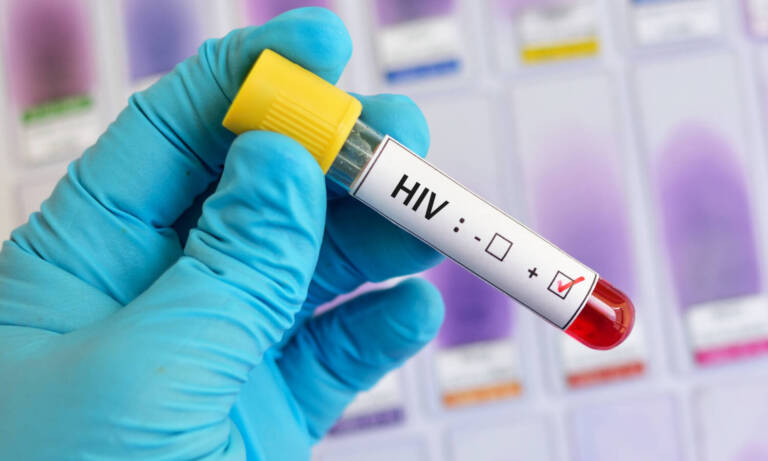
The human immunodeficiency virus, or HIV, is a microorganism that wreaks havoc on the immune system. The cells that are the components of the immune system, like white blood cells, assist the body in fighting off infections brought on by fungi, viruses, bacteria, and other foreign organisms.
Without this immune system, we can not maintain sound health for very long. These cells help to create our natural immunity (our first line of defense) and adaptive immunity (the antigen response dispersed to stop specific infections). Due to HIV destroying essential components of the immune system, patients are less equipped to battle everyday infections and more severe microorganisms.
Although there have been no thorough surveys carried out on medical cannabis users in the United States, smaller-scale surveys show that most users are looking for relief from AIDS symptoms. For instance, each of the three California marijuana buyers’ clubs, organizations that make marijuana available to patients, visited by the IOM team, recorded that more than 60 percent of their members asked for AIDS treatment.
Cannabis And HIV: The Research
HIV is one of the most prevalent diseases in the world. It used to be the deadliest in the late ’90s and early 2000s. Thanks to medical innovations and research, antiretroviral drugs have been made available to weaken this virus and improve patients’ lives. It’s now time to go into some studies exploring the relationship between cannabis and patients with HIV.
Cannabinoids And Inflammation
Severe inflammation fuels many diseases. That very word “inflammation” has a negative reputation, but in reality, it helps to survive. When coming into contact with an infectious microorganism, the immune system releases inflammatory cells and signals molecules to launch an attack against the invaders. However, some specific health conditions hinder the body from turning off this hostile attack. Over time, this process can begin to cause damage to bodily tissues.
Although some components of the immune system are depleted due to HIV infection, others, such as monocytes, become highly activated. This can lead to systemic inflammation, which puts patients at a higher risk of coming down with neurological, cardiovascular, and bone diseases. Many HIV patients also showcase an imbalance in their gut microbiome—the trillions of microbes that significantly influence immunity and inflammation.
A lot of HIV patients go through neurocognitive impairment and changes in behavior due to neuroinflammation caused by the virus. Different research teams have now ventured out to check if cannabis can play a role in reducing inflammatory signals that give rise to this symptom.
Photo by peterschreiber.media/Getty Images
For instance, a 2019 study published in the journal AIDS Care looked at one hundred and thirty-eight HIV patients’ previous cannabis use to see if the herb affected their neurocognition. A comparable study published in the Journal of Acquired Immune Deficiency Syndromes observed the effects of cannabis on neurocognitive impairment in six hundred and seventy-nine patients with acquired immune deficiency syndromes.
In addition, a 2021 study sought to ascertain if cannabis changed the lower central nervous system inflammation in HIV patients. The researchers chose HIV-positive patients who consume the herb daily, HIV-negative patients who didn’t take cannabis, HIV-positive patients who didn’t take cannabis, and HIV-positive patients with an average use pattern.
Cannabis And Immunity
Since problems with immunity are at the heart of HIV, it is reasonable that researchers look to analyze the effect of cannabis on immunity in HIV patients. Though data obtained through human trials remains sparse, a group of researchers suggested a study protocol in 2019 to examine the impacts of oral cannabinoids on immunity activation in HIV patients.
The study’s concept calls for the recruitment of 26 HIV patients with an undetectable viral load for at least three years. The researchers would go on to randomize the recruits into two groups and give oral capsules to each for 12 weeks; one group would be assigned capsules with a 1:1 THC to CBD ratio, while the other would get a proportion of 1:9. The paper states that the study was approved by the Research Institute of the McGill University Health Centre. However, the findings are still unpublished.
Pain And Cannabis
A couple of hundreds of thousands of patients worldwide are legitimately prescribed marijuana for a bunch of conditions, and severe pain is still one of the most common. Studies are targeting the ECS to alleviate HIV-associated neuropathic pain as researchers continue to uncover the role of the ECS in pain signaling.
Photo by Karolina Grabowska from Pexels
In addition to this, a systematic review published in 2021 searched through the current preclinical and clinical data obtained from studies that pitched endocannabinoids, cannabinoids, and ECS enzyme inhibitors against strains of HIV. In terms of clinical evidence, the majority of the investigations involved smoked cannabis.
HIV And CBD: Potential Drawbacks
The relationship between HIV and cannabis hasn’t been ascertained, as the data collected so far remains inconclusive. Additionally, cannabis possesses some clear downsides that will challenge manufacturers and researchers over time. Though the plant contains over one hundred cannabinoids, THC and CBD are the most present in the majority of cultivars.
While THC has psychotropic side effects (which might exacerbate various mental health disorders), CBD has been known to produce an upset stomach and tiredness in some people, as well as interact with a wide range of pharmaceutical medicines.
Bottom Line
Since becoming classified as a virus in 1981, the Human Immunodeficiency Virus has taken over 35 million lives. The deadly virus originated in animals and spread to human beings through hunting practices. As soon as it enters the body, the pathogen targets crucial immune cells, leaving patients’ immune systems weak and making them vulnerable to everyday infections.
Researchers are now looking at whether cannabis could be linked to HIV symptoms as science continues to put the herb and its ingredients against a broad spectrum of health concerns. So, is there a future to look forward to with cannabis and HIV?
Fortunately, the backing for legal marijuana continues to increase, and several nations have already put cannabis programs in place. As acceptance of cannabis grows and data from human tests accumulates, many more conclusions could yet be drawn regarding the impact of cannabis on HIV patients.