“If there is anyone out there who doubts that there is an audience for female athletes and questions whether their stories are valuable or entertaining or important … let this Academy Award be the answer.”
Ben Proudfoot’s ‘The Queen of Basketball,’ made with Shaquille O’Neal and Stephen Curry as executive producers, tells the story of Lucy Harris, the only woman to be drafted by the NBA and the first Black woman inducted into the Basketball Hall of Fame.
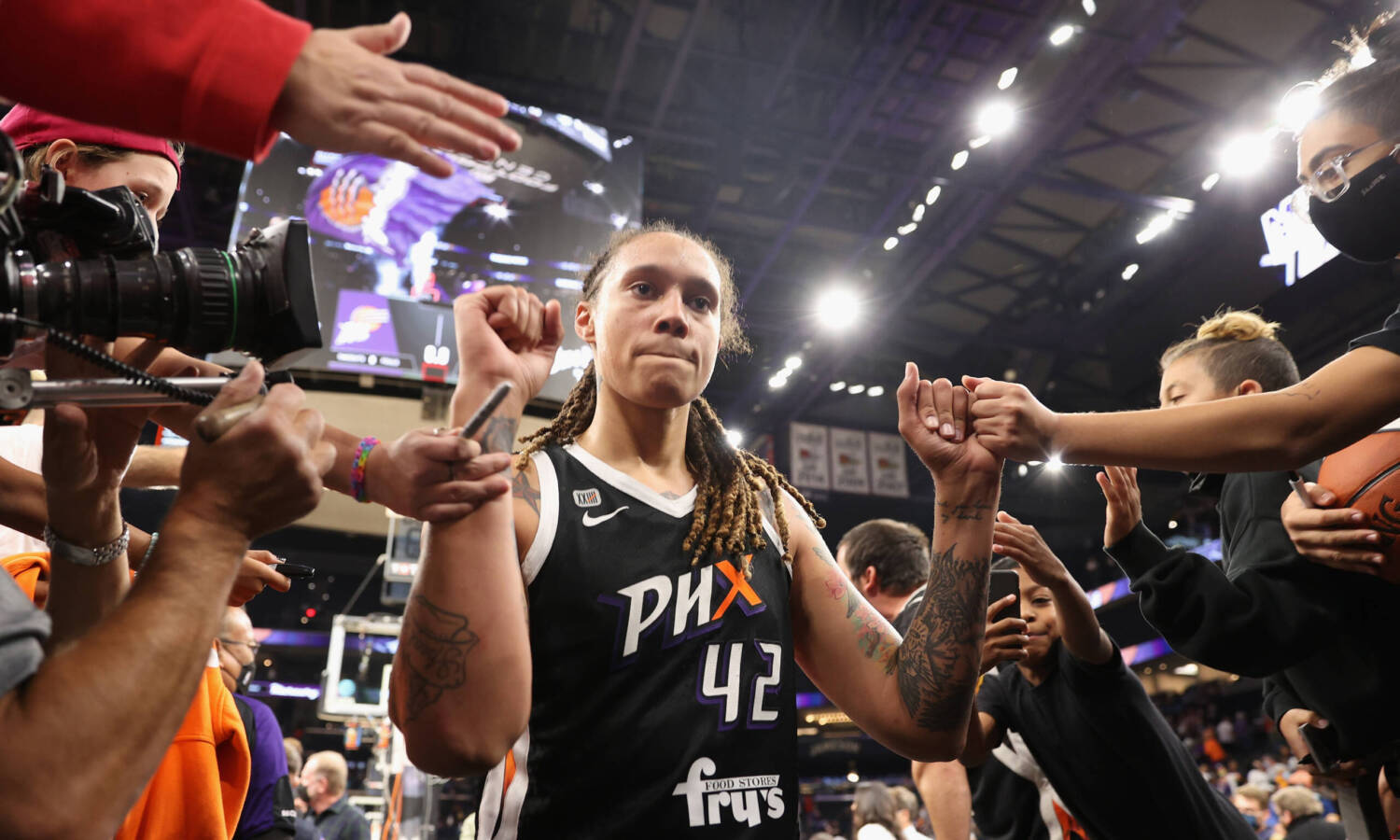
Upon receiving the Oscar, Proudfoot used the moment to call on President Joe Biden and urge him to obtain the release of two-time Olympic gold medalist and top women’s player Brittney Griner, who is jailed in Russia. “President Biden, bring Brittney Griner home,” Proudfoot said.
Photo by Christian Petersen/Getty Images
Griner was arrested at the airport in Moscow, where she played in the off-season and accused of having cannabis oil in her bags.
“If there is anyone out there who doubts that there is an audience for female athletes and questions whether their stories are valuable or entertaining or important … let this Academy Award be the answer,” Proudfoot, who is from Halifax, said at the award ceremony in Los Angeles, via the Associated Press.
“This proves that Lucy Harris’ story, after 45 years of being ignored, does indeed mean something profound to America and the world,” he told the Canadian press.
“From a quiet town in Mississippi to the world stage, Lucy Harris, The Queen of Basketball, has always and will always belong at the top. Her’s is a record that will never be broken.”
Growers will have to utilize better and safer farming practices to ensure product safety isn’t compromised while securing their profits at the same time.
Several years after Washington’s legislature first discussed the requirements, the state has finally approved compulsory pesticide testing for all cannabis products produced and sold in the state. Cannabis manufacturers have a duty to meet the demands of cannabis users in a state. For profit reasons, some of these operators have settled for harmful chemicals to increase the output of their crops. These chemicals include insecticides, pesticides, and inorganic fertilizers. Many of them are unfit for human consumption.
Since the first month of cannabis legalization in Washington, users have found it quite challenging to know the components of the cannabis products sold to them. A lot could go wrong, from cultivation to the final packaging of cannabis products. And these companies, cultivation facilities, and producers rarely come out to explain what goes on behind the scenes.
The Washington State Liquor and Cannabis Board (LCB) proposed third-party tests to help cannabis users know if the products to be ingested are safe.
Pesticide Testing
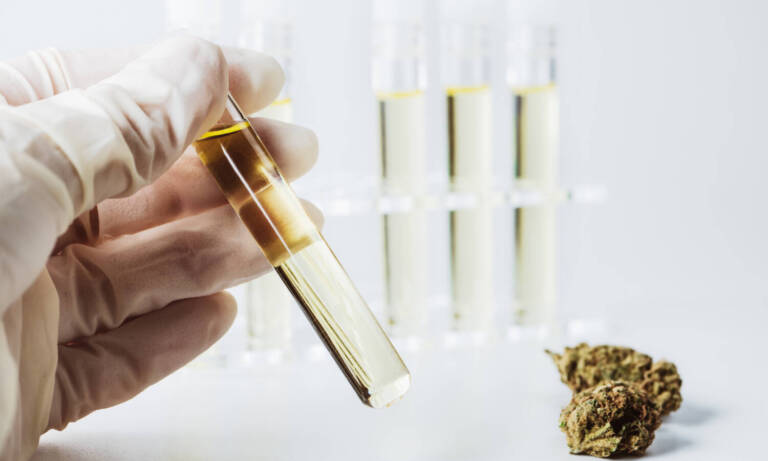
In legal countries and states, cannabis products undergo several third-party tests to ascertain that they’re fit for consumption. However, most of these legal areas fail to necessitate pesticide tests for these products. There are different methods for carrying out pesticide tests, but the most common is the use of a liquid chromatography-mass spectrometer. This equipment can detect even the tiniest traces of toxic chemicals used as pesticides. Ensuring that the customer’s safety is not compromised.
Washington State’s state cannabis regulators noticed the growing use of pesticides in the cannabis and hemp industries months after the state began its medical program. However, the growers claimed that they only use pesticides with zero harmful effects. Yet, feeble tests have proved that these claims are untrue. Cannabis products are starting to become mainstream products, and it would be risky to carry on the medical and recreational cannabis sectors without enforcing these critical tests.
Imagine a chronic patient suffering more because they unknowingly consumed medical cannabis containing toxic pesticides. Or an occasional recreational user developing health conditions due to these poisonous compounds. In fact, the public’s safety is far from being guaranteed without these tests. Hence, the recent development is highly commendable.
Long Awaited Policy
Cannabis advocates have lauded this new mandatory requirement as a long-awaited move for the state’s cannabis industry. A few pointed out that the states with legal cannabis markets have these regulations and more to guarantee that their residents get only the best and safest products. It is important to note that the state has always mandated that all medical products be tested for pesticides. Although some growers may have found ways to forge the test results or work around the policy. California has also banned pesticides in marijuana growing.
The core aspect of this new policy is that cannabis producers now have to conduct these tests for recreational products. The regulation change is majorly focused on the recreational industry because the regulatory board assumes that all medical products are free from toxic pesticides.
The Liquor and Cannabis Board disclosed that from the moment the new policies were announced, irregular and random tests would be conducted across cannabis manufacturing facilities in the state. They believe this will compel all producers to maintain the new status quo. It is high time recreational users stopped being exposed to unsafe cannabis products.
The WSLCB unanimously voted that the new changes for quality control of recreational cannabis would be effective April 2. The pesticide tests will be added to a list of compulsory tests that must be conducted on cannabis products released onto the market.
Photo by Wanida Prapan/Getty Images
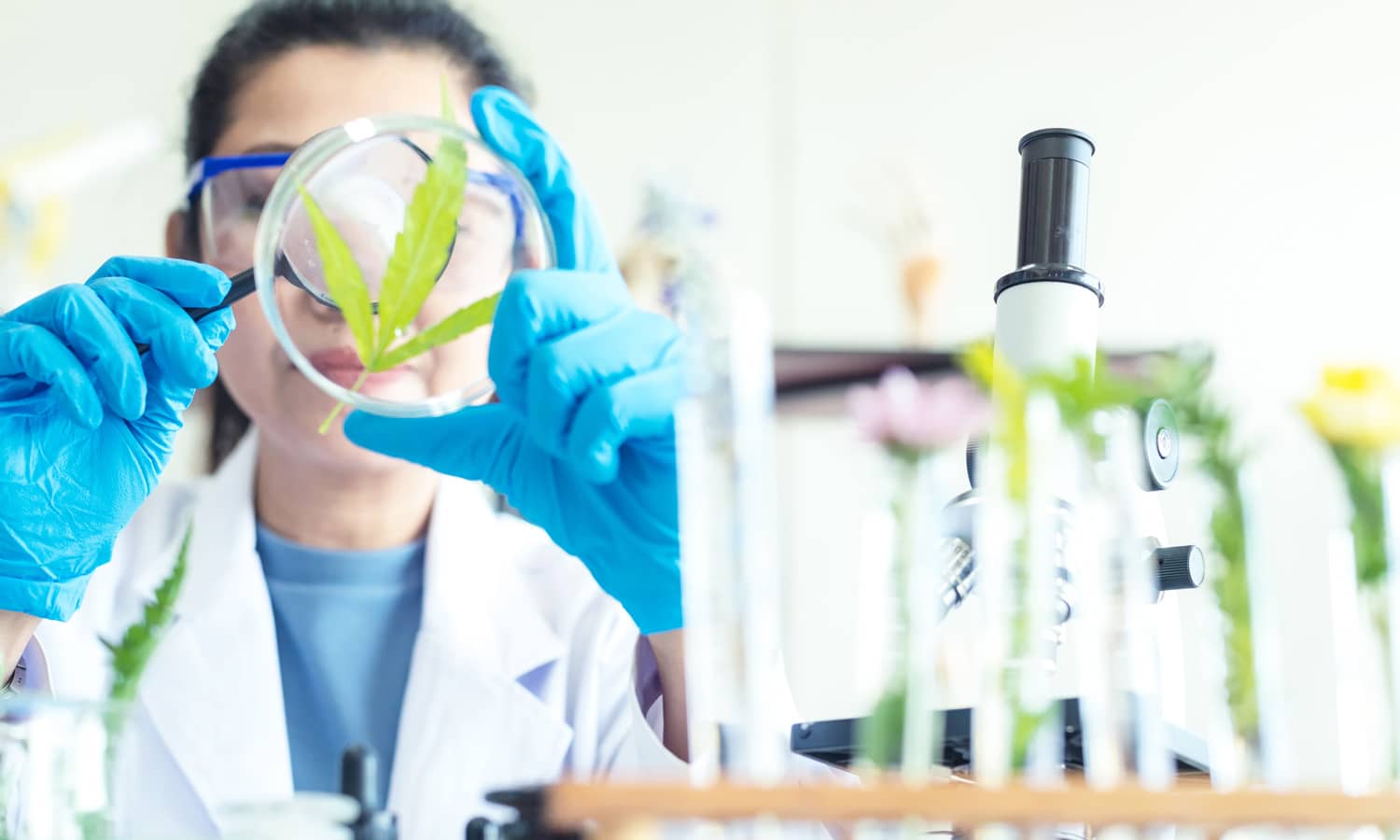
After about three years of public debates and considerations from various stakeholders, the new stringent regulations were finally approved. Once the law is implemented in a few weeks, every batch of smokable cannabis products produced within Washington state will be tested by state-licensed laboratories. The submitted samples will be critically analyzed for toxic pesticides like Bifenthrin, Daminozide, Permethrin, Spinosad, DDVP (Dichlorvos), Abamectin, Spiromesifen, etc. Cannabis stores and dispensaries will have the results of these tests before the products can be sold. The products that fall short of the accepted standards will be destroyed.
Industry watchdogs and cannabis secret shoppers revealed months ago that at least 1 in 5 cannabis products sold in cannabis dispensaries contain toxic pesticides. The failure of these products to meet quality assurance will decrease in the next few months as farmers will halt the use of these poisonous pesticides to prevent their products from being recalled or destroyed.
Washington-based Confidence Analytics, one of the most OK state-approved cannabis testing laboratories, revealed an updated white paper in February. The White Paper outlined the CEO’s plans to take proactive measures to kick-start pesticide tests before the law is enacted. Nick Mosley pointed out that the latest revisions will have massive effects on the state’s cannabis sector. In the white paper, Mosley explained that all supply levels would be affected, not to mention the market disruptions and realignments that would follow. Mosley believes that the quality control rule amendments will create new winners and losers in the industry.
In addition, the state legislature would consider other proactive bills that would impact the state’s existing cannabis product testing requirements. The measure, named House Bill 1859, would modify the current lab accreditation scheme and standards for these licensed labs. Another bill, Senate Bill 5983, plans to establish a new regulatory committee for the Liquor and Cannabis Board to ensure other cannabis-derived compounds are regulated.
Bottom Line
Pesticide testing is now more critical than ever in Washington. More regulations will be revised and added to the existing cannabis legislation in the next few months. But for now, the regulatory board is focused on making sure all cannabis products are free of pesticides.
Growers will have to utilize better and safer farming practices to ensure product safety isn’t compromised while securing their profits at the same time. For now, the United States federal government has not approved any pesticides to cultivate cannabis and hemp. However, some states have approved the use of a few. Meanwhile, more outreach efforts are being organized to educate sensitive growers about the adverse effects of pesticides on consumer health.
It seems that New Jerseyans will have to wait a bit longer to purchase recreational cannabis, as the state regulator for the nascent industry rejected the applications from eight medical cannabis operators — dubbed Alternative Treatment Centers and all owned by MSOs — to launch adult-use sales.
Curaleaf Holdings’ founder and chairman Boris Jordan was one of many disappointed cannabis entrepreneurs who did not take the news well.
Photo via Getty/StockstudioX
“Frustrating day in NJ – once again, the goal posts have been moved & the will of the people and the Governor is being ignored! We will continue to fight for what the NJ voters decided they want – a safe & regulated adult-use cannabis marketplace,” Jordan said in a recent Tweet.
Frustrating day in NJ – once again the goal posts have been moved & the will of the people and the Governor is being ignored! We will continue to fight for what the NJ voters decided they want – a safe & regulated adult use cannabis marketplace! #msogang
The New Jersey Cannabis Regulatory Commission took the decision on the grounds that, in the aggregate, cannabis operator in the state doesn’t have enough capacity to serve the current medical market.
Following its midday meeting, the state regulator called a special meeting for April 11, where the issue will be revisited.
Recreational Sales To Launch By Mid-May
Cantor Fitzgerald’s Pablo Zuanic said that recreation sales might begin in the Garden State by mid-May despite this setback.
“In practical terms, the CRC only has two weeks to check operators’ capacity and ability to supply the med market,” the analyst said in his latest note. “Because of probably significant political pressure and lobbying, we are of the opinion some incumbents (not all) will get the green light on 4/11.”
CRC Executive Director Jeff Brown explained that “our goal is to work with the industry and the industry to work with us so at the very next CRC meeting we have a cohort of ATCs that are turnkey to launch this market here, simply pending a vote by this commission,” reported NJ Advance Media.
“If for any that are still not there, hopefully (they’ll be) ready for conditional approval pending certain timelines and regulatory milestones that we can work to get done.”
Photo by Add Weed via Unsplash
“Without having all the facts, it would seem the CRC may want to delay the rec head start for med incumbents in order to narrow the gap with new social equity applicants starting operations,” he added.
Either way, New Jersey is still on track to beat Massachusetts in terms of launching the marijuana recreational market after voters approved it via the ballot box in November 2020, the analyst noted.
Conditional Licenses
Separately, the commission unanimously awarded the first 68 conditional licenses to adult-use cannabis cultivators and manufacturers, including 50 cultivators and 18 manufacturers, reported Politico.
Zuanic said these businesses will not be ready to supply the market until the first half of 2023.
“If the newly approved licensees submit their application by March 31, are approved by April 31, the only thing preventing them from starting would be build out and receiving local permits,” the analyst added.
If you’re in the mood to visit California or go on a cannabis tourism road trip in the state, make sure to allow enough time to enjoy the various stops you’ll be making.
California is one of the best places to visit for a fulfilling cannabis experience. It is fondly known as the “center of America’s cannabis industry” due to the high number of cannabis operations that go on in the different regions of the state.
Traveling through California is usually a swell journey. The state has several unforgettable experiences for visitors, from scenic views, natural areas, and spectacular landmarks; it has it all. What’s more, cannabis is legal here.
If you’re thinking about going on a road trip through California, this guide is for you. There are various places to visit in California to show you how Californians grow and smoke only the best cannabis products. You’d get to revel in the glorious history of cannabis in the different cities in the state. If you drive as far as the Big Sur coastline or Joshua Tree, you will enjoy the state’s unique landscape. There’s more enjoyment for you if you explore with an elevated mind.
Road Trip Guides Through California
Here is a carefully curated list of three different road trips stoners could embark on to enjoy the drop-dead gorgeous views of Cali cities. The guide also highlights some picture-worthy locations where you could stop to enjoy the wonders of edibles, vapes, gummies, edibles, or flowers.
Before you go on this trip, head over to a cannabis dispensary close to you to get your favorite cannabis goodies. If you have short notice, you can hold onto some money because you’d see some dispensaries to buy your favorite strains from. It’s time for some weedy adventure.
Through California’s Pacific Coast Highway
This is a 656-mile-long trip that starts from Southern California and ends at the city’s center in Mendocino County. The iconic state road is an iconic route. It has an extensive number of stops along the coastline where you can feast your eyes on some inspiring scenery while feasting on some mouthwatering strains.
This drive shouldn’t be rushed through in four or five days. To have the most fun and experience the lifestyles of Californians in these areas, it’s best to take at least ten days. Going from Dana Point to the region close to Legget will expose you to many natural and architectural views. The most striking aspect of this road trip is the views of the majestic Pacific Ocean. A significant part of this trip passes through the coastline. There are some forested parts to enjoy close to the Big Sur. As you go up north, you’ll make your way around some mountains. You might even see some wildlife like elephants, zebras, and seals as you get closer to San Simeon.
Some man-made structures will also be highlighted as you go through California’s Pacific Coast Highway. You’ll see a diverse selection of architectural landmarks, like the Spanish colonial architecture in the Santa Ynez Valley. Other architectural gems include the Golden Gate Bridge in San Francisco and the Hearst Castle estate.
Photo by Matthew Hamilton via Unsplash
The Desert Drive
This shorter drive begins in San Diego and ends in the Joshua Tree National Park. There are several wonderful sites along this route that are mostly inconspicuous when one is in a hurry to get to a destination.
Many people often fail to appreciate the scenic views along this terrain because all their attention is fixated on getting to Joshua Tree National Park. Although Joshua Tree Park is an exciting place, it won’t hurt to take in the various rock types, meadows, and art present along the route. You can complete this 290-mile trip in a week. And yes, the trip will be worth those seven days of your life.
Once you get to San Diego, press the button on your map as you begin to head to the northeast region by going through Highway 163 to Highway 78. As the name implies, the desert drive leads towards the Ansa-Borrego Desert State Park. It’s best to stop here and enjoy the beautiful landscape. If you’re fortunate enough to visit this park during spring, you’ll witness the blooming wildflowers. There’s a 130-foot prehistoric animal sculpture you could take pictures of just at the entrance of the park. The sculptures were created by artist Ricardo Breceda.
Photo by Patrick Tomasso via Unsplash
Another part of the trip includes the Palm Canyon Drive, heading to the Salton Sea. Other stops include the abandoned navy base called Slab City, Santa Rosa, and the San Jacinto Mountains National Monument. The significant part of this drive is that there are pit stops where you can enjoy one or two hits from your favorite strains.
All the sights highlighted here are worth the hype. For some years, the Salton Sea (one of the largest inland seas in the world) would completely dry up. Now is the best time to enjoy this beauty. On the other hand, the slab city is now a deserted area where some go to enjoy a puff or more.
Don’t forget to visit Palm Springs when you’re on Highway 111. You might even get to see some celebrities at the tree park.
The Rim of the World Scenic Byway
Not everyone can free up enough time to go on very long trips, which is why this route is included in this list.
This 117-mile road trip starts at Cajon Pass and ends in the Big Bear area. Travelers have the choice to leave their vehicles and participate in hiking in the rocky and mountainous regions of the state. You could also take your rides along the cliff edges and the peaks of the mountains at San Bernadino. This trip could take three to five days. Each day, you get to explore the different lakes, mountain passes, and various hikes.
Enjoy the Ride
If you’re in the mood to visit California or go on a cannabis tourism road trip in the state, make sure to allow enough time to enjoy the various stops you’ll be making. Enjoy the mountain views, lakes, and ocean coastlines. Who knows, you could even come across another group going the same route as you—the more the merrier. The best time to visit is during the summer or spring. Have fun!
It could be a new, inexpensive approach for delivering pain relief, and without the side effects of anti-inflammatory drugs and addiction risks linked to opiates.
An orally absorbed tablet containing CBD effectively reduces pain after shoulder surgery with no safety concerns, a new study finds.
Led by researchers in the Department of Orthopedic Surgery at New York’s NYU Langone Health, the study found that the tablet ORAVEXX safely managed pain after minimally invasive rotator cuff surgery, and did not produce side effects sometimes associated with CBD use, such as nausea, anxiety and liver toxicity. The findings were presented at the American Academy of Orthopaedic Surgeons 2022 Annual Meeting in Chicago.
“There is an urgent need for viable alternatives for pain management, and our study presents this form of CBD as a promising tool after arthroscopic rotator cuff repair,” stated lead investigator Michael J. Alaia, MD, FAAOS, associate professor in the department of orthopedic surgery. “It could be a new, inexpensive approach for delivering pain relief, and without the side effects of anti-inflammatory drugs like NSAIDs and addiction risks linked to opiates. Additionally, CBD has the benefit of pain relief without the psychotropic effects associated with THC or marijuana.”
How The Trial Was Undertaken
The multi-center Phase 1/2 clinical trial randomly involved 99 participants between the ages of 18 and 75 across 2 study sites, placing half in a placebo group and the others into the group receiving oral-absorbed CBD. Participants were given a low dose of Percocet, instructed to wean off the narcotic as soon as possible and then take the placebo/CBD 3 times a day for 14 days after the surgery.
On the first day after surgery, patients receiving CBD experienced on average 23 percent less pain as measured by the visual analog scale pain score compared to patients receiving the placebo, highlighting that in patients with moderate pain, CBD may render a significant benefit.
On both the first and second days after surgery, patients receiving CBD reported 22 to 25 percent greater satisfaction with pain control compared to those receiving placebo. Further analysis also showed that patients receiving 50 mg of CBD reported lower pain and higher satisfaction with pain control compared to patients receiving placebo. No major side effects were reported.
Results Promising, But…
While the results are promising, Dr. Alaia cautioned consumers against seeking out commercialized CBD products.
“Our study is examining a well-designed, carefully scrutinized product under an investigational new drug application sanctioned by the FDA. This is currently still experimental medicine and is not yet available for prescription,” said Alaia.
Moving forward, NYU Langone has launched a second study looking at whether ORAVEXX can specifically treat chronic pain in patients with osteoarthritis. Multiple Phase 2 studies are also planned to evaluate the drug’s efficacy for other acute and chronic pain management issues and assess the role of CBD on inflammation.
It’s an excellent form of cannabinoid that has multiple health benefits, including supporting overall health and well-being
Cannabigerol (CBG) is quickly becoming one of the most popular cannabinoid products these days. More than just a buzzword, CBG exists in the hemp plant as a precursor to CBD as well as THC. Also known as the mother of all cannabinoids, it can only be found in the plant’s blooming phase before the cannabinoids are converted into CBD or THC. However, due to the short blooming timeframe of the hemp cannabis plant, it can be challenging to find products that are rich in CBG. Here is some advice and ways to use and consume CBG.
When CBG is still in its precursor form, better known as cannabigerolic acid (CBGA), it doesn’t produce any psychoactive effects. Once it converts to CBG form, its original properties go through a transformation although there are also other properties that remain the same. Pure CBG can naturally be found in small concentrations that are usually less than 1% in the hemp plant so it took a while for researchers to take it seriously and study it.
Photo by CRYSTALWEED cannabis via Unsplash
Now, we have farmers and scientists that are devoting more time to genetic studies on CBG. There are now more hemp cultivars that have a higher CBG content, allowing everyday people like you and me to benefit from its therapeutic benefits.
Benefits of CBG
Just like CBD, CBG isn’t intoxicating so you can consume it without worrying about getting high. It’s a beneficial cannabinoid for treating stress, anxiety, and pain. Studies show it also has antibacterial activity.
Researchers have found that it has potent anti-inflammatory properties but a word of caution: it’s best not to mix CBG intake with THC or CBD since they have different effects on the body.
Dosage
As of the time of writing, there is no standard dosage instructions for CBG.
However, we can follow the standards that have been determined for CBD and THC. There are many personal factors that affect finding the right dose for you, which includes your overall baseline health, age, weight, underlying conditions, and your previous experience with cannabis, if any. Just like with cannabis, we always recommend starting small and going slow.
When shopping for CBG products, manufacturers will indicate either in percentage or MG form the quantity of CBG. If a manufacturer doesn’t indicate this information, you can check their website or any lab results. Manufacturers may already have a recommended starting dose which you can start with, then work your way up gradually until you have found the quantity necessary for achieving your desired effect.
Gradually consuming CBG will help you get used to the cannabinoid. Start with 2.5 to 5mg of CBG as the smallest dose while you begin working your way up. While there are no fatal side effects for taking too much CBG, consuming an excess may lead to diarrhea, nausea, or vomiting until the cannabinoid has fully left your system although this may take 3-5 hours. However, everyone will react to it differently just like with other cannabinoids.
Generally speaking, CBG has shown to be well-tolerated and its effects are mild. Always remember to follow the recommended dose indicated by the manufacturer or brand.
Consumption
There are many ways you can consume CBG. Here are some products to look for:
CBG Isolate: Similar to other isolate products on the market, CBG isolate ensures you get the purest form possible. This is ideal for individuals who want to create edibles infused with CBG, or simply medicate with CBG without the properties of other products.
Isolate can be consumed orally or infused with a carrier oil to make a tincture. If you intend to consume the isolate on its own, just put a drop or two (depending on its dose and the effects you’re after) underneath your tongue, where you can leave it for a minute before swallowing.
CBG Oil: When starting out with a new cannabinoid product, consuming it via oil is one of the easiest ways to control dosage. Simply put a few drops under your tongue, then hold it for 30-60 seconds so that the cannabinoid receptors located in this part of your mouth can more efficiently absorb it. This is an efficient way to get the most out of CBG.
Photo by Rocky89/Getty Images
Moreover, CBG oil can also be added into food and drink. Many people enjoy adding CBG oil into coffee, shakes, smoothies, salads, baked goods, and salad dressings the way you would with other condiments. Keep in mind that it may not have a desirable flavor though adding it to other food and drink can hide the flavor.
Vaporizer: Vape CBG oil is also available, which are compatible with vape pens and vaporizers. Vaping cannabis products including CBG has been one of the most popular ways to consume cannabis since they are easy to do and more discreet compared to smoking flower because it produces very little smoke. Additionally, consuming it this way takes it directly to the lungs where it will reach the bloodstream almost immediately, so you can feel its effects straight away.
Flower: Hemp flower with higher-than-average amounts of CBG can also be found in the market. It’s much less concentrated compared to oils or isolate, and you are also getting the benefits of other cannabinoids when you smoke it via flower. Some CBG strains you can try include:
There are many reasons people are trying CBG these days. It’s an excellent form of cannabinoid that has multiple health benefits, including supporting overall health and well-being. Given that there are numerous ways that you can consume it, there’s no reason you shouldn’t be trying CBG today.
With a slightly shortened show with three lively hosts who like joking about weed in a state where it is legal, one can only hope this year’s ceremony is elevated.
It’s that time of the year again. The 94th annual Academy Awards are this Sunday. And while the Oscars have always been synonymous with elegant red carpets and golden statues, green is the color we’re most interested in.
While none of this year’s nominees are expected to thank marijuana specifically for winning their golden statue, do any of them have notable associations with weed? Yes. Yes, they do.
Best Actor nominee Benedict Cumberbatch (“Power of The Dog”) may seem tight laced and calculated in many of his memorable performances, but he has openly admitted to indulging in marijuana.
“I’ve smoked a bit of weed in my time, but that’s about it,” Cumberbatchtold Rolling Stone, in regards to how he related to his character in Showtime’s “Patrick Melrose.” “I’ve always been about moderation. I’m not a binger and nothing is habitual with me,” he continued.
Andrew Garfield
“Tick, Tick…BOOM!” star Andrew Garfield has also admitted to enjoying marijuana from time to time. “I can only really take substances if it’s a ritual. I mean, weed, I can smoke because it’s just nice,” the best actor nomineetold The Evening Standard.
Garfield then touched on the importance of hallucinogens for his creative inspiration. “But with hallucinogens, I have to do it in a very conscious way in a place where I feel free and safe and can have a freak out if I want to. I want to be able to express my insights.” Who knows, maybe Garfield will give a quick thanks to hallucinogens if he takes home the best actor trophy on Sunday.
Kristen Stewart
Kristin Stewart is nominated for her first Academy Award for her portrait of Princess Diana in “Spencer.” Stewart had plenty of her own experience with the paparazzi to prepare her for this Academy Award nominated role, including being caught smoking weed outside her home. She discussed this experience in a 2012 Vanity Fair interview.
“You can Google my name and one of the first things that comes up is images of me sitting on my front porch smoking a pipe with my ex-boyfriend and my dog,” she said.
“The next day it was like I was a delinquent slimy idiot, whereas I’m kind of a weirdo, creative Valley Girl who smokes pot. Big deal. But that changed my daily life instantly.”
Nicole Kidman
“Being The Ricardos” star Nicole Kidman has already won a Best Actress Oscar (“The Hours”), but many of her fans might be surprised to learn that she’s dipped her heels in the cannabis business. In 2020, it was announced that she would be partnering with Cure Pharmaceutical to promote their cannabis products. While Kidman’s personal interest in marijuana remains a mystery, she is eager to promote the use of CBD.
Kirsten Dunst
Best Supporting Actress nominee Kirsten Dunst (“The Power of the Dog”) has had very candid comments about marijuana in the past.
Screenshot via Jimmy Kimmel Live/Youtube
Ahead of the times, Dunst told Britain’s Live Magazine in 2007, “I drink moderately, I’ve tried drugs. I do like weed. I have a different outlook on marijuana than America does.” Dunst went on tosay, “I think America’s view on weed is ridiculous. I mean, are you kidding me? If everyone smoked weed, the world would be a better place.”
The Hosts!
This year’s Academy Awards will be hosted by Regina Hall, Wanda Sykes and Amy Schumer — all three of whom have spoken publicly about cannabis use.
When asked how she “unplugged,” Schumer told Today host Savannah Guthrie, “usually marijuana.” Schumer has also been vocal about how CBD was “the only thing” that helper her intense nausea during pregnancy.
Photo by Jemal Countess/Stringer/Getty Images
Sykes has often joked about cannabis both as a comedian and even on social media. In her act Sykes once said in her Comedy Centralspecial that she told her stock broker to “put all my money in weed, because the price of weed never goes down.”
Hall also made people laugh with a story about weed. Hall admitted on Jimmy Kimmel Live! that she and her mom got way too high for their own good when eating her late dog’s medical prescribed marijuana.
These hosts have a tall order, as the Oscars have been known to go on a bit longer than the audience would like. With a slightly shortened show with three lively hosts who like joking about weed in a state where it is legal, one can only hope this year’s ceremony is high as a kite elevated.
Cannabis stocks went into a tizzy, in a good way, on Thursday’s blockbuster news that the House of Representatives will call a vote next week on the MORE Act (Marijuana Opportunity, Reinvestment and Expungement), which seeks to remove cannabis from the list of federally controlled substances and promote social equity in the industry.
Then, within hours came more news: the Senate unanimously approved a bipartisan bill promoting cannabis research. The latter didn’t quite get the shouts and murmurs nor cause cannabis stocks to go wild, but, as one researcher put it, “Cannabis contains a galaxy of unexplored compounds…that may well transform our understanding of plant medicine and human biology.” So, yes, legalizing cannabis research was another piece of huge news.
Photo by Kirill Vasikev / EyeEm/Getty Images
What About Cannabis Stocks?
Doubtless, cannabis legalization in the U.S. would be a huge milestone for cannabis stocks, especially in view of the slow but sad drop over the past year, due largely to dashed hopes over the progress, or lack thereof, regarding U.S. federal legalization.
And though nothing is official just yet, the suggestion that cannabis legalization is being discussed at the highest levels of government has encouraged investors and has kept cannabis stocks continuing to respond positively.
What’s Next?
Cantor Fitzgerald’s analyst Pablo Zuanic said he assumes the MORE bill’s main sponsor Rep. Jerrold Nadler (D-NY) has been in touch with Senate Majority Leader Chuck Schumer (D-NY) who is expected to file his own bill (the Cannabis Administration and Opportunity Act) on April 20. CAOA is a broader reform bill than the SAFE Act that would allow for interstate cannabis commerce across the US.
“Both bills, or an eventual joint version, in our view, will at least allow Democrats to claim they are doing their very best to pass comprehensive cannabis reform. The conventional wisdom view is that neither Bill has the votes in the Senate to pass (based on what we know at this moment, we agree with that sentiment),” Zuanic said. “But as Rep. Perlmutter (sponsor of the SAFE Banking Act) told us recently ‘the stars are aligning.'”
Can The Dems Pull It Off?
Can these leading Senate Democrats afford to come out empty-handed after bringing so much attention to their reform proposals?
Zuanic says that the SAFE Banking Act could be more than just “face-saving” for the Democrats.
Photo by RODNAE Productions via Pexels
“SAFE passage could be an honorable start, and provide a realistic spark for future broader more comprehensive reform. Supposedly, SAFE (in its current version) has more than 60 votes in the Senate. It will all come down to Sen Majority Leader Schumer: do nothing this term (in terms of getting actual MJ legislation passed), or tweak Rep Perlmutter’s Bill.”
Clearly, getting even one of these bills passed by the Senate is the challenge.
Benzinga’s View
It might behoove the potential naysayers in the Senate to give the situation some real, non-partisan thought as it would make sense to recognize that a vast majority — fully 68% — of their own constituents indeed want cannabis legalized, regulated and fairly taxed.
“Today, voters of every age and in virtually every region of the country agree that marijuana should be legal,” said NORML’s former executive director Erik Altieri. “We have a mandate from the American people and we intend to make sure that elected officials abide by it.”
New York is implementing a novel way of taxing cannabis, one that could result in very, very expensive weed.
Buying legal marijuana in New York will soon be a reality, with the state legalizing recreational use in 2021. Now, new reports say that the Empire State could impose a potency tax, elevating weed prices to up to $70 for an eighth.
Per Syracuse.com, the law would tax distributors different amounts depending on the milligrams of THC present in the compound. Distributors would be taxed half a cent in flower, eight-tenths of a cent in concentrates, and three cents in edibles.
Last year, New York announced its complex tax cannabis plan that, while not the highest in the country, could be the most complex. Instead of tying wholesale tax to factors such as weight or volume, New York would link the tax to the amount of THC in a product.
New York is the first state to tax cannabis this way, with many industry experts calling the plan overly complicated. “I mean it’s great that we finally have marijuana legalization, but this THC-based tax is something that could create a lot of problems,” said Kaelan Castetter, of Castetter Cannabis Group. She argues that this complex plan could put a new industry in a tough spot since it’s just starting out, while also coping with a pandemic. She predicts the tax could elevate costs, something that appears to be the case as we near the opening of legal cannabis businesses.
Still, not everyone is upset by New York’s new taxes. “It is an interesting approach,” cannabis law specialist Rob DiPisa told Syracuse.com. “Clearly New York is paying attention to the way that THC now drives the value and the growth in the industry. It may be the first, but I can see this becoming a trend in other states.”
Others think the tax could push cannabis workers to make strains and cannabis products that aren’t so reliant on THC, giving other compounds a chance, and showing people that there’s much more to cannabis than that single element.
Legal cannabis sales could start by the end of the year, following a program that plans to provide cannabis licenses to people affected by marijuana-related convictions.
The bill states that it “shall not be a violation of the Controlled Substances Act (CSA) for a State-licensed physician to discuss” the risk and benefits of marijuana and cannabis-derived products with patients.
On Thursday, the Senate gave a green light to a bipartisan marijuana bill meant to promote marijuana research, reported Marijuana Moment.
The legislation, sponsored by Sens. Dianne Feinstein (D-CA), Brian Schatz (D-HI), and Chuck Grassley (R-IA), is titled Cannabidiol and Marihuana Research Expansion Act. It was reintroduced in February 2021, following an earlier version that passed the Senate in 2020.
Photo by Aleksandr_Kravtsov/Getty Images
The bill was approved unanimously, without debate, on the same day congressional leadership confirmed that the U.S. House of Representatives plans to vote on a bill to federally legalize marijuana (Marijuana Opportunity, Reinvestment, and Expungement Act) — for the second time in history.
While the bill sponsored by House Judiciary Committee Chairman Jerrold Nadler (D-NY) is poised to end up on the House floor next week, a Senate legalization bill being finalized by Majority Leader Chuck Schumer (D-NY) — the Cannabis Administration & Opportunity Act (CAOA) — is yet to be filed, most likely in April.
What’s In The Research Bill?
The newly passed bill would simplify the application process for researchers seeking to study cannabis. It will also encourage the Food and Drug Administration (FDA) to develop cannabis-derived medicines.
Under the legislation, physicians would be allowed to discuss the risks and benefits of marijuana with their patients.
The bill states that it “shall not be a violation of the Controlled Substances Act (CSA) for a State-licensed physician to discuss” the risk and benefits of marijuana and cannabis-derived products with patients.
Moreover, physicians will be able to require the U.S. Department of Health and Human Services (HHS) to submit a report on the potential health benefits of marijuana, the obstacles related to cannabis research and how to overcome them.
Photo by Esther Kelleter / EyeEm/Getty Images
“Current rules and regulations make it hard for researchers to study how marijuana and marijuana-derived medications can best be used to treat various conditions,” Sen. Feinstein said in a press release. “This important legislation will cut the red-tape around the research process, helping get FDA-approved, marijuana-derived medications safely to patients.”
Sen. Grassley emphasized that the bill is “critical” to better understand the cannabis plant.
“It will empower the FDA to analyze CBD and medical marijuana products in a safe and responsible way so that the American public can decide whether to utilize them in the future based on sound scientific data,” Grassley said. “Researching marijuana is widely supported by my colleagues on both sides of the aisle, and it’s a smart step forward in addressing this current schedule I drug.”
Sen. Schatz highlighted that federal laws are still ‘standing in the way of learning about cannabis’ potential health benefits.
“We are now one step closer to removing excessive barriers that make it difficult for researchers to study the effectiveness and safety of marijuana, and hopefully, give patients more treatment options,” Schatz said.