Male birth control may soon be on the map, with researchers finding a new method that prevents 99% of pregnancies with no side effects.
Male birth control pills have been an urban myth for years. But now, they might finally be a realty. On Wednesday, a team of scientists reported that they had developed a contraceptive in male mice that was 99% effective.
Researchers have been trying to create a birth control that would affect men the same way it does women. The problem with this approach was that, due to the targeting of testosterone, men were likely to experience depression, weight gain and an increase risk for heart disease.
The new method is non-hormonal, targeting a protein in the body that can block out the making of sperm. The method had no adverse side effects, finding that the mice were equally active and hungry as they were before. The effects were also temporary, with mice being able to get mice pregnant four weeks after they stopped taking the compound.
The team hopes to start human trials at some point in 2022. “There is no guarantee that it will work…but I would really be surprised if we didn’t see an effect in humans as well,” said Professor Gunda Georg.
Birth control has long been an controversial issue of responsibility, landing squarely on female partners. If this method were to come to fruition, it would provide couples with more options for birth control, allowing them to find a method that works best for them as a couple.
Perhaps Jackson’s generational separation from Breyer and her unique experience will give marijuana laws a fair shake the next time they are up for debate in the highest court in the land.
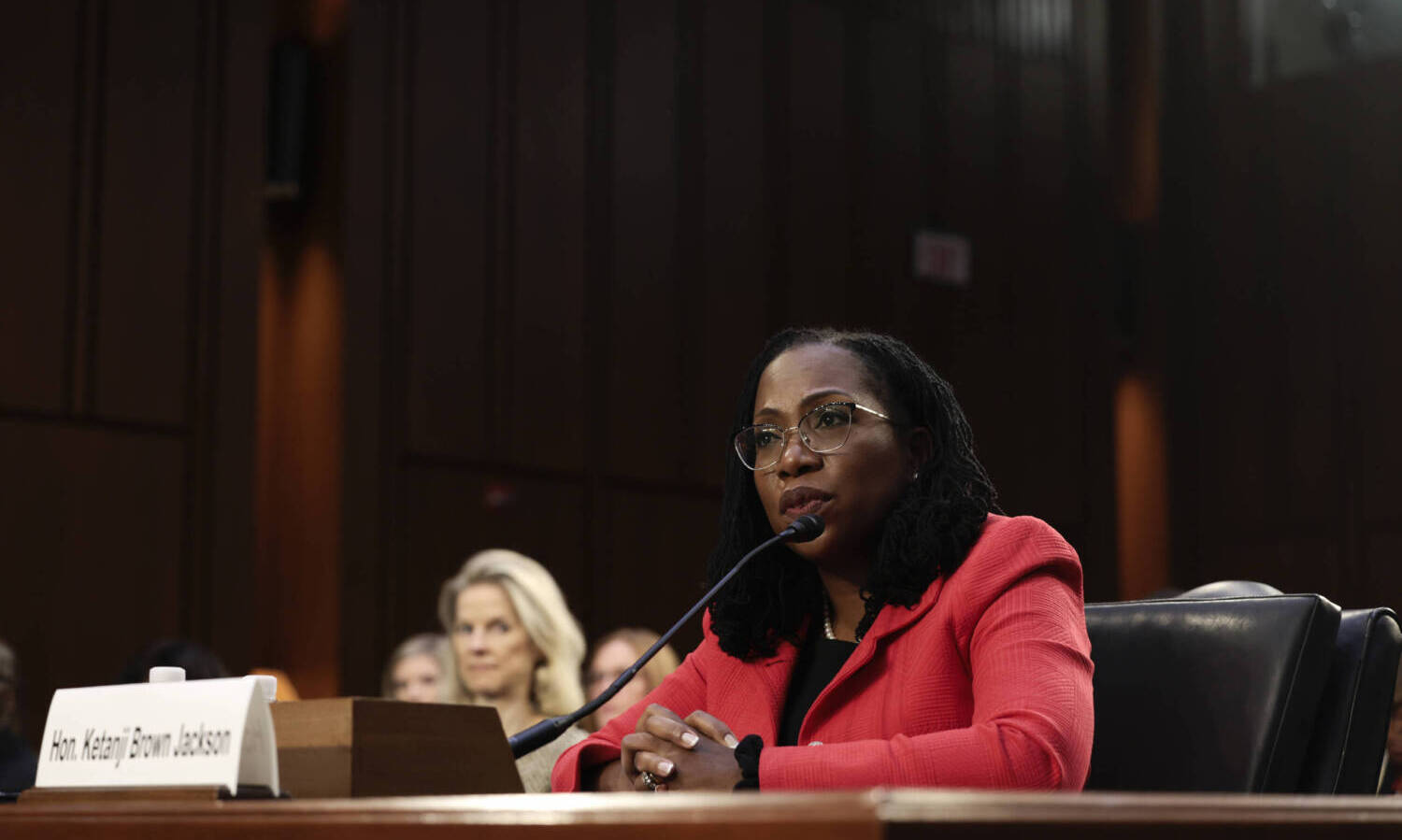
There will be a new judge on the United States Supreme Court, and in all probability, President Biden’s selection will be a historic one. Confirmation hearings began last week for Ketanji Brown Jackson, the likely replacement for Justice Stephen Breyer, who will retire from the Supreme Court this year.
If Jackson is appointed, she would become the first African American woman on the U.S. Supreme Court, and also one of the only Supreme Court judges in history with experience as a public defender. Jackson will most likely be confirmed within a month or two, thus bringing a new set of experiences, expertise and a unique understanding of the legal framework.
What, if anything, would this historic appointment mean for the future of marijuana legalization?
Photo by Anna Moneymaker/Getty Images
Jackson, like most Supreme Court justices and past nominees, has been silent about her own personal views on many contentious subjects in the United States during her confirmation hearings, including the topic of marijuana legalizations. In fact, the only justice that has made any sort of opinion on the subject lately was Justice Clarence Thomas, a conservative.
Justice Thomas may be conservative, but his recent official opinion on marijuana’s legal status shows that he, like many, is growing frustrated with America’s indecision, and confused antiquated logic on the matter.
“The Federal Government’s current approach to marijuana bears little resemblance to the watertight nationwide prohibition that a closely divided Court found necessary to justify the Government’s blanket prohibition,” Thomaswrote in an official statement. Times are changing, indeed.
While Jackson has not made her views on marijuana known, her service as a public defender means she has real-life experience with drug laws, and has seen first hand how they (often unfairly) impact lives.
Photo by Erin Schaff-Pool/Getty Images
“No other lawyers in the system are seeing the law from the perspective of public defenders,” Premal Dharia, executive director of the Institute to End Mass Incarceration,told the Harvard Gazette, Jackson’s Law School alma mater. “Public defenders are the system’s check on governmental overreach, on police misconduct, on legal misconduct, on all of these different parts of the system.”
Jackson reportedly went into public defense, which is not a popular path for those seeking a seat on the highest courts, with intention. She did it because “She clearly wanted to see how the system worked in actuality, and was more interested in the defense side of trying to help people who came from very unfortunate backgrounds,” A.J. Kramer, a public defender who knows Jackson,told The New York Times.
This unique outlook will be an important perspective for a court that currently has little recent first-hand experience with drug incarceration, or the understanding of how disproportionately these laws affect people of color. “Because people of color are disproportionately arrested, prosecuted, and locked up, her work is also inextricably tied up with the fight for racial justice,” Voxwrote in regards to Jackson’s unique career.
Jackson would replace Justice Stephen Breyer, who has been a reliably liberal vote on the Supreme Court, but has never voiced an official favorable opinion on marijuana legalization or voted in ways that would suggest he has such opinions. So perhaps Jackson’s generational separation from Breyer and her unique experience will give marijuana laws a fair shake the next time they are up for debate in the highest court in the land.
The Marijuana Opportunity, Reinvestment and Expungement (MORE) Act is poised to end up on the House floor next week, reports Marijuana Moment.
Rumors of a floor vote, coming from a congressional staffer and a key advocate familiar with the high-level discussions and another source close to Marijuana Moment’s redaction, are being fueled by a closed-to-press session held weeks ago by congressional Democrats at a party retreat. The session featured a panel on advancing marijuana reform.
Photo by MmeEmil/Getty Images
Cannabist advocates have been working tirelessly to bring a bill to federally legalize cannabis to the House floor again this month.
The Marijuana Justice Coalition (MJC), a broad coalition of national advocacy organizations convened by the Drug Policy Alliance, including the American Civil Liberties Union and Human Rights Watch, sent a letter to House Speaker Nancy Pelosi (D-CA) and House Majority Leader Steny Hoyer (D-MD) earlier this month, calling for a floor vote on the bill.
Nadler’s bill was approved 26-15, with 24 Democrats joined by two Republicans at the House Judiciary Committee this session in September.
The MORE Act repeals the long-standing federal prohibition of marijuana by removing it from the Controlled Substances Act, that way ending the state/federal conflict over cannabis policies and providing state governments with greater authority to regulate marijuana-related activities, including retail sales.
“This legislation would end federal marijuana prohibition, address the collateral consequences of federal marijuana criminalization, and take steps to ensure the legal marketplace is diverse and inclusive,” MJC’s letter stated.
The formal introduction of a separate Senate legalization bill being finalized by Majority Leader Chuck Schumer (D-NY) and others is yet to come. Schumer revealed his plan to file that bill — the Cannabis Administration & Opportunity Act (CAOA) — in April.
Photo by Pavel Danilyuk from Pexels
Marijuana Legalization Does Not Increase Teen Use
In the meantime, National Institute on Drug Abuse (NIDA) director Nora Volkow reiterated on Wednesday that there is no evidence to support the erroneous claim that adolescent marijuana consumption has increased in states where it is legal, reported Marijuana Moment.
“Specifically in the United States, legalization by some states of marijuana has not been associated with an increase in adolescents’ marijuana use,” Volkow said in response to a question from Sen. Bill Cassidy (R-LA).
Cassidy said that Volkow’s assertion “surprises” him. “If you relax blue laws for alcohol, there ends up being more alcohol used by adolescents in that given county or parish,” he replied to the NIDA director.
Volkow said that officials are “seeing significant increases in adult use of marijuana and young people, but not in adolescence, which is different exactly from what you’re saying with the alcohol.”
The director of NIDA explained to a Republican senator that, in the US, there’s no link between legal cannabis and an increase in teen usage.
Studies have shown over the years that marijuana legalization doesn’t have an impact on teen use. And while that isn’t exactly surprising news to those in the know, one U.S. senator was gobsmacked when faced with this (not even new) info.
The information was presented by Nora Volkow, the director of the National Institute on Drug Abuse (NIDA). Volkow was present at a hearing on Wednesday, where she provided some measured information on cannabis, highlighting some of its risks but making it clear that the data available doesn’t indicate that legal marijuana makes it more likely for teens to partake.
When asked about the legalization of marijuana, Republican Senator Bill Cassidy said that NIDA’s research shows evidence of marijuana harming the brains of adolescents.
“Definitely, this is one of the areas where we are most concerned when it comes to the legalization of marijuana” said Volkow, prompting Cassidy to pose that states with more liberal approaches to cannabis should have increased instances of mental illness in teens and young adults.
“In the United States there are no studies that have documented that,” said Volkow. “Specifically, marijuana legalization has not been associated with an increase in adolescent marijuana use.” Cassidy then said that states with relaxed blue laws for alcohol (restrictive laws on the consumption of alcohol) had more alcohol use by adolescents. “We are seeing significant increases in adults’ use of marijuana but not in adolescents, which is different from what you’re saying with the alcohol,” explained Volkow.
These surprising results that have also been used to stoke prohibitionist ideas are not surprising for marijuana advocates, who have long said that enabling a legal market for marijuana could limit instances of underage use. “These latest findings add to the growing body of scientific literature showing that marijuana regulation policies can be implemented in a manner that provides access for adults while simultaneously limiting youth access and misuse,” said NORML’s deputy director Paul Armentano, in regards to the most recent study showing no link between legal cannabis and teen usage.
Cannabis use in teens has been linked with a propensity for mental health conditions. While this link is not understood (it’s unknown if cannabis can cause mental health diseases or if teens with a predisposition for these conditions tend to seek cannabis, etc.), it’s a subject that must be monitored and studied.
The pandemic has impacted our drinking habits and has increased the amount of alcohol-related deaths by a significant margin.
We don’t need a study to inform us that alcohol consumption has increased with the pandemic. You can probably see that on your credit card statement. Still, as more studies come out, the more the picture gets worse, with COVID-19 drinking exceeding our predictions and affecting the world in a myriad of ways. According to a new study, alcohol-related deaths have increased by 25% between 2019 and 2020.
The study, published in the Journal of the American Medical Association, was conducted on people aged 16 and older.
The statistics accounted for a variety of scenarios that related to alcohol deaths, including underlying mental health conditions or the combination of opioids and alcohol. It listed up to 20 contributing causes. While the researchers’ net was wide, they also accounted for deaths of all causes in that year and found relatively little increase, suggesting that alcohol did play a part in the deaths that were reported.
“Deaths involving alcohol reflect hidden tolls of the pandemic. Increased drinking to cope with pandemic-related stressors, shifting alcohol policies, and disrupted treatment access are all possible contributing factors,” wrote the study’s researchers. “Whether alcohol-related deaths will decline as the pandemic wanes, and whether policy changes could help reduce such deaths, warrants consideration.”
Alcohol issues have grown pervasive since the pandemic, influencing people in ways small and large. The majority of these issues stem from developing an alcohol disorder, a term that encapsulates a variety of behaviors that range from having difficulty balancing the need to drink with doing other activities, experiencing symptoms of withdrawal, and continuing to use alcohol even when it causes physical and mental problems.
A study shows that changes in alcohol consumption have been significant, with drinking days increasing 14% since the start of the pandemic. For women, these numbers are even higher, reporting a 41% increase in heavy drinking days. Researchers speculate this is due to women having to balance, work, their personal lives, and their household throughout the past 2 years.
The pandemic has submitted us all to great amounts of stress. While it’s understandable to turn to alcohol for relief, it’s also important to factor in other self-care activities that can make you feel happier and healthier.
The U.S. State Department shared an official update on WBNA star Brittney Griner’s Russian detention. The official granted access to detained WNBA’s Brittney Griner found her to be in “good condition,” they shared Wednesday.
The State Department confirmed Wednesday that a U.S. embassy official in Moscow was granted access to the seven-time WNBA All-Star.
Photo by Ethan Miller/Getty Images
“We were able to check on her condition, we will continue to work very closely with her legal team, with her broader network, to see to it that she is treated fairly,” U.S. State Department spokesman Ned Price told CNN.
State Department spokesperson Ned Price provides an update on US basketball star Brittney Griner who remains detained in Russia on allegations of drug smuggling.
State Department spokesperson Ned Price provides an update on US basketball star Brittney Griner who remains detained in Russia on allegations of drug smuggling. pic.twitter.com/PquLiJKqWr
“Our official found Brittney Griner to be in good condition and we will continue to do everything we can to see to that she is treated fairly throughout this ordeal,” Price added.
The U.S. recently increased pressure for consular access to Griner, who has won two Olympic gold medals. Over the past seven years, she has traveled to Russia on dozens of occasions where she plays professionally during the WNBA off-season.
“We are closely engaged on this case and in frequent contact with Brittney Griner’s legal team,” the State Department said in a statement Friday. “We insist the Russian government provide consular access to all U.S. citizen detainees in Russia, including those in pre-trial detention, as Brittney Griner is.”
Russian news agency Tass recently reported that a Moscow court extended her arrest until May 19.
A growing contingent of family, friends and officials including Hillary Clinton are calling for Griner’s safe return.
“She’s an amazing person, role model, champion and she doesn’t deserve what’s happening right now,” Griner’s friend and basketball legend Nancy Lieberman said, reported WBNS.
A campaign from a college in Canada hopes to provide accessible and scientific information on cannabis.
Cannabis misinformation has been one of the main problems plaguing the drug since we learned of its existence. Now, a university in Canada is hoping to instruct younger demographics, who are at risk for cannabis misuse. The program hopes to debunk weed myths and help shape the future generation and their perceptions of weed.
This new project from Humber College, done in partnership with the Canadian Students for Sensible Drug Policy and the Canadian Public Health Association, is called “Weed Out Misinformation,” and was devised by the colleges’ cannabis researchers and students.
According to the project’s website, the campaign kicked off after conducting a survey on 1,600 Canadian consumers, who were asked how they acquired their cannabis information. According to The Star, researchers found that there were little options for young people who wanted to learn more about cannabis and that they distrusted public education efforts.
“Weed Out Misinformation” encourages honest conversations that prioritize science, removing the stigma attached to the drug. It’s geared towards consumers between the ages of 18 to 30 years old.
“From our initial research, we found that young people are feeling stigmatized, and they wanted access to reliable sources of information about cannabis,” said Daniel Bear, the study’s lead researcher and a professor in Humber’s faculty of social and community services. “For too long, the focus has been on potential harm to dissuade use, but that approach hasn’t reduced consumption and hasn’t kept consumers safe. This new campaign dispels myths and provides young cannabis consumers with a safe space in which the discussion of it feels normalized.”
Today’s young adults are growing up within a changed cannabis landscape; while the drug is more normalized and accepted than it was in the past, there’s still a lot of misinformation surrounding it, with there being few places that provide the answers people need in ways that are scientific, unbiased and trustworthy.
In the case of young adults, these types of programs could be incredibly helpful, addressing the demographic that’s most at risk of experiencing the negative side effects of cannabis.
Colon cancer is scary and when you see one of the signs, you should immediately go to a physician. Over 130,000 Canadians and Americans are diagnosed with it each year. Colon cancer have risen steadily since the 1990s, especially a adults. Undetected and treat later survival rates are just 64%, but if diagnosed early, the prognosis increases significantly to 91%. Perhaps could cannabis-mushroom combo stop colon cancer cells? Thanks to research from Israel, there is a bit of hope.
Photo by SolStock/Getty Imagees
There is a dire need to develop more advanced medical solutions to address the growing colon cancer cases in order to save lives. Driven but this, Cannabotech, an Israeli biomedical firm that innovates botanical-based solutions for oncology and preventive medicine, has found promising results in an experiment involving its Integrative-Colon product. The formula combines mushroom extracts together with cannabinoids from the cannabis plant, then tested on various subtypes of colon cancer. They found that the ingredients of the formulation acted more effectively compared to isolating the cannabinoids, and that the active ingredients showed great synergy working together. Based on the findings, the Integrative-Colon product was able to kill more than 90% of colon cancer cells.
The mushroom extracts had a high concentration of PSK, which is derived from the Trametes mushroom, renowned for its cancer-fighting properties. In fact, the Trametes mushroom has already been approved for cancer treatments in South Korea, Taiwan, and Japan. They intend to combine the formulation with conventional chemotherapy treatment in the next phases, and also combine it with the Cyathus Striatus mushroom.
In addition, their study shows that there are different impacts of each cannabinoid on various colon cancer subtypes. According to Cannabotech, it demonstrates the importance of personalizing medical care for each patient’s unique needs. However, the goal of Cannabotech’s work is not to completely replace conventional cancer treatments though they hope that with the new formulations, cancer patients need less treatments in order to get the same benefits.
“We know that patients need a minimum amount of chemo, but a lot of people can’t survive this because of side effects, so they stop the treatment,” said Elchanan Shaked, Cannbotech’s CEO to Israel21c.
“This is a significant milestone in Cannabotech’s growth to becoming a leader in integrative oncology medicine. The integrative products developed by Cannabotech are intended for use in combination with chemotherapy treatment to reduce its side effects. Cannabotech’s solutions will be launched in Israel and the US towards the second half of 2022, while the company’s goal is to define a new standard for the medical cannabis industry,” said Shaked.
Photo by Cavan Images/Getty Images
They are currently studying four cancers aside from colon cancer: breast, prostate, lung, and pancreatic. CannaboBreast, their breast cancer product, has so far already been developed furthest along, having been tested on various breast cancer subtype and they have adjusted the treatments based on the subtype.
While many studies are focused on the benefits of magic mushrooms which contain psilocybin, Cannabotech utilizes some of the many other medical mushrooms that have healing benefits. In fact, back in 2015, Shaked was traveling to Nepal on business when he first heard about mushrooms. “A local entrepreneur was collecting mushrooms from the locals and selling them to the Indian alternative pharmaceutical industry,” Shaked told Israel21c. “He wanted to examine the effectiveness of those mushrooms.”
This piqued the interest of Shaked so once he got back home to Israel, he linked up with Prof. Solomon Wasser, who heads the International Center for Biotechnology and Biodiversity of Fungi at the Institute of Evolution at the University of Haifa. He also spoke with Prof. Fuad Fares, director and founder of the Carmel Medical Center’s molecular genetics unit, and an associate professor of human biology in the University of Haifa.
Cannabotech is seeking to release a personalized cancer treatment kit by the middle of this year.
Cancer-Fighting Properties Of Mushrooms
The anti-cancer benefits of cannabis is already well-documented, but what about the trametes mushroom?
Trametes, more famously known as the turkey tail mushrooms, contain naturally-occuring compounds known as the PSK (polysaccharaide-K) and PSP (polysaccharopeptide). There have been numerous studies conducted showing the efficacy of these compounds in fighting cancer. The Chinese have been drinking turkey tail extract for centuries in traditional medicine, where it’s known as Tun Zhi.
Aside from the Chinese, the turkey tail mushroom, which is usually found on dead hardwood trees, is prized in other Asian cultures including Japan. It is a symbol of health and longevity as well as infinity and spiritual attunement.
Other uses of turkey tail mushroom in traditional medicine include strengthening the lungs and respiratory function, spleen, stomach, and overall immunity.
While there are more studies being done, here’s what we know:
In a 2008 scientific review, researchers proposed investing more on researching turkey tail mushrooms and its PSK content for breast cancer. The researchers suggested that it can be used as an add-on treatment to boost immunotherapy after the initial treatment for breast cancer such as chemotherapy or surgery. In 2012, a small study followed up on this; though it only had 9 subjects, the researchers found that consuming Trametes versicolor orally through powder form significantly improved the immunity of breast cancer patients.
Then in 2019, another study examined the impact of turkey tail mushrooms combined with hen-of-the-woods mushroom. Amazingly, both mushrooms were shown to be effective in preventing the spread of cancer cells; they also enhanced the anti-cancer properties of 5-fluorouracil, which is usually used for treating colorectal cancers.
There was a review conducted of 8 studies, including over 8,000 people who had gastric cancer. After adding PSK to their treatment plan and chemotherapy, the study’s findings showed that their prognosis improved and the patients were able to live longer.
Given all the exciting therapies being developed, and considering how powerful the combination of cannabis and mushrooms are, we hope to see these treatments go mainstream to save more lives.
Representatives Nancy Mace (R) and Barbara Lee (D) filed a resolution on Friday expressing “the sense of Congress” that the United States representative to the United Nations Commission on Narcotic Drugs should use “the voice, vote, and influence of the United States to seek to de-schedule cannabis from Schedule I of the Single Convention on Narcotic Drugs of 1961 and treat the plant “as a commodity.”
In 2020, the U.N.’s Commission for Narcotic Drugs voted to remove medicinal cannabis from Schedule IV of the 1961 Single Convention on Narcotic Drugs, following recommendations from the World Health Organization.
Photo by VICTOR DE SCHWANBERG/Getty Images
The U.S. voted in favor of removing cannabis from Schedule IV, however, cannabis and cannabis resin are still on Schedule I.
“Many countries would deschedule cannabis and reevaluate how cannabis is classified if the U.N. did so. Cannabis has been shown to be effective in the treatment of numerous medical conditions such as epilepsy, PTSD, cancer pain relief, nausea, and chronic and terminal illnesses. Descheduling at the U.N. would support global research into how cannabis can treat a wide range of ailments and conditions,” stated Rep. Mace in a press release on Friday.
“Scientific research has shown that cannabis has wide-ranging positive effects on chronic illness treatment. The classification of cannabis as a schedule one drug is outdated, out of touch, and should be addressed not only in the United States but around the world. The United States should be leading the way on cannabis reform on the global stage, and descheduling at the United Nations would be a great start,” added Rep. Lee.
Dementia is a cluster of conditions that affect older adults, with risks increasing as people age. Researchers now say this is a sign you may develop it.
Dementia is a common concern for people over the age of 65. The condition, which is often confused with the normal symptoms of aging, affects 2 out of every 100 adults. Now, a new study has found a link between the condition and excessive naps.
The study, published in Alzheimer’s and Dementia: The Journal of the Alzheimer’s Association, showed that seniors who napped once a day or more than an hour a day were 40% more likely to develop dementia. This is a tough symptom to single out since elderly adults tend to nap more often due to the changing demands of their bodies.
To get results, researchers gathered information from a study that had the data of 1,400 people between the ages of 14 and 88 and tracked them for over 14 years. For 14 days a year, these people wore trackers that signaled their patterns and movements, including whether or not they were sleeping.
“Regardless of the reason, falling asleep during the day or excessive napping raises my antenna to focus on whether the person may be at higher risk for Alzheimer’s disease or cognitive decline,” said Dr. Richard Isaacson, director of the Alzheimer’s Prevention Clinic at the Center for Brain Health at Florida Atlantic University.
While there’s not sufficient information to determine whether the relationship between napping and dementia is causal (meaning that one doesn’t trigger the other), the study’s results are significant enough to make researchers think that excessive napping could be a symptom of a larger problem and can suggest brain deterioration.
When talking about sleep, the majority of people tend to think that more is better. This tends to be the case in most stages in life, when people are growing up or are busy with work and commitments. In the case of older adults, it’s important for family members and caregivers to be informed and to keep an eye on any changes in behavior.