Friday, May 8, 2026
Home Blog Page 277

Nearly 1 In 10 New Jobs In This State Came From The Cannabis Industry

0

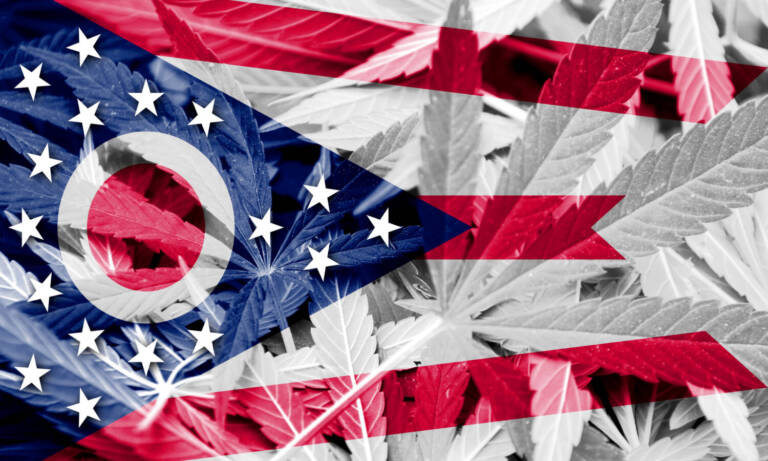
An analysis of state labor shows that, in this state, almost 1 out of 10 jobs was created by the medical marijuana industry.

Legal marijuana is good for business. According to an analysis of state labor from Missouri, nearly 1 in 10 new jobs was linked to the state’s recently functional medical marijuana industry.

The report shows some details of medical cannabis’s first year of operations, calculated between December 2020 and December 2021, showing that medical cannabis created 7,000 new jobs. A total of 77,600 jobs were created overall.

“Missouri’s medical cannabis industry is delivering on its promise of not only providing safe, affordable and convenient access for patients but also helping to infuse the state’s economy with sizable investment and millions in new tax revenue,” said Andrew Mullins, executive director of MoCannTrade.

cannabis industry jobs
Photo by Hoptocopter / Getty Images

RELATED: Terminally Ill Patients In Missouri Can Seek Psychedelic Treatments Under ‘Right To Try’ Law

According to Jay Patel, CEO of Green Releaf Dispensaries, “Medical cannabis is hands down the most impactful collective investment our state has seen in recent memory.”

Missouri’s medical marijuana program has been incredibly successful, attracting 170,000 registered patients and creating over $200 million in sales. To date, the state has approved 322 medical marijuana facilities, including dispensaries and cultivation facilities.

RELATED: Marijuana Lawsuits Cost Missouri $1.3 Million With No Medical Sales Yet

Medical marijuana was legalized in Missouri in 2018, with the state’s first legal sale in October 2020. Under this ruling, doctors are able to recommend cannabis treatment to patients who fit the state’s criteria. Conditions treated by the program include cancer, epilepsy, glaucoma, migraines, and more.

People who live in Missouri can apply for medical marijuana cards and home cultivation cards for a $25 and $100 fee, respectively.

Do Psychedelics Help To Treat Pain?

0

There is hope for those struggling from pain if researchers determine that psychedelics indeed can be used, since the studies we have today are still lacking.

This article originally appeared on Cannabis.net and has been reposted with permission.

The use of psychedelics for treating emotional, mental, and psychological disorders has been proven time and again.

It’s an area of interest specifically because psychedelics, such as the psilocybin in magic mushrooms, LSD, and ketamine, have been proven in the lab to help reduce and manage difficult to treat conditions such as addiction, PTSD, depression, anxiety, and more. Aside from that, they have a loyal following because of the anecdotal evidence.

Fibromyalgia And Cannabis What The Latest Research Says
Photo by Andrea Piacquadio from Pexels

Simply said, psychedelics works so well for psychological disorders. But what about for ailments of the body? What about pain?

The Problem of Pain

Different types of pain afflict some 50 million adults in the United States alone. It causes a strain on healthcare, costing some $635 million each year. Pain can be a notoriously difficult condition to treat, whether it’s acute or chronic, without the use of dangerous opioid medications, which can be fatal and addicting.

If not opioids, then there are over-the-counter painkillers, which may not work so well and result in a dependence or addiction, which can then harm the liver.

So can you use psychedelics to treat pain the way you would depression?

In 2020, a paper published by members of the UC San Diego PHRI: Timothy Furnish, who is an associate clinical professor of anesthesiology and pain medicine, UC San Diego pain physician Joel Castellanos, and associate professor of psychiatry Adam Halberstadt, as well as others, discussing the potential benefits of psychedelics for chronic pain.

Their preliminary findings reveal that psychedelics could be used either alone or as part of a multi-prong approach to treat chronic pain conditions including complex regional pain disorders, cluster headaches, and cluster headaches among others because pain has a cognitive aspect as much as it does a physical aspect. It represents a great alternative to opioids.

RELATED: Fibromyalgia Patients & CBD: What University Of Michigan Researchers Discovered

“Neuropathic pain conditions such as phantom limb pain are often difficult to treat,” explains Furnish. “The possibility that psychedelics could reorganize pain pathways in the brain holds out the promise of a much more long-lasting treatment than current medication can offer.”

There are already studies that prove the safety of psychedelics, primarily psilocybin, at least on healthy individuals. But can it be safe for treating pain in less healthy people?

An Area Of Interest

There are some research groups that have taken on the herculean task of determining if psychedelics can be used in pain treatment. It’s certainly an area of interest, and we’re all interested to learn more.

An article by Scientific American, which was published last year, discusses how medical professionals are engaging in the studies to learn more. “Pain is this four-letter word that can mean so many different things,” says Stanford University School of Medicine assistant professor of anesthesiology, perioperative and pain medicine, Vivianne Tawfik. “There’s a role for opioids,” she tells Scientific American. “There might end up being a prescribed role for psychedelics. The jury’s still out.”

Acute And Chronic Pain Affects Millions — How Can Cannabis Help?
Photo by Karolina Grabowska from Pexels

Tryp Therapeutics, a start-up pharmaceutical company in California, last year announced that they were working with researchers at the Chronic Pain & Fatigue Research Center in the University of Michigan Medical School to continue the Phase 2a study, the first of its kind to determine if psilocybin was helpful in treating fibromyalgia.

“We are thrilled to collaborate with such forward-looking clinicians and scientists to develop additional treatment options for fibromyalgia,” explained Tryp President and Chief Science Officer, Jim Gilligan, PhD. “The Chronic Pain & Fatigue Research Center at the University of Michigan brings incomparable experience with evaluating treatments for fibromyalgia and other chronic pain indications, and there is nothing more important to our collective team than creating therapies that will address the daily distress of these patients.”

RELATED: Fibromyalgia And Cannabis: What The Latest Research Says

For the study, Tryp developed a synthetic version of psilocybin called TRYP-8802, and they will be assessing its safety and efficacy. Psychotherapy will also be included as part of the research, a treatment that is intended to treat pain through the process of neuroplasticity, which changes and reorganizes the brain’s neural networks.

“Existing treatment options for fibromyalgia are often ineffective and show significant side effects,” explains Daniel Clauw MD, Director for the Chronic Pain & Fatigue Research Center.

Last year as well, Mind Medicine (MindMed) of New York launched a project to discover if psychedelics is effective in treating two pain conditions, under the name Project Angie.

“With the launch of Project Angie, we seek to align closely with MindMed’s core mission to improve mental health and combat substance abuse for the many patients in need. If we can help to develop a new paradigm to treat pain, it may have the potential to greatly reduce the use of addictive medicines such as opioids currently ravaging society and its mental health,” says JR Rahn, co-founder of MindMed and CEO.

Relieving Pain With CBD And Acupuncture
Photo by massagenerds via Pixabay

However, MindMed didn’t say which pain conditions they were looking to treat. They are working in cooperation with researchers in Switzerland who had a Phase 2 clinical trial back then for using LSD to treat cluster headaches. They added that they were working on a second treatment for a “common, often debilitating, chronic pain syndrome.”

RELATED: Study: Medical Marijuana Improves Quality Of Life In Fibromyalgia Patients

“Evidence dating back to the 1950s suggests that LSD and other psychedelics may have analgesic effects, but this treatment area remains largely untapped by companies studying psychedelics, with the majority of research focusing solely on psychiatric indications,” explains MindMed Chief Development Officer, Rob Barrow.

For as long as psychedelics are used correctly, they should have a good safety profile. They aren’t addictive unlike opioids. There is hope for those struggling from pain if researchers determine that psychedelics indeed can be used, since the studies we have today are still lacking, but we are optimistic that psychedelics can eventually be used for long-lasting and meaningful results.

This article originally appeared on Cannabis.net and has been reposted with permission.

House Approves Marijuana Banking Bill, Attaches It To America COMPETES Act

The amendment from sponsor Rep. Ed Perlmutter (D-CO) was preliminarily approved on Wednesday on a voice vote

By Maureen Meehan

The U.S. House of Representatives formally attached a marijuana banking reform amendment to a large-scale bill dealing with innovation and manufacturing, marking the most recent development in the push to protect financial institutions that work with state-legal cannabis businesses.

Marijuana Moment first reported that the amendment from sponsor Rep. Ed Perlmutter (D-CO) was preliminarily approved on Wednesday on a voice vote as part of an ‘en bloc group’ with other amendments, but a roll call was requested. The chamber then took that package back up on Thursday and passed it in a 262-168 vote.

cannabis money banking
Photo by mekcar/Getty Images

“There was no floor debate about the cannabis provision itself, demonstrating how relatively noncontroversial the bipartisan-supported reform is in the House,” noted Marijuana Moment‘s Kyle Jaeger. “The Senate, as observers of the issue know, is a different story.” Yes, we do.

What’s Next?

Advocates will need to wait and see whether the America COMPETES Act, with the now-attached Secure and Fair Enforcement (SAFE) Banking Act, will actually pass in the House on Friday when a final vote is expected.

Marijuana legalization proponents have been pushing for the SAFE Banking Act to be passed into law for several years.

RELATED: SAFE Act Just Got Re-Added To Defense Bill As Amendment, But Could It Pass On Its Own?

Though legislative hurdles have arisen in the past, it appears as though there may be momentum for meaningful change. The hope is that bicameral negotiations do not remove the desired language from the currently proposed legislation, ultimately setting the stage for its enactment.

This article originally appeared on Benzinga and has been reposted with permission.

Is COVID-19 Pneumonia An Allergic Reaction

0

A variety of social media posts have been claiming that pneumonia is just an “allergic reaction” to COVID-19. Experts don’t agree.

With new diseases, there are misunderstandings. In the case of a pandemic, these are augmented by a collective panic and people’s easy access to social media, amplifying everyone’s opinions.

Most recently, users took to social media to discuss COVID-19 and pneumonia, with some claiming that it’s an allergic reaction to the infection. Suffice to say, experts don’t agree with this.

These types of posts that have been making the rounds claiming that a variety of COVID-19 symptoms are actually allergic reactions. One of the most concerning ones, which has been shared on Facebook hundreds of times through the past week, explains that this type of pneumonia is a “mast cell degranulation” of the lungs.

How To Stop Coughing So Hard From Marijuana Smoke
Photo by cottonbro via Pexels

RELATED: People Who Drink This May Have A Lower Risk Of COVID-19 Infection

“Put simply, it’s an allergic reaction occurring after the viral phase ends, most likely to something in the viral particles left over after the body deals with the virus,” reads the post. “Add antihistamines to your C protocol!”

This is wrong according to a variety of fact-checking companies. USA Today spoke to experts who explained how pneumonia works in the case of COVID-19, and why it’s related to lung inflammation. “Allergies and infectious diseases could present with some similar features but are different clinically,” explained Dr. Kyle Enfield.

Pneumonia is a lung infection that occurs due to COVID-19 complications and lung inflammation. According to data, about 15% of people with COVID-19 get pneumonia, with 5% of them needing to go on a ventilator.

lungs
Photo by Anna Shvets from Pexels

RELATED: Study: Thousands Of Lives Could Be Saved If We Did This Every Day

Allergic reactions are prompted by completely different things, occurring when the body creates antibodies as a reaction to foreign substances, like pollen. Symptoms can be similar to pneumonia shortness of breath, asthma, etc but prompted by different things.

Researchers also make it clear that taking antihistamines shows no evidence of improving a COVID-19 infection, particularly if the person starts experiencing pneumonia as well.

Pepsi Launches Hemp Energy Drink

“With Rockstar Unplugged, we continue the brand’s heritage in driving culture while delivering innovation to the category,” said PepsiCo’s General Manager.

Beverages giant PepsiCo is launching Rockstar Unplugged, a new kind of energy drink infused with hempseed extract.

Rockstar Unplugged, designed to offer less energy boost but more “good vibes,” contains hemp seed oil and B vitamins. The drink also contains 80mg of caffeine providing that burst of energy. The new sugar-free, calorie-free beverage is available in three sugar-free flavors — blueberry, passionfruit and raspberry cucumber.


Rockstar Unplugged also features a new campaign — Turn Up Your Mood —  with colorful groove-shaped illustrations symbolizing aura, music and energy. These shapes swirl and expand from the iconic Rockstar star on the 12oz slim cans.

“With Rockstar Unplugged, we continue the brand’s heritage in driving culture while delivering innovation to the category,” said Fabiola Torres, PepsiCo general manager and CMO of the Energy Category. “Ninety-one percent of our consumers told us they wanted a beverage that lifts their mood. Rockstar Unplugged delivers the ingredients consumers have been asking for, creating an opportunity for us to transform the category and introduce new consumers to our energy portfolio.”

RELATED: Wine Or Weed? Experts Discuss The Future Of Cannabis-Infused Beverages

Rockstar Energy’s new partnership with MTV will spotlight the Rockstar Unplugged product and launch a first-of-its-kind, three-part music series with the groundbreaking music franchise, MTV Unplugged, which shares its name. Kicking off the music series in Los Angeles, Rockstar and MTV Unplugged will then hit the road, with two additional concerts in 2022.

RELATED: Drinking This Popular Beverage Increases Your Odds Of Dementia

“MTV’s legacy is grounded in speaking to young people with content and experiences that matter to them,” Jason White, CMO, MTV Entertainment Group said. “This partnership with Rockstar Unplugged enables us to extend the iconic MTV Unplugged franchise to a new generation of music fans as a reimagined concert series that can drive entertainment forward.”

Rockstar Unplugged is available nationwide, starting at $1.99 per can.


Doing This Regularly Can Boost Your Memory, Finds New Study

0

A new study shows that a healthy sleeping schedule can help to boost your memory.

Memory is key to living. It helps us carry out complex and simple tasks, from our job to preparing our morning cup of coffee. It’s also something that deteriorates with age, with many trying their best to preserve it once they enter their senior years.

Now, a new study provides a simple solution to memory problems, one that likely won’t completely prevent dementia, but that can still result in a healthier brain and recall. Published in the journal Nature, the study shows that uninterrupted sleep can help boost our memories.

RELATED: The Most Effective Way Of Keeping Your Memory Sharp, According To Science

sleep
Photo by Andrea Piacquadio from Pexels

Researchers of the study gathered 24 subjects between the ages of 18 and 31 and had them complete a variety of tasks. For starters, subjects had to memorize 80 faces and names: 40 from a Latin American history class and 40 from a Japanese class. Subjects were then asked to take a nap while their brain waves were measured by EEG scans. Once subjects entered their slow-wave of sleep stage (also known as deep sleep), a subset of spoken names with associated background music was played.

According to the study, “This manipulation preferentially improved name recall and face recognition for those reactivated face-name pairs.” Researchers concluded that “memory benefits were positively correlated with the duration of stage N3 sleep (slow-wave sleep) and negatively correlated with measures of sleep disruption.”

This finding is one that reinforces evidence available from previous studies. According to experts, deep sleep is the stage where memories are consolidated, which is why a variety of studies have found links between the two. For example, an older study found that students who study before going to bed have sharper memories and recollections for tests.

RELATED: This Sleep Disorder Has Been Associated With Depression

sleep
Photo by Weiquan Lin/Getty Images

Deep sleep is achieved once people have adequate sleep time, clocking in their 7, 8 or 9 hours a night. The American Sleep Association recommends getting your deep sleep by creating and sticking to a healthy routine, one where you work out often and eat healthy meals. Adhering to the same bedtime can also help you get to sleep quicker and easier every night.

Is It Time To Stop Using The Word Marijuana?

0

Perhaps now as the country continues to legalize the substance, it’s time to say goodbye to marijuana and just stick to cannabis, the way we did before this whole marijuana madness began.

In recent years, society has shown interest in correcting centuries of historically hurtful symbolism and terminology. As people begin to dig deeper into this country’s often-problematic past, more and more words and phrases have revealed their racist origins.

There are a wide array of still-commonly used phrases that some suggest should be examined further. Common terms like “Black Market,” used widely in conversation about cannabis culture and all business, according to Reader’s Digest, is just one example of a phrase with racist roots. Even the term marijuana, a term so common and accepted that it has even found itself in modern legislation, is a word that many say should be canceled for good.

The word marijuana is the widely used term to describe cannabis that contains THC. However, it was not the first term Americans used to describe the psychedelic, and its origins are not at all scientific. 

marijuana education
Photo by eyegelb/Getty Images

RELATED: Cannabis, Marijuana And Hemp — What Is The Difference, Exactly?

The creation of the word marijuana is rather dark, and altogether troublesome. “In fact, the term entered the national consciousness in 1937 when it was used by the federal government as part of an effort to discriminate against Latinos,” said Ángel Cruz, NHCSL President and Pennsylvania State Representative.

Before this fictitious and racially motivated campaign, cannabis was the most commonly used term to describe the then legal flowering plant. “The use of the term increased dramatically in the 1930s, when it was systematically employed by Harry Anslinger, the director of the Federal Bureau of Narcotics, who waged a three-decade long campaign against cannabis,” according to the Ottawa Citizen

The term marijuana was popularized when politicians like Aslinger used the word to scare the American people into thinking cannabis was a dangerous substance used by violent minorities, hence the exotic sounding name.

“Fear of brown people combined with fear of nightmare drugs used by brown people to produce a wave of public action against the ‘marijuana menace,’” according to NPR. This elaborate fabrication clearly played to anti-immigrant and minority sentiment. These methods proved successful.

“That combo led to restrictions in state after state, ultimately resulting in federal prohibition,” the article continued.

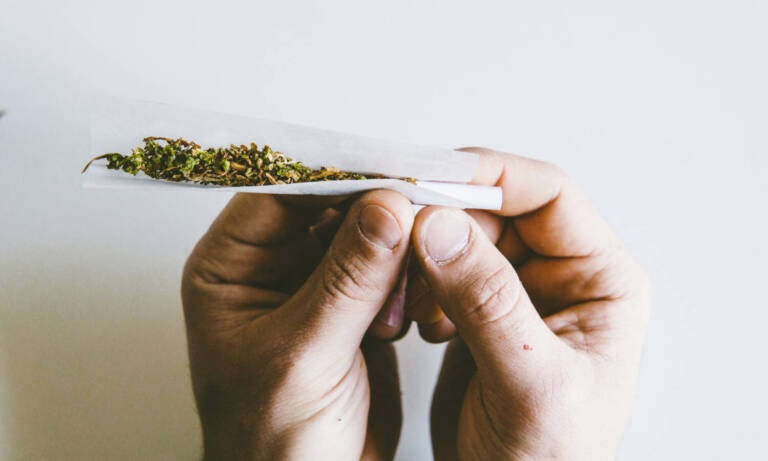
marijuana joint
Photo by Wavebreakmedia/Getty Images

This campaign may have occurred nearly 100 years ago, but it can be argued that its effects are still felt today. It is widely known that arrests associated with marijuana are racially disproportionate. “Despite roughly equal usage rates, Blacks are 3.73 times more likely than whites to be arrested for marijuana,” according to the ACLU. 

RELATED: High Vs. Stoned: Is There A Difference?

Fear tactics and racism birthed the word marijuana, and also helped lead to it becoming illegal on a federal level, but the tide continues to shift. “Today ‘cannabis’ and ‘marijuana’ are terms used more or less interchangeably in the industry, but a vocal contingent prefers the less historically fraught ‘cannabis,’” wrote The Guardian.

Perhaps now as the country continues to legalize the substance, and society continues to want to improve upon its racist and problematic mistakes, it is time to say goodbye to marijuana and just stick to cannabis, the way we did before this whole marijuana madness began.

Will Mississippi’s Governor Sign Medical Marijuana Bill? Does It Even Matter?

Reeves told reporters at the Capitol that as the deadline approaches, his attorneys are still reviewing the bill.

By Maureen Meehan

Mississippi Gov. Tate Reeves said Tuesday he’s yet to decide whether he will sign a bill to legalize medical marijuana for people with debilitating medical conditions such as cancer, AIDS and sickle cell disease.

Regardless of the governor’s decision, the bill is expected to become law because the GOP-led House and Senate passed it last week by veto-proof majorities.

Mississippi
Photo by Pieter van de Sande via Unsplash

RELATED: Mississippi Lawmakers Advance Medical Cannabis Bill To Governor’s Desk

Nearly 75% of Mississippi voters approved a medical marijuana initiative in November 2020. Yet after the overwhelming vote, the state Supreme Court proceeded to invalidate the initiative six months later by ruling the process was outdated and the measure was not properly placed on the ballot.

Anger and confusion ensued. NORML’s state policies manager Carly Wolf called the ruling “overtly undemocratic tactics,” which should make Americans furious.

Now, eight months later, Reeves said he likes that the bill requires parental consent and a doctor’s permission for patients younger than 18 to obtain marijuana — a requirement that essentially exists in every legal medical marijuana state.

To Sign Or Not To Sign, That Is The Question

The deadline is upon the governor to act on the bill: sign, veto or let it become law.

Reeves told reporters at the Capitol that as the deadline approaches, his attorneys are still reviewing the bill, and he was pleased legislators made some of the changes he suggested, including reducing the amount of marijuana available to patients each month.

RELATED: More Red States Are Going Wild For Weed

“The process doesn’t always work, but the process has worked in this particular instance,” Reeves said.

This article originally appeared on Benzinga and has been reposted with permission.

Despite Health Risks, The Use Of This Sleeping Aid Has Increased Over The Years

0

Even though melatonin is an over-the-counter medicine, not enough is known about it for people to be consuming it so comfortably.

Sleep disorders are incredibly common, affecting about 70 million Americans a year. Medications and other substances that treat sleep are increasingly common, although with some concerning side effects that might impact sleep in the long term.

One of the most harmless solutions to this is melatonin, a compound that’s been growing in popularity over the years. Still, when used at high levels, it has a certain amount of risks.

According to a new study, melatonin use has increased over the past few years, increasing by more than twice the amount consumed a decade ago.

This Sleep Disorder Has Been Associated With Depression
Photo by Sharon McCutcheon via Unsplash

RELATED: Is CBN Going To Give Melatonin A Run For Its Money?

The study, published in JAMA Network, argues that even though melatonin is an over-the-counter medicine, not enough is known about it for people to be consuming it so comfortably. Despite the fact that people view it as a natural herb, the reality is that melatonin is a hormone. The consumption of it is so widespread that companies advertising it as a sleep aid vary wildly in the amount of melatonin per gram, at times providing more than the standard 5mg a day dosage that’s recommended for providing quick relief in sleep problems.

According to the NIH, melatonin has been linked with headaches, dizziness, nausea, irritability, anxiety and depression, and is capable of interacting with other medications. “We cannot be certain of the purity of melatonin that is available over the counter,” sleep specialist Rebecca Robbins told CNN.

While it appears that in the short term melatonin provides useful benefits, its long-term use is much more complex than a harmless pill that can put you to bed.

RELATED: Why The Latest Study Saying Cannabis Is Bad For Sleep Is Deeply Flawed

Melatonin is helpful depending on the person taking it. While it may work for some, it might not for others, and should always be monitored, from the amount of it you consume to frequency, to the brand you’re using. In regards to pregnant women and children, it’s important to visit a doctor first, who can provide you with a more informed opinion than what you can find online.

Did Biden Forget His Promise To Decriminalize Weed? Here’s Why Advocates Are Concerned

The fact that Biden’s Commerce Sec. is not focused on marijuana legalization has provoked cannabis advocates to question the President’s willingness to keep his promise.

By Nina Zdinjak

President Joe Biden’s Commerce Secretary Gina Raimondo revealed in a recent interview with Politico that she has no updates on cannabis decriminalization that was promised during the presidential campaign, reported Marijuana Moment.

When a reporter asked if cannabis should be descheduled, pointing out that some businesses don’t want to see this as it would likely increase competition creating across state markets, Raimondo replied that the matter is “so far afield from anything that I’m working on.” As Raimondo’s focus continues to be trade and supply chain management, marijuana is apparently not yet on her agenda.

joe biden kamala harris
Photo by Chip Somodevilla/Getty Images

Just recently, a new poll conducted by YouGov and The Economist, revealed that more than half of the U.S. adult population concurs that President Biden has made little to no progress on his crucial campaign promise to decriminalize cannabis during his first year in office.

The survey revealed that the majority of U.S. residents also don’t hold out much hope that the president will make progress on this important reform in 2022, which is in line with Raimondo’s response.

RELATED: Most Americans Don’t Believe Biden Will Keep His Cannabis Decriminalization Promise

Interestingly, Raimondo, who was a governor of Rhode Island before joining the Biden administration, skillfully dealt with marijuana policies, backing a plan in her budget proposal to legalize recreational cannabis via a state-run model. Her successor, Gov. Dan McKee just recently proposed a measure in his budget that would support a more conventional recreational cannabis market.

The fact that Raimondo is not focused on marijuana legalization has provoked cannabis advocates to question the President’s willingness to keep his promise on cannabis decriminalization.

This article originally appeared on Benzinga and has been reposted with permission.

Don't Miss Your Weekly Dose of The Fresh Toast.

Stay informed with exclusive news briefs delivered directly to your inbox every Friday.

We respect your privacy. Unsubscribe anytime.