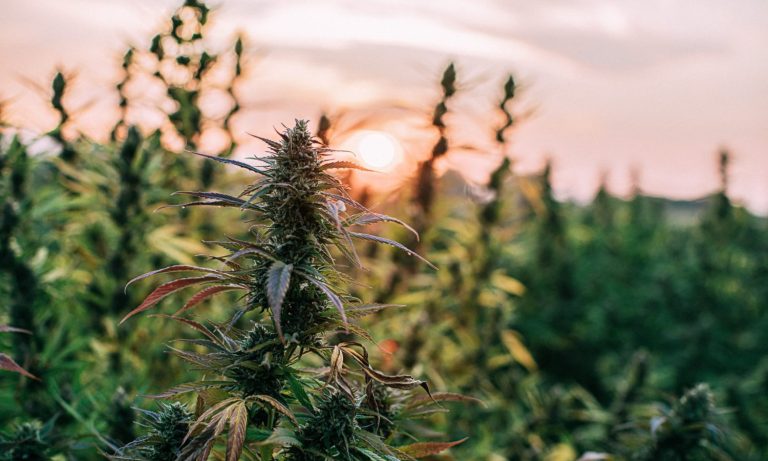
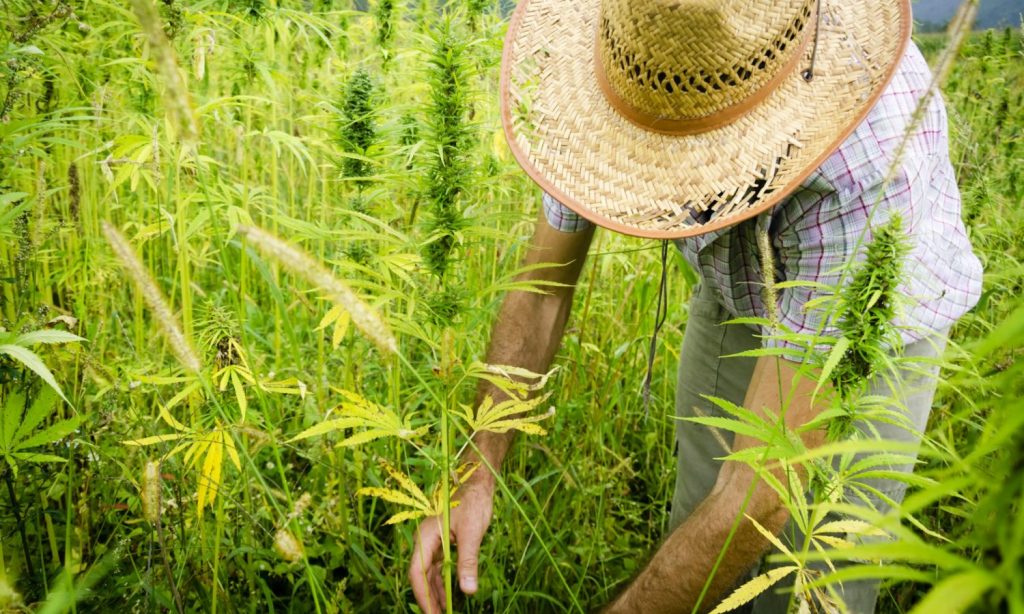
Thousands of immigrants working on southern Oregon’s illegal marijuana farms are living in squalid conditions, reported Oregon Public Broadcasting (OPB), prompting Jackson County and Douglas County to declare a state of emergency. County officials requested state funding and other resources, including deployment of the National Guard, to enforce cannabis laws.
Oregon State Rep. Lily Morgan noted that some of the workers have no identification papers, do not speak English and have no food.
Photo by AlenaPaulus/Getty Images
Jackson County Sheriff Nathan Sickler saidworkers are forced to use holes in the ground for toilets, cook in unsanitary kitchens and sleep in shipping containers.
Oregon’s labor bureau is investigating wage complaints from workers at the illegal cannabis farms and advocacy groups are getting involved.
“We’ve had several cases in Josephine County, where they were threatened with guns to their heads and told ‘If you guys tell anybody, we’re going to harm your family in Mexico,'” said Kathy Keesee-Morales, co-director of Unete, an immigrant and farmworker advocacy group based in Medford, Oregon.
In September, $50 million in illegal marijuana was found at a grow operation in Douglas County.
Douglas County Board of Commissioner, Tim Freeman said the county receives a staggering number of calls about illegal marijuana grow operations. “People call and they’re scared (…) in many cases they’re afraid to leave their homes,” Freeman said. He added that in the past year, more than 300,000 illegally grown marijuana plants have been confiscated in Douglas County.
Widespread Problem
In Nevada County, California, authorities launched a pilot program to use drones as a cost-effective measure to enforce cannabis laws. Unlike other tools such as helicopters and fixed-wing aircraft, drones are cost-effective and save time. However, in Oregon, there are not enough inspectors nor funding to control the situation.
“This summer was absolutely out of control,” said Josephine County Sheriff Dave Daniel. “We’re anticipating next year being just as bad, if not worse.”
Since the challenges cannabis retailers are facing don’t appear to be going away anytime soon, the best case scenario is for them to be able to successfully adjust to a new normal.
Just as the cannabis industry was beginning to catch its stride, the world was swept into a panic caused by COVID-19. The ways in which the pandemic has affected the supply chain across industries has made life difficult for consumers of products across the board — and the cannabis industry has been no exception.
Here are just a few ways the industry has struggled through recent supply chain challenges.
Cannabis Companies are Having A Harder Time Finding Basic Supplies
The process of providing consumers with cannabis products becomes that much harder when they can’t find the supplies necessary to manufacture and package them in a timely fashion. The products that are becoming harder for cannabis manufacturers to find include things consumers may never give a second thought to like the hardware that goes into vaporized cannabis products.
Photo by Michele Ursi/Getty Images
Making matters more complicated is the fact that most cannabis retailers rely on Chinese factories to produce those products since not many domestic factories are equipped to produce those types of products. Even though most Chinese factories are back to work, many have enacted social distancing policies that have made it difficult for them to produce the supplies at a rate efficient enough to keep up with demand.
Prices of Growing Supplies Are Unpredictable
Cannabis retailers can’t sell products that they can’t cultivate. One of the biggest obstacles currently facing cannabis retailers is the fact that supplies that make it possible to grow are becoming increasingly more costly. According to recent reports, volatility within the industry has led to many cultivators buying products like fertilizer, grow lights and other materials in bulk for numerous reasons.
The first reason is because there is a current 2-to-3 month delay in receiving products. Next is the fact that they’re hoping to avoid experiencing price hikes, which experts say are nearly inevitable. Even though the volatile market within the cannabis supply industry started at the onset of the pandemic in early 2020, it’s showing no signs of ending any time soon.
Photo by colnihko/Getty Images
Lack of New Talent Within the Cannabis Industry Capable of Solving Supply Chain Related Problems
The challenges that the cannabis industry is currently facing are compounded by the complex regulatory nature of the industry itself. Making matters worse is that the industry is relatively new, so there are few people who have both the experience with navigating its highly regulated nature and experience with supply chain management. That presents the challenge of hiring new employees from different industries to manage supply chain issues which could lead to costly mistakes being made.
This is often the case because many newcomers into the cannabis industry don’t possess an accurate understanding of exactly how regulated cannabis markets operate. That costs cannabis retailers because not only are they still faced with the same supply chain issues they originally faced, but now they have to go correct their mistakes too which costs time and money.
For the most part, the challenges presented by the supply chain have yet to impact most recreational cannabis customers. Since the challenges cannabis retailers and product manufacturers are facing don’t appear to be going away anytime soon, the best case scenario is for them to be able to successfully adjust to a new normal. If they can’t sustain their business models as-is, there’s no telling what that means for consumers in the long-term.
Given that people of color are more likely to have been targets of marijuana criminalization in the past, restrictions on participation in the industry are viewed as discriminatory.
Michigan Gov. Gretchen Whitmer (D) signed a bill into law that would expand the pool of individuals who are eligible to receive medical marijuana business licenses, lifting the ban that had disqualified individuals with a cannabis-related felony or misdemeanor convictions on their records.
However, the measure, House Bill 4295, does contain an exception for those convicted of distributing marijuana to a minor, according to the bill available on Gov. Whitmer’s webpage. The new law takes immediate effect.
Photo by Priscilla Du Preez via Unsplash
The legislation is meant to resolve a problem that legalization and social equity advocates, not only in Michigan but around the country, have constantly highlighted.
Where Are The People Of Color?
While state and city leaders, as well as cannabis advocates nationwide, have embraced social equity programs with the goal of righting the wrongs of the Drug War, their efforts have not yet succeeded in getting people of color into the legal cannabis industry.
Why?
Given that people of color are more likely to have been targets of marijuana criminalization in the past, restrictions on participation in the industry are viewed as discriminatory. Despite roughly equal usage rates, Blacks are 3.73 times more likely than whites to be arrested for marijuana.
A recent ACLU report confirms marijuana arrests now account for over half of all drug arrests in the U.S., and out of the 8.2 million weed arrests between 2001 and 2010, 88% were for simple possession.
Similar regulations, allowing those with felony criminal records or multiple misdemeanors to be considered for cannabis business licenses, took effect in Washington state this past September.
Other measures in Vermont, Illinois and Colorado were recently enacted in efforts to reduce barriers of entry for those seeking to participate in the legal marijuana industry.
Portfolio diversity is always ideal, but what if you had to go all in on just one with exactly $1000 to invest?
While some advise to play it safe, others opt for the more risky but potentially rewarding investment strategies, focusing on nascent spaces like crypto, psychedelics and cannabis. Of these three, which is the most appealing to today’s marketplace?
Photo by Mathieu Stern via Unsplash
With Each Market Showing Potential, Crypto and Cannabis Get The Edge
Each sector received its support among the unscientific polling this writer conducted. An October LinkedIn poll saw 40% selecting cannabis. Crypto received 38% of the votes, with psychedelics receiving 22%.
This article should note that the pool of LinkedIn respondents largely came from the cannabis industry.
Going off traffic from Benzinga, much of the readership is eager to learn more about crypto. Significant interest is centralized on all things Elon Musk, Dogecoin and Shiba Inus. As of early November, other topics of interest include emerging assets like Floki Inu (CRYPTO: FLOKI) and prominent names like Ethereum.
On November 2, 2021, just two of the site’s top 20 read articles were not about crypto. The first cannabis article to make the list came in at 27. Psychedelics didn’t crack the top 50 that day.
Support for Choosing Crypto
Dr. Jeremy Britton, CFO of BostonCoin, believes that cannabis and psychedelics are “fascinating solutions for many real-world problems” but noted their similarities to pharma stocks.
Britton, a financial analyst for 29 years, gave the edge to his sector due to its lack of red tape, saying regulations can delay rollouts and ROIs for years.
“It is often the red tape and regulations which slow some of these projects down for many months, if not many years,” Britton said. “As much as crypto can be dangerous due to its lack of regulation, the lack of red tape also gives it speed.”
Photo by RODNAE Productions from Pexels
Jonathan Seif, managing partner at the disruptive tech-focused advisory firm The ProFolio Group, also noted crypto’s rapidly evolving market. “With large financial institutions purchasing billions of dollars in crypto, the industry is not slowing down.”
Though voicing concerns about the other markets, Seif believes cannabis still has a “considerable runway to clear before taking off in a sustainable way.” Psychedelics, while exciting, are a decade behind cannabis, he added.
In conversations for previous articles, sources have hypothesized alternative outcomes where psychedelics could catch up to, or even outpace, cannabis regulations.
Waneta Jaikarran, director of brokerage ops for E1 Asset Management, favors crypto, citing ongoing political decisions.
“Given that the government will keep increasing the debt ceiling and making things unattractive, crypto was created to counteract that,” Jaikarran said.
If possible, she’d recommend diversifying the funds. “My current outlook on crypto is using it as a hedge.”
Support for Choosing Cannabis
Brett Sifling, director of financial planning program Get Invested at Gerber Kawasaki Wealth and Investment Management, highlighted the potential of cannabis – a market his firm heavily focuses on.
Sifling believes that crypto could face large drawdowns while public psychedelic companies are in their earliest stages.
Photo by Darren415/Getty Images
Sifling leans toward ETFs such as AdvisorShares Pure US Cannabis ETF. “Instead of making a bet on just one cannabis company, you’d have exposure to nearly 30 different cannabis companies spanning multiple industries.”
Rick Batenburg III, chief investment officer at Cliintel Capital Management Group said each market has its own models and needs to assess, calling cannabis “the easiest and smartest choice” to invest in.
Citing looming federal reform and adult use status in many states as reasons he’s invested, Batenburg says he does not see psychedelics following the adult-use route. He referred to crypto as “purely forex trading” not backed by “real diligence.”
Industry outsiders like Kristen Bolig, founder of home and online security company SecurityNerd, opted for cannabis, citing digital concerns.
“With the digital threat landscape for hackers becoming much larger over the past 18 months, investing in anything that is so heavily intertwined with the world wide web comes with a lot of risks,” he cautioned.
Invest in What You Know
Overall, each sector offers potential if a person understands the space.
Shuan Heng, VP of operations for the crypto-asset tracking site CoinMarketCap, advocates for people investing in their expertise.
Heng likes the freedom crypto creates for people. He also made a case for plant medicines and similar substances, saying, “Many others could be motivated by investing in the mental health potential of psychedelics or the medical applications of cannabis.”
While there’s always a degree of risk, here are some things you should keep in mind if planning to meet up with unvaccinated guests over the holidays.
Vaccination status is not a fun topic of conversation, especially not over the holidays. Still, it’s the one thing that’s on everyone’s minds and it’s of paramount importance when it comes to the safety of your family. Here are some tips on how to safely host Thanksgiving with unvaccinated guests.
Now that family gatherings are around the corner, here are your options for this turkey day:
Talk it out with potential guests
Photo by Aarón Blanco Tejedor via Unsplash
If you have family you love and they’re unvaccinated, try talking to them about options for your gathering while steering clear of the political. It’s not easy, but stick to your safety measures and brainstorm ideas that could result in a gathering that while different might still be nice.
Use rapid tests
Photo by Mufid Majnun via Unsplash
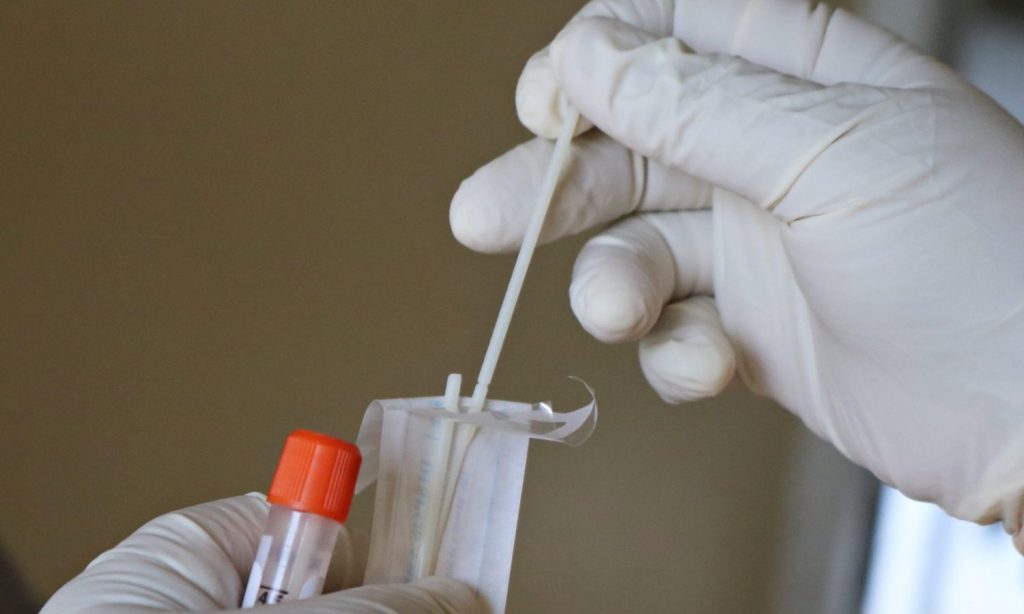
COVID-19 rapid tests might be a nice way to gather everyone together and make sure that people are, for the most part, safe. These tests are particularly helpful when mixing groups of different households, different communities and different states. These tests can be purchased in bulk and can be administered to people right before the party, which might be a little clunky, but it might give you some peace of mind. Still, remember that a COVID-19 rapid rest is no guarantee that there’s no infection.
Use what you’ve learned over the past year to your advantage
Photo by Gustavo Fring via Pexels
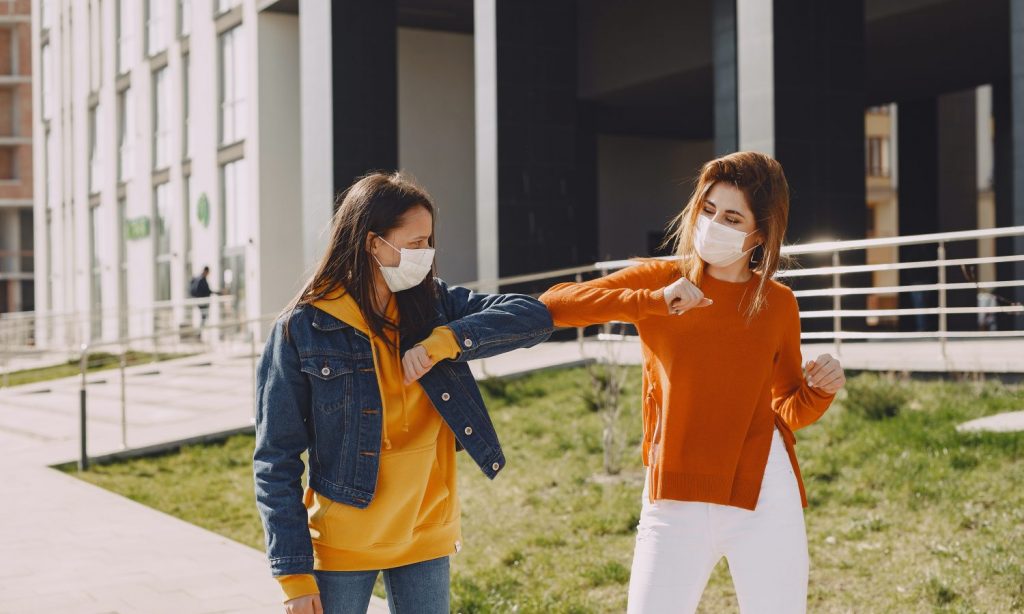
Whether we meant to do it or not, we’ve learned a whole lot about social distancing practices over the past two years. There are ways of staying safe, or, at least managing risks. Some rules you could impose would be to wear face masks if indoors, to take the party outside and install an outdoors heater to manage the weather, and to space out where people are eating in order to minimize contact.
As always, keep in mind your community’s level of transmission. If your guests live in an area with a lot of COVID-19 infections and are unvaccinated, meeting up with them is a sizable risk.
Be aware of the risk factor
Photo by Ekaterina Shakharova via Unsplash
Lastly, it’s important to be aware of the fact that there are risks in meeting up with people who are not vaccinated. When choosing to spend the holidays together, be aware of your age, your immune system’s strength, whether or not you have commodities and the lifestyle of your guests.
How the tips on how to safely host Thanksgiving with unvaccinated guests is helpful. While you don’t want to step on anyone’s toes, don’t feel pressured to hang out with people who are not vaccinated. While you can try to reason with them and explain why they should do it, sometimes it’s out of your hands. It may be too late for people to get their shots before the holiday, but it’s right on time for Christmas! So if your loved ones haven’t gotten their shots because they’re a little lazy, it’s okay. There’s some time for convincing them.
This Sunday, Nov. 7, marks the 50th running of the New York City Marathon, the largest in the world. Some 33,000 runners from around the nation and around the globe will step off in waves from various spots around the city at 8:00 am EST. Though the number of participants this year was limited to nearly half due to COVID-19 restrictions, the race is especially meaningful after the 2020 cancellation when New York City was under lockdown and, at one tragic point, there were nearly 800 COVID-related deaths per day.
Kerin Hempel, chief executive of the New York Road Runners, the organization that operates the marathon, said this marathon brings back a sense of normalcy to the city, which is ready to welcome tourists, and their dollars, back to the Big Apple.
Photo by Ferdinand Stöhr via Unsplash
As the national economy begins to recover from the pandemic, New York City is among the slowest to come back, having suffered deeper job losses than any other big city in the country. A report from the Center for New York City Affairs noted that while the city received $272 billion in Federal COVID-19 relief, most benefits have run out and New York still has a deficit of more than 500,000 jobs.
Though there is one industry that’s doing well…actually, extremely well.
Cannabis: The Race Is On
The 10 largest cannabis companies in New York state — all but two of which are publicly traded — function as part of the state’s medical-marijuana program. This gives them a significant head start on what is shaping up to be a multi-billion dollar industry for the Empire State after adult-use cannabis was signed into law last March.
Weed And Running: What’s The Connection?
When Sha’Carri Richardson was denied a spot at the Tokyo Olympics last summer after testing positive for cannabis, a debate was ignited among athletes, experts, advocates and lawmakers about whether weed was a performance enhancement. The consensus was no, it is not.
Dr. Peter Grinspoon, Harvard Medical School instructor and cannabis expert, confirmed to Benzinga at the time that there are no studies that show marijuana as a performance enhancer, which is why more and more professional sports teams are no longer testing for it.
Photo by RUN 4 FFWPU/Pexels
So, what does weed do for athletes?
Quite a lot according to Josiah Hesse, author of the “Runner’s High,” in which he explores what he calls the “hidden culture” of cannabis use among recreational and elite athletes who consume it for their workouts, to reduce the pain of sore muscles and to improve their sleep. Though, the most common response from athletes was that it helped calm their nerves and alleviate anxiety.
Rosie Mattio, a dedicated bodybuilder who is running in Sunday’s marathon, concurred. “Cannabis was an integral part in me placing 1st in my first bodybuilding competition,” said Mattio, CEO and founder of MATTIO Communications, one of the first and longest-running cannabis PR firms in the space.
“The stress and inflammation associated with a grueling competition prep would have been unmanageable without using cannabis for my rest and recovery. I often took an Incredibles Snoozeberry gummy to help me sleep at night,” Mattio told Benzinga, adding that sleep is crucial for muscle building and recovery.
An award-winning bodybuilder and the mother of four daughters, Mattio said she was forced to cut calories to stay lean for competitions, “so going out for high-calorie cocktails just was not an option for me.”
So she traded cocktails for cannabis and is now bulking up to run in her first marathon. “I’m packing some carbs, too. PB & J before I start. I can’t run hungry!” Mattio laughed.
To watch the New York Marathon, whose rally cry is “A half-century of history is just the start,” check out the NY Road Runners website.
Marijuana YouTube channels aren’t as popular as you’d think. Still, there are a few YouTubers who provide consistent, entertaining and informative content.
Marijuana is a growing industry and, as such, there’s a lot of content available on the internet. Weed enthusiasts have come up with websites, Instagram pages, and Twitter accounts, all looking to find new and creative ways of engaging with marijuana. YouTube is a different matter entirely.
As a platform for monetization, YouTube is a challenging space for many different creators. In order to develop a following and make a profit, YouTubers need to find ways to avoid triggering the site’s filters which are meant to keep harmful content off the web.
YouTube has been called out for blocking the content of LGBTQ creators and other subjects that might be deemed inappropriate. When talking about weed, the channels that are out there are facing a complex battle against censors and viewers who consider their content inappropriate.
Still, there are some marijuana YouTubers out there who have managed to make reliable and steady weed content, catering to people who have medical questions, want to learn how to plant and grow marijuana, or simply want to look at someone discuss their opinions on different strains of weed.
Here are 5 marijuana YouTube channels you should keep an eye on:
Strain Central is a YouTube channel developed with the purpose of educating people about cannabis and breaking outdated stereotypes. Josh, the host, differentiates himself from the rest by discussing his personal experiences with drugs and educating others on how to take tolerance breaks.
Erick Khan
Erick Khan is one of the most informal YouTubers out there, and also one of the most consistent in terms of providing content. Khan has over 48 million views and posts a variety of videos that range from explaining the sudden vape illness that appeared last year, to his personal smoke sessions, which people for some reason enjoy viewing.
Mr. Canucks Grow
Mr. Canucks Grow is a channel based in Canada, providing educating and entertaining content on how to save money while you grow weed, growing it in awkward and dark spaces, open fields, and more. If you’re a visual learner and want to get your hands on growing your first marijuana plant, look no further.
Vice has a lot of weed content and their YouTube channels, including Vice News and Vice, have some interesting documentaries and specials you should keep an eye on. From short clips talking about the perks of microdosing weed, to deep cuts like a documentary on the “King of Cannabis,” Vice is your place to go to if you’ve been around the block and want to learn something beyond tips on how to smoke weed and roll joints. You already know that.
Searching the term ‘Cannabis’ on YouTube
This might seem like a bit of a cop-out, but it’s the most effective way of finding what you want on weed. YouTube is a vast place, like its own little internet, containing a variety of good and bad content. Aside from this, cannabis is a tough thing on sell on the website, with videos getting flagged and content makers moving on to other platforms that allow for more freedom.
When searching for “cannabis” on YouTube, you’ll find a variety of important information that can help you learn about this topic, something that’s incredibly important for a nascent industry that’s filled with misinformation.
While the results do not unambiguously favor decriminalization nor legalization, increases in arrest rate disparities in states without either policy highlight the need for targeted interventions to address racial injustice.
Can marijuana legalization help reduce crime? It seems so. A new study published by the American Medical Association revealed that states with legalized or decriminalized cannabis have seen “large reductions in race-based arrests among adults,” reported Marijuana Moment.
And, let’s face it, every race-based arrest is a crime.
Photo by sakhorn38/Getty Images
Researchers from Eastern Virginia Medical School and Saint Louis University analyzed data from 43 states and recognized a specific pattern indicating that removing or loosening laws around marijuana is connected to notable decreases in arrest rates compared to states that have kept cannabis illegal.
The study, which mainly concentrated on race-related patterns, examined data gathered from 2008 to 2019. The results revealed that states which have legally embraced marijuana had 561 fewer arrests per 100,000 black people and 195 fewer arrests for white people on average.
Decriminalization, although yielding slightly “lower results,” also had 449 fewer arrests per 100,000 black people and 117 fewer arrests for 100,000 white people.
Racial Disparities Rise In States With Cannabis Prohibition
The study, published last week in the Journal of the American Medical Association (JAMA) Health Forum, also revealed that “cannabis arrests for adults and youth increased over time in states that did not implement a cannabis policy change.”
What’s more, racial disparities in arrest rates also went up in states that have maintained prohibition and down in those states that have embraced reform policies.
“States that did not implement any policy change showed no meaningful change in arrests for White individuals and an increase for Black individuals, thereby increasing the arrest rate disparity over time,” concluded the study.
Interestingly though, the research also noted that adolescents had a lower risk of being arrested in states that enacted decriminalization as compared to legalization.
In the end, the research pointed out that while the results “do not unambiguously favor decriminalization nor legalization, increases in arrest rate disparities in states without either policy highlight the need for targeted interventions to address racial injustice.”
The American Medical Association, a professional association and lobbying group of physicians and medical students, was founded in 1847.
A new study found a link between happiness and the consumption of coffee. Here’s why it’s a little suspicious.
Coffee makes the world go round, right? If you believe that statement, you’ll be delighted by a new study that found that coffee can actually contribute to happiness. Here’s where things get a little side-eyed: The study is backed by the Institute for Scientific Information on Coffee, whose members include the coffee companies Lavazza and illy, so they might be a little biased. So, does science show drinking this makes people happier?
Over 5,000 adults from the regions of Finland, Germany, Italy, Poland, and the U.K were surveyed, with most reporting that coffee lifted their moods, even during the winter, when there’s less daylight. Respondents claimed that this change in weather and natural light made it harder for them to concentrate and engage in physical activity. They also reported having increased levels of sadness and depression during this time of the year.
The majority of survey respondents said that the main reason why they drank coffee was to boost their energy. The next most popular reason to consume coffee was to enhance concentration and improve emotions and mood.
Researchers quoted previous results that support this theory. They mentioned previous connections found in studies that found coffee responsible for promoting neurogenesis, thus preventing cognitive and affective disorders.
Photo by Priscilla Du Preez via Unsplash
Studies have found numerous links between coffee consumption and health benefits, with the drink promoting heart health and preventing heart disease, while also preventing liver disease.
In order to maximize the benefits of coffee, experts suggest waiting about an hour after you’ve woken up to consume your cup of coffee. They explain that waiting this amount of time allows your body to wake up naturally with cortisol, the stress hormone it produces naturally upon waking. Once this hour has passed, coffee can elevate your mood when your body needs it most while preventing stressing your system out too much because of too much caffeine.
The number of Americans who think that marijuana should be legally obtainable hit a record high for the second year in a row, according to a new Gallup survey released Thursday, which showed that as many as 68% of U.S. residents support cannabis legalization. The figure is the same as last year, which is the highest percentage or support ever revealed in a national Gallup poll.
For more than five decades, Gallup has recorded growing support of cannabis legalization, noting that the most significant increases occurred in the 2000s and 2010s. In 2013, a majority of Americans, for the first time, supported legalization in stark contrast to 1969 when Gallup first began to survey the topic and only 12% of Americans were in favor.
Photo by wildpixel/Getty Images
Like last year, notable majorities of adult Americans across major subgroups by gender, age, income and education back cannabis legalization. Significant differences are seen, however, by political party and religion.
While most Democrats (83%) and political independents (71%) support legalization, Republicans are nearly evenly split on the question (50% in favor; 49% opposed).
“Weekly and semi-regular attendees of religious services are split on the issue as well, while those who attend infrequently or never are broadly supportive of legalizing marijuana,” Gallup pollsters highlighted.
“There is no buyer’s remorse on the part of the American people. In the era of state-level legalization, voters’ support for this issue has grown rapidly — an indication that these policy changes have been successful and are comporting with voters’ desires and expectations.” NORML’s executive director Erik Altieri said. “Today, voters of every age and in virtually every region of the country agree that marijuana should be legal. We have a mandate from the American people and we intend to make sure that elected officials abide by it.”