A new study found a connection between coffee consumption and liver disease. Here’s what you need to know.
There’s a lot of information out there regarding coffee and its impact on your health. Recently, a lot of new studies have shown that it’s not all bad when it comes to your caffeine habit; drinking moderate amounts of coffee has been linked with decreased cancer odds, promoting fat burn, and more. Now, there’s a study that links the consumption of coffee with preventing liver disease.
Published in the journal BMC Public Health, the study tracked the development of liver disease in more than 495,000 people for a decade. Participants who drank coffee had 21% less chance of developing chronic liver disease when compared to non-coffee drinkers. Twenty-percent of coffee drinkers also had reduced risk of developing chronic or fatty liver disease.
Photo by rawpixel.com
One of the study’s most interesting findings indicates that if coffee drinkers contracted any type of liver disease, they were much less likely to die from it.
“Coffee is widely accessible and the benefits we see from our study may mean it could offer a potential preventative treatment for chronic liver disease,” said the study’s authors.
Benefits were stronger for people who consumed ground coffee as opposed to instant coffee. Researchers explain that ground coffee contains higher levels of kahweol and cafestol, elements that have appeared to be beneficial for liver health in different animal studies.
Photo by Sara Johnston via Unsplash
While this is good news for coffee drinkers, study authors warn that coffee consumption was reported when participants first enrolled in the study. Researchers didn’t account for any changes in amount or type of coffee that was consumed over the 10 years that the study took to be published.
Researchers also note that participants were predominantly white and from a higher socio-economic background, making it difficult to apply these results to a variety of countries and populations.
Future research could help better understand the link that exists between coffee and liver health, hopefully shedding a light on how to prevent or treat this illness with a drink that the majority of people encounter on their everyday to day life.
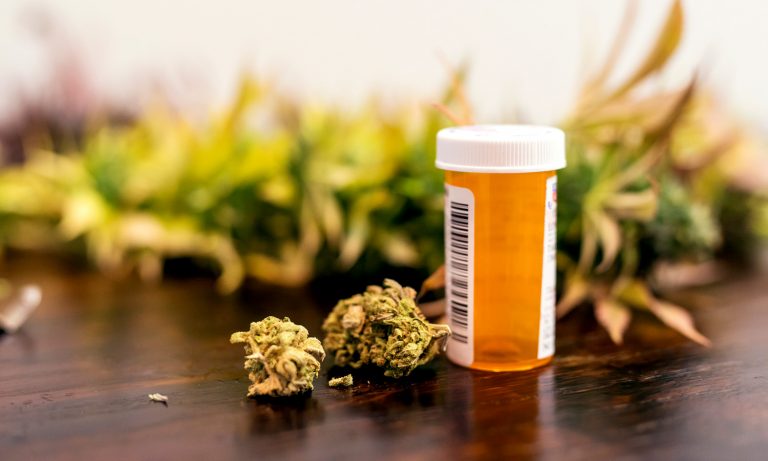
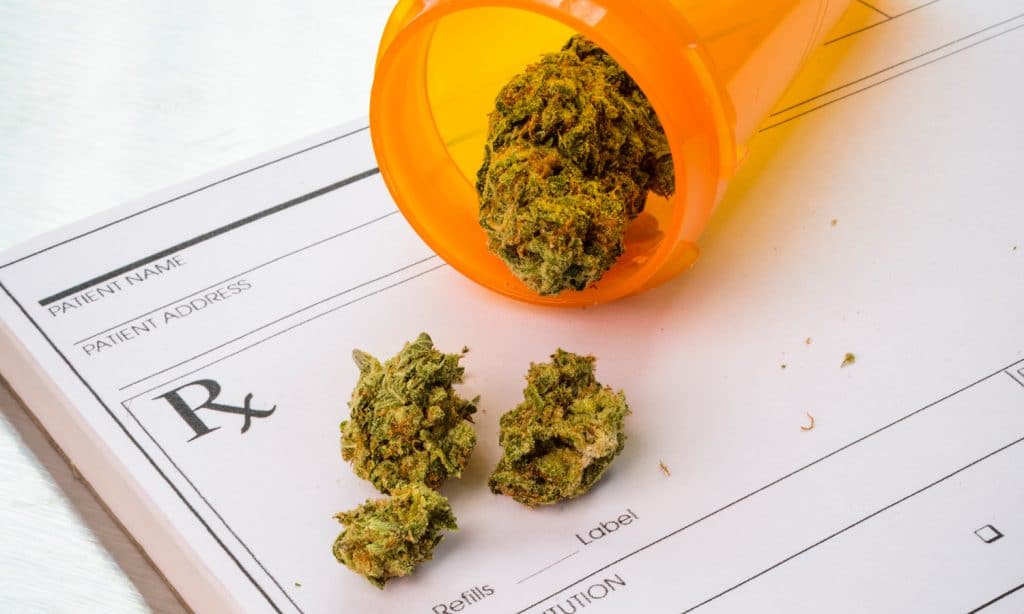
A key Senate committee overwhelmingly approved a proposal to allow medical marijuana use in North Carolina for certain conditions and to set up a state network for supply and distribution.
The vote was seen as historic.
A Change Of Course
No North Carolina Senate committee has ever taken a vote on medical marijuana, reported WRAL, a local TV network.
One House committee voted down a proposal back in 2015 and no bill since then has been heard in committee in either chamber until Wednesday’s Senate Judiciary Committee bipartisan vote.
Photo by HighGradeRoots/Getty Images
The bill was amended to reduce the number of distribution centers from a maximum of 80 statewide to 40, and to lower the fine for an infraction to $100. Trafficking in medical marijuana would receive a slightly harsher penalty than trafficking non-medical marijuana.
“We plan to tighten up any and all loose ends,” said State Sen. Bill Rabon, the bill’s sponsor.
“I have been quite moved by this because of my personal experience, and at times, it has been difficult for me to talk to some people about that,” Rabon, a cancer survivor, told the committee. “But I will say again that that time has come that this needs to be discussed, and we need to compassionately care for our fellow man in any way that we can.”
The Senator’s Colleagues Agree
“We have people that need certain kinds of help to get better, and I’m concerned that we do all the things that are necessary so that all of our citizens can live a better quality of life,” said Sen. Paul Lowe, another primary sponsor of the bill.
Photo by thegoodphoto/Getty Images
Republican Sen. Kathy Harrington added: “If you’d asked me six months ago if I’d be supporting this bill, I’d probably have said no, but life comes at you fast,” she said. “My husband was diagnosed with multiple myeloma and has been going through some cancer treatments, and I believe we’ve already had some moments in our lives where this type of medication would have assisted.”
Legalization advocates say the bill, as written, does not go far enough, that it is restrictive and too narrowly drawn. Medical conditions like chronic pain, mental health issues and opioid use reduction are not included.
On the other hand, several religious conservative groups are against the bill because it goes too far.
The vote was by voice and still has two more committee hearings before it goes to the Senate floor for a vote, which could happen during the second week of July. The bill would then have to pass the state House.
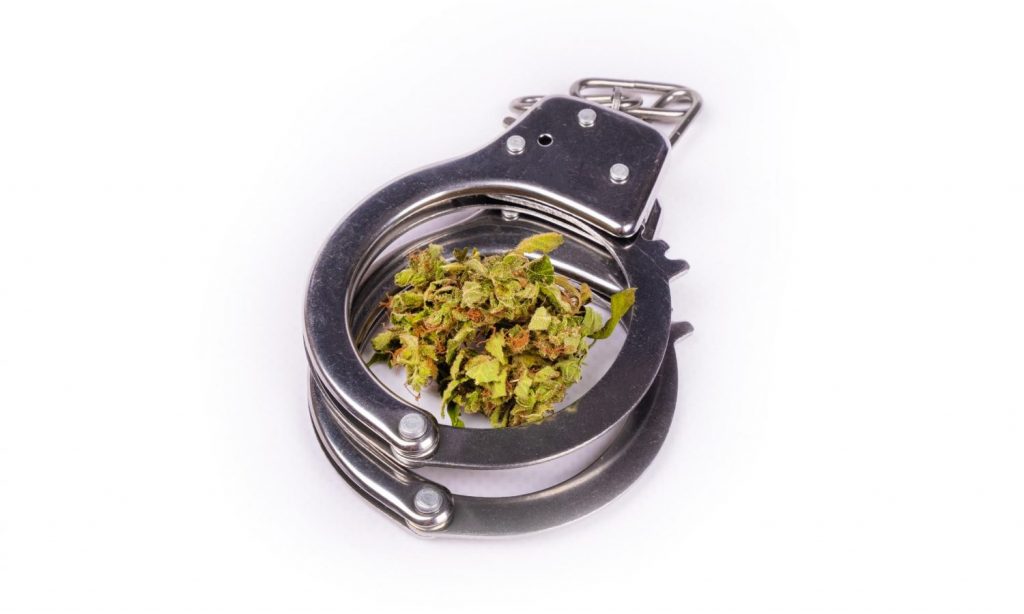
Americans need to understand that they’re not necessarily safe from prosecution just because marijuana is becoming increasingly legal in parts of the country.
Since marijuana is legal in around 20 states for adults 21 and over, the American cannabis-using public has taken on a blasé attitude when it comes to weed. Many are of the opinion that the increasing acceptance of marijuana across the United States has made it to where there are virtually no repercussions even if law enforcement happens to find it on them in states where it is banned. However, there is still a load of hardships that can arise from the possession of the cannabis plant in areas of prohibition. One of which involves getting your children taken away by the state.
Earlier this year, a Michigan woman named Erika Prock set out on a road trip with her 18-month-old son to pick up her husband Todd from her in-laws along the Mississippi-Alabama border. On the way home, the family made a stop in Moulton, Alabama for lunch. It was while Mr. Prock was standing outside smoking a cigarette that the situation took a wild turn. A police officer accused Prock of having marijuana on his breath. According to AL.com, Mr. Prock eventually admitted that he had smoked marijuana and had around two ounces in the trunk.
Big trouble was on the horizon.
Photo by Roman Budnyi/Getty Images
The Procks, who are from a state where marijuana has been legal for medicinal purposes since 2008 and adult use since 2018, were arrested for various charges, including marijuana possession. But more than that, the couple was later charged with felony chemical endangerment — a law that is typically used to prosecute parents who raise children in meth labs. Their son was subsequently snatched up by the Department of Human Resources and placed into foster care. He remains with a strange Alabama family to this day.
Now, the couple must fight some gnarly criminal charges while working on getting their child back into their care. And that’s not going to be an easy task. They’ve since moved into a tent on their in-law’s property, where they have spent months battling the charges. But prosecutors aren’t taking the case lightly, and there’s no indication that they are going to go easy on the Procks.
“I don’t understand how the same situation in two different states can differ so drastically to the point where in one state your child is taken and put into foster care over marijuana and you’re charged with chemical endangerment,” Prock told the news source, “but in another state, they consider it legal and safe and you go home to your family that night and never have to worry about your child being taken.”
At the risk of sounding insensitive to the situation, the Procks made one devastating mistake during this trip — they traveled outside their home state with marijuana. Regardless of how nonsensical conflicting marijuana laws might be, the fact remains that a person (or a couple) from a legal marijuana state cannot travel into a prohibition state, like Alabama, with marijuana in tow and not expect to feel the wrath of law enforcement if they get caught. States are not required to consider the marijuana laws of a person’s home state before filing criminal charges.
Photo by freestocks.org via Pexels
Furthermore, some states remain militant about marijuana possession. In some places, weed is no different than heroin. Despite the changing laws in many parts of the country, hundreds of thousands of people are arrested every year for pot. Unfortunately, the Procks just made that list.
Lawrence County District Attorney Errek Jett says the situation is cut and dry. The Procks screwed up — big time.
“Although an officer may exercise discretion,” Jett explained, “there is no provision under the laws of Alabama to permit possession of marijuana if the individual is from a state where it is lawful. Possession of marijuana is illegal under our laws. A similar situation exists where one of our citizens has a pistol carry permit but travels to New York, for instance. In that situation, the Alabama citizen has committed a criminal offense under the laws of the State of New York.”
Americans need to understand that they’re not necessarily safe from prosecution just because marijuana is becoming increasingly legal in parts of the country. State marijuana laws only cover the state. Traveling across state lines with marijuana is technically a violation of federal law. Make no mistake about it, there are still plenty of opportunities for citizens to get jammed up in the criminal justice system over weed. That’s not likely to change until the federal government legalizes nationwide and gives more states the green light to take similar action.
Sure, it is more than likely that Good ol’ Boy states like Alabama will probably be the last to change their marijuana laws. Still, the repeal of federal prohibition would at least support the argument that their hellbent dedication to criminalizing marijuana offenders is dumb.
Obviously, none of this helps the Procks get their kid back. But their story might keep more citizens from suffering a similar fate. Know the marijuana laws. It’s best to leave the weed at home when traveling. Even if marijuana is legal at your final destination, it definitely isn’t in the eyes of the federal government, and it might not be in bordering states. Either that or keep a real shark of an attorney on retainer. Because if you get busted for pot in most places, you’re going to need one.
At every level of the government, cannabis resistance lacking a defensible basis beats out the voted will of the people.
ByGreg Huffaker III, Director Of Client Services With Canna Advisors
State after state, millions of voting Americans check ‘yes’ on their ballot for cannabis. Most of these voters understandably assume that’s the end of the story, and their government officials then go out and create a cannabis program. Those millions would be surprised to learn this is not the case all too often.
In recent weeks, we have seen Mississippi’s Supreme Court strike down their voter-approved cannabis program, as well as Florida’s Supreme Court uphold a legislatively created divergence from that voter-approved program. These maneuvers are a continuance of a pattern of elected and appointed government officials fighting cannabis after the voters have approved it, often influenced by vocal cannabis opponents.
Photo by KellyJHall/Getty Images
Though cannabis is by no means the only issue where government action does not match the polled desires of the population (e.g., gun control, minimum wage), the important difference in cannabis is that the votes were cast, the will of the voters clear, yet resistance persists, and across all three branches of state governments.
When a state legalizes cannabis (medical or adult-use), it can do so via either the legislature passing a bill that the governor then signs or by putting a question on the ballot for voters to decide. That question on the ballot can be put there by collecting a qualifying number of signatures of state residents, as Mississippi did, or from the state legislature putting the question to the voters, as New Jersey did. Voters usually are making a change to the state constitution when they are voting on a ballot question.
After a voter-approved constitutional amendment passes, the legislature should then pass enabling legislation, directing a state agency to write regulations that follow the constitutional amendment and enabling legislation. Those regulations, written in an agency under the governor, should then be used to administer the program. People will then sue, bringing the courts into the mix. Sometimes these suits are brought by opponents, as in Mississippi, and sometimes they are brought by proponents, as in Florida.
The involvement of all three branches gives a variety of opportunities for program interference to occur. Back in 2018, an Ohio court struck down a license preference for racial minorities, and as mentioned, other state courts weigh in as well. In Montana and Florida, both the state courts and their legislatures have attacked legalizing cannabis at different points. Governors in South Dakota and Florida have also taken anti-cannabis actions after their voters approved.
Overturning the 74% Vote in Mississippi
Mississippi’s well-meaning amendment imposed only the state’s sales tax on cannabis sales. Looking to other states that generate more income through special taxes and fees, the Mississippi government seemed to yearn for the missing cash. Using what may well be impeachable reasoning, the state’s highest court struck down the voter-approved constitutional amendment, so that the legislature can create their own program, which will generate more revenue.
Photo by Nathan Griffith/Getty Images
No Straight Path in the Great Plains
Montana voters first legalized a medical program in 2004, which the legislature and courts then obliterated through a 2011 law, which the state supreme court upheld in 2016. Later that same year, Montana re-voted a medical program in, then in 2020 voted in an adult-use program, which their legislature then diluted down this year.
South Dakota’s Governor Kristi Noem is a vanguard in ignoring the votes of her people. Being the first state to pass medical and adult-use cannabis simultaneously, Noem had the opportunity to streamline the two programs. Instead, she is fighting adult use and their legislature is propping up the medical program, creating waste now and likely duplicity/contradiction later.
Florida’s Uniquely Broken Process
After 71% of Floridians voted for a medical program, the Governor set up the program to fail through appointing regulators who did so little that the legislature had to freeze their salaries in an attempt to get them to respond to the legislature’s requests for information.
Years of various lawsuits have mired the Florida program. The most recent was from the state Supreme Court. The Court upheld a law passed by the legislature that made a significant change to what the voters approved. That law only allows for a single license that does all business functions, called required vertical licensing. Vertical licensing differs from horizontal licensing, where someone can just operate one business type, like a cultivation or a dispensary. Though the constitutional amendment used the article “or” in the definition of what activities a business could engage in, the law passed by the legislature only had a single license type, which could do every phase of business, effectively turning that “or” into an “and.”
Photo by matt_benoit/Getty Images
Support and State Revenue Swell, Yet Obstruction Persists
Through the years, watching cannabis resistance has been fascinating, though often depressing. It is difficult to find issues in the U.S. that have such high agreement as cannabis—91% in one recent survey—and moreover increase state revenue simultaneously.
The cannabis opponents that remain generally make two main arguments: 1) We NEED more research into its dangers (somehow over 29,000 peer-reviewed studies, the vast majority of them searching for negative effects and finding few, is not enough for them; yet, all sunscreen use is based on one randomized study) and 2) but think of the children (as if children are not able to currently obtain cannabis). Yet, at every level of the government, cannabis resistance lacking a defensible basis beats out the voted will of the people.
What does not reach those officials making these decisions is what the people have already figured out: that the best way to protect children while learning more about the possible benefits of cannabis is to legalize. Drug dealers do not check IDs, dispensaries do. Cannabis users report that they use it to help sleep and with anxiety, yet prohibition blocks studies to isolate the underlying reasons for these benefits.
Sadly, this is an example—not an outlier—of this phenomenon of our governments going far askew of the polled desires of Americans. As mentioned, gun control and raising the minimum wage are another two topics where what Americans want has minimal effect on how government actors operate. The difference in cannabis? The people already voted for it. Then, government officials—who ostensibly represent those people—eroded or entirely eliminated the right to cannabis.
Greg Huffaker III is an expert in navigating the complex cannabis regulations and emerging state programs across the country. From his early industry work of maintaining a comprehensive database of ever-changing cannabis laws, his J.D. from Cardozo School of Law, and being a Colorado-licensed attorney, Greg brings a keen sense and deep knowledge of the legislation that impacts clients at every phase of business.
Heat waves can take all the fun out of summer. Here are some things to keep in mind in order to stay safe and cool.
The sun is usually celebrated. Normally, it indicates that the weather is getting hot and summer is on its way. Heat waves are different though, no matter how much you love the beach.
Heat related illnesses like heat stroke and heat exhaustion are appearing more often as it affects large parts of the U.S. It’s important to recognize symptoms of heat illness and to guard yourself against extreme temperatures, especially since it can quickly grow into a problem when it’s not addressed.
Here are three precautions to take during a heat wave:
It’s much easier to suffer from heat stroke than to get frostbite, which is why it’s important to remain hydrated. Aside from drinking lots of water, when outdoors, it’s important to keep your skin cool by spritzing yourself with cool water and to avoid strenuous exercise. When indoors make sure to block out windows when the sun is strongest and to let air circulate inside the room if there’s no A.C.
Keep an eye out for heat stroke
Photo by Nikada/Getty Images
Heat stroke involves a variety of symptoms that can be easy to confuse with being normally hot. Keep an eye out for your body temperature, which shouldn’t be over 103°F, and for hot and damp skin. When feeling dizzy or wrong, be sure to find some shade and to lower your body temperature with cool cloths or a cool bath.
Rather than keeping track of how many glasses of water you drink a day, you could try carrying around a water bottle. This will serve as a reminder to hydrate and will provide you with a source of water while you’re on the go. Drink every time you remember to do so, since extreme temperatures make us sweat electrolytes that should be replenished.
When it comes to foods, make sure to have stuff that is hydrating and refreshing, like fruits and veggies. If you’re eating salty meals, balance that out with water.
With Democrats in control of the Presidency, House, and Senate, some form of tax reform is a good bet, though no slam-dunk.
To quote Benjamin Franklin, “nothing is certain except death and taxes”. But tax rates and rules are far more unpredictable. As the dust continues to settle from the seismic tax reforms passed under the 2017 Tax Cuts and Jobs Act signed by President Trump, the Biden Administration is already discussing another round of tax reform. The specifics of the Biden proposal became clearer with the May release of the Treasury’s “Greenbook” – a summary of the administration’s tax proposals. (Link).
The Biden Greenbook Proposals
The proposals don’t specifically target cannabis, but they also don’t provide any relief for an industry beleaguered by the one-two punch of the punitive tax on gross income inflicted by Section 280E and an established IRS audit policy that aggressively targets cannabis companies. To put the average cannabis business’ tax burden in perspective, consider that a cannabis company that generates revenue but is unprofitable pre-tax can find itself owing a massive tax bill without the cash-flow to pay!
Photo by Hillary Kladke/Getty Images
Under the proposals outlined in the Biden Greenbook, many cannabis businesses (and their owners/investors) would likely see even higher tax bills, due primarily to its proposed increases in the corporate tax rate (21% to 28%), top marginal rates for individuals on ordinary income (37% to 39.6%) and capital gains/dividends (23.8% to 40.8%). To add insult to injury, some reforms (such as the capital gains/dividend rate changes) may apply retroactively to as early as March 2021!
Still, cannabis investors shouldn’t move to the Cayman Islands just yet. The Greenbook tax reforms are often a “wish list” that serve as a starting point for the legislative process, and it would be unusual for the proposals to pass in their current form. Nevertheless, with Democrats in control of the Presidency, House, and Senate, some form of tax reform is a good bet, though no slam-dunk. Much will depend on whether Senate Majority Leader Chuck Schumer can persuade his entire caucus to use reconciliation to pass tax reform with a simple majority.
The Leaflet’s (Tax-Free) Two Cents
Our informed speculation at this stage is that the retroactivity provisions of Biden’s proposed tax plan are unlikely to make it into the final bill. We also wouldn’t be shocked to see meaningful shifts on both the 39.6% rate and $1 million threshold. A downward shift in the proposed rate and a potential raising of the $1 million threshold could make a big difference for cannabis owners and investors that anticipate certain high value liquidity events, such as the sale of their businesses. Additionally, given the potential political toxicity of imposing taxes at death (even for the wealthy), we wouldn’t be shocked if the proposal to tax transfers on death either fails to pass or is modified to raise the threshold and/or applicable exclusions.
That said, Benjamin Franklin needs to add another certainty to his list — Biden tax reform is quite certain to remain uncertain for at least the next several months. So, Leaflet readers may want to sit tight for now, as the final tax reform bill is likely to depart in significant ways from the proposals in Biden’s Greenbook. In the meantime, the FK tax group is always happy to discuss prudent tax planning steps and considerations that may be appropriate based on your specific circumstances.
Rich Trotter is a litigation counsel at the New York-based law firm of FeuersteinKulick, one of the nation’s leading cannabis law firms.
This article originally appeared in Feuerstein Kulick’s monthly cannabis newsletter, The Leaflet, which you can subscribe to here. For more information you can contact Rich at rich@dfmklaw.com or (201) 410-4737, or email The Leaflet at theleaflet@dfmklaw.com.
Mexico is relatively peaceful and prosperous compared to its southern neighbors. So Harris’s first stop was not Mexico City, but Guatemala City, but then it got weird.
Disclaimer:The views expressed in this article solely belong to the author and do not necessarily represent those of The Fresh Toast.
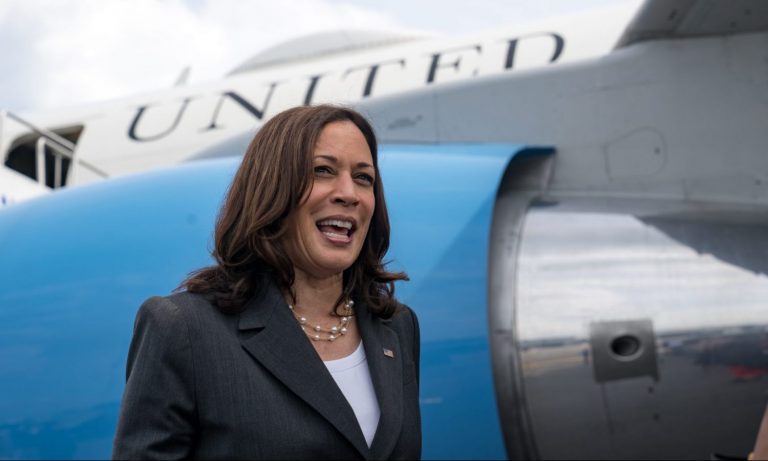
Vice President Kamala Harris’s first international trip to Mexico via Guatemala was delayed for a few hours because her plane was forced to return to Joint Base Andrews due to technical problems about 30 minutes after it took off. Maybe that was an omen…
A little history.
Photo by John Coletti/Getty Images
This August 13 will be the 500th anniversary of the Spanish conquest of the Aztec capital of Tenochtitlan, now Mexico City. The Aztecs had conquered central Mexico in the 1300s and had established one of the (literally) bloodiest regimes in human history. Human sacrifice was essentially the state religion.
The Mexican dictator Porfirio Díaz famously said, “Poor Mexico, so far from God, so close to the United States.” That was over 100 years ago, but it is still a convenient way for Mexican politicians to pass the blame, like demanding that Spain apologize for liberating central Mexico from the Aztec empire.
Unfortunately, extreme violence is a frequently recurring part of Mexican history. In their recent elections, over 100 politicians were murdered.
But Mexico is relatively peaceful and prosperous compared to its southern neighbors. So Harris’s first stop was not Mexico City, but Guatemala City, but then it got weird.
Harris was greeted by protesters in Guatemala with professionally printed signs telling her “Trump won” and “go home” — as the country’s president blamed President Biden for this year’s “migrant crisis.”
Photo by Brandon Bell/Getty Images
Consider the context. The “border crisis” does not begin in Guatemala or even with its southern neighbors, Honduras or El Salvador.
All of them have been devastated by multiple hurricanes, and — of course the Drug War.
Of course, the very Trumpian New York Post was delighted and ran the headline, Guatemala’s prez blames Biden for border crisis as protesters tell Kamala Harris ‘Trump won’. But how and why would protesters in Guatemala have professionally printed posters baiting Biden? Other signs actually attacked Harris for not having children. Not exactly the kind of greeting that one might expect under the circumstances.
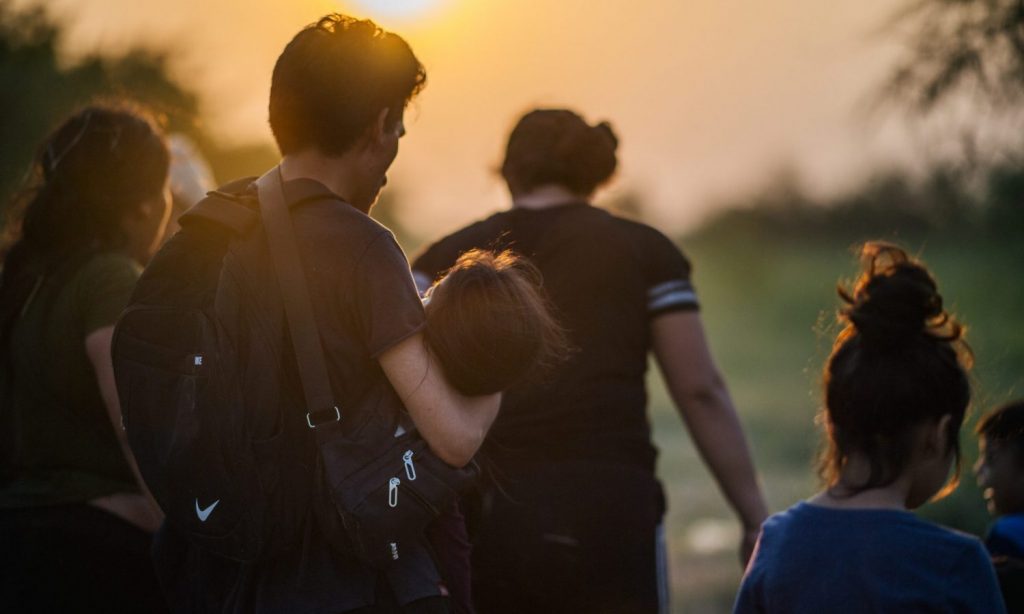
It is easy to understand why these people would want to flee to the United States. Hurricanes and endemic poverty and the Drug War are reasons enough, but they are also fleeing the violence related to their national political and ethnic divisions.
For example: The Guatemalan Civil War was a civil war in Guatemala fought from 1960 to 1996 between the government of Guatemala and various leftist rebel groups, which were primarily supported by ethnic Maya indigenous peoples and Ladino peasants…”
So it is easy to understand “Central American migrant caravans”except for just how they really work.Just how do thousands of the poorest people in the world march over 1,300 miles (maybe up to 2,500 to California) from Guatemala City to the U.S. border?
Who organized them? Who paid for their food and other expenses? The same people paid for the Trump posters? Just asking.
Photo by Greg Gallaher via Unsplash
And why would they blame Biden when there was a huge caravan right before the 2018 midterm elections? As this Examiner article explained, “President Trump has repeatedly blamed Democratic lawmakers for enticing migrants to travel to the U.S. without having applied for asylum at a U.S. consulate in one’s home country ahead of time. He said the new caravan is a result of lawmakers not fixing ‘loopholes’ that allow the majority of families and children smuggled north to avoid prosecution and to be released from federal custody shortly after being apprehended.”
“Trump said aid to Central American countries would now be cut off or curtailed after they failed to rein in their own people.”
So Biden is to blame, and Trump is their hero? Just asking.
Although cannabis might help people with anxiety, it can worsen the symptoms of severe psychiatric conditions like schizophrenia and bipolar disorder.
People who use marijuana are more likely to have suicidal thoughts. That’s the latest round of anti-pot propaganda coming from a couple of bodies of research published over the last two months. It’s enough to scare the ever-living crap out of parents worried about their kids getting wrapped up in the novelty of weed and then being carted off to a very dark place.
More sympathetic to these concerns for their children, we couldn’t be. However, health professionals say the link between the consumption of marijuana and increased suicidal behavior is not that cut and dry.
Two recent studies show a connection between marijuana use and suicide. The first comes from Stanford University, where researchers found an uptick in suicides where marijuana was legal. The study blames the potency of legal pot products for driving users over the edge.
Photo by Srdjanns74/Getty Images
The next study is from the National Institute on Drug Abuse (NIDA) (yep, the federal government), which finds that people who use marijuana are more likely to experience suicidal thoughts. The study shows that cannabis users are at a higher risk for mood disturbances and self-harming attempts.
So, watch out, right?
Well…
The relationship between marijuana and suicide is nothing new. For years, scientific minds have noted a connection between those who smoke marijuana and suicidal behavior. But it’s not like the average, happy person is suddenly going full-blown depressive through the use of the herb. All the research we have on the subject seems to show that people with pre-existing mental health conditions are more susceptible to the wrath of these adverse effects than healthy individuals.
Although cannabis might help people with anxiety, it can worsen the symptoms of severe psychiatric conditions like schizophrenia and bipolar disorder. We just don’t know much about how or why. Dr. Nora Volkow, the director at NIDA and lead author of the study, stops short of blaming cannabis for an increase in suicidal behavior. She believes more research on this topic is critical.
“While we cannot establish that cannabis use caused the increased suicidality we observed in this study, these associations warrant further research, especially given the great burden of suicide on young adults,” she said in a statement. “As we better understand the relationship between cannabis use, depression, and suicidality, clinicians will be able to provide better guidance and care to patients.”
Photo by Paola Chaaya via Unsplash
Even though high humanity could use some solid research to find out more about how marijuana reacts with the mentally ill, the fact that we don’t yet have that data at our disposal isn’t stopping legalization from happening all over the country. Somewhere around 17 states have legalized marijuana for adults 21 and over. There will even be a push this year to legalize it at the federal level. But the chances of the nation turning into the Jonestown Massacre are slim to none.
“Most people who use cannabis are not suicidal, and most people who have attempted suicide may not have used cannabis, so cannabis is neither necessary nor sufficient to ‘cause’ suicide or mood disorders,” Dr. Deepak Cyril D’Souza, a professor of psychiatry at Yale University School of Medicine, told Healthline.
Still, America could use some of that additional marijuana research that Dr. Volkow mentioned in her study. To make those kinds of opportunities more available, however, the federal government must make changes to the Schedule I classification of the cannabis plant — downgrading it to a Schedule II. This is something President Joe Biden said he would change during his campaign. Yet, nothing so far has been done to see it through.
Dr. D’Souza admits the added science surrounding the purported correlation between cannabis use and suicide would be greatly beneficial.“Clearly, further work is necessary to tease the complex association between cannabis use, mood disorders, and suicide.”
The PACT Act requirements do suggest that we take another close look at what exactly drug “paraphernalia” means across the states that have legalized recreational or medical marijuana.
The PACT Act has caused quite the stir in the cannabis and vaping community, but a vague reference to the Controlled Substances Act (CSA) by the United States Postal Service (USPS) last month caught my eye.
The USPS PACT Act update and notice indicated that the USPS would continue to reject drug paraphernalia items as defined by 18 USC 863, as they did before the enactment of the PACT Act. However, cannabis companies that sell accessories and other parts should be aware of a little-known provision of the CSA that defers to state and local governments for enforcement purposes.
The definition of drug paraphernalia seems rather straightforward, encompassing “any equipment, product, or material of any kind” that is “primarily intended or designed for use in manufacturing, compounding, converting, concealing, producing, processing, preparing, injecting, ingesting, inhaling, or otherwise introducing into the human body a controlled substance.”
The definition goes on to list examples of what would be drug paraphernalia, like water pipes, “hashish heads” and “punctured metal bowls.” However, it also indicates that each drug paraphernalia item is considered on a case-by-case basis. There are various indicators of what may be used to determine drug paraphernalia including instructions, advertising materials, and expert testimony considering its use.
Then, finally, we get to the big exemption: “This section shall not apply to—any person authorized by local, State, or Federal law to manufacture, possess, or distribute such items.” In the case of marijuana paraphernalia, most states that have legalized medical, recreational, or both uses would be authorized by local and state law to possess or distribute such items.
Now, this may not seem like big news, but there are concerns that the PACT Act shipping ban could make it impossible to ship vape products that are used or intended for use with marijuana because it is a Schedule I controlled substance, federally. In this case, there is a reasonable argument that the CSA does not criminalize shipments of drug paraphernalia to and from or within states and other localities that have decriminalized the possession of such items for use with cannabis.
Photo by Vaporesso via Unsplash
The language “authorized by local and State law” is truly the magic phrase in this case. It is a needle in a haystack because it is the only reference in the CSA to local and state law authority. It is a good thing, though, because statutory interpretation principles emphasize that inclusion of such precise and unique language in a section titled “exemptions” is rather significant. In other words, it would not be easy for a court to dismiss the language as superfluous, but rather the meaning of the phrase authorized by state and local law is important and should be interpreted as having significant weight by the courts.
Until now, only a few scholars and some law school graduates have taken the time to sift through the language of the CSA exemption on drug paraphernalia, but the PACT Act requirements do suggest that we take another close look at what exactly drug “paraphernalia” means across the states that have legalized recreational or medical marijuana.
Emily Burns is a recognized expert on cannabis-related legal, regulatory, and policy issues, having worked with a wide range of individuals and entities in both the public and private sector. You can contact Emily at info@gl-lg.com or (503) 488-5424.
The individual right to grow and consume marijuana without affecting third parties is now officially recognized in Mexican law.
In a historic session yesterday afternoon, the Mexican Supreme Court voted to issue a General Declaration of Unconstitutionality (the “Declaration”) of the General Health Law’s prohibition on individual adult (recreational) cannabis use.
The Supreme Court vote followed the Mexican Senate’s failure to pass a Cannabis Law bill that would have regulated adult use, as we reported here. In 2018, the Mexican Supreme Court ruled that the federal statutory prohibition on recreational marijuana use was unconstitutional, and ordered Congress to legalize recreational use throughout Mexico within 90 days. The deadline was extended several times and the final extension expired on April 30, 2021.
In issuing the Declaration (which will be effective upon publication in the Federal Official Gazette and notification to the Ministry of Health — most notably COFEPRIS, the Federal Commission for Protection Against Health Risks) and both chambers of Mexico’s Congress, the Supreme Court Justices have expunged from the Mexican legal system the wording in the General Health Law providing that any cannabis-related activity should only be conducted for medical or scientific purposes.
Photo by Filip Gielda via Unsplash
What does the Declaration mean for consumers?
First, that activities related to individual adult use of cannabis are now fully legal nationwide. In other words, the individual right to grow and consume marijuana without affecting third parties is now officially recognized in Mexican law, formalizing existing jurisprudencia (binding court precedent).
Second, COFEPRIS, which will continue to be the agency in charge of issuing individual adult use cannabis permits, has been directed to issue guidelines telling consumers how to procure seeds for themselves, apply for permits and conduct individual adult use activities.
Third, individual adult cannabis use is considered an exercise of “the right to the free development of one’s personality” (for what that means concerning cannabis use, see here), which in Mexico, following international practice, is deemed a human right.
Fourth, you will still need a permit to conduct individual adult cannabis use-related activities (i.e. growing and consuming marijuana without a permit will still be a crime). However, in order to have COFEPRIS entertain your application, you will no longer need to file an amparo action saying that the Court had already ruled that prohibition of individual adult use was unconstitutional.
Photo by MariaLR via Pixabay
Fifth, as previously, individual adult use does not include the right to import, purchase, sell or in any other way transfer ownership or distribute cannabis or THC. A permit shall only allow for growing, preparation, possession and transport of cannabis for individual (i.e. private) use. Any violation of this will result in revocation of the permit.
Sixth, given that in our experience COFEPRIS either does not answer applications or outright rejects them, we foresee that amparo actions will still be needed to get individual adult use permits.
Seventh, because now individual adult use is officially recognized, individuals (or their lawyers) can force COFEPRIS to respond to applications or justify rejections by filing amparo actions that include a request to federal courts to allow individual activities pending a ruling-till now, you had to wait for a court ruling ordering COFEPRIS to act and obtain a permit to conduct any activity.
What does the Declaration mean for cannabis industry stakeholders?
The Declaration signals another step along the road to the comprehensive Cannabis Law we expected Congress to enact earlier this year. Though the Declaration issued by the Supreme Court limits adult cannabis use activities to individual consumers, those consumers will require seeds, accessories and more. Once COFEPRIS issues guidelines that provide a framework for individual cannabis use, industry stakeholders will be able to react.
Photo by Jezael Melgoza via Unsplash
With its Declaration of unconstitutionality, Mexico’s Supreme Court has renewed pressure on the Mexican Ministry of Health and both chambers of Congress to regulate cannabis, for the sake of legal certainty and public health policy.
Full legalization of cannabis cultivation and distribution is all but inevitable in Mexico, and as we have written recently, interested stakeholders understandably want to be prepared when the doors swing open. Go here for our suggested steps to ready your business for that day.
Adrián Cisneros Aguilar is an attorney at Harris Bricken and oversees the firm’ss Mexico practice, where he helps companies on US-Mexico cross border legal matters, including cannabis law matters, Latin American and European companies on China and International Law issues, and local companies with international and domestic business transactions.