Monday, May 11, 2026
Home Blog Page 372

Senate Parliamentarian May Have Foiled Schumer’s Marijuana Legalization Plan

0

Senate Democrats just don’t have enough of a majority to use the budget reconciliation process to their full advantage this year.

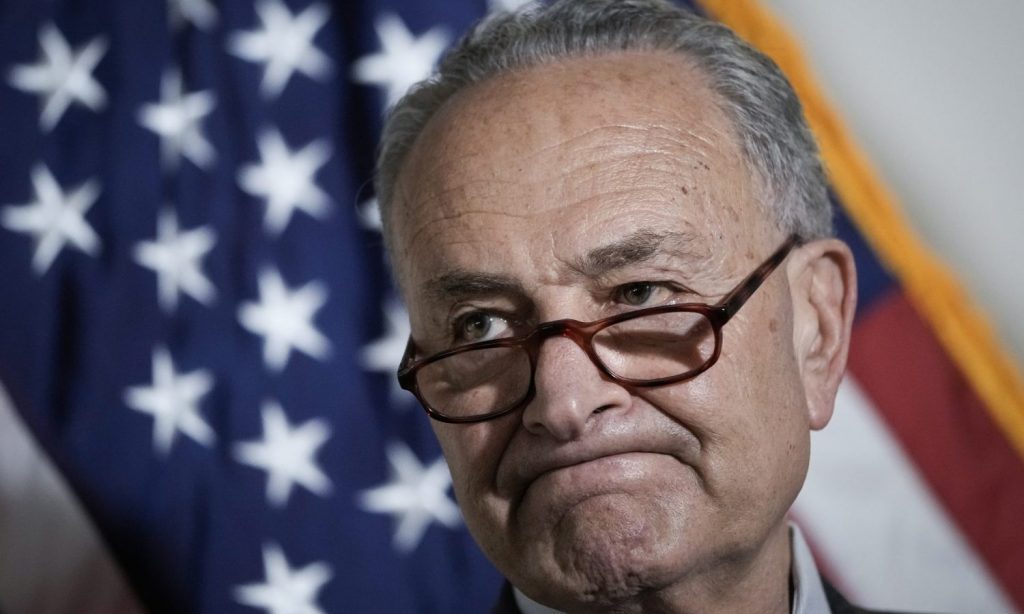
There has been some discussion over the past couple of months that Senate Majority Chuck Schumer might employ some clever finagling to bypass the 60-vote supermajority requirement to push through a comprehensive marijuana reform bill. As it stands, an old rule known as the filibuster is in the way of Schumer securing the votes necessary to make legal weed a reality. But if he could wrap it up in a budget reconciliation proposal, there’s a chance it would pass with a simple majority.

If the term budget reconciliation sounds familiar, that’s because it’s the only way Democrats have been able to get anything accomplished in the past few months. The budget reconciliation process allows the Senate to pass bills with a simple majority (51 votes), basically moving a bill through the upper chamber without Republican support. This is how they passed President Biden’s $1.9 trillion COVID-relief bill, despite Republicans throwing a fit about how it would cripple America. 

white concrete building under cloudy sky during daytime
Photo by Harold Mendoza via Unsplash

The problem with this tactic, however, is the controlling party can typically only use it once per fiscal year.

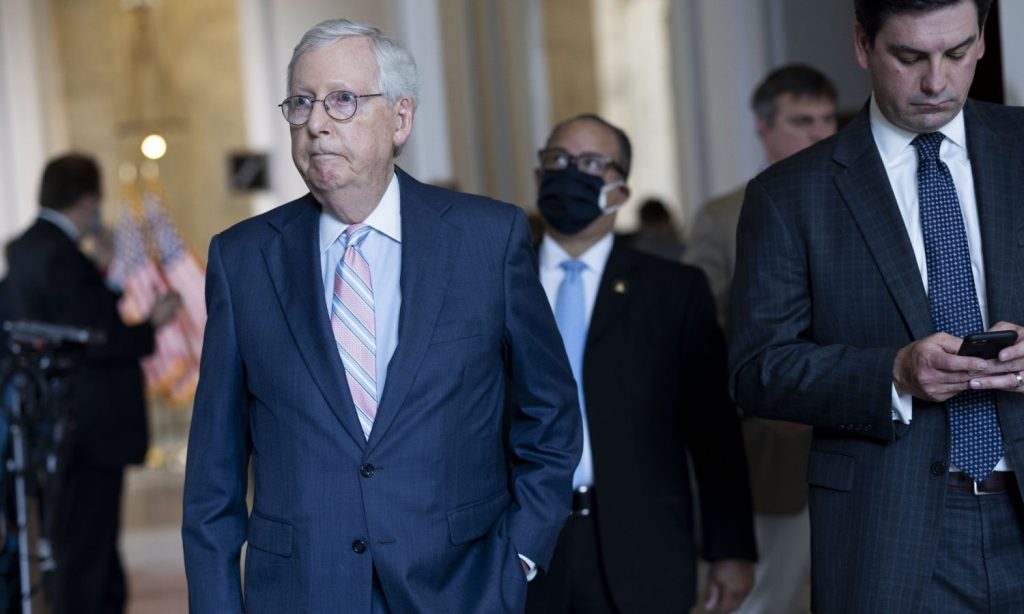
But Schumer, leaning on Section 304 of the 1974 Congressional Budget Act, believed Democrats had additional budget reconciliations coming to them. And if that was the case, he might try to include a long-awaited marijuana reform proposal into another resolution. Schumer admitted that was possible in a recent press conference. He told reporters that he’d confirm in a few weeks. 

The next move seemed contingent on a ruling by the Senate parliamentarian, Elizabeth MacDonough. 

Democrats soon received good news. 

In April, the Senate parliamentarian determined that the party did, in fact, have additional budget reconciliation options at their disposal. “The Parliamentarian has advised that a revised budget resolution may contain budget reconciliation instructions. This confirms the Leader’s interpretation of the Budget Act and allows Democrats additional tools to improve the lives of Americans if Republican obstruction continues,” Schumer’s spokesman said, according to The Hill. 

Yet, it seems that Schumer may have over embellished just how much authority these reconciliations would give them. A recent report from Punchbowl News suggests that the parliamentarian’s ruling puts strict limits on what Democrats can do with their newly green-lit option.

“The majority party — in this case, the Democrats — cannot use reconciliation simply to avoid the regular legislative process, and there have to be reasons beyond political expediency for triggering the majority threshold, such as an economic downturn,” the news source wrote of MacDonough’s decision. “In other words, the parliamentarian said Dems can’t use this as a shortcut.”

Although Democrats thought they had two more automatic budget reconciliations to use this year, MacDonough’s ruling leaves them with one. Schumer has only one shot at passing critical items in the Biden agenda. And trying to convince the president that marijuana legalization needs to be a part of the deal probably isn’t going to fly.

RELATED: Somebody Should Let Federal Government Know Americans Want Legal Marijuana

Biden’s focus is on his American Jobs Plan, American Families Plan, and a Medicare expansion. Those efforts were initially supposed to be split between the two budget resolutions, but now Schumer must find a way to get it all done with one. Schumer would be hard-pressed to convince the Biden administration to squeeze in weed. After all, Biden isn’t even sure whether full blown legalization is the right thing to do. 

Will Weed Ever Be Federally Legal In The US? What The Experts Say
Photo by Anton Petrus/Getty Images

Even trying to force a revision to another budget resolution must endure the full committee and amendment process. That’s where Republicans could swoop in and jam up a vote. Senate Democrats just don’t have enough of a majority to use the budget reconciliation process to their full advantage this year. Any misstep at this point could blow Biden’s agenda out of the water.  

RELATED: Senate Democrats Need To Destroy Mitch McConnell For Marijuana Reform

So, it appears that Schumer will have to walk a narrow line to further the greater good of the Democratic party. This could mean that his highly publicized plans to push a comprehensive cannabis reform measure could be put on hold. It just doesn’t appear that the Senate parliamentarian will allow the Democrats to toss any old issue over their shoulders and carry it to the finish line with the budget reconciliation process.

Marijuana legalization will likely need to be done through regular legislative means (and be subject to the GOP filibuster). Unfortunately, trying to legalize weed nationwide in this manner spells nothing but certain death.

Cannabis Advocates Praise Billion Dollar Market, Yet Afraid Of Big Business

Although the amount of money spent on marijuana in this country is impressive, why do advocates act so surprised when they see reports that continue to show an uprising of pot profits with each passing year?

Marijuana brings big money to those states willing to legalize. This is the message cannabis advocates have been preaching for years, and they take every opportunity to praise it as a selling point. 

Some of the latest numbers prove that the sale of cannabis products is poised to become one of the largest, tax-generating inebriation markets in the United States. A new study from the Marijuana Policy Project finds that around $7.9 billion in tax revenue has been made from pot sales since 2014. At the same time, local governments benefited to the tune of hundreds of thousands of dollars. In other words, if states need a new revenue stream, legal weed is the ticket.

Photo by Hillary Kladke/Getty Images

Although the amount of money spent on marijuana in this country is impressive, why do advocates act so surprised when they see reports that continue to show an uprising of pot profits with each passing year? Of course, marijuana is selling like mad. It’s now legal in over half the nation for various reasons, with 17 of those states allowing it to be sold like beer. People no longer need to frequent the black market to purchase marijuana — although many still do — creating a situation where the cash that was once spent on illegal sources has gone legit. 

There’s also the novelty factor associated with the cannabis market. People who may have never used marijuana before (or those who tried it in their youth) are gravitating toward the legal weed scene because it humors them to some degree and there’s little to no risk involved. They are interested in being “bad” without a brush with the law. They want to hang with the cool kids. Studies show that more people try weed for the first time when it is legal. Canada saw a massive uprising in first-time marijuana users after it launched its legal market a few years back. 

“One of the things … unique with this survey is the number of respondents who said they’re using for the first time,” Michelle Rotermann, a senior analyst in Statistics Canada’s health analysis division, told CBC News in 2019. “So, they started, in this case, in the post-legalization period.”

More users equals more money.

But a funny thing started happening to weed several years ago. The alcohol and tobacco industries began “watching it closely.” Some of these companies even invested loads of money to participate. Beverage companies like Constellation Brands (maker of Corona & Modelo) invested billions of dollars to get in on the ground floor of ganja. Meanwhile, Molson Coors, Anheuser-Busch, and the Boston Beer Company also made moves. Imperial Brands (maker of Kool and Winston cigarette brands) jumped in as well. Most recently, Marlboro-maker Philip Morris said that it is watching the pot market to see where it fits in. These large corporations with deep, deep pockets are dabbling in marijuana in preparation for when the federal government finally legalizes it. And that’s something that we could see happen in the next few years.

 RELATED: Marlboro Maker Is Eying Cannabis Industry, Like It Or Not

Senate Democrats are going to try to legalize marijuana at the national level this year. Senate Majority Leader Chuck Schumer has plans to reveal a comprehensive cannabis reform bill “soon.” Federal legalization is so close, in fact, that the alcohol and tobacco industries have formed a national lobbying group to influence pot policy changes at the federal level. It’s a development that has the cannabis folks spooked. After spending years touting weed’s substantial revenue potential, weed advocates now want legalization to happen sans capitalism.

Marlboro Maker Is Eying Cannabis Industry, Like It Or Not
Photo by Amritanshu Sikdar via Unsplash

“It’s a false dichotomy to suggest our only two choices are to keep incarcerating people for marijuana or to immediately roll out a red carpet for national big businesses to take over the market,” wrote Shaleen Title, vice chair of the Cannabis Regulators of Color Coalition and Distinguished Practitioner in Residence at Ohio State University’s Drug Policy and Enforcement Center.

Interestingly, restricting the alcohol and tobacco industries from participating in cannabis is precisely what Senator Schumer wants to do. He made this clear when he announced how cannabis reform was a Democratic priority. But now, instead of pushing Congress to establish a taxed and regulated national market, advocates want them to slow down and let states figure out the best way forward. “Lawmakers should give states the time they need to implement equitable policies and prevent market domination by Big Tobacco and other bad actors in the meantime,” Title asserts

It remains to be seen how Schumer plans to legalize marijuana federally without allowing some good ol’ fashioned capitalistic carnage to take shape. Although the cannabis scene is split between those who want justice for decades of brutal drug war tactics and those who just want to sell weed and relish in profits, it seems unlikely that pot will get out alive without being exploited just like alcohol and tobacco. It seems even less likely that the cannabis industry will make it another twenty years without big corporations swooping in and swallowing it whole.

I suppose this should be a lesson in “be careful what you ask for.” Weed is going legal, and the design will likely mimic the big money ideas that the cannabis advocacy community has been selling for decades.

Is This The Real Reason Amazon Is Supporting Marijuana Legalization?

I can guarantee Amazon figured out how many employee applications are failing the marijuana drug test nationally each month.

Why did Amazon come out in favor of legalizing marijuana, now?

With the big press release from Amazon about supporting marijuana legalization in America many in the cannabis industry jumped to the conclusion that Jeff Bezos and his board were getting ready for full on delivery and shipping of marijuana.

Not so fast, While Amazon may someday be able to sell and ship THC products, we are not even close to that idea yet as far as legalization and state laws.  Remember, Amazon has one federal government, 50 state governments, and about 120 governments in other countries to worry about and placate before they start dropping shipping weed all around North America.

what to expect on this years amazon prime day
Photo by Christian Wiediger via Unsplash

After calling our sources at Amazon and talking to various Amazon DSP partners, what is the real reason for Amazon’s new found legalization support?  It is not a benevolent or maleficent as you may think. It is all about getting workers in their warehouses. Amazon, like most of America, is having a very hard time getting people to come back to work and at the $16 to $18 an hour pay level, and many Amazon stations shifting to “megacycle” where the warehouse workers work from 11pm to 7am, they are finding takers for that glorious offer to be sparse.

RELATED: Amazon Backs Federal Bill To Legalize Marijuana, Drops Drug Screening

Recently, Amazon announced $1 billion going back to workers salary and creating jobs. This was not done for any benevolent reasons by Amazon, it was done because they could not get workers at their current pay levels. Minimum wages at Amazon warehouse have risen anywhere from 10% to over 30% in order to try and attract workers. This is not even including the new $1,000 and $1,500 signing bonuses Amazon is offering to warehouse workers now in order to try and fill their vacant job listings.

Jane Technologies
Photo courtesy of Amazon

What does this have to do with marijuana legalization you may ask?

Amazon has a drug testing policy that includes marijuana. Amazon realizes they can greatly expand their eligible worker pool at that pay level if they stop testing for marijuana or cannabis gets legalized at the Federal level.  While the press release says they will stop testing for non-DOT positions (sorry, drivers!), they realize like many government offices, if you eliminate everyone who can’t pass a marijuana drug test, you eliminate a lot of potential employees. This is especially relevant in large, legal cannabis states like California, Colorado, and now Florida.

I can guarantee Amazon figured out how many employee applications are failing the marijuana drug test nationally each month, let’s say 10,000 for fun, and realized if they didn’t have the marijuana drug test policy, that 10,000 more people may be able to fill their midnight to 7am pick-and-pack shifts.

RELATED: Uber Wants To Explore Marijuana Delivery Once It’s Federally Legal

Does Amazon want to sell cannabis and ship it someday?  Absolutely, they are already dabbling with prescription drug refills to a larger and larger test area now, but that is not the main goal with supporting marijuana legalization now, it is to expand their pool of eligible workers at $15 to $17 an hour. The FBI and CIA have all faced similar problems and discussed it, especially around recruiting computer programs and “hackers”, since a large majority of that community would be unable to pass a marijuana drug test.

Amazon Prime Week is June 21-22 this year. Get ready, because when you sell a few billion dollars of items in 48 hours, someone needs to pack and ship all those packages to your house.

This article originally appeared on Cannabis.net and has been reposted with permission.

Marijuana Hangovers, Why And How To Treat Them

Weed hangovers are different than alcohol hangovers. They principally affect people who are new to the drug or who are trying out a new cannabis method.

Weed hangovers are a mystery. Unlike alcohol hangovers, which universally affect everyone, when weed hangovers happen there’s not much of an explanation. Maybe you smoked more than you’ve ever smoked or maybe you consumed weed in a brand new way. It could never happen to you or it could happen often.

Weed hangovers encompass a range of effects that include brain fog, headaches, fatigue and feeling like you’re still high hours later. While they’re not as uncomfortable as an alcohol hangover, they can still be pretty limiting, starting from the moment you smoke until hours after.

RELATED: 4 Ways To Relieve A Marijuana Hangover

5 Ways To Beat A Hangover That Actually Work
Photo by fizkes/Getty Images

Due to marijuana’s legal status, there’s not a lot of information out there on why these types of hangovers occur. Anecdotal evidence suggests it’s related to the amount of weed that’s consumed. This varies from person to person, depending on the individual’s cannabis threshold.

In general, the more THC there’s in cannabis, and the more you consume of it, the higher the odds of getting a cannabis hangover. Marijuana hangovers aren’t as crippling as alcohol hangovers but there are a few things you can do to put them under control.

If you get recurring weed hangovers

Marijuana Hangovers Are Real: What You Need To Know
Photo by TechPhotoGal via Pixabay

Recurring weed hangovers may indicate that something is off with your cannabis consumption. Everyday users should try to limit the amount of cannabis they ingest, consuming it every other day or just on the weekends. A change of your cannabis smoking schedule might also help; if you get hangovers when you smoke at night, trying smoking during the day.

If you get the occasional one-off

New Study Confirms Cannabis Users Are Not Lazy Stoners After All
Photo by Bruno Nascimento via Unsplash

RELATED: Can You Get a Hangover From Marijuana?

If you have a weed hangover and don’t know what to do about it, try to sleep it off. If you sleep and it’s still disturbing you, avoid spending the entire day in bed, since this will likely make your situation worse. Go for a walk or a run and you’ll quickly notice the change in your system. Don’t skip out on meals and stick to something healthy and natural. Stay hydrated and wait for it to pass.

5 Ways To Make Teletherapy Work If You Have Roommates

0

Don’t have much privacy? Here’s how to make teletherapy work when you lack alone time.

Thanks to the pandemic, online therapy has become very popular. Not only is this practice socially distanced, it’s also a convenient and viable option for a large percentage of people.

One of the major limitations of teletherapy is privacy. Teletherapy creates a new host of problems in the shape of roommates, parents, children, and spouses. The thought of them accidentally listening in on your therapy sessions is kind of terrible.

5 Things You Can Do To Make The Most Of Your Therapy Sessions
Photo by Ivan Samkov via Pexels

If you still enjoy the convenience of teletherapy but are concerned with the privacy aspect of it all, there are a few things you can do to make yourself more comfortable and make the most out of your therapy session. Here are 5 ways to make teletherapy work if you live with other people:

Talk to the people you live with

How To Smoke Weed When Living With Parents Or Disapproving Roommates
Photo by cottonbro via Pexels

If you can, be as honest as you can with everyone you live with. Talk about your therapy schedule and your desire for privacy, hopefully getting everyone you live with on the same page and giving you the space you need. Accessorize yourself with headphones and, if you can, get a door in between yourself and others.

Get creative with your space

13 songs to add to your smoke sesh playlist
Photo by Matthew Henry via Burst

RELATED: 5 Tips To Make The Most Of Your Online Therapy Sessions

If you have a bedroom or a bathroom, make it comfortable and ask for other people to give you some space for the duration of your therapy. Wear headphones and consider using a white noise machine, which can create an environment of quiet and privacy. You should place it right out of the room where you’re having your therapy, giving you some peace of mind.

Incorporate text therapy

There Are Psychological Benefits Of Texting Vs Talking, Even With People You Live With
Photo by Eddy Billard via Unsplash

If you’re discussing something really juicy that you’d like to keep relatively private, consider incorporating text therapy. Discuss it with your therapist beforehand to see if they agree with you and give it a shot. If this is too much for you, come up with code names for the people you’re talking about, that way you can express yourself and you can get everything off of your chest.

Sit in your car

Legal States Prepare For Driver Safety On 4/20 Weed Holiday
Photo by SunRiver via Pixabay

RELATED: Here’s How To Get Better At Spending Time Alone

If you have a car, you’ve already won half of the battle. This environment is quiet and provides you with total privacy. It’s also nice to leave your home and go to a different setting for your therapy, even if it’s your car.

Go for a walk

How Marijuana And CBD Help Create Calm, Healing Walks
Photo by Tyler Nix via Unsplash

If your home is crowded and you don’t have a car where you can have privacy, go for a walk. This is a nice opportunity to move a bit and get your thoughts in order as you have your therapy session. Try to go to a place where there’s not a lot of people and where you can enjoy yourself as best as you can, while also focusing on the task at hand.

Amazon Backs Federal Bill To Legalize Marijuana, Drops Drug Screening

Earlier this year, Amazon was hit with a proposed class action that accused the company of violating a New York City law by testing applicants for jobs at local facilities for marijuana.

By Madhukumar Warrier

Amazon.com Inc. (NASDAQ:AMZN) said it supports the federal legalization of marijuana and will drop marijuana-testing requirements for some of its workers.

What Happened: Dave Clark, CEO of Amazon’s worldwide consumer division, said in a blog post that the e-commerce giant will actively support the Marijuana Opportunity Reinvestment and Expungement Act of 2021 (MORE Act), which will decriminalize marijuana at the federal level. The bill was reintroduced in Congress last Friday.

Photo by 400tmax/Getty Images

Amazon also said it will adjust its corporate drug testing policy for some workers. The company will no longer include marijuana in its comprehensive drug screening program for any positions not regulated by the Department of Transportation.

Instead, Amazon will continue to do impairment checks on the job and test for all drugs and alcohol after any incident.

RELATED: End Of Pre-Employment Drug Testing Doesn’t Mean You Can’t Still Be Fired For Marijuana

Why It Matters: Amazon had previously disqualified people from working at the company if they tested positive for marijuana use. The company’s marijuana policy change comes as many states in the U.S. have already passed laws and legislation to legally allow the sale and use of marijuana.

It was reported in July last year that Amazon included cannabis company Enlighten Dispensary Solutions in its AWS Data Exchange, a marketplace for data run by Amazon Web Services, for the first time ever. However, the company does not allow marijuana sales on its platform.

RELATED: Amazon Bans CBD Sales, But Here’s How You Can Buy It On The Platform

According to a report by Reuters in March, Amazon was hit with a proposed class action that accused the company of violating a New York City law by testing applicants for jobs at local facilities for marijuana.

Price Action: Amazon.com shares closed 0.14% lower in Tuesday’s regular trading session at $3,218.65 and further declined another 0.14% in the after-hours session to $3,214.14.

This article originally appeared on Benzinga and has been reposted with permission.

MORE Act Reintroduced In House As Senate Readies Its Own Cannabis Reform Legislation

The MORE Act comes with the backing of over 150 organizations across the country, including the Drug Policy Alliance (DPA).

By Andrew Ward

The Marijuana Opportunity Reinvestment and Expungement Act (MORE) was reintroduced in Congress on Friday after the previous year’s version failed to pass the Senate.

Overall, the bill would remove marijuana from the federal Controlled Substances Act (CSA). The bill also addresses re-sentencing for cannabis offenses and prevents federal agencies from prohibiting security clearance or benefits because of cannabis use.

Why Advocates Say MORE Act Falls Short In Restorative Justice
Photo by MmeEmil/Getty Images

This version of the bill strikes down previous barriers preventing the formerly incarcerated from taking part in the industry.

If passed, the bill would also provide extended Small Business Administration (SBA) aid for those affected by the drug war.

The MORE Act comes with the backing of over 150 organizations across the country, including the Drug Policy Alliance (DPA).

RELATED: The MORE Act Will Not Legalize Cannabis Nationwide — Not Like You’re Thinking

“It is clear, by the overwhelming extent to which they passed the MORE Act last session, that the House understands this for the urgent racial and social justice issue it is,” said Maritza Perez, DPA Director of the Office of National Affairs.

The Senate is preparing its own reform bill.

Was The House Vote On The MORE Act A Strategic Mistake?
Photo by drnadig/Getty Imges

NORML Political Director Justin Strekal said that while Senate Majority Leader Chuck Schumer and Senators Cory Booker and Ron Wyden collect feedback for their forthcoming legislation, the House is taking action now.

RELATED: Why Advocates Say MORE Act Falls Short In Restorative Justice

“The House is preparing to once again advance criminal justice-focused legislation that will bring our failed prohibitionist policies to an end while also ensuring that those Americans who are saddled with the consequences of a marijuana conviction can have their records cleared,” Strekal said.

House Judiciary Committee Chairman Jerrold Nadler reintroduced the bill.

“I’m proud to reintroduce the MORE Act to decriminalize marijuana at the federal level, remove the needless burden of marijuana convictions on so many Americans, and invest in communities that have been disproportionately harmed by the War on Drugs,” Nadler said.

This article originally appeared on Benzinga and has been reposted with permission.

Mitch McConnell Is Still The Cannabis Grim Reaper

Even though he was instrumental in legalizing industrial hemp a few years back, nothing McConnell has said in the past year suggests that he’s ready to tender his support for pot.

Cannabis advocates who are still optimistic about how Senate Democrats will fare in passing a comprehensive marijuana reform bill later this year should pay close attention to the recent vote on the commission to investigate the Capitol insurrection. That’s where Senate Minority Leader Mitch McConnell showed America and everyone watching that, regardless of his demotion in the upper chamber, he is still the same blood-thirsty grim reaper of Capitol Hill that he ever was.

Democrats were powerless last week when Senate Republicans destroyed an effort to establish a bipartisan commission to delve deeper into the Capitol attacks. Not only did McConnell prove he still has the clout to rally the troops in a time of need, but also that he possesses a deadly weapon known as the filibuster (an old Senate rule that requires a 60-vote supermajority on controversial issues), and he’s not afraid to use it. All but six Republicans voted against the measure, killing it dead.

McConnell has proved that he is still in control of the Senate, and that spells big trouble for weed.

Storm The Capitol, You Walk — Smoke Weed, Get Arrested
Photo by Spencer Platt/Getty Images

Senate Majority Leader Chuck Schumer is now left wondering if he has enough weight behind him to further the Democratic agenda. He still has lots to do. All the success the party has relished in so far this year was done through the budget reconciliation process, which only calls for a simple majority to pass. They didn’t need any Republican input to approve President Biden’s massive COVID-relief bill. Nor will they need any help from them to pass additional budget-oriented measures. But as far as anything else, Republicans still have plenty of blocking power. 

 RELATED: Senate Democrats Need To Destroy Mitch McConnell For Marijuana Reform

Despite having the majority, Schumer and crew lost their first real Senate fight. Meanwhile, a popular cannabis legalization bill known as the MORE Act was recently introduced in the House, while the Senate is preparing a similar measure. This legislation would eliminate cannabis from the Controlled Substances Act, clear some pot-related criminal convictions and allot a certain percentage of the federal tax revenue to reinvigorate communities most ravaged by the war on weed. The measure passed the House last year but wasn’t even considered in the Senate under McConnell’s leadership. But all hope is not lost.

The most interesting aspect of the vote regarding the January Capitol attacks is that it was a close one. In fact, without McConnell’s opposition to the bill, it would have had the 60 votes needed to win over the Senate. We know that more Republicans are starting to side with the concept of marijuana legalization or, at the very least, decriminalization. The question is: Have enough conservatives changed their tune to cripple the filibuster and advance a cannabis bill with or without the support of McConnell? You can bet Schumer is presently trying to figure out who’s on his side. Still, McConnell seems intent on stopping the Biden Administration at every turn. He recently told the press that “100% of our focus is on stopping this new administration.” 

Anti-Marijuana Mitch McConnell Could Still Control Senate As Minority Leader
Photo by Nicholas Kamm-Pool/Getty Images

He’s concerned that Biden’s plan means a loss of Democracy.

“We’re confronted with severe challenges from a new administration and a narrow majority of Democrats in the House and a 50-50 Senate to turn America into a socialist country, and that’s 100 percent of my focus,” McConnell said.  

RELATED: What Chuck Schumer Can Do For Marijuana As Senate Majority Leader

Some aren’t convinced that McConnell’s statement means that he plans to combat every single measure that runs through the upper chamber. But it’s no secret that McConnell is no friend to marijuana. He’s spent much of his career preventing cannabis reform from so much as being discussed in the Senate. Even though he was instrumental in legalizing industrial hemp a few years back, nothing McConnell has said in the past year suggests that he’s ready to tender his support for pot. So, when Schumer finally introduces his long-awaited bill to legalize marijuana nationwide, he’s probably going to have to contend with the wrath of McConnell, the GOP filibuster, and a lot of disappointed cannabis fans. 

According to national polling data, most Americans believe the time has come for the federal government to change the country’s marijuana laws.

Can You Legally Smoke Weed In DC? It’s Complicated

The District of Columbia is not a state, and a good chunk of the land is federally owned, where cannabis is not legal. D.C. currently sits in a bit of a gray area. Here’s what consumers and operators should know.

I recently relocated to Washington, D.C. to join our East Coast practice group and have been inundated with inquiries surrounding the legal framework of recreational cannabis (i.e., marijuana and hemp) in the nation’s capital. So, in light of this overwhelming interest, I thought I’d briefly summarize this issue for our readers.

Marijuana

In November 2014, D.C. residents overwhelmingly approved Initiative 71, a ballot measure that legalized the possession and cultivation of small amounts of marijuana by residents of 21-years of age or older.

Marijuana Pop-Up Markets Thrive In The Legal 'Gray Area' Of Washington DC
Photo by 12019 via Pixabay

However, a few weeks following the passage of the marijuana ballot initiative, Congressional Republicans attempted to nullify the law by including a rider in the Consolidated and Further Continuing Appropriations Act of 2015 that prohibited the District from using any funds to enact legislation taxing and regulating marijuana. Under federal law, Congress reviews all legislation passed by the Council (think of it as the equivalent of D.C.’s state legislature) and any referendum measure approved by voters before it becomes law. In addition, Congress retains authority over the District’s budget. Therefore, if Congress wishes to influence the affairs of the District, it generally does so through amendments to unrelated legislation such as spending bills.

RELATED: Marijuana Pop-Up Markets Thrive In The Legal ‘Gray Area’ Of Washington DC

Nevertheless, District officials, including the District’s Attorney General and Mayor Muriel Bowser, declared that the Congressional rider would not prevent the legalization of marijuana which was enacted and certified by the Board of Elections before Congress passed the spending bill.

Consequently, the District inherited of a “grey market” where local businesses began engaging in “gifting economy,” which consists of selling items unrelated to marijuana at marked-up prices and offering marijuana as a complementary gift with the transaction. This legally questionable business practice arose from a provision in Initiative 71 that states it is lawful for anyone 21-years of age or older to “transfer without payment (but not sell) up to one ounce of marijuana to another person 21-years of age or older….”

Smuggling Weed In From A Legal State? Don't Get Caught By Doing This
Photo by Tunatura/Getty Images

So, while marijuana-related arrests ceased to occur in the nation’s capital (a particularly good thing in light of a 2013 report by the American Civil Liberties Union that revealed D.C. had one of the highest arrest rates of any county in the country, with blacks 9 times more likely to be arrested than whites), the District became confronted with an unregulated, legally dubious market where the commercial sale of marijuana is illegal.

In an attempt to address this ongoing issue, District lawmakers recently introduced the Comprehensive Cannabis Legalization and Regulation Act of 2021, a sweeping bill which, if enacted in its current version, would establish a comprehensive regulatory framework for the production and sale of recreational marijuana, but would also address social equity by repairing the damage done by past criminal enforcement by investing in the communities most harmed by the drug war, and by creating equitable access to the new marketplace. No actions have been taken since the bill’s introduction on March 1.

Hemp

The District has yet to enact hemp-related laws or regulations, which means it does not authorize nor regulate the production of hemp nor that of hemp-derived products, including the sale of cannabidiol (CBD). Therefore, these products are not legal despite the notable presence of “CBD shops” throughout the city.

RELATED: Hemp-CBD Legislation: Will Congress Boost Hemp Total THC Limit To 1%?

In sum, the commercial sale of recreational cannabis products is expressly prohibited in the District. This means that the vast majority of the products sold and “gifted” in the city are unregulated, and thus, may be unsafe for human consumption. Moreover, while these activities seem vastly tolerated, they nonetheless put local businesses at risk of enforcement actions by local and federal agents. Something to think about before venturing into this market.

 is an attorney at Harris Bricken. This article was originally published on the Canna Law Blog and is reposted with permission.

Why The Law Of Unintended Consequences Is The Only Law That Always Works 

0

When we try to control everything, we can set in motion the exact opposite of what we intended. The Law of Unintended Consequences.  

Disclaimer: The views expressed in this article solely belong to the author and do not necessarily represent those of The Fresh Toast.

I remember a letter to the editor in a California newspaper circa 1973 during Nixon’s gasoline “shortage” from a man who told of sitting in his car waiting in line at what was ironically called a “filling station.” He said that when he looked in his rearview mirror he saw the driver behind him was smoking a joint. He quipped that we could solve two problems if we just legalized marijuana and outlawed gasoline. 

Fifty years later, we have almost solved the marijuana “problem” by almost legalizing it. I say we have almost solved that problem, not just because the Feds and a few states are lagging, but because most of the states have made a mess of it by over-regulating and over-taxing it, so the black market persists. Good intentions are not enough. 

Everything standing in the way of federal legalization in 2021
Photo by Olena Ruban/Getty Images

I have cited what I call the Iron Law of Prohibition demonstrating how the economics of contraband actually makes “drugs” stronger and more dangerous. Actually, I’m certain that this is not always “unintended.” 

Obviously, the frustrated motorist was joking about banning gasoline, but there really wasn’t an actual gas shortage. Nixon had panicked and slammed price controls on it which kept the market from functioning. In a free market, there are never long-term shortages because the prices will rise, angering consumers (voters), but eliminating lines, pleasing voters. Unintended?  

SEE: Trump’s War on Postal Service Harms His Base, Seniors, Rural Communities, Veterans and Small Businesses 

When the Colonial pipeline to the East Coast was hacked, there were suddenly lines for fuel because of another aspect of human nature. There was a “shortage” because everyone panicked and got in line to fill up their tanks so inventory was shifted to cars because… Another unintended consequence.  

The hacking of the pipeline was possible because of the phenomenon called “Internet of Things”. What could possibly go wrong? The February Texas blizzard came close to wrecking the world economy because Texas politicians wanted to pretend the Lone Star State was really a lone star. Ain’t no Yankees gonna tell us what to do! An unintended consequence. 

Can You Get COVID-19 In Between Vaccine Dosages?
Photo by Spencer Davis via Unsplash

The Biden Administration has done an excellent job of making the COVID-19 vaccine easily available and free to everyone. What could possibly go wrong? But two groups are still hesitant to get their jabs. Ironically, they can be identified by race: Black and White.  

SEE: Don’t Mention The Drug War. We Must Decriminalize Being Black Because Black Freedom Matters 

Blacks have historical reasons to distrust the medical establishment, the Tuskegee Syphilis Study and general history of poor medical care. Whites think everything is a conspiracy. 

What if, instead of being so proudly egalitarian, Biden had announced that the rich could jump the lines by paying $100 or maybe more for shots at country clubs? “Influencers” could pose in front of Ferraris as they sip Champagne getting their jabs.  

People would be demanding that everyone must have immediate access.   

Of course, “socialism” is the ultimate in unintended consequence, but the point remains that good intentions don’t necessarily produce good outcomes. On the contrary.   

Like the Internet of Things, we are all connected in ways that we cannot understand or even know. When we try to control everything, we can set in motion the exact opposite of what we intended. The Law of Unintended Consequences.  

Richard Cowan is a former NORML National Director and author of the Difference Between CBD For Dogs And Humans

Don't Miss Your Weekly Dose of The Fresh Toast.

Stay informed with exclusive news briefs delivered directly to your inbox every Friday.

We respect your privacy. Unsubscribe anytime.