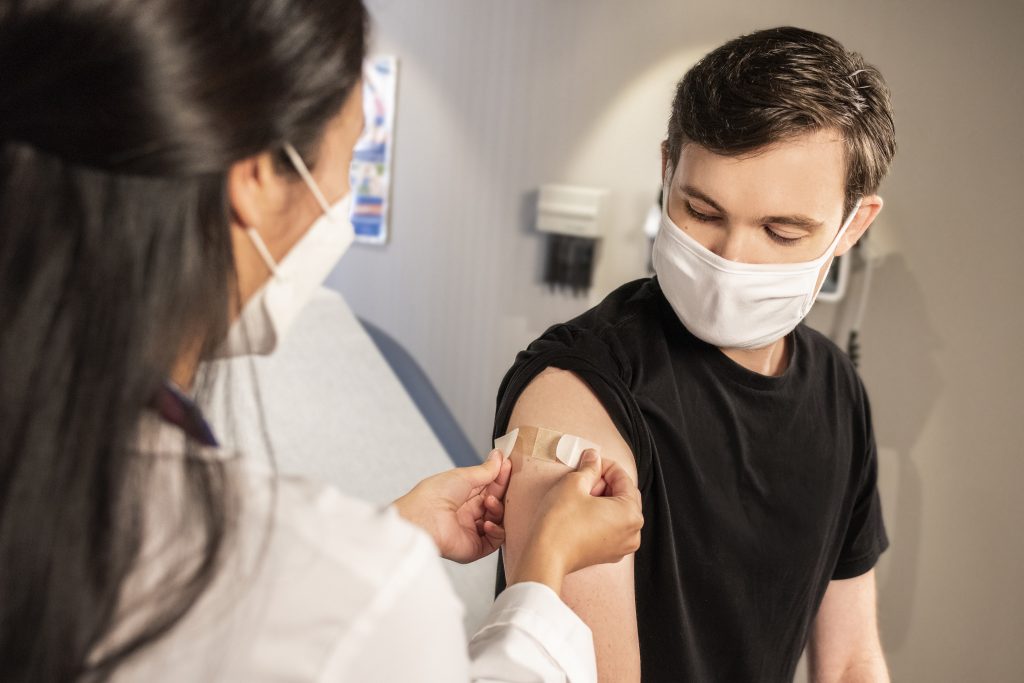
The FDA authorization will ease the worry of middle and high school administrators planning for the fall should all students be vaccinated by that time.
The Food and Drug Administration has plans to authorize the emergency use of Pfizer Inc PFE 0.01% and BioNTech SE’sBNTX 17.88% jointly-developed COVID-19 vaccine in adolescents aged between 12 to 15 years, the New York Timesreported Monday.
What Happened: The move means that the campaign to vaccinate against COVID-19 will potentially expand to millions more, as per the Times.
Photo by Gustavo Fring via Pexels
The FDA could reportedly give its go-ahead early next week. Subject to clearance, the U.S. Centers for Disease Control and Prevention’s vaccine advisory panel is likely to meet the following day to take stock of both the clinical trial data and make recommendations of use in the adolescent age group.
“We can assure the public that we are working to review this request as quickly and transparently as possible,” a spokeswoman for the FDA told the Times. She declined to comment on the timing of the agency to the Times.
BioNTech shares closed 10.95% higher in Monday’s regular session to $208.90 and rose another 3.35% to $215.89 in after-hours trading. On the same day, Pfizer shares also gained 3.05% in the regular session to $39.83. The shares rose 0.38% in after-hours trading.
Why It Matters: Pfizer announced positive results related to the Phase 3 trial evaluating its BNT162b2 vaccines in 2,260 adolescents aged 12 to 15 years on Mar. 31.
The results indicated 100% efficacy and substantial antibody responses and showed that the vaccine was well tolerated.
At the time, Pfizer CEO Albert Bourla said that the drugmaker plans to submit data to the FDA as a “proposed amendment” to the company’s existing Emergency User Authorization for the vaccine.
Cantor Fitzgerald analyst Louise Chen said Pfizer’s stock is underappreciated, after the adolescent data was released.
The FDA authorization will ease the worry of middle and high school administrators planning for the fall should all students be vaccinated by that time, as per the Times.
Thoughtful ideas to help you choose the perfect marijuana-inspired gift for those women who are lovingly doing life’s most challenging job.
Let’s be honest: only mothers really know what it means to be a mother and raise children. Not even pregnant moms-to-be have a clue what they’re in for, much less those of the male persuasion.
Yup, that’s right. Being a mother is simultaneously the most fulfilling and most challenging job in the world. The things that matter the most never come easy.
Whether a stay-at-home mom or a working mom, one thing is certain: it’s nearly impossible to find time for oneself. Mothers often seem to be on an endless and essential search for stress relief, relaxation, getting some exercise, meditating or whatever it is that helps them take care of their own wellbeing, health and happiness. To help, here are 6 cannabis gifts for Mother’s Day.
Photo by rawpixel.com
That’s why for this Mother’s Day, you might want to say thank you to your mom with an original cannabis-inspired gift.
Acknowledge everything she has done, and continues to do for you, by introducing her to CBD-infused relaxation and exquisite skin care products. Or, if she is already a fan of Mary Jane — many moms are — then get her just the right gift to ease and open her mind even further.
I am sure there is a cannabis-infused gift that every mom would appreciate, from bath salts, soaks and scrubs to oils, lotions, creams and on to edibles and pre-rolls.
Clearly cannabis is a healthier choice than alcohol or a box of chocolates. As we know from a wide body of research, cannabis provides a healthy sense of relaxation without the annoying and unhealthy side effects of alcohol.
If mom is unfamiliar with the world of cannabis, perhaps now is the time to explain the benefits of and difference between THC and CBD products. Whether she is feels like getting high or simply relaxing in a hot tub, or both, there are many products to be had. And remember, CBD-infused products are for everyone!
Mothers Unite
Mothers all know what it’s like to face daily challenges. Let’s honor each other and pick out some gifts to share. For that reason, I’ve crafted several ideas to help you choose the perfect marijuana-inspired gift for those women who are lovingly doing life’s most challenging job.
Let’s start with the Santa Barbara County-licensed cannabis cultivator Autumn Brands and its Nourishing Muscle + Joint Salve. This cannabis-infused topical contains 400mg of full-spectrum, pesticide-free cannabis (ratio 1:7). It is rich in terpenes, cannabinoids, and magnesium. It should bring muscle and joint relief, provide general body relaxation and better sleep quality for somewhere between $45 and $60, depending on the dispensary.
Courtesy image
CBD brand Green Eagle is not only for professional athletes, with the NFL Hall of Famer Brett Favre as its spokesman; it is for all outdoor adventurers, sports enthusiasts and moms on the go. Back and muscle daily aches and pains are often part of a “mom’s job,” and Green Eagle’s Max Relief Freeze Spray may help you deal with it. It is THC-free, made with hemp-derived CBD, arnica, camphor and menthol, using nanotechnology that enables better absorption. It is priced at $39.99.
Courtesy image
A women-owned CBD brand should know what women want, right? That’s why our list of Mother’s Day cannabis gifts includes TONIC CBD’s Outer Space CBD + CBG Body Butter rich in plant-derived butter, oils, and essential fatty acids to moisturize and nourish your skin. CBD and CBG compounds in the product will provide much-needed antioxidant effects.Outer Space CBD + CBG comes in two sizes, 1 oz and 4 oz, with prices from $15 to $65.
Courtesy image
Cannabis delivery company Ganja Goddess was thinking of moms and those who will celebrate them when it decided to offer a special 15% discount on a variety of cannabis and CBD products from May 1-9. Just use the discount code CANNAMOM.
Photo courtesy of Ganja Goddess
Now a little something for those moms who are known for supporting good causes. Is there a better gift for mom than one that shows you understand what she’s passionate about? Justice Joints Pre-Rolls, a brand that donates 100% of its profits, has teamed up with the Last Prisoner Project, which supports criminal record expungement and release and reentry programs with its profits. One full gram of high-grade cannabis is $10. You can get her a few!
Nugg Club, a cannabis subscription box, is all in for Mother’s Day this year. The Club is offering $30 off the first box with the code CLUBMOM. Furthermore, it has also designed something special — a full Mother’s Day curated set of products that include drinks, edibles, flower, pre-rolls, topicals and vapes. Though Nugg Club gift boxes are usually priced at $99, they contain products valued up to $225.
The comparison between the war in Afghanistan and the Drug War is particularly appropriate. They even overlap.
Disclaimer:The views expressed in this article solely belong to the author and do not necessarily represent those of The Fresh Toast.
President Biden has announced that the U.S. and our allies will be out of Afghanistan no later than September 11, the 20th anniversary of the terrorist attacks on the World Trade Center and the Pentagon. Finally, we are seeing the end of what is being called our “longest war.”
But it is no such thing. Of course, the “Prime Directive” of U.S. public policy, journalism, and politics, religion, and pet care, is “Don’t Mention The Drug War” (see: America’s Longest Ongoing War: The War on Drugs).
Ironically, it was signed at The Hague, the Netherlands. on January 23, 1912, during the First International Opium Conference. “It was the first international drug control treaty. The United States was unsuccessful in its attempts to have cannabis included in the 1912 Convention.”
In 1937, the notorious Harry Anslinger got Congress to pass the Marihuana Tax Act (see: Harry Anslinger: The Godfather Of Cannabis Prohibition). It was signed into law by Franklin Roosevelt, and almost every President since has contributed to an escalation in the violence.
The comparison between the war in Afghanistan and the Drug War is particularly appropriate. They even overlap. Afghanistan is still a major source of heroin, but the once famous Afghani hash is impossible to find. Surprise, surprise!
The most important point is that the War on Drugs was never just a figure of speech, like the War on Cancer or the War on Poverty. It was and is real violence by the users and sellers of some drugs against the users and sellers of other drugs.
First, the United States was never officially at war with Afghanistan. In fact, after easily overthrowing the Taliban terrorists who had seized control, the war was very much like the Drug War in the U.S. and Latin America.
Mexico, Guatemala, Honduras, Colombia, Peru, and other countries that are barely functioning have been destabilized by both the violence and corruption of the Drug War. It has also spread to Africa to supply Europe with cocaine.
Photo by Spencer Platt/Getty Images
Meanwhile, in the U.S., we had the National Guard rappel from helicopters into feral hemp fields, aptly called Ditch Weed. We have militarized our police with “war surplus” equipment, even armored cars. We kick down doors and violently storm into American homes under no-knock warrants. Just like Afghanistan.
It is still a war, even if the violence is all from one side. In fact, most of the violence in the domestic Drug War is simply threatened by the police against peaceful marijuana users. There have been over 22 million Americans arrested for marijuana possession since the late 1960s. Even now, there are still over half a million marijuana arrests every year, more than for all violent crimes combined.
The Drug War was also like other wars because truth really was the first casualty, and the lying about cannabis is still the foundation of most state violence in western democracies.
As Patrick Henry once said, “Gentlemen may cry, ‘Peace! Peace!’ — but there is no peace.”
We’ve been overexerting our eyes for years. The pandemic has made this much worse.
If there’s one thing the pandemic has indisputably done is increase the amount of time we look at screens. Whether we’re working, relaxing, or watching TV, we’re glued to our screens for the majority of our days. We weren’t doing all that great with our screen time before the pandemic, so new eye conditions have been popping up, all influenced by lockdown measures.
The Huffington Post spoke to different health experts and determined that there were a few conditions we might all be more prone to now that we spend more time looking at screens. Here are a few you should keep an “eye” on:
Nearsightedness
Photo by kmatija/Getty Images
Myopia, or nearsightedness, has an important genetic element to it, with some people developing it due to their genes. But several studies suggest that lack of time spent outdoors and a lot of eye stress might contribute to this condition. “All of this screen time can contribute to myopia [i.e., nearsightedness], since people aren’t getting enough time to relax their vision or look into the distance,” said behavioral optometrist Juanita Collier. “And because we’re spending much more time inside, our bodies aren’t getting that important daily dose of vitamin D, which has been shown to decrease the progression of nearsightedness.”
Dry eye occurs when we don’t blink enough, which can happen when staring at screens or when wearing masks for long periods of time. Dry eye can result in watery eyes, blurred vision and light sensitivity. To prevent it, make sure you stay hydrated, wearing a mask with a pliable nose wire and blinking often and purposefully, that way you provide breaks for your eyes.
While “computer vision syndrome” sounds like a cool modification for the future, it actually refers to the several symptoms that are associated with spending so much time looking at computer screens. These screens force our eyes to work harder due to the fact that there’s low contrast and difficulty in differentiating letters from the backgrounds. They include computer screens, tablets, phones, etc. and facilitate the development of headaches, eye strain, blurred vision and dry eyes. In order to prevent this, health experts recommend attaching screen filters to your devices, turning off blue light, blinking more, and taking frequent breaks.
While the USPS could have banned vaping products altogether as part of the new rule, it now seems that they are taking time to revisit the implications.
In a move that should encourage the cannabis industry, the United States Postal Service (USPS) is delaying the implementation of its new rules for the enforcement of a ban on direct-to-consumer mailing of vaping products. As we reported earlier this year, recent amendments to the PACT Act (Preventing All Cigarette Trafficking) required the USPS to issue regulations putting into effect the new ban on USPS mailing vape products from retailers to consumers.
I remain optimistic about mailability, despite the grim outlook lately with this news. One reason is that the principles of statutory interpretation lend credibility to the argument that the ban does not apply to vaping products that are not used to deliver tobacco or nicotine. While the USPS could have banned vaping products altogether as part of the new rule, it now seems that they are taking time to revisit the implications of an all-encompassing prohibition on shipments of vaping products. The USPS must not exceed its own legal authority under the PACT Act by regulating vaping products that fall outside the definition of tobacco product, as such a rule could be subject to challenge by various industry groups.
Photo via pxhere
If you’ve been following our PACT Act updates, by now you might recall that he amended PACT Act now defines Electronic Nicotine Delivery Systems (ENDS) as “any electronic device that, through an aerosolized solution, delivers nicotine, flavor, or any other substance to the user inhaling from the device; includes—an e-cigarette; e-hookah; e-cigar; vape pen; advanced refillable personal vaporizer; electronic pipe; and any component, liquid, part, or accessory of a device described without regard to whether the component, liquid, part, or accessory is sold separately from the device.”
While many fear that this would automatically encompass vaporizer components that are used in connection with marijuana and hemp products, I am not convinced that this is the case and the USPS decision to postpone the rule-making process provides greater support for such a position.
THE TOBACCO CONTROL ACT
The Tobacco Control Act (TCA) supersedes the PACT Act if there is a conflict between the two bills, due to a provision in the PACT Act that states the law does not alter or affect the provisions of the Food, Drugs, and Cosmetics Act (FDCA), which includes the TCA. The TCA does not explicitly define ENDS but it does define Tobacco Products as follows:
[A]ny product made or derived from tobacco that is intended for human consumption, including any component, part, or accessory of a tobacco product (except for raw materials other than tobacco used in manufacturing a component, part, or accessory of a tobacco product). (21 USC 321 (rr)(1).)
The TCA granted the Food and Drug Administration (FDA) broad authority to determine what products were considered “tobacco products” because, in addition to granting FDA regulatory oversight over cigarettes, roll-your-own tobacco, smokeless tobacco and other traditional products, the TCA also empowered the FDA to regulate any other tobacco products it deemed to be subject to the TCA. In May 2016, the FDA issued the “Deeming Rule” to establish what novel products would be subject to TCA.
The FDA has specifically explained what they consider to be ENDS under the TCA’s definition of “Tobacco Products.” That FDA interpretation excludes CBD, THC, or other cannabis derivatives because the FDA lacks the jurisdiction to regulate such products under the TCA. The FDA specifically defines ENDS in enforcement guidance:
Electronic nicotine delivery systems (or ENDS) include devices, components, and/or parts that deliver aerosolized e-liquid when inhaled. For example, FDA considers vapes or vape pens, personal vaporizers, e-cigarettes, cigalikes, e-pens, e-hookahs, e-cigars, and e-pipes to be ENDS.
The FDA further states that e-liquids generally refer to “liquid containing nicotine and nicotine-containing e-liquids (liquids combined with flavorings, colorings, and other ingredients).” If a vaporizer product, component, or accessory: (1) does not deliver aerosolized e-liquid when inhaled, (2) does not contain nicotine or other material made or derived from tobacco; (3) is not intended or reasonably expected to be used with or for the human consumption of a tobacco product; and (4) is not derived or made from tobacco and intended for human consumption, then the FDA does not consider this to be included in the definition of an ENDS product or tobacco product altogether. Unlike the amended PACT Act, ENDS – for the purpose of the TCA and Deeming Rule – is not defined to include vapor devices and accessories used with “other substances” that do not contain nicotine or tobacco.
Photo by Khwanchai Phanthong from Pexels
READING THE FINE PRINT
The inclusion of the term “other substances” in the PACT Act definition of ENDS was likely intended by its drafters to capture formulations of e-liquids containing tobacco or nicotine that sophisticated lawyers for the tobacco industry would argue are outside of the FDA’s framework under the TCA. The vapor market is very popular among young people and the whole premise of the PACT Act is preventing underage tobacco sales and the avoidance of tobacco taxes. The PACT Act definition of ENDS goes beyond the TCA’s definition of ENDS, and it seems lawmakers wanted to target the e-cigarette industry. But lawmakers failed to read the fine print, as the ENDS definition that they came up with is totally inconsistent with the FDA’s Deeming Rule.
The cannabis vaporizer community could make the argument that the ENDS definition included in the PACT Act does not cover products reasonably expected to be used with cannabis or its derivatives including THC, CBD, and hemp-derived products. Those products are not reasonably expected to be used for human consumption of a Tobacco Product.
The amended PACT Act explicitly does not alter the FDCA which includes the TCA, indicating that the addition of “any other substance” to the definition of ENDS probably was not meant to capture non-nicotine and non-tobacco products such as cannabis.
BOTTOM LINE
If lawmakers intended to truly change the way the federal government defines ENDS to include non-tobacco and non-nicotine products, it is rational to assume that Congress would have also amended the TCA to allow the FDA to regulate these other substances. The strategy moving forward should be to encourage USPS to specifically focus on the ENDS market because of the relation to nicotine and tobacco, as this is what is statutorily required and authorized by the PACT Act and anything done in relation to cannabis or hemp should be seriously challenged by the industry.
Emily is a recognized expert on cannabis-related legal, regulatory, and policy issues, having worked with a wide range of individuals and entities in both the public and private sector. You can contact Emily at info@gl-lg.com or (503) 488-5424.
The Marijuana Collection Act would allow the federal government to get an accurate glimpse into the legal weed movement to see what works and what doesn’t.
Some Congressional members believe the concept of marijuana legalization should be studied extensively to pass the best laws at the federal level. Senators Robert Menendez (D) and Rand Paul (R), along with Representatives Sylvia Garcia (D) and Don Young (R), have introduced a piece of bipartisan legislation in both chambers called the Marijuana Collection Act.
If passed, the bill would task the Secretary of Health and Human Services, the Attorney General, the Secretary of Labor and various health agencies to examine taxed and regulated marijuana markets across the nation over the next decade to learn more about what legal weed does for state and local economies, public health and criminal justice. It is then that nationwide legalization might be more realistic.
“As more and more states legalize and regulate marijuana, we must take a thorough examination at how different laws and policies in different states have been implemented, what works, what doesn’t, and what can be replicated elsewhere,” Senator Menendez said in a statement accompanying the bill.
Photo by traffic_analyzer/Getty Images
“It’s important to understand how communities and people are ultimately impacted by marijuana legalization and its effect on local economies, public health, criminal justice, employment, and our nation’s battle with opioid and other drug addiction. Having this data at our fingertips and making it available to the public will help drive public policy decisions and dispel any misconceptions about marijuana legalization.”
The word on the street is that the bill was introduced in response to the recent pressure for Congress to legalize marijuana. It’s an alternative, a compromise, a trap door if Senate Majority Leader Chuck Schumer cannot work the magic he’s been promising by ending prohibition nationwide. The Marijuana Collection Act would allow the federal government to get an accurate glimpse into the legal weed movement to see what works and what doesn’t. From there, lawmakers could draft policy based on years of research rather than just go for it and hope for the best.
All of the data collected would be reported to the National Academy of Sciences every couple of years. Part of the goal is to see if legal marijuana can actually help remedy the opioid epidemic.
“Congress and the American people need reliable facts on the impact of states’ legal marijuana programs. We need independent data on how these programs impact state budgets, the public health and employment,” said Representative Garcia. “This is especially important amid the pandemic, that’s been filled for many with isolation, depression and financial stress that has led to an alarming rise in opioid deaths – especially among communities of color.”
The guts of this legislation would be tremendous for cannabis. It would allow Uncle Sam to see just how to make marijuana legalization work on a grand scale. However, if Congress were to buy into the Marijuana Collection Act, it would ensure that federal marijuana legalization would be put on hold for another 10 years. But then again, the chances of federal cannabis reform taking shape in 2021 aren’t very good, as the Senate must contend with the filibuster, lack of Democratic support, and the genuine possibility of not being able to use the budget reconciliation process to move it forward.
The Marijuana Collection Act might be a way to unify the parties on this issue and advance it in a palatable way. Even President Biden has stated that he wants to see more research before moving to legalize marijuana in the way states have done for adult use. We could end up seeing this legislation becoming this year’s rockstar of cannabis reform.
One study found that cannabis reduces perceived symptoms of negative affect in the short-term, but continued use may exacerbate baseline symptoms of depression over time.
Current research on how marijuana affects mental health disorders is mixed, but the public perceives the relationship differently. About 50% of adults believe cannabis relieves symptoms from anxiety, stress, and depression, a 2018 national survey reported. Of the more than 16,000 U.S. adults who were polled, only 15% of them thought marijuana could worsen symptoms of depression.
A study published in the medical journal JAMA Network Open calls that perception into question. Researchers tracked the cannabis habits of more than 16,000 people across 11 years and discovered individuals with depression had about double the risk of using marijuana than those without depression.
Photo by Dmitry Schemelev via Unsplash
“[T]hese findings are concerning, given that both heavier use and depression have been associated with increased risk of cannabis-related harm,” the study’s authors wrote.
How cannabis affects depression, both positively and negatively, is not yet fully understood. One study reported cannabis could relieve stress-induced depression and Canadian researchers found marijuana was an effective anti-depressant at low doses.
But a landmark 2017 study concluded that for people with depression “cannabis reduces perceived symptoms of negative affect in the short-term, but continued use may exacerbate baseline symptoms of depression over time.”
That marijuana possibly worsens depression over time concerned researchers in the recent investigation, as they saw a “concerning” trends between the two. These researchers used data from the National Health and Nutrition Examination Survey to track marijuana use by 16,216 U.S. adults ages 20-59 between 2005 and 2016. Among those participants, 1,413 received positive diagnosis for major depression through Patient Health Questionnaire-9 — a survey doctors use to objectify degrees of depression severity.
Photo by Iz zy via Unsplash
The number of people with major depression didn’t really change across the 11-year span, but using marijuana dramatically spiked, particularly for those with depression. In 2005, those with depression were 46% more likely to consume marijuana, but by 2015 they were 130% more likely to do so. The odds of near-daily marijuana use for people with depression jumped even higher; in 2005 they were 37% more likely to use cannabis more than 20 days per month, but 216% more likely to do so in 2015.
“These results suggest that over time, a higher proportion of individuals with depression are using cannabis,” the study’s authors wrote. “This could be the case if an increasing number of individuals with depression are using cannabis to self-medicate, potentially influenced by media and advertising presenting cannabis as beneficial to health.”
Although their analysis showed this relationship, researchers noted that further studies into the possible explanations and causes of the increasingly strong association is needed. Until then, the authors recommended new information campaigns about the possible risks related to cannabis and depression.
A few solutions that can soothe your sore throat and other symptoms the next time you smoke that unique strain.
Toking can be really frustrating and dissatisfying when it produces irritating symptoms in a user’s throat. These symptoms include a continuous cough, a raspy voice, as well as a painful and dry sore throat.
The appearance of these irritations may vary depending on the type of cannabis smoked or the user’s tolerance to the common irritant in this situation: smoke.
The enjoyment of several weed smokers has been cut short due to the painful sore throat developed almost immediately after smoking one or two sticks. It not only affects recreational cannabis smokers, it also affects medical patients using marijuana to relieve the symptoms of their ailments. In fact some users have had to quit the use of medicinal cannabis due to the sore throat developed. What the majority of users don’t know is that there are other ways you can try to soothe your sore throat and still be chanced to smoke some more.
Why Cannabis Users Develop A Sore Throat After Smoking
When a person smokes, it results in a dry mouth and throat. This is because toxic chemicals are inhaled along with the tar present in the hot and dry air. These particles can irritate the throat. Research carried out by the National Institute on Drug Abuse (NIH) has made it known that the smoke inhaled when smoking cannabis comprises ‘carcinogenic combustion products’. This is enough reason for users to develop sore throats.
While the user can continue smoking when the throat is sore and irritated, it is not advisable, unless he/she attends to the irritation.
Photo by DESIGNECOLOGIST via Unsplash
If you’re a new user or you just recently developed the irritation to a new strain and you’re feeling helpless, don’t fret. To help with this, I have curated a few solutions that can soothe your sore throat and other symptoms the next time you smoke that unique strain.
Solutions To Help With Sore Throat After Smoking
Stay hydrated
Smoking dehydrates the throat and mouth—that is, it draws and dries out the moisture that is needed by these tissues.
The intake of at least the recommended daily amount of H2O is necessary for regular smokers. Although, they need almost 50% added to the recommended amount.
Smoking for hours on end without drinking water or any other hydrating liquid can be detrimental. The healthy lining of the throat gets stripped off when there is no moisture available, hence, the painful soreness felt in the throat as well as the raspy voice that’s developed.
Stay hydrated with water regardless of the amount of smoking you plan on doing.
Before smoking—drink water,
While smoking—drink water,
Immediately after smoking—drink water.
Avoid spicy foods
Smoking marijuana induces a healthy appetite in seasoned smokers. They either crave more pot or they crave food.
In this situation, you have to do well to avoid spicy meals when you have a sore throat.
The acidic nature of these hot spices could worsen the inflammation. Chilli pepper, hot sauces, and even nutmeg should be avoided.
Photo by Sarah Pflug via Burst
Rather, you should eat and enjoy only soothing meals. Like ramen, tomato juices, and other soothing sauces can help ease the pain and boost the immune system.
Although, it is common for you to crave more weed after smoking, eating these soothing meals will help satisfy your cravings in a way.
So when you’re about to smoke, make sure your fridge is filled with your favorite non-spicy meals. Ice cream is also a better option for when your throat is burning up after smoking.
Gargle with warm salt water
Saltwater gargle is an old but gold solution to throat infections. In the same way, it is an efficient solution for easing a sore throat.
While it has bad taste, the relief it offers is worth it.
You just have to warm up a little amount of water, add at most 5 tbsp of salt and stir till the salt dissolves. Then you gargle for at least 30 seconds before spitting the water out and gargling another. Continue till you feel better. Results can be seen in a few minutes, or at most a few hours.
For cannabis users that tend not to smoke at home or in a place where they can easily access salt and tap water, they tend to carry around a Chloraseptic spray— which acts the same way salt water does.
Photo by Mayara Klingner/EyeEm/Getty Images
Reduce the amount of cannabis consumed
This does not mean you should quit cold turkey (that’s a bad idea). This means you should reduce the number of sticks you smoke. However, if the sore throat turns out to be very bad, you might need to take a few days off. This would give the throat time to recover, rather than degenerate into more serious issues.
By cutting down how much or how often you smoke, you’re helping your throat tissues and sinuses stay hydrated and less irritated.
Other solutions include:
Lick honey or lemon.
Drink soothing herbs tea with fruits
Avoid caffeine or energy drinks
Switch your usual smoking location to a more airy place.
Purchase a vaporizer or humidifier to remove stale dry air in your homes.
Try another method of using cannabis— vaping and consuming edibles.
Photo by Itay Kabalo via Unsplash
Vaping: This is an inconspicuous way of enjoying the effects of the cannabinoid in a marijuana strain. It is also healthier, as no dry/hot air is inhaled. Although, you might still take in a little bit of tar.
Edibles: Not everyone fancies smoking. Edibles are food products that have been infused with an active cannabinoid— could be THC, CBD, or both. It is the healthiest way of ingesting weed— no risk of having respiratory issues in the process of getting high.
Bottom line
If you have adjusted and tried every solution listed above, and your throat has still not recovered — it is still sore and the pain persists — it might be an indication of an underlying illness. If so, consult your health practitioner ASAP.
Not want to share what you do or your weed? Here are a few creative hiding spots both discreet and convenient.
Whether you live with roommates or prefer to have your weed out of sight, good hiding spots are important. The ideal place will preserve the quality of your cannabis while also being discreet and disguising the smell, something that’s easier said than done.
It’s important to have a designated spot for your weed; that way you won’t lose it and it won’t appear during inconvenient times. It’s also important to keep it in a place that’s out of reach, with some sort of security mechanism that prevents pets or children from accessing it.
Here are 5 great spots to hide your weed:
A hollow book
Photo by Thought Catalog from Pexels
If you have a bookshelf at your disposal and a small stash of weed, a hollow book is a great option. You can purchase some off of Etsy or make one yourself, with there being plenty of DIY manuals online. Hollow books are beautiful and discreet, but they’re not the best at containing smell; be sure to store your weed in an airtight container which can then be stored in the hollow book.
While definitely creating a risk for washing your jeans and ruining your weed, clothes usually make for a lowkey hiding spot that’s aptly dark and moist. As is the case with the hollow book, a pocket won’t isolate smells, so it’s important to store the weed in an airtight bag or jar beforehand.
A coffee can
Photo by Clay Banks via Unsplash
Aside from being discreet, coffee cans have that distinct coffee smell, which can perfectly disguise the scent of marijuana. Keeping the coffee can in a plain sight place will make the can less conspicuous.
A thick market or highlighter is also an efficient place to store weed, which can be conveniently stored in a pencil case. In order to store the cannabis, make sure to remove cap, take out the highlighter or ink. This won’t serve for a long term solution, but it can keep your weed portable.
Old gadgets
Photo by TheDigitalWay via Pixabay
Old gadgets and phones serve as discreet hiding places for weed, especially because you can find one in every house and no one is going to check their insides. Depending on the amount of weed you want to store in it, you could use a battery pack or an empty speaker, which can store larger amounts cannabis.
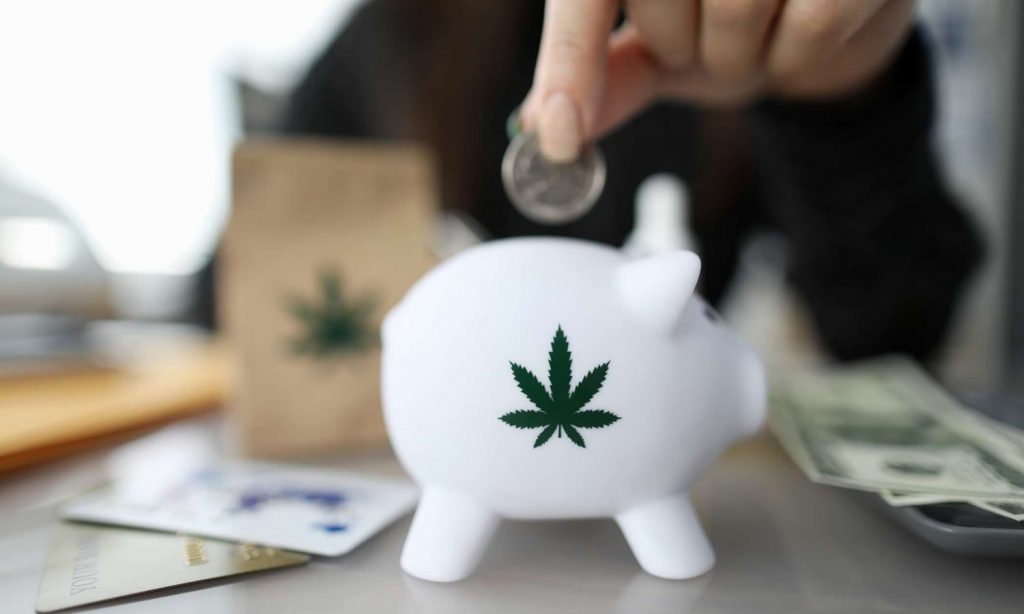
The U.S. House of Representatives voted for the Secure and Fair Enforcement Banking (SAFE) Act on Monday for the fourth time. The bill aimed at enabling banks to provide its services to state-legal cannabis businesses never before passed to the Senate floor.
And Cantor Fitzgerald’s analyst Pablo Zuanic doesn’t see the bill reaching a Senate vote either, as leading Democrats there are pushing for broader reform, and not for “isolated federal level changes” for the industry.
Back in March, Senate Majority Leader Chuck Schumer held a short conference with Senate Finance Committee Chairman Ron Wyden (D-OR) and Sen. Cory Booker (D-NJ) sharing their actions on drafting extensive reform legislation.
Just last week, Schumer announced his plans to introduce a federal legalization bill soon.
“Once it is introduced, it will go on the floor,” Schumer said.
Photo by OlegMalyshev/Getty Images
‘Compromise Scenario’
“With the considerable limitations of a two-year Congressional term, President Biden’s apparent lukewarm support, and the threat of a Republican filibuster, we are starting to see a ‘compromise scenario’ is quite likely,” Zuanic said in a Tuesday note.
With so much noise around Democrats and cannabis legalization going on for a while, the analyst doubts they’ll end up doing anything substantial, but instead thinks “a narrower bill of bills” is likely to get the final signature.
According to Zuanic, that limited bill would include:
Federal level decriminalization, which is allegedly acceptable to the President as well;
Cannabis rescheduling from class 1 status under the Controlled Substances Act;
Banking reform;
Enabling states to decide about their programs.
If the bill passes in the above-stated format, it would imply a positive change for multi-state operators, ultimately boosting their valuations.
”We think the banking reform provisions would propel the US exchanges (NYSE, NASDAQ) to list US MSOs, and such a move would mean, in our opinion, that both the TSX (Toronto Stock Exchange) and US exchanges would have to be OK with large listed Canadian LPs buying US MSOs (in full or stakes),” the analyst explained.
Photo by Aleksandr_Kravtsov/Getty Images
New York Flower Sales Update
Also in the note, Zuanic looked into the New York market, noting it’s probable that adult-use flower sales won’t begin prior to January 2022.
With the “Office of Cannabis Management” yet being in the process of configuration, the analyst thinks a full staff won’t be chosen prior to June. This means that the process of drafting the new rules for the adult-use program and introducing changes to the medical program would only commence in summer.
“We think this process could take as long as a year, so we model recreational sales starting only by 7/1/22.”