Monday, June 22, 2026
Home Blog Page 558

How To Stop Touching Your Face In 5 Easy Steps

Face touching is an extremely common habit, one that makes it easier for you to get sick and interact with bacteria.

The news of the coronavirus spreading throughout the U.S. has caused plenty of alarm. It has also reminded us of how hard it is to avoid bacteria and germs, and how dry your hands can get when you wash them so often.

Aside from regular hand washing, one of the most important safety measures you can take is to avoid touching your face, something that is much easier said than done.

During a press conference in California, Sara Cody, the public health officer and director of Santa Clara County, explained why we should avoid hand-to-face contact, especially around the eyes, nose and mouth. She then proceeded to lick her finger in order to flip a page.

In brief: even experts have a hard time managing their face touching habits. According to a 2015 study, people touch their face around 23 times per hour, facilitating the spread of bacteria and viruses. This habit is also frequently associated with the development of zits and acne, so even if there was no coronavirus it’s good to control the urge.

Here are some things you can do to manage your face touching:

Identify triggers

The New York Times says that once you identify triggers, it’s easier to manage a compulsion. “If you find yourself rubbing your eyes because they are dry, use moisturizing drops. If you are using your hand as a chin rest or to adjust your hair, be aware of that,” explains the article.

Try holding on to something else

facebook continues to take over our lives
Photo by Abigail Keenan via Unsplash

RELATED: How To Protect Yourself From The Coronavirus While Traveling

Touching our faces constantly is usually a way to vent anxiety and to keep our hands busy. Try holding on to an object, be that a stress ball or something that keeps your hands moving. Remember to keep that object clean and sanitized by periodically wiping it with alcohol or by washing it with soap.

Use reminders

Use app reminders or paste Post Its around your office and house, ensuring you stay on top of these behaviors and can minimize them as much as possible.

Use mindfulness

Mediation
Photo by kosal ley via Unsplash

RELATED: How Long Can The Coronavirus Live On Surfaces?

Since these fidgety behaviors are usually a symptom of anxiety or restlessness, try to practice staying in the moment and being mindful. Take deep breaths for a couple of seconds and try out guided meditation, especially during moments of stress.

Take care of your hands

It’s very important to keep your hands clean since it’s likely that at some point you’ll have to touch your face. This isn’t the end of the world. Remember to wash your hands often and to use lotions, keeping them hydrated. It’s also important to try to relax and stay as calm as possible since stress can lower your defenses and make it easier for you to get sick.


Study: Teenagers Are Waiting To Experiment With Drugs Later

0

According to new research, the average age when teens first try drugs, such as cocaine, heroin, and marijuana, has risen since 2004.

The advent of marijuana reform across North America caused politicians and parents alike to worry about teenagers having easy access to cannabis. But in places where marijuana has become legal for adult-use, adolescents are consuming less weed, not more. This is true in Canada, where marijuana is more recently legal, as well as a city like Denver, an early site of recreational marijuana.

New research from Washington State University scientists show this isn’t true just of marijuana. Teenagers are trying the majority of drugs later in life, not just cannabis. The study, published in JAMA Pediatrics, showed the average age of teen drug use rose between 2004 and 2017 for 12 of 18 common drugs. On average, teenagers previously started trying drugs around the age of 15, but the study found that increased to 17 or 19, depending on the drug in question.

RELATED: Youths Smoke Less Weed, Adults Smoke More Following Marijuana Legalization

“This is great news, because delaying drug use prevents early exposure, which is associated with a variety of negative health consequences, including increased risk of drug use disorder and long-term impairments such as depression, neurocognitive deficits, involvement in risky behaviors, and sexually transmitted diseases,” lead author Karl Alcover said in a statement.

can hackers tell what your texting and searching by listening
Photo by Teddy Rawpixel via rawpixel.com

The researchers collected data from the National Survey on Drug Use and Health, an annual representative poll of U.S. residents 12-years or older. Researchers reported that teens trying alcohol or tobacco rose from 16-years to 17-years old in 2017. Meanwhile, adolescents tried heroin or cocaine at an average age of just over 17 in 2004. That figure rose to about 18-years for heroin and 19-years for cocaine by 2017. The study concluded rising ages for first-time use of the following drugs: alcohol, cocaine, ecstasy, hallucinogens, heroin, inhalants, LSD, marijuana, stimulants, and tobacco products.

Among the six other drugs they tested — crack cocaine, methamphetamines, opioids, PCP, sedatives, and tranquilizers — researchers found no significant changes in average age of first use.

RELATED: Nobody Understands How High Edibles Will Make Them

“Our study shows that since 2004 fewer individuals started using drugs at age 15 and younger, which is what we would typically consider as early-onset drug use,” Alcover said. “These promising trends may serve as early evidence that prevention strategies — especially those focused on teens and young adults — are working.”

On the other hand, the average age of inaugural drug use decreased for adults between the ages of 18 and 25. The study’s authors noted this could represent a shift in drug culture at large, and how adults interact with drugs. “This suggests an increase in the mean age at initiation of some drugs, although we have found no confirmation of this in recent literature.”

What Is Cannabis Telemedicine And Is It Beneficial?

0

Telemedicine is a practice growing in popularity thanks to advancements in technology. 

The practice of remote medical practice began decades ago in the 50s and 60s. Recent technological advancements, like the influx of communications apps, advanced the field to new heights. Today, a slew of services link patients and physicians via video and text-based chat apps. This can be found in every area, from general practice to psychology. 

The cannabis industry has caught on to telemedicine as well. In select states, patients now can talk with a doctor and possibly receive their medical cannabis recommendation without ever leaving home, benefitting scores of people searching for relief. 

Why Would a Person Use Telemedicine

Opting for a telemedicine appointment is much more convenient for many applicants or current medical cannabis patients. For some, their medical condition leaves them in no shape to visit a physician. In other cases, a patient may find themselves far from a doctor participating in the state’s medical cannabis program, having to drive a significant distance away for an appointment. 

5 ways medical marijuana can help you deal with pain
Photo by OlegMalyshev/Getty Images

Convenience is another point worth considering. Instead of the standard wait at the doctor’s office, telemedicine allows patients to dial into a call mere moments before their appointment, with the doctor doing the same. 

RELATED: Will I Need to Keep Using Medical Marijuana Forever?

Cost is just as much a point of consideration. While each office and service varies, a doctor’s visit can reach up to several hundred dollars when factoring in copay and registration. Telemedicine does include sign up and registration fees as well. However, with some services, sign up charges include the ability to speak with a physician for six or twelve months as part of their membership. 

Laws and Providers Vary By State

Those seeking a cannabis recommendation online may not find access to be so easy. Numerous states prohibit the practice altogether. In other cases, a patient and their doctor must establish a relationship before conducting online visits. Building such relationships typically involves at least one meeting between the two. 

Like many aspects of cannabis, telemedicine could soon be on the rise a bit more. As of February, New Jersey lawmakers were considering a telemedicine bill of its own to address ease of access and affordability concerns for patients.

The Feds Block Michigan Marijuana Using Gun Buyers

The ATF rescinded a provision that allowed Michigan residents to buy guns while using marijuana on the low.

An ongoing and often underreported feature of medical marijuana access is that it denies gun rights to patients. According to federal law, it’s a felony for an “unlawful user of … any controlled substance” to “possess … any firearm or ammunition.” By participating in state-legal medical marijuana programs, the feds assume patients are currently using cannabis. They are therefore not allowed to own a gun until 12 months after their last assumed use. Now, the feds block Michigan marijuana using gun buyers.

One way Michigan residents have avoided this problem is by obtaining a Concealed Pistol License (CPL). A 2006 provision from the Bureau of Alcohol, Tobacco, Firearms and Explosives (ATF) allowed unlicensed gun dealers in the state to accept a CPL in lieu of conducting a federal background check. This became a loophole for medical patients and recreational users alike in the state to both own a gun and having cannabis access.

But the feds have caught on. The ATF will now require all firearm dealers to conduct background checks on buyers before issuing their gun. That’s because the ATF believes Michigan State Police were granting CPLs to those who didn’t qualify, including “habitual marijuana users.”

RELATED: Your Guns Or Your Ganja? You Can’t Have Both

“Specifically, ATF learned that CPLs were and continue to be issued to applicants who were likely prohibited due to a conviction for a misdemeanor crime of domestic violence, and to habitual marijuana users,” reads an ATF memo sent to all licensed gun dealers. “Although possession and use of marijuana is not unlawful under Michigan law, marijuana remains a ‘controlled substance’ under Federal law, and those using marijuana are prohibited from possessing or transporting a firearm.”

Divided Government Is The Reason Marijuana Isn’t Getting A Fair Shake
Photo by Joshua Sukoff via Unsplash

This will force some Michigan residents to choose between medical marijuana access or gun ownership. Anyone who purchases a gun must fill out a Firearm Transaction Record, issued by the ATF. It includes the question: “Are you an unlawful user of, or addicted to, marijuana or any depressant, stimulant, narcotic drug, or any other controlled substance?” Saying yes to this question will block your possible gun purchase. Lying on this form is a felony.

RELATED: Will Marijuana Use Affect Your Chances Of Getting Hired?

Legal experts have advised recreational users in Michigan to avoid possessing a firearm. Two different laws — one under the criminal code and another under the firearms statute — strictly prohibits possessing a firearm while under the influence of marijuana. Though neither law states a definition for what “under the influence,” the ease at which the state could convict you using a combination of police observation and blood test is too much to risk.

This new advisory by the ATF is yet again an assault on Michigan’s state sovereignty and singularly targets the most law-abiding among us,” Michigan resident Josh Wayner told The Truth About Guns. “The citizens of Michigan voted to legalize marijuana in our state, and as a result of federal overreach, the government has decided to put upstanding citizens, who have the lowest rate of crime here, under the microscope for doing what is legal here if they choose to.”

Which State Will Legalize Marijuana First In 2020

As with any bet, there is no sure thing. But, the following predictions are most likely how it will all go down. 

There has been a lot of discussion this year about legalizing marijuana in a few additional states across the Midwest now that Michigan and Illinois have joined the party. So far, three states — Kentucky, Ohio and Indiana — are looking at some options that could lead to new marijuana laws. Which state will legalize marijuana first in 2020.

One of them is searching for ways to give patients the freedom to use cannabis for its therapeutic benefits, while another is trying to eliminate the criminal penalties associated with small-time possession. Meanwhile, the third is making a push to legalize for adults 21 and older. But the question remains: Which one of these jurisdictions will be the first to go legal? 

As with any bet, there is no sure thing. But, the following predictions are most likely how it will all go down. 

Kentucky

Last month, the Kentucky House of Representatives passed a bill aimed at legalizing marijuana for medicinal use. The bill would give patients with various health conditions the right to medicate with specific cannabis products. It would not, however, allow participants to smoke their medicine or engage in home cultivation. Some say it would be the strictest medical marijuana program in the nation.

Nevertheless, some lawmakers believe the bill is a solid start to getting Kentucky over its fear of weed. The only problem is, Senate President Robert Stivers isn’t sold on the idea. He’s not even convinced that the issue deserves a hearing. But he’s promised House lawmakers a “fair chance,” according to some reports.

RELATED: These States Are Most Likely To Legalize Marijuana In 2020

At this point in the game, we are only giving this legislation a slight chance of being considered by the Senate. Even if Stivers does allow the bill to move forward, there will likely be all sorts of amendments that will surely cripple its intent. But more likely than not, the upper chamber will overlook it completely.  

Doctor Says Marijuana May Have Caused 12 Hour Erection
Photo by wutwhanfoto/Getty Images

Ohio

As we predicted late last year, Ohio is officially making a push in 2020 to legalize marijuana for recreational use. The proposal, which is called Regulate Marijuana Like Alcohol, calls for adults 21 and over to be permitted to purchase weed in a retail environment similar to beer. It would give them the freedom to possess up to an ounce of grass at a time and grow up to six marijuana plants at home.

The measure was recently submitted to the office of Ohio attorney general Dave Yost along with 1,000 signatures in hopes of being given the green light to move on to the next phase of the campaign, which would be to go before the Ohio Ballot Board for final approval. If those two obstacles fall in line, the group would then have to collect 442,958 verified signatures by the beginning of July to qualify for a spot on the November ballot.

RELATED: Will Kentucky Legalize Medical Marijuana In 2020?

The problem here is these types of voter driven campaigns are super expensive. And while the measure does have the support of former Ohio State University and Washington Redskins wide receiver Evan Spencer, it is still going to take millions of dollars in funding to get this thing even close to done. That’s if it makes it through the gates of Ohio officials. Still, supporters of the measure seem confident in their ability to get it off the ground, so we’re giving it 50-50 at this juncture.

Indiana

Although a heaping majority of Hoosiers support the legalization of medical marijuana, lawmakers aren’t enthused. In fact, the Republican domination in Indianapolis has all but sealed the fate of even the most modest pot-related measures.

Indiana Senator Karen Tallian has been trying for years to get a bill passed that would decriminalize petty pot possession. But she can’t get Republicans to budge on the issue. And even if she could, Governor Eric Holcomb isn’t about to sign a marijuana-related bill. Holcomb said recently: “I can’t at this time because I’ve taken a couple oaths in my life. I’ve raised my hand and sworn to uphold the law, this being one of them. It is illegal. It is a controlled substance. It is illegal per federal administration. The law needs to change there first.”

Is It Possible For Medical Marijuana To Go Bad?
Photo by Rouzes/Getty Images

Meanwhile, interstate drug trafficking has become a real problem for the state ever since Michigan and Illinois legalized for recreational use. But the state’s solution to the problem is to just keep trying to arrest their way out of it. In other words, no matter what type of pot bill gets introduced in this session, it doesn’t have a chance at going the distance. Some lawmakers are even trying to force local prosecutors to revamp policies aimed at dismissing pot-related cases under a certain amount. It is for this reason that we are giving Indiana only a slight chance this year at pulling some kind of marijuana reform out of their hat.  

But which state will be the first to do something? 

Even though it is a long shot, we are going with Ohio. Because as long as the proposed amendment can make it through the initial hurdles, the voters will likely come out in droves to see that it passes. Some of the latest polls show as much as 86 percent support for full-blown legalization.

What Newbies Should Know About CBD Skincare Products

CBD has become an important compound for the skincare industry. Here’s what you should know.

CBD is a compound that can be used for plenty of things, ranging from treating ailments such as stress and depression to being used in some very effective beauty products. One of CBD’s most beneficial uses lies within skincare products, specifically moisturizers, that can easily treat aches and stiff joints.

If you’ve never used CBD and are curious about its effects, then you’ve come to the right place. While the CBD industry is kind of complex to get into, the compound’s presence in skincare products is pretty straight forward; CBD has a lot of healing properties, with some of the strongest ones providing plenty of relief for dry skin and muscle and joint pain.

RELATED: You Should Reconsider Using Store-Bought CBD To Treat Seizures

Here are some of the main ailments that CBD can provide relief from:

Itchiness

Top 5 CBD Skincare Brands That Celebrities Love
Photo by Toa Heftiba via Unsplash

RELATED: Can You Trust CBD Ads On Social Media?

Studies have shown that CBD oil can treat itchiness and even eczema, a condition that has no permanent cure. By reducing inflammation and dry skin, CBD oil can help people manage their bouts of itchiness while also giving the skin room for healing and mending itself.

Inflammation

CBD’s anti-inflammatory properties are well documented and are one of the main reasons why the compound is being used for lotions, massage oils and more. Depending on the type of product you purchase, CBD oil can do different purposes. For example, by purchasing a lotion designed to treat muscle aches, CBD’s anti-inflammatory properties can treat arthritis, joint aches, and other kinds kinds of aches. If you want to treat acne, CBD oil might help reduce the size and swelling of bumps and blemishes.

Dry skin

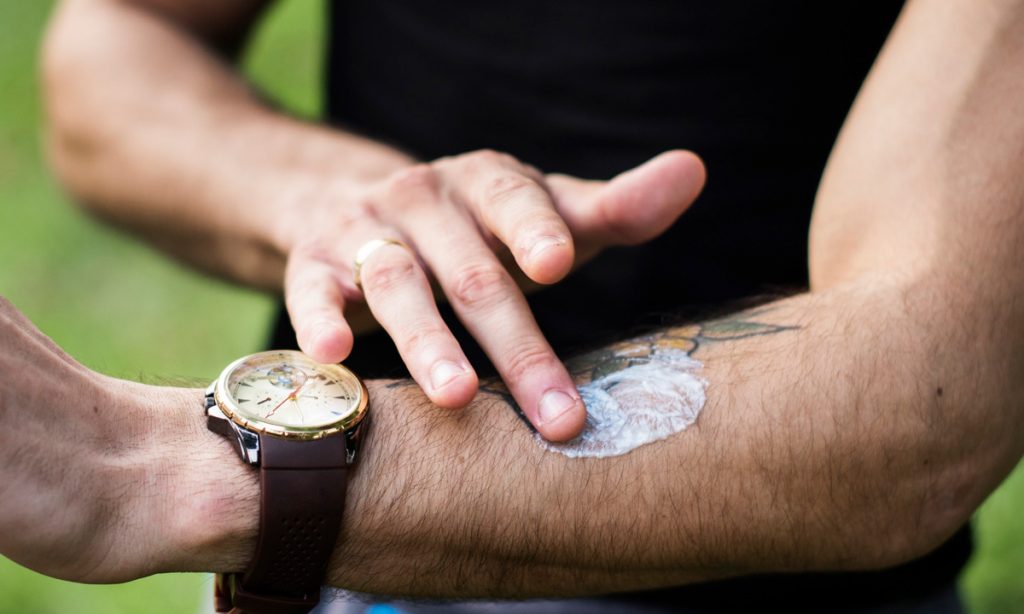
The Summer Skinny On CBD Sunscreen
Photo by rawpixel.com

According to different sources, CBD oil has nutrients and substances that can nourish your skin, preventing cuts, peeling and dry patches. There are plenty of CBD products designed for treating damaged lips, hands and cuts.

Before you purchase

Before purchasing any CBD products, it’s important to learn about the types of products that are on the market and which sources to trust. While CBD has been growing as a wellness and beauty compound, it’s still a nascent industry and one that’s still trying to find stable ground with the government.

You should also exercise more care than usual when considering CBD products. Do your research about the elements present within these products and avoid using websites like Amazon and eBay, which aren’t the most thorough when it comes to checking with sellers and distributors. Look for certificates of analysis and browse through the product’s websites. The more thorough you are, the better.

MLB Bans Players From Selling Or Investing In Marijuana

In a new memo, the MLB tells players don’t show up high, don’t deal marijuana, and don’t invest in the cannabis industry

This offseason, Major League Baseball made a significant step forward with marijuana reform. The league removed marijuana from its banned substance list, after the tragic death of Angels pitcher Tyler Skaggs, who overdosed on prescription opioids. Allowing the use of marijuana by players was in a part to manage the growing problem of opioid addiction in the league.

The caveat: Don’t dare show up to baseball parks and stadiums high on marijuana, wrote deputy commissioner Dan Halem in a league-wide memo. Furthermore, the MLB reserves the right to punish players for violating laws related to marijuana, including possession and distribution, as well as driving while under the influence.

According to ESPN, the memo states that players who “appear under the influence of marijuana or any other cannabinoid during any of the Club’s games, practices, workouts, meetings or otherwise during the course and within the scope of their employment” will experience a “mandatory evaluation,” possibly resulting in a treatment program. You’ve been warned, batters and outfielders: Don’t take too much CBD before the game, or risk punishment.

RELATED: NBA Commissioner On Basketball Players Using Marijuana: ‘It’s A Complicated Issue’

The MLB also wants to emphasize it will not advocate for players to use marijuana as part of medical treatment. “Club medical personnel are prohibited from prescribing, dispensing or recommending the use of marijuana or any other cannabinoid,” the memo reads.

Marijuana Is Now Legal In The MLB
Photo by Doug Pensinger/Staff/Getty Images

Most interesting, though, is that the MLB is banning players from investing in the cannabis industry. According to ESPN’s sources, there are players who have expressed interested in doing so. But the league has denied that right to players, though the MLB told players this may change in the future.

“Until such guidance is issued, any such investments or commercial arrangements are still considered to be prohibited in accordance with current practices,” the memo reads.

RELATED: Why Are Professional Golfers Obsessed With CBD Oil?

Here’s what the league should’ve included in its memo: Players can, however, use marijuana as a medicine, but we won’t inform them about the science behind it or offer any guidance.

What a mixed bag delivered to players, especially as the MLB is trying to combat its opioid problem. It remains unclear what authority the MLB has in prohibiting players from investing in marijuana. How strictly this rule will be enforced, or what penalty players will receive for breaking it, is a bridge the league appears comfortable once it’s been crossed.

5 Self-Care Tips You Wish You Had Adopted Sooner

Self-care is a term that includes a variety of behaviors, some of which you can start practicing today.

Taking care of your physical and mental health is something we should practice every day, not just when we’re sick or experiencing a sharp bout of anxiety. Learning how to eat better, develop helpful routines, and monitor your habits and thoughts will help you prevent stress and manage tough situations better.

While it’s hard to make space for “me time” while we’re worried about work, spending time with friends and family, and other everyday stressors, there are simple ways of sneaking in self care if you know where to look. Here are 5 self-care tops you wish you had adopted sooner.

Develop routines

Routines give us a blueprint of daily, often auto-pilot actions. Most of us follow these routines during key moments of the day, like before going to bed and upon waking.  Try to sneak in some helpful habits during these times of the day, such as limiting your smartphone usage, meditating and setting time limits when it comes to waking up and going to bed. Habit stacking is also useful, allowing us to remember that we’re supposed to do something helpful for ourselves, even if it’s only for a couple of minutes.

Make time for friends and family

5 ways cannabis can improve your summer
Photo by McKinsey via rawpixel.com

RELATED: These Are The Wellness Trends You Should Know In 2020

While we usually associate self-care with alone time, surrounding yourself with friends and family is also another form of taking care of yourself. Hang out with people that leave you feeling energized and limit the time you spend with toxic people. Helping out a friend will make you feel better and will also ensure that someone will have your back when times get tough.

Take an interest in your health

Prioritize your health, making regular visits to the doctor and slowly try to cut bad habits. While drinking and eating fast foods occasionally is perfectly fine and good for you mental health, try to limit these behaviors on a weekly basis, creating more opportunities for exercising, eating healthy and taking care of yourself.

Pay attention to your thoughts

women with this odd quality have more orgasms says study
Photo by Thought Catalog via Burst

RELATED: 5 Meditation Techniques To Help You Stay Calm During Stressful Times

Self-monitoring is one of the best habits you can adopt for changing behaviors and breaking patterns. Psychology Today reports that self-monitoring allows you to keep track of your progress or lack of progress when it comes to achieving a goal. It’s a moment of reckoning when you spot unhelpful patterns that you commit to on a daily basis, but it’s a necessary step for viewing your progress and for setting realistic goals.

Listen to your emotions

Listening to your emotions is important for self-care, allowing you to identify sources of stress, triggers and more. Pay attention to your feelings, what actions and people make you feel happy or sad. Developing a better understanding of your emotions will allow you to make better decisions in the future and will teach you better coping habits when it facing moments of change and high stress.

Driven High With This Is A Felony

0

Research published last year in the Journal of Studies on Alcohol and Drugs found that a lot of people with THC coursing through their veins are driving around with minors riding shotgun.

Driving high with this a felony, for good reason. Driving with THC in your system with a couple of kids in the backseat might sound as irresponsible as it gets. After all, while there is still some contention over whether someone who has smoked marijuana is as dangerous behind the wheel as a person who’s two sheets to the wind on booze, most of us can agree that driving under the influence of weed probably isn’t the best idea when kids are around.  

But because of how cannabis metabolizes in the body, a parent or guardian could still get busted for stoned driving with their children in tow, an offense that’s not only going to lead to them getting arrested in most states — even where marijuana is legal — it could also lead to criminal charges. 

Research published last year in the Journal of Studies on Alcohol and Drugs found that a lot of people with THC coursing through their veins are driving around with minors riding shotgun. Approximately 14% of motorists (2,056 surveyed, all in Washington State) with children in their vehicle tested positive for THC, according to researchers with Insurance Institute for Highway Safety. 

Now, this, of course, doesn’t mean that all of those people were driving impaired. Marijuana metabolizes differently than alcohol, so some (if not all) of the participants may have just consumed marijuana in the past 30 days or so. But in real life, if a cannabis user happens to get caught by police in this scenario, chances are they would be arrested and taken to jail. Meanwhile, their kids would be turned over to Child Protective Services (CPS). All in all, the offender would be forced to complete a hoop-jumping installment plan before their lives could return to normal. 

RELATED: The Number Of People Who Get Behind The Wheel After Smoking Weed Will Surprise You

It can be bad enough when it’s just you, the driver, caught up in the confusion surrounding marijuana impairment. But when the kids get involved, it makes it ten times worse for everyone. Because the cops are going to charge you for Driving Under the Influence of Drugs (DUID) — something that can lead to the suspension of your driver’s license, fines and maybe some jail time — while they will also press additional charges because children were present at the time. 

is a cannabis dui really the same as drunk driving
Photo by Samuele Errico Piccarini via Unsplash

Some states refer to this as an “aggravating” factor, which allows them to seek tougher penalties for those caught operating a vehicle under the influence of drugs in the presence of a child. It can mean paying steeper fines, serving mandatory jail time, and having a felony on your record. 

That’s right, a felony.

Because in some states, driving high with a minor in the vehicle is considered child endangerment. It’s the same as if a person was caught driving under the influence of alcohol, illicit or prescription drugs. The law doesn’t care if a motorist has a medical marijuana card or whether weed is legal for recreational use. All a cop sees is a stoned driver with a kid in the backseat, so they go in for the kill. And remember, the motorist doesn’t actually have to be impaired to endure this wrath.

 RELATED: Here’s What You Should Know If You’re Caught Driving While High

And while it is inevitable that CPS is going to get involved in this situation, the good news is it doesn’t mean the parents will lose custody immediately. There is typically an investigation in these matters, which can be a grueling process in and of itself. Rest assured, the state is going to be in your business for a while until it gets sorted out. So, it’s always best to just avoid these encounters. That means not smoking marijuana in your vehicle, not toting around weed and paraphernalia in plain sight. You never want to give an officer any reason to suspect that you’re driving high. 

Legal professionals advise anyone caught driving high (regardless of whether a child was present or not) to get an attorney and go to trial. Since there isn’t any science yet to prove marijuana impairment, many jurors in legal states have had no choice but to acquit these cases. Unfortunately, the law has got cannabis users by the ears if they happen to get busted in areas of prohibition. So, be careful out there, folks. Marijuana is progressing, but it could still rip your family apart.

5 Things Employers Should Know About CBD

0

It’s important for employers to understand the compound and the benefits and hindrances it could provide for employees.

The CBD industry is booming and shows signs of not going away anytime soon. While more and more businesses continue to incorporate the compound with differing levels of success, people continue to be as intrigued by CBD as ever, finding it accessible enough to want to incorporate it into their lives, be that for health or fun.

With this environment in mind, it’s important for employers to understand the compound and the benefits and hindrances it could provide for employees. Since CBD has connections with marijuana and the legality of that topic remains complex, it’s best if employers are just as informed as users who consume the compound. Here are 5 things employers should know about CBD:

It doesn’t cause impairment

When CBD is ingested correctly, it shouldn’t provide any kind of negative side effects. The compound is unlike THC in that it doesn’t produce a psychoactive experience despite having an effect on anxiety and depression.

When the compound is consumed incorrectly, say by mixing it with other elements or by taking a dose that is too large, side effects like drowsiness, nausea and diarrhea have been reported.

Most of the time it’s legal

5 Common Myths About Hemp Oil And CBD Oil
Photo by Tinnakorn Jorruang/Getty Images

RELATED: Sephora Becomes First Retailer To Create CBD Standards For Products

As long as CBD products contain less than 0.3% of THC, they are legal nationwide. The problem with this is that the math on CBD dosages is still a little off, meaning that some products may contain more or less CBD than the amount they advertise. The legality of the product also depends on the state where you live, and if the CBD was taken from a marijuana plant.

It can cause positive drug tests

If the CBD oil is sourced from a marijuana plant, or if the product is mislabeled and contains more THC than it’s supposed to, it’s possible for them to trigger positive drug tests. These drug tests measure the presence of THC in people’s systems and there’s currently no test out there that measures CBD.

Learn about CBD policies

By 2024 The US CBD Skincare Market Will Be Worth Over $950 Billion
Photo by Rebecca Wiggins via Unsplash; Illustration by cheifyc via Pixabay

RELATED: Do Tolerance Breaks Work For CBD?

Since CBD can be utilized for medicinal purposes and most of the time is harmless, it may be worthwhile to investigate CBD policies and see if it makes sense to implement one in the workplace. Train managers and everyone who’s in charge of coming in contact with employees who might be using CBD for a variety of reasons.

Keep an eye on state laws 

One of the most important things to keep in mind is the fact that CBD laws vary depending on the state. While some are lenient, others are not, and your workplace should be aware of this if they wish to avoid any legal issues with employees and the products they are using.

Don't Miss Your Weekly Dose of The Fresh Toast.

Stay informed with exclusive news briefs delivered directly to your inbox every Friday.

We respect your privacy. Unsubscribe anytime.