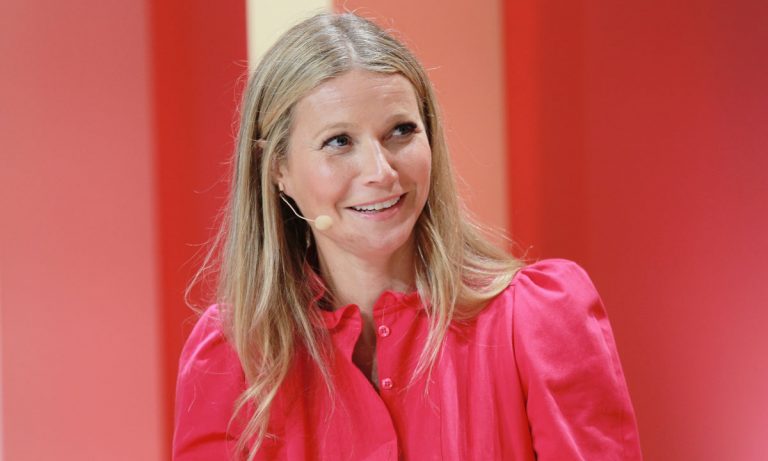
When it comes to making a celebrity uncomfortable, Howard Stern can’t resist. So when Gwyneth Paltrow stopped by recently, he prodded her about her upcoming wedding to producer Brad Fulchak. Noting that Paltrow eloped when she married her first husband, Coldplay frontman Chris Martin, Stern wanted to know if Fulchak and Paltrow would blow it out.
Though she neither confirmed nor denied having a big wedding, Paltrow said the couple’s engagement party was a big to-do. In attendance was Kate Hudson, Reese Witherspoon, Nicole Richie, Jennifer Aniston, Cameron Diaz, and “like, 300 normal people,” according to Paltrow.
When Diaz’s name was mentioned, Stern perked up. “I like her,” he said, before asking, “Is she fun? Like she’ll smoke some weed and chill out?” To which Paltrow nervously laughed. Sensing an opening, Stern inquired further, asking, “Are you smoking any weed?”
“Sometimes,” Paltrow admitted. “It’s legal now in California!”
Paltrow later added, “We weren’t smoking pot, though. Not at the engagement party.”
In an interview with Esther Perel from The Sunday Times, Paltrow admitted her past romantic relationships have lacked “a certain level of intimacy and communication, revealing, “Now, for the first time, I feel I’m in an adult relationship that is sometimes uncomfortable because he sort of demands a certain level of intimacy and communication that I haven’t been held to before. What came up in the first couple of years of our relationship was how incapable I was in this realm, how I feared intimacy and communication.”
As Duchess Meghan and Prince Harry continue to bask in the glow of their new life together, new research finds that within the first 18 months of marriage, many couples go through the Big Five. The study, published in Developmental Psychology, says heterosexual couples will likely exhibit five personality changes during the early months, as they adjust to their new roles. Is this what they mean by “honeymoon’s over”?
According to study lead Justin Lavner at the University of Georgia:
Results indicated significant changes in personality over time, including declines in agreeableness for husbands and for wives, declines in extraversion for husbands, declines in openness and neuroticism for wives, and increases in conscientiousness for husbands.
He says while women will become less open, men will become less extroverted during those initial stages.
The study also finds that wives become “less neurotic” and the husbands “increasingly conscientious and more emotionally stable.”
And this goes for everyone. The results did not differ despite age, demographics, relationship length prior to marriage, cohabitation prior to marriage, initial marital satisfaction, or parenthood status.
Lavner concludes that, “Taken together, these findings indicate that newlywed spouses’ personalities undergo meaningful changes during the newlywed years and these changes are associated with changes in spouses’ marital satisfaction.”
While Meghan Markle looked stunning on her wedding day, it took several tries for her to find the perfect dress. Clare Waight Keller, th dress designer, claims that a total of eight gowns were tried on for the royal wedding until they finally found “the one”.
On an interview with Paris Match, Waight Keller revealed that she met Markle in January to plan the wedding dress and that Markle is also a “strong woman who knows exactly what she wants.”
Waight Keller was a surprising choice for a wedding dress designer — not as popular as the other options that were being discussed, but still very well regarded among her peers. Harper’s Bazaar reports that Keller has had a long and successful career, being the artistic director of Givenchy and previously having the same position at Chloe, another French brand.
Kensington Palace claims that Waight Keller was chosen by Markle due to several factors, including the fact that she’s a British designer and that she’s also had an impressive career.
After meeting Ms. Waight Keller in early 2018, Ms. Markle chose to work with her for her timeless and elegant aesthetic, impeccable tailoring, and relaxed demeanour. Ms. Markle also wanted to highlight the success of a leading British talent who has now served as the creative head of three globally influential fashion houses.
For her part, Waight Keller is extremely happy with the dress and with her experience working with the Duchess of Sussex. “It is an immense honor to have worked closely with Meghan and to have lived by her side all these special moments. Prince Harry came to me and said, ‘Oh my God. Thank you. She is absolutely magnificent.’ I am very proud. It’s a fairy tale. A dream come true.”
Waking up energized is something we all deserve. We all want to be prepared for the day and to be the best possible version of ourselves. The key to energy is sleep, which is sometimes hard to come by, and even if you do get the necessary eight hours a night some days it’s still hard to be energized.
There are different types of marijuana that can help you sleep, but there are also types that can give you a lift, just like a cup of coffee.
Know that there are multiple ways to consume marijuana, you can eat or drink it, rub it into your skin, vape, smoke and much more. Ask the budtenders at your local dispensary which products have the strains listed and then pick how you want to put it into your body. Here are 10 types of marijuana to make you feel rejuvenated, like you’re brimming with energy and power:
Although the name is a little funky, this marijuana strain will make you feel like your cells are being reborn again, boosting your brain with creativity and uplifting your mood. This strain is also perfect for social situations, enabling super philosophical conversations with your friends.
9 Pound Hammer
This indica strain will hit you like a truck; giving you the best night’s sleep you’ve ever had and making you feel like a whole new person from the moment you wake up. 9 Pound Hammer is also great for stress relief and for making your body feel great.
BSC
This hybrid has powerful effects that will induce a deep and heavy relaxation, filling your brain with calm and happy thoughts. BSC allows your brain to disconnect and to pursue that mid-day nap you’ve been craving, or that perfect night of deep sleep.
Bruce Banner
This green monster packs a very high THC punch, hitting you fast and strong and making you feel creative and like anything is possible. Bruce Banner’s effects mostly affect your head and brain, but it also induces physical relaxation and relief.
This hybrid is mostly indica dominant but produces a focused mental high that’s most commonly associated with sativa strains. If you have any physical pain or ailments be ready to swap them out for a full body euphoria that will have a fast effect that’ll soon mellow out, leaving you brimming with energy and vitality.
Hawaiian Snow
This sativa blend has a very potent and delicious pineapple flavor. This bud is perfect to consume right before carrying out activities and chores, be them physical or creative, allowing you to tackle them head on. It’s not uncommon for Hawaiian Snow to give users a wonderful case of the giggles.
This hybrid strain gives you euphoric relaxation that’ll get you pumped and ready for anything. It also has an earthy aroma with a mint taste.
Incredible Hulk
A mix of delicious blueberry, pineapple and earthy flavors, Incredible Hulk is perfect for socializing and for consuming during the day, preparing you to make the most of it.
Bettie Page
This high THC strain encourages energy and movement instead of relaxation, perfect to get you prepped for whatever it is that you want to do.
This sativa dominant type of marijuana has fruity and tropical flavors which reference its name. It leaves your body and brain active and ready to work out, be creative and socialize.
One of the most bizarre developments in the wake of legal marijuana is the concept of the doobie delivery service. For some, specifically those living in legal territory, long gone are the days when it was necessary to beat the street in hopes of tracking down a neighborhood weed slinger. Now, simply putting in a call to one of these cannabis couriers can put pot products at the doorstep before the day is done. But some companies are taking the idea of weed delivery up a notch – stealing a chapter out of the pizza parlor ethos of the 1990’s by promising to transport legal tokes from dispensary to door in 20 minutes or less.
If they fail to complete the task, however, the customer still wins. One bike delivery service in Vancouver, BC guarantees customers free weed if their two-wheeled pot-peddlers cannot beat the clock.
It is called Spruce Delivery, and it is promising customers pot deliveries in “20 minutes or less or you get a free joint,” said Frank Le, one of the owners of Spruce. He told the Vancouver Sun that the company is a “bike-powered delivery service that runs under 20 minutes which is faster than you can get your pizza.”
For obvious reasons, Spruce is conducting its cannabis deliveries in a very unassuming way.
Rather than put their bud-toting delivery riders on two-wheels branded with some clever marketing mumbo-jumbo that translates to, “Hey, I’m carrying weed, come rob me,” their couriers do not look any different than those flying around the streets of Vancouver, dropping off food to drunkards and shut-in’s.
The company says that any of their bicycles plastered with a logo and slogan is strictly for advertising purposes – the people on these rides are not carrying any money or weed. In fact, this particular fleet is all marked with a message that reads, “Sorry, no marijuana onboard.” So please don’t jack them.
While the Spruce concept is fun, there is some question over its legality. The Vancouver Police are calling the delivery model “drug trafficking,” as it goes against the plan outlined by the government. Although marijuana is scheduled to go fully legal in the northern nation over the summer, the concept of weed delivery is not part of the deal.
“As it stands now, this is trafficking in a controlled substance (cannabis) contrary to the (Controlled Drugs and Substances Act),” Sergeant Jason Robillard, media relations officer with the Vancouver Police Department, said in an emailed statement. “When the Cannabis Act is passed (as it currently reads), this behavior would be an offense under the Cannabis Act. But until the Cannabis Act comes into effect we won’t know for sure.”
The owners of Spruce understand that they are breaking the law. And they don’t care.
“We’re going against what the government is proposing to do,” Le said.
“They’re having everything run at brick and mortar shops in designated locations by operators who have won a lottery — essentially. We don’t think it is fair or the best way to approach it. We think we’re going above and beyond with the value and service we’re providing.”
Digital assistants learn by listening to your voice and intonation. These devices create voice profiles that help them predict when you’ll be issuing a command. They don’t have an off button, which is part of their charm, but it can also be a very scary thing, especially in this day and age. What if someone hacks your AI? What if your Alexa sends a snippet of a private conversation to one of your contacts? This actually happened.
Amazon offers up these occurrences as false positive commands, which is what happens any time an Alexa commercial pops up and your device freaks out. The events are not that common, and the more they occur, the less likely it is that they’ll happen again. According to The Verge, there are ways of deleting and monitoring what your Amazon Alexa device has been recording.
To begin, open up your Alexa app on your smartphone and tap on the hamburger button to see the menu options. Tap on the Settings menu followed by History, which will show you all the commands you’ve issued to Alexa. The length of the list will vary depending on how much you use your device.
Things get interesting when the app notes a “text not available” notification, which will allow you to listen to a recording of your command. By tapping on this note, you’ll hear whatever it was that you or other users said that confused the device and made it “wake up.”
While this all seems harmless enough, a recording is still a recording, and this might be disturbing to some people. Amazon allows you to delete each recording manually or to get rid of the feature entirely by heading over to Amazon’s “Manage Account and Devices” page. Amazon claims that getting rid of this feature may degrade your “Alexa experience,” since the device won’t be learning from these recordings.
A device listening in on your conversations is always creepy, especially now that the concept of privacy is changing into something much less private. According to Amazon, these particular recordings are done to improve the user’s experience and to make your device as personalized and tailored as possible. Is it freaky? Yep. But so is technology, so you really can’t win.
You’d think someone who’s been as famous for as long as Snoop Dogg wouldn’t have any more “back in the day” anecdotes to tell—at least any interesting ones, that is. However, no one is better than radio legend Howard Stern at pulling out stories from celebrities whenever they sit on his couch. Stern’s like your therapist, except he’s cool and you actually don’t lie to him.
As the iconic MC told Stern, Snoop was all set to make his first appearance on “Saturday Night Live” in 1994 when a problem arose — he’d run dry of weed. So he called up his buddy Tupac Shakur.
“Before he was on Death Row Records, when he was just my homeboy, after we had met at the Poetic Justice wrap party,” Snoop Dogg said. “I ain’t got no dope. That’s when it was hard getting weed out here [in New York]… And he was like, don’t worry about a mother fucking thing.”
Snoop says Tupac showed up with, what he described as, a big ol’ bag of weed. But that’s not all. “Guess who he pulls up with?” Snoop asked, before crooning an impromptu version of Madonna’s smash hit “Like A Virgin.” Tupac and Madonna infamously dated while the rapper was at the height of his fame in the mid-90s.
“I don’t know that I would do that for anybody,” Stern said, adding that Snoop and Pac must’ve had a genuine friendship. “I’d stay home and fuck Madonna. I’m not bringing you weed. No offense.”
Snoop also revealed on the program that he smoked his first blunt with Tupac—“I’d been smoking joints up until then,” Snoop revealed. The rapper and cannabis entrepreneur also revealed that he’s formed more relationships and business partners by sharing a joint than he ever has grabbing a drink with someone. “It’s a bridge, Howard,” Snoop said.
Since Governor Phil Murphy took office, medical marijuana in the Garden State has expanded beautifully. With the addition of qualifying conditions and easier access to medicine came bigger dispensaries — and the biggest of all is quite the showboat. With its humble beginnings in what was once a T-shirt shop, Curaleaf cannabis dispensary is now the biggest on all of the East Coast.
With 6,150-square-feet of space to work with, the newly revamped location can serve up to 1,000 patients a day, which is a very good thing for medical cannabis users in the general area and even beyond. The dispensary is located just 10 miles south of Philly in West Jersey and is accessible to many New Jerseyans.
Curaleaf has locations across the East Coast and their website states that they, “are a non-profit company in the business of symptom relief. Our mission is to help relieve the pain and suffering that patients with serious diseases experience and we are well on the road to achieving that.”
Already, 21,000 New Jersey residents have registered for the medical cannabis program, 5,000 of whom joined in the last year. Curaleaf served well over 6,000 patients in 2017 and 2018 is looking like a busy year for the giant new medicinal facility.
With new medical cannabis rules in place, Curaleaf’s relocation and expansion is likely just the tip of the iceberg for New Jersey, which is growing its cannabis program at a steady clip. “Our expansion into a larger dispensary mirrors not only Curaleaf’s growth but also the progression of medical marijuana access within the state,” George Schidlovsky, Curaleaf New Jersey’s president, said in a statement.
Two of the additional qualifying conditions under Murphy’s leadership are anxiety and chronic pain, both of which are primary reasons to obtain cannabis. Because they are now on the list of approved ailments, there is bound to be more and more people signing up for the program, making large dispensaries with great selections a necessity.
For example, Keith Chase, 62, is a patient who has visited the facility. “I love it. It’s fantastic,” he said, “It looks like a dispensary in Colorado — big and clean. They just need more product.” Chase said he utilizes cannabis because it keeps him off of the addictive opioids that had him in their grips for years due to a back injury.
Cannabis may be able to help yet another group of patients improve their quality of life; this time it is a group of kids in need of some good news.
Childhood is tough enough, but it is exponentially more complicated for those with complex movement disorders, CMD. These are atypical movements that interfere with daily life. Instead of being able to simply sit in a classroom, they may be interrupted by involuntary, repetitive movements and sometimes repetitive vocalizations.
There are two main categories of movement disorders, hypokinetic or hyperkinetic, too little or too much movement respectively. Kids with CMD almost always display on the too much movement side. Not only is the behavior disruptive to the individual and social settings, it can create poor coordination. In total, it can lead to feelings of shame, isolation and loneliness. It can be a very tough burden to bear for a child.
There are few known effective medical remedies for CMD. That is why news about cannabis being a potential benefit for these children is such a big deal. The source of this news is a solid one in the scientific community. Israeli researchers teamed up with Tikun Olam, the first and largest supplier of medical Cannabis in Israel. They conducted a study of 25 patients aged 1-17 years who suffer from moderate to severe complex movement disorders using two formulations of CBD enriched oil. One had a 20:1 ratio of CBD:THC, one had a 6:1 ratio.
The oil was administered to patients for 5 months. At the end of the trial period, “Significant improvement in spasticity and dystonia, sleep difficulties, pain severity, and QOL (quality of life) was observed” in both groups. Negative effects were rare but did include 2 patients whose seizures worsened, 2 whom had behavioral changes and one who became too sleepy as a result of the medicated oils.
Good research begets good research, so we are bound to hear much more about this line of questioning. While the US fumbles its way through a bad federal policy regarding cannabis and the subsequent challenges that it poses to completing solid, human subject research, countries like Israel, Spain and others are moving ahead. We have them to thank for pushing the boundaries and challenging our stateside politicians and medical professionals. Thank goodness for them. Patients like children with complex movement disorders should not have to wait for us to get over our reefer madness so that they can improve their quality of life. That’s the real crime.
Coffee and cannabis are two of the most widely used psychoactive substances in the world. Whereas cannabis is often consumed to relax the body, enhance perception, and stimulate creativity, coffee – like tea and other caffeinated beverages – is typically used to energize and help people focus, particularly in the face of exhaustion.
Does it make sense to consume cannabis and coffee together? How do they interact? Is it fitting that decriminalized THC-rich cannabis was first sold over-the-counter in Amsterdam’s coffee shops?
More recently, several unregulated cannabis start-ups have begun producing and selling coffee infused with doses of hemp-derived CBD. Are caffeine and cannabidiol truly a good combo, or is this just a clever marketing gimmick?
Opposite effects
Caffeine is typically thought of as a mild cognitive enhancer. It increases one’s ability to focus and can improve short term memory. Physiologically, caffeine promotes fat metabolism and wards off sleepiness. These effects are mostly opposite those of THC, which can also help one focus, but briefly impairs short term memory while decreasing fat metabolism.
Caffeine is a stimulant that activates the sympathetic nervous system, which is intrinsic to the basic human stress-response. But THC mitigates many of the effects of stress. Paradoxically, THC can even restore memory in animals impaired by chronic stress. When coffee and cannabis are combined, which effects win out?
Since plant-cannabinoids like THC and CBD weakly inhibit the metabolism of caffeine by blocking an enzyme called CYP1A2, one might expect that caffeine would overpower the cannabinoids.
Photo by Yuichiro Chino/Getty Images
As it turns out, their interaction is not so straightforward. Caffeine actually amplifies memory impairment caused by THC. And this effect may be specific to short-term memory. To understand how this happens, it’s necessary to look at the neurological properties of these special compounds.
Caffeine has two major biochemical effects. At low doses it blocks adenosine receptors (A1, A2A, and A3). These receptors are typically associated with sleepiness. Adenosine regulates the sleep-wake cycle and regulates the dilation and constriction of blood vessels. The stimulating effects of coffee and tea are due to the inhibition of adenosine receptors. And the headaches that some people experience during caffeine withdrawal are likely due to constriction of blood vessels in the brain.
At higher doses, caffeine inhibits a type of enzyme called a phosphodiesterase (PDE). PDEs break down important chemical messengers that are generated by both cannabinoid and adenosine receptors. These messengers are called cyclic AMP (cAMP) and the related cGMP. They are some of the most common signaling molecules in cells.
PDE enzymes are a target of asthma medications, as well as Viagra.
Adenosine: CB1 gatekeeper
CB1 cannabinoid receptors and A1 adenosine receptors both populate the hippocampus – a region of the brain responsible for many aspects of memory. Short-term memory, in particular, is processed by brief neurological changes in the hippocampus. When hippocampal A1 is highly activated, the efficacy of cannabinoids at CB1 is reduced. THC, endocannabinoids or an experimental synthetic cannabinoid will still be able to activate CB1, but even high doses will produce a smaller effect.
In a 2011 study led by Portuguese scientists at the University of Lisbon, THC’s effect was one third as strong when given along with an A1 adenosine receptor agonist. (An agonist activates a receptor; an antagonist blocks the receptor.) Conversely, blocking the A1 receptor would increase the effect of cannabinoids, but only in situations where A1 is already active. The precise mechanism by which A1reduces CB1’s efficacy is still unclear.
This research suggests that elevating adenosine levels might protect people from THC-induced memory impairment without diminishing THC’s important effects outside of the hippocampus, which include neuroprotection, reduction of nausea, and painkilling, as well as psychoactivity. Adenosine levels are highest before sleep. So nighttime use of cannabis may have a lesser effect on memory than daytime use, though this has not been tested experimentally.
In cases where cannabis is used to ease trauma, caffeine drinkers may end up benefiting by combining the herb or its components with a cup of Joe. But this might not be the case for a stressed employee who drinks coffee to get through the day. A few preliminary studies have shown that drinking coffee occasionally or frequently had the same effect: Both amplified THC’s ability to temporarily weaken memory.
The neurology of memory
The memory changes in the brain’s network. If certain connections between neurons are highly utilized, it would make sense for the brain to strengthen those pathways. On the other hand, if two neurons rarely communicate, it would be better not to expend much energy maintaining the connection. The dynamic strengthening and elimination of neural connections is a key aspect of brain plasticity.
Endocannabinoids play a significant role in synaptic plasticity (and overall neuroplasticity) by regulating what scientists refer to as “long-term potentiation” (LTP) and “long-term depression” (LTD). Both of these processes have a direct bearing on memory and many other brain functions.
LTP involves potentiating or strengthening neural connections between cells; this can occur by increasing the amount of neurotransmitters released by the presynaptic (signal-sending) neuron or by heightening the sensitivity of the postsynaptic (signal-receiving) neuron. LTD entails the opposite process, which ultimately reduces the effect of neuronal activity. LTD in the hippocampus facilitates the clearance of old memories.
Endogenous cannabinoids and plant cannabinoids inhibit neurotransmitter release by activating the CB1receptor. This can result in bidirectional physiological effects depending on which neurotransmitters are inhibited. CB1 exists on both excitatory (glutamatergic) and inhibitory (GABAergic) neurons. When CB1impedes the release of GABA, an inhibitory neurotransmitter, CB1 increases (“disinhibits”) brain activity. And by slowing glutamatergic neurons, cannabinoids (via CB1) generally promote LTD and the removal of old memories in the hippocampus.
Fine-tuning the brain
Adenosine is constantly released in small concentrations onto the same part of the hippocampus where cannabinoid, adenosine, and glutamate receptors reside. Adenosine, by activating the A1 receptor, reduces the efficacy of THC and other cannabinoids at CB1. And this partially suppresses cannabinoid-mediated LTD, thereby enhancing short-term memory.
But caffeine blocks A1 receptors. This amplifies the impact of cannabinoid activity and, in turn, will lead to greater LTD and temporary impairments in working memory.
CB1 and A1 receptors also exist on GABAergic neurons in the hippocampus. A1 plays a similar gatekeeping role for CB1 in these neurons (it impedes CB1’s suppression of the inhibitory neurotransmitter GABA). GABAergic neurons act as the major brake slowing glutamate release in the hippocampus.
By engaging the CB1 receptor, cannabinoids can promote either LTD or LTP under different circumstances. LTD appears to be more common. Adenosine acting at A1 receptors will enhance memory by reducing LTD. These complex interactions and feedback loops provide neurons with subtle means to fine-tune the brain.
CBD and adenosine
Cannabidiol does not directly activate CB1, but exerts effects through many other pathways. For example, high doses of CBD elevate adenosine levels in the brain by preventing the reuptake of adenosine. This may account for CBD’s ability to ameliorate the short-term memory impairments attributed to THC in some studies. It could be one of many mechanisms that contribute to the “ensemble effect,” whereby the variety of compounds in cannabis can mitigate each other’s side effects and promote each other’s efficacy.
Adenosine is not just a neurotransmitter; it is also known to have intrinsic anti-inflammatory effects. Its reuptake is the main way the body terminates adenosine signaling. Cannabidiol is protective in some models of heart attack, multiple sclerosis, lung injury, and retinal problems because CBD indirectly activates (via adenosine reuptake inhibition) A2A and A1 receptors.
The sedative side effect of high doses of CBD might also be related to amplified adenosine. In clinical trials of a sublingual CBD isolate called Epidiolex, sedation is one of the most common side effects. Although the molecular cause of this is not known with certainty, a high dose of CBD may augment adenosine signaling and contribute to tiredness.
When mixed with caffeine, CBD’s effects on adenosine would probably be dwarfed by caffeine’s antagonistic activity at adenosine receptors. The extent to which this might diminish CBD’s medicinal properties is unknown. Given cannabidiol’s many modes of action, it is unlikely that this would be seriously problematic. But as of now, there aren’t clear advantages to combining or marketing CBD and caffeine together.
This story was first published in Project CBD, a California-based nonprofit dedicated to promoting and publicizing research into the medical uses of cannabidiol (CBD) and other components of the cannabis plant. Read the original story here.