
Enjoyed by many, few know the history of the cocktail party.
They have been in movies, television, books and entertaining lore. The cocktail party has long been a symbol of stylish socializing, boozy drinks and snappy dressing. But beyond the clink of glasses and carefully crafted drinks what is the history of the cocktail party? It stretches back over a century — shaped by culture, rebellion, and even literature.
RELATED: Mixed Messages From The Feds About Cannabis
Though it may seem like a classic product of mid-century America, the cocktail party’s roots go back to the early 20th century, during the height of Prohibition. Between 1920 and 1933, when alcohol was outlawed in the United States, private homes became the center of secret gatherings. Hosts served bootleg liquor in mixed drinks designed to mask harsh flavors, and the concept of informal, standing-room-only gatherings with drinks and hors d’oeuvres began to take shape.
One of the first formal mentions of a cocktail party appeared in 1917, when a St. Louis socialite, Mrs. Julius S. Walsh Jr., invited 50 friends over for drinks at noon. The event was so novel, it was reported in the local press — and the idea quickly gained traction among fashionable urbanites.

As the cocktail party spread, it also made its way into literature. British novelist Evelyn Waugh chronicled this scene with razor-sharp satire in works like Vile Bodies (1930), a novel that follows a generation of wealthy, fashionable young Londoners — the so-called “Bright Young Things.” Their lives, filled with late-night parties, hangovers, and existential drift, mirrored the ways cocktail culture was becoming a stand-in for both freedom and distraction.
Waugh didn’t invent the cocktail party, but he helped define its mood — one of stylish detachment, cleverness, and fleeting pleasure. In his world, a drink in hand often masked deeper anxieties about identity, class, and purpose.
The theme continued in post-war literature. In 1949, T.S. Eliot wrote The Cocktail Party, a play that used a seemingly mundane social gathering as the stage for deeper philosophical reflection. By then, the cocktail party had become not only a social ritual but a cultural symbol.
RELATED: Celebrate With These Simple Classic Cocktails
The cocktail party was becoming a symbol of adult sophistication, evolving into the highball-and-canapé affairs seen in mid-century homes and on shows like Mad Men.
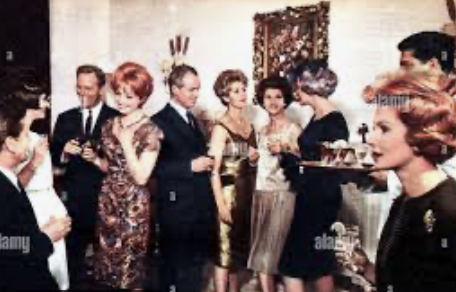
In the 1950s and ’60s, cocktail parties were nearly ubiquitous in American life. With martini shakers, canapés, and dress codes, these gatherings were seen as sophisticated yet convenient — an alternative to formal dinners that still allowed for meaningful conversation and social networking.
RELATED: The Best Refreshing Cocktails
Today’s cocktail parties look different, but the spirit remains. Millennials and Gen Z have embraced the format in their own way, favoring craft cocktails, alcohol-free options, and more relaxed settings. Whether hosted in small apartments, grand living rooms, private clubs, on patios, or at pop-up bars, the goal is the same: to connect.
As social life continues to evolve, the cocktail party endures — a lasting tradition that proves good company and a well-poured drink never go out of style.
