

Federal marijuana policy faces new uncertainty as leadership shakeup stalls rescheduling momentum and raises questions about enforcement direction.
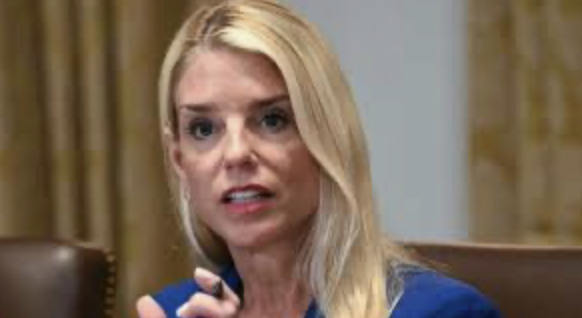
The sudden firing of Pam Bondi has surprised his loyal followers. But with Pam Bondi fired what’s next for marijuana. It has injected new uncertainty into federal marijuana policy at a moment when long-promised reform was already moving at a cautious pace.
Bondi’s departure comes amid broader turmoil inside the administration of Donald Trump, with reports indicating frustration over unrelated Justice Department controversies ultimately led to her removal. But beyond the political drama, her exit could have real implications for cannabis policy—especially the long-anticipated federal rescheduling of marijuana.
RELATED: Did Marijuana Play A Part In Cigarette Smokings HUGE Decline
At the time of her firing, marijuana remained in a transitional phase at the federal level. The administration had previously directed the Justice Department to move forward with rescheduling cannabis under federal law, a shift could ease research restrictions and reduce criminal penalties. However, the process had not yet been completed, leaving the industry, investors, and state regulators in limbo.
Bondi herself was not widely viewed as a champion of cannabis reform. During her earlier political career, she opposed marijuana legalization efforts, and even as attorney general, her role in rescheduling was seen more as executing White House directives than leading reform. The dynamic is important: federal cannabis policy under this administration has been driven less by the Justice Department and more by political calculations inside the White House.
Early reporting suggests Zeldin is a leading contender for the permanent role. Zeldin has historically taken a cautious stance on marijuana, opposing broad federal legalization while showing limited openness to medical use and states’ rights. His record suggests he may favor incremental changes over sweeping reform, leaving the pace of rescheduling uncertain.
Todd Blanche has little public record on marijuana policy, having built his career as a federal prosecutor and defense attorney focused on high-profile cases rather than drug reform. His approach is expected to align with broader Justice Department priorities rather than signal any independent push for cannabis legalization or rescheduling.
It appears Deputy Attorney General Todd Blanche may serve in an interim capacity. Zeldin is widely viewed as a loyalist aligned with Trump’s broader agenda, but he has not been closely associated with cannabis policy. The lack of a clear record creates uncertainty: he could accelerate rescheduling to claim a policy win, or slow-walk it depending on political priorities. He has little public record on marijuana policy, having built his career as a federal prosecutor and defense attorney focused on high-profile cases rather than drug reform.
The key issue is timing. Marijuana rescheduling is not automatic—it requires regulatory review, potential public comment, and coordination across agencies. A leadership change at the Justice Department can delay or redirect the process, especially if new leadership revisits legal strategy or enforcement priorities.
RELATED: Idaho Electeds At Odds With General Public On Cannabis
There is also a broader political context. The administration has signaled mixed messages on cannabis—supporting limited reform such as research expansion and CBD access while avoiding full federal legalization. That middle-ground approach leaves room for shifts depending on internal personnel and political pressures.
In practical terms, Bondi’s firing does not automatically change marijuana law. But it does introduce a pause—and potentially a pivot—at a critical moment. For the cannabis industry, state governments, and millions of consumers, the question is no longer just if federal policy will change, but how quickly and in what direction.
With a new attorney general likely to put their own stamp on the Justice Department, marijuana policy remains one of the most closely watched—and uncertain—issues in Washington.
