Friday, December 26, 2025
Home Blog Page 1157

Why Does Marijuana Give Me The Munchies? Here’s The Science

0

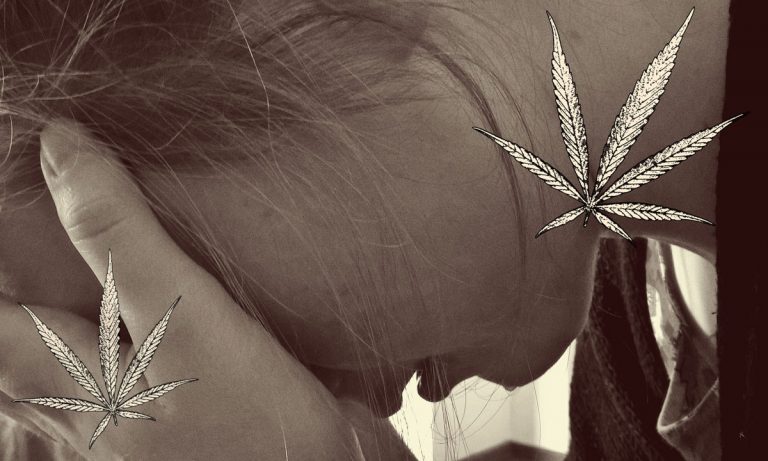
Ask anybody — from a hardcore chronic cannabis consumer to a ardent abstainer of the herb — to name one of the main side effects of marijuana and you’ll usually get the same answer. Munchies.

And it’s true. Cannabis promotes appetite. That powerful urge to eat is actually the herb doing its job.

For those who have battled through chemotherapy and lose their appetite have found cannabis to be the only medicine that helps. Same with patients suffering from wasting syndrome, AIDS and other ailments in which your body’s desire for nutrients is low of non-existent.

For some recreational consumers not fighting a disease, there is the tendency to binge eat resulting in undesired added pounds.

For years, scientists struggled to understand the physiology of how THC, the active psychoactive ingredient in cannabis, stimulated appetite.

According to a 2015 Yale study, what is basically happening is this: Neurons in the brain that are normally involved in suppressing appetite were being tricked by THC. Lead author Tamas Horvath of the study explains it this way:

“It’s like pressing a car’s brakes and accelerating instead. We were surprised to find that the neurons we thought were responsible for shutting down eating, were suddenly being activated and promoting hunger, even when you are full. It fools the brain’s central feeding system.”

The research from Horvath and his team is interesting because it may help explain what compels some people to overeat even when they are not hungry.

“By observing how the appetite center of the brain responds to marijuana,” Horvath explains, “we were able to see what drives the hunger brought about by cannabis and how that same mechanism that normally turns off feeding becomes a driver of eating,” said Horvath.

Researchers have known for decades that using cannabis increases appetite even when you are fully sated. It is established science that activating the cannabinoid receptor 1 contributes to overeating. Nerve cells called pro-opiomelanocortin (POMC) neurons have been found to be key drivers of reducing eating when full.

These neurons are found in the hypothalamus, the part of the brain that associated with base instincts like sexual arousal and feeding. Horvath theorizes that the POMC neurons normally work by sending out a chemical signal telling the brain, you’re sated, stop eating. But cannabis interrupts the natural course of action.

In 2014, a team of European researchers also investigated the munchies mystery. The study, conducted on labratory mice, found that cannabinoids activated the brain’s olfactory center, making mice more sensitive to smells. Other earlier research suggests cannabinoids were spiking dopamine levels in the brain that stimulated appetite.

So will if this is the case, why aren’t all cannabis consumers obese?

While marijuana generally promote appetite, the cannabinoid receptors in your brain eventually become desensitized or trained. At least that is what one Harvard study indicated.

“The most important finding is that current users of marijuana appeared to have better carbohydrate metabolism than nonusers,” says Murray Mittleman, an associate professor of medicine at Harvard Medical School and the author of the study. “Their fasting insulin levels were lower, and they appeared to be less resistant to the insulin produced by their body to maintain a normal blood-sugar level.”

The War On Drugs Is Holding Science Back From Helping Patients

Alcoholism is a relentless condition—90 percent of patients suffer a relapse within three years. But Dr. Ben Sessa believes he’s identified a substance that could help improve these outcomes. There’s just one problem: war on drugs makes it exceedingly difficult for him to conduct research into the treatment.

That’s because the substance is MDMA, a Schedule 1 controlled substance, which is classified in both the United Kingdom and the United States as “having no medical benefits” and is thus so strictly regulated that it is almost impossible for clinical researchers to study.

Even though Dr. Sessa is a renowned clinical psychiatrist with 20 years of experience and the backing of a respected university, it’s taken him six years to get the study off the ground. The special license required to work with controlled substances cost him nearly $40,000 and took two years to acquire. The requisite lab security equipment and law enforcement monitoring cost another $50,000.

His team also had to apply for a range of regulatory approvals, ethics review boards, pharmacy permissions, and legal and medical licenses. These hurdles increased the cost of Dr. Sessa’s research by a factor of 10. Last month, he finally announced the commencement of his study, which will continue to be subject to scrutiny by officials overseeing the implementation of drug control policy.

Dr. Sessa’s experience may sound like a tall tale of irrational and inefficient regulation, but his story is all too real—and far from unique. For 50 years, and in the name of the war on drugs, policymakers have prioritized law enforcement over medical research. The result? A war on drugs that is still raging, and half a century of suppression of scientific research and discovery.

Although this incursion on people’s right to enjoy the benefits of scientific progress is one of the lesser-known costs of the war on drugs, its consequences are both severe and long-lasting. By labeling MDMA, among other substances, as Schedule 1, governments have created a huge barrier to scientific research, depriving the world of possible breakthroughs in health and knowledge. Reform is badly needed.

Take cannabis, for example. Despite the nearly 4,000 years of history during which cannabis was used for medical purposes—and despite the fact it is currently used for medicinal purposes in 29 states as well as the District of Columbia—in the United States today, cannabis, too, is a Schedule 1 controlled substance. Any U.S. researcher who wishes to further society’s understanding of cannabis is thus faced with a dispiriting gauntlet of regulations.

It doesn’t have to be this way. Not so long ago, MDMA was utilized in psychotherapy to facilitate communication. (While the substance is popularly known today as “ecstasy,” researchers back then called it “empathy.”) LSD, too, was once used to treat an array of health issues—from alcoholism to cluster headaches—and was studied in over a thousand clinical papers in the 1950s and ’60s.

However, since the UN Drug Control Conventions of 1961, 1971, and 1988 imposed severe restrictions on even the medical and scientific handling of certain substances, research into their medical value has all but disappeared. Right now, in countries around the world, researchers in this field are confronting Kafkaesque bureaucracies that are delaying and disrupting their work.

Countering the oppressive impact of drug policy on science will require a long-term commitment to serious and expansive reform. But there are things policymakers can do as interim steps.

National governments could reclassify substances such as MDMA, cannabis, and LSD to less restrictive schedules, which would put them under more feasible regulatory control and open up options for scientific research—while still being in compliance with the abovementioned conventions. Governments and policymakers could also lift the outrageous licensing fees charged to scientists for research into controlled substances, and could simplify and expedite licensing approvals for academic research into controlled substances.

Ultimately, though, policymakers on both the national and international levels need to take a hard look at the way the war on drugs is holding the world’s researchers to ransom. We’ve already let more than 50 years’ worth of research slip through our fingers; enough is enough.

This piece was originally published by the Open Society Foundations. The original may be viewed here.

Washington Study: Legalized Marijuana Didn’t Increase Youth Usage

The kids, as they say, are quite alright in Washington state. Any preceding worry that legalizing recreational cannabis would drive increased usage appear misguided, according to a new study from the Washington state legislature’s think tank.

As the Seattle Times first reported, youth marijuana use and cannabis-abuse treatment admission have not risen in the state since implementing cannabis laws three years ago. Under stipulations from Initative-502, the state’s marijuana law, the Washington State Institute for Public Policy (WSIPP) must periodically administer cost-benefit analyses regarding the legalization of cannabis. This can run anywhere from prenatal usage to driving while high.

“In these initial investigations, we found no evidence that I-502 enactment, on the whole, affected cannabis abuse treatment admissions,” the study states. “Further, within Washington State, we found no evidence that the amount of legal cannabis sales affected cannabis abuse treatment admissions.

“We found no evidence of effects of the amount of legal cannabis sales on indicators of youth cannabis use in grades 8, 10, and 12,” the study also states.

The study comes following Attorney General Jeff Sessions condemnation of Washington’s cannabis law, a statement that was later criticized by Governor Jay Inslee and State Attorney General Bob Ferguson. Inslee and Ferguson emphasized that they’d like to meet with Sessions to better explain how the state’s laws and systems work with regards to cannabis.

However, the study did report that those living in Washington counties with increased levels of legal sales were considered more likely to consume marijuana. They also were more likely to consume cannabis more frequently, as based on state telephone surveys.

But as Adam Darnell, the lead researcher and author of the study, told the Seattle Times, “It’s not earth-shattering that people were using more of a product they’re buying more of.”

9 Gushing Celebrity Moms Share Their Kids’ Back To School Pics

Doesn’t matter how old your kid is, if you’re the parent, you are beyond thrilled that they are heading back to school. Perhaps they are entering kindergarten, mixing it up in the classroom for the first time. Or maybe you’re just sick of them being in the house all summer and those tears you’re shedding are ones of relief.

The start of a new school year levels the playing field for all moms, famous or not — it’s a time when we grab our cameras and take as many snaps as we can before the kids realize it’s super uncool. Here are 9 celebrity moms who dote on their offspring  just like everyone else.

Jessica Simpson

Daughter: Maxwell

https://www.instagram.com/p/BYeCBHugRTZ

Kelly Ripa

Son: Joaquin

https://www.instagram.com/p/BYqLr20jvZ_

Jennie Garth

Daughters: Lola and Fiona.

https://www.instagram.com/p/BYeT2EDBTyc

Jessica Alba

Daughters: Haven and Honor

https://www.instagram.com/p/BYWzU4oBjSF

Busy Philipps

Daughter: Birdie

https://www.instagram.com/p/BYgPNzIhDL1

Jamie Lynn Spears

Daughter: Maddie

https://www.instagram.com/p/BXlDvNsD6hB

Rebecca Romijn

Daughters: Dolly and Charlie

https://www.instagram.com/p/BYJArLkHRhP

Victoria Beckham

Son: Brooklyn

https://www.instagram.com/p/BX8mJo0Fnkq

Katherine Heigl

Daughter: Nancy

https://www.instagram.com/p/BYOIMJ_DOpr


The GOP Blocks Vote To Protect Medical Marijuana States

Lawmakers on Wednesday said GOP leadership will not allow a full house vote on an amendment barring the Department of Justice from “pursuing” medical marijuana states. The amendment was authored by California (R) Dana Rohrabacher.

“That’s what we’re doing now, we’re avoiding the issue,” California (R) Duncan Hunter chimed in to cameras directly after the House GOP shot down the vote to protect medical marijuana states from persecution.

With no legislation in place, states that have legalized for medicinal use will no longer enjoy the protection they’ve had in place for the last four years. Without any protection in place, it could also give Jeff Sessions the push he’s been waiting for with bated breath to come down hard on the ever-expanding marijuana landscape.

In a closed-door meeting of House Republicans, Rohrabacher beseeched his colleagues to allow a vote on his amendment, knowing the damage that could ensue without it. Hunter said that after Rohrabacher made his pleas, they ultimately couldn’t bring it to the floor because it just, “splits the conference too much.”

It could be that it splits the conference or it could be that it would pass, an even scarier prospect for some House Republicans. The amendment has bipartisan support and merely continues the protections that we as a country are used to when it comes to legal medicinal cannabis states.

Rohrabacher had started his urgent messaging Tuesday night, practically begging his colleagues to vote. He said that without his amendment, “we’re changing the status quo in a way that undermines the rights of the states and the people … to make their policy.”

Rohrabacher’s amendment was co-sponsored by Oregon (D) Earl Blumenauer and was included in the four preceding Commerce-Justice-Science funding measures, back when it was an Obama White House. It was also included in a Trump omnibus funding bill that expires at the end of the month.

Soon, the amendment will have vanished and we’ll have to pin our hopes on the continued bravery of people like Rohrabacher and Blumenauer to do their best to protect our rights.

Gossip: Ryan’s Plot To Replace Kelly Ripa; Ramona Singer Fired From Real Housewives?

Kelly Ripa better watch her back because Ryan Seacrest has a bunch of friends lined up to replace her if she decides to leave the show.

“Ryan taped shows with Kim Kardashian and a bunch of his other friends as co-hosts, however the person that made Kelly sit up and watch was when Ryan asked Lisa Rinna to join him to fill in for Kelly who was on vacation,” sources tell Straight Shuter. “Not many people know this but when Kathy Lee Gifford left the show it came down to Kelly Ripa and Lisa Rinna to replace her. Kelly and Lisa were the final two and Kelly got the job. She is very weary of Lisa as she knows that the best job on TV was almost hers. When Ryan brought in Lisa it was a red flag.”

Ramona Singer Fired From Real Housewives?

The Real Housewives of New York’s season is over and now producers are looking for a new lady to possibly be replacing Ramona Singer!

“Ramona doesn’t know it yet but she will might not be coming back to the show,” sources tell Straight Shuter. “The producers love Ramona and acknowledge that as one of the few original cast members, she helped make the show a huge hit. But her storyline has come to a natural end and she needs to turn up the heat if she wants to survive. Viewers have seen her daughter grow up and her marriage fall apart and now she has nothing interesting to add. She was supposed to be finding love after her ugly split but that didn’t really happen. Everyone wishes her the best.”

However one insider says no decisions have been made yet. The show is always looking for new talent and excited about the new season. They noted the ratings for the past season have been great – so why mess with a good thing?

Love the fresh dirt we bring over daily from Naughty Gossip? Let us know in the comments!

Are U.S. Marijuana Laws Hampering Legalization In Jamaica?

Over the weekend, I attended CanEx Jamaica in Montego Bay. The event focused on the business and policy of cannabis in Jamaica and abroad. Jamaica decriminalized cannabis in 2015, imposing a fine for possession of less than two ounces of cannabis rather than possible jail time. Jamaica also has legalized cannabis for medical use, but is still in the process of implementing a regulated program.

Jamaica is facing challenges in regulating a plant that has long been celebrated in Jamaican culture despite legal prohibition. Ganja, as it is known on the Island, has deep cultural and religious significance. It is a sacred herb in the Rastafarian religion. Its religious and recreational use on the island has been widespread for years. As a result, many Jamaicans are not excited about it being regulated. I went to this event for two reasons. One, because Hilary Bricken, our lead cannabis lawyer out of our Los Angeles office would be speaking there. And two, because our cannabis practice has always been an international one, and that has been accelerating in the last few months as Barcelona, Spain, (where we have an office) continues to liberalize.

Dr. Jalani Adwin Niaah, a professor at the University of the West Indies at Mona and Rastafarian, gave a presentation on Rastafarian Dispensing and Advocacy. He noted an increased interest in ganja from local business leaders after it was decriminalized. He fears though that commercialization of Jamaica’s medical cannabis will leave Rastafarians behind and cannabis as a sacrament will become marginalized. Dr. Niaah suggested Rastafarian’s hosting “herb camps” where they could grow and dispense ganja for religious purposes while also providing guidance to Jamaicans and visitors who want to use ganja for healing and wellness. Dr. Niaah proposed these camps would give Rastafarians a place in Jamaica’s regulated cannabis market. Jamaican law allows cannabis for religious purposes, but it is not clear these sorts of camps would qualify under this exemption.

Hilary Bricken from our office moderated a panel on cannabis policy that included Florida attorney Michael Minardi, entrepreneur Sidney Himmel, Dr. Lorenzo Gordon of Jamaica’s Ministry of Health, and Greg Douglas, CEO of Jamaica’s Cannabis Licensing Authority.

Dr. Gordon and Mr. Douglas provided insight into the challenges Jamaica faces as two of its regulatory bodies work together to establish Jamaica’s medical cannabis scheme. The Ministry of Health regulates cannabis processing, strains, and products. It looks at the scientific side of cannabis, studying the percentage of CBD and THC in each strain. This Ministry also requires a microbiological analysis of each product and provides training for physicians who wish to recommend cannabis. The Cannabis Licensing Authority focuses on location, security, and cultivation. As the title suggests, it also will eventually provide licenses to cultivators and dispensaries.

Mr. Douglas expressed the need for the two agencies to work together to send a unified message and provide a consistent process for applicants hoping to obtain a cannabis license. He also acknowledged the importance of cannabis in Jamaica saying “in Jamaica, ganja is cultural, not just a matter of money.” Mr. Douglas maintains that the emotional impact of ganja in Jamaica must be taken into account in creating a regulated industry.

The elephant in the room was the impact United States Government policy has had and will continue to have on Jamaica’s cannabis regime, especially considering the Trump administration has been hostile to cannabis. Both Jamaica and the US have entered into treaties prohibiting the manufacture and distribution of cannabis and other drugs. The US wields significant influence over international trade and could force its will on a small nation like Jamaica. At one point in the panel discussions, Hilary asked whether Jamaican government officials see the US as a bully. Both Jamaican officials gave diplomatic answers, acknowledging they are aware of the United State’s position on the subject and how it is necessary to “consider” the international environment when implementing Jamaica’s regulatory regime.

Though over half the states in the US have legalized medical cannabis and eights states (plus Washington DC) allow cannabis for recreational use, the United States is still viewed internationally as somewhat of a drug law dinosaur with sharp teeth. Many of the speakers and attendees talked of how Canada and Israel (and to a lesser extent Uruguay and Spain) are model nations for cannabis research and policy. Dr. Gordon stated he hoped Jamaica could be an international leader in cannabis as well. See Marijuana Legalization: The International Edition

 In addition to Hilary’s panel, CanEx hosted Montel Williams for a keynote address, held a job fair for individuals interested in working in cannabis and hosted a number of other panel discussions on topics like “Women in Cannabis”, “Finance and Trade”, and “Arts and Entertainment.” The event was well attended and very informative. If you regret missing it this year, I highly recommend attending in 2018. Great locale and great speakers. What more could you want?

Daniel Shortt is an attorney at Harris Bricken, a law firm with lawyers in Seattle, Portland, Los Angeles, San Francisco, Barcelona, and Beijing. This story was originally published on the Canna Law Blog

The Hemp-Based CBD Market Will Top One Billion Dollars By 2020

The marijuana industry in the U.S. is doing better than ever, producing an estimated revenue of $6.7 million last year alone. While hemp-based CBD much is less commercial and popular than THC, some industry experts predict that the healing and therapeutic cannabinoid could become the next big thing within the cannabis business, and that if it keeps doing as well as it’s been doing it’ll be able to hit the $1 billion mark in less than five years.

Hemp plants, which are legal throughout the nation, are currently the main source of CBD on the market. These hemp products have a variety of uses, including hemp oil, skin care products and so much more. These companies don’t sell medical or recreational marijuana, instead, they focus on developing products that are hemp derived.

Medical Marijuana Inc. is one of these companies, crafting products that are unaffected by marijuana legislation and that have a market cap of  $300 million. The company produces a variety of hemp oil products that come in different forms and that are very successful.

The only problem that hemp CBD companies may encounter in the future is the fact that many states are legalizing marijuana. All of these hemp based products can be affected due to the widespread legalization and approval of recreational marijuana, which will cut their sales the more people use it. Still, these companies can all survive if they plan ahead for the inevitable legalization of marijuana.

What You Need To Know About The Nationwide Marijuana DUI Laws

The acronym DUI stands for Driving Under the Influence and it represents the crime of driving a vehicle while affected by alcohol or other drugs to a level when the driver can’t operate the vehicle safely.

Depending on the state that you are living in, penalties for alcohol and the drugs may differ. For example, in California, penalties for both are the same. Whether you are consuming alcohol, illegal or legal drugs (with or without the prescription), you will end up with a DUI. Actually, the most important thing is the influence that the substance by definition has on your “nervous system, brain or muscles.”

Marijuana in the DUI cases

Marijuana is the most commonly used drug involved in a DUI. Although this drug is legal somewhere, it is not important in the case you are affected by it while driving. Actually, you won’t be charged with marijuana DUI when you possess this drug (since it can be legal in some cases), but you will if you consumed it.

Marijuana’s effects include sleepiness, memory breakdown, changed sense of time, increased appetite, mood changes, although its effects vary among users. Some may be affected more, while some people don’t feel anything of enumerated.

Testing Methods

When police suspect an individual for a marijuana DUI, Drug Recognition Experts (DRE’s) will first try to spot certain signs of it. Signs may include:

  • Red eyes
  • Smell of marijuana
  • Rapid breathing and heart rate
  • Dilated pupils

Afterward, if they feel you are probably impaired, there are some tests that are usually done.

  • Blood test. This test detects the presence of THC, also known as  delta-9-tetrahydrocannabinol, an active ingredient in cannabis and considered illegal. Although it is commonly used, it can’t reveal the usage of a drug within a couple of hours.
  • Urine test. This is the second possibility if you can’t take the blood test for some reason. It also checks the THC level and its inactive metabolites in your body.
  • Saliva test. This test is often used in Australia, but it is hard to conduct on the roads.

These tests aren’t always authoritative because THC can stay in the body even up to 30 days after consuming the cannabis. So every chronic user of cannabis, you should wait at least 30 days or more so that THC component will be out of your system. Because you can be charged with the DUI even if you stopped consuming it more than three weeks ago!

Penalties

Driving under the influence of marijuana, an individual can be punished with:

  • 96 hours – 6 months in jail
  • Fine of $390 – $1000
  • Six months driver’s license suspension
  • Informal/summary probation of 3 – 5 years
  • Participation in a drug education class for 3 months

However, penalties vary according to whether it is a first or following conviction. The penalties also differ from the state. For example, the lowest fine is in Arkansas ($150), then in California, Montana, and Georgia ($350), while in Alaska and Texas fine isn’t lower than $1000.

As far as time in prison is concerned, an individual must spend at least 72 hours in prison in Alaska, and in Arizona not less than 10 days! The maximum of jail sentence is 1 year in most of the states.

If on the other hand have your fourth DUI or you caused an accident with bodily injuries or death, a marijuana DUI elevates to a felony. The potential sentence will include:

  • 180 days in jail
  • 4-year license suspension
  • Five years probation
  • Fine up to $5000
  • Participation in an alcohol or drug education class for 18 months

Expungement for Marijuana DUI

Most of marijuana DUI convictions are misdemeanors and are eligible for expungement. The things that are considered are:

  • He/she didn’t serve any time in state prison
  • He/she completed all terms and conditions of his/her probation
  • He/she didn’t commit a subsequent felony
  • No criminal charges are pending

As said, marijuana effects are disputable and also is DUI. If you are among the people who are charged with DUI, you may try to hire a lawyer. The most important thing of all is speaking to a good one. A DUI lawyer knows it all about the defense for each substance and they also know how the judge will act about it, too. Also, the DUI tests evidence can be challenged.

Of course, if you are using marijuana very often for whatever reasons, you may try to avoid driving for some time. Make sure that you don’t enter the car alone, so you won’t have to turn it on at all. You will surely save yourself from unnecessary hassle with the police and lawyers, and if cannabis affects you much, you will surely save others, too.

For more cannabis business coverage, visit the MJ News Network.  

Related Stories 

[soliloquy id=”24090″]

Marijuana Poisoning In Oregon Will Soon Be A Thing Of The Past

All cannabis sold legally in Oregon will be tested for pesticides, according to a notice issued by the Oregon Liquor Control Commission.

The Oregon Health Authority earlier this week created permanent regulations on pesticides that require that all of the cannabis to be tested before it can be approved for legal retail sale. The new policy replaces the temporary regulations set earlier this year.

According to the OLCC notice:

“Every batch of usable marijuana (flower and leaves) must be tested directly for pesticides according to the Oregon Health Authority’s testing rules in order to be compliant. This includes untested product that was collected for sampling prior to August 30.

“Some temporary rules regarding the sampling and testing of usable marijuana have expired and Oregon Liquor Control Commission Recreational Marijuana Program licensees are required to follow updated OLCC and Oregon Health Authority rules.”

Fewer than five labs were accredited to test for pesticides in October, according to the OLCC. Today, the number of labs has almost doubled. Additionally, the Oregon Health Authority’s most recent testing rules increased by 50% the amount of usable marijuana that can be tested together in a batch.”

This is what legalization and regulation does to the cannabis industry: It holds businesses accountable. A non-regulated industry would not have an agency dedicated to keeping the market free from inferior products. It ensures that growers, distributors, processors and retailers follow protocols designed to keep consumers safe. Try doing that with your unregulated neighborhood dealer.

The Oregon Health Authority offers the following tips to consumers considering purchasing marijuana products:

  • Read marijuana product labels. All labels must have the producer’s business or trade name and licensee or registrant number; the business or trade name of licensee or registrant that packaged or distributed the product, if different from the producer; the name of the strain; and the universal symbol.
  • Request a copy of the pesticide test results from the dispensary.
  • People choosing to smoke marijuana should consider the negative effects that smoking may have on their health.

Don't Miss Your Weekly Dose of The Fresh Toast.

Stay informed with exclusive news briefs delivered directly to your inbox every Friday.

We respect your privacy. Unsubscribe anytime.