Sunday, December 21, 2025
Home Blog Page 1297

Gossip: Kendall Jenner Flashes Nipples; Katy Perry And Ryan Phillippe Are WHAT?

Kendall Jenner is being made to put her assets on display as she jumped around wearing an extremely sheer and frilly pink bra to help save her troubled show.

“The ratings of the reality show this season are a disaster and Kris Jenner has made it clear that ALL the family are responsible to get those numbers up and do whatever possible to get attention and interest back in the family and its show,” sources tell Naughty Gossip. “Kendall flashed her nipples in the barely-there underwear from La Perla, and you can expect to see Kim naked again soon. The family will make you talk about them again – whatever it takes.”

Katy Perry And Ryan Phillippe Were “Totally Flirting” At Elton John’s 70th Birthday Party

She doesn’t waste any time!

Katy Perry and Ryan Phillippe were “totally flirting” at Elton John’s 70th birthday party over the weekend, according to a new report.

“She was totally giggling and at one point he had his hand on her knee. Then he took off but came back late with for more flirting!” an eyewitness told the outlet. So how did they first meet?
“They were seated at separate tables but he made his way over to her and sat down next to her,” the source added.

It’s perfect timing for a hot new romance, as they’re both single. The “Roar” songstress called off her relationship with Orlando Bloom earlier this month, and in November of last year, Reese Witherspoon’s ex ended his engagement to law student Paulina Slagter.

Love the fresh dirt we bring over daily from Naughty Gossip? Let us know in the comments!


[gravityform id=”13″ title=”false” description=”true”]


The ‘Hermès Of Marijuana:’ The Uber Upscale And Fashionable Beboe

As cannabis grows more and more into the mainstream, it isn’t that surprising that companies might create products that present the plant in more mainstream ways. But it seems some companies, like Beboe, founded by Scott Campbell and Clement Kwan, aims to take cannabis higher and into a more upscale, fashionable world.

The New York Times recently ran an article on Campbell, a celebrity tattoo artist inking Heath Ledger and Penelope Cruz among others, and Kwan, a former fashion executive, and their company Beboe, which sells fancy vaporizers and edibles. But the article makes their goals clear, calling them the “Hermès of Marijuana.”

Here is how the Times describes their product:

The company’s disposable vaporizers, which retail for $60 and are good for about 150 marijuana­-infused drags, are sleek in design, come in only one color—rose gold—and would not look out of place poking from the breast pocket of a Saint Laurent suit.

The packaging, too, is Instagram-­worthy: white boxes festooned with elegant line drawings by Mr. Campbell.

With their connections, Beboe is chasing a higher celebrity-minded consumer, and was released at a lavish dinner party in West Hollywood that included guests like Daniela Villegas, Sami Hayek, David Schill, Sharon Stone, Justin Theroux, Orlando Bloom, and more. Their investors include the actress Rose McGowan, early NetaPorter investor Carmen Busquets, and Gotham Gal angel investor Joanne Wilson.

Beboe isn’t the first kind of uber-luxe cannabis product to come on the market, but it is unique considering its positioning and proximity so close to Hollywood. Campbell delivers this anecdote about the Chateau Marmont “where you’ll go to this dinner, and then at one point in the meal, between entrees and desserts, a handful of people will sneak off into the bushes and smoke a joint.” The quote is delivered in a way like this behavior is normal and usual for most Californians, when everyone knows the Chateau Marmont is a celebrity haven of sorts.

However, Beboe—which Campbell named after his grandmother Be (short for Bernice) Boe, who used to bake pot brownies to help his mother’s pain as she battled cancer—seems like it might have a foothold in the marketplace. Because if we know anything, it’s that celebrities enjoy cannabis, too.


[gravityform id=”13″ title=”false” description=”true”]


Canada Will Legalize Recreational Marijuana By July 2018: All The Details

Whoa Canada! The Canada’s emblematic maple leaf may soon be joined by another iconic leaf: Cannabis. Canadian Prime Minister Justin Trudeau’s campaign promise to legalize recreational marijuana will be fulfilled by next summer, according to reports.

If the reports are true, Canadians will be free to consume and cultivate cannabis beginning next July under landmark legislation that would legalize the possession of the herb for personal consumption. The government has not confirmed the report, but has not denied it.

CBC News, Canada’s national broadcaster, first broke the news.

Trudeau — and his Liberal Party — have long supported cannabis reform and the prime minister made it one of his platform pillars in his 2015 campaign.

The new law, which was revealed by fellow liberal Bill Blair over the weekend, will be made public during the week of April 10. According to CBC reports, the law is scheduled to go into effect by July 1, 2018.

Each year, Canadians celebrate July 1 as Canada Day, a federal holiday marking the official birth of the nation.

While the federal government will set a minimum age of 18 to legally purchase cannabis, provinces will be allowed to set a stricter age limit if desired.

Canada’s Conservative party has been opposed legalization, but times may be changing. Kevin O’Leary, considered to be a frontrunner in the race for the Conservative party’s leadership, has signaled that he would embrace legalization. O’Leary’s chief concern is impaired driving.

One major wrinkle to this — and any national cannabis legalization — is that it appears to directly defy international treaties. But the liberal government argues:

Canada is one of more than 185 Parties to three United Nations drug control conventions: the 1961 Single Convention on Narcotic Drugs (as amended by the 1972 protocol), the 1971 Convention on Psychotropic Substances and the 1988 Convention against Illicit Traffic in Narcotic Drugs and Psychotropic Substances.

Despite enforcement efforts under these treaties, cannabis remains the most widely used illicit drug in the world. Although the ultimate aim of the drug treaties is to ensure the “health and welfare of humankind,” there is growing recognition that cannabis prohibition has proven to be an ineffective strategy for reducing individual or social harms, including decreasing burdens on criminal justice systems, limiting negative social and public health impacts, and minimizing the entrenchment of illicit markets, which in some cases support organized crime and violence. Thus, a growing number of governments are interested in alternative approaches to cannabis control that promote and protect the health, safety and human rights of their populations. Several European and Latin American countries have decriminalized the personal possession of cannabis.

The proposed law appears to be in line with a document published by the federal government on November 30, 2016, titled “A Framework For The Legalization And Regulation Of Cannabis In Canada.”

According to that document, here are some of the proposed provisions:

Sales And Marketing

  • Set the minimum age of purchase as 18, respecting the rights of provinces and territories to harmonize with sales of alcohol.
  • Avoid selling alcohol and cannabis at the same location where possible: dedicated storefronts and direct mail are preferable.
  • Limit the density and location of storefronts, including their proximity to schools and parks.
  • Regulate retail sales at the provincial and territorial level.
  • Restrict the promotion and advertising of cannabis products, similar to restrictions now in place for tobacco.
  • Require plain packaging with company name, strain name, price, tetrahydrocannabinol (THC) and cannabidiol (CBD) amounts and health warnings.
  • Prohibit any product deemed “appealing to children,” including products that look like candy.

Taxation

  • Establish pricing and taxation following an economic analysis.
  • Tax higher potency THC products at a higher rate to discourage purchase.
  • Use revenue from cannabis regulation for drug prevention, education and treatment.​

Public Consumption And Possession

  • Extend restrictions on public smoking of tobacco products and vaping to cannabis.
  • Allow and regulate dedicated places to consume cannabis products (lounges, for example.)
  • Limit public possession to 30 grams of dried, non-medical cannabis or its equivalent, with a corresponding sales limit.

Production And Distribution

  • Implement a system of licensed producers to grow cannabis in Canada.
  • Allow personal cultivation of up to four plants per residence, with a height limit of 100 cm.
  • Maintain medical marijuana access separately, with the same tax system as non-medical use.
  • Move swiftly to create capacity for producing and selling cannabis.

Public Education And Safety

    • Begin public education strategy immediately.
    • Determine how to establish limits to prevent an increase in cannabis-impaired driving.


[gravityform id=”13″ title=”false” description=”true”]


The Fresh Toast Marijuana Legislative Roundup: March 27

The fight to legalize marijuana in the United States made some significant strides last week. Ballot measures in Illinois introduced a bill to legalize recreational marijuana, while Connecticut had its first hearing on the subject.

Read all about these developments and more in The Fresh Toast’s Legislative Roundup for March 27:

Illinois:

Illinois legislators introduced a bill on Wednesday that would legalize possession and use of small amounts of cannabis for adults 21 and older. Under the law, possession of up to one ounce (28 grams) of marijuana would be legal. In addition, individuals would be permitted to grow no more than five plants.Illinois has a bill to legalize recreational marijuana, while Connecticut had its first hearing on the subject. The Fresh Toast’s Legislative Roundup.

The bill, which lawmakers say will likely not come up for a vote until next year, also proposes taxing marijuana at $50 per ounce on the wholesale level. The state’s 6.25 percent sales tax would also apply to marijuana sales at the retail level.

Under the proposed legislation, the state would license and regulate the production, distribution, and sale of the plant. Safety regulations such as testing and labeling requirements would also be established by the state.

Connecticut:

Connecticut lawmakers opened their first hearing on legislation to legalize recreational marijuana in the state. The hearing was conducted by the Judiciary Committee and featured testimony that sharply diverged on the safety and impact of marijuana use. Supporters emphasized the much-needed revenue that taxes on cannabis sales would provide.

Under the proposed law, persons 21 and over would be allowed to possess up to one ounce and grow five plants. A 23.65 percent tax would be added onto the state’s existing 6.35 percent sales tax for retail marijuana sales, bringing the total tax to 30 percent. The state would license five types of facilities: growers, lounges, retailers, product manufacturers, and laboratories. Cities and towns would be given authority to prohibit cannabis within their respective jurisdictions.

Rhode Island:

Two leading proponents of marijuana legalization in the Rhode Island legislature announced that they have sufficient votes to pass proposed legislation legalizing recreational marijuana. 25 out of 75 members of the Rhode Island House of Representatives are listed as sponsors of H 5555, while 15 of 38 state Senators have signed on as sponsors of companion bill S 0420. The measures would allow municipalities to enact local prohibitions on cannabis possession. Legalization bills have been introduced in Rhode Island every year since 2011, but none have thus far made it out of committee.

California:

Six Democratic lawmakers in California have introduced a measure that would prohibit local law enforcement from cooperating with federal authorities in investigating state-licensed marijuana dealers. The law would apply to local police departments as well as sheriff’s departments statewide. The measure comes in response to numerous threats by federal authorities to crack down on state-legal marijuana businesses, which remain illegal under U.S. law. Proponents argue that such a measure is necessary to ensure that prospective growers and sellers of cannabis will not be pursued for having applied for licenses under state law. In November, California voters approved Proposition 64 to legalize and regulate the production and sale of cannabis in the state.

Tennessee:

By a 65-28 vote, the Tennessee House of Representatives passed a measure intended to nullify recent ordinances enacted in Nashville and Memphis decriminalizing possession of small amounts of cannabis. Under the ordinances, marijuana possession is treated as a civil offense and violators receive a citation requiring them to pay a small fine, rather than face criminal prosecution. House Bill 173 would repeal any local law that is inconsistent with state law regarding control of narcotics and would prohibit localities from enacting their own sanctions for such offenses.

Delaware:

State Senator Margaret Rose-Henry has announced that she will soon introduce a bill to legalize recreational marijuana in the state. A recent poll found that 61 percent of Delawareans support the legalization and regulation of cannabis. However, Delaware state law does not permit ballot referenda of the sort that have legalized marijuana in eight states and the District of Columbia.

Study: Opioid Abuse Linked To Higher Suicide Rates For Veterans

Females who abused opioids were nearly eight times more likely to die of suicide.

Veterans that abuse prescribed sedatives in addition to alcohol are four times more likely to die from suicide if they’re men and eleven times more likely if they’re female, according to a new study published in Addiction.

Narrowing it down more, females who abused opioids were nearly eight times more likely to die of suicide.

“There is an opiate crisis in America, including among our veterans, and this paper provides evidence that opiate addiction and suicide are strongly linked,” Rajeev Ramchand, a researcher in military mental health and suicide prevention at Rand Corporation who wasn’t involved with the study, told Reuters.

Reuters reports the medical information and death records of more than 4.4 million veterans who received care through the Veterans Health Administration were examined in the study. During the two-year study, 9,087 veterans died from suicide, which translated to a suicide rate of 34.7 cases per 100,000 person-years. Of those who suffered from substance-abuse problems, the suicide rate spiked to 75.6 cases per 100,000 person years.

From Reuters:

After researchers accounted for veterans’ age and the severity of any medical conditions, the increased risk of suicide associated with substance abuse diminished somewhat but remained meaningful in most cases.

Once researchers also factored in mental health diagnoses, however, the findings changed. Differences between men and women diminished, and only alcohol and opioid misuse remained associated with an elevated suicide risk for female veterans.

Pesticide Poisoning Fears Result In First Recreational Marijuana Recall In Oregon

0

The first-ever recreational marijuana recall was issued earlier this week in Oregon after a specific brand tested positive for high amounts of pesticide residue, reports Capital Press.

On Monday, the Oregon Liquor Control Commission (OLCC), which monitors the state’s recreational pot market, announced a recall of “Blue Magoo” after samples of the herb sold at Buds 4 U in Mapleton, located just outside Eugene, did not pass the pesticide testing protocol outlined under state law.

Based on the state’s tracking system, the retailer sold the tainted product to 31 customers during March 8-10. Anyone who purchased this strain from the retailer is urged to either return it or throw it away.


The retailer immediately informed the commission of the problem once it discovered the product violated safety standards. A spokesperson for the OLCC said the folks at Buds 4 U earned a “gold star” for their willingness to cooperate with respect to this issue.It seems the wholesaler (Cascade Cannabis Distributing) simply failed to test the product, which was grown by Emerald Wave Estate in Creswell, before allowing it to move forward for retail sale, the report shows.

According to a study published in the Journal of Toxicology, “the portion of pesticide recovery is alarmingly high” in cannabis products “and is a serious concern.” These chemicals have the potential to make it into a person’s bloodstream and can contribute to a wealth of serious health problems, especially in patients who use the herb for medicinal function.

Pesticide residue “can pose substantial threats to immuno-compromised patients or patients with other conditions, such as diseases of the liver, that may intensify the toxicological effects of pesticide exposure,” the study shows.

But strangely, no one really knows just how much of these dangerous chemicals are actually toxic.

For now, the remaining nine pounds of Blue Magoo has been set aside until it is determined safe for consumption under the guidelines of the state.

But the foul up could lead to penalties.

A first offense comes with the potential of a $1,650 fine and 10 days business closure. Any further issues (four within a year) could cause these businesses to lose their licenses.


[gravityform id=”13″ title=”false” description=”true”]

The Fresh Toast Announces Partnership With Cheddar TV

What’s better than a grilled cheese sandwich?  Nothing!  That is why The Fresh Toast and Cheddar TV are teaming up to share current cannabis and cannabis industry information to its 700,000 viewers.

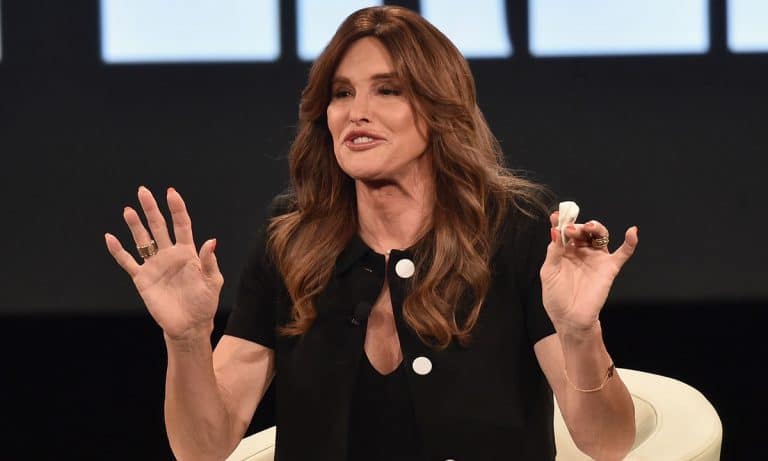
Founded by Jon Steinberg, former president of Buzzfeed and MailOnline, Cheddar is a live and on-demand financial news network targeting business-minded millennials. It broadcasts live daily from Post 10 on the floor of the New York Stock Exchange, NASDAQ Marketsite and their studio in the Flatiron Building. The channel focuses on covering new products, technologies and services and breaking news like the SNAP IPO.

“We are honored to partner with Cheddar TV as their new primary cannabis source,“ enthused JJ McKay, Founder/Publisher of TFT.

Last year, cannabis was a $7.1 Billion industry, which continues to outpace cable and the early dot-com industry.

Gossip: Kim Kardashian Planning Baby #3 For Ratings; Justin Bieber Stinks Up The Place

Baby # 3. Kim Kardashian reveals she is ready for baby # 3, and is planning it!

“I’m going to try to have one more baby,” Kanye West’s other half has revealed. She said, “I want my kids to have siblings!”

“Kim is trying to save her show. Ratings are at an all-time low and the storyline about her robbery in Paris did not get people watching. Now she is talking about another baby. Baby news has always worked in the past and got the ratings up,” sources tell Naughty Gossip. “I am sure she wants to be a mom again, but she also wants to get her ratings up.”

Justin Bieber $20 Million Luxury Rental Needed To Be “Deodorized”

Gross. His stay in the $20 million luxury mansion this month upset neighbors with loud late-night parties, screaming fans and police visits. And it appears Justin Bieber also caused problems for the Sydney property’s owner.

The Sydney Morning Herald reports the singer, 23, left an unpleasant aroma wafting through the plush premises and it had to be professionally “de-odorized.”

A source told the publication that the clean-up at the 7 Coronation Avenue address was well underway, including the removal of the dreadful smell. It was claimed the hitmaker also damaged items of furniture during his stay, including a very expensive sofa.

Love the fresh dirt we bring over daily from Naughty Gossip? Let us know in the comments!


[gravityform id=”13″ title=”false” description=”true”]


Jimi Hendrix’s Family Battling It Out Over Rights to Marijuana Products

Family members of Jimi Hendrix have filed a lawsuit against the late guitar legend’s brother Leon Hendrix, who they claim has tried to illegally use Hendrix’s trademarks to sell cannabis-related products and other memorabilia.

The Wrap reports Experience Hendrix and Authentic Hendrix filed a suit on Thursday, claiming that Leon Hendrix and his partner Andrew Pitsicalis have repeatedly ignored injunctions against them selling the products. From The Wrap:

“Over the past 10 years, Defendants Andrew Pitsicalis and Leon Hendrix, and a variety of individuals and entities with which they have been associated, have attempted to hijack Plaintiffs’ trademarks and copyrights for their own personal gain,” the suit, file in federal court in New York on Thursday, reads. “Federal courts have repeatedly prohibited those unlawful activities. Ignoring those prohibitions, Pitsicalis and Leon recently have renewed and expanded their infringements of Plaintiffs’ trademarks and copyrights through the creation, development, licensing, manufacturing, promotion, advertising and sale of cannabis, edibles, food, wine, alcohol, “medicines,” electronic products, and other goods.”

Later in the complaint, Experience Hendrix and Authentic Hendrix called Leon Hendrix and Andrew Pitsicalis’s disregard of the injunctions “ a full-scale assault on the Plaintiffs’ trademark and copyrights that relate to Jimi Hendrix.”

Pitsicalis falsely claims that his cannabis company Purple Haze Properties “represents the greatest guitarist in Rock ‘n’ Roll history, ‘my man, Jimi Hendrix,” the suit alleges.

Experience Hendrix and Authentic Hendrix were both founded in the mid-90s by Jimi Hendrix’s father, Al Hendrix, according to the suit, with Jimi’s sister Janie Hendrix, cousin Bob Hendrix, and “certain other family members” named as managers. Leon Hendrix was reportedly excluded intentionally from both organizations by his father, who the suit claims stipulated in his will that the companies be left to“family members other than Leon Hendrix.”

Thomas Osinski, a lawyer for Leon Hendrix and Pitscalis denies the plaintiffs’ claims and told Hypebot that his “clients will be vigorously defending this latest onslaught and filing appropriate counter suits and/or counter claims to vindicate their rights and punish these slanderous and false attacks once and for all.”


[gravityform id=”13″ title=”false” description=”true”]

So, John Mayer Has Replaced Drinking Alcohol With Marijuana

John Mayer is a talented songwriter, an underrated guitarist, and someone who has loved putting his foot in his mouth. As detailed in a recent New York Times profile that aims to rehabilitate Mayer’s public image, the “Your Body Is A Wonderland” singer has been on the wrong end of controversy in recent years.

But he wants to change and has undergone some dramatic shifts in his personal life. He currently lives in a hotel to avoid creating another bachelor pad. He hasn’t really dated anyone significantly since his breakup with Katy Perry.

Oh, and he’s quit drinking. In its place, he told the New York Times, “I’m actually very thoughtfully entering the cannabis life.”

How Mr. Mayer might enjoy his cannabis is an entertaining enough question—he seems like a vape guy; that “very thoughtfully” modifier is a dead giveaway—but this is yet another example of celebrities publicly embracing cannabis. Perhaps Jeff Sessions should pay attention.

Don't Miss Your Weekly Dose of The Fresh Toast.

Stay informed with exclusive news briefs delivered directly to your inbox every Friday.

We respect your privacy. Unsubscribe anytime.