When novelists write dystopian literature, their sentences both hint at and exaggerate a state of their current reality. In some cases, they are a what if? played out, extending trends these writers fear might spell doom. But what happens when those fictional nightmares seemingly become current reality?
Kellyanne Conway, an adviser to President Donald Trump, reflected that possibility after offering the distinction of “alternative facts.” Conway uttered this phrase when questioned regarding Trump’s record attendance numbers at his inauguration.
The idea of “alternative facts,” it seems, reminds many of George Orwell’s classic 1984, which has sits atop Amazon’s bestseller list following Trump’s inauguration and Conway’s phrasing. 1984 features “newspeak,” a type of propaganda that clouds facts and distorts any sense of foundational truth through mixed messaging and overwhelming surveillance.
We put through a 75,000 copy reprint this week. That is a substantial reprint and larger than our typical reprint for 1984,” a Penguin spokesman told CNNMoney Tuesday evening.
[…]
According to Nielsen BookScan, which measures most but not all book sales in the United States, “1984” sold 47,000 copies in print since Election Day in November. That is up from 36,000 copies over the same period the prior year.
From George Orwell's "1984." why there evolves in Oceania, "an unwearying, moment-to-moment flexibility in the treatment of facts" pic.twitter.com/NAC7fpZtyI
Two other editions of 1984 are in the bestseller list, though Orwell is not the only author whose work has seen a recent resurgence. Aldous Huxley’s Brave New World, another dystopic society where truth is obscured, and Upton Sinclair’s It Can’t Happen Here, which involves the election of an authoritarian president, have entered the top 100 of Amazon’s bestseller list.
Other novels to jump into the bestseller list since Trump’s inauguration: Orwell’s Animal Farm, Ray Bradbury’s Fahrenheit 451, Margaret Atwood’s The Handmaid’s Tale, and Hannah Arendt’s The Origins of Totalitarianism.
When A Tribe Called Quest, inimitable elder statesmen of hip hop, released their final record We Got It from Here…Thank You 4 Your Service, they gathered a who’s who of hip hop old and new. The political and social implications of that album aside, it should be little doubt why that would include Talib Kweli.
An icon of rap’s backpacker movement, Kweli’s name is synonymous with poetic bars and thoughtful underpinnings. His collaborations include Black Star with Mos Def and Reflection Eternal with Hi-Tek, each further establishing Kweli as an inveterate member of hip hop.
He’s a cerebral artist and a prolific musician – and he’s just kicked off a new tour. So we talked to Kweli to learn his current thoughts on touring, the political climate, and what does he like to smoke?
The Fresh Toast: Is there a message you want to transfer to your audience on this new tour, or something you’re expecting to see form them?
Talib Kweli: I just want people to come and have a good time and listen to great hip-hop – so far on the first stop we had a good time.
Is there a difference between now and the Black Star days in America while touring? The audience, the people, tape more things than watch them now. Back in the days you could tell what the crowd was thinking and experience a level of back-and-forth because the people responded to the music, they had their hands in the air. Now they’re on their phones.
I definitely appreciate it. But I remember when I first started touring, it was discouraged to let photographers shoot the whole show. Usually it was just one or two songs and then they were forced to leave the pit. That’s a real old school music industry thing. Back in the days, artists wanted to control all their images, pictures. You decided what to do with them. If too many people did it, it would lost value. But now it’s flipped. It’s the opposite. If no one is taking pictures, that’s a bad thing!
Photos by Dorothy Hong
I remember seeing Dave Chappelle live at Rutgers University and he stopped the show because someone was filming it and it seemed totally normal. With Dave, with comedy, it’s a little different. With comedians, you’re testing new material in the clubs and colleges. With me, I’m performing pre-recorded music. It doesn’t make sense for me to protect footage. For comedians, if their set gets on YouTube, no one is going to pay to see it.
What do you eat, drink, consume while on tour across country – how do you relax? I do what I love for a living, so making hip-hop music is relaxing for me. And I try to eat as best as I can. Right now as we’re talking, my fruit, oatmeal and egg whites came. But I might have some fatty fried food later on. I have the same vices as most Americans: caffeine, sugar, pot, alcohol, tobacco.
Do you like sativa or indica? I’m not a weed scientist – I don’t know the difference between a sleepy high and driving high.
Did you do anything over the political weekend?
I ended up participating in a couple of marches. I was staying in downtown L.A. so it was convenient for me to walk. There was an immigrants rights march on the 19th and, of course, the Women’s March. I did a free anti-Trump concert in Orange County. That was cool. But my life didn’t start or start with Donald Trump.
Photos by Dorothy Hong
You live in New York, right? What’s the vibe there – it seems if any city can withstand the new president, it’s New York. I might not be the best person to ask because I travel so often. But New York didn’t vote for Trump. Trump lost here by a wide margin. The city can withstand a lot of stuff.
Any plans for upcoming new music? All the time. I drop projects every couple of months. And at the end of this tour, I’ll be dropping a new record.
Last week we ran an interview with Sir Mix-A-Lot about the 25th Anniversary of “Baby Got Back.” Just for fun, do you have any thoughts on the significance of that song?
I’m glad you told me! I’m performing in Seattle tonight and I plan on bringing Mix on stage. I didn’t know it was the 25th anniversary. I’m more of a “Posse on Broadway” kind of guy – but when “Baby Got Back” came out, that was hugely popular. To be a black person in American, right now in 2017 the big ass is something that’s revered in our culture from the Kardashians on down, fake ass cheeks, implants. But when that song came out, it was revolutionary even though it was rude and crude. It celebrated black women’s asses. Sure it’s a booty poppin’ record and fun in the club, it has that great bass line. But for him to say, “Oh my god…” and imitate a white girl up front. Popular music didn’t deal with race at all. So to deal with it in a playful way, it crushed and smashed a stereotype.
We are lovers of music. We’ll hook you up with a sexy playlist when we’re not busy unearthing Vine artists and treasure troves of musical memorabilia. But this is not music. This is… something else entirely.
This is one man using way too many kazoos to make the world a weirder place. Roll your blunts because shit’s about to get ridiculously extra.
Youtuber EricsWurld has only posted three videos to his channel total, all within the last two weeks, but it only took that many tries to hit his creative peak. He plays the song “Yakety Sax” on his kazoo in a loop, layering it over and over in this video that’s maddening if you watch it to the end.
We tried to count the number of kazoos involved in this stunt, but lost track around six. There are somewhere between seven and 30 kazoos involved in the making of this video, plus various instruments: Chimes, bells, rattles, a guitar, cowbell, xylophone, a piano, a giant drum, smaller drums, a triangle, and finally a large gong that signals the final round.
The entire compilation is like something from a kooky warped cartoon about a dystopian world where only madmen with the most kazoos reign. The video description asks, “Ever wonder what Hell sounds like?” Well, not really, but now we know it sounds like this.
Valentine’s Day is closing in, and for those without a date, the pressure is on to find a cuddle-buddy for the weekend. What if you turn the day into an excuse to love the hell out of yourself instead?
As the famous poet RuPaul once said, “If you can’t love yourself, how in the hell you gonna love somebody else?” Try these ideas for making the most of the day, no matter your relationship status.
Get Outta Town
via GIPHY
Escape this ridiculous holiday altogether by booking a super-affordable escape. Solo traveling is freeing, and there’s still time left to book a flight to one of our top destinations.
Pair It With Your Favorite Infused Cocktail
Be your own bartender with our guide to cocktails and drinks, many of which are marijuana-infused for that extra-chill buzz.
Take A Pole Class
Think you can’t get a workout and feel like a time goddess at the same time? Welcome to pole class. A drop-in sesh lets you dip a toe in before deciding if it’s right for you.
Make An Amazing Dinner For One
via GIPHY
Most relationships are just two people asking what the other wants to eat until they die. Single people skip this torture, and can make a dinner for one without consulting any-damn-body about what they’re in the mood for. Try a sexy carbonara and this healthy winter salad.
Flex In Hot Yoga
Get hot and steamy, no partner necessary. Take a hot yoga class to sweat away the February chill and connect to your self at the same time. Admit it, walking around in a sleeping bag with sleeves for the last three months has made you forget how wonderful your own body is.
Winter vacation doesn’t have to involve strapping your feet to a board and flying down a mountainside. These locales are meant for the cold-weather lover that doesn’t have a need for speed.
If you love snow, wilderness, and wildlife, Alaska’s got it all. You’ll see glaciers and take Arctic cruises, but be warned: Winter is off-season for a reason.
https://www.instagram.com/p/BPpIG-uhWmQ/
Iceland
The small town of Reykjavik has all the charm of a capitol city without the urban hustle. Time your trip right, and at night, you’ll be treated to a stunning aurora show.
https://www.instagram.com/p/BPqcYdoh5X7/
Amsterdam
The Netherlands’ capital is best known for its rich history, festivals, and yes, its party scene. Some would argue winter is the city’s best time to shine, with light festivals and ice skating.
https://www.instagram.com/p/BPqNDSjjIDU/
Alta, Norway
Go dog sledding in Finnmark’s “blue season,” when the days are super short. If you REALLY love winter, check out the Igloo Hotel in nearby Sorrisniva.
https://www.instagram.com/p/_zvtx9C9v4/
Bend, Oregon
If snowy resorts are your idea of a relaxing getaway, find your way to Bend and cozy up while the rest of the tourists shred powder.
https://www.instagram.com/p/BPpzUgCBrJ4/
Glacier National Park
Visit this scenic park in Montana and see gorgeous mountain ranges and take ranger-led snowshoe walks through the winter wonderland.
For decades, California’s unregulated medical marijuana industry relied heavily on migrant workers to harvest the crop, trim the bud and other labor-intensive duties. Now that the state has legalized cannabis, farmers of other crops — most notably wine grapes — fear that the burgeoning industry may steal hard-to-find laborers.
In a wide-ranging 72-page report —”State of the Wine Industry 2107,” released by Silicon Valley Bank — the potential labor shortage was singled out as a concern.
In the cannabis industry, trimmers are paid nearly triple what a picker can get working in the hot fields. As a cash crop, cannabis is king in California, therefore it typically can pay its workers a higher hourly wage (or by-the-pound wage).
With legalization, the price of cannabis may drop and the wages may stagnate. But the conditions may be gentler for many workers.
According to the “State of the Wine Industry 2107” report:
Looking at the results of the past two years, we can say that the industry is more confident in the economy and the state of consumer demand. But overall, respondents reported that confidence is lower because of critical labor issues and, to a lesser degree, foreign competition and substitutions.
With respect to the latter, it’s a reflection of the growing concern about legalized cannabis. It remains to be seen if that will cool demand for fine wine. I’m on the side that believes that fine wine and cannabis will co-exist.
A more pressing concern is labor. In every growing area, the labor force is inadequate, which is leading to increased costs and more incentive to mechanize. From an American Viticultural Area perspective, Mendocino shows this as the largest concern. In our survey, one respondent said:
“Much of this shortage, especially during harvest, is caused by the competition from marijuana growers who hire laborers to sit on a white bucket and “trim buds” for $25–$30 an hour vs. working in the hot sun in the vineyard, where the average wage is around $20 an hour.”
The flow of migrant workers from Mexico has stalled in the last few years and winegrowers are concerned that the Trump administration will exacerbate the labor shortage. Of the three major issues facing the wine industry (labor, foreign competition and wine substitutes), the labor issue is by far and away the biggest worry, according to the report.
Eight states now have legalized marijuana for adult recreational use and 29 states have medical marijuana programs in place.
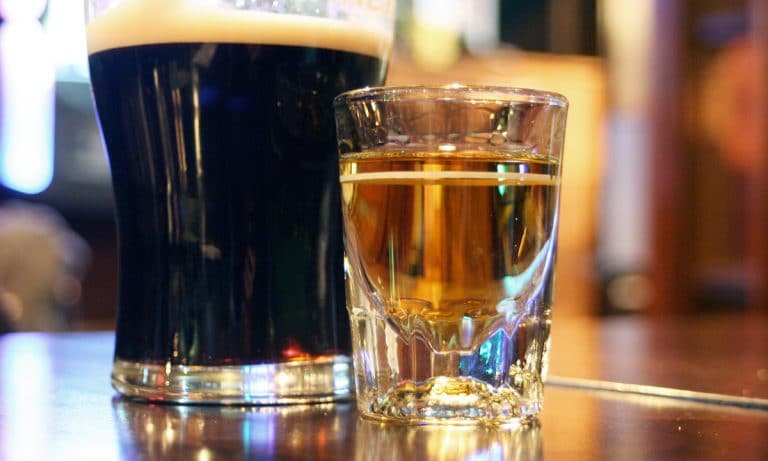
The global alcoholic beverage market is expected to grow from $1,198 billion today to $1,451.6 billion in 2020, according to P&S Market Research, an international analytics firm. In the U.S., the alcoholic beverage industry is estimated at more than $200 billion.
Can the nascent marijuana industry compete with the big boys of booze?
“While the alcohol beverage category has looked insulated from cannabis thus far — from a revenue perspective — with the legal market still in its infancy we think the risk to alcoholic beverage consumption will become increasingly apparent,” according to Vivien Azer, senior analyst for Cowen and Co., an investment research firm.
According to Azer, the 10-year trend show that men in particular are substituting alcohol with marijuana.
“Over the last decade, while we have seen a rise in drinkers who use cannabis, we have also seen declines in cannabis users who drink,” Azer wrote. “Nonetheless, there is undeniable overlap, as close to nine million adult consumers used cannabis with their most recent alcoholic beverage occasion.”
Each of us indulge in our own form of therapy. For some Canadians, that includes a therapy rooster named Louise who rolls around the farm in a wheelchair.
Now you might think Louise an unusual name for a rooster. But that’s not the only unusualy thing about this rooster, who went viral recently thanks to his small wheelchair.
For one, Louise’s previous family thought him a hen. Fortunate break as baby roosters tend to get slaughtered. Another lucky moment for Louise: the children on the farm liked him, despite his two deformed legs that made it difficult to contend with fellow birds for food.
“He arrived at our farm in 2015 as a baby hen and as he grew, it slowly started to dawn on us that he wasn’t a hen,” Sali’s Farm Founder Keryn Denroche told CBC British Columbia.
Since relationships with humans are more confusing and unpredictable, children at-risk are more available and open to animal relationships. They feel the unconditional acceptance from the animals and trust more readily. When these experiences are paired with a nurturing, trustworthy adult, the childʼs ability to heal and learn is enhanced.
Animals like Louise help inspire the kids, as they witness the hardships Louise has faced and continues to battle. Then, in that way only animals can, Louise displays serious affection to children, furthering that connection.
As Denroche told CBC, “”Now, when the kids come, they hear about his story and they see him with his very visible disability and it just resonates with the kids, because some of their stories aren’t that great. When they come here, they get unconditional love from Louise and that can have a really big impact on them.”
So as adorable as this wheelchair-bound rooster might be, his purpose is far being just another internet sensation.
Canadian cities are expected to introduce legislation in the coming months aimed at legalizing marijuana nationwide.
According to a report from CBC News, Edmonton’s business community is already in the midst of getting of its ducks in row with respect to legal weed. Some companies are said to be developing rules in an attempt to define what it will mean for their employees to consume marijuana legally and still draw a paycheck.
“This is coming at us now, this is going to happen, there is going to be legalization of marijuana,” said Janet Riopel, CEO of the Edmonton Chamber of Commerce. “So this is something that has very much hit our radar, and especially in safety-sensitive workplaces, employers have said marijuana use is inconsistent with safe work places.”
In other Canadian cities, such as Richmond, British Columbia, officials are doing whatever it takes to completely outlaw the presence of marijuana dispensaries in their neck of the woods. In the case of Richmond, its philosophy on the issue is: Just because the Canadian government wants to make weed fully legal “doesn’t mean we have to follow suit.”
While the less stable breed of Canadian commerce and leadership prepares for the supposed apocalypse they believe is destined to come from living in a fully legal cannabis market, the governing brass of the northern nation remains hell bent on ending prohibition in the very near future.
Canada’s marijuana task force recently issued a list of recommendations outlining the moves needed to implement a taxed and regulated system. So far, it appears that adults 18 and older would be permitted to purchase cannabis products in a manner similar to beer. It would also allow people to grow their own weed at home for personal use, while making way for cannabis lounges and most importantly, force police to stop busting the average citizen for marijuana possession.
In the meantime, only medical marijuana is legal in Canada, which seems to have confused some members of the cannabis community, who believe that pending legalization is a green light to sell weed for recreational use. This opinion has cause a veritable shitstorm in places like Toronto where police have been aggressively raiding dispensaries suspected of selling pot products outside the realm of Health Canada’s medical marijuana program.
“People are right now breaking the law,” Canadian Prime Minister Justin Trudeau told the Star. “We haven’t changed the laws. We haven’t legalized it yet. Yes, we got a clear mandate to do that. We’ve said we will. We’ve said we’re going to do it to protect our kids and to keep the money out of the pockets of criminals.”
Back in the day, references to Palm Springs conjured up images of retired people, golf courses and cacti. These days, there’s a mix of youthful energy injected into this SoCal destination: an enclave of hipsters on bikes, beautiful people lazying around poolside and fashionistas/creatives dining al fresco. And now, the Obama’s are kicking it here too. Here are 7 recs that would have the former First Family not even missing the chefs and kitchen staff at The White House.
The most powerful person in Palm Springs may very well be the host overseeing the wait list at Cheeky’s. Between 10am-noon, get ready to hang out with your brunch compatriots who are all waiting to eat Cheeky’s fluffy blueberry pancakes, chilaquiles with chorizo and weekly eggs benedict specials. Piggy lovers, try the $5 bacon flight that includes five strips of different varieties of bacon such as smoked, thai green curry and apple cinnamon.
Arrive is one of the newest additions to Palm Spring’s collection of chic lodging. Regardless of whether you stay in one of their 32 guestrooms, all are welcome to dine at the hotel’s outdoor restaurant, Reservoir. Tres Leches pancakes and fried chicken & churros are faves. Post-breakfast, hit the outdoor ping pong tables to work off some calories before visiting the hotel’s onsite ice cream shop to treat yourself.
In 1996, Diana DiAmico built a burger joint in a historic 1936 Spanish colonial structure that was at one point a gas station and later a greyhound bus stop. Back in the day, DiAmico’s mom ran a popular burger stand in Venice Beach, so DiAmico’s learned pretty early in life how to flip burgers. Many locals regard Tyler’s as the best burger in town. It’s often described as the perfect backyard barbecue burger. DiAmico still works there every day.
4) People-Watching And Proper Pool party, Mosey Over To Ace Hotel
Photo by Jen Chiu
When you need a break from the pool, King’s Highway has got your back. With a roadside diner feel overlaid with that signature Ace vibe, King’s is appropriately set in an old Denny’s. King’s works with local farmers and sourcers to serve SoCal favs such as a toasted farrow bowl and date shake made with local dates (they come from the neighboring Coachella Valley), almond milk and vanilla bean gelato. Bonus: there’s bingo on Monday nights!
If you like to dine outside, Palm Springs is your best buddy. Many locals think Birba, located next door to brunch hot spot Cheeky’s and run by the same owners, does it best. Surrounded by fichus trees dotted with white lights and fire pits, this intimate and modern setting is like hanging out at your interior designer friend’s garden patio. Italian is the genre with favorites such as the tricolore salad with fried garlic, aged parm and lemon and the bruschetta with local tomatoes, olive oil and basil. Chase it all down with a Pisco Sour or Greyhound.
This bad ass tiki bar, located behind a coffee shop and housed in the original 1950’s Don the Beachcomber restaurant, used to be a secret spot but awesomeness can’t stay incognito forever. The dim-lit three booths and 5-seater bar still makes this place feel like a laid-back speakeasy. For the record, these are not your cheesy tiki rum drinks. Proper mixologists tend the bar, making syrups and bitters from scratch. Fair warning, more than a couple of these honed concoctions and you’ll wonder if you can touch a Secret Serviceman’s gun.
Anyone who thinks Palm Springs is a food desert needs to visit this James Beard award-winning restaurant. Located in the heart of the Design district, people who’d pick modern austere minimalist over stuffy and pretentious will like the digs and atmosphere here. Workshop’s menu is market and season driven with winter dishes such as Kabocha squash + burrata and Duck leg confit with duck merguez sausage, de puy lentils and jus. For a romantic experience, sit outside.
Grow Condos, an Oregon-based cannabis firm, announced on Monday its plans to build “Smoke On The Water,” a cannabis-friendly park for recreational vehicles.
“This is one of the most exciting ventures to date for our company,” said Wayne Zallen, CEO of Grow Condos. “The opportunity for this segment of the real-estate industry is potentially very advantageous and largely untapped. This year we expect significant growth through this subsidiary, as we build, launch, and brand one of Oregon’s next beautiful cannabis friendly destinations,” he added.
Grow Condos has entered into an agreement to acquire Lake Selmac Resort, located just 20 miles south of Grants Pass, Oregon and about two miles east of Highway 99 in the southern part of the state. Lake Selmac Resort features everything a camper would enjoy: fishing, swimming, boating, RV parking, tent camping and cabins. And, hopefully soon, marijuana.
Toking in national and state parks is still illegal, but Grow Condos believes that relaxed marijuana laws are indeed a powerful motivator for tourists, which “creates a very lucrative niche opportunity for smaller, privately owned properties that can offer the freedom of experiencing Oregon’s strikingly beautiful landscape while also allowing its visitors to enjoy Oregon’s 420 friendly privileges,” the company said in a statement.
Summer Fun! Marijuana-Friendly RV Park Planned In Oregon:
“More people than ever are choosing to come to Oregon, and they are traveling farther than ever to get here. They are coming to enjoy the things we love: natural beauty, wilderness, adventure, amazing fresh food, wine, craft beer, world-class sports, and a vibrant arts and culture community. The result of all these visitors is a long list of powerful statistics and measures that show the profound economic power of tourism in Oregon.”
Now that Oregon has made recreational cannabis legal, perhaps it will add its world-renown marijuana cultivation alongside the craft beer and wine.
In a recent survey done in Colorado, the following statistics were discovered:
“Potential summertime visitors who were exposed to the state’s tourism ads said the marijuana laws influenced vacation decisions almost 49 percent of the time.”
While Colorado’s tourism ad campaign does not mention marijuana, 22 percent of survey respondents said marijuana access was “extremely influential” in their decision to visit Colorado. Another 27 percent of Rocky Mountain High toursits said the herb positively influenced their decision in some way.
According to Zallen, the company is looking to expand its concept to other legal cannabis states. The innovative RV parks would a retail outlet, he said.